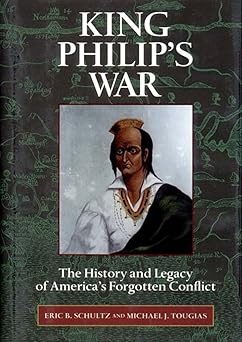
Hardcover. Woodstock VT, Countryman Press, 4th pr., 1999, Book: Very Good, Dust Jacket: Very Good, Hardcover in a bright, price-clipped dust jacket, 416 pages, b&w illustrations. Now largely forgotten, the massacres of 1675 to 1676, known as King Philip's War, ended the harmonious relations that had existed between native Americans and the colonists since their arrival at Plymouth Rock in 1620. Tensions had been rising as the number of settlers grew, and the pillaging of an outlying farm by affronted young braves escalated into open hostilities. Pitched battles were fought from Rhode Island to Maine. Hundreds of English died as farmers fled and cowered behind stockades or in the few port towns. Thousands of natives were slaughtered and the rest dispersed or sold into slavery in the West Indies. The savagery resulted in the clearing of the native populations from southern New England and the unopposed expansion of the New England colonies. It also became the brutal model on which the United States came to deal with its native peoples. King Philip's War tells the story with such close attention to detail that each ambush, each burned-out farm, becomes a vivid image. The authors make abundant use of maps and photographs of old sites to enable the reader to follow the course of the war: the book forms an exhaustive guide for the armchair historian or anyone wishing to visit the monuments and battlefields today. Clean copy.
Hardcover. Boston, Houghton Mifflin, 2nd pr., 1973, Book: Very Good, Dust Jacket: Very Good, Hardcover. Black & white photos. 337 pages. Dj price clipped
Hardcover. London, England, Collins, 1st UK Edition, 1962, 352 pages. Hardcover. Includes appendices, bibliography & index. B/w illustrations throughout. Dust jacket unclipped, has some agewear (see image). Cover boards bound in red cloth, gilt title on spine. Tanning to pages and edges from age, otherwise pages clean and unmarked. Binding tight, spine straight. In great shape. Before Columbus, before the Vikings, did Ireland's St. Brendan make a North Atlantic crossing?
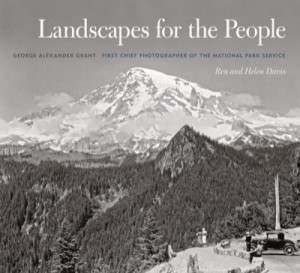
Hardcover. Athens GA, University of Georgia Press, 1st, 2015, Book: Very Good, Dust Jacket: Very Good, Hardcover in a bright dust jacket. 254 pages, b&w illustrations. George Alexander Grant is an unknown elder in the field of American landscape photography. Just as they did the work of his contemporaries Ansel Adams, Edward Weston, Eliot Porter, and others, millions of people viewed Grant's photographs; unlike those contemporaries, few even knew Grant's name. Landscapes for the People shares his story through his remarkable images and a compelling biography profiling patience, perseverance, dedication, and an unsurpassed love of the natural and historic places that Americans chose to preserve. A Pennsylvania native, Grant was introduced to the parks during the summer of 1922 and resolved to make parks work and photography his life. Seven years later, he received his dream job and spent the next quarter century visiting the four corners of the country to produce images in more than one hundred national parks, monuments, historic sites, battlefields, and other locations. He was there to visually document the dramatic expansion of the National Park Service during the New Deal, including the work of the Civilian Conservation Corps. Grant's images are the work of a master craftsman. His practiced eye for composition and exposure and his patience to capture subjects in their finest light are comparable to those of his more widely known contemporaries. Nearly fifty years after his death, and in concert with the 2016 centennial of the National Park Service, it is fitting that George Grant's photography be introduced to a new generation of Americans.
Hardcover. Baltimore MD, Johns Hopkins University Press, 1st, 1998, Book: Very Good, Dust Jacket: Very Good, Hardcover in a bright dust jacket, 356 pages, b&w illustrations. Starrs offers a detailed and comprehensive look at one of America's most enduring institutions. Richly illustrated with 130 photographs and maps, the book combines the authentic detail of an insider's view (Starrs spent six years working cattle on the high desert Great Basin range) with a scholar's keen eye for objective analysis. Tracing the geography and history of ranching in the United States, Starrs tells how Anglo settlers first encountered the open grasslands of the West - an environment alien to most of the European experience." Clean copy.
Hardcover. New York, Miller, Orton & Mulligan, 1st, 1856, Book: Good, Dust Jacket: None, 493 pages. Hardcover. Illustrated with black & white engravings. Foxing to frontis, title page, and occurring to pages surrounding illustrated pages. Brown cloth covers with fading, rubbing moderate wear. Binding is firm. Good + condition.
Hardcover. San Francisco, H.S. Crocker Company, 1st, 1926, Book: Very Good, Dust Jacket: None, Hardcover, 87 pages, original dark mustard paper covered boards with dark brown web-lined patterns and tan cloth back strip with brown lettering on spine; numerous photographs including some by well renowned photographer Ansel Adams (4 photos by Adams). 6 1/4 x 8 1/2 inches. The book "being a collection of favorite Yosemite views, together with a brief account of its history and legends, for those who want to know and enjoy Yosemite more". Bookplate on inside front cover, otherwise clean, bright copy.
Hardcover. NY, Basic Books, 1st, 2004, Book: Very Good, Dust Jacket: Very Good, Hardcover in a bright dust jacket, unclipped. INSCRIBED BY AUTHOR on the title page. Throughout the nineteenth century, swarms of locusts regularly swept across the continent, turning noon into dusk, demolishing farm communities, and bringing trains to a halt as the crushed bodies of insects greased the rails. In 1876, the U.S. Congress declared the locust "the single greatest impediment to the settlement of the country." From the Dakotas to Texas, from California to Iowa, the swarms pushed thousands of settlers to the brink of starvation, prompting the federal government to enlist some of the greatest scientific minds of the day and thereby jumpstarting the fledgling science of entomology. Over the next few decades, the Rocky Mountain locust suddenly--and mysteriously--vanished.A century later, Jeffrey Lockwood set out to discover why. Unconvinced by the reigning theories, he searched for new evidence in musty books, crumbling maps, and crevassed glaciers, eventually piecing together the elusive answer: A group of early settlers unwittingly destroyed the locust's sanctuaries just as the insect was experiencing a natural population crash. Drawing on historical accounts and modern science, Locust brings to life the cultural, economic, and political forces at work in America in the late-nineteenth century, even as it solves one of the greatest ecological mysteries of our time. 294 pages, clean copy.
Hardcover. Boston, Massachusetts, Harry N. Abrams, 1st, 1992, Book: Very Good, Dust Jacket: Very Good, 470 pages. Brown cloth cover, color illustrated dust jacket, 113 color and 206 illustrations. Still in original shrink wrap; book in excellent condition. American artists have been inspired by Italy since the 1760s, when Benjamin West, the first American painter to travel there, was drawn to the ancient Roman ruins and magnificent Renaissance architecture, statuary, and frescoes. This intriguing, superbly illustrated book is the first to explore the fascination Italy held for the American artist from West's time to the eve of World War I.The unique sense of the past found in Italy, where tangible evidence exists of a continual civilization from antiquity to the present, lured countless American artists to its cities, towns, and countryside. Painters from West and Copley in the eighteenth century to Cole, Inness, Whistler, Sargent, and Prendergast in the nineteenth century were inspired to create many of their finest works in Italy, as were American sculptors such as Hiram Powers and Harriet Hosmer and writers from Washington Irving to Henry James. This in-depth study includes 319 illustrations, of which 113 are reproduced in full color, many of works that have not previously been published. Theodore E. Stebbins, Jr., John Moors Cabot Curator of American Paintings at the Museum of Fine Arts, Boston, and Professor of Art History at Boston University, provides a broad overview of the American perception of Italy and the unique role that Italy played in the formation of American art.
Hardcover. Boston, Massachusetts, Harry N. Abrams, 1st, 1992, Book: Very Good, Dust Jacket: Very Good, 470 pages. Brown cloth cover, color illustrated dust jacket, 113 color and 206 illustrations. Still in original shrink wrap; book in excellent condition. American artists have been inspired by Italy since the 1760s, when Benjamin West, the first American painter to travel there, was drawn to the ancient Roman ruins and magnificent Renaissance architecture, statuary, and frescoes. This intriguing, superbly illustrated book is the first to explore the fascination Italy held for the American artist from West's time to the eve of World War I.The unique sense of the past found in Italy, where tangible evidence exists of a continual civilization from antiquity to the present, lured countless American artists to its cities, towns, and countryside. Painters from West and Copley in the eighteenth century to Cole, Inness, Whistler, Sargent, and Prendergast in the nineteenth century were inspired to create many of their finest works in Italy, as were American sculptors such as Hiram Powers and Harriet Hosmer and writers from Washington Irving to Henry James. This in-depth study includes 319 illustrations, of which 113 are reproduced in full color, many of works that have not previously been published. Theodore E. Stebbins, Jr., John Moors Cabot Curator of American Paintings at the Museum of Fine Arts, Boston, and Professor of Art History at Boston University, provides a broad overview of the American perception of Italy and the unique role that Italy played in the formation of American art.
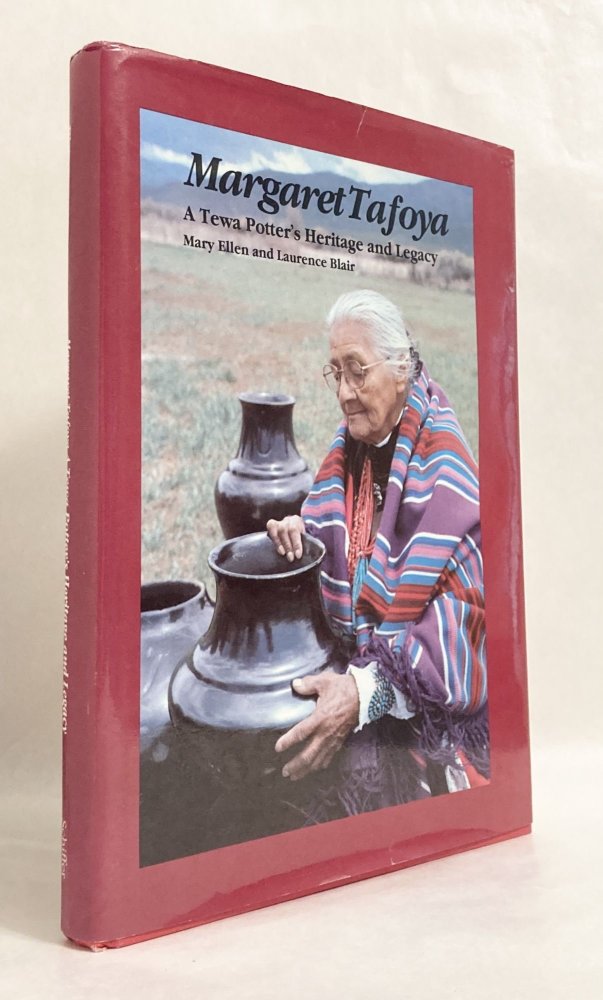
Hardcover. West Chester PA, Schiffer Publishing, 1st, 1986, Book: Very Good, Dust Jacket: Very Good, Hardcover in a bright dust jacket, 199 pages. SIGNED BY THE ARTIST/POTTER MARGARET TAFOYA on the title page. Foreword by Rick Dillingham. Illustrated throughout with black & white and color photography. Bibliography. Index. This beautiful book presented in large format tells the story of Margaret Tafoya and her contributions to Tewa Pueblo pottery. The book explores her life, pottery making techniques, the Tafoya family and descendants, and the history of the Pueblo people. clean copy.
Softcover. Guilford CT, TwoDot, 1st, 2008, Book: Very Good, Dust Jacket: None, Softcover, 151 pages, b&w illustrations. The massacre at Wickenburg was one of the most notorious crimes committed in the Wild West--a story revealed in this book through a criminal investigation. November 5, 1871. A westbound stagecoach carrying seven men and one woman left Wickenburg in the early morning hours. At 8:00 a.m., six of the passengers were shot dead. One man and the lone woman, severely wounded, escaped into the desert. Debates raged over the identity of the murderous ambushers -- Indians? Mexican bandits? The two survivors? After a massive investigation, the U.S. Army concluded that a band of local Yavapai Indians were responsible, which led to a policy of "removal and concentration" that altered the fate of nearly every Indian in America's Southwest. Clean copy.
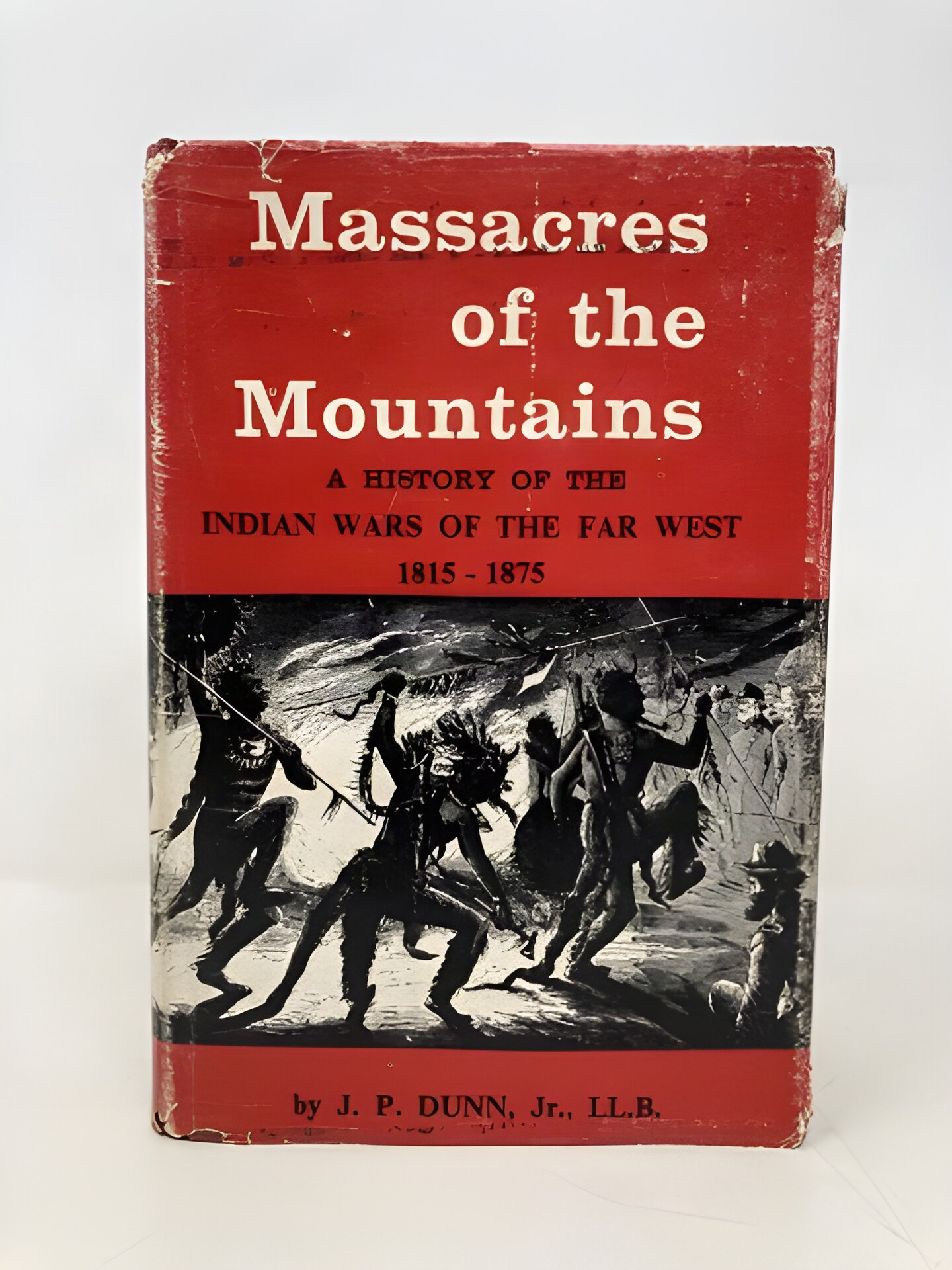
Hardcover. NY, Archer House, reprint, 1958, Book: Very Good, Dust Jacket: Good, Hardcover in a lightly worn dust jacket, 110 b/w illustrations. 669 pages. This is a facsimile reprint of edition first published in 1886. Covering 60 years of merciless bloody conflict, it documents in detail every major Indian battle between 1815 and 1876. Dust jacket spine faded, otherwise a clean, very good copy.
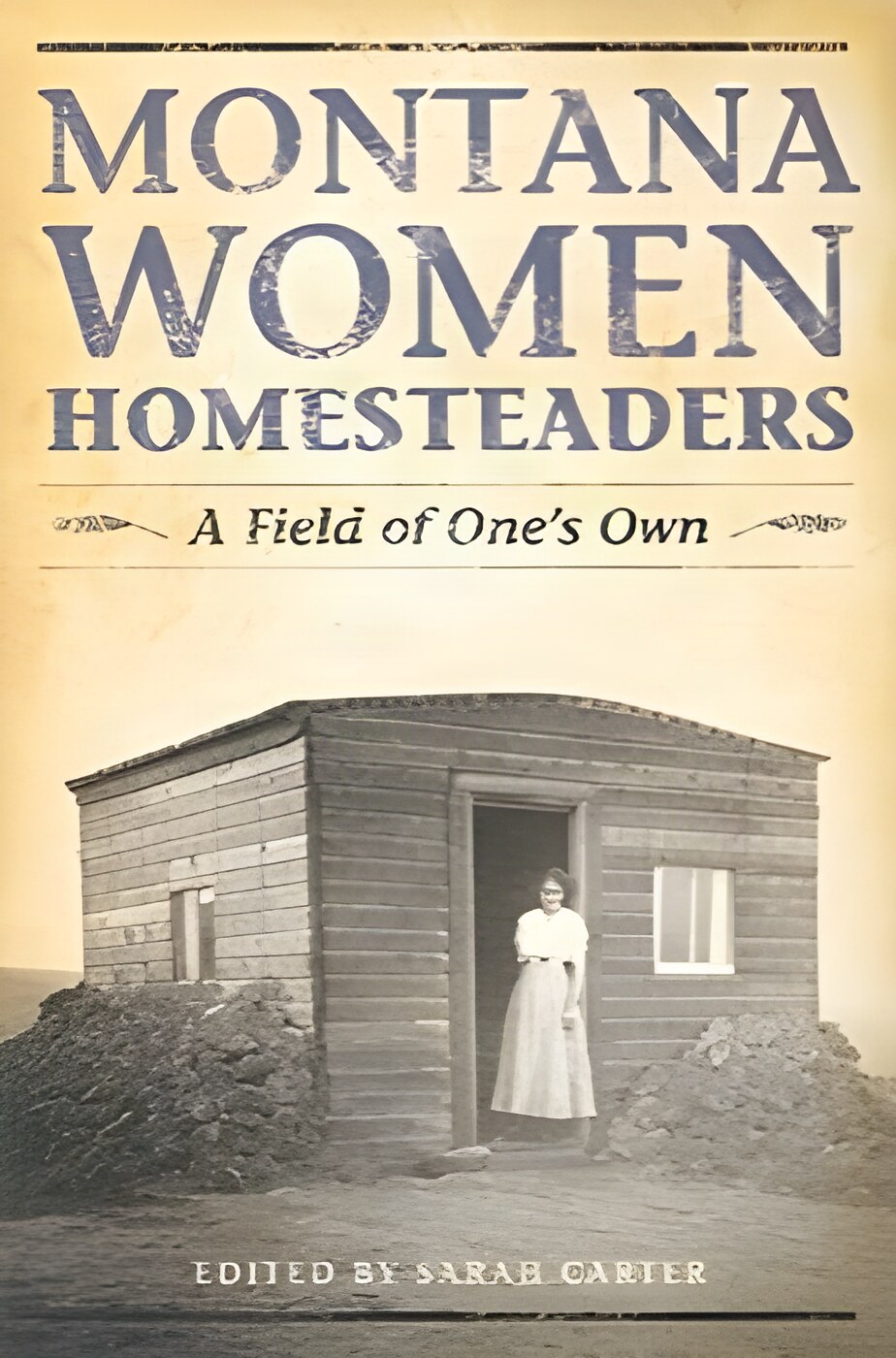
Softcover. Helena MT, FarCountry Press, 2nd pr., 2009, Book: Very Good, Dust Jacket: None, Softcover, 295 pages, b&w illustrations. In this remarkable and important book, Sarah Carter introduces us to some of Montana's first women homesteaders through their journals and other writings. By shedding light on these determined nineteenth- and early twentieth-century pioneers, Carter reveals inspiring stories filled with joy, tragedy, and redemption.
Hardcover. Lincoln NE, University of Nebraska Press, 1st, 1993, Book: Very Good, Dust Jacket: Very Good, Hardcover in a bright dust jacket, 391 pages, b&w illustrations. An excellent study of a military commander who transformed the American Frontier and the West. Based on a wide range of sources, including materials only recently made available to researchers, this first complete, carefully documented biography of Miles skillfully delineates the brilliant, abrasive, and controversial tactician whose career in many respects epitomized the story of the Old Army. Nelson A. Miles was probably the best Indian fighter produced by the U.S. Army between 1865 and 1890, figuring prominently in some of the most famous and significant conflicts between whites and Native Americans. This carefully documented biography of Miles skillfully delineates the brilliant, abrasive, and controversial tactician whose career in many respects epitomized the story of the Old Army. Clean copy.
Hardcover. New York , Viking, 1st, 2004, Book: Very Good, Dust Jacket: Very Good, Hardcover. SIGNED BY AUTHOR. 434 pages, b&w photographs. Light edge wear to dust jacket; else a very clean, tight copy.
Hardcover. Hartford CT, Hartford Publishing Co., 1st, 1869, Book: Very Good, Dust Jacket: None, Hardcover, brown cloth with gilt lettering and design, embossed rules to covers. 524 pages. Detailed records of travel between the Mississippi River and the Pacific coast on the newly completed transcontinental railroad. Includes much information on the Mormons, Salt Lake City, Indians, gold mining, etc. 12 engraved plates and one map. Bookplate on inside front cover, light fading to spine gilt. Solid, clean copy.
Hardcover. Westport CT, Greenwood Press, reprint, 1981, Book: Very Good, Dust Jacket: None, Hardcover, black cloth with gilt lettering on spine, 210 pages. Professor Dunn presents an account of the making of the Japanese peace treaty. He discusses the international environment from the outbreak of World War II to 1950, the San Francisco conference of September 1951 and the security arrangements which the United States helped to create in the Pacific and Asian area. Originally published in 1963 by Princeton. Name on front fly leaf, otherwise clean.
Hardcover. Urbana IL, University of Illinois Press, 1st revised, 1997, Book: Very Good, Dust Jacket: Very Good, Hardcover in a bright dust jacket, 410 pages. The book that re-established Peckinpah's reputation--now thoroughly revised and updated! When critics hailed the 1995 re-release of Sam Peckinpah's masterpiece, The Wild Bunch, it was a recognition of Paul Seydor's earlier claim that this was a milestone in American film, perhaps the most important since Citizen Kane. Peckinpah: The Western Films first appeared in 1980, when the director's reputation was at low ebb. The book helped lead a generation of readers and filmgoers to a full and enduring appreciation of Peckinpah's landmark films, locating his work in the central tradition of American art that goes all the way back to Emerson, Hawthorne, and Melville. In addition to a new section on the personal significance of The Wild Bunch to Peckinpah, Seydor has added to this expanded, revised edition a complete account of the successful, but troubled, efforts to get a fully authorized director's cut released. He describes how an initial NC-17 rating of the film by the Motion Picture Association of America's ratings board nearly aborted the entire project. He also adds a great wealth of newly discovered biographical detail that has surfaced since the director's death and includes a new chapter on Noon Wine, credited with bringing Peckinpah's television work to a fitting resolution and preparing his way for The Wild Bunch. This edition stands alone in offering full treatment of all versions of Peckinpah's Westerns. It also includes discussion of all fourteen episodes of Peckinpah's television series, The Westerner, and a full description of the versions of Pat Garrett and Billy the Kid now (or formerly) in circulation, including an argument that the label "director's cut" on the version in release by Turner is misleading. Additionally, the book's final chapter has been substantially rewritten and now includes new information about Peckinpah's background and sources.
Hardcover. Richmind VA, Dietz Press, 1st, 1959, Book: Good, Dust Jacket: None, Hardcover, 219 pages. Ex-library copy with usual stamps and marks. No dust jacket. Tan cloth covers with gilt stamping.Primarily covers the era of the early American fur trader, as typified by the white trader and the Indian beaver hunter. Clean, tight copy.
Softcover. Bristol UK, Intellect, 1st, 2012, Book: Very Good, Dust Jacket: None, Softcover, 255 pages. With a focus on the settler societies of the United States and Australia, Photography and Landscape is a new critical account of landscape photography created through a unique collaboration between a photography writer and a landscape photographer. Beginning with the frontier days of the American West, the subsequent century-long popularity of landscape photography is exemplified by images from Carleton Watkins to Ansel Adams, the New Topographics to Richard Misrach, all of whose works are considered here. Along with discussions of other contemporary photographers, this extensively illustrated volume demonstrates the influence of settler societies on landscape photography, in which skilled photographers captured the fascination with and the appeal of the land and its expanse. Clean copy.
Hardcover. New York, Harry N. Abrams, 1st thus, 1986, Book: Very Good, Dust Jacket: Very Good, 272 pages. Hardcover with dust jacket. Clean, tight copy. Photographs throughout. Spine lightly faded. Photographs portray the actual way of life of the pioneers who settled the American West in the years after the Civil War.
Hardcover. NY, Charles Scribner's Sons, 1st, 1947, Book: Very Good, Dust Jacket: Very Good, Hardcover in a lightly worn, unclipped dust jacket. 308 pages with 393 b&w photographs, endpapers map. As proclaimed on the dust jacket: "This volume, carefully prepared under the direction of the Picture Maker's son, Mr. C. S. Jackson, contains an unrivaled pictorial record which can never be duplicated. It was created by a great artist and photographer who himself played a part in the opening of the frontier country." A truly wonderful work-attractive and informative. "A" On Copyright Page. Light bump to top corner of text block causing a mild crimp to pages at corner. Otherwise very good.
Hardcover. New York, Neale Publishing Co., 1st, 1914, Book: Very Good, Dust Jacket: None, Hardcover, 324 pages, dark blue cloth with gilt lettering on spine. An account of a Civil War battle fought in Missouri. Tight, clean copy.

 "Kinta Years, The - An Oklahoma Childhoodby: Giles, Janice Holt")
 "Land to the West: St. Brendan's Voyage to Americaby: Ashe, Geoffrey")
 "Let the Cowboy Ride: Cattle Ranching in the American Westby: Paul F. Starrs")
 "Life of Col. John Charles Fremont, and His Narrative of Explorations and Adventures, in Kansas, Nebraska, Oregon and California, Theby: Smucker, Samuel M.")


 "Lure of Italy, The: American Artists and The Italian Experience, 1760 - 1914by: Stebbins, Theodore E. Et al.")
 "Lure of Italy, The: American Artists and The Italian Experience, 1760 - 1914by: Stebbins, Theodore E. Et al.")
 "Massacre at Wickenburg: Arizona's Greatest Mysteryby: Wilson, R. Michael")
 "Nelson A. Miles and the Twilight of the Frontier Army by: Robert Wooster")
 "Old Iron Road, The: An Epic of Rails, Roads, and the Urge to Go West (SIGNED COPY)by: Bain, David Haward")
 "Our New West. Records of Travel Between The Mississippi River and the Pacific Ocean. Over the Plains Over the Mountains Through the Great Interior Basin Over the Sierra Nevadas To and Up and Down the Pacific Coast... Including a full")
 "Peace-Making and the Settlement with Japan by: Frederick S. Dunn")
 "Peckinpah: THE WESTERN FILMS - A RECONSIDERATIONby: Paul Seydor")
 "Pelts and Palisades: The Story of Fur and Rivalry for Pelts in Early America by: Nathaniel C. Hale")

 "Photography and the Old Westby: Current, Karen; Current; William R.")
 "Picture Maker of the Old West: William H. Jacksonby: Jackson, Clarence S.")


 "Pilot Knob: The Thermopylae of the Westby: Peterson, Cyrus A. and Joseph Mills Hanson")