Hardcover. NY, Library of America, 8th pr., Book: Very Good, Dust Jacket: Very Good, Hardcover in a bright dust jacket, 1175 pages. Part Two of a two-volume set. Assembled here in chronological order are hundreds of newspaper articles, pamphlets, speeches, and private letters written or delivered in the aftermath of the Constitutional Convention. Along with familiar figures like Franklin, Madison, Patrick Henry, Jefferson, and Washington, scores of less famous citizens are represented, all speaking clearly and passionately about government. The most famous writings of the ratification struggle - the Federalist essays of Hamilton and Madison - are placed in their original context, alongside the arguments of able antagonists, such as "Brutus" and the "Federal Farmer." Part Two gathers collected press polemics and private commentaries from January to August 1788, including all the amendments proposed by state ratifying conventions as well as dozens of speeches from the South Carolina, Virginia, New York, and North Carolina conventions. Included are dramatic confrontations from Virginia, where Patrick Henry pitted his legendary oratorical skills against the persuasive logic of Madison, and from New York, where Alexander Hamilton faced the brilliant Antifederalist Melancton Smith. Like new.
Hardcover. Princeton NJ, Princeton University Press, 1st, 1958, Book: Very Good, Dust Jacket: Very Good, Hardcover in a lightly worn, price-clipped dust jacket, 513 pages, b&w illustrations. In 1918 the U.S. government decided to involve itself with the Russian Revolution by sending troops to Siberia. This book re-creates that unhappily memorable story: the arrival of British marines at Murmansk, the diplomatic maneuvering, the growing Russian hostility, the uprising of Czechoslovak troops in central Siberia which threatened to overturn the Bolsheviks, the acquisitive ambitions of the Japanese in Manchuria, and finally the decision by President Wilson to intervene with American troops. Of this period Kennan writes, "Never, surely, in the history of American diplomacy, has so much been paid for so little." Name on front fly leaf, otherwise clean.
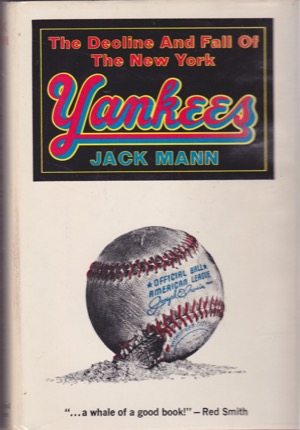
NY, Simon and Schuster, 1st, 1967, Book: Very Good, Dust Jacket: Very Good, Hardcover in a bright, unclipped dust jacket. 256 pages, 16 pages of B&W photos. Over a 45 year span the Yankees were the most magnetic drawing card in American sports. Why did the House That Ruth Built come tumbling down after so many years of triumph? Long inscription on front fly leaf otherwise clean.
Hardcover. NY, Dial Press, 1st, 1976, Book: Very Good, Dust Jacket: Very Good, Hardcover in a bright, unclipped dust jacket. A view of American film-making from the author's viewpoint.
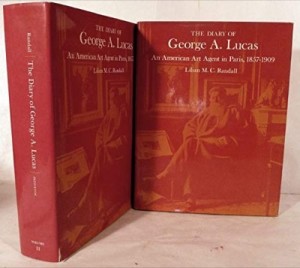
Hardcover. Princeton NJ, Princeton University Press, 1st, 1979, Book: Very Good, Dust Jacket: Very Good, Two volume set. Matching gold cloth boards with titles in gold on spine, in bright dust jackets. Transcribed and with Introduction by Lilian M.C. Randall. B&w illustrations of the sculptures, paintings, drawings and etchings that Lucas dealt with while in Europe. Double-column English text. Provides an extraordinary archive for historians and dealers. Provides a hugely empirical database for prices paid and commissions issued to artists, dealers, and craftsmen. George A. Lucas's acquaintances include Daumier, Cassatt, Whistler and Barye, among many, many others. Volume Two is given over wholly to Lucas's daily diary, which ran for an extraordinary length of time. Volume 1: xv [2], 3-148 pages.; Volume 2: iv [ii], 3-965 pages. DUE TO WEIGHT, DOMESTIC SHIPPING ONLY.
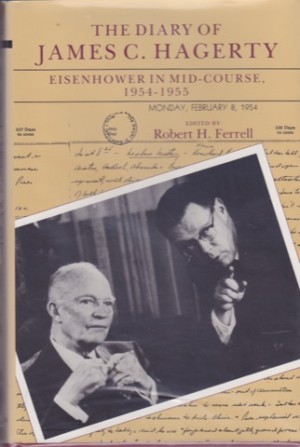
Hardcover. Bloomington, Indiana University Press, 1st, 1983, Book: Very Good, Dust Jacket: Very Good, Hardcover in an dust jacket with mild fading to spine. A valuable record of the first Presidency of the TV age. Hagerty was President Eisenhower's only press secretary. Clean copy.
Hardcover. Chicago, University of Chicago Press, 1st, 2022, Book: Very Good, Dust Jacket: Very Good, Hardcover in a bright dust jacket, 328 pages with index. INSCRIBED BY AUTHOR on the title page. This gripping history shows how the electronic devices we use to access and receive care influence the kind of care we receive. The Doctor Who Wasn't There traces the long arc of enthusiasm for and skepticism of electronic media in health and medicine. Over the past century, a series of new technologies promised to democratize access to healthcare. From the humble telephone to the connected smartphone, from FM radio to wireless wearables, from cable television to the electronic brains of networked mainframe computers: each new platform has promised a radical reformation of the healthcare landscape. With equal attention to the history of technology, the history of medicine, and the politics and economies of American healthcare, physician and historian Jeremy A. Greene explores the role that electronic media play, for better and for worse, in the past, present, and future of our health. Clean copy.
Hardcover. Baltimore, Johns Hopkins University, 1st, 1978, Book: Very Good, Dust Jacket: Very Good, Hardcover in a bright dust jacket with light edgewear, 460 pages. Translated by Lawrence Lipson. A vivid historical narrative of the US military intervention in Central America. Uncommon. Name on front fly leaf otherwise clean.
Hardcover. Cambridge MA, Harvard University Press, 1st, 1972, Book: Very Good, Dust Jacket: Very Good, Hardcover in a bright, unclipped dust jacket, 246 pages. Preface, Introduction, Chapters on: The United States and the Dominican Republic to 1965: Background to Intervention; The Origins of the 1965 Dominican Crisis: Setting the Stage; The Decision to Intervene; Deploying the Troops; and Explaining the Dominican Intervention. Drawing on nearly 150 personal interviews with individuals in the Dominican Republic and the United States, on rare access to classified U.S. government documents, and on his own first-hand experiences during the crisis, Abraham F. Lowenthal rejects official, liberal, and radical accounts of the intervention. Instead, he explains it as the product of fundamental premises, of decision-making procedures, and of bureaucratic politics. Name on front fly leaf, otherwise clean.
Hardcover. NY, Orion/Crown, 1st, 1989, Book: Very Good, Dust Jacket: Very Good, Hardcover, 272 pages. Recaptures the World War II bombing raid over Tokyo under the command of Lt. Col. "Jimmy" Doolittle and the incredible seek-and-destroy mission that he and other American pilots endured after the bombing.
Softcover. Luminare Press, 1st, 2016, Book: Very Good, Dust Jacket: None, Softcover, pictorial wrappers, 138 pages. This memoir immerses the reader in post-World War II rural Oregon where logging trucks laden with timber rumbled along gravel roads and moonshine was secreted in nearby shadows. Here a man's measure was taken not by his wealth or success but by his toil, and a woman was assessed not by her virtues but by her virtue. Rivers and reputations rose and fell swiftly. Electricity came to this rural area almost to the day the girl and her family arrived at the farm. Lowell and Fall Creek were charged for change. Even though families of pioneers and newcomers together celebrated in 1948 the centennial of the Oregon Territory, the landscape flush with virgin forests and rivers in very short time changed exponentially. Clean copy.
Softcover. Luminare Press, 1st, 2016, Book: Very Good, Dust Jacket: None, Softcover, pictorial wrappers, 138 pages. This memoir immerses the reader in post-World War II rural Oregon where logging trucks laden with timber rumbled along gravel roads and moonshine was secreted in nearby shadows. Here a man's measure was taken not by his wealth or success but by his toil, and a woman was assessed not by her virtues but by her virtue. Rivers and reputations rose and fell swiftly. Electricity came to this rural area almost to the day the girl and her family arrived at the farm. Lowell and Fall Creek were charged for change. Even though families of pioneers and newcomers together celebrated in 1948 the centennial of the Oregon Territory, the landscape flush with virgin forests and rivers in very short time changed exponentially. Clean copy.
Hardcover. NY, New York University Press, 1st, 1992, Book: Good, Dust Jacket: Very Good, Hardcover in a bright dust jacket, 240 pages. Under the influence of European historians, scholarship about the Dutch in America has generally emphasized what was derived from the urban and merchant character of the Netherlands, particularly the single province of Holland in the seventeenth century. But it was among the farmers of New York and New Jersey, according to David Steven Cohen, rather than the urban merchants of Albany and New York City, that a distinctive Dutch-American regional subculture arose, thrived, and survived through the end of the nineteenth century. By examining the life of the early emigrant Dutch settlers, the author constructs a picture of their culture through the farmhouses they built, the landscapes they cultivated, and the tools and equipment they used, relating it all to the structure of their families, their folklore, and folklife. It was in the second quarter of the eighteenth century, according to Cohen, that a change occurred in the culture of the Dutch in America by which they became Dutch-American, and the most striking material evidence of this transformation was in the development of a new type of farmhouse, which began to replace those still traceable to the Netherlands.Thirty black-and-white illustrations. Many pages with light pencil notations.
Hardcover. Cambridge MA, The MIT Press, 1st, 2016, Book: Very Good, Dust Jacket: Very Good, Hardcover in a bright dust jacket. The daguerreotype, invented in France, came to America in 1839. By 1851, this early photographic method had been improved by American daguerreotypists to such a degree that it was often referred to as "the American process." The daguerreotype-now perhaps mostly associated with stiffly posed portraits of serious-visaged nineteenth-century personages-was an extremely detailed photographic image, produced though a complicated process involving a copper plate, light-sensitive chemicals, and mercury fumes. It was, as Sarah Kate Gillespie shows in this generously illustrated history, something wholly and remarkably new: a product of science and innovative technology that resulted in a visual object. It was a hybrid, with roots in both fine art and science, and it interacted in reciprocally formative ways with fine art, science, and technology. Gillespie maps the evolution of the daguerreotype, as medium and as profession, from its introduction to the ascendancy of the "American process," tracing its relationship to other fields and the professionalization of those fields. She does so by recounting the activities of a series of American daguerreotypists, including fine artists, scientists, and mechanical tinkerers. She describes, for example, experiments undertaken by Samuel F. B. Morse as he made the transition from artist to inventor; how artists made use of the daguerreotype, both borrowing conventions from fine art and establishing new ones for a new medium; the use of the daguerreotype in various sciences, particularly astronomy; and technological innovators who drew on their work in the mechanical arts.
Hardcover. Chapel Hill NC, University of North Carolina Press, 1st, 2005, Book: Very Good, Dust Jacket: Very Good, Hardcover in a bright, unclipped dust jacket. The personal correspondence between President Dwight D. Eisenhower and Prime Minister Anthony Eden during the time they were simultaneously in office tells the dramatic story of a relationship that began with great promise but ended in division and estrangement. Many of the letters have only recently been declassified, making it possible for the first time to publish this unique historic collection in its entirety. Peter G. Boyle's introduction, annotations, and conclusion provide context for the letters--details about the personalities and careers of Eden and Eisenhower and major issues that influenced the Anglo-American relationship up to 1955, such as relations with the Soviet Union, nuclear concerns, colonialism, the Middle and Far East, economic issues, and intelligence matters. The letters themselves offer an intimate look into the special connection between Britain and the United States through the often eloquent words of their leaders. Clean copy.
Softcover. Charlottesville, University of Virginia Press, 1st pbk, 1991, Book: Very Good, Dust Jacket: None, Softcover, 256 pages. A collection of scholarly essays on Virginia in the 1800s. Clean copy.
Hardcover. NY, Columbia University Press, 1st, 2003, Book: Very Good, Dust Jacket: Very Good, Hardcover in a bright, unclipped dust jacket, 562 pages. During John Dewey's lifetime (1859-1952), one public opinion poll after another revealed that he was esteemed to be one of the ten most important thinkers in American history. His body of thought, conventionally identified by the shorthand word "Pragmatism," has been the distinctive American philosophy of the last fifty years. His work on education is famous worldwide and is still influential today, anticipating as it did the ascendance in contemporary American pedagogy of multiculturalism and independent thinking. His University of Chicago Laboratory School (founded in 1896) thrives still and is a model for schools worldwide, especially in emerging democracies. But how was this lifetime of thought enmeshed in Dewey's emotional experience, in his joys and sorrows as son and brother, husband and father, and in his political activism and spirituality? Acclaimed biographer Jay Martin recaptures the unity of Dewey's life and work, tracing important themes through the philosopher's childhood years, family history, religious experience, and influential friendships. Clean copy.
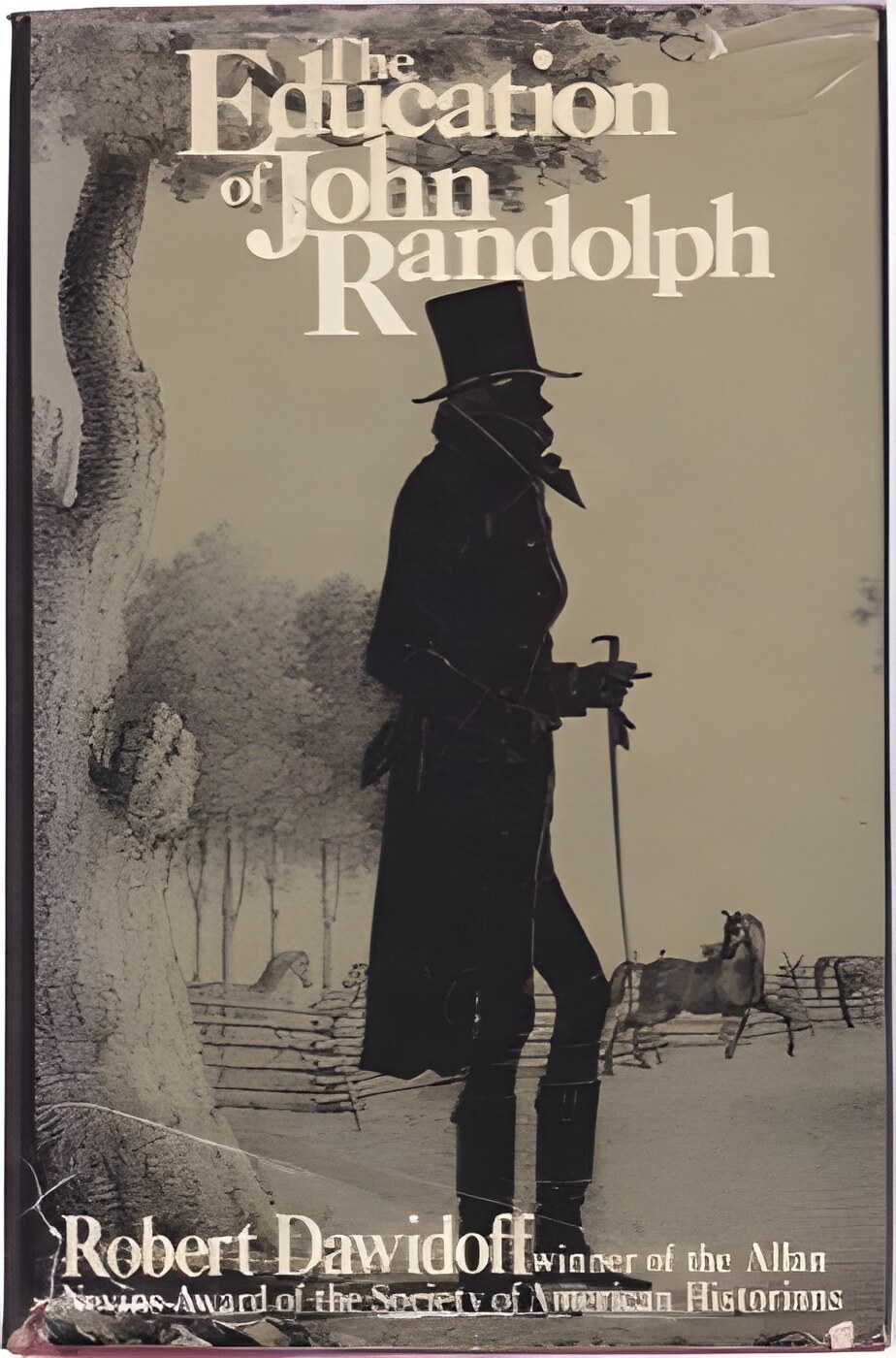
Hardcover. NY, W.W. Norton and Co., 1st, 1979, Book: Very Good, Dust Jacket: Good, Hardcover in a worn, price-clipped dust jacket, 346 pages. John Randolph of Roanoke, the notorious Virginian congressman and senator, was as renowned for his eccentric behavior as for his unusual political positions. Frontispiece portrait. Clean copy.
Softcover. NY, Cambridge University Press, reprint, 1996, Book: Very Good, Dust Jacket: None, Softcover, 434 pages. Of all the terms with which Americans define themselves as members of society, few are as elusive as "middle class." This book traces the emergence of a recognizable and self-aware "middle class" between the era of the American Revolution and the end of the nineteenth century. The author focuses on the development of the middle class in larger American cities, particularly Philadelphia and New York. He examines the middle class in all its complexity, and in its day-to-day existence--at work, in the home, and in the shops, markets, theaters, and other institutions of the big city. The book places the new language of class---in particular the new term "middle class"--in the context of the concrete, interwoven experiences of specific anonymous Americans who were neither manual workers nor members of urban upper classes. Clean copy.
Hardcover. London, Jonathan Cape, 1st UK, 1960, Book: Very Good, Dust Jacket: Very Good, Hardcover in a lightly worn dust jacket, 431 pages. Clean copy.
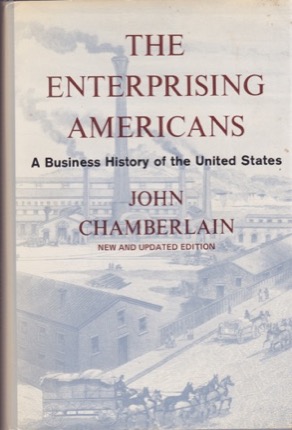
Hardcover. NY, Harper & Row, Revised Ed., 1974, Book: Very Good, Dust Jacket: Very Good, Hardcover in a bright dust jacket, 282 pages. INSCRIBED BY CHAMBERLAIN on the front fly leaf. The Updated Edition of a title first published in the 1960s. Clean copy.
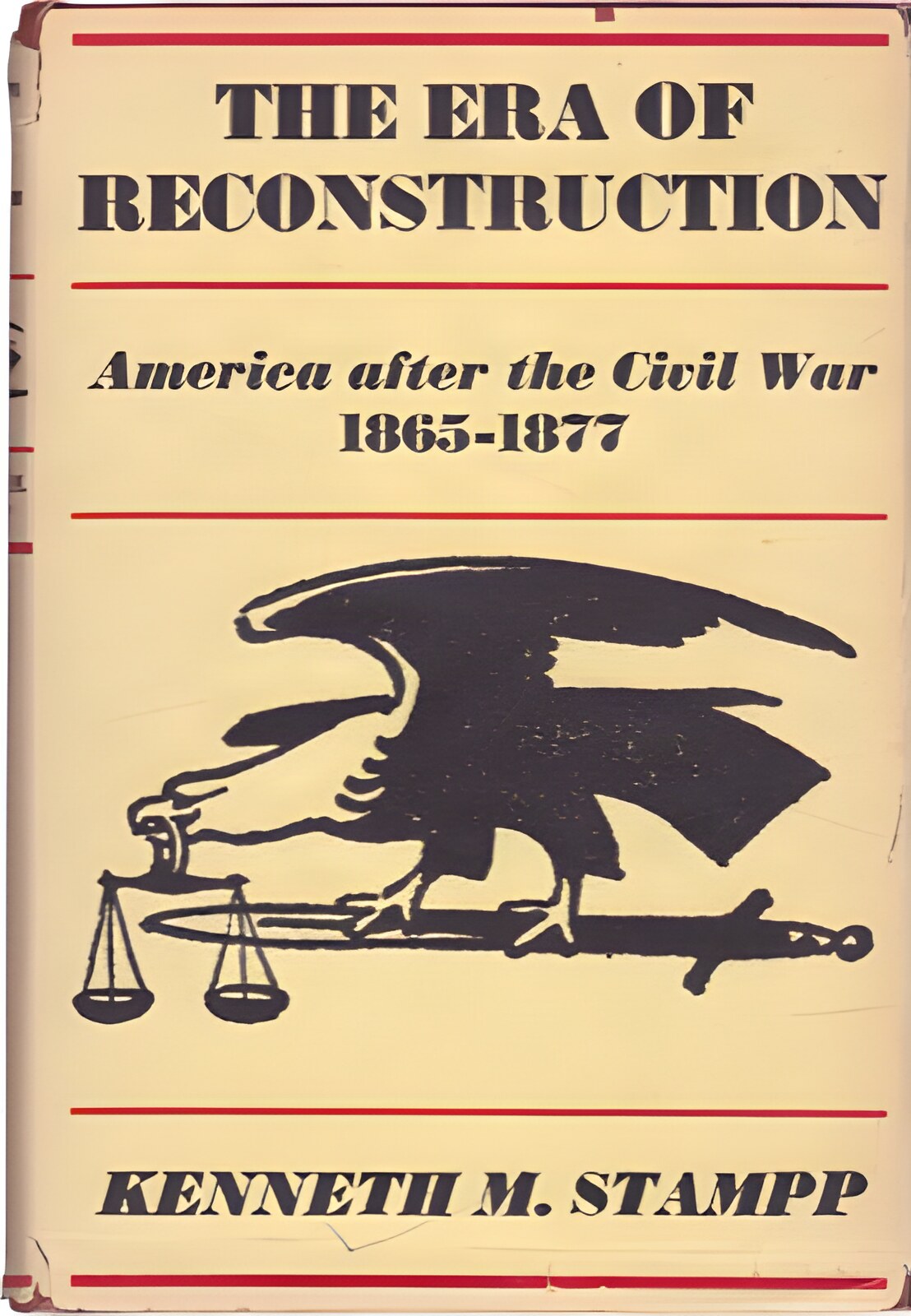
Hardcover. London, Eyre & Spottiswoode, 1st UK, 1965, Book: Very Good, Dust Jacket: Fair, Hardcover in a worn dust jacket with pieces gone, 229 pages plus index. A study of the controversial period in America which followed the Civil War examining the political situation in the South.
Hardcover. New Haven CT, Yale University Press, 1st, 2016, Book: Very Good, Dust Jacket: Very Good, Hardcover in a bright dust jacket. A compelling account of how women shaped the common law right to privacy during the late nineteenth and early twentieth centuries Drawing on a wealth of original research, Jessica Lake documents how the advent of photography and cinema drove women--whose images were being taken and circulated without their consent--to court. There they championed the creation of new laws and laid the groundwork for America's commitment to privacy. Vivid and engagingly written, this powerful work will draw scholars and students from a range of fields, including law, women's history, the history of photography, and cinema and media studies.






 "The Dusky Afternoon: An Oregon Childhood by: Sara Jeanne Duncan Widness")