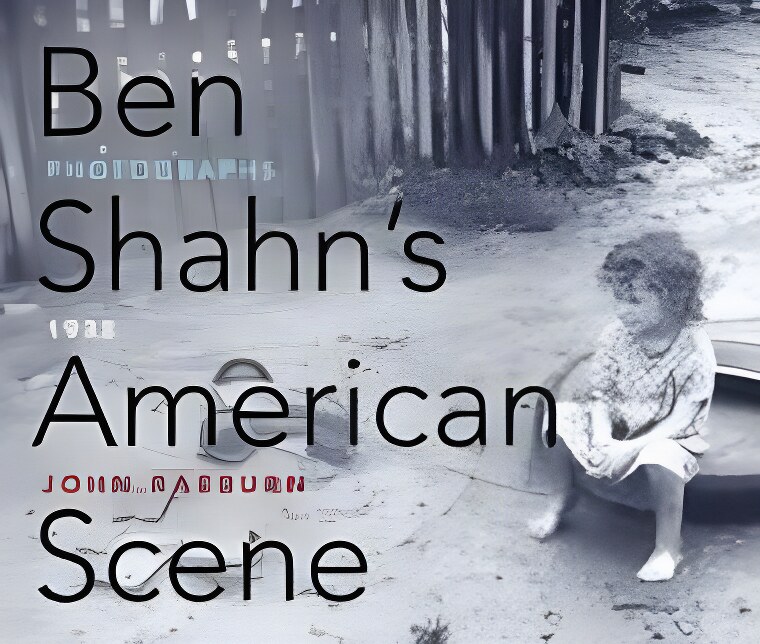
Softcover. US, University of Illinois Press, 1st, 2010, Book: Very Good, Dust Jacket: None, 190 pages, illustrated throughout in b&w. Clean, unmarked copy with only minor wear to wrappers. The paintings, murals, and graphics of Ben Shahn (1898-1969) have made him one of the most heralded American artists of the twentieth century, but during the 1930s he was also among the nation's premier photographers. Much of his photographic work was sponsored by the New Deal's Farm Security Administration, where his colleagues included Dorothea Lange and Walker Evans. Ben Shahn's American Scene: Photographs, 1938 presents one hundred superb photographs from his most ambitious FSA project, a survey of small-town life in the Depression. John Raeburn's accompanying text illuminates the thematic and formal significance of individual photographs and reveals how, taken together, they address key cultural and political issues of the years leading up to World War II. Shahn's photographs highlight conflicts between traditional values and the newer ones introduced by modernity as represented by the movies, chain stores, and the tantalizing allure of consumer goods, and they are particularly rich in observation about the changes brought about by Americans' universal reliance on the automobile. They also explore the small town's standing as the nation's symbol of democratic community and expose the discriminatory social and racial practices that subverted this ideal in 1930s America.
Softcover. US, University of Illinois Press, 1st, 2010, Book: Near Fine, Dust Jacket: None, 190 pages, illustrated throughout in b&w. Clean, unmarked copy with only minor wear to wrappers. The paintings, murals, and graphics of Ben Shahn (1898-1969) have made him one of the most heralded American artists of the twentieth century, but during the 1930s he was also among the nation's premier photographers. Much of his photographic work was sponsored by the New Deal's Farm Security Administration, where his colleagues included Dorothea Lange and Walker Evans. Ben Shahn's American Scene: Photographs, 1938 presents one hundred superb photographs from his most ambitious FSA project, a survey of small-town life in the Depression. John Raeburn's accompanying text illuminates the thematic and formal significance of individual photographs and reveals how, taken together, they address key cultural and political issues of the years leading up to World War II. Shahn's photographs highlight conflicts between traditional values and the newer ones introduced by modernity as represented by the movies, chain stores, and the tantalizing allure of consumer goods, and they are particularly rich in observation about the changes brought about by Americans' universal reliance on the automobile. They also explore the small town's standing as the nation's symbol of democratic community and expose the discriminatory social and racial practices that subverted this ideal in 1930s America.
Hardcover. New York, Vanguard Press, 1st, 1932, Book: Good, Dust Jacket: None, 306 pages. Hardcover. B/w illustrated frontispiece. Some age wear to covers. Bound in gray fabric. Previous owner's bookplate on front endpaper. Deckled edges. Some age yellowing to pages and edges. In good condition for its age.
Hardcover. Indianapolis/NY, Bobbs-Merrill, 1st, 1971, Book: Very Good, Dust Jacket: Good, Hardcover in a worn dust jacket, 490 pages, b&w frontis. Rush, the Philadelphia doctor who signed the Declaration of Independence, was an energetic, ambitious man given to devising reforms and, as the author puts it, meddling in politics. He studied medicine in Edinburgh and London, meeting Hume, Goldsmith, Samuel Johnson, et al. and, Hawke thinks, solidifying his republican disposition. Back in Pennsylvania he agitated for independence, made friends with John Adams, urged Paine to write Common Sense, and entered Congress. Apart from the recurrent epidemics of the age, the practice of military medicine and propaganda for resuming debt payments occupied Rush during the war; afterwards he turned to progressive education, speculated in land, fought paper money, equivocally supported the abolition of slavery, declared that tobacco is unhealthful, and boosted the Constitution before it was even written. Dust jacket chipped, faded in parts, clean internally.
Hardcover. Boston Ma., Houghton Mifflin Co., 1st, 1978, Book: Very Good, Dust Jacket: Very Good, 525 pages, b&w illustrations. Green cloth, gilt titles to front and spine. Light wear and rubbing to edges and spine of pictorial dust jacket, else a very nice, tight copy.
Softcover. Baltimore, MD, Baltimore Museum of Art, 1st, 1989, Book: Near Fine, Dust Jacket: None, Softcover, 119 pages, illustrated throughout in color and b&w. Blue pictorial stiff wrappers. Lovely copy. Like new.
Softcover. Washington , Smithsonian Institution Press, 1st, 1980, Book: Very Good, Dust Jacket: None, Exhibition catalog. 202 pages, illustrated throughout with 148 plates in b&w. White pictorial stiff wrappers. Light wear to covers, small tear to upper edge of spine, else a very nice, tight copy.
Hardcover. Princeton NJ, Princeton University Press, 1st, 2011, Book: Very Good, Dust Jacket: Very Good, Hardcover in a bright dust jacket. Small ink notation on front fly leaf otherwise clean. 320 pages with extensive notes and index. This book tracks the dramatic outcomes of the federal government's growing involvement in higher education between World War I and the 1970s, and the conservative backlash against that involvement from the 1980s onward. Using cutting-edge analysis, Christopher Loss recovers higher education's central importance to the larger social and political history of the United States in the twentieth century, and chronicles its transformation into a key mediating institution between citizens and the state. Framed around the three major federal higher education policies of the twentieth century--the 1944 GI Bill, the 1958 National Defense Education Act, and the 1965 Higher Education Act--the book charts the federal government's various efforts to deploy education to ready citizens for the national, bureaucratized, and increasingly global world in which they lived. Loss details the myriad ways in which academic leaders and students shaped, and were shaped by, the state's shifting political agenda as it moved from a preoccupation with economic security during the Great Depression, to national security during World War II and the Cold War, to securing the rights of African Americans, women, and other previously marginalized groups during the 1960s and '70s. Along the way, Loss reappraises the origins of higher education's current-day diversity regime, the growth of identity group politics, and the privatization of citizenship at the close of the twentieth century. At a time when people's faith in government and higher education is being sorely tested, this book sheds new light on the close relations between American higher education and politics.
Hardcover. NY, Farrar, Straus and Giroux, 1st, 2000, Book: Very Good, Dust Jacket: Very Good, Hardcover in a bright dust jacket, 358 pages. A riveting historical mystery of Colonial America. In April, 1586, Queen Elizabeth I acquired a new and exotic title. A tribe of Native Americans, "savages," had made her their weroanza-a word that meant "big chief." The news was received with great joy, both by the Queen and by her favorite, Sir Walter Ralegh. His first American expedition had brought back a captive, Manteo, whose tattoed face and otter-skin cloak had caused a sensation in Elizabethan London. In 1857, Manteo was returned to his homeland as Lord and Governor, along with more than 100 English men, women and children.In 1590, a supply ship arrived at the colony to discover that the settlers had vanished. For almost twenty years the fate of Ralegh's colonists was to remain a mystery. When a new wave of settlers sailed to America to found Jamestown, their efforts to locate the lost colony were frustrated by the mighty chieftain, Powhatan, father of Pocahontas, who vowed to drive the English out of America. Only when it was too late did the settlers discover the incredible news that Ralegh's colonists had survived in the forests for almost two decades before being slaughtered in cold blood by Powhatan's henchmen. Clean copy.
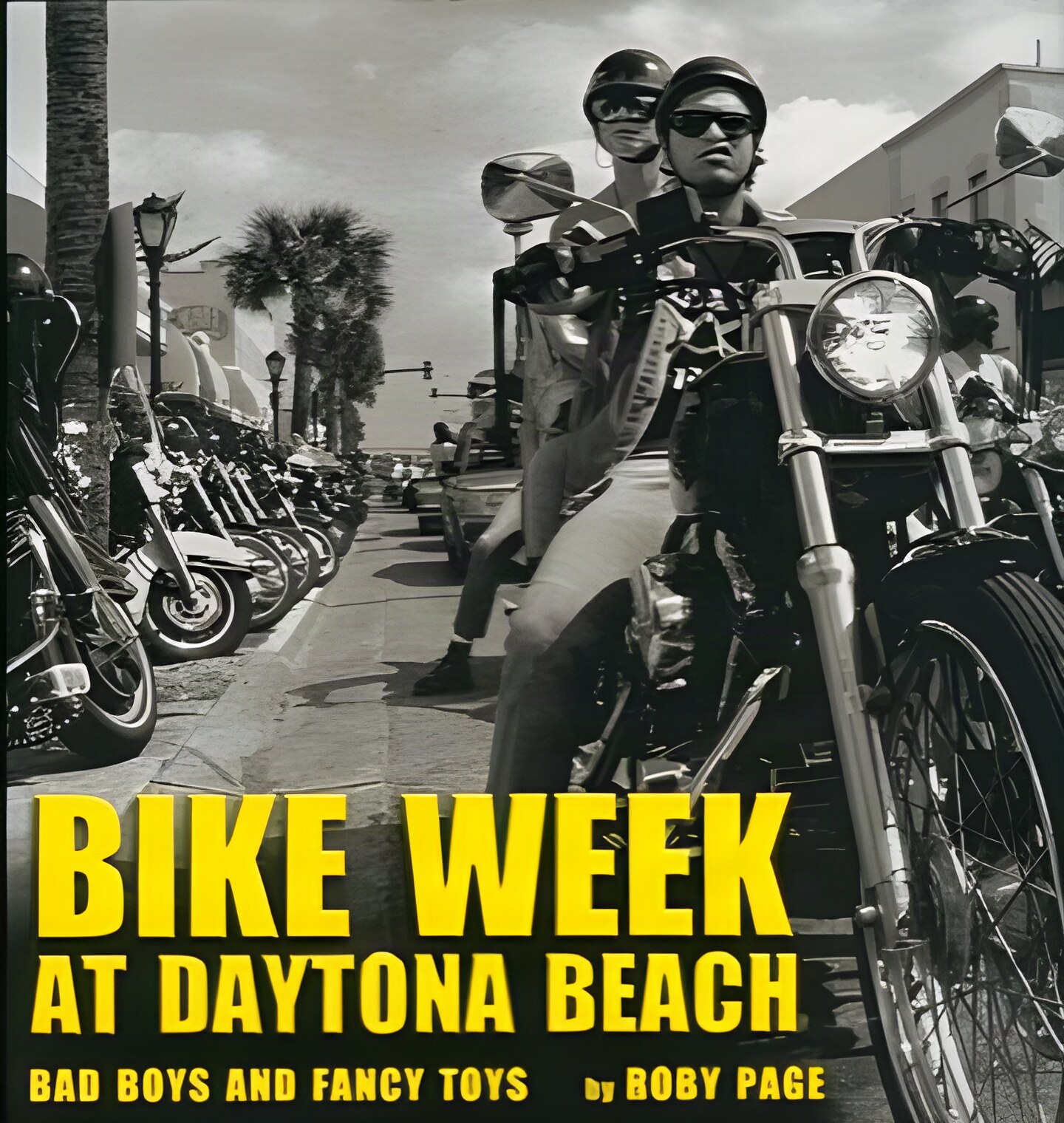
Softcover. Jackson MS, University Press of Mississippi, 1st, 2005, Book: Very Good, Dust Jacket: None, Softcover, 147 pages, b&w photos throughout. When photojournalist and writer Roby Page first started trekking to Daytona Beach, Florida, for Bike Week in 1985, the counterculture gathering was dominated by rogues, ruffians, and rebels. Now the leather-clad biker rumbling down Atlantic Avenue might be a doctor or a lawyer. More than a half-million enthusiasts arrive at Daytona Beach every March, a number swelled by new bikers from the American mainstream. Page sets out on his Harley-Davidson to search for what it really means to be a biker. Part memoir, part narrative history, and part photo essay, the book not only chronicles Bike Week, but also vividly documents the evolution of two American icons--the Harley and the biker. Remainder dot on bottom edge, light crease to back cover, otherwise like new.
Hardcover. NY, Walker Books, 1st, 2012, Hardcover in a bright, unclipped dust jacket, 434 pages, b&w photos. William Louis "Bill" Veeck, Jr. (1914-1986) is legendary in many ways-baseball impresario and innovator, independent spirit, champion of civil rights in a time of great change. Paul Dickson has written the first full biography of this towering figure, in the process rewriting many aspects of his life and bringing alive the history of America's pastime. In his late 20s, Veeck bought into his first team, the American Association Milwaukee Brewers. After serving and losing a leg in WWII, he bought the Cleveland Indians in 1946, and a year later broke the color barrier in the American League by signing Larry Doby, a few months after Jackie Robinson-showing the deep commitment he held to integration and equal rights. Cleveland won the World Series in 1948, but Veeck sold the team for financial reasons the next year. He bought a majority of the St. Louis Browns in 1951, sold it three years later, then returned in 1959 to buy the other Chicago team, the White Sox, winning the American League pennant his first year. Ill health led him to sell two years later, only to gain ownership again, 1975-1981. Veeck's promotional spirit-the likes of clown prince Max Patkin and midget Eddie Gaedel are inextricably connected with him-and passion endeared him to fans, while his feel for the game led him to propose innovations way ahead of their time, and his deep sense of morality not only integrated the sport but helped usher in the free agency that broke the stranglehold owners had on players. (Veeck was the only owner to testify in support of Curt Flood during his landmark free agency case). Bill Veeck: Baseball's Greatest Maverick is a deeply insightful, powerful biography of a fascinating figure.
Hardcover. US, Reel Art Press, 1st, 2014, Book: Very Good, Dust Jacket: Very Good, Large heavy book, 448 pages, illustrated throughout in b&w. Clean, unmarked copy with only minor wear to dust jacket. This breathtaking tome is the definitive and comprehensive collection of Billy Name's black-and-white photographs from Warhol's Factory. Name's photographs from this period (1964-68) are one of the most important photographic documents of any single artist in history. Name lived in a tiny closet at the Factory. He was responsible for the legendary "silverizing" of the space using aluminum paint and foil to complete the instillation. When Warhol gave Name a Pentax Honeywell 35mm camera, he took on the role of resident photographer and archivist. This visual essay, produced in collaboration with Billy name, offers an extensive trip through Warhol's world. Name photographed the day-to-day happenings at The Factory with Andy, including visits from Lou Reed and the Velvet Underground, Nico, Edie Sedgwick, Ivy Nicholson and Bob Dylan, and filming Screen Tests and features such as Chelsea Girls, Vinyl and My Hustler.
Hardcover. Norman OK, University of Oklahoma Press, 1st , 1950, Book: Very Good, Dust Jacket: Very Good, Hardcover in a lightly worn dustjacket. Ground plans of the Indian villages of New Mexico and Arizona with aerial photos & scale drawings.
Softcover. Libreria Musicale Italiana, 1st, 2011, Book: Very Good, Dust Jacket: None, Softcover, 215 pages, b&w illustrations. A history of the diaspora of Neapolitan musicians in New York. This book reviews the period from the unification of Italy to the fascist era through significant Neapolitan performers such as Gilda Mignonette and Enrico Caruso. It traces the transformation of a popular tradition written in dialect into a popular tradition, written in Italian, that contributed to the production of 'American' identity. PLEASE NOTE: ITALIAN TEXT. Simona Frasca is a lecturer on early sound reproduction and Italian migration, and a freelance music journalist. She hold a doctorate in History and Analysis of Musical Culture from La Sapienza University in Rome. Mild sunning to wraps, clean copy.
Softcover. Cambridge UK, Cambridge University Press, 1st pbk., 1999, Book: Very Good, Dust Jacket: None, Softcover, 267 pages. This book argues that modern presidents could learn much from Franklin Roosevelt's method of organizing his presidency. Roosevelt consciously avoided a large, functionally specialized White House bureaucracy. Instead, he developed staff agencies composed mostly of civil servants and personally managed them using competitive administrative practices. Matthew Dickinson is the first scholar to reconstruct the methods FDR used and his research suggests modern presidents could benefit greatly by studying them. Clean copy.
Hardcover. Syracuse NY, Syracuse University Press, 1st, 1973, Book: Very Good, Dust Jacket: Good, Hardcover in a worn dust jacket with fading to spine, 236 pages. This foremost history of the Northern slave system examines its operation from its colonial beginnings to its dissolution. Unlike the South, which used slaves primarily for agricultural labor, the North trained and diversified its slave force to meet the needs of a complicated economy. In the early 19th century the author sees that economic displacement allows an emancipation of blacks that is at least as beneficial to the masters as to the blacks. Name on front fly leaf, otherwise clean.
Softcover. Cambridge MA, Harvard University Press, reprint, 1998, Book: Very Good, Dust Jacket: None, Softcover, 310 pages, b&w illustrations. Few Americans, black or white, recognize the degree to which early African American history is a maritime history. W. Jeffrey Bolster shatters the myth that black seafaring in the age of sail was limited to the Middle Passage. Seafaring was one of the most significant occupations among both enslaved and free black men between 1740 and 1865. Tens of thousands of black seamen sailed on lofty clippers and modest coasters. They sailed in whalers, warships, and privateers. Some were slaves, forced to work at sea, but by 1800 most were free men, seeking liberty and economic opportunity aboard ship.Bolster brings an intimate understanding of the sea to this extraordinary chapter in the formation of black America. Because of their unusual mobility, sailors were the eyes and ears to worlds beyond the limited horizon of black communities ashore. Sometimes helping to smuggle slaves to freedom, they were more often a unique conduit for news and information of concern to blacks.But for all its opportunities, life at sea was difficult. Blacks actively contributed to the Atlantic maritime culture shared by all seamen, but were often outsiders within it. Capturing that tension, Black Jacks examines not only how common experiences drew black and white sailors together-even as deeply internalized prejudices drove them apart-but also how the meaning of race aboard ship changed with time. Bolster traces the story to the end of the Civil War, when emancipated blacks began to be systematically excluded from maritime work. Rescuing African American seamen from obscurity, this stirring account reveals the critical role sailors played in helping forge new identities for black people in America.
Hardcover. Washington, DC, Associated Publishers, Revised Ed., 1944, Book: Very Good, Dust Jacket: None, Hardcover, 381 pages. Dark green cover with slight wear and white spotting to back. Slight soiling to edges. Binding cracked at page 45. Overall, a clean, tight copy.
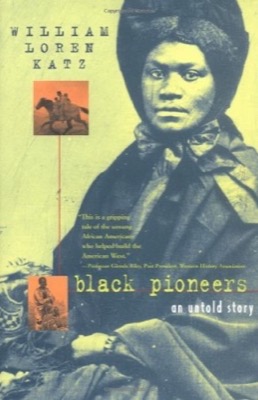
Hardcover. NY, Atheneum, 3rd pr., 1999, Book: Very Good, Dust Jacket: Very Good, Hardcover in a bright, unclipped dust jacket. In a clear, straightforward style, Katz describes the settlement of the Ohio and Mississippi Valleys (covering Ohio, Indiana, Illinois, Michigan, Wisconsin, Minnesota, Iowa, Kansas, and Missouri) by African Americans seeking freedom, including biographical sketches of men and women who formed churches, started schools, or were politically active in their region. Some of these settlers were fugitive slaves; several set up stations on the Underground Railroad with the aid of the Quakers; others were farmers, poets, and soldiers. In several states, they helped form black regiments in the Civil War. Chronologically arranged, the book introduces many lesser-known personages not found in most collective biographies and places them in a broader context of U.S. history as a whole.
Hardcover. NY, Atheneum, 3rd pr., 1999, Book: Very Good, Dust Jacket: Very Good, Hardcover in a bright, unclipped dust jacket. In a clear, straightforward style, Katz describes the settlement of the Ohio and Mississippi Valleys (covering Ohio, Indiana, Illinois, Michigan, Wisconsin, Minnesota, Iowa, Kansas, and Missouri) by African Americans seeking freedom, including biographical sketches of men and women who formed churches, started schools, or were politically active in their region. Some of these settlers were fugitive slaves; several set up stations on the Underground Railroad with the aid of the Quakers; others were farmers, poets, and soldiers. In several states, they helped form black regiments in the Civil War. Chronologically arranged, the book introduces many lesser-known personages not found in most collective biographies and places them in a broader context of U.S. history as a whole.
Hardcover. New York, Fox Duffield & Co., 1st, 1904, Book: Good, Dust Jacket: None, 350 pages, 13 pages of b&w photographs (12 African American portraits by A.L. Coburn). Textured blue cloth covers with dark blue lettering and ruled design. Some light soiling and wear to covers and spine. Internally clean, a few dog-eared pages.
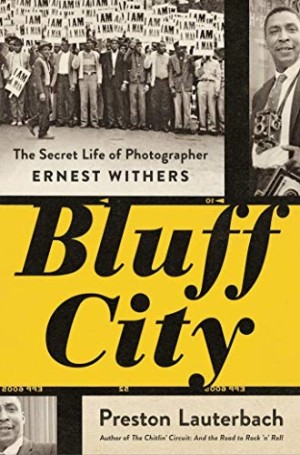
Hardcover. NY, Norton, 1st, 2019, Book: Very Good, Dust Jacket: Very Good, Hardcover in a bright, unclipped dust jacket, 339 pages, b&w illustrations. The little-known story of an iconic photographer, whose work captured--and influenced--a critical moment in American history. Ernest Withers took some of the most legendary images of the 1950s and '60s: Martin Luther King, Jr., riding a newly integrated bus in Montgomery, Alabama; Emmett Till's uncle pointing an accusatory finger across the courtroom at his nephew's killer; scores of African-American protestors carrying a forest of signs reading "i am a man." But at the same time, Withers was working as an FBI informant. In this gripping narrative history, Preston Lauterbach examines the complicated political and economic forces that informed Withers's seeming betrayal of the people he photographed, and "does a masterful job of telling the story of civil rights in Memphis in the 1960s" (Ed Ward, Financial Times), including the events surrounding Dr. King's tumultuous final march in Memphis. Small remainder dot to top edge.
Hardcover. NY, Clarkson Potter, 1st, 2024, Book: Very Good, Dust Jacket: None, Hardcover in pictorial boards, 319 pages, color illustrations. This stunning cookbook collects 100 of the most timeless and seminal recipes from the first leg of Bobby Flays monumental career in one place, for the first time ever. At the age of sixteen, Bobby Flay left high school and the idea of traditional education behind to pursue a life in professional restaurant kitchens. Through his groundbreaking restaurants, cookbooks, and numerous television shows, Flay has built a body of work that is one of the most influential in American culinary history. His stamp can be felt in restaurants across the country, as well as at the dinner table in many families' homes. Read the essays, absorb the photography, and most important, cook tantalizing dishes from this book. Bobby Flay has put decades of his daily work into these pages. Clean, bright copy.

 "Benedict Arnold: Military Racketeerby: Sullivan, Edward Dean")
 "Benjamin Rush: Revolutionary Gadfly by: David Freeman Hawke")
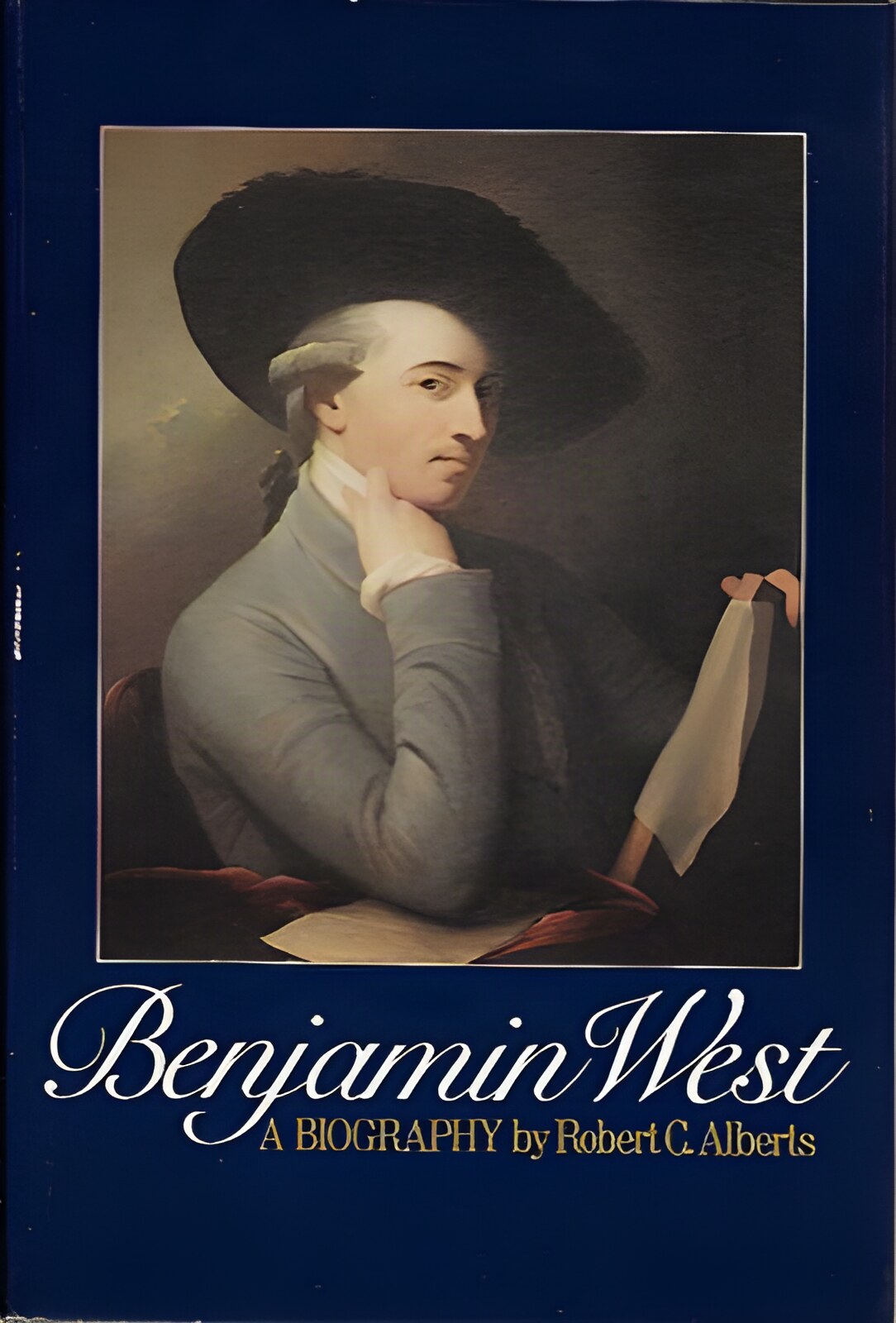
 "Benjamin West : American Painter at the English Courtby: Baltimore Museum of Art")
 "Benjamin West and His American Studentsby: Evans, Dorinda")



 "Billy Name:The Silver Age: Black and White Photographs from Andy Warhol's Factoryby: James, Dagon")
 "Bird's Eye View of the Pueblosby: Stubbs, Stanley A.")

 "Bitter Harvest: FDR, Presidential Power and the Growth of the Presidential Branchby: Dickinson, Matthew")

 "Black Man in White America, Theby: Van Drusen, John O.")