Hardcover. Benteli Verlags , 1st, 2017, Book: Very Good, Dust Jacket: None, Oblong hardcover with a pictorial label, 192 pages. The faded remnants of a glorious past are captured in all their morbid beauty, in images that manifest the ephemeral and go beyond all conventional associations and conceptions of the American South: Days Gone By combines carefully crafted photographs from the past ten years with a cultural history of the region's social and structural changes. With an unflinching gaze, Jorg Rubbert presents the demise of countless small towns between Georgia, Mississippi and Texas, their suffering particularly tangible following the financial crisis. Rural towns, idyllic at first glance, are soon revealed as forgotten relics of times long past.
Hardcover. NY, Dodd, Mead & Co., 1st, 1976, Book: Very Good, Dust Jacket: Very Good, Hardcover in a bright dust jacket, 466 pages, b&w illustrations. Name on front fly leaf, minor wear to dj. Otherwise a clean, tight copy.
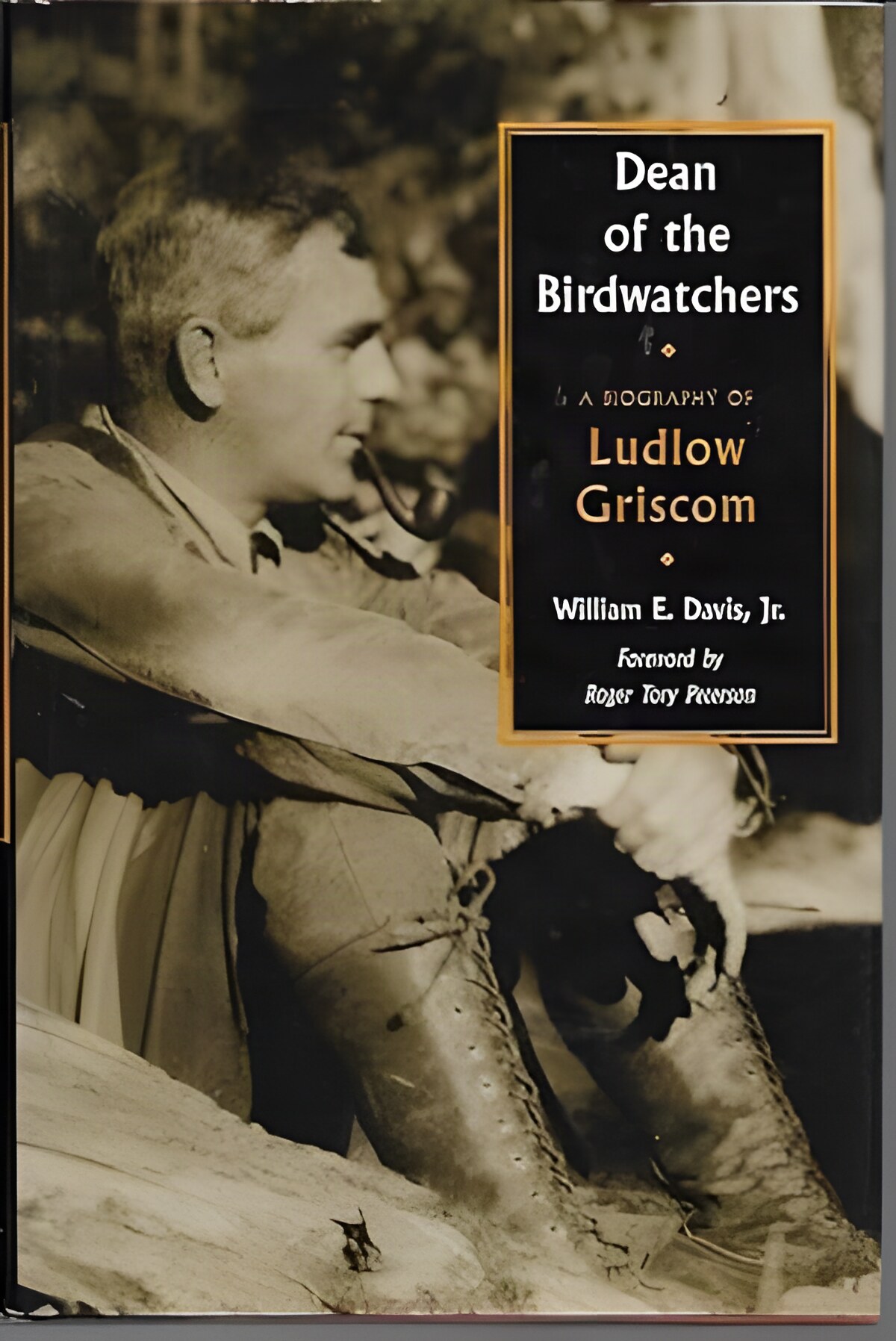
Hardcover. Washington DC, Smithsonian Books, 1st, 1994, Book: Very Good, Dust Jacket: Very Good, Hardcover in a bright dust jacket, 250 pages, photos, notes, bibliography. An influential ornithologist, curator of birds at the American Museum of Natural History; expert on the birds of Central and South America, New York City and Massachusetts, Griscom was influential in the shift to modern "binocular" birding and mentored a generation of notable ornithologists. Draws on Griscom's writings and those of his contemporaries. Clean copy.
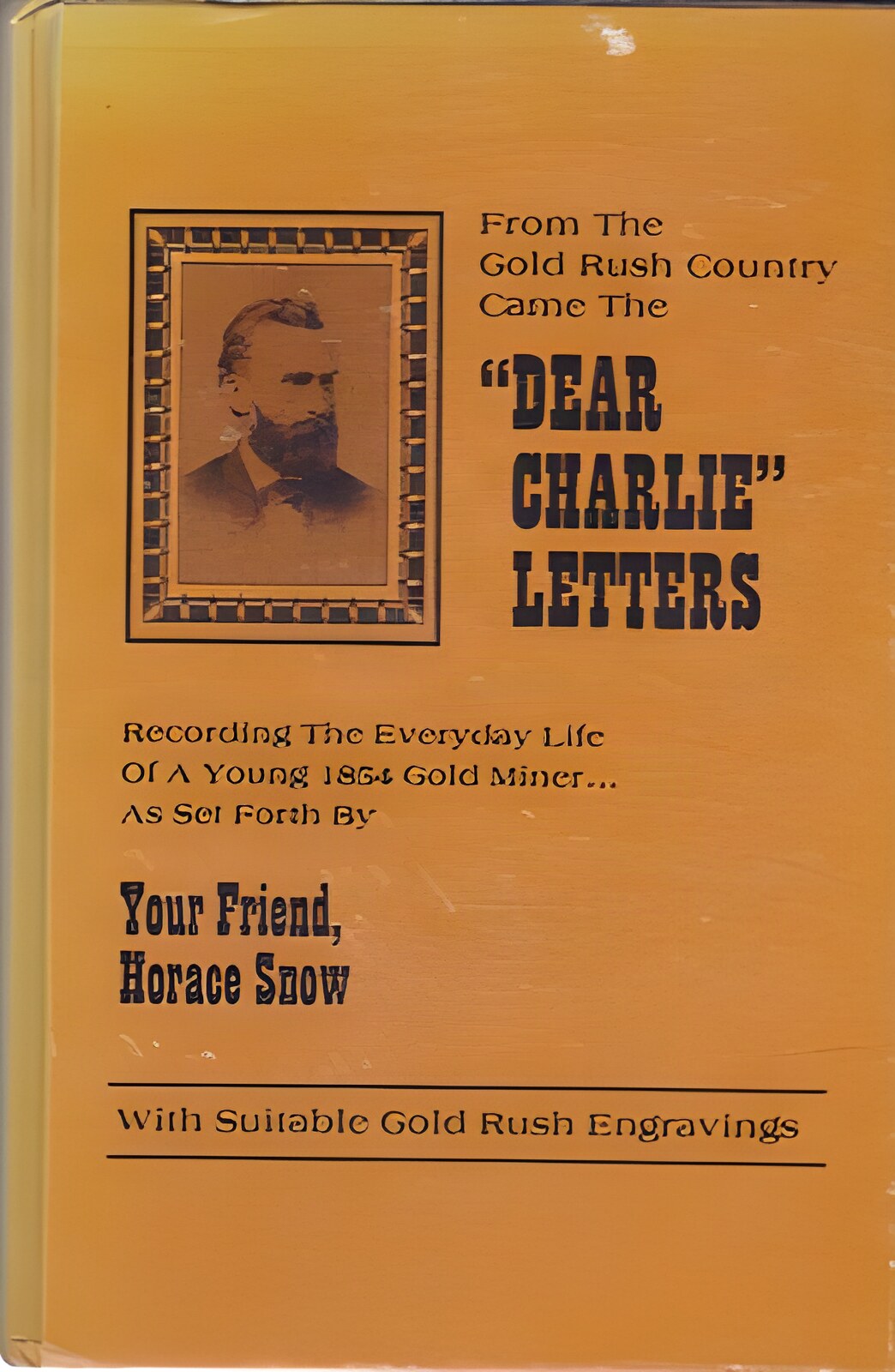
Hardcover. Fresno CA, Mariposa County Historical Society, 1st, 1979, Book: Very Good, Dust Jacket: None, Hardcover, orange cloth stamped in black, 118 pages, b&w illustrations. Horace C. Snow, the writer of the "Dear Charlie" letters, was one of many young men who came to California to make their fortune in the gold fields. Laid in is a 8-page supplement containing a lost letter not included in the first edition. Signed on title page by a member of the historical society. Spine faded. Clean copy.
Hardcover. NY, Harry N Abrams, 1st, 2001, Book: Very Good, Dust Jacket: Very Good, Hardcover in a bright, unclipped dust jacket. A groundbreaking presentation of rarely seen photographs, history, social observation, and pictorial analysis provides an entirely new perspective on male friendship in the nineteenth century and suggests a surprisingly broad-minded attitude toward physical intimacy between men. The book collects more than 100 portraits -from daguerreotypes to cartes des visites and early photographic postcards--depicting affectionate male friendships whose precise nature, whether platonic or sexual, will never be known. Editor David Deitcher, who teaches art and critical theory at the Cooper Union, reflects on the history of these images and their possible significance. Clean copy.
Hardcover. Philadelphia, Macrae Smith Company, 1st, 1929, Book: Very Good, Dust Jacket: None, Hardcover, 506 pages, illustrated throughout in color and black & white. Gilt titles and decorations on black cloth board, minor edge wear and rubbing, otherwise, very clean and bright copy.
Hardcover. Philadelphia, Macrae Smith Company, 1st, 1929, Book: Very Good, Dust Jacket: None, Hardcover, 506 pages, illustrated throughout in color and black & white. Gilt titles and decorations on black cloth board, minor edge wear and rubbing, otherwise, very clean and bright copy.
Hardcover. Birmingham AL, Legal Classics Library, reprint, 1988, Book: Very Good, Dust Jacket: None, Hardcover, full gray leather. all edges gilt, ribbon marker, marbled endpapers, raised bands. Facsimile reprint of his landmark work first published in two volumes in 1838 and 1840. The author was a French aristocrat, political philosopher and historian. His travels through America and his astute observations about our government and it's people create an important historical portrait of the country at the time. Bright, clean copy.
Softcover. Indianapolis/NY, Bobbs Merrill, 2nd pr., 1966, Book: Very Good, Dust Jacket: None, Softcover, 452 pages. This book covers the Massachusetts Convention of 1820-21; New York State Convention of 1821; and the Virginia State Convention of 1829-1830, along with numerous tables. Clean, tight copy.
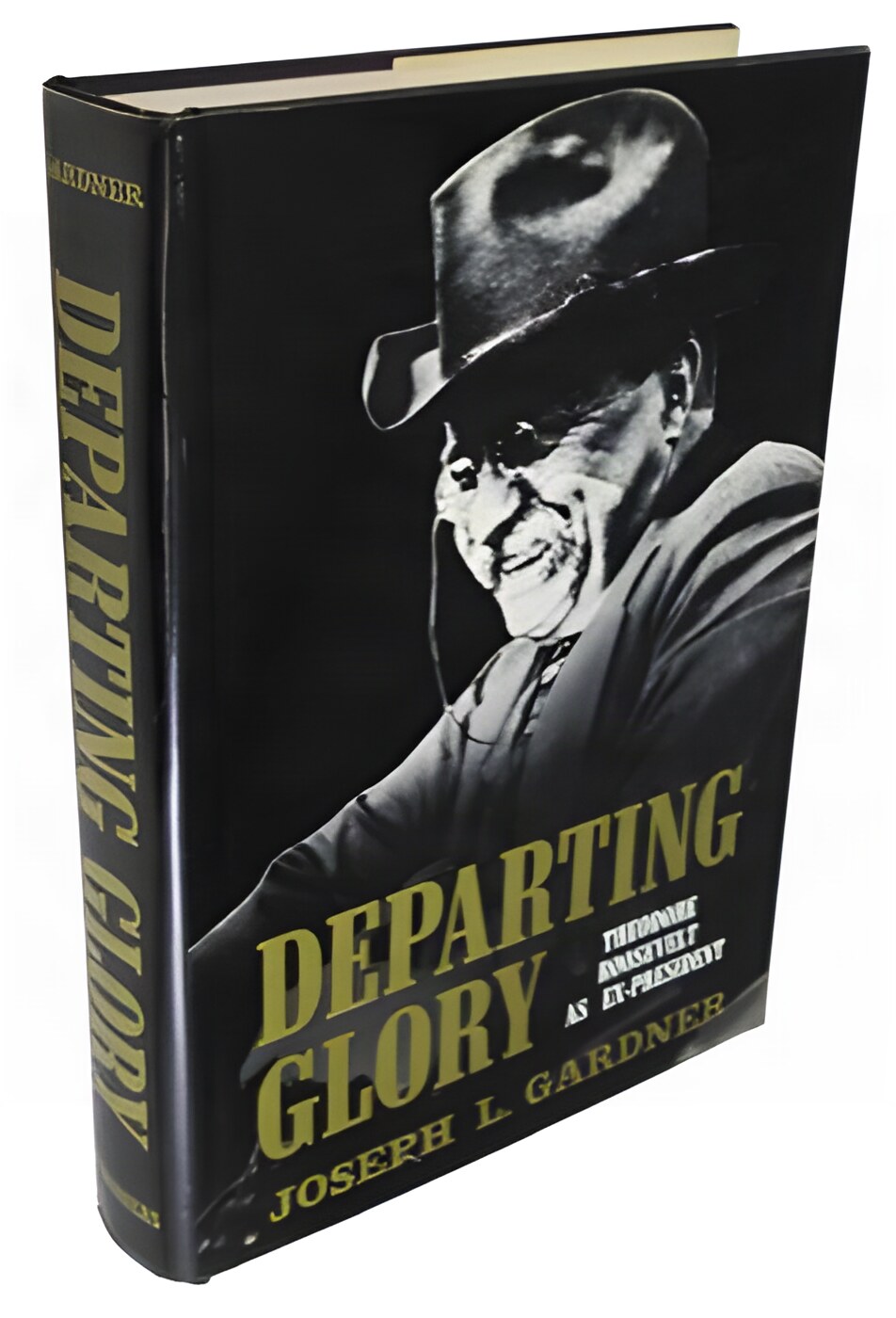
Hardcover. NY, Charles Scribner's Sons, 1st, 1973, Book: Very Good, Dust Jacket: Very Good, Hardcover in a bright, unclipped dust jacket, 432 pages, b&w illustrations. A moving account of Theodore Roosevelt's post-presidential years. Name on front fly leaf, otherwise clean.
Hardcover. New York, Anson D. F. Randolph & Company, 1st, 1872, Book: Good, Dust Jacket: None, 365 pages plus 6 pages of ads. Previous owners inscription in pencil on front endpaper. Original advertising leaflet for book laid-in. Moderate rubbing, chipping to cover edges. Clean, unmarked pages.
Hardcover. Philadelphia, Chilton Company, 2nd pr., 1959, Book: Very Good, Dust Jacket: Very Good, Hardcver in a bright, unclipped dust jacket with $4.95 on the flap. This is the fascinating story of a naval squadron, a study in depth and in action of DesRon-23, of Arleigh Burke's tremendously significant doctrine of faith, and of the mystique which it produced to make this the greatest destroyer squadron in the history of the U. S. Navy. Included are authentic, minute-by-minute details, the scalp-tingling stories of the slashing naval battles of Tassafaronga, Savo Island, Rmpress Augusta Bay, and Cape St. George , battles fought against the Japanese in World War II. ' ... Six pages of maps. Index. Mild wear to dj, clean copy.
Hardcover. NY, Time Life, reprint, 1983, Book: Very Good, Dust Jacket: None, 274 pages. Hardcover with no dust jacket. Dark blue leather bound with gilt titles to front cover and spine. Embossed decoration on front cover. Gilt text block edges, red ribbon marker. Clean, tight copy. This memoir by Confederate General Richard Taylor is usually considered one of the best and least biased by a general officer. The work is full of considered analysis on both the strategy of the war and the personalities of his fellow officers. Taylor is always fair in his criticism and seems to have no real scores to settle. While he makes little mention of his own talents, his tactical brilliance and strategic insight does shine through. Many contemporaries said Richard Taylor was one of the best soldiers of the war, but he is comparatively little known due to his posting to peripheral theaters. While he was a man of his time, the work (with the exception of some of his Reconstruction writings) is much less tainted by Lost Cause polemics than most Confederate memoirs.
Hardcover. NY, Time Life, reprint, 1982, Book: Very Good, Dust Jacket: None, 224 pages. Hardcover with no dust jacket. Dark blue leather bound with gilt titles to front cover and spine. Embossed decoration on front cover. Gilt text block edges, red ribbon marker. Clean, tight copy. This Civil War classic of soldiering in the ranks debunks all the romantic notions of war. Like his Northern counterpart, the Confederate soldier fought against bullets, starvation, miserable weather, disease, and mental strain. But the experience was perhaps even worse for Johnny Reb because of the odds against him. Never as well equipped and provisioned as the Yankee, he nevertheless performed heroically. Carlton McCarthy, a private in the Army of Northern Virginia, describes the not-always-regular rations, various improvisations in clothing and weaponry, etc.
Hardcover. Baltimore, Johns Hopkins University Press, 1st, 2020, Book: Very Good, Dust Jacket: Very Good, Hardcover in a bright, unclipped dust jacket. America has had a love affair with the hard-boiled detective since the 1920s, when Prohibition called into question who really stood on the right and wrong side of the law. And nowhere did this hero shine more than in crime fiction. In Detectives in the Shadows, literary and cultural critic Susanna Lee tracks the evolution of this truly American character type from Race Williams to Philip Marlowe and from Mike Hammer to Jessica Jones. Lee explores how this character type morphs to fit an increasingly troubled world, offering compelling interpretations of The Wire, True Detective, and Jessica Jones. 216 pages, clean copy.
Softcover. NY, Columbia University Press, reprint, Book: Very Good, Dust Jacket: None, Softcover, 666 pages. Name on front fly leaf, title-page. Otherwise a tight, clean copy.
Softcover. Detroit, Wayne State University Press, 2nd pr., 1974, Book: Very Good, Dust Jacket: None, Softcover, 355 pages with index, b&w illustrations. Clean copy.
Hardcover. New York, Walker & Company , 1st, 2005, Book: Very Good, Dust Jacket: Very Good, 434 pages. Hardcover. Dust jacket unclipped. B/w illustrations throughout. Gilt title on spine. Dust jacket has just a touch of shelf wear to very top of spine. In excellent shape. Binding tight, seems barely read. Clean and unmarked inside and out.
Hardcover. New York, Hovendon & Co., 1st, 1899, Book: Very Good, Dust Jacket: None, 366 pages. Blue cloth covers with bright gilt and 3-color design. Illustrated with black & white engravings and color plates. Previous owners inscription on front endpaper. Light fraying at top and bottom of spine. Otherwise clean, tight copy.
Hardcover. Germany, Taschen, 1st, 2013, Book: Very Good, Dust Jacket: Very Good, 3-vol set in slip case. Hardcovers. Like new in publisher's shrink-wrap. Editor Dian Hanson traces the fascinating development of the genre from 1900 to 1969 in three compact, informative volumes. In Volume 1 you'll learn about the first magazines that appeared around 1900 in France, Germany, and the U.S., and follow the development of the genre through the First and Second World Wars. Covered are men's magazines masquerading as movie magazines, humor magazines, art magazines, nudist magazines, and "spicy" fiction. Volume 2 documents the proliferation of pin-up magazines following World War II, most notably a little item called Playboy that debuted in December 1953 and spawned dozens of imitators. This volume also charts the emergence of English men's magazines, fetish magazines, and the top five covergirls of the 1950s. Volume 3 begins with an explosion of new American pin-up magazines following the loosening of U.S. obscenity laws, and continues with French titles in decline, England going pervy; nudists going hippy, and Germany going pervy, hippy and political.
Hardcover. Ann Arbor, MI, Edwards Brothers, Inc., 1st Limited Edition, 1984, Book: Very Good, Dust Jacket: None, 631 pages. Hardcover. SIGNED BY AUTHOR ON FRONT FLYLEAF. Cajun to English/English to Cajun Dictionary. Red cover boards, gilt title on spine and front cover. No Dust jacket. Binding very good. Pages clean and bright. Spine straight.
Hardcover. Columbia MO, University of Missouri, 1st, 1981, Book: Very Good, Dust Jacket: Very Good, Hardcover in a bright dust jacket, 216 pages. This unique reference book is a compendium of makers and manufacturers of every variety of musical instrument made in the United States circa 1981. It provides names and addresses of instrument makers indexed alphabetically. Each entry gives all known information on the total and annual number of instruments the maker has produced, the number of workers in the shop, the year the individual or firm began manufacturing instruments, whether the instruments are available on demand or made to order, and whether a brochure is available from the maker. Complete cross-references are provided for companies known by more than one name, for partnerships, and for parent and subsidiary firms. Instruments are also indexed, and makers are listed by state for the convenience of the reader. Lists of schools of instrument making and relevant organizations and publications are included as appendixes. An invaluable source of information for historians and for the rapidly growing number of collectors of musical instruments, who will be able to use the data gathered here in appraising instruments and tracing their history.
Hardcover. NY, Abrams Press, 1st, 2023, Book: Very Good, Dust Jacket: Very Good, Hardcover in a bright, unclipped dust jacket, 439 pages. In the 1950s, comics meant POW!BAM! superheroes, family-friendly gags, and Sunday funnies, but in the 1960s, inspired by these strips and the satire of MAD magazine, a new generation of creators set out to subvert the medium, and with it, American culture. Their "comix"--spelled that way to distinguish the work from their dime-store contemporaries--presented tales of taboo sex, casual drug use, and a transgressive view of society. Embraced by hippies and legions of future creatives, this subgenre of comic books and strips often ran afoul of the law, but that would not stop them from casting cultural ripples for decades to come, eventually moving the entire comics form beyond the gutter and into fine-art galleries. Brian Doherty weaves together the stories of R. Crumb, Art Spiegelman, Trina Robbins, Spain Rodriguez, Harvey Pekar, and Howard Cruse, among many others, detailing the complete narrative history of this movement. Through dozens of new interviews and archival research, he chronicles the scenes that sprang up around the country in the 1960s and '70s, beginning with the artists' origin stories and following them through success and strife, and concluding with an examination of these creators' legacies. Dirty Pictures is the essential exploration of a truly American art form that recontextualized the way people thought about war, race, sex, gender, and expression.
Hardcover. NY, Abrams Press, 1st, 2023, Book: Very Good, Dust Jacket: Very Good, Hardcover in a bright, unclipped dust jacket, 439 pages. In the 1950s, comics meant POW!BAM! superheroes, family-friendly gags, and Sunday funnies, but in the 1960s, inspired by these strips and the satire of MAD magazine, a new generation of creators set out to subvert the medium, and with it, American culture. Their "comix"--spelled that way to distinguish the work from their dime-store contemporaries--presented tales of taboo sex, casual drug use, and a transgressive view of society. Embraced by hippies and legions of future creatives, this subgenre of comic books and strips often ran afoul of the law, but that would not stop them from casting cultural ripples for decades to come, eventually moving the entire comics form beyond the gutter and into fine-art galleries. Brian Doherty weaves together the stories of R. Crumb, Art Spiegelman, Trina Robbins, Spain Rodriguez, Harvey Pekar, and Howard Cruse, among many others, detailing the complete narrative history of this movement. Through dozens of new interviews and archival research, he chronicles the scenes that sprang up around the country in the 1960s and '70s, beginning with the artists' origin stories and following them through success and strife, and concluding with an examination of these creators' legacies. Dirty Pictures is the essential exploration of a truly American art form that recontextualized the way people thought about war, race, sex, gender, and expression.


 "Deep Water Daysby: Swan (Editor), Oliver G.")


![Democracy Liberty and Property: The State Constitutional Conventions of the 1820's by: Peterson, Merrill D. [Editor]](https://www.browsingisarousing.com/shop/images/Democracy-Liberty-and-Property-The-State-Constitutional-Conventions-of-the-1820s_by_Peterson-Merrill397449-449118.jpg "Democracy Liberty and Property: The State Constitutional Conventions of the 1820's by: Peterson, Merrill D. [Editor]")
![Democracy Liberty and Property: The State Constitutional Conventions of the 1820's by: Peterson, Merrill D. [Editor]](https://www.browsingisarousing.com/shop/images/Democracy-Liberty-and-Property-The-State-Constitutional-Conventions-of-the-1820s_by_Peterson-Merrill397449-449118_50_th.jpg)
![Democracy Liberty and Property: The State Constitutional Conventions of the 1820's by: Peterson, Merrill D. [Editor]](https://www.browsingisarousing.com/shop/images/Democracy-Liberty-and-Property-The-State-Constitutional-Conventions-of-the-1820s_by_Peterson-Merrill397449-449119_50_th.jpg)


 "Destruction and Reconstruction - Personal experiences of the late war (Collector's Library of the Civil War)by: Taylor, Richard")
 "Detailed Minutiae of Soldier Life in the Army of Northern Virginia, 1861-1865 (Collector's Library of the Civil War)by: McCarthy, Carlton")


 "Detroit's Coming of Age, 1873-1973by: Don Lochbiler")

 "Dewey and Other Naval Commandersby: Ellis, Edward S.")


 "Dictionary of the Cajun Language, A (SIGNED)by: Daigle, Jules O.")