Hardcover. Edmonton CA, Hurtig , 1st, 1973, Book: Very Good, Dust Jacket: Very Good, Hardcover, 221 pages, b&w photographs, map end papers. Edge wear, rubbing, small tears to dust jacket. Else a clean, tight copy.
Hardcover. New York, Doubleday, 1st, 1962, Book: Very Good, Dust Jacket: Good, Hardcover, 460 pages, gray cloth covers. Dust jacket with light edgewear, chipping. SIGNED BY NIXON on tipped-in page. Xerox of dealer's letter laid in on the authenticity of Nixon's autograph. (He suggests it's authentic).
Hardcover. NY, Hurd and Houghton, 1st, 1866, Book: Very Good, Dust Jacket: None, Hardcover, 359 pages including index. Burgundy cloth with embossed rules front and back, with faded gilt lettering on spine. Name on front fly leaf (dated 1866) and title page. A clean, tight copy. Carpenter's memoir of Lincoln's tenure was written out of great admiration for Lincoln and his political platforms, in particular the Emancipation Proclamation.
Hardcover. NY, Knopf, 1st, 2012, Book: Very Good, Dust Jacket: Very Good, Hardcover in a bright, unclipped dust jacket. 418 pages, b&w illustrations. From the author of the best-selling One Minute to Midnight, a riveting account of the pivotal six-month period spanning the end of World War II, the dawn of the nuclear age, and the beginning of the Cold War. When Roosevelt, Stalin, and Churchill met in Yalta in February 1945, Hitler's armies were on the run and victory was imminent. The Big Three wanted to draft a blueprint for a lasting peace--but instead set the stage for a forty-four-year division of Europe into Soviet and western spheres of influence. After fighting side by side for nearly four years, their political alliance was rapidly fracturing. By the time the leaders met again in Potsdam in July 1945, Russians and Americans were squabbling over the future of Germany and Churchill was warning about an "iron curtain" being drawn down over the Continent. These six months witnessed some of the most dramatic moments of the twentieth century: the cataclysmic battle for Berlin, the death of Franklin Roosevelt, the discovery of the Nazi concentration camps, Churchill's electoral defeat, and the dropping of atomic bombs on Japan. While their armies linked up in the heart of Europe, the political leaders maneuvered for leverage: Stalin using his nation's wartime sacrifices to claim spoils, Churchill doing his best to halt Britain's waning influence, FDR trying to charm Stalin, Truman determined to stand up to an increasingly assertive Soviet superpower.
Hardcover. Middletown Conn. , Wesleyan University Press, 1st, 1975, Book: Very Good, Dust Jacket: Very Good, Hardcover, 283 pages, 94 black/white illustrations. Study of American artists influenced by Dada and their relationship with American avant-garde. Orange cloth, gilt lettering to spine. Pictorial dust jacket shows light wear and rubbing along edges and faded spine, else a very nice, tight, clean copy.
Hardcover. Middletown, Connecticut, Wesleyan University Press, 1st, 1975, Book: Very Good, Dust Jacket: None, Study of American artists influenced by Dada and their relationship with American avant-garde. 283 pages, 94 black/white illustrations. Cloth bound book in near fine condition, only sign of wear is slight discoloration to the top edges of pages (light spotting), not visible when reading the book.
Hardcover. Middletown Conn. , Wesleyan University Press, 1st, 1975, Book: Very Good, Dust Jacket: None, Hardcover, 283 pages, 94 black/white illustrations. Study of American artists influenced by Dada and their relationship with American avant-garde. Orange cloth, gilt lettering to spine. A very nice, tight, clean copy.
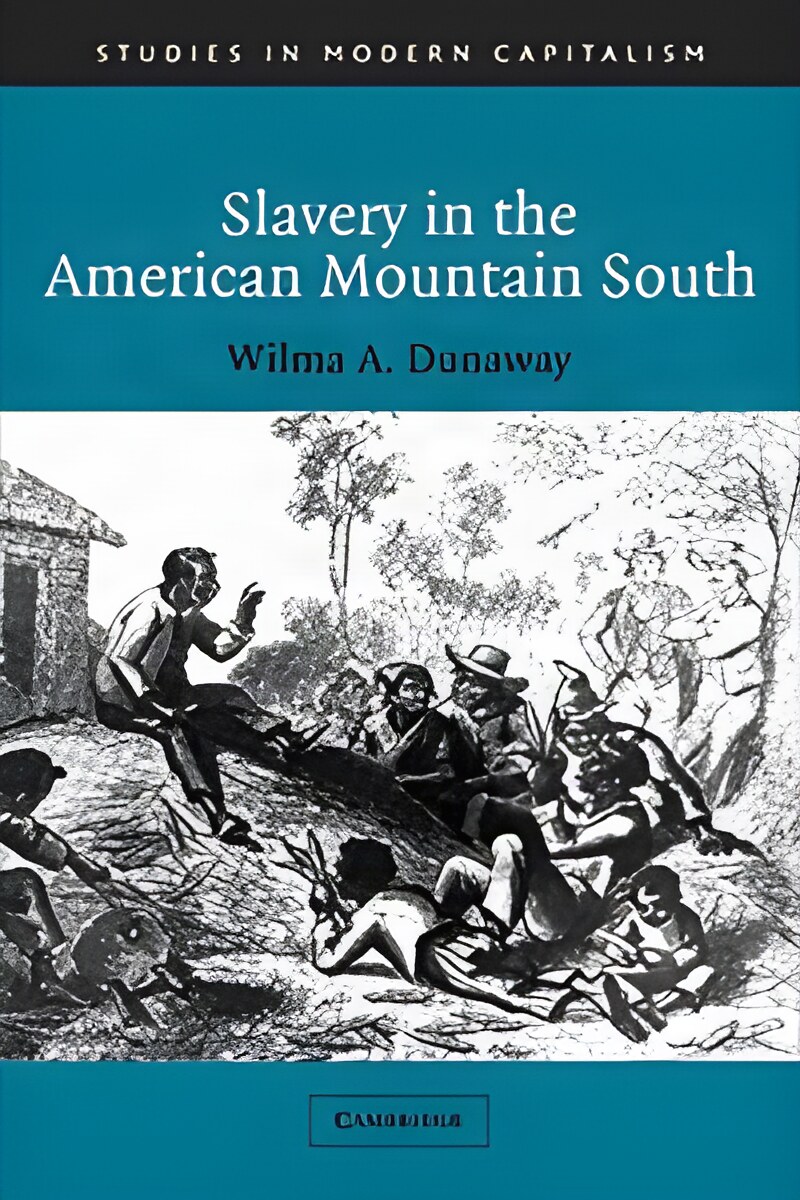
Softcover. UK, Cambridge University Press, Reprint, 2004, Book: Very Good, Dust Jacket: None, 236 pages. Softcover. Binding tight. Some underlining in pencil on a few pages, otherwise clean inside. A touch of foxing to top edge. Wrapper in great shape. Looks great.
Hardcover. Urbana IL, University of Illinois Press, 1st, 1964, Book: Very Good, Dust Jacket: Good, Hardcover in a dust jacket with two small holes to front cover, 227 pages with index. "Slavery was a social and an economic institution of such power that it sustained and extended an economic system whose demands went far to determine the domestic and foreign policy of the "agrarian" party in our early history. For the agrarian politics of Jefferson, while possibly benefiting the small freeholder, very closely served the interests of the plantation system, at least as the planters conceived their interests." Name on front fly leaf, otherwise clean.
Softcover. Montgomery AL, Equal Justice Initiative, 1st, 2014, Book: Very Good, Dust Jacket: None, Softcover, 58 pages. Slavery in America: The Montgomery Slave Trade documents American slavery and Montgomery's prominent role in the domestic slave trade. The report is part of a project focused on developing a more informed understanding of America's racial history and how it relates to contemporary challenges.
Softcover. NY, The New Press, 1st, Book: Very Good, Dust Jacket: None, Softcover, 403 pages. Edited by Ira Berlin, the Bancroft Prize-winning author of Many Thousands Gone, and Leslie Harris, Slavery in New York brings together twelve new contributions by leading historians of slavery and African American life in New York. Published to accompany a major exhibit at the New York Historical Society, the book demonstrates how slavery shaped the day-to-day experience of New Yorkers, black and white, and how, as a way of doing business, it propelled New York to become the commercial and financial power it is today. Powerfully illustrated with images from the New York Historical Society exhibit, Slavery and the Making of New York will be the definitive account of New York's slave past.
Softcover. UK, Cambridge University Press, 1st pbk, 2003, Book: Very Good, Dust Jacket: None, Softcover, 352 pages, b&w illustrations. Wilma Dunaway breaks new ground by focusing on slave experiences on small plantations in the Upper South. She argues that a region was not buffered from the political, economic, and social impacts of enslavement simply because it was characterized by low black population density and small slaveholdings. By drawing on a massive statistical data base derived from antebellum census manuscripts and county tax records of 215 counties in nine states, on a vast array of slaveholder manuscripts, and on regional slave narratives, she pinpoints several indicators that distinguished Mountain South enslavement from the Lower South. These include a higher incidence of ethnic mixing between African and Native American slaves, heavier reliance on the field labor of women and children, and more frequent assignment of slaves to non-agricultural occupations. Dunaway also calls into question the notion that large numbers were necessary before slaves could engage in community building and resistance. Clean, bright copy.
Hardcover. NY, Farrar, Straus & Giroux, 3rd pr., 1968, Book: Very Good, Dust Jacket: Very Good, Hardcover in a lightly worn dust jacket, 290 pages. This book about slavery and the southern plantation system includes writings by Nat Turner, Frederick Douglass, Thomas Jefferson, and many others. Name on a blank prelim page, otherwise clean.
Hardcover. New York, John S. Taylor, 2nd pr., 1837, Book: Good, Dust Jacket: None, Hardcover, leather bound with gilt design on front and rear covers, spine also with gilt design with the title Cabinet of Freedom (the series under which the publisher issued this narrative). 517 pages with an extra illustrated title page dated 1836, the regular title page dated 1837. All edges gilt. First published by John Shugert in Lewistown PA a year earlier. Written with the help of Isaac Fisher, a white Philadelphia lawyer, who declares in his preface that he has edited the oral narrative Ball had dictated to him to omit any beliefs or feelings Ball may have expressed about slavery. This declaration of significant editing has led scholars to debate the authenticity of Ball's narrative, but most agree that it represents a true story. Ball describes his experiences as a slave, including the uncertainty of slave life and the ways in which the slaves are forced to suffer harsh and inhumane conditions. In particular, he recounts the qualities of his various masters, and the ways in which his fortune depended on their temperament. The leather has separated from the spine of the book but appears to be very repairable. The first 3 pages loose (a blank leaf and the two title pages), there is a light stain to the illustrated one and light foxing. The interior of the book is clean, tight with minimal foxing throughout.
Hardcover. Cambridge MA, Harvard University Press], 1st, 2015, Book: Very Good, Dust Jacket: Very Good, Hardcover, 365 pages, b&w illustrations. In a bright dust jacket. SIGNED BY AUTHOR on the title page. In 1834 Harvard dropout Richard Henry Dana Jr. sailed to California as a common seaman. His account of the voyage, Two Years Before the Mast, quickly became an American classic. Dana's sense of justice made him a lawyer who championed sailors and slaves, and his extraordinary advocacy put him at the center of some of the most consequential cases in American history.
Softcover. NY, American Italian Historical Assoc., 1st, 2010, Book: Very Good, Dust Jacket: None, Softcover, 248 pages. This volume consists of a selection of 14 scholarly works examining the urban experience of Italian Americans in small towns and big cities, out of the approximately 60 stimulating papers presented at the 41st annual Conference of the American Italian Historical Association, held in 2008. Clean copy.
Hardcover. New York, Harry N Abrams, 1st, 1982, Book: Very Good, Dust Jacket: Very Good, 336 pages, illustrated throughout in color and b&w. Clean, unmarked copy with only minor wear to dust jacket. Presents selections from comic books from 1938 to 1955 that feature the adventures of characters such as Superman, Batman, Pogo, Captain Marvel, and Donald Duck. A list of comics included: Action Comics #1 (First appearance of Superman); Detective Comics #29 (Origin of Bat-man); All-American Comics #20-#14 (First appearance of the Red Tornado, and other Red Tornado stories); Police Comics #1 and #13 (First appearance of Plastic Man, and Woozy Winks); Captain Marvel Adventures #100 (Captain Marvel Battles the Plot Against the Universe); Sub-Mariner #4 (Dr. Dimwit by Basil Wolverton); Tessie the Typist #8 (Powerhouse Pepper by Basil Wolverton); Jingle Jangle Comics #5, 24#, (The Pie-faced Prince by George Carlson); Little Lulu Four Color 74 and Little Lulu #38, #40, #80; Walt Disney's Christmas Parade #1 (Donald Duck Christmas story by Carl Barks); Animal Comics #1, Pogo Possum #3, #8 (Pogo the Possum and Gang by Walt Kelly); The Spirit supplements August 10, 1941, September 5, 1948, September 11, 1949 (Great Spirit stories by Will Eisner); The EC Collection (Frontline Combat No. #4, Two-Fisted Tales #25, Mad #4 (Superduperman vs. Captain Marbles), Mad # 18, Impact #1).
Hardcover. US, Princeton Architectural Press and Reed College, 1st, 2006, Book: Very Good, Dust Jacket: None, 200 pages. Like new in publisher's shrink-wrap. "Snapshot Chronicles" is a visual exploration of the creative outpouring made possible by the camera. Friends, family, travel, domestic life, special occasions, the workplace, farm and city life these were all intermingled in early albums in surprising and dynamic forms. Four essayists weave together the history of the photo album, making them not just a part of our past but a significant aspect of Americana.
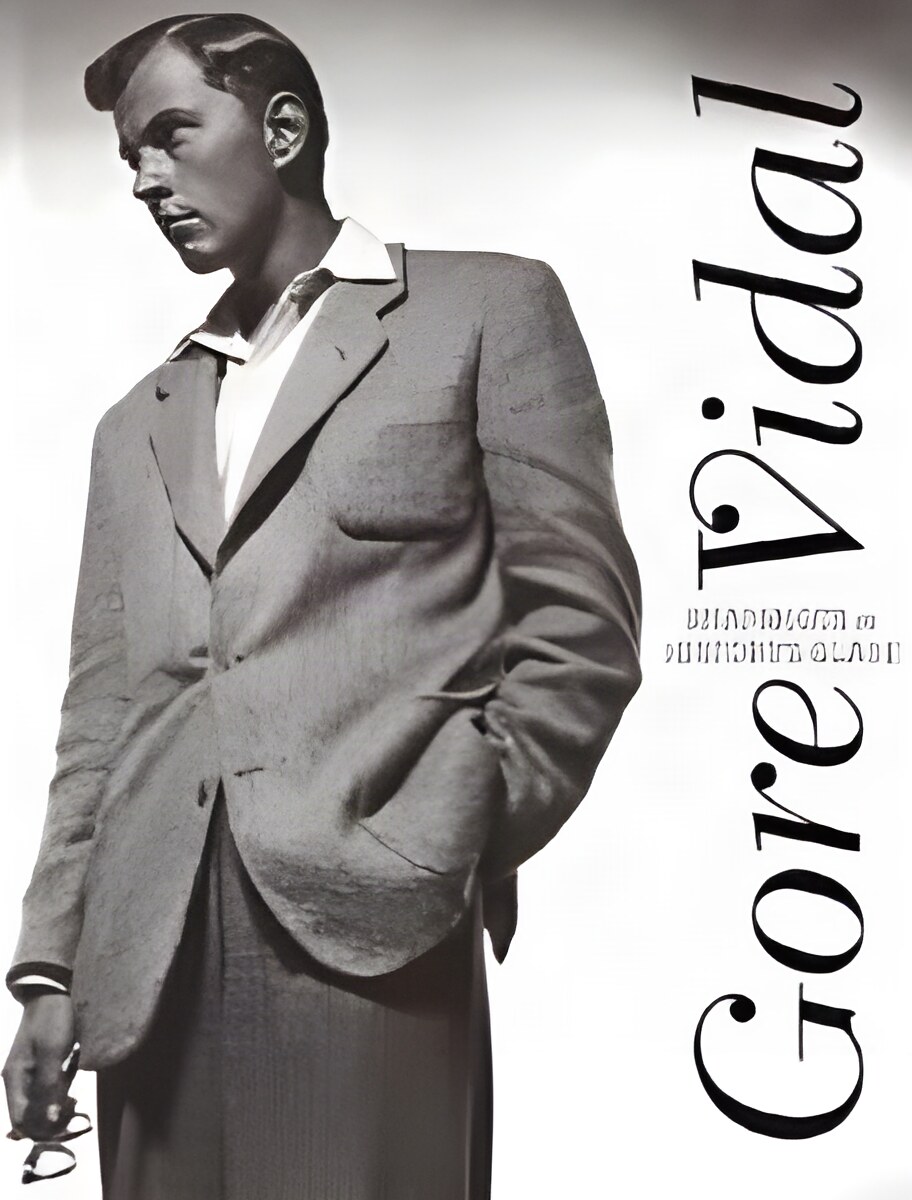
Hardcover. New York, Abrams, reprint , 2009, Book: Very Good, Dust Jacket: Very Good, 255 pages. Hardcover with dust jacket. Extensive b&w and color photographs throughout. INSCRIBED BY VIDAL on title page. Otherwise clean, unmarked copy with only minor wear to dust jacket.
Hardcover. NY, Philomel, 2nd pr., 2000, Book: Very Good, Dust Jacket: Very Good, 52 pages. Hardcover with dust jacket. SIGNED BY ILLUSTRATOR ON TITLE PAGE. Color illustrations by David Small. Winner of the Caldecott Medal. Clean, tight copy. Second printing, no medal sticker on cover.
Hardcover. New Haven, Yale University Press , 1st, 2006, Book: Very Good, Dust Jacket: Very Good, Hardcover with dust jacket. Like new in publisher's shrink-wrap. This beautifully illustrated book highlights the unique history of The Societe Anonyme, Inc., an organization founded in 1920 by the artists Katherine S. Dreier (1877-1952), Marcel Duchamp (1887-1968), and Man Ray (1890-1976). As America's first "experimental museum" for modern art, the Societe Anonyme provided a means for artists, rather than historians, to chronicle the rise of modernism. Led by Dreier and Duchamp, the group eventually assembled a collection of more than one thousand artworks, which it presented to the public in a variety of innovative programs, publications, and exhibitions. The incredible collection of the Societe Anonyme now belongs to the Yale University Art Gallery, a gift from the Societe and Dreier. It features the work of more than one hundred artists, many of whom are among the century's most renowned--including Jean Arp, Duchamp, Max Ernst, Wassily Kandinsky, Paul Klee, El Lissitzky, Piet Mondrian, Man Ray, Kurt Schwitters, and Joseph Stella--as well as works by lesser-known artists whose contributions to modernism are substantial. With new archival information, including personal correspondence between Dreier and the artists whose work she assembled, a host of previously unpublished images, essays by leading scholars, and an interview with artists Robert and Sylvia Mangold about the contemporary significance of this collection, this fascinating book is essential to our understanding of the reception and interpretation of modernism in America.
Hardcover. Salt Lake City, University of Utah Press, 1st, 1988, Book: Very Good, Dust Jacket: Very Good, Hardcover in a bright dust jacket, 188 pages. 141 color and black and white photographs by Milton Rogovin, Tony Maine, Ron Kelley, the essayists, and Yemeni workers. "What did the American astronauts find when the first landed on the moon?" "Yemenis, looking for work." High wages and easy work - these are the myths that lure Yemeni workers abroad, and especially to the United States, which has seen generations of migrant laborers. But the realities of migrant labor are something else. In Sojourners and Settlers, leading scholars of history, anthropology, folklore, sociology, and political science have joined with photographers and critics to present an interdisciplinary look at the phenomenon of labor migration. They reveal drastically changing rural and urban environments in Yemen, and in the United States, strenuous work weeks, bleak farm work camp conditions, plant shut downs, culture shock, and cautious assimilation. Under Friedlander's editorship, these reports of the ordinary events of Yemeni workers' lives become studies in courage, persistence, and dignity. Clean copy.
Hardcover. New York, Cambridge University Press, 1st, 1996, Book: Very Good, Dust Jacket: Very Good, 314 pages. Hardcover with dust jacket. Clean, unmarked copy with only minor wear to dust jacket. Black and white pictures.


 "Six Crises (SIGNED COPY)by: Nixon, Richard M.")



 "Skyscraper Primitives: Dada and the American Avant-Garde, 1910-1925by: Tashjian, Dickran")
 "Skyscraper Primitives: Dada and the American Avant-Garde, 1910-1925by: Tashjian, Dickran")




![Slavery in the South: First-Hand Accounts of the Ante-Bellum American Southland from Northern & Southern Whites, Negroes, & Foreign Obervers by: Wish, Harvey [Ed.]](https://www.browsingisarousing.com/shop/images/Slavery-in-the-South-First-Hand-Accounts-of-the-Ante-Bellum-American-Southland-from-Northern-Souther396380-446228.jpg "Slavery in the South: First-Hand Accounts of the Ante-Bellum American Southland from Northern & Southern Whites, Negroes, & Foreign Obervers by: Wish, Harvey [Ed.]")


 "Slavish Shore: The Odyssey of Richard Henry Dana Jr. (SIGNED COPY)by: Amestoy, Jeffrey L.")




 "Snapshot Chronicles: Inventing the American Photo Albumby: Snyder, Stephanie/Barbara Levine")





 "Solar System Astronomy in America: Communities, Patronage, and Interdisciplinary Science, 1920-1960by: Doel, Ronald E.")