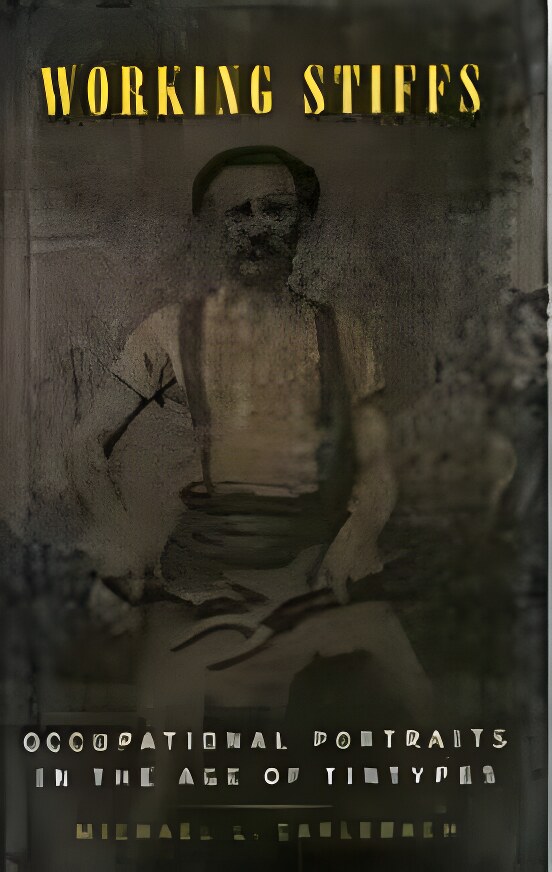
Hardcover. Washington DC, Smithsonian Institution Scholarly Press, 1st, 2002, Book: Very Good, Dust Jacket: Very Good, Hardcover, 144 pages. The tintype, patented in 1856, was a cheap, fast, easy-to-make, practically indestructible type of photograph that became enormously popular among the working class in the late nineteenth century. For common laborers and their families, the opportunity to join the ranks of those who owned pictures of family and friends--the upper classes--was momentous. This collection exhibits more than eighty examples of a specific kind of tintype: occupational portraits, photographs of working people with the tools of their trade. Michael L. Carlebach examines the historical significance of these tintypes and finds that they reveal a great deal about late nineteenth-century values. The subjects of these images are plumbers proudly holding their wrenches and pipe cutters, carpenters with their saws and lathing hatchets, textile workers with their spindles and yarn, icemen with their tongs. These people lived and worked at a time when a depersonalized factory system run by production and efficiency experts was beginning to dominate American industry and culture. Many of the men and women in these tintypes were part of a disappearing class of self-employed artisans and journeymen; their portraits proudly stress their individuality and the essential nobility of their work.
Hardcover. US, Sansom Foundation, Inc., 1st, 2011, Book: Very Good, Dust Jacket: Very Good, 240 pages. Like new in publisher's shrink-wrap. The painter William Glackens (1870-1938) and his friends were among the liveliest and most influential American artists of the opening decades of the twentieth century. Their continued importance in the history of American art is explored in this informative collection of essays. Colin Bailey chronicles the beginnings of Albert C. Barnes' unparalleled collection of modern art, as well as Glackens' role in forming it, and Avis Berman investigates the friendship of John Sloan, Robert Henri and John Butler Yeats. Carol Troyen examines George Bellows' war paintings and Richard J. Wattenmaker probes the relationship between Glackens' paintings and sketchbooks. H. Barbara Weinberg documents how the leading American Impressionists and members of The Eight dealt with the pressures of economic survival. This profusely illustrated publication is an essential reference for curators, collectors and historians.
Softcover. St Paul, MN, Pogo Press, 1st thus, 1992, Book: Very Good, Dust Jacket: None, Softcover, pictorial wrappers, 108 pages, b&w illustrations. Presents a series of contemporary articles describing the 1893 Chicago world's fair for the Fargo, N.D., Sunday Argus, and discusses the author's career and the role of women journalists. Shaw's 12 newspaper articles along with contemporary photos are reprinted here.
Softcover. Norman OK, University of Oklahoma Press, 1st, 1997, Book: Very Good, Dust Jacket: None, Softcover, 656 pages. In mythic sagas of the American West, the wide western range offered boundless opportunity to a limited cast of white men. Buffalo roamed, deer and antelope played, and women's voices were never heard. Writing the Range allows us to hear many long-silenced women: Spanish-Mexican settlers and American Indians on New Spain's northern frontiers; Chinese, Basque, Japanese, Korean, Vietnamese, Slavic, and Irish immigrants; film stars Dolores del Rio and Lupe Velez; Navajos and African Americans who moved to western cities during World War II; and the activist Mothers of East Los Angeles, who organized to resist environmental dangers to their community. A valuable introduction to the rapidly changing field of western history, Writing the Range explains clearly how race, class, and culture are constructed and connected. The first section examines issues raised by more than a decade of multicultural western women's histories; following are six chronological sections spanning four centuries. Each section offers a short introduction connecting is essays and placing them in analytic and historical perspective. Clean copy.
Hardcover. New Haven, Connecticut, Yale University Press, 1st, 1974, Book: Near Fine, Dust Jacket: Good, Hardcover. Illustrated history of the Yale's 1969 architectural competition. 117 pages, illustrated fully with black/white photographs and drawings, mostly full-page. Book is cloth bound and in near fine condition, dust jacket is in good condition: bottom of the spine and few edges show wear, small rip on the back at the top edge and small stain on the back as well.
Hardcover. London, Cambridge University Press, 1st, 2010, Book: Very Good, Dust Jacket: Very Good, Hardcover in a bright, unclipped dust jacket. This revisionist study of Allied diplomacy from 1941 to 1946 challenges Americocentric views of the period and highlights Europe's neglected role. Fraser J. Harbutt, drawing on international sources, shows that in planning for the future Churchill, Roosevelt, Stalin, and others self-consciously operated into 1945, not on "East/West" lines but within a "Europe/America" political framework characterized by the plausible prospect of Anglo-Russian collaboration and persisting American detachment. Harbutt then explains the destabilizing transformation around the time of the pivotal Yalta conference of February 1945, when a sudden series of provocative initiatives, manipulations, and miscues interacted with events to produce the breakdown of European solidarity and the Anglo-Soviet nexus, an evolving Anglo-American alignment, and new tensions that led finally to the Cold War. This fresh perspective, stressing structural, geopolitical, and traditional impulses and constraints, raises important new questions about the enduringly controversial transition from World War II to a cold war that no statesman wanted. Clean copy.
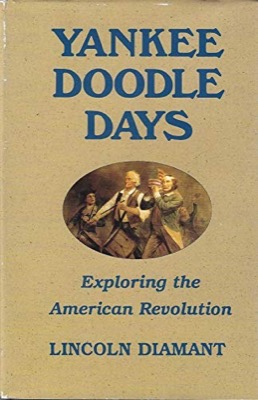
Hardcover. Fleischmanns NY, Purple Mountain Press, 1st, 1996, Book: Very Good, Dust Jacket: Very Good, Hardcover in a bright, unclipped dust jacket. 178 pages.Award-winning biographer and historian Lincoln Diamant introduces a diverse group of men and women who contributed in unique ways to the eight-year American Revolution. . . . Among them are soldiers and civilians, veteran generals and three-week militiamen, patriots and spies, a host of Native American and African-American volunteers, and more than a few courageous women. Clean copy.
Softcover. New York, McGraw-Hill Book Company, 1st, 1975, Book: Very Good, Dust Jacket: None, Softcover, 85 pages, b&w photographs. Minor fading along cover edges and spine. Otherwise, in clean condition.
Softcover. Caldwell ID, Caxton Press, reprint, Book: Very Good, Dust Jacket: None, Softcover, 328 pages. illustrated frontispiece. Extensive b&w photographs throughout. The Nez Perce campaign is among the most famous in the brief and bloody history of the Indian wars of the West. Yellow Wolf was a contemporary of Chief Joseph and a leader among his own men. His story is one that had never been told and will never be told again. A first person account, through author L.V. McWhorter of the Nez Perce's ill-fated battle for land and freedom. Clean copy.
Hardcover. New York , Farrar and Rinehart, 1st, 1940, Book: Very Good, Dust Jacket: Good, 271 pages, b&w line illustrations, some two-color by Robert Fawcett. Maroon cloth with paper labels on front cover and spine. Dust jacket with wear, chipping. Previous owner's signature crossed out on front fly leaf, otherwise clean, very good.
Hardcover. NY, Random House , 1st, 2021, Book: Very Good, Dust Jacket: Very Good, Hardcover in a bright, unclipped dust jacket. 532 pages. The first definitive account of the rise and fall of the Secret Service, from the Kennedy assassination to the alarming mismanagement of the Obama and Trump years, right up to the insurrection at the Capitol on January 6--by the Pulitzer Prize winner.
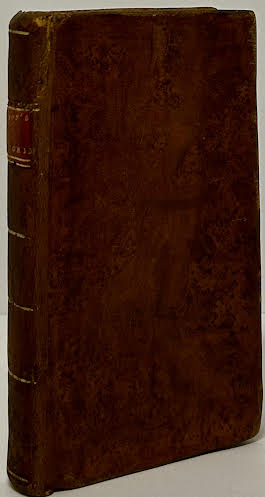
Hardcover. Middlebury, VT, Swift & Chipman, 2nd American from the 7th London Edition, 1811, Book: Good, Dust Jacket: None, 202 pages. Hardcover. Brown leather cover boards, front cover board slightly bowed (see image), gilt title on spine with gilt bands. Binding tight. Spine straight. Some appropriate agewear throughout: tanning, foxing, etc. A series of graphic and interesting scenes illustrating the temper and conduct of the pilgrim on his way to Zion.
Hardcover. Los Angeles, Reel Art Press, 1sr, 2013, Book: Very Good, Dust Jacket: Very Good, Hardcover. Like new in publishers shrink-wrap. The first anthology dedicated to one of the greatest American photographers of the 20th century, Dennis Stock, during his most celebrated period of the 1950s-1970s. Undisputedly one of America's greatest photographers, in early 1955 Dennis Stock captured one of the iconic images of the 20th century: the black-and-white image of the unknown James Dean walking across a deserted Times Square, trademark cigarette in hand, a brooding and introspective figure hunched into his oversized coat, braced against the rain and set against the backdrop of the Manhattan skyline. Stock took a series of photographs in New York, Hollywood and in Dean's hometown of Fairmount, Indiana. Stock went on to photograph Marlon Brando, Marilyn Monroe, Audrey Hepburn resting her head on a car window on the cusp of fame, JFK on the campaign trail. His catalogue of work throughout this period reflects his ability to empathize with his subjects but not become subservient to them. In the late 1950s, Stock's focus shifted to the leading jazz musicians and performers of the day; this book contains some of the best photographs ever taken of artists such as Duke Ellington, Billie Holiday, Charlie Parker, Miles Davies and Louis Armstrong. This book is a beautiful tribute to Stock's timeless legacy and complete access to the Stock Archive was granted for this stunning 288-page edition.
Softcover. Santa Fe, NM, Museum of New Mexico Press, 1st, 1998, Book: Very Good, Dust Jacket: None, Softcover, 166 pages. Toba Tucker's expressive portraits honoring Pueblo artists were made over a two-and-a-half year sojourn in the Southwest. These photographs form a record for history and art at the end of the twentieth century and portray Tucker's interest in the individuals and families who pass their artistic traditions from one generation to the next. Remainder stamp on bottom edge otherwise clean.

 "World of William Glackens. The: The C. Richard Hilker Art Lecturesby: Bailey, Colin")




 "Years of Bitterness and Pride: Farm Security Administration Photographs 1935-1943by: Evans [photographer, Hiag Akmakjian (Introduction), Walker")




 "Zoar Furniture 1817-1898: A Preliminary Studyby: Snyder, Tricia and Gil, and Paul A. Goudy")

 "Pueblo Artists: Portraitsby: Tucker Toba; Swenzell Rina; Bush Alfred L")