Hardcover. NY, Time Life, reprint, 1982, Book: Very Good, Dust Jacket: None, 480 pages. Hardcover with no dust jacket. Dark blue leather bound with gilt titles to front cover and spine. Embossed decoration on front cover. Gilt text block edges, red ribbon marker. Clean, tight copy.
Hardcover. NY, Time Life, reprint, 1982, Book: Very Good, Dust Jacket: None, 392 pages. Hardcover with no dust jacket. Dark blue leather bound with gilt titles to front cover and spine. Embossed decoration on front cover. Gilt text block edges, red ribbon marker. Clean, tight copy.
Hardcover. NY, Time Life, reprint, 1982, Book: Very Good, Dust Jacket: None, 392 pages. Hardcover with no dust jacket. Dark blue leather bound with gilt titles to front cover and spine. Embossed decoration on front cover. Gilt text block edges, red ribbon marker. Clean, tight copy.
Hardcover. NY, Time Life, reprint, 1984, Book: Very Good, Dust Jacket: None, 354 pages. Hardcover with no dust jacket. Dark blue leather bound with gilt lettering on front cover and spine. Embossed decoration to front cover. Gilt text block edges, red ribbon marker. Clean, tight copy.
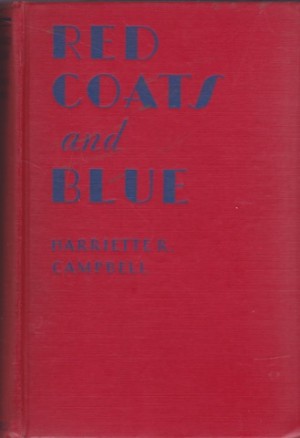
Hardcover. NY, Juniot Literary Guild, Book Club, 1930, Book: Very Good, Hardcover, 324 pages. Color frontispiece, 9 b&w plates by Marguerite DeAngeli. Red cloth with blue lettering. Spine slightly cocked, previous owner's inscription on front paste-down. Still very good.
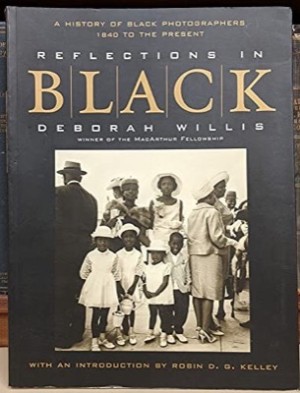
Softcover. NY, W. W. Norton & Company, 1st, 2000, Book: Very Good, Dust Jacket: None, Softcover, 348 pages. Reflections in Black, the first comprehensive history of black photographers, is a groundbreaking pictorial collection of African American life. Featuring the work of undisputed masters such as James VanDerZee, Gordon Parks, and Carrie Mae Weems among dozens of others, this book is a refutation of the gross caricature of black life that many mainstream photographers have manifested by continually emphasizing poverty over family, despair over hope. Nearly 600 images offer rich, moving glimpses of everyday black life, from slavery to the Great Migration to contemporary suburban life, including rare antebellum daguerrotypes, photojournalism of the civil rights era, and multimedia portraits of middle-class families. DUE TO WEIGHT, DOMESTIC SHIPPING ONLY.
Hardcover. Hampton, VA, Hampton Institute Press, 1st, 1927, Book: Very Good, Dust Jacket: Poor, Hardcover, dark blue cloth with gilt lettering on front cover and spine, 236 pages plus appendix. A scarce collection of traditional hymns, gospel, folk songs and "Songs of Tribulation" of the American Negro. An historical document of African-American culture and the history of slavery. Songs in musical score with lyrics. A tight, generally unmarked and clean volume with nice cloth and clear gilt, In a poor dust jacket with chipping and tape repairs. Name on front fly leaf otherwise clean.
Hardcover. NY, The New Press , 1st, 1998, Book: Very Good, Dust Jacket: Very Good, Hardcover book with a bright dust jacket in a slipcase that also includes interview tapes. A startling first-person history of slavery. Using excerpts from the thousands of interviews conducted with ex-slaves in the 1930s by researchers working with the Federal Writers' Project, the astonishing audiotapes made available the only known recordings of people who actually experienced enslavement-recordings that had gathered dust in the Library of Congress until they were rendered audible for the first time specifically for this set. Two sixty-minute audiotapes: the first is original recordings of former slaves recorded in the 1930s, the second features dramatic readings by Esther Rolle, James Earl Jones and other black artists. Foreword by Robin D. G. Kelley.
Hardcover. Chicago, The Lakeside Press, 1st, 1913, Book: Very Good, Dust Jacket: None, Hardcover, dark green cloth stamped in gilt, top edge gilt, 137 pages. Tight, attractive copy of this early "Lakeside Classic," the annual keepsake presented by this printer/publisher to friends and clients starting in 1903. The frontispiece is a portrayal of Chicago in 1853 with a tissue guard. Includes: Introduction; William Bross - extracted from "What I remember of early Chicago", a lecture delivered Jan. 23, 1876; Charles Cleaver - extracts from articles which appeared first in the Chicago tribune; Joseph Jefferson, Chicagoan - reprinted from "The autobiography of Joseph Jefferson"; and Chicago's first railroad systems - reprinted from Andraes's "History of Chicago." Clean, bright copy.
Hardcover. Chicago, The Lakeside Press, 1st, 1915, Book: Very Good, Dust Jacket: None, Hardcover, dark green cloth stamped in gilt, top edge gilt, 140 pages. Tight, attractive copy of this early "Lakeside Classic," the annual keepsake presented by this printer/publisher to friends and clients starting in 1903. In this volume there have been gathered the personal experiences of some ten individuals who passed through the great Chicago Fire of 1871. The total area burned over was 2,124 acres, the number of buildings destroyed was about 17,450 and the persons rendered homeless nearly 100,000; out of a population of about 300,000. This work has two large fold-outs the first of which is opposite the title page and is entitled: "Chicago After the Great Fire of 1871". It is in two pieces with the last section separated along fold, minor tape repair. The second fold out (after page 36) is a map showing the course of the Chicago Fire of 1871 and is in excellent condition. No markings.
Hardcover. NY, Time Life, reprint, 1981, Book: Very Good, Dust Jacket: None, 474 pages. Hardcover with no dust jacket. Dark blue leather bound with gilt titles to front cover and spine. Embossed decoration on front cover. Gilt text block edges, red ribbon marker. Clean, tight copy. Fascinating reminiscences of our Civil War by an important participating leader on the Southern side with wide experience. Covers wartime highlights, anecdotes, and other recollections drafted some 3 decades after the conclusion of hostilities.
Hardcover. Washington DC, Government Printing Office, 1st, 1895, Book: Fair, Dust Jacket: None, Hardcover, 187 pages of text followed by 34 folding plates. The first section is the message transmitting the report of the Board of Engineers for the purpose of ascertaining the feasibility, permanence, and cost of construction and completion of the Nicaragua Canal by the route contemplated. The 34 plates that follow are all folding plans that map the project (1st 22 plates), the remaining dozen are profiles of water levels in the different planned divisions. The cover of the volume is detached as are the first 16 pages, but everything is present. The rest of the book is intact and all the plates are present and in very good condition.
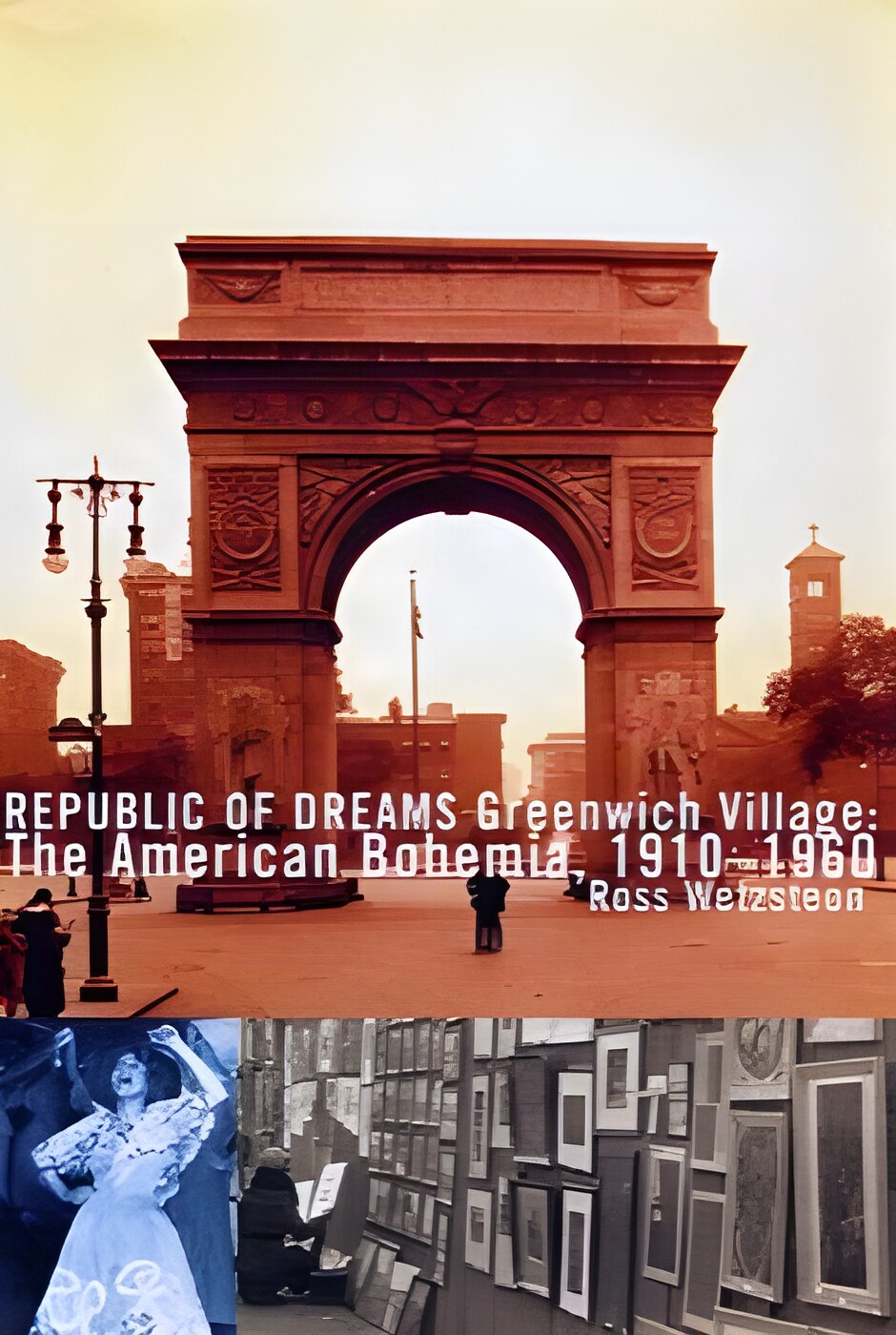
Hardcover. NY, Simon & Schuster, 1st, 2002, Book: Very Good, Dust Jacket: Very Good, Hardcover in a bright, unclipped dust jacket. A thoughtful history of the legendary New York City neighborhood chronicles the Village's role as a bohemian enclave that became the home of and transformed the lives of such individuals as Edna St. Vincent Millay, Emma Goldman, Eugene O'Neill, Margaret Sanger, and Thomas Wolfe, who came to the neighborhood to pursue individual artistic, personal, and political dreams. Clean copy.
Hardcover. Toronto, Anansi, 1st, 2007, Book: Very Good, Dust Jacket: Very Good, Hardcover in a bright dust jacket, 280 pages. Slowly dying of Lou Gehrig's Disease, Donald, a middle-aged Chippewa-Finnish man, begins dictating family stories he has never shared with anyone, hoping to preserve history for his children. The dignity of Donald's death and his legacy encourages his loved ones to find a way to redeem and let go of the past, whether through his daughter's immersion in Chippewa religious ideas or his mourning wife's attempt to escape the malevolent influence of her own father. A deeply moving book about origins and endings, and how to live with honor for the dead, Returning to Earth is one of the finest novels of Harrison's long, storied career, and will confirm his standing as one of the most important American writers. Clean copy.
Hardcover. Chicago, University of Chicago Press, 1st, 2006, Book: Very Good, Dust Jacket: Very Good, Hardcover in bright, unclipped dust jacket. 575 pages, b&w illustrations. Stephen Kercher here provides the first comprehensive look at the satiric humor that flourished in the United States during the 1950s and early 1960s. Focusing on an impressive range of comedy--not just standup comedians of the day but also satirical publications like MAD magazine, improvisational theater groups such as Second City, the motion picture Dr. Strangelove, and TV shows like That Was the Week That Was--Kercher reminds us that the postwar era saw varieties of comic expression that were more challenging and nonconformist than we commonly remember. His history of these comedic luminaries shows that for a sizeable audience of educated, middle-class Americans who shared such liberal views, the period's satire was a crucial mode of cultural dissent. For such individuals, satire was a vehicle through which concerns over the suppression of civil liberties, Cold War foreign policies, blind social conformity, and our heated racial crisis could be productively addressed. Clean copy.
Hardcover. Newport VT, Vermont Civil War Enterprises, Reprint, Book: Very Good, Dust Jacket: None, 2 Hardcover Volumes. Reprint from early 2000's. Volume 1 - 455 pages. Hardcover. Imitation red leather covers. Gilt titles on spine and cover. Related article laid in. Previous owner's pencil inscription on front end paper has been erased. Otherwise clean, tight copy. Volume 2 - 408 pages. Hardcover. Imitation red leather covers. Gilt titles on spine and cover. Previous owner's pencil inscription on front end paper has been erased. Some pencil markings throughout. Otherwise clean, tight copy.
Softcover. Washington DC, National Museum of American Art and National Portrait Gallery, Smithsonian Institution, 1st, 1993, Book: Very Good, Dust Jacket: None, Softcover, 408 pages, illustrated throughout in color and b&w. Light edgewear and rubbing to wrappers, else a clean, tight copy.
Softcover. NY, Thunder's Mouth Press, reprint, 2005, Book: Very Good, Dust Jacket: None, Softcover, 259 pages. While the supremely popular Steal This Book is a guide to living outside the establishment, Revolution for the Hell of It is a chronicle of Abbie Hoffman's radical escapades that doubles as a guidebook for today's social and political activist. Hoffman pioneered the use of humour, theatre, and shock value to drive home his points, and in Revolution for the Hell of It he gives firsthand accounts of his legendary adventures, from the activism that led to the founding of the Youth International Party,or Yippies!, to the 1968 Democratic National Convention protests ("a Perfect Mess") that resulted in his conviction as part of the Chicago Seven. Clean. bright copy.
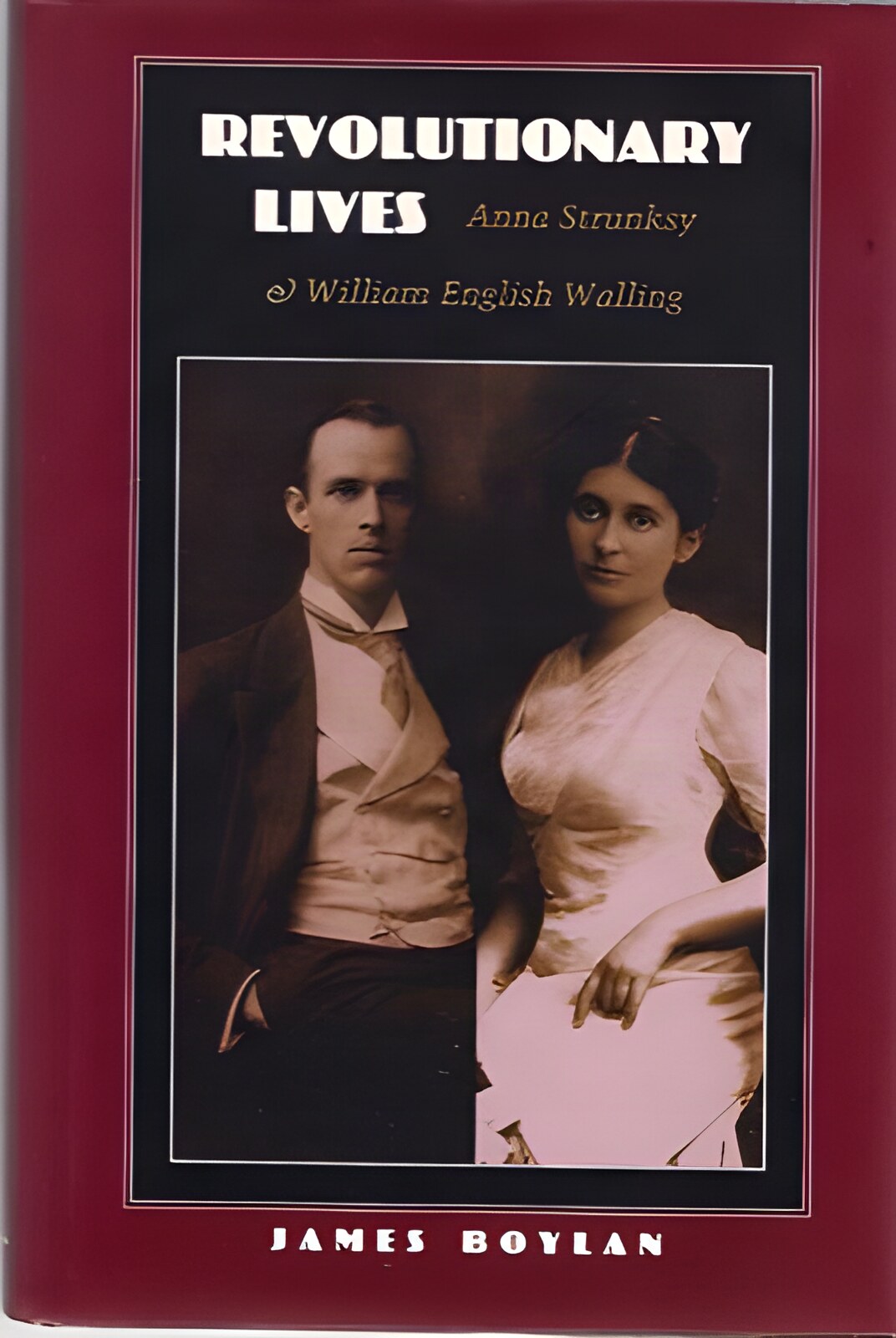
Hardcover. Amherst MA, University of Massachusetts Press, 1st, 1999, Book: Very Good, Dust Jacket: Very Good, Hardcover in a bright dust jacket, 334 pages, b&w illustrations. Relying on original historical materials, an illustrated biography traces the lives of an influential pair of American socialists--he a wealthy journalist-activist, she an aspiring novelist. When they fell in love amid the tumult of the 1905 Russian revolution, they believed they were destiny's match: William English Walling, a wealthy American journalist-activist from the Midwest, an Anna Strunsky, an aspiring novelist from San Francisco. Vowing to dedicate themselves to socialist ideals, they soon became celebrities who moved in an elite circle of writers, journalist, and reformers. ultimately, both their marriage and their political commitment faltered, but not before they had participated in some of the most urgent social causes of their day. Drawing on archival sources and family materials, James Boylan creates engaging portraits of two striking figures. He reveals the details of Strunsky's intesnse involvement with Jack London and their troubled literary collaboration. He describes the creation of Walling's "revolutionary news bureau" in Russia under scrutiny of the czarist police, and Strunsky's harrowing journey to report on a pogrom. He also recounts the couple's dash to cover a race riot in Illinois, Walling's pivotal role in creating the NAACP and the disasterous schism between Strunksky's pacifism and Walling's bellicosity during World War I. Clean copy.
Hardcover. Baltimore, Genealogical Publishing Company, 2nd pr., 1997, Book: Very Good, Dust Jacket: None, Hardcover, blue cloth stamped with gilt lettering, 608 pages. After the Revolutionary War, the federal government awarded bounty lands to citizens and soldiers for services rendered. In its simplest form, this involved the exchange of free land for military service. Federal records of these Revolutionary War bounty land awards are well known and readily accessible to genealogists. But the federal government was not alone in rewarding its citizens and soldiers with bounty lands. Nine state governments adopted similar policies, generating even more records. Unlike the federal bounty land records, however, these state records are not centralized; instead, they are found in the various states in the form of manuscript records and printed books and are all but inaccessible to the researcher. Until now, that is! Because with this work by Lloyd Bockstruck we now have a master index to state bounty land records, a Revolutionary War resource unparalleled for freshness, originality, and research potential. The nine states that awarded bounty lands in their western reserves or on their western borders (directly affecting the future states of Indiana, Kentucky, Maine, Ohio, and Tennessee) are Connecticut, Georgia, Maryland, Massachusetts, New York, North Carolina, Pennsylvania, South Carolina, and Virginia. (The basis for the Connecticut and Georgia awards, by the way, differ from the norm.) Clean, bright copy.
Hardcover. The Monacelli Press , 1st, 2018, Book: Very Good, Dust Jacket: Very Good, Hardcover in a bright dust jacket, 264 pages. Richard Filipowski (1923-2008) was among the most gifted polymaths in the annals of American modernism. Whether as a painter, sculptor, or designer of furniture and jewelry, Filipowski developed a lush, abstract, and amazingly consistent visual language that marks him among the finest figures of midcentury art and design. As a student at the Institute of Design (formerly the New Bauhaus) in Chicago, he quickly became a protege of founder Laszlo Moholy-Nagy, who featured several of Filipowski's works in his seminal text Vision in Motion (1947); Filipowski was the only student Moholy-Nagy called upon to join the faculty, where he taught alongside Walter Gropius and Marcel Breuer. Recruited by Gropius to develop a course in design fundamentals at Harvard, which remains a cornerstone of design pedagogy to this day, he would move to MIT where he taught for more than three decades, until his retirement in 1988. With a foreword by Laszlo Moholy-Nagy's daughter Hattula, Richard Filipowski: Art and Design Beyond the Bauhaus is the first monograph of this master, who over the course of his career created a unique body of work in diverse media that has largely, until recently, been held in private collections due to his relative lack of compulsion to seek media attention or worldly rewards. But now through the efforts of the Filipowski family and new attention by design scholars--several of whom contribute essays here on Filipowski's graphic and painted works, sculpture, furniture, and position in design history--the work is being revealed to a new generation of aficionados. Richard Filipowski is a rich document of a life and career that is poised to reenter the canon of modernism.
Hardcover. Newburyport Press, 1st, 2006, Book: Very Good, Dust Jacket: Very Good, Hardcover in a bright, unclipped jacket. Richard Henry Arbib was considered one of the leading industrial designers in the United States in the years following World War II. By the 1950s, he had established himself as one of the true visionaries in his field, producing groundbreaking design concepts not only for automobiles, but for a range of products that included wristwatches, pens, boats and even personal helicopters--designs so innovative than many of them would still be considered advanced today. This book is an attempt to rediscover both the man and his extraordinary work. Combining a biographical essay and commentary by historian and collector Frederic A. Sharf with 35 never-before-seen drawings by Arbib, this is a revelatory look at one of the great artists of America's industrial history, and the first biographic study of his work.

 "Rebel War Clerk's Diary at the Confederate States Capital, A (Volume 2) (Collector's Library of the Civil War)by: Jones, John B.")
 "Rebel War Clerk's Diary, A (Volume 1) (Collector's Library of the Civil War)by: Jones, John B.")
 "Rebel War Clerk's Diary, A (Volume 1) (Collector's Library of the Civil War)by: Jones, John B.")
 "Recollections of a Private - A Study of the Army of the Potomac (Collector's Library of the Civil War)by: Goss, Warren Lee")


 "Regarding Frank Capra: Audience, Celebrity, and American Film Studies, 1930")




 "Reminiscences of Chicago During the Great Fire by: McIlvaine, Mabel")
 "Reminiscences of the Civil War (Collector's library of the Civil War)by: Gordon, John B.")
 "Report of the Nicaragua Canal Board by: Ludlow and others, Lieut. Col. William")


 "Revised Roster of Vermont Volunteers in the War Of Rebellion and Lists of Vermonters Who Served in the Army and Navy of the United States During the War of the Rebellion 1861-66 - Field Edition - Volume 1 & 2")
 "Revisiting the White City: American Art at the 1893 World's Fairby: Art, National Museum of American (U.S.)")




 "Revolutionary War Bounty Land Grants Awarded by State Governmentsby: Bockstruck, Lloyd DeWitt")

 "Richard H. Arbib: 1917-1995 Visionary American Designerby: Arbib, Richard")