Hardcover. Auburn NY, Knapp, Peck and Thomson, 1st, 1887, Book: Fair, Dust Jacket: None, Hardcover, original red cloth, gilt titles and rules, blind-stamped double border. 581 pages including Errata leaf. Includes several fold-out maps, plus pockets inside the front and rear boards containing maps and plans. Engraved frontispiece of Sullivan, engraved portraits in text of Brigadier General James Clinton, Colonel Peter Gansevoort (from a portrait by Gilbert Stuart, famous for his portrait of George Washington), and Colonel Philip Van Cortlandt. John Sullivan was an American general in the Revolutionary War and a delegate in the Continental Congress. Sullivan served as a major general in the Continental Army and as Governor (or 'President') of New Hampshire. He is most famous for leading the Sullivan Expedition in 1779, a scorched earth campaign against the Iroquois towns that had taken up arms against the American revolutionaries. This volume contains journals by 27 officers present during the campaign, and has become the authoritative primary source of the event. Both front and rear hinges cracked with spine cloth loose, battlefield map at page 288 has a tear but no loss, front signature with title page loose but whole. All other maps present in envelopes and in very good condition. Covers worn.
Hardcover. New York, Argosy-Antiquarian Ltd., Reprint, 1963, Book: Very Good, Dust Jacket: None, Hardcover, 272 pages. limited edition (#10 of 750 copies). A diary of the late Emil Teichmann, edited and with an introduction by his son Oskar. Foreword by Ernest Gruening. Illustrated with b/w drawings and maps. Frontis portrait of author. Top edge stained blue. Blue cloth with gilt pictorial front and gilt lettering on spine. Light wear to top and bottom of spine.
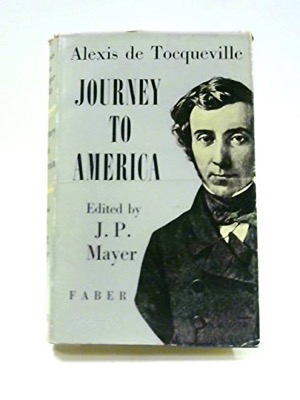
Hardcover. London, Faber and Faber Limited, 1st, 1959, Book: Very Good, Dust Jacket: Good, Hardcover in an edgeworn dust jacket, 334 pages. The editor has chosen excerpts from de Tocquville's 14 notebooks he kept on his visit to America 1831-32. The detailed notes were the raw material that became his classic Democracy In America. Many of these observations never made into the final work. Clean copy.
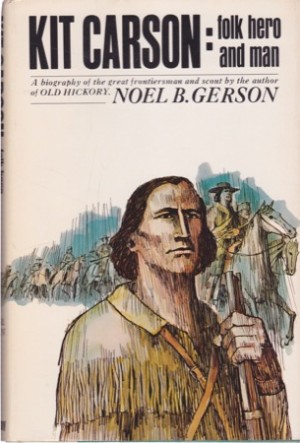
Hardcover. New York , Thomas Y. Crowell Company, 7th printing, 1950, Book: Very Good, Dust Jacket: Good, Hardcover, 306 pages, b&w photos. Light wear, rubbing and sunning to dust jacket. Book itself is very good.
Hardcover. Chicago, University of Chicago Press, 1st, 1968, Book: Very Good, Dust Jacket: Very Good, Hardcover in a lightly worn dust jacket, 178 pages. A new perspective on the Supreme Court during the Reconstruction period. Name on front fly leaf, otherwise clean.
Softcover. NY, Museum of Modern Art, 1st, 2022, Book: Very Good, Dust Jacket: None, Softcover, 184 pages, illustrated in color and b&w. Just Above Midtown, or JAM, was an art gallery and self-described laboratory for experimentation led by Linda Goode Bryant that foregrounded African American artists and artists of color. Open from 1974 to 1986, it was a place where an expansive idea of contemporary art flourished and debate was cultivated. The gallery offered early opportunities for artists recognized as pivotal figures in late-20th-century art-including David Hammons, Butch Morris, Senga Nengudi, Lorraine O'Grady and Howardena Pindell-as well as a nonhierarchical approach to art that welcomed artists without stylistic proscription. Published in conjunction with the first museum exhibition to focus on this visionary gallery and its ongoing impact, Just Above Midtown: Changing Spaces showcases rarely seen material from JAM's history-artworks, ephemera and photographs-that collectively document the gallery's communal and programmatic activities. This richly illustrated, jacketed paperback catalog includes essays that contextualize JAM and consider its legacy, a conversation between Goode Bryant and Thelma Golden, Director and Chief Curator of the Studio Museum in Harlem, a complete exhibition chronology written by MoMA and Studio Museum staff with nearly 50 annotated entries, and excerpts from oral histories with JAM staff and artists conducted especially for this project. Clean copy.
Hardcover. Minneapolis MN, Walker Art Center, 1st, 2007, Book: Very Good, Dust Jacket: None, Hardcover, publisher's light-brown cloth over boards, stamped lettering, and illustration to the spine, and boards. Richly illustrated in black-and-white and color throughout. "Deploying an acidic sense of humor, Walker examines the dialectics of pleasure and danger, guilt and fulfillment, desire and fear, race and class. This landmark publication, which is sure to win international design awards, accompanies Walker's first major American museum survey. It features critical essays by Philippe Vergne, Sander L. Gilman, Thomas McEvilley, Robert Storr and Kevin Young, as well as an illustrated lexicon of recurring themes and motifs in the artist's most influential installations by Yasmil Raymond, more than 200 full-color images, an extensive exhibition history and bibliography." Clean copy.
Hardcover. Glens Falls, Champlain Publishing, 1st, 1914, Book: Very Good, Dust Jacket: None, 255 pages. Blue cloth covers with title rubbed from spine and some rubbing to gilt title on cover. Book has slight damp smell. Clean, tight copy.
Hardcover. Scranton PA, Newmarket, 1st, 1999, Book: Very Good, Dust Jacket: Very Good, Hardcover in a bright dust jacket. Illustrated with 72 photos and 19 posters. Based on interviews conducted over a period of 18 months. Fascinating and instructive comments by Kazan on his casting decisions, directorial techniques and perceptions, etc. All 19 of Kazan's films are discussed, including: A Tree Grows in Brooklyn (1947), Gentleman's Agreement (1947), A Streetcar Named Desire (1951), On the Waterfront (1954), East of Eden (1955), etc. Also recounted here are his role in the McCarthy era, his controversial testimony before the House Un-American Activities Committee in 1952, his thoughts about the blacklist, and involvement with the Communist Party. Filmography. Credits. Bibliography. Index. Clean copy.
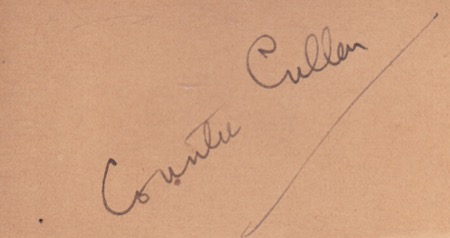
Hardcover. UK, Oxford University Press, 2nd pr., 1926, Book: Good, Dust Jacket: None, Hardcover, pale orange cloth with title on spine label. Former copy belonging to COUNTEE CULLEN (1903-1946), with his signature on the front fly leaf. Cullen was an American poet, novelist, children's writer, and playwright, particularly well known during the Harlem Renaissance. 248 pages, b&w frontis. Small paper scars to front endpapers, otherwise clean.
Hardcover. Princeton NJ, Princeton University Press, 1st, 1992, Book: Very Good, Dust Jacket: Very Good, Hardcover in a bright dust jacket, 281 pages, b&w illustrations. "For, Lo! We live in an Iron Age--In the age of Steam and Fire!" wrote a poet mesmerized by the engines that were transforming American transportation, agriculture, and industry during his lifetime. Indeed, by the nineteenth century fire had become America's leitmotif--for good and for ill. "Keeping the flame" was deadly serious: even the slightest lapse of attention could convert a fire from friendly ally to ravaging destroyer. To examine the cultural context of fire in "combustible America," Margaret Hazen and Robert Hazen gather more than a hundred illustrations, most never before published, together with anecdotes and information from hundreds of original sources, including newspapers, diaries, company records, popular fiction, art, and music. What results is an immensely entertaining and encyclopedic history that ranges from stories of the tragic "great fires" of the century to fire imagery in folktales and popular literature. Dealing more with technology than with fire in nature, the book provides a vast amount of information on fire manipulation and prevention in urban life. Hazen and Hazen discuss the people who worked with fire--or against it. Founders, gaffers, blacksmiths, boilers at saltworks, and housewives knew how to "read" a fire and employ it for their purposes. A few dedicated investigators inquired about the scientific nature of heat and flame. And firefighters gradually progressed from "bucket brigades" to "using fire to fight fire" with the newly invented steam engine. The colorful stories of these Americans--the risks they took and the rewards they received--will fascinate not only social historians but also a broad audience of general readers. Clean copy.
Softcover. Norman OK, University of Oklahoma Press, reprint, 1997, Book: Very Good, Dust Jacket: None, Softcover, 351 pages. George Wilkins Kendall, who founded the New Orleans Picayune in 1837, was a restless, impatient, and colorful character in an exciting era. For thirty years he guided the Picayune and built it into a powerful force in behalf of America's westward expansion. Kendall's vigorous editorials championed the cause of the infant Republic of Texas. When the Texan Santa Fe Expedition was organized in 1841, for the purpose of occupying New Mexico (then still under Mexican rule), Kendall left his editorial chair to participate--and was marched off to Mexico as a captive for seven months when the expedition was overwhelmed at Santa Fe. A few years later, when Kendall accompanied American forces invading Mexico during the Mexican War, he became America's first war correspondent--reporting directly from the battlefront. His effective "courier expresses" brought the first news of each battle to an eager nation, including President Polk, who often read news of the war in Kendall's Picayune before hearing it from his field commanders. Clean copy.
Hardcover. Princeton NJ, Princeton University Press, 1st, 2023, Book: Very Good, Dust Jacket: Very Good, Hardcover in a bright dust jacket, 624 pages, black and white illustrations. The diplomat and historian George F. Kennan (1904-2005) ranks as one of the most important figures in American foreign policy and one of its most complex. Drawing on many previously untapped sources, Frank Costigliola's authoritative biography offers a new picture of a man of extraordinary ability and ambition whose idea of containing the Soviet Union helped ignite the Cold War but who spent the next half century trying to extinguish it. Clean copy.
Hardcover. NY, Oxford University Press, 1st, 2001, Book: Very Good, Dust Jacket: Very Good, Hardcover in a bright dust jacket, 400 pages. Price-clipped. Clean covers and dust jacket, pages crisp and unmarked, tight binding; clean copy. A generation before Walt Disney, Fred Thompson was the "boy-wonder" of American popular amusements. At the turn of the 20th century, Thompson's entrepreneurial drive made him into an entertainment mogul who helped to define the popular culture of his day. In this lively biography, Woody Register tells Thompson's remarkable story and examines the transformation of commerce and entertainment as American society moved into an era of mass marketing and large-scale corporate enterprise. Getting his start as a promoter of carnival shows at world's fairs, Thompson was one of the principal developers of Coney Island, where he created the majestic Luna Park. Register traces Thompson's career as he built the mammoth Hippodrome Theater in Manhattan, where he mounted many productions noted for their spectacular--and spectacularly costly--staging effects. Register shows how Thompson's fantasies appealed to the growing legions of Americans who found themselves in a world that seemed increasingly "businesslike" and profit oriented. He illustrates how Thompson aggressively marketed to adult consumers a world of make-believe and childlike play, carefully crafting his own public image as "the boy who never grew up." Colorful, well-written, and insightful, The Kid of Coney Island brings to life a kaleidoscopic era in New York history as well as one of its most striking characters.
Hardcover. Baltimore, Johns Hopkins University Press, 1st, 2003, Book: Very Good, Dust Jacket: Very Good, Hardcover in a bright dust jacket with a small closed tear to front panel. INSCRIBED BY HUDDLESTON on the dedication page. Huddleston has paired archival images of the first modern war with his own, contemporary color shots of the same locations, at the same time of year, at the same time of day. Some sites of suicidal charges have become Kmarts, mini-malls or swamps strewn with metal and plastic trash. The juxtapositions possess surprising power. In an overexposed and damaged archival shot of the Confederate prisoner of war camp at Andersonville, Ga., a filthy crowd of anonymous men packs the frame, while on the facing page Huddleston presents his own fine-tuned image of a muted, borderless sky. Office buildings, grocery stores and fast food franchises have sprouted where Union Major General George H. Thomas and Confederate General John Bell Hood slugged it out for December days in Nashville 141 years ago. Near the site of some of the heaviest fighting between blue and gray, a KFC sign now advertises discounts on the colonel's secret recipe. Clean copy.
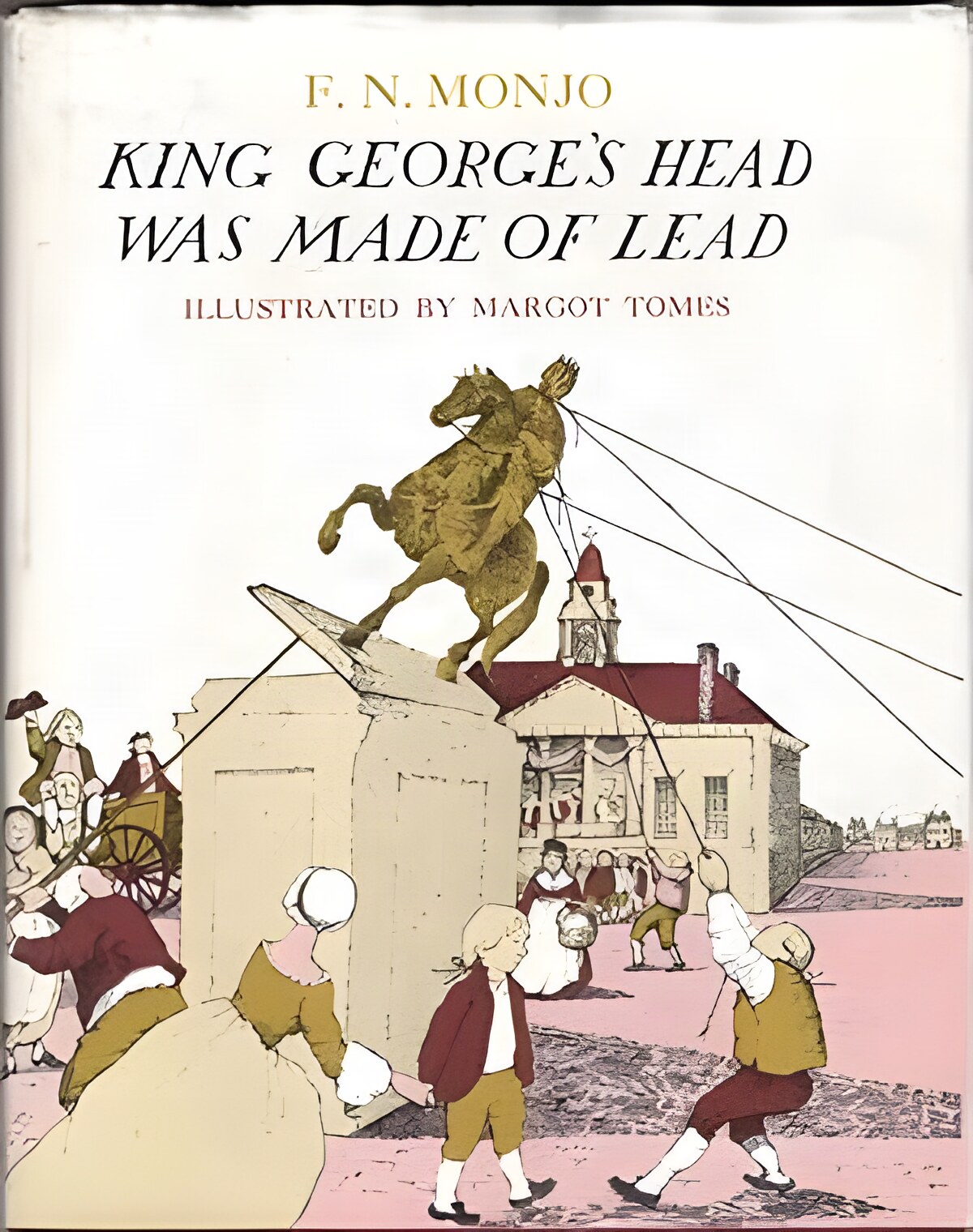
Hardcover. NY, Coward, McCann & Geoghegan, 4th pr., 1974, Book: Very Good, Dust Jacket: Very Good, Hardcover in an unclipped dust jacket, 48 pages illustrated in colors and b&w by Margot Tomes. A lead statue of King George III relates the events leading to the American Rovolution through indignant ratings about what he observes. Clean copy.
Hardcover. Boston/NY, Houghton Mifflin Harcourt, 1st, 1993, Book: Very Good, Dust Jacket: Very Good, Hardcover in a bright, unclipped dust jacket. Boston Globe reporter Haygood ( Two on the River ) weaves together interviews and research to create a nuanced yet vivid narrative about the crusading Harlem congressman who served in the House for 24 years and whose controversial behavior and womanizing often overshadowed his crucial contribution to the War on Poverty. Haygood astutely traces how the light-skinned Powell (1908-1972), who tried to pass as white when a Colgate student, later embraced his blackness and demanded acceptance in the white world. Mixing New York and national political history with Powell's rise as a Baptist minister and politician, Haygood adds deft cameos of characters like Hattie Dodson, Powell's devoted secretary, and Hazel Scott, the jazz star whose wedding to the divorced congressman was "the stuff of grand romance and intrigue." Expelled from Congress in 1966 for alleged misappropriations and an unpaid libel judgment, Powell, Haygood writes poignantly, was shunned by black leaders and, even after reinstatement by the Supreme Court, disparaged by many he had helped. Though less authoritative in assessing Powell's political milieu than Charles V. Hamilton's 1991 book, Adam Clayton Powell Jr.: The Political Biography of an American Dilemma , this is a richer portrait of Powell the man. Clean copy.
Hardcover. Woodstock VT, Countryman Press, 4th pr., 1999, Book: Very Good, Dust Jacket: Very Good, Hardcover in a bright, price-clipped dust jacket, 416 pages, b&w illustrations. Now largely forgotten, the massacres of 1675 to 1676, known as King Philip's War, ended the harmonious relations that had existed between native Americans and the colonists since their arrival at Plymouth Rock in 1620. Tensions had been rising as the number of settlers grew, and the pillaging of an outlying farm by affronted young braves escalated into open hostilities. Pitched battles were fought from Rhode Island to Maine. Hundreds of English died as farmers fled and cowered behind stockades or in the few port towns. Thousands of natives were slaughtered and the rest dispersed or sold into slavery in the West Indies. The savagery resulted in the clearing of the native populations from southern New England and the unopposed expansion of the New England colonies. It also became the brutal model on which the United States came to deal with its native peoples. King Philip's War tells the story with such close attention to detail that each ambush, each burned-out farm, becomes a vivid image. The authors make abundant use of maps and photographs of old sites to enable the reader to follow the course of the war: the book forms an exhaustive guide for the armchair historian or anyone wishing to visit the monuments and battlefields today. Clean copy.
Hardcover. New York , Abrams, 1st, 1999, Book: Very Good, Dust Jacket: Very Good, Hardcover, 254 pages, 173 illustrations, 131 in color. Although he is now seen as a progenitor of the "naive" style, during his lifetime Edward Hicks (1780-1849) was known only as a devout, impoverished Quaker minister who liked to paint. With a few exceptions, his extant body of work is made up of 62 "Peaceable Kingdom" pictures, based on Isaiah's biblical prophecy. Although these paintings, known for their charmingly wide-eyed and sensuous beasts, use potent color and effective design, they are technically unsophisticated and repetitive in the extreme. But they contain a powerfully serene devoutness, a mood probably expressed in compensation for Hicks's guilt about an avocation viewed as frivolous by other Quakers. As the popularity of folk art boomed in the early 20th century, Hicks's homely visions were popularized and became the focus of scholarly attention, and this work is probably the best to date. Weekley, the director of museums at Colonial Williamsburg, shrewdly considers Hicks's "secular" life and art through the filter of his intense piety and copiously illustrates her large-format book with brilliant color plates.
Hardcover. Boston, Houghton Mifflin, 2nd pr., 1973, Book: Very Good, Dust Jacket: Very Good, Hardcover. Black & white photos. 337 pages. Dj price clipped
Hardcover. Fort Worth, TCU Press, Reprint, 1981, Book: Very Good, Dust Jacket: Very Good, Two hardcover volumes,. Volume 1 - 164 pages. Ceremonial Dance, Ritual and Song. Full color and black & white illustrations. Dust jacket in clear plastic protective cover. Clean, tight copy. Volume 2 - 323 pages. Myths, Legends and Folktales. Full color and black & white illustrations. Dust jacket in clear protective cover. Clean, tight copy.
Hardcover. New York, The New Press, 1st, 1999, Book: Very Good, Dust Jacket: Very Good, 515 pages. Hardcover. Gray cover boards, gilt title on spine. In nice shape, Dust jacket unclipped, has just a touch of age yellow. Edges show a little soil (shelfwear). Binding very tight, clean inside. Very good condition.
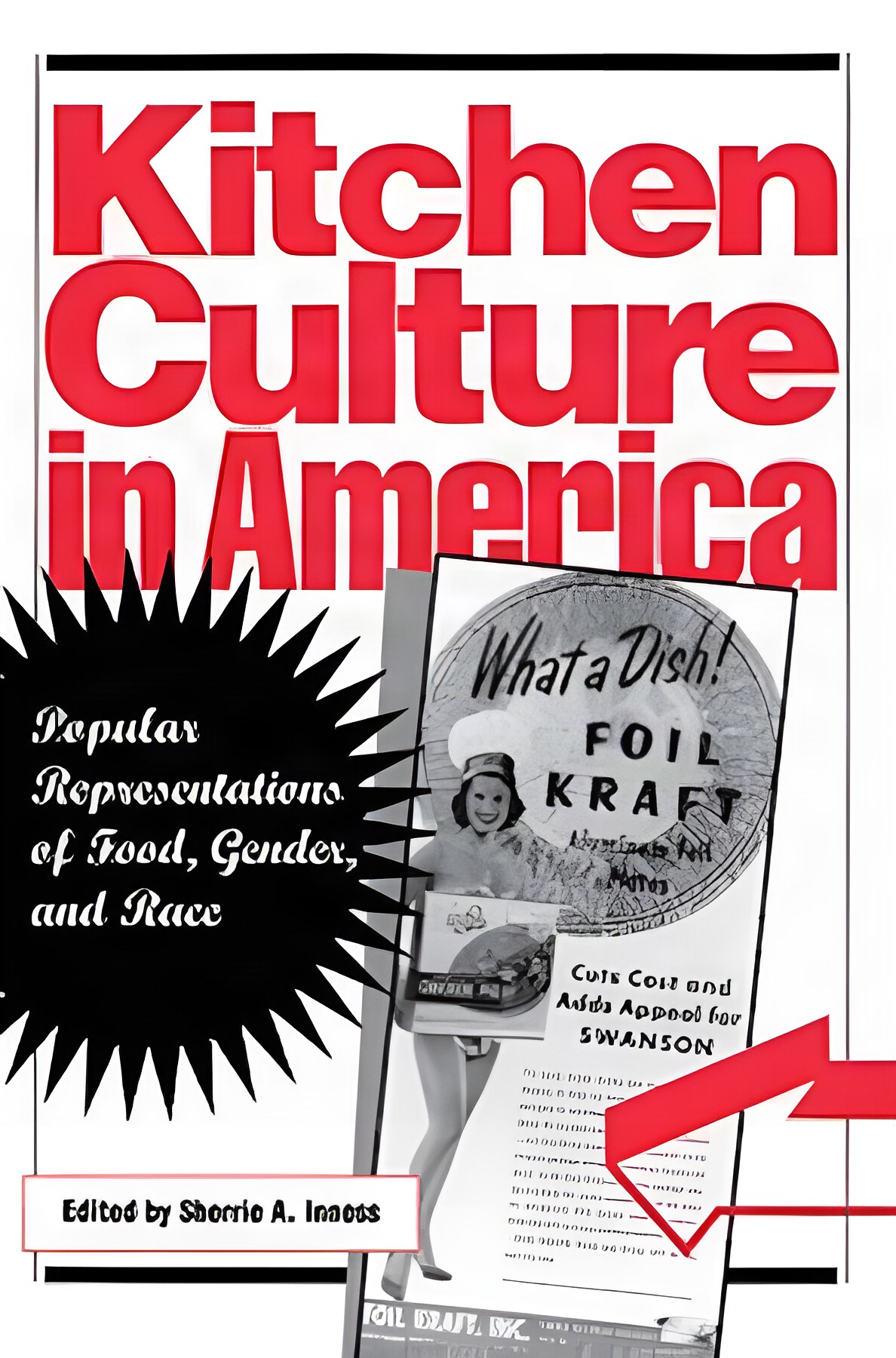
Softcover. Philadelphia, University of Pennsylvania Press, 1st, 2001, Book: Very Good, Dust Jacket: None, Softcover, 286 pages. Kitchen Culture in America is a collection of essays that examine how women's roles have been shaped by the principles and practice of consuming and preparing food. Exploring popular representations of food and gender in American society from 1895 to 1970, these essays argue that kitchen culture accomplishes more than just passing down cooking skills and well-loved recipes from generation to generation. Kitchen culture instructs women about how to behave like "correctly" gendered beings. One chapter reveals how juvenile cookbooks, a popular genre for over a century, have taught boys and girls not only the basics of cooking, but also the fine distinctions between their expected roles as grown men and women. Several essays illuminate the ways in which food manufacturers have used gender imagery to define women first and foremost as consumers. Other essays, informed by current debates in the field of material culture, investigate how certain commodities like candy, which in the early twentieth century was advertised primarily as a feminine pleasure, have been culturally constructed. The book also takes a look at the complex relationships among food, gender, class, and race or ethnicity-as represented, for example, in the popular Southern black Mammy figure. In all of the essays, Kitchen Culture in America seeks to show how food serves as a marker of identity in American society. Clean, bright copy.


 "Judge Landis and Twenty-Five Years of Baseballby: Spink, J. G. Taylor")
 "Judicial Power and Reconstruction Politicsby: Kutler, Stanley I.")




 "Kathi of Skenesboroughby: Curtis, May Belle")



 "Killing Ground: The Civil War and the Changing American Landscape (INSCRIBED COPY)by: John Huddleston")


 "Kingdoms of Edward Hicks, Theby: Weekley, Carolyn J.")
 "Kinta Years, The - An Oklahoma Childhoodby: Giles, Janice Holt")

 "Kissinger Transcripts, The: The Top-Secret Talks with Beijing & Moscowby: Burr, William (Ed.)")