Hardcover. New York, Sterling Publishing, 1st, 2005, Book: Very Good, Dust Jacket: Very Good, 183 pages. Hardcover. Full color illustrations. Light wear. Clean, tight copy. The term pulp fiction has always had a certain resonance; but it is the artwork--bold, energized, dramatic, garishly colorful, and frequently grotesque--that has made pulp magazines memorable to so many people. Pulp Art is the groundbreaking--and ultimate--book on one of America's most important and spectacular forms of illustration art. At last, preserved in this volume are most of the still-existing originals created for the pulp covers, never before seen in all their sharply focused, vibrantly colored brilliance. Robert Lesser, a pioneering collector of this work and an expert on American popular culture, has assembled a gallery of these now-priceless originals. The dynamically pulp-flavored text is a complete historical survey of the pulps and their most important cover artists--Virgil Finlay, J. Allen St. John, Rafael de Soto, Hannes Bok, George and Jerome Rozen, Frank R. Paul, and many others. Also offered are critical discussions of individual paintings, as well as the major themes of the pulp magazines.
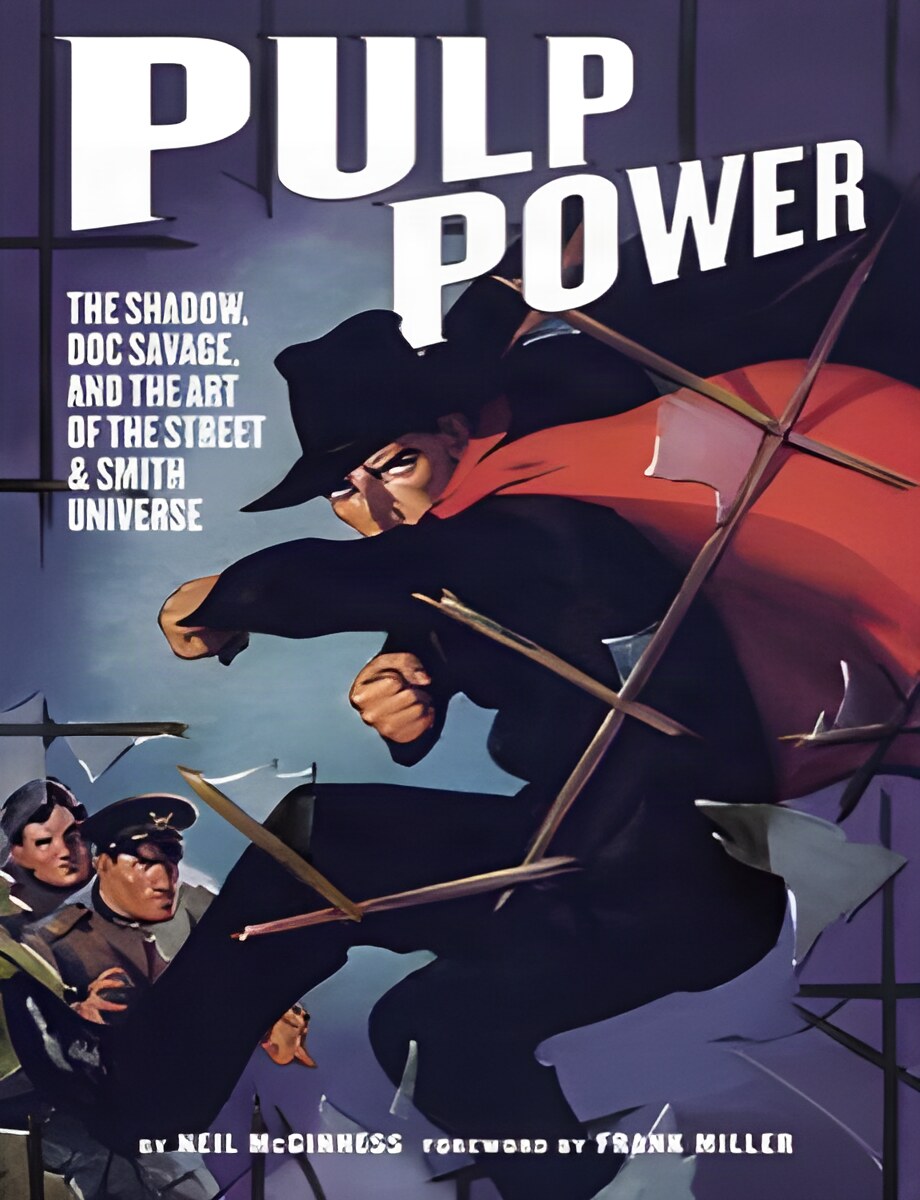
Hardcover. NY, Harry N Abrams, 1st, 2022, Book: Very Good, Dust Jacket: Very Good, Hardcover in a bright dust jacket. Pulp Power gives fans a rare glimpse into the pre-war pulp novel decade of the 1930s, a period of bold action and adventure storytelling that ultimately led to the creation of the comic book and the superheroes we know and love today. This period, a pre-Batman, pre-Superman golden era of American creativity and artistic excellence, starred two main characters in leading roles: The Shadow and Doc Savage. In more than 500 novels written between 1930 and 1940, The Shadow, Doc Savage, and the Street & Smith universe of characters captivated a generation of Americans with their heroic exploits and inspired a new generation of writers to create a pantheon of comic book superheroes in their mold. Street & Smith, the renowned publisher of these novels, commissioned leading artists to provide bold and original cover artwork for their publications, and in Pulp Power, hundreds of these eye-catching covers are reproduced as a collection for the first time. Comics legend Dan DiDio provides context for the cover illustrations alongside a narrative discussion of the influence of the Street & Smith superhero universe on legendary creators such as Orson Welles, Truman Capote, Michael Chabon, George Lucas, Agnes Moorehead, James Patterson, Walter Mosley, Dwayne Johnson, Frank Miller, James Bama, Jim Steranko, Jim Lee, Gail Simone, and many more. Bright, clean copy.
Hardcover. New York, Rizzoli, 1st, 1985, Book: Very Good, Dust Jacket: Very Good, Hardcover in a bright dust jacket,160 pages. Folio. gray cloth, spine stamped in gilt. Richly illustrated with 172 illustrations, 50 in full color. First monograph of this American-born artist who has lived most of his life in England. Includes a catalogue of all his work up until 1985.R.B. Kitaj (1932-2007) is one of the most intriguing 20th century artists. Born into a Russo-Jewish family near Cleveland, Ohio, 17-year old Kitaj spent 5 years at sea aboard a Norwegian freighter. He went on to study art in New York and Vienna. A Royal College of Art stipend made him move to London where he became a celebrated artist. Curating The Human Clay, a 1976 show of figurative contemporary British artists, he coined the term "School of London" for the artistic circle around Francis Bacon, Frank Auerbach, Lucian Freud, and Leon Kossoff. In 1991 he was elected a member of the Royal Academy, one of only three American painters to be thus honored in the history of the institution. A major 1994 retrospective at London's Tate Gallery failed to produce Kitaj's international breakthrough, but was unanimously panned by British critics instead. This, and the unexpected death of his wife Sandra, induced his increasingly paranoid perspective. Embittered he returned to the USA and settled in Los Angeles, where he finally took his own life in 2007. Kitaj left behind a manuscript unmatched among 20th-century artist autobiographies -- Confessions of an Old Jewish Painter. Eloquently describing his vices and sufferings, it stands in the traditions of both St. Augustine and Thomas de Quincey. Now published for the first time, it is a sensation, from both a literary and art historical point of view.
Hardcover. New York, State University of New York, 1st, 1967, Book: Very Good, Dust Jacket: Good, Hardcover, 96 pages, illustrated throughout. Dust jacket edge wear and fade, minor rub, otherwise, very clean and tight copy.Here at long last is the study of the life and paintings of Ralph Earl, the colorful eighteenth-century American artist whose pictures hang in the great galleries but about whom relatively little has appeared in print. A pioneer landscapist in a day when portraiture was the vogue, a Tory in Revolutionary New England, he nevertheless captured the stance and spirit of the new nation in the first decades after the Revolution. He portrayed the merchants and civic leaders of the time, often with their families, in their homes, orchards, business establishments--and the result is a record of post-Revolutionary American dress, design, and decoration as well as face and figure. Professor Goodrich has tracked down and assembled forty-one of Earl's paintings for this book, providing the first opportunity of viewing the artist's work as a body. The pictures range from a youthful re-creation of the Battle of Concord, through portraits done in England (whence he fled during the Revolution and which enabled him to absorb the techniques of the great eighteenth-century English portraitists), to his invaluable paintings of General von Steuben, Mrs. Alexander Hamilton, and other figures in the young United States.
Hardcover. Flagstaff AZ, Northland Press, reprint, 1985, Book: Very Good, Dust Jacket: Very Good, Hardcover in a bright, price-clipped dust jacket with a small chip to rear panel. B&w drawings by Remington. Reprinted from a series of articles published in The Century Magazine in 1888. During the early 1880s, both Remington the artist and Roosevelt the writer were trying their hands at ranching, Remington in Kansas and Roosevelt in Dakota territory. Their respective records of the experience as perhaps the most important to survive of ranching in that era. Contains specific material on the severe winter of 1886-87 which put an end to ranching for many. Clean copy.
New York, George Routledge, 1st , 1886, Book: Very Good, Dust Jacket: None, Hardcover, 216 pages, 172 B&W illustrations. An exceptionally bright, tight copy. Green beveled covers with gilt lettering, all edges gilt. Surprisingly scarce. First American Edition. A significant memoir, published in the year of Caldecott"s death.
Hardcover. New York, Da Capo Press, 1st, 1967, Book: Very Good, Dust Jacket: Good, Hardcover, 257 pages with 126 black and white illustrations. Biographical notes. List of printers. Index of Prints. Frontispiece is an original lithograph created especially for this volume. "The only catalogue of Soyer's prints. Contains 126 separate prints - from his first etched self-portrait to his most recent experiments in advanced lithographic technique. Each print is fully described, and each is illustrated - full size wherever possible - on a separate page." Very good in a bright dust jacket.
Hardcover. New York, Assouline, 1st, 2005, Book: Very Good, Dust Jacket: Very Good, 80 pages, illustrated in color and b&w. In publisher's shrinkwrap. While Andy Warhol is known for creating icons, it is Raymond Loewy who built monuments. At once an engineer and a visionary, this master of streamlined design integrated movement into his designs in what would become a characteristic American way. Indeed, his drawings of the Coca Cola truck, the Greyhound bus, the package of Lucky Strike cigarettes, the Studebacker automobile, and the bullet-nose train molded our vision of twentieth-century American iconography. Illustrated with photographs of Loewy s most notable designs, this memoir pays a tribute to a man who shaped the image of an entire nation with his pencil strokes.
Hardcover. Seattle, WA, Fantagraphics, 1st, 2016, Book: Very Good, Dust Jacket: Very Good, 256 pages. Hardcover with dust jacket. Clean, unmarked copy with only minor wear to dust jacket. Black and white pictures throughout. Founded by Paul Krassner, "The Realist" was a satirical magazine that took aim at American culture during the period of 1958 to 2001. Paul Krassner collaborates with Fantagraphics to create a collection of the best of "The Realist" drawings with contributions by R. Crumb, Art Spiegelman, S. Clay Wilson, Jay Lynch, Wallace Wood and others. Illustrated front board, 291 pages plus annotations, black/white and 2-color images. Volume numbers and year published accompanies each cartoon.
Hardcover. NY, Harper, 1st, 2009, Book: Very Good, Dust Jacket: Very Good, Hardcover in a bright dust jacket, 183 pages. Illustrated with photos. Basketball immortal Bill Russell provides this memoir of his deep friendship with Boston Celtics coach red Auerbach. Russell was the center on the Auerbach teams that one 11 championships in 13 years. At the time, he said little about his deeply personal relationship with his coach but Russell and Auerbach--one a short, brash Jew from Brooklyn, the other a tall, intense African American from Louisiana and Oakland--were far more than just coach and player. Through the 13 years of the Celtics dynasty together their relationship evolved into a rare, telling example of deep male friendship: confident, supportive, understanding, founded in common goals, even as their feelings went largely unspoken. Clean copy.
Hardcover. NY, Juniot Literary Guild, Book Club, 1930, Book: Very Good, Hardcover, 324 pages. Color frontispiece, 9 b&w plates by Marguerite DeAngeli. Red cloth with blue lettering. Spine slightly cocked, previous owner's inscription on front paste-down. Still very good.
Hardcover. New York , Roy Publishers, 1st, 1960, Book: Very Good, Dust Jacket: Very Good, Hardcover, 222 pages, b&w illustrations by C. Walter Hodges.In a bright, unclipped dust jacket. Previous owner's signature on front fly leaf otherwise a clean, bright copy.
Hardcover. NY, Harcourt, Brace And Company, 1st, 1937, Book: Fair, Dust Jacket: None, Hardcover, terra-cotta cloth with orange lettering. Beautiful full page illustrations done in khaki, black, rust and green by the author. Forward by Frank Boas. A tale based on the author's own knowledge of life in the South American jungles of a ten year old boy who goes deep into the jungle looking for honey. He forgets how his father always marks his trail, and so gets lost. This is the story of how he escapes the dangers of the jungle and finds his way back to the river and his family. Author Elizabeth K Steen (1886-1938) was an explorer and anthropologist who traveled in South America. Ex-lib. Worn at corners and spine ends. Top of spine torn, frayed.
NY, Jr. Literary Guild, BC Ed, 1929, Book: Very Good, Dust Jacket: Very Good, Hardcover. Color frontispiece, b&w illustrations, endpapers by Henry Pitz. Dust jacket with light edgewear, chipping. 256 pages.
Softcover. US, Top Shelf Productions, 1st, 2007, Book: Very Good, Dust Jacket: None, Softcover. 285 pages, illustrated throughout in b&w. Clean, unmarked copy with only minor wear to wrappers. As the NATO bombs fell on his hometown of Pancevo in 1999, Serbian cartoonist Aleksandar Zograf used his diary comics and e-mail to reach out to the world and offer a glimpse at the effects of the attacks. Over the weeks and months of the war, Zograf documented not only how the bombings shattered the lives of his friends and neighbors, but also how the routine of daily life remained unchanged. The most recent attacks on Pancevo's oil refinery are contrasted with the latest local soccer matches -- and American propaganda flyers are as likely to fall from the sky as American comics are to arrive in the mail.
Softcover. US, Top Shelf Productions, 1st, 2007, Book: Very Good, Dust Jacket: None, Softcover. 285 pages, illustrated throughout in b&w. Clean, unmarked copy with only minor wear to wrappers. As the NATO bombs fell on his hometown of Pancevo in 1999, Serbian cartoonist Aleksandar Zograf used his diary comics and e-mail to reach out to the world and offer a glimpse at the effects of the attacks. Over the weeks and months of the war, Zograf documented not only how the bombings shattered the lives of his friends and neighbors, but also how the routine of daily life remained unchanged. The most recent attacks on Pancevo's oil refinery are contrasted with the latest local soccer matches -- and American propaganda flyers are as likely to fall from the sky as American comics are to arrive in the mail.
Hardcover. Madison WI, University of Wisconsin Press, 1st, 1989, Book: Very Good, Dust Jacket: Good, Hardcover in a lightly worn dust jacket with fading to the spine. "Cary Nelson performs an invaluable service to the reader by recovering the work of dozens of forgotten poets, especially women, blacks, and writers on the left, while making it clear that the texts we recover inevitably gain new meaning from their positioning within contemporary culture." Nicely illustrated in b&w and some color, mostly book jackets and title pages of books discussed. Some light pencil marking in margins.
Hardcover. New Haven, Yale University Press, 1st, 1958, Book: Very Good, Dust Jacket: Fair, 232 pages. Hardcover. INSCRIBED BY AUTHOR on front flyleaf. Illustrated plates of old advertising. Yellow cloth covers w/ red decoration. Worn, chipped, price-clipped dust jacket - now protected by clear plastic cover. Light foxing, soiling to edges; else a clean, tight copy.
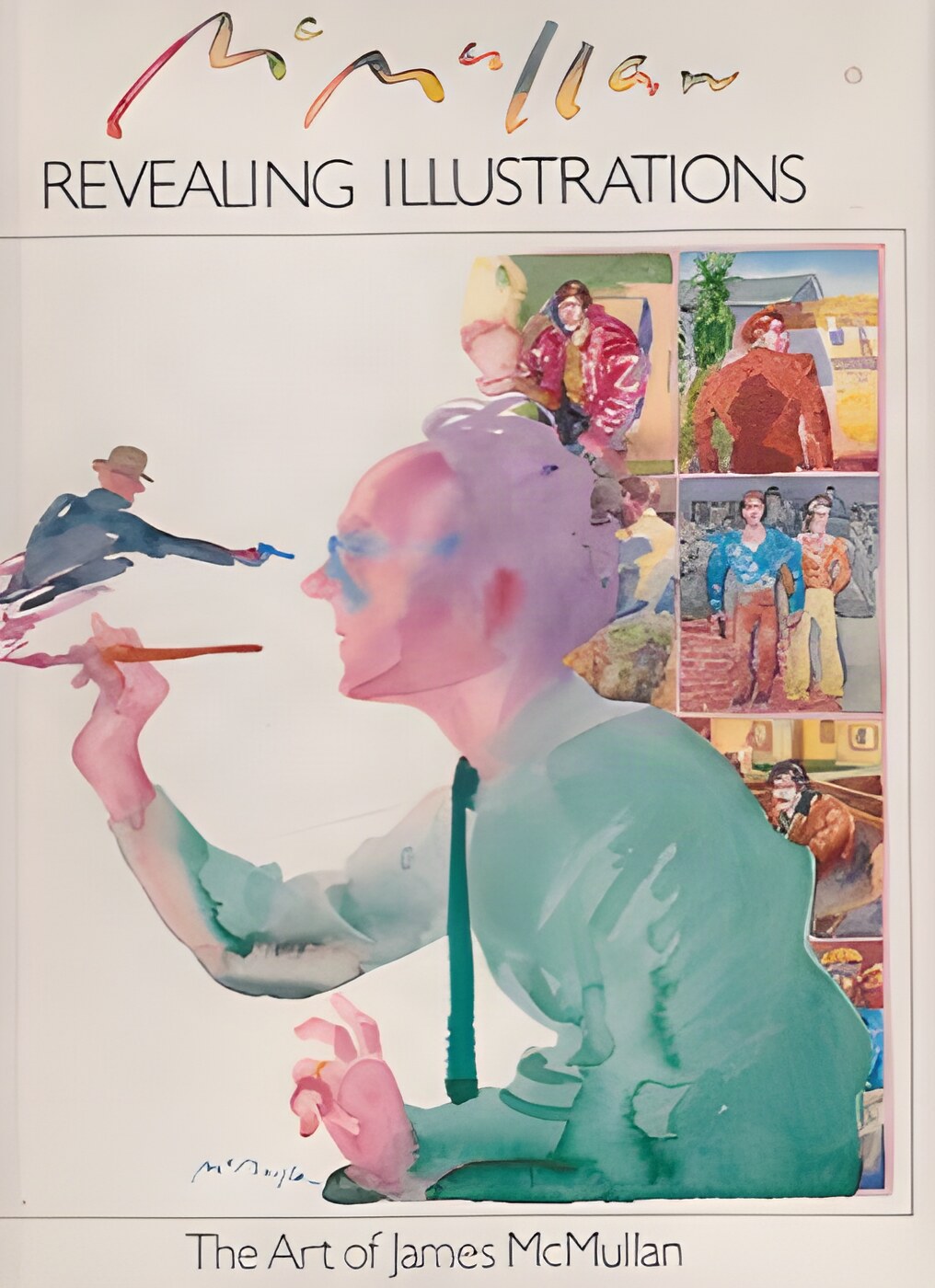
New York, Watson-Guptill Publications, 1st, 1981, Book: Very Good, Dust Jacket: Very Good, Hardcover, 143 pages, illustrated throughout. A monograph on the artwork of James McMullan as well as a step-by-step guide to his approach to the design process with his reference materials, sketches, photographs of the artist at work, and the finished project. Introductory interview by Milton Glaser. Dust jacket edge wear and fade, minor foxing on top edge. Otherwise, very clean and tight copy.
Softcover. Washington DC, National Museum of American Art and National Portrait Gallery, Smithsonian Institution, 1st, 1993, Book: Very Good, Dust Jacket: None, Softcover, 408 pages, illustrated throughout in color and b&w. Light edgewear and rubbing to wrappers, else a clean, tight copy.
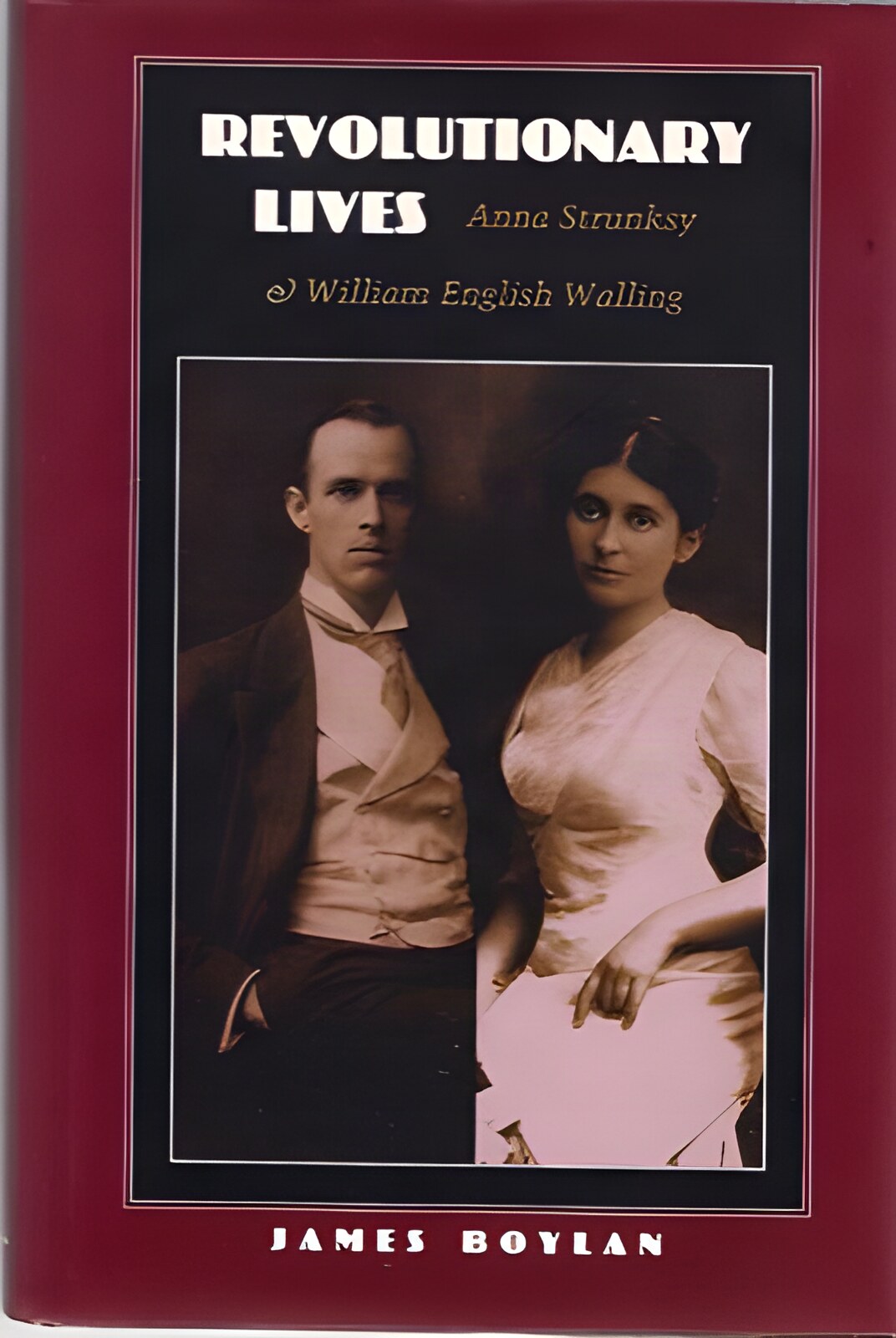
Hardcover. Amherst MA, University of Massachusetts Press, 1st, 1999, Book: Very Good, Dust Jacket: Very Good, Hardcover in a bright dust jacket, 334 pages, b&w illustrations. Relying on original historical materials, an illustrated biography traces the lives of an influential pair of American socialists--he a wealthy journalist-activist, she an aspiring novelist. When they fell in love amid the tumult of the 1905 Russian revolution, they believed they were destiny's match: William English Walling, a wealthy American journalist-activist from the Midwest, an Anna Strunsky, an aspiring novelist from San Francisco. Vowing to dedicate themselves to socialist ideals, they soon became celebrities who moved in an elite circle of writers, journalist, and reformers. ultimately, both their marriage and their political commitment faltered, but not before they had participated in some of the most urgent social causes of their day. Drawing on archival sources and family materials, James Boylan creates engaging portraits of two striking figures. He reveals the details of Strunsky's intesnse involvement with Jack London and their troubled literary collaboration. He describes the creation of Walling's "revolutionary news bureau" in Russia under scrutiny of the czarist police, and Strunsky's harrowing journey to report on a pogrom. He also recounts the couple's dash to cover a race riot in Illinois, Walling's pivotal role in creating the NAACP and the disasterous schism between Strunksky's pacifism and Walling's bellicosity during World War I. Clean copy.
Hardcover. Hatje Cantz, 1st, 2019, Book: Very Good, Dust Jacket: None, Hardcover, pictorial boards, 304 pages illustrated in b&w and color. At the first mention of his name, one can easily picture them: light-flooded bungalows that are lavishly composed into nature and that characterize the architectural style of the American West Coast surrounding Los Angeles. But it is sometime overlooked that the career of Richard Neutra (1892-1970) began in Berlin-Zehlendorf. And yet these houses in Zehlendorf represent a fascinating phase in Neutra's work. With their complex color schemes and extravagant interior design, they reveal themselves to be more than just an experimental and radically innovative design. Indeed, these lesser-known aspects already hint at elements that will be taken up again in future projects. The present publication finally provides for a rightful appreciation of Neutra's early works and, alongside historical sources, it collects countless new and unpublished documents about the houses and their first residents. Clean, still in publisher's shrink wrap.
Hardcover. New Haven, Yale University Press, 1st, 2008, Book: Very Good, Dust Jacket: Very Good, 129 pages. Hardcover. Color and b/w illustrations throughout. Clean inside and out. In excellent shape. From the Foreward: "River of No Return is organized like a long poem or a piece of music...a stunning look at an actual place, a meditation on rivers, nature history, the history of landscape photography of the American West and the idea of the American West. And the nature of fact and the nature of myth, and how we hold the world in our hands."
Softcover. Delaware, Delaware Art Museum, 1st, 1984, Book: Very Good, Dust Jacket: None, Pictorial green wrappers, full-cover color painting on front cover. 174 pages, profusely illustrated in b/w, some color. Back cover slightly scratched and spine slightly worn, otherwise, tight, clean copy. Essay by Helen Farr Sloan, catalogue and prologue by Bennard B. Perlman. Chronology, bibliography, list of exhibitions. Catalogue lists 100 works.

 "Pulp Art - Original Cover Paintings for the Great American Pulp Magazinesby: Lesser, Robert")
 "R. B. Kitajby: Livingstone, Marco")
 "Ralph Earl: Recorder for an Eraby: Goodrich, Laurence B.")
 "Ranch Life in the Far Westby: Roosevelt, Theodore / Frederic Remington")
 "Randolph Caldecott - His Early Art Career - A Personal Memoirby: Blackburn, Henry")
 "Raphael Soyer: Fifty Years of Printmakingby: Cole, Sylvan, Jr.")
 "Raymond Loewy: Never Leave Well Enough Alone!by: Tretriack , Philippe")
 "Realist Cartoons, Theby: Persoff, Ethan (Editor)")
 "Red and Me: My Coach, My Lifelong Friendby: Bill Russell /Alan Steinberg")
 "Red Coats and Blue: A Story of a British Girl in the American Revolutionby: Campbell/Marguerite DeAngeli, Harriette R.")


 "Red Indian Folk and Fairy Talesby: Manning-Sanders, Ruth")
 "Red Jungle Boyby: Steen, Elizabeth K.")


 "Red Prior's Legacy, The - The Story of the Adventures of an American Boy in the French Revolution.by: Bill, Alfred H.")
 "Regards From Serbiaby: Zograf, Aleksandar")
 "Regards From Serbiaby: Zograf, Aleksandar")
 "Repression And Recovery: Modern American Poetry & Politics Of Cultural Memory 1910-1945by: Cary Nelson")
 "Responsibilities of American Advertising - Private Control and Public Influence 1920-1940, The (SIGNED COPY)by: Pease, Otis")
 "Revisiting the White City: American Art at the 1893 World's Fairby: Art, National Museum of American (U.S.)")

 "River of No Return: Photographs by Laura McPheeby: McPhee, Laura")
 "Robert Henri Painterby: Henri, Robert")