Hardcover. Chicago, Quadrangle Books, 1st, 1968, Book: Very Good, Dust Jacket: Very Good, Hardcover in an unclipped dust jacket, 167 pages. Name on front fly leaf, otherwise clean.
Hardcover. NY, The Century Co., 1st, 1906, Book: Very Good, Dust Jacket: None, Hardcover, bright blue cloth with gilt design to cover and spine. Tissue-guarded frontispiece, illustrations. A wonderfully tight, bright first edition with gilt as bright as the day it was made. Rather uncommon, especially in such choice condition. No markings.
Softcover. Chapel Hill, University of North Carolina Press, 1st pbk, 2002, Book: Very Good, Dust Jacket: None, Softcover, 411 pages, b&w illustrations. Tracing the erosion of white elite paternalism in Jim Crow Virginia, Douglas Smith reveals a surprising fluidity in southern racial politics in the decades between World War I and the Supreme Court's 1954 Brown v. Board of Education decision. Smith draws on official records, private correspondence, and letters to newspapers from otherwise anonymous Virginians to capture a wide and varied range of black and white voices. African Americans emerge as central characters in the narrative, as Smith chronicles their efforts to obtain access to public schools and libraries, protection under the law, and the equitable distribution of municipal resources. This acceleration of black resistance to white supremacy in the years before World War II precipitated a crisis of confidence among white Virginians, who, despite their overwhelming electoral dominance, felt increasingly insecure about their ability to manage the color line on their own terms. Exploring the everyday power struggles that accompanied the erosion of white authority in the political, economic, and educational arenas, Smith uncovers the seeds of white Virginians' resistance to civil rights activism in the second half of the twentieth century. Light marking to 10 pages, otherwise clean, very good.
Softcover. Bowie MD, Heritage Books, reprint, 2001, Book: Very Good, Dust Jacket: None, Two softcover volumes 391 & 392 pages. Volumes 1 and 2 complete, a facsimile reprint of the 1897 edition by Lippincott. This two-volume series takes the reader on a journey through the colonies of Virginia, Massachusetts, Connecticut, Rhode Island, New Hampshire, Pennsylvania, New Jersey, New York, Maryland, Carolina, and Georgia. The charm of the journey is in its variety, as the reader passes through communities of such striking individuality that they assume the character of different nations. Each colony has a set of opinions and laws peculiar to itself, and it is not uncommon to find the laws of one in contradiction with the laws of another. This text explores the settlement and history of each colony prior to the American Revolution. Topics include development of the colonies' government, laws, religion, schools, boundaries, industries, layout of the cities, fashions, homes, social activities, slavery, architecture, interaction with the Indians, and customs. At least one prominent person from each colony is discussed, amongst them, William Penn of Pennsylvania, John Smith of Virginia, George Calvert of Maryland, and General Oglethorpe of Georgia. Light sunning ti spines.Clean copies.
Hardcover. Cambridge MA, Harvard University Press , 1st, 1993, Book: Very Good, Dust Jacket: Very Good, Hardcover in a bright, lightly worn dust jacket. 338 pages. INSCRIBED BY THE AUTHOR on the half-title page. After the triumphs of Montgomery and Selma, Martin Luther King, Jr., rallied his forces and headed north. The law was on his side, the nation seemed to be behind him, the crusade for civil rights was rapidly gathering momentum--and then, in Chicago, heartland of America, the movement stalled. What happened? This book is the first to give us the full story--a vivid account of how the Chicago Freedom Movement of 1965-1967 attempted to combat northern segregation. Northern Protest captures this new kind of campaign for civil rights at a fateful turning point, with effects that pulse through the nation's race relations to the day. James Ralph has written the fullest and most perceptive account yet to appear of the 1966 civil-rights campaign in Chicago, a crucial event in the history of the movement. Clean copy.
Hardcover. Boston, MA, Little Brown & Company, 1st, 1928, Book: Good, Dust Jacket: None, Hardcover, light gray cloth with red lettering, 228 pages. INSCRIBED BY AUTHOR on prelim-page. Slight wear and soil to covers, internally very good
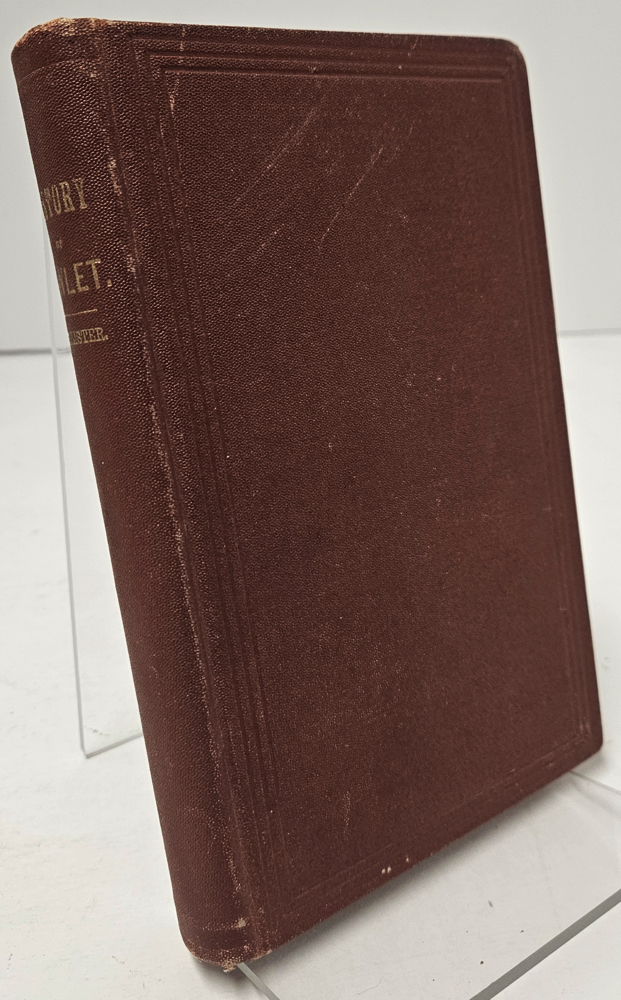
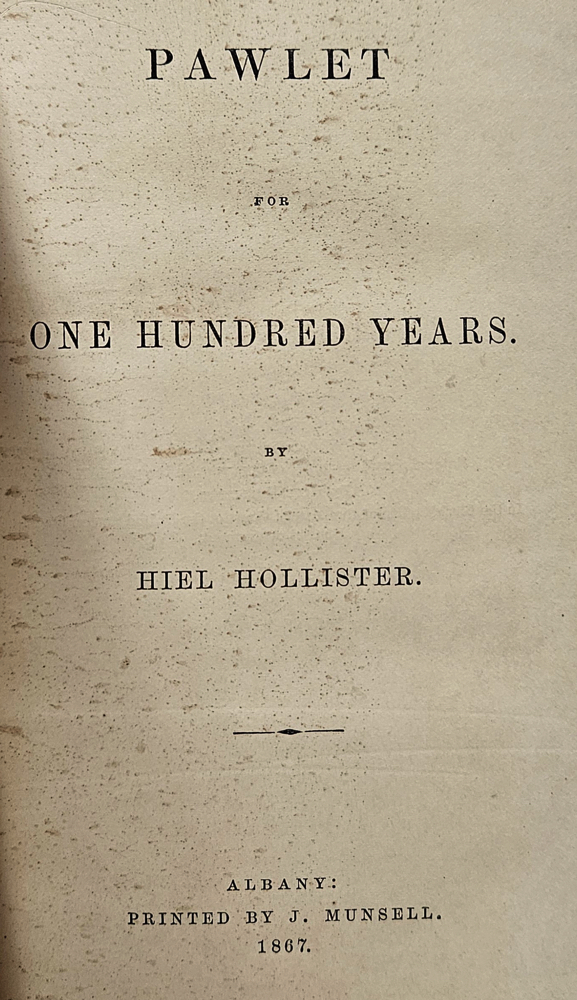
Hardcover. Albany NY, J. Munsell, 1st, 1867, Book: Very Good, Dust Jacket: None, Hardcover in brick red cloth with gilt lettering on the spine, 272 pages. Brown endpapers. Front hinge lightly cracked. Several early pages have foxing. A previous owner numbered in the margin, in light pencil, each sketch, ending with 429, and also noted with small light pencil lines, several men listed in "Names of Soldiers". Still a very nice copy of a first printing, 1867. A fascinating account of the first century of Pawlet, Vermont, a small farming community in southwestern Vermont. Memories of the Civil War were still fresh when this bountiful history was written. The first half of the book contains material on early settlement, the American Revolution (including some military correspondence, accounts of Burgoyne's defeat at Bennington, and a list of Revolutionary soldiers who settled in Pawlet), the War of 1812 (with a list of Pawlet soldiers), an extensive list of men who fought in the Civil War and brief histories of the local militia and Civil War regiments. Chapters are included on local government and politics (including lists of names of officials), emigration, customs and observances, names of merchants, physicians and lawyers, census figures, anti-slavery sentiment, railroads, church histories and other subjects, replete with names and dates. The second half of the book consists of family histories, presented as an alphabetical series of biographical sketches. These short narratives often note date and place of birth, occupation, spouse, children, military service, age and cause of death.
Softcover. Washington and Lee University, 1st, 2005, Book: Very Good, Dust Jacket: None, Softcover, 100 pages. The 2005 issue, Volume 12, of Perspectives in Vernacular Architecture: The Journal of the Vernacular Architecture Forum contains the articles: "Selling Domestic Space: The Boarding House in the Southern Mountains" by Michael Ann Williams; "La Casa Alamense: The Mexican Hacienda as Urban Dwelling" by John Messina; "Unraveling the Benjamin Deyerle Legend: An Analysis of Mid-Nineteenth-Century Brickwork in the Roanoke Valley of Virginia" by Michael J. Pulice; "Orson S. Fowler and a Home for All: The Octagon House in the Midwest" by Rebecca Lawin McCarley; and "Roadside Shrines and Granite Sketches: Diversifying the Vernacular Landscape of Memory" by David Charles Sloane.
Hardcover. Cambridge, MA, MIT Press, 1st, Book: Very Good, Dust Jacket: Very Good, Hardcover, 208 pages. Pictures that are made, not taken, are the focus of this exciting collection of works by 90 American artists who are using appropriation, computer technology, performance, and numerous other sources of inspiration to stretch the limits and expand the possibilities of photographic art. "Perhaps in the future," Man Ray suggested to Duchamp, "photography would replace all art." The Photography of Invention hints at that future by documenting a decade of startling new work in American photography: work that challenges the accepted hierarchy of the arts and, arguably, establishes photography as the equal of the other arts. Pictures that are made, not taken, are the focus of this exciting collection of works by 90 American artists who are using appropriation, computer technology, performance, and numerous other sources of inspiration to stretch the limits and expand the possibilities of photographic art. The selection of nontraditional pictures includes works by some of the decade's most interesting experimenters-Cindy Sherman, Sherrie Levine, Richard Prince, Barbara Kruger, William Christenberry, Louise Lawler, Stefan Roloff, and others who create or manipulate the subject photographed.
Softcover. NY, Burns Archive Press, 1st, 2022, Book: Very Good, Dust Jacket: None, Softcover, 272 pages. SIGNED BY STANLEY BURNS on title page. Picturing Freedom chronicles and celebrates the photographic history of African Americans and their cars by focusing on personal images of the pride and joy of car ownership (1900-1980+). Owning a car was a significant life-changing achievement. It offered special freedoms--the freedom to travel, the freedom to work further from home, the freedom to visit family and friends, the freedom to avoid Jim Crow laws, and the freedom to migrate. The car was unequivocal evidence of Black success and an important symbol of status in a country that had long fought their advancement in every area. Car ownership was purposely and proudly photographed. All of the photographs were taken in Black communities by a family member or a friend and reveal how African Americans represented themselves. This 2022 IPPY award-winning compilation of over 450 unique photographs is an inspiring visual narrative of American life. Clean, bright copy.
Softcover. NY, Vintage Crime/Black Lizard, reprint, 1990, Book: Very Good, Dust Jacket: None, Softcover, 217 pages. A chilling and brutally funny romp through the American South. As high sheriff of Potts County, Nick Corey spends most of his time eating, sleeping and avoiding trouble. If only people--especially some troublesome pimps, his foul-tempered wife, and his half-witted brother-in-law--would stop pushing him around. Because when Nick is pushed, he begins to kill . . . or to make others do his killing for him!The basis for an aclaimed French film noir, Coup de Torchon. Clean copy.
Hardcover. Middletown CT, Wesleyan University Press, 1st, 2011, Book: Very Good, Dust Jacket: Very Good, Hardcover in a bright dust jacket. The first book to look in detail at the turnpikes, steamboats, canals, railroads, and trolleys (street railroads) that helped define Connecticut and shape New England. Advances in transportation technology during the nineteenth century transformed the Constitution State from a rough network of colonial towns to an industrial powerhouse of the Gilded Age. From the race to build the Farmington Canal to the shift from water to rail transport, historian and transportation engineer Richard DeLuca gives us engaging stories and traces the significant themes that emerge as American innovators and financiers, lawyers and legislators, struggle to control the movement of passengers and goods in southern New England. The book contains over fifty historical images and maps, and provides an excellent point of view from which to interpret the history of New England as a whole. Clean copy.
Hardcover. Middletown CT, Wesleyan University Press, 1st, 2011, Book: Very Good, Dust Jacket: Very Good, Hardcover in a bright dust jacket. The first book to look in detail at the turnpikes, steamboats, canals, railroads, and trolleys (street railroads) that helped define Connecticut and shape New England. Advances in transportation technology during the nineteenth century transformed the Constitution State from a rough network of colonial towns to an industrial powerhouse of the Gilded Age. From the race to build the Farmington Canal to the shift from water to rail transport, historian and transportation engineer Richard DeLuca gives us engaging stories and traces the significant themes that emerge as American innovators and financiers, lawyers and legislators, struggle to control the movement of passengers and goods in southern New England. The book contains over fifty historical images and maps, and provides an excellent point of view from which to interpret the history of New England as a whole. Clean copy.
Hardcover. Ithaca NY, Cornell University Press, 1st, 2004, Book: Very Good, Dust Jacket: Very Good, Hardcover in a bright dust jacket, 260 pages. From the dawn of the twentieth century to the early 1960s, public-sector unions generally had no legal right to strike, bargain, or arbitrate, and government workers could be fired simply for joining a union. Public Workers is the first book to analyze why public-sector labor law evolved as it did, separate from and much more restrictive than private-sector labor law, and what effect this law had on public-sector unions, organized labor as a whole, and by extension all of American politics. Joseph E. Slater shows how public-sector unions survived, represented their members, and set the stage for the most remarkable growth of worker organization in American history. Slater examines the battles of public-sector unions in the workplace, courts, and political arena, from the infamous Boston police strike of 1919, to teachers in Seattle fighting a yellow-dog rule, to the BSEIU in the 1930s representing public-sector janitors, to the fate of the powerful Transit Workers Union after New York City purchased the subways, to the long struggle by AFSCME that produced the nation's first public-sector labor law in Wisconsin in 1959. Slater introduces readers to a determined and often-ignored segment of the union movement and expands our knowledge of working men and women, the institutions they formed, and the organizational obstacles they faced.
Hardcover. Cambridge, MA, Harvard University Press, 1st, 1949, Book: Good, Dust Jacket: None, Hardcover. 529 pages. Previous owner's inscription on front end paper. Rubbing to corners and spine. Some markings to covers.
Hardcover. Seattle WA, Fantagraphics, 1st, 2013, Book: Very Good, Dust Jacket: None, Hardcover, 171 pages, illustrated throughout in color and b&w. In 2006, Janet Hamlin went to Guantanamo as a courtroom sketch artist to serve as a visual witness to the courtroom proceedings and provide worldwide media with artwork drawn during them. Clean, tight copy.
Hardcover. New York, John S. Taylor, 2nd pr., 1837, Book: Good, Dust Jacket: None, Hardcover, leather bound with gilt design on front and rear covers, spine also with gilt design with the title Cabinet of Freedom (the series under which the publisher issued this narrative). 517 pages with an extra illustrated title page dated 1836, the regular title page dated 1837. All edges gilt. First published by John Shugert in Lewistown PA a year earlier. Written with the help of Isaac Fisher, a white Philadelphia lawyer, who declares in his preface that he has edited the oral narrative Ball had dictated to him to omit any beliefs or feelings Ball may have expressed about slavery. This declaration of significant editing has led scholars to debate the authenticity of Ball's narrative, but most agree that it represents a true story. Ball describes his experiences as a slave, including the uncertainty of slave life and the ways in which the slaves are forced to suffer harsh and inhumane conditions. In particular, he recounts the qualities of his various masters, and the ways in which his fortune depended on their temperament. The leather has separated from the spine of the book but appears to be very repairable. The first 3 pages loose (a blank leaf and the two title pages), there is a light stain to the illustrated one and light foxing. The interior of the book is clean, tight with minimal foxing throughout.
Hardcover. Cambridge MA, Harvard University Press], 1st, 2015, Book: Very Good, Dust Jacket: Very Good, Hardcover, 365 pages, b&w illustrations. In a bright dust jacket. SIGNED BY AUTHOR on the title page. In 1834 Harvard dropout Richard Henry Dana Jr. sailed to California as a common seaman. His account of the voyage, Two Years Before the Mast, quickly became an American classic. Dana's sense of justice made him a lawyer who championed sailors and slaves, and his extraordinary advocacy put him at the center of some of the most consequential cases in American history.
Softcover. London, Hard Case Crime, 1st thus, 2018, Book: Very Good, Dust Jacket: None, Softcover, colorful wraps with a retro-style illustration by Robert McGinnis. It begins on Death Row, with a condemned man refusing the services of the lawyer assigned to defend him. It begins with a beautiful woman dead, murdered--Vassilia Caroline Baird, known to all simply as V. That's where this extraordinary novel begins. But the story it tells begins years earlier, on a struggling farm in the shadow of the Great Depression and among the brawling "cat skinners" of Southern California, driving graders and bulldozers to tame the American West. And the story that unfolds, in the masterful hands of acclaimed author Oakley Hall, is a lyrical outpouring of hunger and grief, of jealousy and corruption, of raw sexual yearning and the tragedy of the destroyed lives it leaves in its wake. Unpublished for more than half a century, SO MANY DOORS is Hall's masterpiece, an excoriating vision of human nature at its most brutal, and one of the most powerful books you will ever read. Like new.
Softcover. London, Hard Case Crime, 1st thus, 2018, Book: Very Good, Dust Jacket: None, Softcover, colorful wraps with a retro-style illustration by Robert McGinnis. It begins on Death Row, with a condemned man refusing the services of the lawyer assigned to defend him. It begins with a beautiful woman dead, murdered--Vassilia Caroline Baird, known to all simply as V. That's where this extraordinary novel begins. But the story it tells begins years earlier, on a struggling farm in the shadow of the Great Depression and among the brawling "cat skinners" of Southern California, driving graders and bulldozers to tame the American West. And the story that unfolds, in the masterful hands of acclaimed author Oakley Hall, is a lyrical outpouring of hunger and grief, of jealousy and corruption, of raw sexual yearning and the tragedy of the destroyed lives it leaves in its wake. Unpublished for more than half a century, SO MANY DOORS is Hall's masterpiece, an excoriating vision of human nature at its most brutal, and one of the most powerful books you will ever read. Like new.
Hardcover. Chapel Hill, N.C., Algonquin Books, 1st, 1984, Book: Very Good, Dust Jacket: Very Good, Hardcover, 295 pages, b&w photos. INSCRIBED BY AUTHOR on half title page with old photo of author taken just after WW2 mounted on front end paper. Light edgewear to dust jacket and faint foxing to top edge, else a clean, tight copy.
Hardcover. NY, Time Life, reprint, 1982, Book: Very Good, Dust Jacket: None, 476 pages. Hardcover with no dust jacket. Dark blue leather bound with gilt titles to front cover and spine. Embossed decoration on front cover. Gilt text block edges, red ribbon marker. Clean, tight copy. Leander Stillwell (1843-1934) was an American lawyer, judge and a pioneer attorney who co-created the first bar of Erie. From 1861 to 1865 he was with the Union army joining as a private of Company D, Sixty-first Regiment, Illinois Infantry Volunteers. He was appointed Corporal, then Sergeant and later First Sergeant in 1863, and re-enlisted in 1864, at Little Rock, Arkansas. He participated in the battle of Shiloh, the siege of Vicksburg, and several minor engagements. His experiences were published as The Story of a Common Soldier of Army Life in the Civil War, 1861-1865 (1917/20). In 1876 he was elected a member of the lower house of the Kansas Legislature. He was a republican and held various township offices, both in Illinois and Kansas, and was quite active in civic affairs. In 1883 he was elected judge of the Seventh Judicial District. He was re-elected judge of the same district in 1887, 1891, 1895 and 1899, and resigned in 1907.