Hardcover. Philadelphia, American Philological Association, 1st, 1941, Book: Very Good, Dust Jacket: None, Hardcover, green cloth covers with gilt lettering on spine, 200 pages. The Greek text with facing translation runs from pages 22-199. The rest of the book is discussions chapters discussing the polemics between Stoic and Epicureans and the ways the Philodemus arguments might be improvements on Early Modern empiricism. Classic scholarly treatise presents a detailed study of the manner in which the problem of method was expressed by the empirically oriented philosophy of the Epicureans and Sceptics, and by their rationalistic opponents, the Stoics. Each of these schools developed a theory of signs, as the basis for both epistemological and logical speculations. Philodemus' treatise is a defense of Epicurean empirical method, and simultaneously an attack on the rival Stoic rationalistic method. This is first English translation of this work. Clean, bright copy.
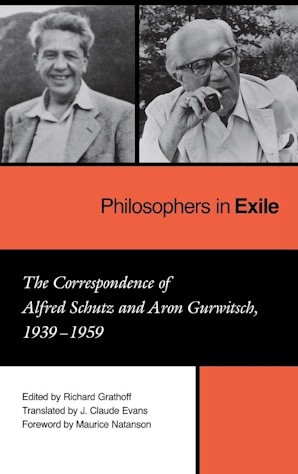
Hardcover. Bloomington, Indiana University Press, 1st, Book: Very Good, Dust Jacket: Very Good, Hardcover in a bright dust jacket, 341 pages. This book presents the remarkable correspondence between Alfred Schutz and Aron Gurwitsch, emigre philosophers influenced by Edmund Husserl, who fled Europe on the eve of World War II and ultimately became seminal figures in the establishment of phenomenology in the United States. Their deep and lasting friendship grew out of their mutual concern with the question of the connections between science and the life-world. Interwoven with philosophical exchange is the two scholars' encounter with the unfamiliar problems of American academic life-what Gurwitsch called the "passology" of exile. Apart from its brilliant and moving portrait of two distinguished men, the correspondence holds rich significance for current issues in philosophy and the social sciences. Clean copy.
Hardcover. Baltimore, Johns Hopkins, 1st, 1981, Book: Very Good, Dust Jacket: Very Good, Hardcover in a bright dust jacket, 184 pages. Saving the Text cuts through Jacques Derrida's complex blend of philosophy, commentary, and elaborate wordplay to ascertain his place in the history of criticism and the significance of Glas as a literary event. Distinguished critic and scholar Geoffrey Hartman explores the usefulness of Derrida's style of close reading for English and American scholarship and establishes its relevance to the division that has arisen between European and Anglo-American critical approaches.
Hardcover. Athens GA, University of Georgia Press, 1st, 2001, Book: Very Good, Dust Jacket: Very Good, Hardcover in a bright dust jacket, 168 pages. This work tells how the first generation of Protestant fundamentalists embraced the modern business and entertainment techniques of marketing, advertising, drama, film, radio, and publishing to spread the gospel. Clean copy.
Hardcover. Windsor VT, Richard and Tracy, 1st US, 1833, Book: Very Good, Dust Jacket: None, Hardcover, polished brown calf, 213 pages. Eleven page preliminary essay by the American editors, followed by 9 sermons, title label on spine. Clean, bright copy.
Hardcover. Durham NC, Duke University Press, 1st, Book: Very Good, Dust Jacket: Very Good, Hardcover in a bright dust jacket, 348 pages. Perhaps best known as a political philosopher, Richard Price (1723-1791) made important contributions to British and American intellectual life in a variety of fields--philosophy, theology, mathematics, demography, probability and public finance, and private and social insurance. The first in a three-volume series edited by W. Bernard Peach and D. O. Thomas, The Correspondence of Richard Price makes available the extant copies of the correspondence to and from Price, including many published for the first time. These letters reveal Price's absorption with financial problems, his influence on the policies adopted by the British government, his defense of Newtonianism against Lord Monboddo, as well as important insights into the political and cultural life in Britain and America. Correspondents include John Adams, William Adams, J. D. van der Capellen, Benjamin Franklin, Thomas Jefferson, Henry Laurens, Lord Monboddo, William Pitt, Joseph Priestly, the Earl of Shelburne, Ezra Stiles, P. W. Wargentin, and Joseph Willard. Clean copy.
Hardcover. Durham NC, Duke University Press, 1st, 1991, Book: Very Good, Dust Jacket: Very Good, Hardcover in a bright dust jacket, 348 pages. Perhaps best known as a political philosopher, Richard Price (1723-1791) made important contributions to British and American intellectual life in a variety of fields--philosophy, theology, mathematics, demography, probability and public finance, and private and social insurance. The second in a three-volume series edited by W. Bernard Peach and D. O. Thomas, The Correspondence of Richard Price makes available the extant copies of the correspondence to and from Price, including many published for the first time. These letters reveal Price's absorption with financial problems, his influence on the policies adopted by the British government, his defense of Newtonianism against Lord Monboddo, as well as important insights into the political and cultural life in Britain and America. Correspondents include John Adams, William Adams, J. D. van der Capellen, Benjamin Franklin, Thomas Jefferson, Henry Laurens, Lord Monboddo, William Pitt, Joseph Priestly, the Earl of Shelburne, Ezra Stiles, P. W. Wargentin, and Joseph Willard. Clean copy.
Softcover. Italy, Leo S. Olschki Editore, 1st, 2002, Book: Very Good, Dust Jacket: Very Good, Softcover in a dust jacket, 313 pages. The first complete collection of all that is conserved of the correspondence that endured for more than thirty years between two great scholars of 16th century religious toleration. The ample introduction and detailed erudite comments accompanying each letter provide precious information on four decades of American and European historiography on the 16th century. Name on cover
Hardcover. NY, Columbia University Press, 1st, 2003, Book: Very Good, Dust Jacket: Very Good, Hardcover in a bright, unclipped dust jacket, 562 pages. During John Dewey's lifetime (1859-1952), one public opinion poll after another revealed that he was esteemed to be one of the ten most important thinkers in American history. His body of thought, conventionally identified by the shorthand word "Pragmatism," has been the distinctive American philosophy of the last fifty years. His work on education is famous worldwide and is still influential today, anticipating as it did the ascendance in contemporary American pedagogy of multiculturalism and independent thinking. His University of Chicago Laboratory School (founded in 1896) thrives still and is a model for schools worldwide, especially in emerging democracies. But how was this lifetime of thought enmeshed in Dewey's emotional experience, in his joys and sorrows as son and brother, husband and father, and in his political activism and spirituality? Acclaimed biographer Jay Martin recaptures the unity of Dewey's life and work, tracing important themes through the philosopher's childhood years, family history, religious experience, and influential friendships. Clean copy.
Softcover. Durham NC, Duke University Press, 1st pbk, 1994, Book: Very Good, Dust Jacket: None, Softcover, 279 pages. Much recent critical theory has dismissed or failed to take seriously the question of the self. French theorists--such as Derrida, Barthes, Benveniste, Foucault, Lacan, and Levi-Strauss--have in various ways proclaimed the death of the subject, often turning to German intellectual tradition to authorize their views. Stanley Corngold's heralded book, The Fate of the Self, published for the first time in paperback with a spirited new preface, appears at a time when the relationship between the self and literature is a matter of renewed concern. Originally published in 1986 (Columbia University Press), the book examines the poetic self of German intellectual tradition in light of recent French and American critical theory. Focusing on seven major German writers--Holderlin, Dilthey, Nietzsche, Mann, Kafka, Freud, and Heidegger--Corngold shows that their work does not support the desire to discredit the self as an origin of meaning and value but reconstructs the allegedly fragmented poetic self through effects of position and style. Offering new and subtle models of selfhood, The Fate of the Self is a source of rich insight into the work of these authors, refracted through post-structuralist critical perspectives. Clean copy.
Hardcover. NY, Frederick Ungar, 1st thus, 1974, Book: Very Good, Dust Jacket: Very Good, Hardcover in a lightly worn dust jacket, 263 pages. 1st American Edition of this Abridged Translation. This is Kraus's masterpiece, with half of Europe as its stage. It is presented here in English for the first time, in an abridged version that preserves the essence of the 800-page original. Its influence on Brecht, Ionesco, and other playwrights is acknowledged. Mingling actual quotations, news reports, and government orders with Kraus's own satiric dialogue, this immense drama (never meaning to be performed) offers a vast fresco of events at the front and at home during, as it prophesied, the last days of the Austro-Hungarian Empire. Indeed, Kraus anticipated the development of atomic warfare and its threat to all mankind. Some of Kraus is untranslatable, but, as Stanley Kauffmann wrote in his New Republic review, "Ungar has done us a benefit at least by bringing us a bit closer to this sharp-eyed, angry, prickly, lover-hater of mankind." INSCRIBED BY FREDERICK UNGAR, the editor and publisher on the half-title page. He also wrote the 14 page introduction. Clean copy.
Hardcover. Chicago, University of Chicago Press, 1st, 2017, Book: Very Good, Dust Jacket: Very Good, Hardcover in a bright dust jacket, 541 pages. b&w illustrations. As Joel Dinerstein reveals in this book, cool began as a stylish defiance of racism, a challenge to suppressed sexuality, a philosophy of individual rebellion, and a youthful search for social change. Through portraits of iconic figures, Dinerstein illuminates the cultural connections and artistic innovations among Lester Young, Humphrey Bogart, Robert Mitchum, Billie Holiday, Frank Sinatra, Jack Kerouac, Albert Camus, Marlon Brando, and James Dean, among others. We eavesdrop on conversations among John-Paul Sartre, Simone De Beauvoir, and Miles Davis, and on a forgotten debate between Lorraine Hansberry and Norman Mailer over the 'white negro' and Black cool. We come to understand how the cool worlds of Beat writers and Method actors emerged from the intersections of film noir, jazz, and existentialism. Clean copy.
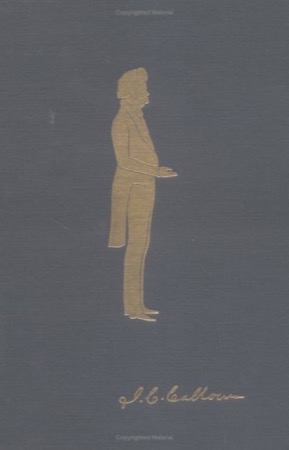
Hardcover. Columbia, University of South Carolina Press, reprint, 2003, Book: Very Good, Dust Jacket: None, Hardcover, blue cloth wth gilt lettering on spine, gilt silhouette of Calhoun on cover. 244 pages with index. The Papers of John C. Calhoun, Volume XXVIII is the final volume in a distinguished documentary edition, the first volume of which was published more than fifty years ago. While identical to others in the series in terms of typeface, binding, and letterpress printing, this volume does not contain any of John C. Calhoun's personal papers, rather it features Calhoun's only formal, scholarly writings on political science and political philosophy. A Disquisition on Government is an examination of the first principles of political science, much in the model of Aristotle's Politics or Baron Montesquieu's Spirit of the Laws. It examines basic principles of politics, including concepts of sovereignty and personal liberty and the relationships between states and nations. A Discourse on the Constitution and Government of the United States is a focused study of American political thought and constitutional history since the ratification of the Constitution. It pays particular attention to antifederalist views of the Constitution, the Virginia and Kentucky Resolutions of the 1790s, and the Bill of Rights, the first ten amendments to the Constitution. Clean copy.
Hardcover. New Haven CT, Yale University Press, 1st, 2003, Two hardcovers in dust dackets with sunning to spines, 479 and 493 pages. Andrew Marvell (1621-78) is best known today as the author of a handful of exquisite lyrics and provocative political poems. In his own time, however, Marvell was famous for his brilliant prose interventions in the major issues of the Restoration, religious toleration, and what he called "arbitrary" as distinct from parliamentary government. This is the first modern edition of all Marvell's prose pamphlets, complete with introductions and annotation explaining the historical context. Four major scholars of the Restoration era have collaborated to produce this truly Anglo-American edition. From the Rehearsal Transpros'd, a serio-comic best-seller which appeared with tacit permission from Charles II himself, through the documentary Account of the Growth of Popery and Arbitrary Government, Marvell established himself not only as a model of liberal thought for the eighteenth century but also as an irresistible new voice in political polemic, wittier, more literary, and hence more readable than his contemporaries. Name, date on front fly leafs, otherwise clean. DUE TO WEIGHT, DOMESTIC SHIPPING ONLY.
Hardcover. London, Pickering & Chatto, 1st, 1999, Book: Very Good, Dust Jacket: None, Hardcover, black cloth, spine with maroon title block and gilt lettering, 377 pages. Vol. 2 ONLY of a six volume set. Clean, bright copy, no markings.
Hardcover. London, Pickering & Chatto, 1st, 1999, Book: Very Good, Dust Jacket: None, Hardcover, black cloth, spine with maroon title block and gilt lettering, 384 pages. Vol. 3 ONLY of a six volume set. Name and date on front fly leaf, otherwise clean.
Hardcover. London, Pickering & Chatto, 1st, 1999, Book: Very Good, Dust Jacket: None, Hardcover, black cloth, spine with maroon title block and gilt lettering, 448 pages. Vol. 4 ONLY of a six volume set. Clean, bright copy, no markings.
Hardcover. Lanham MD, Lexington Books, 1st, 2022, Book: Very Good, Dust Jacket: None, Hardcover, pictorial boards, 143 pages. American nature writing characteristically embodies an appreciative, lyrical evocation of the natural world. But often, too, green-disposed authors have been moved to dramatize diverse, anthropogenic perils to environmental health. John Gatta freshly reveals how this dark yet graced and hopeful strain of environmental literature enlarges upon a jeremiad tradition of prophecy inherited from Puritan New England. Across successive historical periods, such expression has assumed a rich variety of American form--as creative nonfiction, poetry, fiction, or film documentary. In the spirit of ancient Hebrew prophecy, jeremiads--unlike diatribes--reach beyond effusions of doom and gloom toward the prospect of change through a conversion of heart. Accordingly, the new climate fiction and much other writing steeped in what Gatta terms this "Green Jeremiad" tradition not only warn of material threats to life's flourishing, but may also look to stir spiritual understanding and renewal. Clean copy.
Hardcover. NY, Pellegrini & Cudahy, 1st, 1949, Book: Very Good, Dust Jacket: None, Hardcover, black cloth with silver stamping, 241 pages, b&w illustrations. Limited to 1500 copies. John Marin was one of the most important American artists of the 20th century, known for his luminous watercolors and bold, expressive style. In this beautifully curated collection, Dorothy Norman presents a selection of Marin's most important writings, offering insights into his creative process and philosophy. Clean copy.
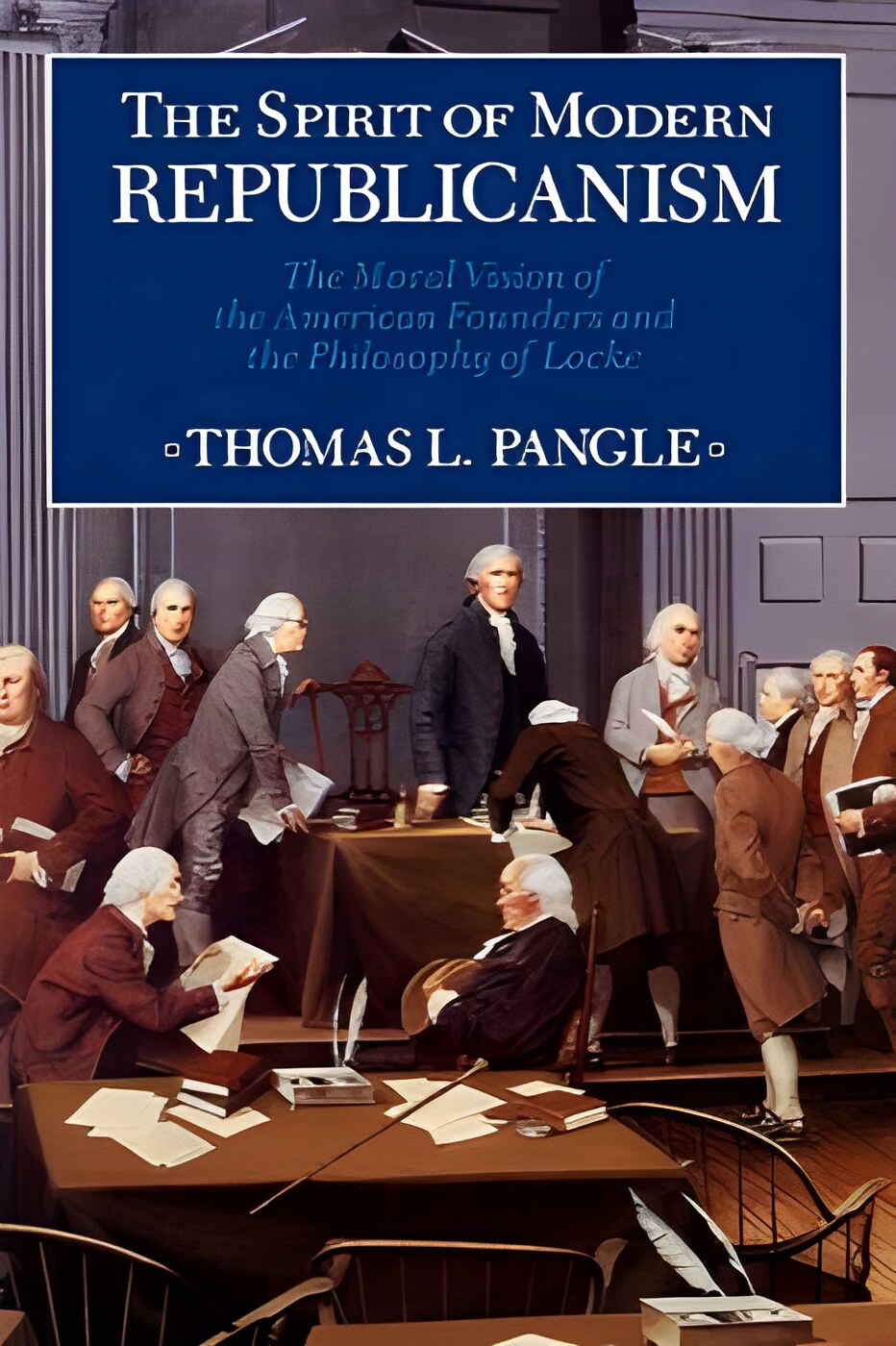
Hardcover. Chicago, University Of Chicago Press, reprint, 1990, Book: Very Good, Dust Jacket: None, Softcover, 334 pages. The Spirit of Modern Republicanism sets forth a radical reinterpretation of the foundations on which the American regime was constructed. Thomas L. Pangle argues that the Founders had a dramatically new vision of civic virtue, religious faith, and intellectual life, rooted in an unprecedented commitment to private and economic liberties. It is in the thought of John Locke that Pangle finds the fullest elaboration of the principles supporting the Founders' moral vision. Clean copy.
Hardcover. NY, Free Press, 5th pr., 1990, Book: Very Good, Dust Jacket: Very Good, Hardcover in a bright dust jacket, 432 pages. INSCRIBED BY BORK on the title page, wishing someone success in his law career. A nominee for the Supreme Court, Judge Bork writes about his social and legal philosophy in what is described on the front flap as "the definitive formulation of the wisdom and necessity of interpreting the Constitution according to the "original understanding" of the framers and the people for whom it was written." A brilliant argument for the wisdom and necessity of interpreting the Constitution according to the "original Understanding" of the Framers and the people for whom it was written. Illuminates the history of the Supreme Court and the underlying meaning of constitutional controversy. Relational between values and the law, concludes with a personal account of Judge Bork's chillingly emblematic experiences during the Senate Judiciary Committee's hearing on his Supreme Court nomination. Clean copy.
Hardcover. London, Stuart & Watkins, 2nd pr., 1970, Book: Very Good, Dust Jacket: Good, Hardcover in a lightly worn dust jacket with tape repairs to rear panel, black cloth stamped with gilt. 221 pages. Originally published in 1896, this printing was limited to 500 copies. Clean. Arthur Edward Waite (2 October 1857 - 19 May 1942), commonly known as A. E. Waite, was an American-born British poet and scholarly mystic who wrote extensively on occult and esoteric matters, and was the co-creator of the Rider-Waite Tarot deck.
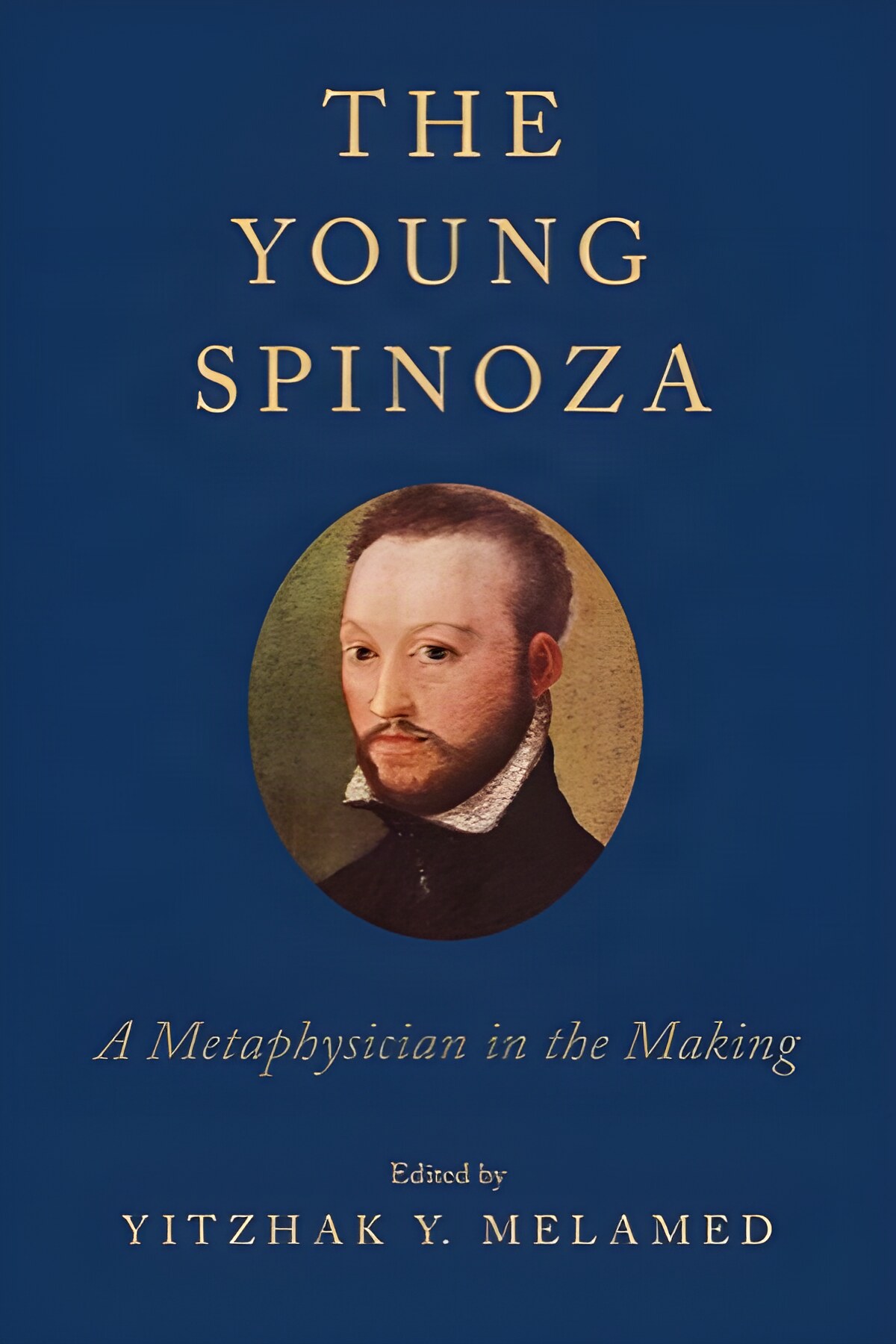
Softcover. NY, Oxford University Press, 1st, 2015, Book: Very Good, Dust Jacket: None, Softcover, 360 pages. Ex nihilo nihil fit. Philosophy, especially great philosophy, does not appear out of the blue. In the current volume, a team of top scholars-both up-and-coming and established-attempts to trace the philosophical development of one of the greatest philosophers of all time. Featuring twenty new essays and an introduction, it is the first attempt of its kind in English and its appearance coincides with the recent surge of interest in Spinoza in Anglo-American philosophy. Spinoza's fame-or notoriety-is due primarily to his posthumously published magnum opus, the Ethics, and, to a lesser extent, to the 1670 Theological-Political Treatise. Few readers take the time to study his early works carefully. If they do, they are likely to encounter some surprising claims, which often diverge from, or even utterly contradict, the doctrines of the Ethics. Consider just a few of these assertions: that God acts from absolute freedom of will, that God is a whole, that there are no modes in God, that extension is divisible and hence cannot be an attribute of God, and that the intellectual and corporeal substances are modes in relation to God. Yet, though these claims reveal some tension between the early works and the Ethics, there is also a clear continuity between them. Name, date on front fly leaf, otherwise clean.
Softcover. NY, Farrar, Straus and Giroux, 1st, 2012, Book: Very Good, Dust Jacket: Very Good, Hardcover, 416 pages. In this definitive biography, Justin Wolff places Benton in the context of his tumultuous historical moment-as well as in the landscapes and cultural circles that inspired him. Thomas Hart Benton-with compelling insights into Benton's art, his philosophy, and his family history-rescues a great American artist from myth and hearsay, and provides an indelibly moving portrait of an influential, controversial, and often misunderstood man.

 "Philodemus: on Methods of Inference. A Study in Ancient Empiricism by: Philodemus, Philip Howard De Lacey, Estelle Allan De Lacey")
 "Saving the Text: Literature/Derrida/Philosophyby: Geoffrey H. Hartman")
 "Selling the Old-Time Religion: American Fundamentalists and Mass Culture, 1920-1940 by: Douglas Carl Abrams")
 "Sermons on Infidelity: First American Edition with a Preliminary Essayby: Thomson, Andrew")


 "The Education of John Dewey: A Biographyby: Jay Martin")

 "The Last Days of Mankind: A Tragedy in Five Acts by: Kraus, Karl; /Ungar, Frederick(Ed.) /Wright, E Sue (transl.)")



 "The Reception of Locke's Politics Vol 2: Patriarchalism, the Social Contract and Civic Virture 1705- 1760by: Goldie, Mark (Ed.)")
 "The Reception of Locke's Politics Vol 3: The Age of the American Revolution 1760-1780by: Goldie, Mark (Ed.)")
 "The Reception of Locke's Politics Vol 4: Poitical Reform in the Age of The French Revolution 1780-1838by: Goldie, Mark (Ed.)")
 "The Saving Grace of America's Green Jeremiad by: John Gatta")

 "Thomas Hart Benton: A Life by: Wolfe, Justin")