Hardcover. US, Soul Jazz Books, 1st, 2014, Book: Very Good, Dust Jacket: None, 200 pages. Hardcover with no dust jacket. Clean, unmarked copy with only minor wear to laminated cover boards. Color and black and white pictures throughout. The image of the Caribbean is as much a creation of the West as it is the result of its population's incredibly complex identity. A melting pot of races born of the 400-year slave trade--Africans, indigenous Americans and their French, Spanish, German, Dutch and English colonizers--the identity of the Caribbean stands at the intersection of tourism, colonialism and tropicality. This deluxe large-format volume features hundreds of fascinating and unique photographs that span 100 years of Caribbean history, culture, industry and more, as well as the subsequent diaspora of its people to America, England and elsewhere. The photographs show the many ways in which the region has been portrayed, from tropical backdrop of tourism and hedonism to colonial outpost and revolutionary threat in North America's own backyard.
Hardcover. NY, Da Capo Press, reprint, 1971, Book: Very Good, Dust Jacket: None, Hardcover, red cloth with gilt lettering on spine, front cover. 280 pages plus index. Facsimile reprint from 1777. Name on front fly leaf otherwise clean.
Hardcover. NY, Macmillan & Co., 1883, Book: Good, Hardcover, light tan cloth stamped in brown, 595 pages. Title page states 1883 with a blank copyright page. Most likely a reprint. Originally published in London in two volumes. This thought-provoking historical novel transports readers to the 18th century, where the American colonies hum with political tension and the winds of rebellion blow. Set against the backdrop of the American Revolution, the author paints a vivid portrait of this tumultuous era through the interwoven lives of a diverse cast of characters. Amidst the turmoil, a young American woman finds herself torn between her love for a British officer and her loyalty to her country. As the lines between love and duty blur, the novel delves into the moral complexities of divided allegiances and the nature of patriotism. Front hinge cracked, shelf wear. Clean copy.
Softcover. Boston, New England Historic Genealogical Society, 1st, 2002, Book: Very Good, Dust Jacket: None, Softcover, pictorial wrappers, 272 pages. Pages have clear, concise listings of cemetery locations and are in excellent condition as well. This one-of-a-kind guidebook provides genealogists and historians with a valuable reference for Massachusetts research. For the first time ever, a researcher can quickly gain information on: * cemetery names *year of consecration or the oldest known gravestone or burial * location of cemetery * printed and manuscript sources for the cemetery * contact information for the office affiliated with the cemetery. This book contains many previously undocumented burial grounds as well as citations to published transcriptions of gravestone listings in places such as the New England Historic Genealogical Society, the National Society Daughters of the American Revolution, and the official Massachusetts Vital Records to the end of 1850 series. Clean copy.
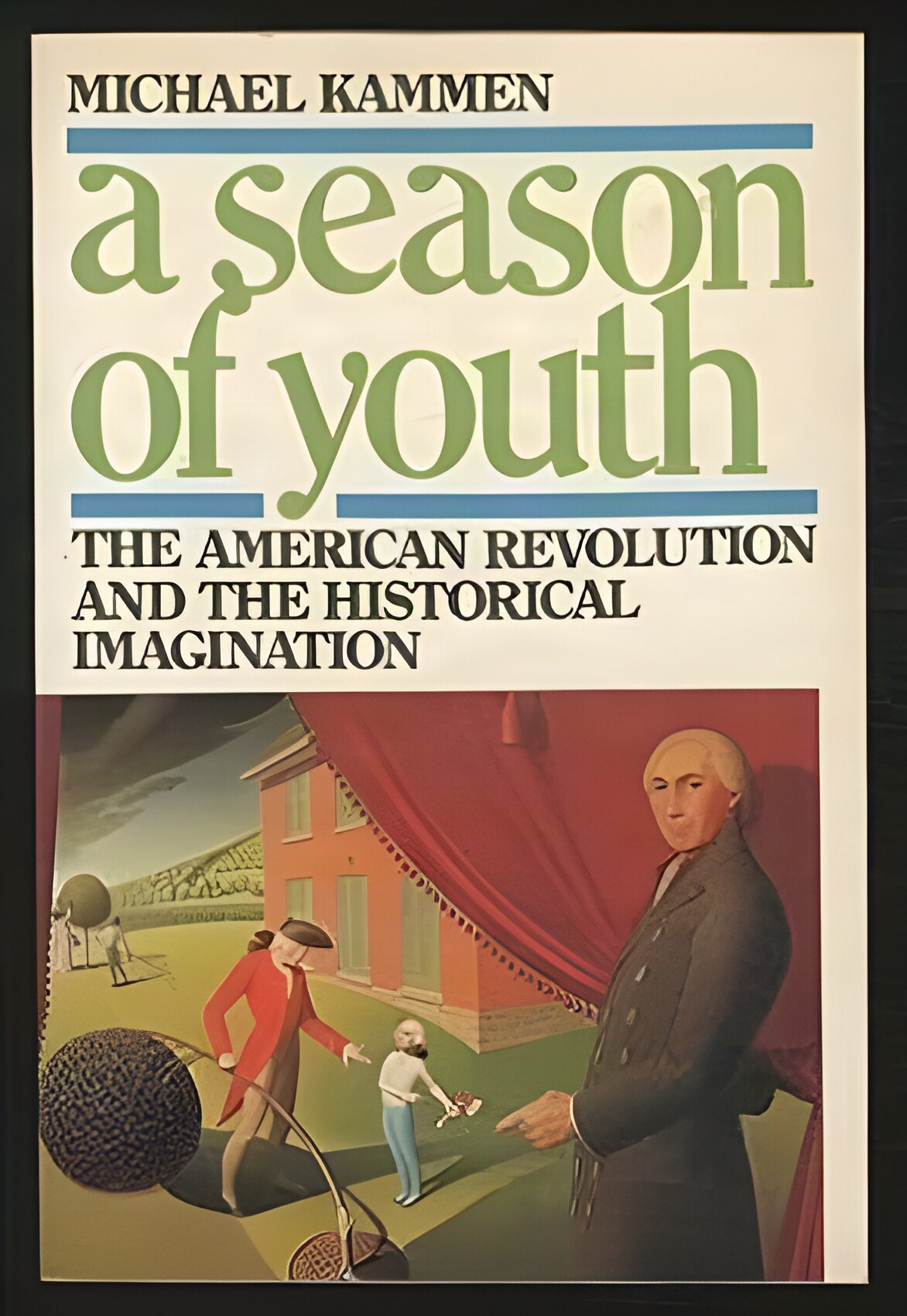
Softcover. NY, Oxford University Press, reprint, 1980, Book: Very Good, Dust Jacket: None, Softcover, 384 pages with index. In this major contribution to cultural history Kammen focuses on the American Revolution and it's impact on literature and art. Name on front fly leaf, otherwise clean.
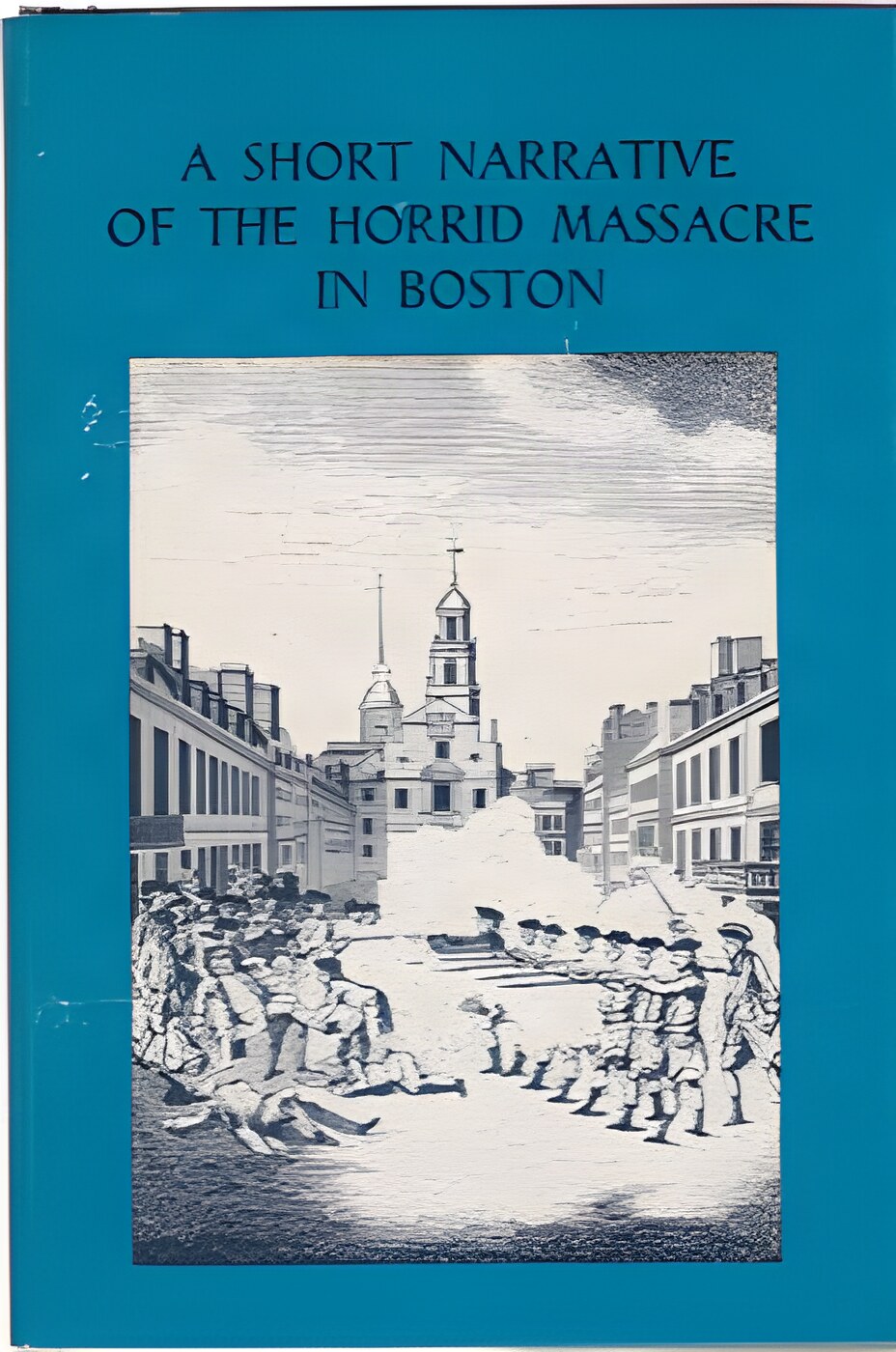
Hardcover. Williamstown MA, Corner House, reprint, 1973, Book: Very Good, Dust Jacket: Very Good, Hardcover in a bright dust jacket, 122 pages. An Official account of the Boston Massacre, March 5, 1770. This is an exact reprint from an original in the library of the New York Historical Society, containing the full appendix, certificates, and circular of the Committee. It also contains events of the few days preceding the massacre drawn up by the Hon. Alden Bradford; and the Report made by John Hancock, Samuel Adams, Joseph Warren and other, presented at the meeting of the citizens on the 12th of March plus explanatory notes by the author.
Hardcover. New Haven CT, Yale University Press, 1st, 2009, Book: Very Good, Dust Jacket: Very Good, Hardcover, 344 pages. The abstract paintings of Jackson Pollock, Willem de Kooning, Barnett Newman, Lee Krasner, Clyfford Still, Helen Frankenthaler, and others revolutionized the art world in the 1940s and 1950s and continue to inspire passionate arguments to this day. What were these artists trying to achieve? Who were the critical voices of the time that rallied public interest in Abstract Expressionism and sparked rancorous debate? Drawing on recent critical, historical and biographical work, this lavishly illustrated book offers a sharp new focus on a pivotal art movement.
Hardcover. Boston, MA, New York Graphic Society, 1st, 1977, Book: Very Good, Dust Jacket: Very Good, Hardcover, 335 pages. 134 black-and-white illustrations. Bibliography and index. Dust jacket slightly sun-faded. Examines Steiglitz's revolutionary role in the American avant-garde from the turn of the century to 1917. Clean copy.
Hardcover. New Haven CT, Yale University Press, 1st, 2019, Book: Very Good, Dust Jacket: Very Good, Hardcover in a bright dust jacket, 259 pages, b&w, some color illustrations. Alfred Stieglitz (1864-1946) was an enormously influential artist and nurturer of artists even though his accomplishments are often overshadowed by his role as Georgia O'Keeffe's husband. This new book from celebrated biographer Phyllis Rose reconsiders Stieglitz as a revolutionary force in the history of American art. Born in New Jersey, Stieglitz at age eighteen went to study in Germany, where his father, a wool merchant and painter, insisted he would get a proper education. After returning to America, he became one of the first American photographers to achieve international fame. By the time he was sixty, he gave up photography and devoted himself to selling and promoting art. His first gallery, 291, was the first American gallery to show works by Picasso, Rodin, Matisse, and other great European modernists. His galleries were not dealerships so much as open universities, where he introduced European modern art to Americans and nurtured an appreciation of American art among American artists. Clean copy.
Hardcover. NY, Penguin Press, 1st, 2007, Book: Very Good, Dust Jacket: Very Good, Hardcover in a bright, unclipped dust jacket with light edgewear, 400 pages.This adventurous book charts the origins of the local "market cooking" culture that we all savor today. When Francophile Alice Waters opened Chez Panisse in Berkeley in 1971, few Americans were familiar with goat cheese, cappuccino, or mesclun. But it wasn't long before Waters and her motley coterie of dreamers inspired a new culinary standard incorporating ethics, politics, and the conviction that the best-grown food is also the tastiest. Based on unprecedented access to Waters and her inner circle, this is a truly delicious rags-to-riches saga.
Softcover. New York, Doubleday, 1st, 1990, Book: Very Good, Dust Jacket: None, 297 pages. Softcover. A very clean, unmarked copy with only minor edgewear to paper wrappers. Faded spine. A Livingston descendant once called the Hudson Valley, Livingston Valley, and with good reason. The original 1686 Royal patent of 160,000 acres on the east side of New York's Hudson River to Scottish merchant Robert Livingston grew within two generations to nearly one million acres and included vast portions of the Catskill Mountains as well. Intermarriages with other wealthy and influential Hudson Valley families, the Roosevelts, Delanos, Van Rensselaers, Schuylers, Astors, and Beekmans, to name a few created a dynasty and a landed aristocracy on the banks of the new republic s most important river an irony embedded at the core of the American experiment. At one time forty Livingston mansions lined the east shore, and the family s reach into NYS and American politics, economics, and social scene was profound and enduring. Their influence on early American politics was pervasive, with Livingstons on the Provincial Assembly, as members of the Continental Congress, on the committee to draft a Declaration of Independence, as first Chancellor of New York State and co-drafter with John Jay of the state s Constitution, justice of the NYS Supreme Court, Minister to France the list goes on. And, of course, there was the patron of Robert Fulton who brought a revolution to commerce with the world s first steamship, known as the Clermont after the Livingston estate in Columbia County that is now a State Historic Site Text includes a map of the Hudson Valley showing Livingston family land holdings, and a family genealogy from 1654 to 1964.
Hardcover. NA, By Subscription, 1825, Book: Fair, Dust Jacket: None, 431 pages. Brown leather covers. Spine with chipping and creases to gilt decoration. Black & white illustrations, including 1 fold-out. Previous owners name stamped on preliminary page. Light to moderate foxing throughout. Front cover detached.
Hardcover. Boston, Houghton Mifflin , reprint, Book: Very Good, Dust Jacket: None, Two volumes, bound in matching 3/4 black leather and marbled boards. Spines with raised bands, gilt decorations and lettering, top edge gilt, ribbon markers. Marbled end papers, previous owner's bookplate on inside front covers. Illustrated with b&w portraits and maps. A handsome production in bright, clean condition.
Hardcover. NY, HarperCollins, 1st, 2003, Book: Very Good, Dust Jacket: Very Good, Hardcover in a bright, unclipped dust jacket. SIGNED BY CHOI on the title page. On the lam for an act of violence against the American government, 25-year-old Jenny Shimada agrees to care for three younger fugitives whom a shadowy figure from her former radical life has spirited out of California. One of them, the kidnapped granddaughter of a wealthy newspaper magnate in San Francisco, has become a national celebrity for embracing her captors' ideology and joining their revolutionary cell. American Woman draws its plot from the Patty Hearst Kidnapping in 1974. It is more than a simple retelling of known facts. The author opens up her characters - their psychology, their background. She gives a sense of the times and of real people in those times. Clean copy.
Hardcover. NY, Alfred A. Knopf , 1st, 1984, Book: Very Good, Dust Jacket: Very Good, Hardcover in an unclipped dust jacket, 408 pages. In this illuminating study of the "crucial century" (1830-1930), Alfred Kazin views the major figures in American writing, beginning when Ralph Waldo Emerson left the church and inspired a national literature on the basis of a religious revolution, and ending with the triumph of modernism - Eliot, Pound, Hemingway, Fitzgerald - and with the revelation after World War I of the "postponed power" of those who had been modern before their time: Henry Adams, Melville, Whitman, Dickinson.
Hardcover. Bemis Heights NY, privately printed, reprint, 1926, Book: Very Good, Dust Jacket: None, Hardcover, green cloth covers, gilt lettering on spine. 290 pages. Folded battle map laid in at rear. A reprint of the 1844 account published in Albany. Clean copy.
Softcover. NY, Aperture Foundation, 1998, Book: Very Good, Dust Jacket: None, Softcover, 80 pages. A large, beautifully designed photography publication with many full page photographs in black and white and color. Glossy wraps. The Mexican book series Rio de Luz was a courageous and energetic presentation of Latin American photography. To honor the accomplishments of the series and the artists, an issue of Aperture is devoted to the Rio de Luz collection. Separate chapters address the outstanding themes concerning the editors of the Rio de Luz series-revolution, the American way of life and Cuba, the 1950s, and "poetry of the onlooker." Artists include Lazaro Blanco, Raul Corrales, Hector Garcia, Graciela Iturbide, Nacho Lopez, Pedro Meyer, Miguel Rio Branco, and Mariana Yampolsky. Authors include Carlos Monsivais, Alvaro Mutis, Victor Flores Olea, Pablo Ortiz Monasterio, Roberto Tejada, Raquel Tibol, and Veronica Volkow.
Hardcover. NY, Quantuck Lane Press, 1st, 2005, Book: Very Good, Dust Jacket: Good, 456 pages. Hardcover with dust jacket. Clean, unmarked copy with tear on front dust jacket and light wear to edges. Erich Lessing is a legend in photography. Born in 1923 in Vienna, he became a photo-reporter for Associated Press in 1947, and in 1951 he became one of the earliest members of the legendary Magnum photo cooperative. His remarkable 1950s images documenting post-World War Europe, and particularly his pictures of the 1956 Hungarian Revolution, garnered worldwide admiration. Lessing's works always revolve around the human condition at the moment when power and powerlessness come face to face, when the joy of living is suddnely overclouded with pain. His photographs seize the opportunity to recount an instant of history that will never be repeated. This monumental book is a tribute to Lessing's talent as a photojournalist and a visual record of a time of turmoil and great change. Lessing has received international honors, including the American Art Directors' Award, the Grand Austrian State Prize for Artistic Photography, and many others. 400 duotone photographs.
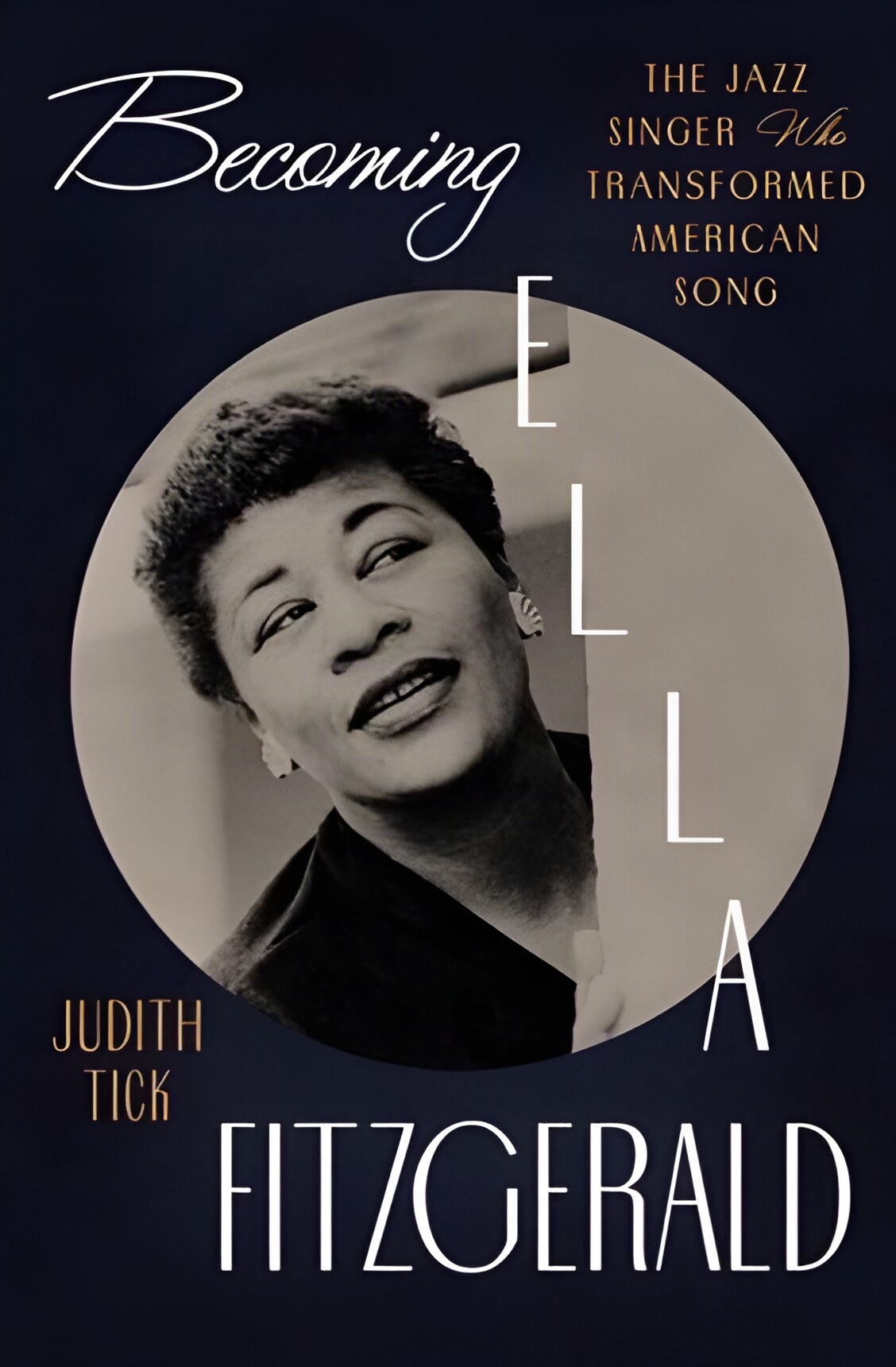
Hardcover. NY, W. W. Norton & Company, 1st, 2024, Book: Very Good, Dust Jacket: Very Good, Hardcover in a lightly rubbed dust jacket, 560 pages, b&w illustrations. In this first major biography since Fitzgerald's death, music historian Judith Tick draws on deep archival research, family interviews and newly available recordings and concert footage to show how Fitzgerald fused a Black vocal aesthetic with mainstream popular repertoire to revolutionise American music. From Fitzgerald's first audition at the Apollo Theatre to swing-era success at the Savoy, Tick shows how this 'girl singer' broke new ground: as a female bandleader, as a ground-breaking bebop improviser and as the arbiter of the American canon with her Song Book recordings. Yet even as she electrified concert halls and sold millions of records, jazz critics belittled her as 'naive'. Tick reveals instead an ambitious risk-taker with a stunningly diverse repertoire, whose exceptional musical spontaneity (often radically different on stage than in the studio) made her a transformational artist. Remainder dot to top edge otherwise a clean copy.
Hardcover. New York, Vanguard Press, 1st, 1932, Book: Good, Dust Jacket: None, 306 pages. Hardcover. B/w illustrated frontispiece. Some age wear to covers. Bound in gray fabric. Previous owner's bookplate on front endpaper. Deckled edges. Some age yellowing to pages and edges. In good condition for its age.
Hardcover. Indianapolis/NY, Bobbs-Merrill, 1st, 1971, Book: Very Good, Dust Jacket: Good, Hardcover in a worn dust jacket, 490 pages, b&w frontis. Rush, the Philadelphia doctor who signed the Declaration of Independence, was an energetic, ambitious man given to devising reforms and, as the author puts it, meddling in politics. He studied medicine in Edinburgh and London, meeting Hume, Goldsmith, Samuel Johnson, et al. and, Hawke thinks, solidifying his republican disposition. Back in Pennsylvania he agitated for independence, made friends with John Adams, urged Paine to write Common Sense, and entered Congress. Apart from the recurrent epidemics of the age, the practice of military medicine and propaganda for resuming debt payments occupied Rush during the war; afterwards he turned to progressive education, speculated in land, fought paper money, equivocally supported the abolition of slavery, declared that tobacco is unhealthful, and boosted the Constitution before it was even written. Dust jacket chipped, faded in parts, clean internally.
Hardcover. NY, Amistad/HarperCollins, 3rd pr., 2005, Book: Very Good, Dust Jacket: Very Good, Hardcover in a bright, unclipped dust jacket. 540 pages, b&w illustrations, index. An important book of epic scope on America's first racially integrated, religiously-inspired political movement for change-The Underground Railroad, a movement peopled by daring heroes and heroines, and everyday folk For most, the mention of the Underground Railroad evokes images of hidden tunnels, midnight rides, and hairsbreadth escapes. Yet the Underground Railroad's epic story is much more morally complex and politically divisive than even the myths suggest. Against a backdrop of the country's westward expansion,which brought together Easterners who had engaged in slavery primarily in the abstract alongside slaveholding Southerners and their slaves, arose a clash of values that evolved into a fierce fight for nothing less than the country's soul. Beginning six decades before the Civil War, freedom-seeking blacks and pious whites worked together to save tens of thousands of lives, often at the risk of great physical danger to themselves. Not since the American Revolution had the country engaged in an act of such vast and profound civil disobedience that not only subverted federal law but also went against prevailing mores.

 "90 Degrees of Shade: 100 Years of Photography in The Caribbeanby: Gilroy, Paul (Foreword)")



 "Action/Abstraction: Pollock, de Kooning, and American Art, 1940-1976by: Norman L. Kleeblatt , Maurice Berger , et al.")
 "Alfred Stieglitz and the American Avant-Gardeby: Homer, William Innes")

 "Alice Waters and Chez Panisse: The Romantic, Impractical, Often Eccentric, Ultimately Brilliant Making of a Food Revolutionby: Thomas McNamee")
 "American Aristocracy, An: The Livingstonsby: Brandt, Clare")
 "American Military Biography; containing the Lives, Characters, and Anecdotes of the Officers of the Revolution, who were most Distinguished in Achieving our National Independence. - Also, The Life of Gilbert Motier La Fayette, Major")
 "American Revolution, The (2 Vols.)by: Fiske, John")


 "American Woman: A Novel (SIGNED COPY)by: Choi, Susan")
 "American's Ethan Allenby: Holbrook, Stewart; Ward, Lynd")

 "Aperture 153: Rio de Luz (Aperture Magazine)by: Aperture Foundation Inc. Staff")
 "Arresting Time: Erich Lessing, Reportage Photography, 1948-1973by: Crawford, Alistair")
 "Benedict Arnold: Military Racketeerby: Sullivan, Edward Dean")
 "Benjamin Rush: Revolutionary Gadfly by: David Freeman Hawke")
 "Bound for Canaan: The Underground Railroad and the War for the Soul of America by: Bordewich, Fergus")