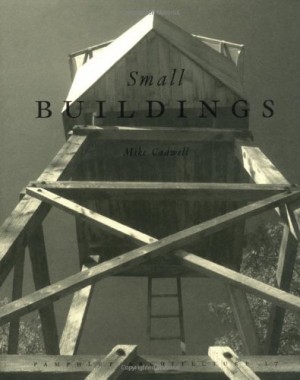
Softcover. NY, Princeton Architectural Press, 1st, Book: Very Good, Dust Jacket: None, Softcover, 64 pages, b&w photos throughout. A portfolio of the small buildings designed by the author with a handwritten note laid in. Tectonically beautiful and intricate, his work represents some of the finer points of simple thought in architecture. His own commentary and a conclusion by Turner Brooks allow a clear and concise understanding of the projects. Clean, bright copy.
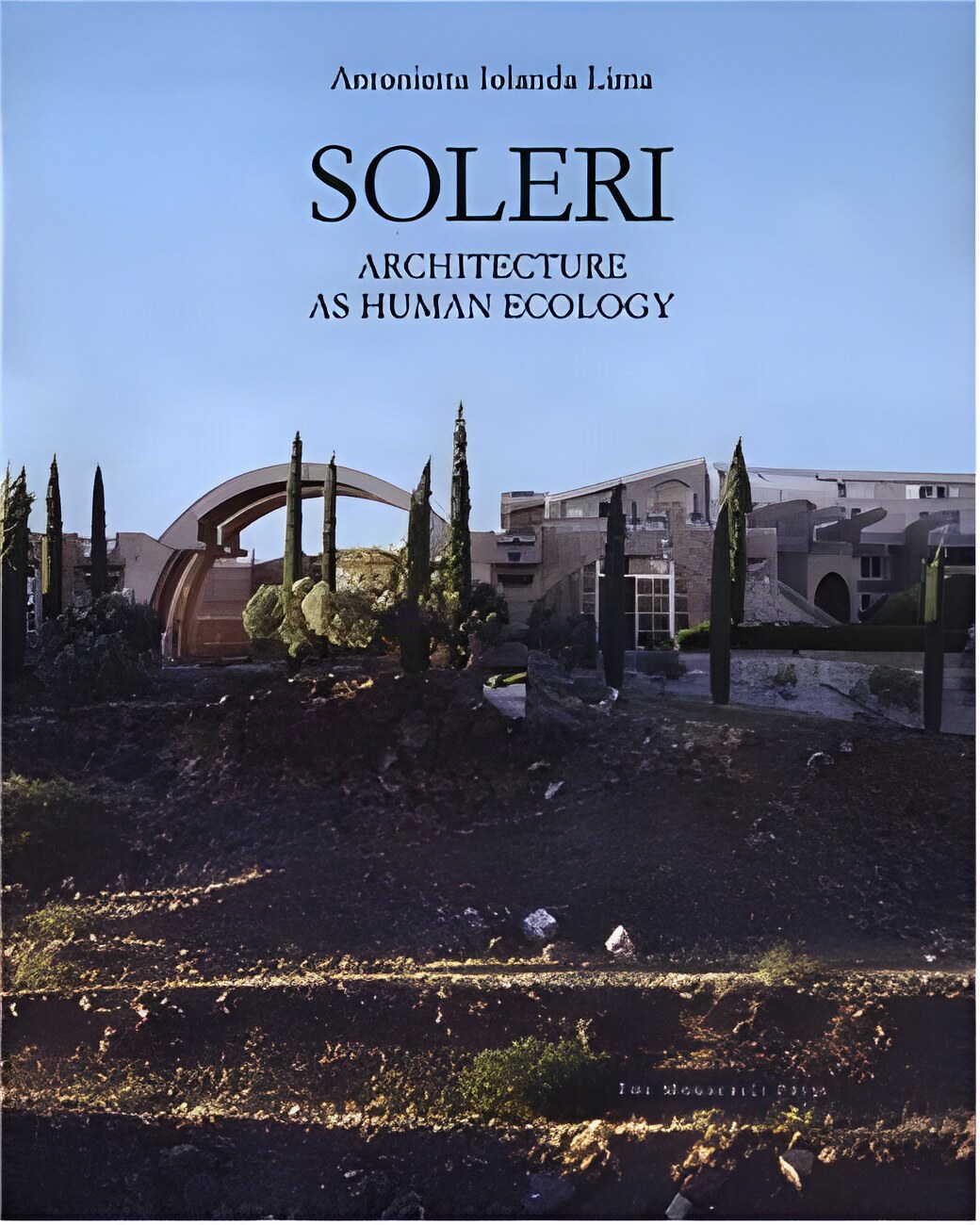
Hardcover. NY, The Monacelli Press, 1st US, 2003, Book: Very Good, Dust Jacket: Very Good, Hardcover in a bright dust jacket, 407 pages. As much a visionary as he is an architect, Paolo Soleri, born in Turin in 1919, worked with Frank Lloyd Wright in the late 1940s and went on to develop his own organically expressive architecture. Since 1935 he has been involved almost exclusively with the design of alternative urban planning models. By 1970 he had designed thirty 'Arcologies,' his term for a series of high-density, fantastically unreal megastructures for up to six million inhabitants. This comprehensive monograph, the first on Soleri to be published in the United States, follows his entire career through a presentation of drawings, sketches, and built work. Over 600 illustrations in color and b/w. Clean copy. DOMESTIC SHIPPING ONLY.
Softcover. New York , Rizzoli, 1st, 1989, Book: Very Good, Dust Jacket: None, 288 pages, softcover edition. Edited by Sarah Mollman Underhill. Introductory Essay by Stanley Tigerman. Afterword by John Hejduk. Illustrated with color and black-and-white drawings, photographs and plans.
Hardcover. London, Smith, Elder and Co., Second Edition, 1858, Book: Very Good, Dust Jacket: None, Three hardcover volumes with blue leather covers featuring marbled endpapers, raised bands along brown spines with red title plates, gilt decoration. Second Edition. Black & white, and some color illustrations in all 3 volumes by John Ruskin. Volume 1 - "The Foundations". 400 pages. Top edge gilt. Light, faint pencil marginalia to a few pages. Minor abrasion to covers. Clean, tight copy. Volume 2 - "The Sea Stories". 394 pages. Top edge gilt. Faint foxing to some pages. a few moderate abrasions to rear cover. Clean, tight copy. Volume 3 - "The Fall". 362 pages. Top edge gilt. Light pencil marginalia scattered throughout. Faint foxing to some pages. Minor abrasions to covers. Clean, tight copy. A nice set.
Softcover. Washington DC, Planners Press, revised ed., 1988, Book: Very Good, Dust Jacket: None, Softcover, This seminal report outlines a street-graphics system that ensures on-premise signs are expressive, appropriate, legible, and compatible with the character of the community. The system is a legally enforceable regulatory framework that makes good design possible. It offers benefits to business owners by eliminating the visual cacophony that often drowns out their messages and to drivers and pedestrians by making it easier and safer for them to find what they're looking for. Clean copy.
Hardcover. NY, McGraw-Hill, 1st, 1996, Book: Very Good, Dust Jacket: Very Good, Hardcover in a bright dust jacket. Clean copy. The topic of streets and street design is of compelling interest today as public officials, developers, and community activists seek to reshape urban patterns to achieve more sustainable forms of growth and development. Streets and the Shaping of Towns and Cities traces ideas about street design and layout back to the early industrial era in London suburbs and then on through their institutionalization in housing and transportation planning in the United States. It critiques the situation we are in and suggests some ways out that are less rigidly controlled, more flexible, and responsive to local conditions.
Hardcover. Harrisburg PA, National Historical Society, reprint, 1987, Book: Very Good, Dust Jacket: None, Hardcover, glossy green pictorial boards. No DJ as issued. A like new copy, no marks. Volume 1 of the Architectural Treasures of Early America. From material originally published as White Pine Series of Architectural Monographs edited by Russell F. Whitehead and Frank Chouteau Brown. 243 page book with historic photographs and home plans. Clean copy.
Hardcover. Santa Monica, CA, Hennessey & Ingalls, 1st, 2001, Book: Very Good, Dust Jacket: Very Good, 162 pages. Hardcover with dust jacket. A very clean, unmarked copy with only minor edgewear to dust jacket. Marston was instrumental in establishing Pasadena as a winter resort and then as a thriving community. He and his firm designed 1000 projects, many of which still survive, including cottages and additions to resort hotels, notable commercial and civic buildings such as the Pacific Asia Museum, and the earliest bungalow court. His residential designs span the range of styles from the Arts and Crafts through English Tudor and Monterey Colonial to, most importantly, Mediterranean Revival. This is an important addition to the literature of California's Golden Age of architecture.
Hardcover. New York, Monacelli Press, Inc., 1st US, 2003, Book: Very Good, Dust Jacket: Good, 276 pages. Hardcover. Illustrated with full color photographs. Dust jacket with fading along spine and edges. Light wear. Clean, tight copy.
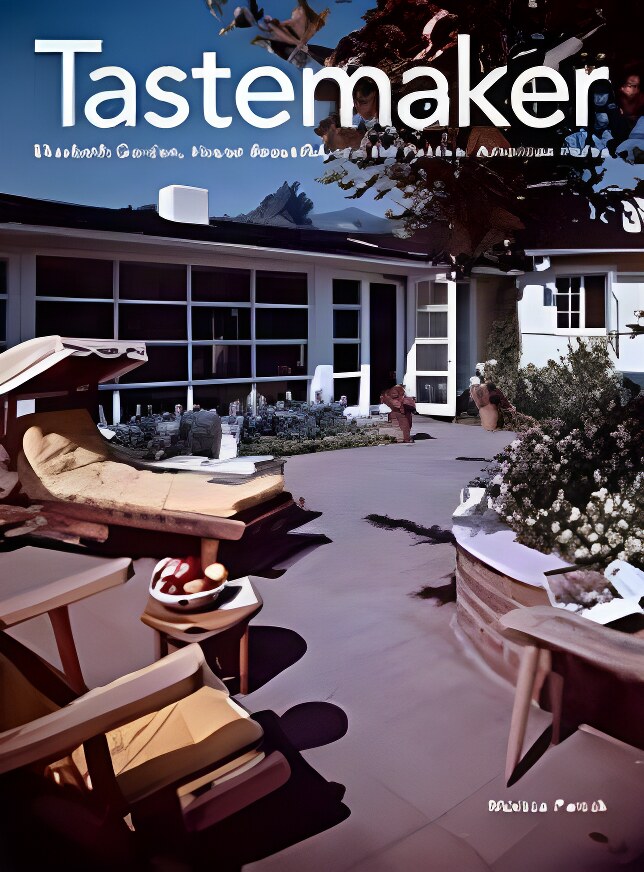
Hardcover. New Haven CT, Yale University Press, 1st, 2017, Book: Very Good, Dust Jacket: Very Good, Hardcover, 260 pages, in a bright, unclipped dust jacket. A riveting and superbly illustrated account of the enigmatic House Beautiful editor's profound influence on mid-century American taste From 1941 to 1964, House Beautiful magazine's crusading editor-in-chief Elizabeth Gordon introduced and promoted her vision of "good design" and "better living" to an extensive middle-class American readership. Her innovative magazine-sponsored initiatives, including House Beautiful's Pace Setter House Program and the Climate Control Project, popularized a "livable" and decidedly American version of postwar modern architecture. Gordon's devotion to what she called the American Style attracted the attention of Frank Lloyd Wright, who became her ally and collaborator. Gordon's editorial programs reshaped ideas about American living and, by extension, what consumers bought, what designers made, and what manufacturers brought to market. This incisive assessment of Gordon's influence as an editor, critic, and arbiter of domestic taste reflects more broadly on the cultures of consumption and identity in postwar America. Nearly 200 images are featured, including work by Ezra Stoller, Maynard Parker, and Julius Shulman. This important book champions an often-neglected source--the consumer magazine--as a key tool for deepening our understanding of mid-century architecture and design.
Softcover. Philadelphia, Philadelphia Museum of Art, 1st, 1973, Book: Very Good, Dust Jacket: None, Softcover in bright pictorial wrappers, 212 pages. With a catalogue of selected buildings and a checklist of the architecture and projects of Frank Furness. Illustrated with b&w photos and plans. Small ink notation on title apge otherwise clean.
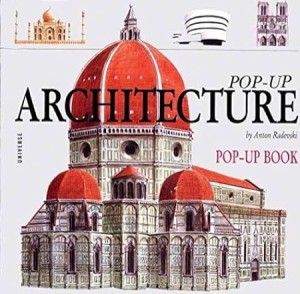
Hardcover. New York, Universe Publishing, 2nd printing, 2009, Book: Very Good, Dust Jacket: None, Non paginated. Hardcover. Six pages of pop-ups in excellent condition, each page has several smaller pop-ups laid in. Bright cover boards & bright illustrations throughout by illustrator, Anton Radevsky. A magnificent journey through the history of architecture. Featuring amazing three-dimensional replications of famous buildings from ancient to modern times, The Architecture Pop-Up Book showcases artwork, photographs, pop-ups, and detailed text of the ancient Egyptian pyramids; the great constructions of Greece and Rome, such as the Parthenon and the Colosseum; majestic Asian wonders, including the Taj Mahal; Gothic and Neoclassical masterpieces, such as Notre Dame and the Florence Duomo; and the work of such important modern architects as Gaudi, Frank Lloyd Wright, and Frank Gehry. From a brilliantly elaborate Gothic cathedral nave to a telescoping Chrysler Building skyscraper, the talent and imagination of architects and builders from all eras and from all over the world are displayed and compared here.Clean, unmarked & tight copy.
Hardcover. New York, D. Appleton, 1st, 1895, Book: Very Good, Dust Jacket: None, 2 Volumes. Elephant Folios. 3/4 leather. Raised bands on spines. Titles in gilt. Designed by Stanford White, a.e.g. with marbled end papers. Set is 16 5/8 inches tall. Profusely illustrated with textual illustrations with fifty photogravures in color on heavy stock. There are also one hundred and twenty full-page typogravures in black and white. One plate with chipped edges - E. L. Weeks - "Three Beggars of Cordova". Rubbing to corner covers and along spines. Interiors clean and unmarked. Both volumes Very Good. Combined volumes weigh approximately 30 lbs - please contact us concerning shipping costs.
Hardcover. NY, The Monacelli Press, 1st, 2005, Book: Very Good, Dust Jacket: Very Good, Hardcover, 640 pages, pofusely illustrated. In the late nineteenth century, Chicago -- the birthplace of modern architecture in the United States -- was a magnet for aspiring architects. The city was forced to rebuild after the destruction wrought by the Great Fire of 1871 and also to expand to accommodate a surge in the population. The seemingly endless demand for taller and more sophisticated buildings offered young draftsmen an unprecedented opportunity to influence the design of the American skyscraper. The Chicago Architecture Club: Prelude to the Modern documents the history of these draftsmen, the organization they founded, and its role in shaping architectural education and modern architectural practice.
Hardcover. NY, The Monacelli Press, 1st, 2005, Book: Very Good, Dust Jacket: Very Good, Hardcover, 640 pages, pofusely illustrated. In the late nineteenth century, Chicago -- the birthplace of modern architecture in the United States -- was a magnet for aspiring architects. The city was forced to rebuild after the destruction wrought by the Great Fire of 1871 and also to expand to accommodate a surge in the population. The seemingly endless demand for taller and more sophisticated buildings offered young draftsmen an unprecedented opportunity to influence the design of the American skyscraper. The Chicago Architecture Club: Prelude to the Modern documents the history of these draftsmen, the organization they founded, and its role in shaping architectural education and modern architectural practice.
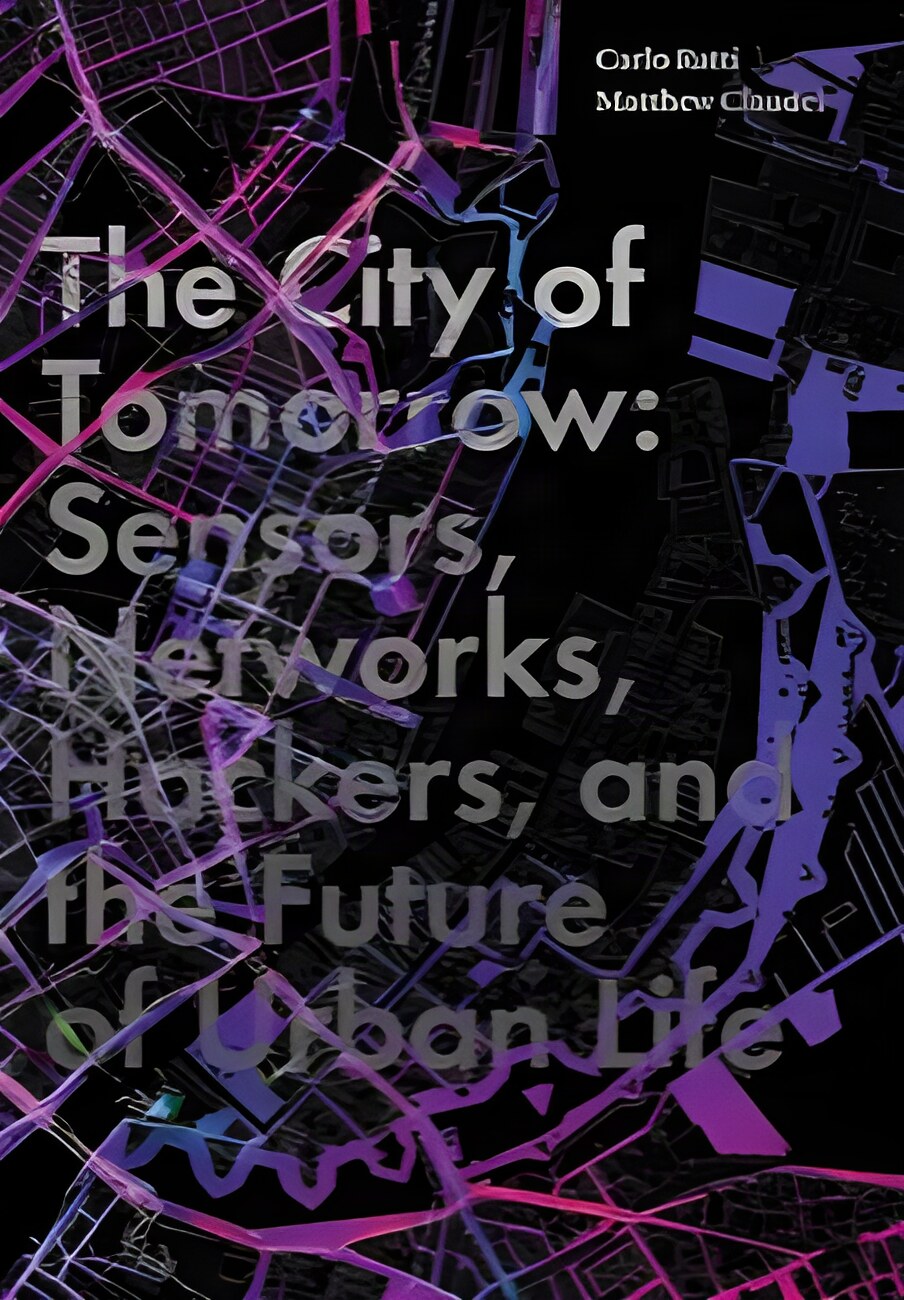
Hardcover. New , Yale University Press, 1st, 2016, Book: Very Good, Dust Jacket: Very Good, Hardcover in a bright dust jacket, 180 pages. The authors explain some of the forces behind urban change and offer new visions of the many possibilities for tomorrow's city. Pervasive digital systems that layer our cities are transforming urban life. The authors provide a front-row seat to this change. Their work at the MIT Senseable City Laboratory allows experimentation and implementation of a variety of urban initiatives and concepts, from assistive condition-monitoring bicycles to trash with embedded tracking sensors, from mobility to energy, from participation to production. They call for a new approach to envisioning cities: futurecraft, a symbiotic development of urban ideas by designers and the public. With such participation, we can collectively imagine, examine, choose, and shape the most desirable future of our cities. Clean copy.
Softcover. NY, Doubleday Anchor , 3rd pr., 1973, Book: Very Good, Dust Jacket: None, Softcover, 245 pages, black and white photographs and line drawings throughout. Clean copy.
Softcover. Notre Dame IN, Theatre Historical Society, 1st, 1986, Book: Very Good, Dust Jacket: None, Softcover, stapled wrappers, 40 pages. Profusely illustrated in b&w. A visual history of the design and building of the Earle Theatre in Philadelphia. Some of the world's biggest stars performed there in it's heyday. Old price sticker on rear cover, otherwise clean, very good.
Softcover. Thousand Oaks CA, Sage Publications, 1st, 1998, Book: Very Good, Dust Jacket: None, Softcover, 182 pages, b&w illustrations. In 1960, Kevin Lynch wrote The Image of the City, which transformed the way design professionals and social scientists dealt with the urban form and design. The Evaluative Image of the City follows the work of Lynch and further explores the role of human evaluations of the cityscape. This book describes how to assess, plan, and design the appearance of cities to please inhabitants. It presents a series of studies on evaluative images, discusses methodologies, findings, and applications to design and planning at various stages. Urban designers and planners, architects, business people, and the general public will find this book a valuable guide for improving the image of their surroundings. Clean copy.
Hardcover. Newtown CT, Taunton , 1st, 2006, Book: Very Good, Dust Jacket: Very Good, Hardcover in a bright dust jacket, 218 pages in color. There are hundreds of books on the market about designing the interior of a home, but none for homeowners that focuses on the design of a home's exterior. And yet the exterior of the house is what we all see and remember- it's the "face" of home we fall in love with, whether we are looking for a new home or just taking in the sights during a Sunday afternoon drive. All of us can relate to a house's exterior, but few understand how they're put together, or how the outside and inside should work in harmony. When people describe the exterior of a house, they usually give a label or a style- Cape, Colonial, Ranch. But, in truth, what they are referring to are not only its exterior physical characteristic- the particular blend of roof-lines, siding, trim, windows, doors and porches, but also its emotional characteristics- inviting, austere, friendly. The author examines these physical and emotional characteristics, explores the concepts and applications of exterior design and how they can be successfully used to enhance the experience of home and provides a fresh, new language for describing, understanding, and shaping the face of home. Clean copy.
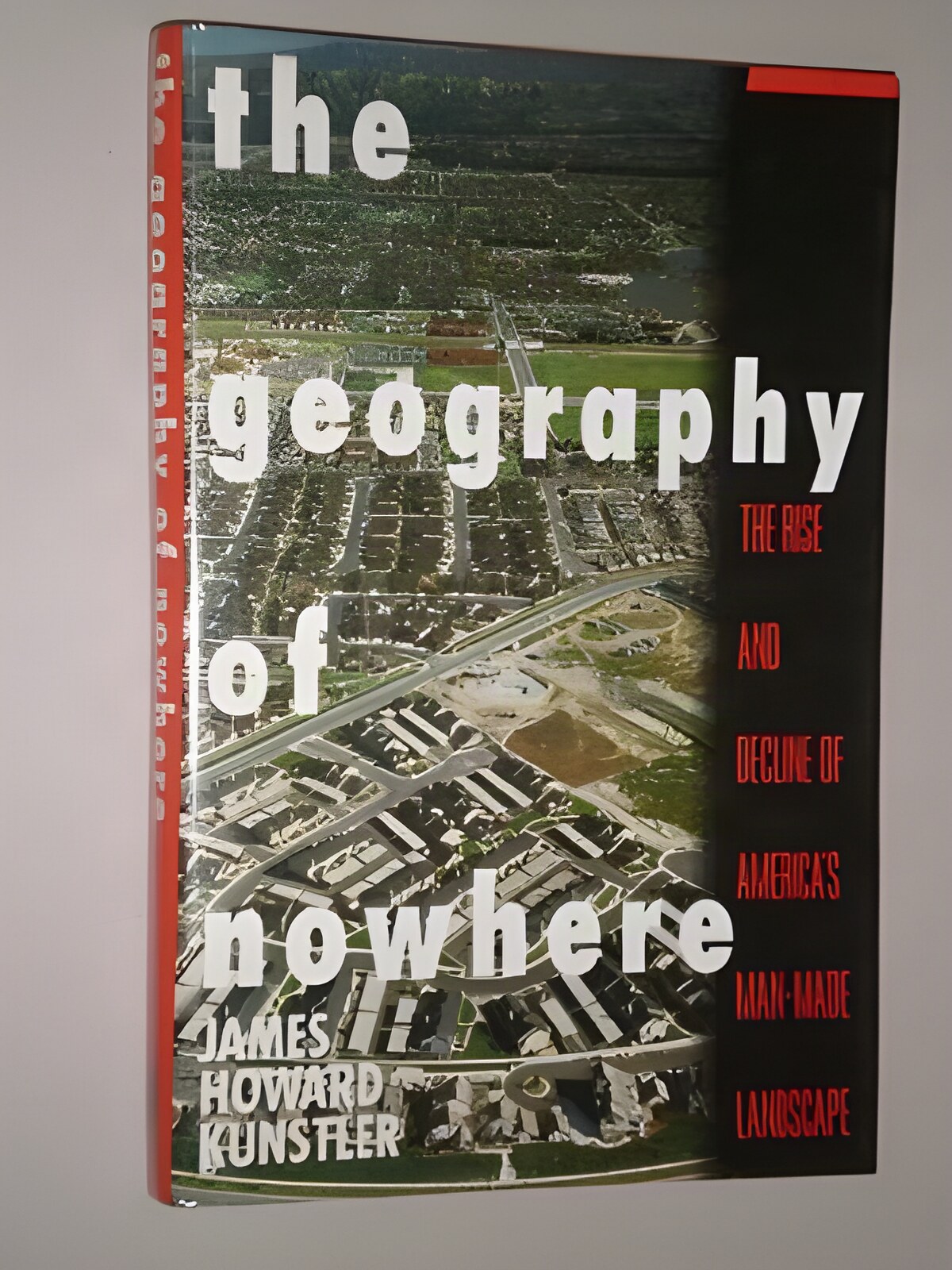
Hardcover. NY, Simon & Schuster, 1st, 1993, Book: Very Good, Dust Jacket: Very Good, Hardcover in a bright, unclipped dust jacket, 303 pages. Eighty percent of everything ever built in America has been built since the end of World War II. This tragic landscape of highway strips, parking lots, housing tracts, mega-malls, junked cities, and ravaged countryside is not simply an expression of our economic predicament, but in large part a cause. It is the everyday environment where most Americans live and work, and it represents a gathering calamity whose effects we have hardly begun to measure. In The Geography of Nowhere, James Howard Kunstler traces America's evolution from a nation of Main Streets and coherent communities to a land where everyplace is like noplace in particular, where the city is a dead zone and the countryside a wasteland of cars and blacktop. Now that the great suburban build-out is over, Kunstler argues, we are stuck with the consequences: a national living arrangement that destroys civic life while imposing enormous social costs and economic burdens. Kunstler explains how our present zoning laws impoverish the life of our communities, and how all our efforts to make automobiles happy have resulted in making human beings miserable. Name on front fly leaf, otherwise like new.
Softcover. New York, Brooklyn Museum, 1st, 1983, Book: Very Good, Dust Jacket: None, 180 pages, b&w and color photography. Very light edge wear, else a very clean, tight copy. Wonderful book on the great Brooklyn Bridge. Includes much historical material, chapters on the design of the bridge with several beautiful fold-outs, and many full color repros. of the many paintings and artwork that have been inspired by the beauty of one of the wonders of the modern world. Even includes a small filmog. of films that have used the Bridge as a background or a major location/set. Published on the 100th anniversary of the opening of the bridge and an exhibition celebrating it, held at The Brooklyn Museum.
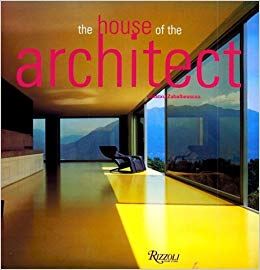
Hardcover. NY, Rizzoli, 1st, 1995, Book: Very Good, Dust Jacket: Very Good, 192 pages. Hardcover. Dust jacket unclipped. Color and b/w illustrations throughout. A tour of the private domains of world-renowned architects. Previous owner initials in right upper corner of endpapers. In excellent condition, clean inside and out.

 "Stanley Tigerman - Buildings and Projects 1966-1989by: Underhill, Sarah Mollman")
 "Stones of Venice, The - 3 Volumesby: Ruskin, John")


 "Survey of Early American Design (Architectural Treasures of Early America Vol. 1) by: Mullins, Lisa C. (editor)")
 "Sylvanus Marston: Master Architect in Pasadena's Golden Ageby: Tuttle, Kathleen")
 "Tadao Ando - Light and Waterby: Frampton, Kenneth/Tadao Ando")
 "The Architecture of Frank Furness by: O'Gorman, James F.; Thomas, George E.")

 "The Chicago Architectural Club: Prelude to the Modernby: Wilbert Hasbrouck")
 "The Chicago Architectural Club: Prelude to the Modernby: Wilbert Hasbrouck")
 "The Dymaxion World of Buckminster Fullerby: R. Buckminster Fuller; Robert W. Marks")
 "The EARLE THEATRE, Philadelphia, Penna., Hoffman & Henon, Architects, Opened: March 24, 1924. Theatre Historical Society Annual for 1986by: Irvin R. Glazer")


 "The Face of Home: A New Way to Look at the Outside of Your House by: Eck, Jeremiah")
 "The Great East River Bridge, 1883-1983by: No Author (Brooklyn Museum)")