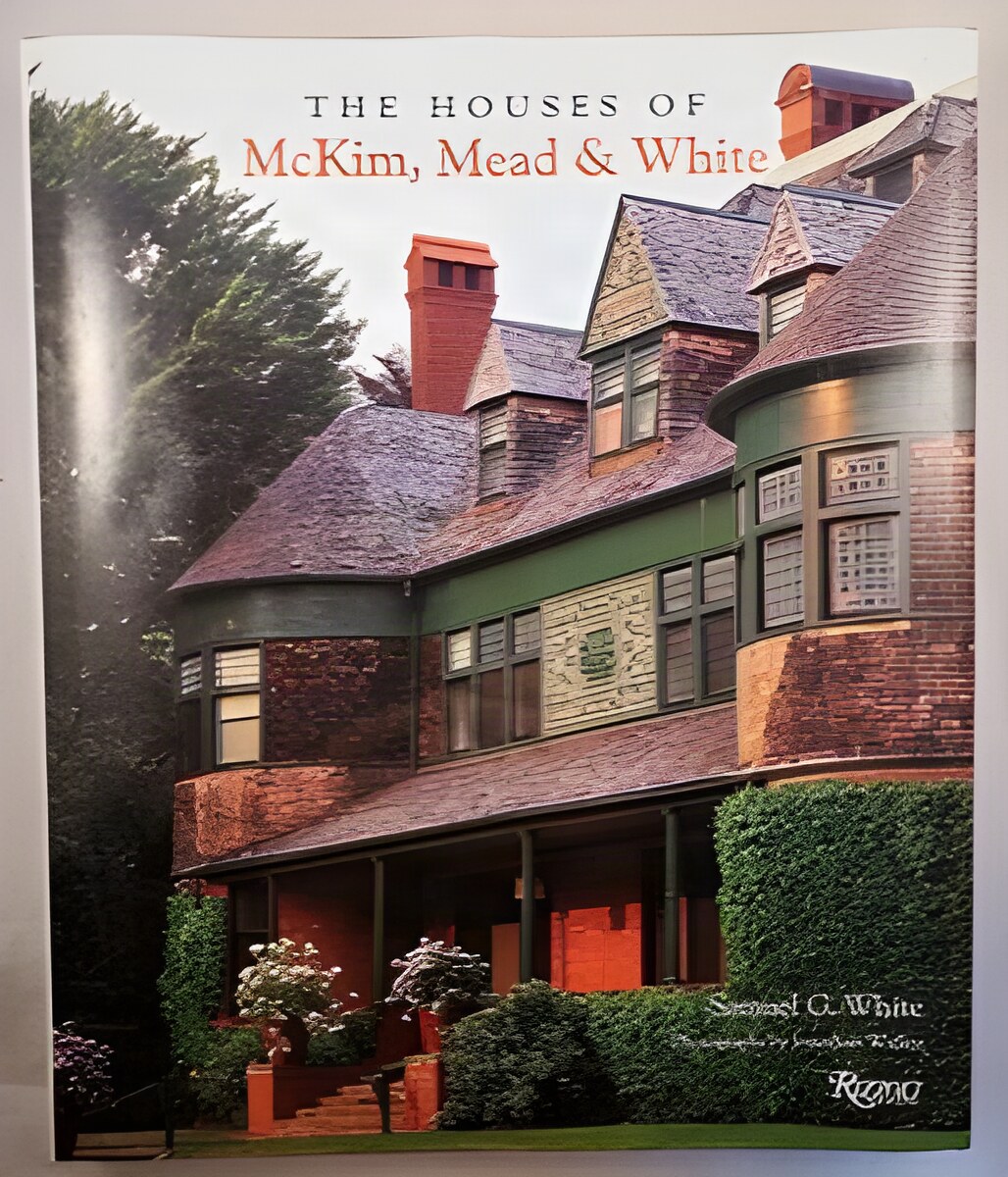
Hardcover. NY, Rizzoli, 1st, 1998, Book: Very Good, Dust Jacket: Very Good, Hardcover in a bright, lightly worn dust jacket. 252 pages illustrated in color. With nearly one thousand commissions executed between 1879 and 1912, McKim, Mead & White was the architectural firm of choice of the most prestigious projects of the era, including the redesign of the White House and the Mall in Washington, D.C., and the campuses of Harvard and Columbia Universities. Among its residential clients were many of the most powerful figures of the Gilded Age-Vanderbilts, Whitneys, Pulitzers-for whom the firm built splendid summer cottages in Newport and throughout Long Island and the Hudson valley and sumptuous town houses in Boston, Washington, Baltimore and New York. More than thirty houses are presented here, their exteriors and interiors elegantly recorded in lush new color photographs. The book also provides the first look at the recent restoration of the Isaac Bell house in Newport and newly reinstalled Venetian room at the Payne Whitney house, now the French Cultural Services, in New York City. Clean copy. DOMESTIC SHIPPING ONLY.
Hardcover. The McKernon Group. Inc., 1st, 2005, Book: Very Good, Dust Jacket: Very Good, Hardcover, 114 pages. Jack McKernon has created an easy-to-read guide for those about to embark on the adventure of building or renovating homes of their own. Pulling together details from his own experiences and those of his colleagues at the design-build firm he founded in Brandon, Vermont, he takes the reader through the process of creating a home that evokes the past but lives in the present. Illustrated with over 290 color photographs, the book offers narrative advice on finding and working with the right design-build contractor, siting the home on the property, incorporating elements of the Vermont vernacular farmhouse, ensuring convenience and comfort in the home, building responsibly, and designing a space that incorporates one's personal desires.
Hardcover. The McKernon Group. Inc., 1st, 2005, Book: Very Good, Dust Jacket: Very Good, Hardcover, 114 pages. Jack McKernon has created an easy-to-read guide for those about to embark on the adventure of building or renovating homes of their own. Pulling together details from his own experiences and those of his colleagues at the design-build firm he founded in Brandon, Vermont, he takes the reader through the process of creating a home that evokes the past but lives in the present. Illustrated with over 290 color photographs, the book offers narrative advice on finding and working with the right design-build contractor, siting the home on the property, incorporating elements of the Vermont vernacular farmhouse, ensuring convenience and comfort in the home, building responsibly, and designing a space that incorporates one's personal desires.
Softcover. NY, Thames & Hudson, 1st pbk., 1988, Book: Very Good, Dust Jacket: None, Softcover in pictorial wrappers, 304 pages. Profusely illustrated in b&w. Piranesi has a powerful appeal for our time. His brilliance as a graphic artist, his transformation of the European vision of Classical antiquity, and his themes of fantasy have been the focus of considerable study in recent years. But though these aspects are important for an appreciation of Piranesi's visual significance, they have tended to obscure other factors essential for a complete understanding of his unique achievement. In this copiously illustrated study, John Wilton-Ely - one of the world's foremost authorities on Piranesi - offers a full reappraisal of the complex personality of an astonishingly versatile artist. His book covers every aspect of Piranesi's life and work, emphasizing especially his importance as a pioneer of Roman archaeology, the high quality of his technical illustrations, and his role in the great Graeco-Roman debate of the 1760s. The author brings to life the Enlightenment world of the artist's ideas - fundamentally bound up with the birth of Neo-Classicism - and the search for an appropriately modern form of expression; and he shows the practical and influential form taken by these ideas in Piranesi's architectural projects, his designs for furniture and decorative schemes and his imaginative restoration of antiquities. Clean copy.
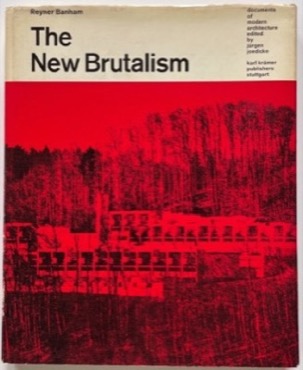
Hardcover. London, The Architectual Press, 1st, 1966, Book: Very Good, Dust Jacket: Good, Hardcover in a bright, lightly edgeworn dust jacket. First edition of Reyner Banham's foundational disquisition on Brutalist architecture presenting, per the liner notes, a scholarly history of the documentable facts on Brutalism, an eye-witness account of the period and personalities that produced it, and a comparative critique of numerous buildings regarded rightly or wrongly as examples of Brutalist architecture. Explores texts and buildings by an international roster of architects including Le Corbusier, Mies van der Rohe, James Stirling, Sir Owen Williams, Louis Kahn, Johannes van den Broke, Vladimir Bodiansky, William G. Howell, Richard Llewelyn-Davies, Denys Lasdun, Sir Basil Spence, Peter Moro, Andre Wogenscky, Atelier 5, Walter Forderer, Sverre Fehn, Oswald Mathias Ungers, Sir Leslie Martin, Vittorio Vigano, Aldo van Eyck, Paul Rudolph, Kiyonori Kikutake, Kunio Mayekawa, and not least, the architects regarded by Banham as the founders of the New Brutalism, Peter and Alison Smithson. 196 pages, illustrated throughout in black-and-white. Clean copy.
Hardcover. Periplus Editions, 1st, Hardcover in a bright, lightly worn dust jacket. 224 pages illustrated in color. The New Malaysian House is a collection of 25 contemporary houses that demonstrate a remarkable flowering of Malaysian design talent that has been germinating since the mid- 1980s. The houses range from luxury detached bungalows set in extensive tropical gardens to weekend retreats in the forest, from the gated communities springing up throughout Malaysia to extended family homes. All are distinguished by a singular quality of innovative design as the architects sought to explore new approaches for designing with the climate and in the cultural context of Malaysia. Clean copy.
Hardcover. New York, Reynal & Hitchcock, 1st, 1938, Book: Very Good, Dust Jacket: None, 2 Hardcover volumes. Volume 1 - 655 pages. Black & white illustrations. Moderate fading to spine of red cloth covers. Light wear. Clean, tight copy. Volume 2 - 640 pages. Black & white illustrations. Moderate fading to spine of red cloth covers. Light wear. Clean, tight copy.
Hardcover. Baltimore, Johns Hopkins University Press, 1st, 2007, Book: Very Good, Dust Jacket: Very Good, Hardcover in a bright dust jacket. The seventh volume of the Papers of Frederick Law Olmsted presents the record of his last years of residence in New York City. It includes reports on the design of Riverside and Morningside parks and Tompkins Square in Manhattan, as well as his comprehensive plan for the street system and rapid transit routes of the Bronx. It records his continuing work on Central Park and presents his final retrospective statement, The Spoils of the Park. In addition, volume seven contains an annotated version of the journal in which Olmsted recorded instances of political maneuvering and patronage politics in the years before his dismissal from the New York parks department in 1878. Later documents chronicle the early stages of his planning of the Boston park system--the Back Bay Fens, Arnold Arboretum, and Riverway. Other major commissions, each with its own political complications, were the grounds of the U.S. Capitol, the completion of the new state capitol in Albany, the designing of a park on Mount Royal in Montreal, and construction of the park system of Buffalo, New York. The volume also presents Olmsted's commentary on issues of the times including federal Reconstruction policy and civil-service reform.
Hardcover. NY, The Monacelli Press, 1st, 2008, Book: Very Good, Dust Jacket: None, Hardcover, 208 pages. Debate and banter between the irascible Philip Johnson and the equally articulate and opinionated Robert A. M. Stern generates a provocative combination of astute commentary and personal observation on the state of architecture in the twentieth century. Philip Johnson's multifaceted career as an architect, curator, and collector extended from the early 1920s to his death in 2005. Captivated by the work of the European modernists Gropius, Le Corbusier, and Mies van der Rohe, Johnson assembled the seminal exhibition "Modern Architecture--International Exhibition" at the Museum of Modern Art in 1932. Among his most notable achievements are the famous Glass House in Connecticut, designed for his own use, and the Seagram Building in New York, in association with Mies van der Rohe. Recognized as the dean of American architecture, Johnson had a profound influence on the next generation of architects, including Robert A. M. Stern. Stern has conducted a series of ten interviews with Johnson, each covering a decade of his life, that provide an illuminating assessment of a significant period of American architecture. No dj issued.
Softcover. Boston, Shambhala, 1st, 1981, Softcover, 160 pages. The Power of Limits was inspired by those simple discoveries of harmony. The author went on to investigate and measure hundreds of patterns--ancient and modern, minute and vast. His discovery, vividly illustrated here, is that certain proportions occur over and over again in all these forms. Patterns are also repeated in how things grow and are made--by the dynamic union of opposites--as demonstrated by the spirals that move in opposite directions in the growth of a plant.
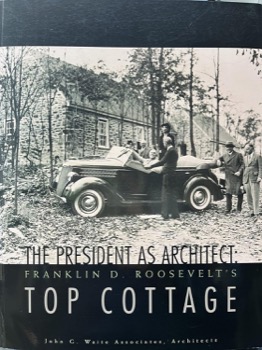
Softcover. Albany NY, Mount Ida Press, 1st, 2001, Book: Very Good, Dust Jacket: None, Softcover, B&w photos and plans; 11" - 13" tall; 160 pages. Traces the history of Roosevelt?s long-forgotten retreat near Hyde Park? from the president?'s original drawings for the modest, two-bedroom cottage to its recent preservation by the Open Space Institute, the Franklin and Eleanor Roosevelt Institute and the National Park Service. Examines Top Cottage as a symbol of Roosevelt?s love of the Hudson Valley and as one of the country?s first barrier-free buildings. Top Cottage joins Thomas Jefferson?s Monticello and Poplar Forest as the only homes designed by a U. S. President while in office. Clean copy.
Hardcover. NY, Chartwell, 2000, Book: N, Hardcover, 448 pages. Virtually every structure that Wright built is represented in this extensive survey of his life's work. His genius at architectural design enable him to work out extremely complex buildings in his head and translate them on to paper in a matter of hours, as the famous story of his design presentation of Falling Water illustrates. His work continues to draw great admiration and interest to this day. His often tempestuous and sometimes tragic life and career are given full coverage in this book. Hundreds of photos, both archival and recent chart his amazing work and influence on all who followed. This concise consideration of Wright's life and work not only offers new insights into the character of this complex, powerful and at all times confident personality, but also the architectural legacy he left behind and which exists to this day in the vast number of homes and public buildings photographed mainly by the author himself.
Hardcover. NY, Arco Publishing , 1st, 1978, Book: Very Good, Dust Jacket: Very Good, Hardcover. Profusely illustrated throughout, some color. 244 pages. A visual survey of much of Adam's work, provides ample material for a critical appraisal of the development of Adam as architect and designer.
Hardcover. NY, Parents Magazine Press, 1st, 1967, Book: Very Good, Dust Jacket: Very Good, Hardcover in a bright dust jacket. Wonderful introduction to different styles of architecture. Illustrated in color by Devlin. Related notes & articles to various landmark houses laid-in. Dust jacket price clipped. Clean copy.
Hardcover. Structure/Links International, 1st, 2004, Book: Very Good, Dust Jacket: Very Good, Hardcover, color plates throughout. The best projects in the design of country houses around the world are profiled in this architectural and design book. Each project has been selected on the basis of its innovation in the field, making this a highly useful sourcebook for architects, designers, and students of architecture who are looking for creative directions in the design of contemporary country homes. All steps of the design process, from conception to construction, are exhaustively documented and include technical information and commentary contributed by the architects themselves.
Hardcover. NY, Rizzoli, 1st, 1996, Book: Very Good, Dust Jacket: Very Good, Hardcover in a bright, unclipped dust jacket, 304 pages, illustrated in color and b&w throughout. Spotless and tight copy. American architect Morris Lapidus is best known as the designer of glamorous postwar resort hotels in Florida, such as the Fontainebleau (1954) and the Eden Roc (1955) in Miami Beach, and the Americana in Bal Harbour (1956). Yet in a remarkable sixty-year career that began in 1926, he designed more than 500 retail stores, hotels, apartment complexes, and stage sets that captured the popular spirit and changing face of Main Street America in the twentieth century.
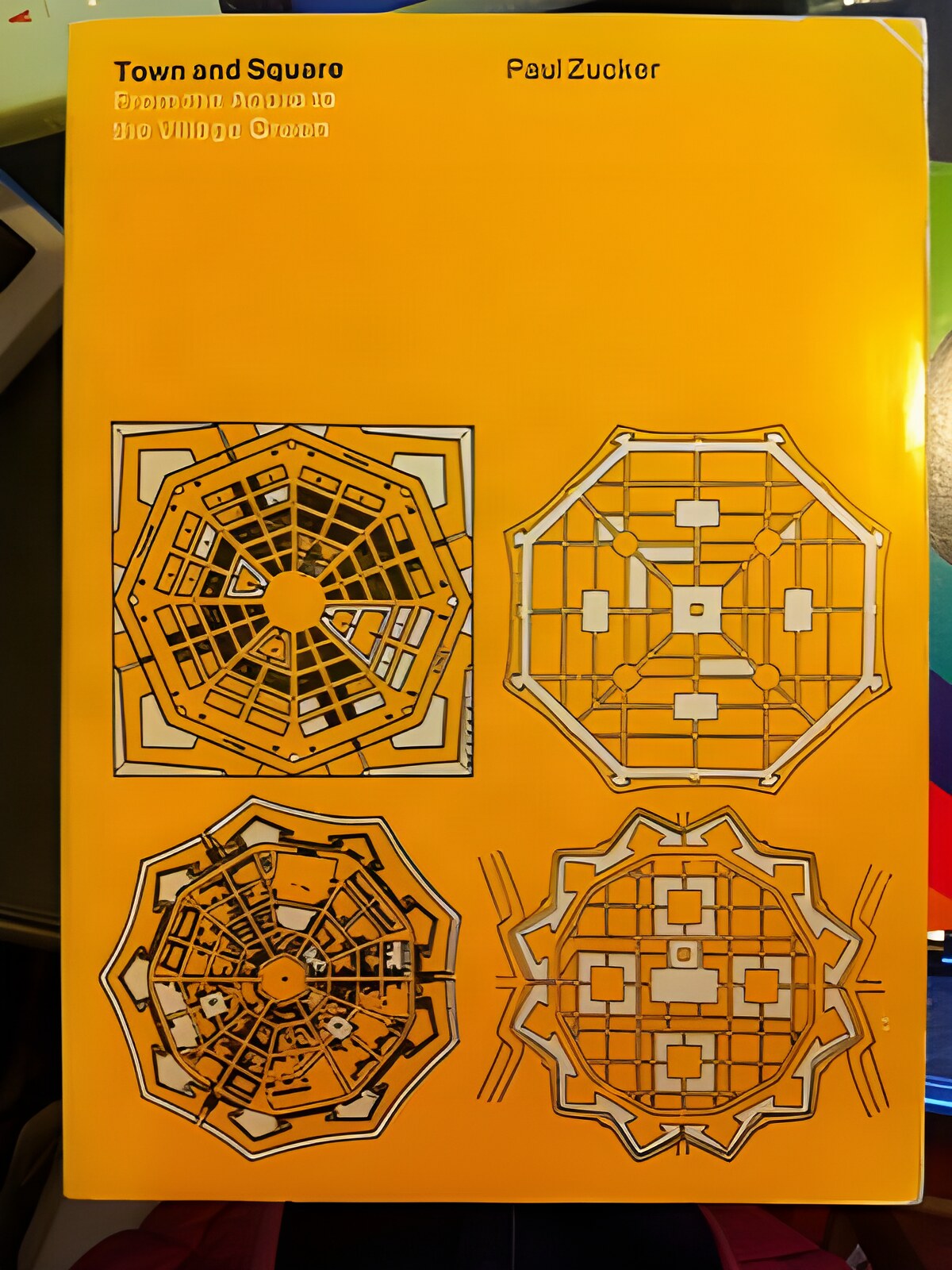
Softcover. Cambridge MA, MIT Press, 1st pbk, 1970, Book: Very Good, Dust Jacket: None, Softcover, yellow card wraps with b&w designs and black lettering. 287 pages with 55 b/w line drawings and 96 b/w plates. The first publication in English that gives a general survey of the development of the inner structure of the town from a dual point of view: that of the function of the square in the life of the community and that of its conception in purely aesthetic terms. Zucker shows a continuous development from Greece and Rome, through the Middle Ages and Renaissance, to the creative heights of the 17th and 18th centuries, periods which he considers the culmination of this development. The concluding chapter surveys the role of the square in early American life. Clean copy.
Hardcover. NY, Dodd, Mead & Co., reprint, 1902, Book: Very Good, Dust Jacket: None, Hardcover, green cloth covers with elaborate gilt decoration to front cover and spine, top edge gilt. Design by Alice Cordelia Morse. 317 pages with 48 b&w plates. Selections from Dickens, Hugo, Ruskin, and many others. Originally published in 1898. Hinges cracked, Small ownership sticker to front fly leaf, otherwise a clean, tight copy.
Hardcover. NY, McGraw-Hill, 4th pr., 1965, Book: Very Good, Dust Jacket: Very Good, Hardcover in a bright dust jacket, 241 pages illustrated in b&w. Foreword by Charles A. Blessing. Voluminously illustrated by the author with drawings and plans. Bibliography. Index. This book traces the history of urban design to date. The monograph has become a classic.
Softcover. New York, The Museum of Modern Art, 1st, 1986, Book: Very Good, Dust Jacket: None, 264 pages. Softcover. A very clean, unmarked copy with minor foxing to textblock edges. Color photographs throughout.
Softcover. Cambridge MA, The MIT Press, 1st, 1997, Book: N, Softcover, 119 pages. Ultimately, Viewing Olmsted is a savvy and thought-provoking, yet diminutive picture book. The collaboration of three brilliant photographers under the sponsorship of the Canadian Centre for Architecture, it guides the reader down three highly personal, present day tours of legendary parks designed by Olmsted, the patron saint of American landscape architecture. Happily, though, its readers are left to intellectually fend for themselves as to meanings or implications of Frederick Olmsted's work, genius, and lasting influence as the man who designed such famous spaces as Central Park. Academics and artists will appreciate the fresh visual perspectives offered on the man's legacy, the sometimes soothing, sometimes haunting nature-by-design retreats for the urban soul. Those with more than a passing interest in the ways in which man interacts with his `natural' surroundings will appreciate vistas evocative of place rather than time. To the authors' credit, the book raises more questions than it answers, and is of a scale to fit neatly into a travel case. Far from definitive, the book is, nevertheless, a must have for architects, landscape architects, photographers, and Olmsted aficionados.
Hardcover. New Haven CT, Yale University Press, 1st, 1977, Book: Very Good, Dust Jacket: Very Good, Two volume set. 575 pages, 63 b&w illustrations. Latrobe (1764-1820), English-born architect of the United States Capitol under Jefferson, Madison, and Monroe, set the course for a vast amount of nineteenth-century American architecture with such works as the Capitol, the Bank of Pennsylvania, and the Baltimore Cathedral. A pioneering engineer as well, he designed the nation"s first comprehensive steam-powered waterworks in Philadelphia. Latrobe combined his professional concerns with an astonishing range of other interests and an acutely ob- servant eye. His papers form one of the finest existing literary and pictorial descriptions of the young republic.
Softcover. Cambridge MA, Lincoln Institute of Land Policy, 1st, 2007, Book: Very Good, Dust Jacket: None, Softcover, oblong format, 152 pages illustrated in color. A richly illustrated book by landscape architect Julie Campoli and aerial photographer Alex S. MacLean helps planners, designers, public officials, and citizens better understand how residential density can help save energy, dollars, and the environment. Name on front fly leaf, otherwise clean.

 "The Making of Beaubourg: A Building Biography of the Centre Pompidou, Paris by: Silver, Nathan")

 "The Master Builders' Guide to the Perfect Home: A Design-Build Approach to Living Vermont Styleby: Jack McKernon")
 "The Mind and Art of Giovanni Battista Piranesi by: John Wilton-Ely")




 "The New Malaysian Houseby: Robert Powell; Albert Lim KS Photographer")


 "The Notebooks of Leonardo Da Vinci - Two Volumesby: MacCurdy (Editor), Edward")
 "The Papers of Frederick Law Olmsted: Parks, Politics, and Patronage, 1874?1882 (Volume 7) by: Frederick Law Olmsted; Editor-Charles E. Beveridge")
 "The Philip Johnson Tapes: Interviews by Robert A. M. Sternby: Robert A.M. Stern")
 "The Power of Limits: Proportional Harmonies in Nature, Art, and Architectureby: Doczi, Gyorgy")
 "The Vision of Frank Lloyd Wrightby: Heinz, Thomas A.")
 "The Work of Robert Adamby: Beard Geoffrey")
 "To Grandfather's House We Go - A Roadside Tour of American Homesby: Harry Devlin")
 "Today's Country Housesby: Krauel, Jacobo")

 "Urban Design: The Architecture of Towns and Cities by: Paul D. Spreiregen")
 "Vienna 1900: Art, Architecture, and Designby: Varnedoe, Kirk")
 "Viewing Olmsted: Photographs by Robert Burley, Lee Friedlander, and Geoffrey Jamesby: Lambert, Phyllis")
 "Virginia Journals of Benjamin Henry Latrobe, The: 1795-1798 (2 Volumes)by: Benjamin Henry Latrobe; Editor-Edward Carter II; Editor-Angeline Polites")
