Hardcover. Boston, Massachusetts, Harry N. Abrams, 1st, 1992, Book: Very Good, Dust Jacket: Very Good, 470 pages. Brown cloth cover, color illustrated dust jacket, 113 color and 206 illustrations. Still in original shrink wrap; book in excellent condition. American artists have been inspired by Italy since the 1760s, when Benjamin West, the first American painter to travel there, was drawn to the ancient Roman ruins and magnificent Renaissance architecture, statuary, and frescoes. This intriguing, superbly illustrated book is the first to explore the fascination Italy held for the American artist from West's time to the eve of World War I.The unique sense of the past found in Italy, where tangible evidence exists of a continual civilization from antiquity to the present, lured countless American artists to its cities, towns, and countryside. Painters from West and Copley in the eighteenth century to Cole, Inness, Whistler, Sargent, and Prendergast in the nineteenth century were inspired to create many of their finest works in Italy, as were American sculptors such as Hiram Powers and Harriet Hosmer and writers from Washington Irving to Henry James. This in-depth study includes 319 illustrations, of which 113 are reproduced in full color, many of works that have not previously been published. Theodore E. Stebbins, Jr., John Moors Cabot Curator of American Paintings at the Museum of Fine Arts, Boston, and Professor of Art History at Boston University, provides a broad overview of the American perception of Italy and the unique role that Italy played in the formation of American art.
Hardcover. Boston, Massachusetts, Harry N. Abrams, 1st, 1992, Book: Very Good, Dust Jacket: Very Good, 470 pages. Brown cloth cover, color illustrated dust jacket, 113 color and 206 illustrations. Still in original shrink wrap; book in excellent condition. American artists have been inspired by Italy since the 1760s, when Benjamin West, the first American painter to travel there, was drawn to the ancient Roman ruins and magnificent Renaissance architecture, statuary, and frescoes. This intriguing, superbly illustrated book is the first to explore the fascination Italy held for the American artist from West's time to the eve of World War I.The unique sense of the past found in Italy, where tangible evidence exists of a continual civilization from antiquity to the present, lured countless American artists to its cities, towns, and countryside. Painters from West and Copley in the eighteenth century to Cole, Inness, Whistler, Sargent, and Prendergast in the nineteenth century were inspired to create many of their finest works in Italy, as were American sculptors such as Hiram Powers and Harriet Hosmer and writers from Washington Irving to Henry James. This in-depth study includes 319 illustrations, of which 113 are reproduced in full color, many of works that have not previously been published. Theodore E. Stebbins, Jr., John Moors Cabot Curator of American Paintings at the Museum of Fine Arts, Boston, and Professor of Art History at Boston University, provides a broad overview of the American perception of Italy and the unique role that Italy played in the formation of American art.
Hardcover. Germany , Steidl, 1st, 2010, Book: Very Good, Dust Jacket: None, 156 pages. Hardcover with no dust jacket. Very clean, unmarked copy with only minor edgewear. Color photographs throughout. In the early 1970s, the workers at a steel smelting factory east of Havana wrote to Fidel Castro describing their housing needs. Out of this exchange a new city called Alamar was born, conceived by the same workers who would build it and live there. Today it is abandoned; Mauro D'Agati's photographs examine its eccentric spaces.
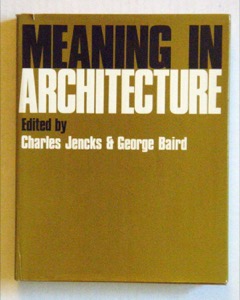
Hardcover. NY, George Braziller, 1st US, 1970, Book: Very Good, Dust Jacket: Very Good, Hardcover in a bright, unclipped dust jacket. 288 pages. Chapters include Semiology and Architecture by Charles Jencks, Meaning into Architecture by Geoffrey Broadbent and 'La Dimension Amoureuse' in Architecture by George Baird, The Time House or Argument for an Existential Dwelling by Martin Pawley. Packed with black and white reproductions of unusual buildings. Mild edgewear to dust jacket, clean copy.
Softcover. Bowie MD, Heritage Books, reprint, 2001, Book: Very Good, Dust Jacket: None, Two softcover volumes 391 & 392 pages. Volumes 1 and 2 complete, a facsimile reprint of the 1897 edition by Lippincott. This two-volume series takes the reader on a journey through the colonies of Virginia, Massachusetts, Connecticut, Rhode Island, New Hampshire, Pennsylvania, New Jersey, New York, Maryland, Carolina, and Georgia. The charm of the journey is in its variety, as the reader passes through communities of such striking individuality that they assume the character of different nations. Each colony has a set of opinions and laws peculiar to itself, and it is not uncommon to find the laws of one in contradiction with the laws of another. This text explores the settlement and history of each colony prior to the American Revolution. Topics include development of the colonies' government, laws, religion, schools, boundaries, industries, layout of the cities, fashions, homes, social activities, slavery, architecture, interaction with the Indians, and customs. At least one prominent person from each colony is discussed, amongst them, William Penn of Pennsylvania, John Smith of Virginia, George Calvert of Maryland, and General Oglethorpe of Georgia. Light sunning ti spines.Clean copies.
Softcover. Cincinnati OH, Contemporary Art Center, 1st, 1987, Book: Very Good, Dust Jacket: None, Softcover, 102 pages, b&w and color illustrations. Very light edge wear, else a clean, tight copy. Publication documenting renowned post-modern architect Michael Graves and the summer pavilion for the Cincinnati Symphony Orchestra. Written by architecture historian and critic Jayne Merkel, the book begins with a history of other outdoor music structures and the decision to build on the river site. Merkel discusses Graves' development as a leader of the post-modern movement and draws upon his sources in ancient amphitheaters, as well as his other structures in Portland, Louisville, and San Juan Capistrano. The book also includes an in-depth interview with Graves and a chapter on the "state of the art" acoustics and the collaboration between architect Graves and artist Ted Schmidt which resulted in the unique cut-out sculptures adorning the roof line of Riverbend.
Hardcover. NY, Harry N. Abrams/Hood Museum of Art, 1st, 1988, Book: Very Good, Dust Jacket: Very Good, Hardcover in a bright, unclipped dust jacket. A beautiful and intimate treatment of the architecture of the early industrialization of New England. 108 pages of color plates. Essays by Noel Perrin & Kenneth Breisch. Clean copy.
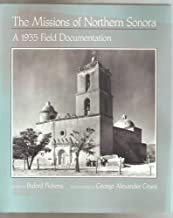
Softcover. Tucson, AZ, Arizona University Press , 1st paperback, 1993, Book: Very Good, Dust Jacket: None, Softcover. Black & white photos by George Alexander Grant. Some color fade to edges of cover. The Spanish missions founded by Padre Eusebio Kino in Sonora, Mexico, during the 1690s and early 1700s are historical as well as architectural marvels. Once self-supporting villages with central churches, the missions stand today as monuments to perseverance in the face of a hostile New World. These "Kino Missions" were surveyed in 1935 by the National Park Service to prepare for the restoration of the mission at Tumacacori, Arizona, then a National Historic Monument. That report, which was never published, provided insights into the missions' history and architecture that remain of lasting relevance. Perhaps more important, it documented these structures in photographs and drawings--the latter including floor plans and sketches of architectural detail--that today are of historic as well as aesthetic interest. This volume reproduces that 1935 report in its entirety, focusing on sixteen missions and including two maps, 52 drawings, and 76 photographs. With a new introduction and appendixes that place the original study in context,
Hardcover. NY/Cambridge MA, The Architectural History Foundation/The MIT Press, 1st, 1984, Book: Very Good, Dust Jacket: Very Good, Hardcover in a bright dust jacket. This is the first complete biography of the inimitable society architect Addison Mizner, whose Spanish Revival buildings created a new style of resort architecture for Palm Beach and south Florida during the boom years of the 1920s. Clean copy.
Softcover. Englewood Cliffs, Prentice-Hall, Inc., 2nd Ed., 1987, Book: Very Good, Dust Jacket: None, 431 pages. Softcover. Tight copy. Profusely illustrated with black & white photographs & architectural illustrations. One interior section includes full page, full color photographs. Clean, bright copy.
Hardcover. Munch/London/NY, Prestel, 1st, 2022, Book: Very Good, Dust Jacket: Very Good, Hardcover in a bright dust jacket. Still in publisher's shrinkwrap. 656 pages. Published on the twentieth anniversary of the founding of Neue Galerie New York, this stunning volume celebrates the varied achievements of modern art history in the German-speaking world by examining historical developments in Austria and Germany from 1890 to 1940. Illustrated throughout with exquisite reproductions of the museum's holdings, this book considers the influence of Friedrich Nietzsche and his writings on the fine arts and examines the founding of the Secessionist artists' organizations in Germany and Austria. Insightful essays trace the emergence of Expressionism and abstraction, as well as the development of such movements as Dada and New Objectivity. Evolutions in architecture and design are appraised through the legacy of the Arts and Crafts movement, as well as the establishment of the Darmstadt Artists' Colony and the Wiener Werkstatte. The book also examines the role of the German Werkbund and the founding of the Bauhaus school. Finally, the book briefly addresses the horrific impact of the National Socialists' degenerate art campaign, which resulted in incalculable damage and led to the exile and death of artists and designers of the era. From well-known artists such as Otto Dix, Josef Hoffmann, Vasily Kandinsky, Gustav Klimt, and Egon Schiele, to lesser recognized but equally important figures, including Albert Birkle, Alfred Kubin, Felix Nussbaum, and Dagobert Peche, this book offers an authoritative and kaleidoscopic look at a crucial moment in history and a portrait of radical thought that changed forever the way we experience art in our lives. DOMESTIC SHIPPING ONLY.
Hardcover. Thomas Jefferson Foundation, reprint, 2006, Book: Very Good, Dust Jacket: Very Good, Hardcover in a bright dust jacket, oblong format, 80 pages. Each year approximately 500,000 people journey up the winding, narrow road from Charlottesville, Virginia, to visit Monticello, the home of Thomas Jefferson. In 1990 a team of architects from the Historic American Buildings Survey (HABS) made this same journey to record Jefferson's residence inside and out. Monticello in Measured Drawings presents HABS' unique set of plan, elevations, sections, and details of the house as it was actually built. They expose many of Monticello's behind-the-scenes mysteries. Seeral reveal the house's complex facade, while others details the relationship of individual floors and the fascinating array of architectural elements found throughout the house.
hardcover. NY, Macmillan , 1st, 1909, Book: Very Good, Dust Jacket: None, Red cloth hardcover with gilt lettering, 424 pages. 98 Black & white and 25 color illustrations by Joseph Pennell. Color illustrated frontispiece with tissue-guard. Light edgewear to covers. Rear and front hinge cracked.
Hardcover. New York, W. W. Norton & Company, 1st, 2002, Book: Very Good, Dust Jacket: Very Good, 223 pages, illustrated in color and b&w. What Pennsylvania Station was, is, and might be in the future, through knowledgeable text and excellent pictures and drawings. A good read for those who want a detailed look at one of New York City's most famous architectural treasures, how it was lost, and how it might be reborn once again. The section on its rebirth in the Farley Post Office building was written before work was delayed on the project. Clean copy.
Hardcover. Alexandria VA, Cypress Communications, 1st, 2000, Book: Very Good, Dust Jacket: Very Good, Hardcover in a bright dust jacket, 295 pages. The charm and diversity of lighthouses are captured in this elegant pictorial history. W&w photos throughout. Clean copy.
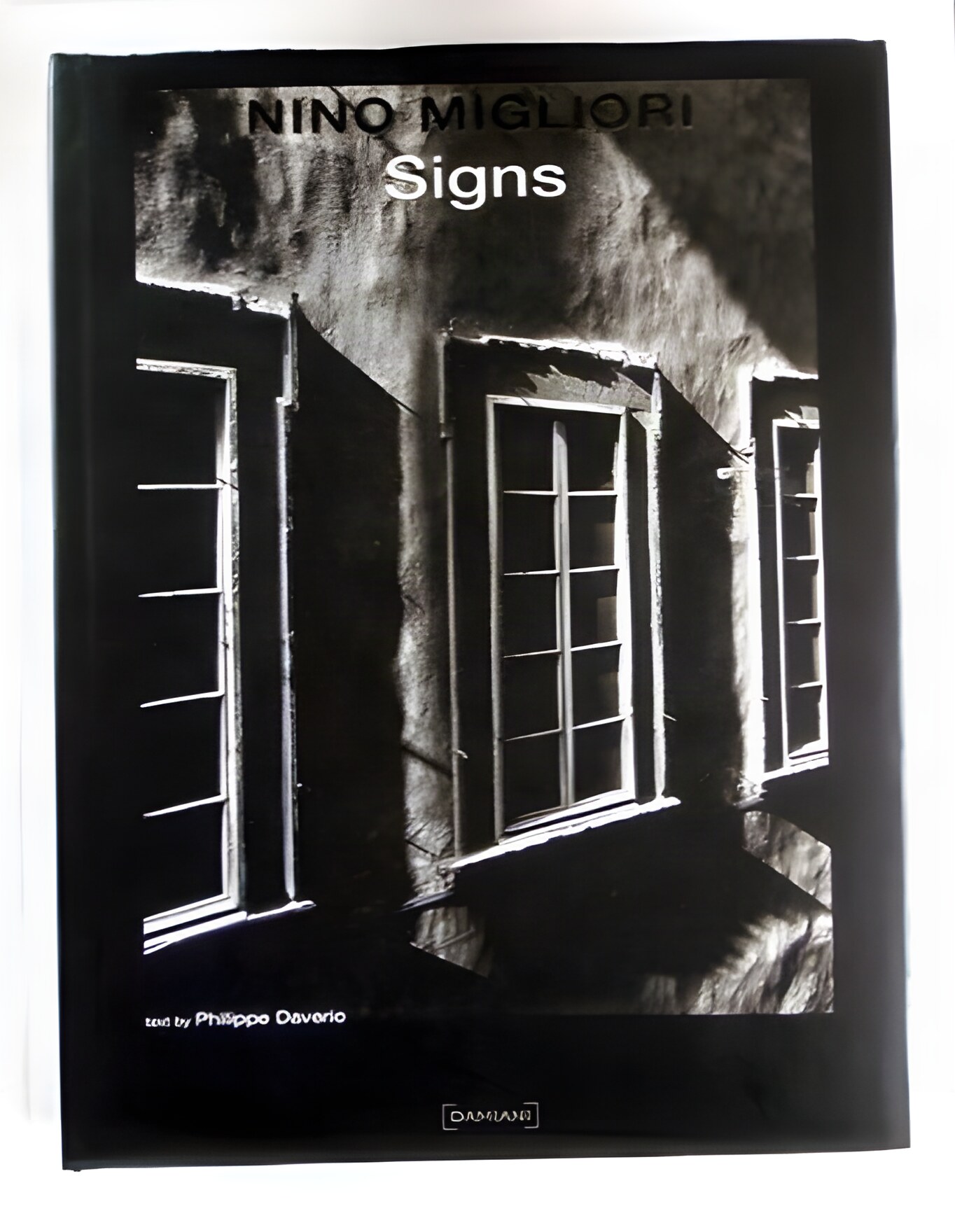
Hardcover. Damiani, 1st, 2005, Book: Very Good, Dust Jacket: Very Good, Hardcover in a lightly worn dust jacket, 300 pages. This monograph, Signs, is dedicated to Nino Migliori, one of the old masters of photography who had a significant effect on the history of Italian imagery after World War II. Signs presents a broad range of his production which has always been marked by creativity, versatility, and innovation. Included here are Miglori's portraits, landscapes, architecture, street scenes, abstract imagery, and polaroids. DOMESTIC SHIPPING ONLY.
NY, The Press of the American Institute of Architects., 1st, 1925, Book: Good, Dust Jacket: None, Hardcover. Complete with 24 watercolor prints and 44 plates. Loosely bound in case with cloth ties which has cracking along spine. Interior very good. Number 677 of 1000. Elephant folio 23" tall. "A Series of Historical Examples from Roman Times to the End of the XVIIIth Century." An appreciation of historic French infrastructure that survived WWI. Beautiful large color reproductions of original watercolors of bridges by Pierre Vignal; 35 black and white drawings by Louis C. Rosenberg & Samuel Chamberlain; 44 measured drawings, photographs, diagrams, and maps. DUE TO SIZE & WEIGHT, DOMESTIC SHIPPING ONLY.
Softcover. Leopard Publishing Ventures, 1st, 2016, Book: Very Good, Dust Jacket: None, Softcover, 60 pages, illustrated. Built in the cottage orne style from a plan by the Regency architect John Nash (1752-1835), Old Came Rectory is the historic home of the poet philologist, William Barnes (1801-1886), Thomas Hardy's mentor. Amid gatherings of poets, writers and historical figures, how many discussions around the fire of this homely home have gone on to shape the world we know today? INSCRIBED BY AUTHOR on Dedication page.
Hardcover. New York , F.A. Stokes , 1st US, Book: Good, Dust Jacket: None, Hardcover, boards with cloth spine. Color frontispiece, b&w Illustrations. Spine darkened, light foxing to a few pages otherwise clean. Hinge weak at title page. A descriptive and historical account of the more important old English towns.
Hardcover. Baltimore, Johns Hopkins University Press, 1st, 2001, Book: Very Good, Dust Jacket: Very Good, Hardcover, 120 pages. "Vacationers of today," writes C. John Sullivan, "can only dream of what this seaside resort was like for those who visited in the early 1900s." With Old Ocean City, Sullivan brings back those long-ago summers through the words and photographs of the Walker family of Washington, D.C. Avid photographers as well as sports enthusiasts, the Walkers preserved their Ocean City summers in hundreds of snapshots. And the Walkers' son, Robert, kept a detailed record of those days in a small leather-bound journal, titled My Vacation, in which he wrote almost daily from 1912 to 1916. In Old Ocean City, Sullivan mixes his own commentary and explanatory captions with excerpts from Robert Walker's journal and more than one hundred family photographs (discovered in 1994, Sullivan notes, in a sweltering attic in Berlin, Maryland). Views of handsome beach architecture and grass-covered dunes suggest an Ocean City almost unimaginable today. Rare photographs and accounts of shorebird hunting (banned in 1918 to protect sandpipers, plover, herons, and other species) are an arresting contrast to more familiar scenes of boating, fishing, and beachcombing. We see the Walker children growing up-and Ocean City growing up around them. The result is a surprising look at a place "far different than our memories would recall." Sullivan includes a time line of Ocean City history and Walker family visits, starting with the formation of the Atlantic Hotel Company in 1868 (the company's stockholders chose the name Ocean City at their 1875 meeting in Salisbury) and ending with the Walkers' sale of their beloved cottage in 1950.
Hardcover. New Haven CT, Yale University Press, 1st, 2018, Book: Very Good, Dust Jacket: None, Hardcover, 156 pages, no dj issued. An insightful new look at two renowned photographers, their interconnected legacies, and the vital documents of urban transformation that they created. In this comprehensive study, Kevin Moore examines the relationship between Eugene Atget (1857-1927) and Berenice Abbott (1898-1991) and the nuances of their individual photographic projects. Abbott and Atget met in Man Ray's Paris studio in the early 1920s. Atget, then in his sixties, was obsessively recording the streets, gardens, and courtyards of the 19th-century city--old Paris--as modernization transformed it. Abbott acquired much of Atget's work after his death and was a tireless advocate for its value. She later relocated to New York and emulated Atget in her systematic documentation of that city, culminating in the publication of the project Changing New York.
Hardcover. New Haven CT, Yale University Press, 1st, 2018, Book: Very Good, Dust Jacket: None, Hardcover, 156 pages, no dj issued. An insightful new look at two renowned photographers, their interconnected legacies, and the vital documents of urban transformation that they created. In this comprehensive study, Kevin Moore examines the relationship between Eugene Atget (1857-1927) and Berenice Abbott (1898-1991) and the nuances of their individual photographic projects. Abbott and Atget met in Man Ray's Paris studio in the early 1920s. Atget, then in his sixties, was obsessively recording the streets, gardens, and courtyards of the 19th-century city--old Paris--as modernization transformed it. Abbott acquired much of Atget's work after his death and was a tireless advocate for its value. She later relocated to New York and emulated Atget in her systematic documentation of that city, culminating in the publication of the project Changing New York.
Hardcover. Lawrence KS, University Press of Kansas, 1st, 1994, Book: Very Good, Dust Jacket: Very Good, Hardcover with a bright dust jacket. B&w vintage photos throughout. The Midwest's one-room schools were, Fuller observes, the most democratic in the nation. Located in small, independent school districts, these schools virtually wiped out illiteracy, promoted democratic values, and opened up new vistas beyond the borders of their students' lives. Entire communities, Fuller shows, revolved around these schools. At various times they were used as churches, polling places, sites of political caucuses, and meeting halls for local organizations. But as America urbanized and the movement to consolidate took hold in rural counties, these little centers of learning were left at the margins of the educational system. Some were torn down, some left to weather away, some sold at auction, and still others transformed into museums.

 "Lure of Italy, The: American Artists and The Italian Experience, 1760 - 1914by: Stebbins, Theodore E. Et al.")
 "Lure of Italy, The: American Artists and The Italian Experience, 1760 - 1914by: Stebbins, Theodore E. Et al.")
 "Mauro D'Agati: Alamarby: D'Agati, Mauro (Photographer)")


 "Michael Graves & Riverbend Music Center: A Summer Pavillion for the Cincinnati Symphony Orchestraby: Merkel, Jayne")
 "Mills and Factories of New England by: Hambourg, Serge/Perrin Noel & Kenneth Breisch (essays)")
 "Mizner's Florida: American Resort Architectureby: Curl, Donald Walter")
 "Modern Architecture Since 1900by: Curtis, William J. R.")
 "Modern Worlds: Austrian and German Art, 1890-1940by: Price, Renee / Lauder, Ronald S./Peters, Olaf/ Staggs, Janis")


 "Monticello in Measured Drawings: Drawings by the Historic American Buildings Survey / Historic American Engineering Record, Nationa Park Service by: William L. Beiswa")
 "New New York, Theby: Van Dyke, John C. and Joseph Pennell")
 "New York's Pennsylvania Stationsby: Ballon, Hilary")
 "Nineteenth-Century Lights: Historic Images of American Lighthousesby: J. Candace Clifford and Mary Louise Clifford")
 "Old Bridges of France by: Emerson William and Georges Gromort")
 "Old Came Rectoryby: Sedley Proctor")
 "Old English Townsby: Andrews, William & Elsie M. Lang")
 "Old Homes of Roxbury Township - Third in a Series of Books on the History of Roxbury Townshipby: Seraly, Ruthann/Frances Lyman")

 "Old Paris and Changing New York: Photographs by Eugene Atget and Berenice Abbottby: Kevin Moore")
 "Old Paris and Changing New York: Photographs by Eugene Atget and Berenice Abbottby: Kevin Moore")
 "One-Room Schools of the Middle West: an Illustrated History by: Fuller, Wayne E.")