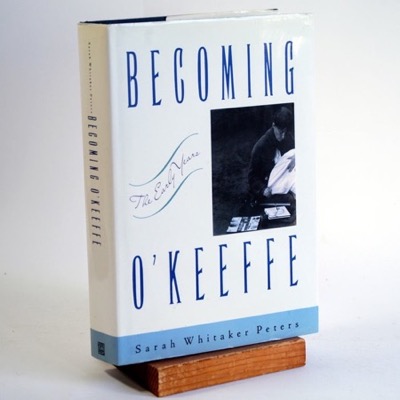
Hardcover. NY, Abbeville Press, 1st, 1991, Hardcover in a bright dust jacket, 397 pages, illustrated in b&w and color. In this thoughtful and thought-provoking art historical study, Peters first traces strands of Art Nouveau and Symbolist theory in the art of Georgia O'Keeffe. She then discusses other influences, from Arthur Dow as teacher to Paul Strand as photographer and friend. But by far the most sustained study in the text is the relationship between O'Keeffe's painting and the photography and philosophy of her husband, Alfred Stieglitz. Peters argues lucidly and always in accessible language for O'Keeffe's emergence as a great and deeply individual artist while illuminating these many influences and illustrating her points with lavish use of excellent reproductions. Clean copy.
Softcover. Berkeley CA, University of California Press, 1st, Book: Very Good, Dust Jacket: None, Softcover, 232 pages. "Professor DeNora's achievement in placing Beethoven, and the reception of Beethoven's music, in social context is all the more impressive because it goes so much against the grain of conventional habits of thought. In illuminating how changing social institutions created opportunities for Beethoven to gain contemporary and posthumous recognition, and, in so doing, created new forms for thinking and talking about musical achievement-the author at once provides fresh insights into the institutional origins of 'classical' music and offers an exemplary contribution to the sociological study of the arts." Clean copy.
Hardcover. New York , Hyperion Press, 1st, 1996, Book: Very Good, Dust Jacket: Very Good, Hardcover, 209 pages, illustrated throughout in color and b&w. Light shelf-wear to dust jacket, else a clean, tight copy. Animation historian John Canemaker chronicles the lives and work of sketch artists at Disney from the 1930s to the present.
Hardcover. New York, Hudson Hills Press, 1st, 1980, Book: Very Good, Dust Jacket: Good, 187 pages. Hardcover with dust jacket. green star sticker on front cover, otherwise clean, tight copy.
Hardcover. Boston Ma., Houghton Mifflin Co., 1st, 1978, Book: Very Good, Dust Jacket: Very Good, 525 pages, b&w illustrations. Green cloth, gilt titles to front and spine. Light wear and rubbing to edges and spine of pictorial dust jacket, else a very nice, tight copy.
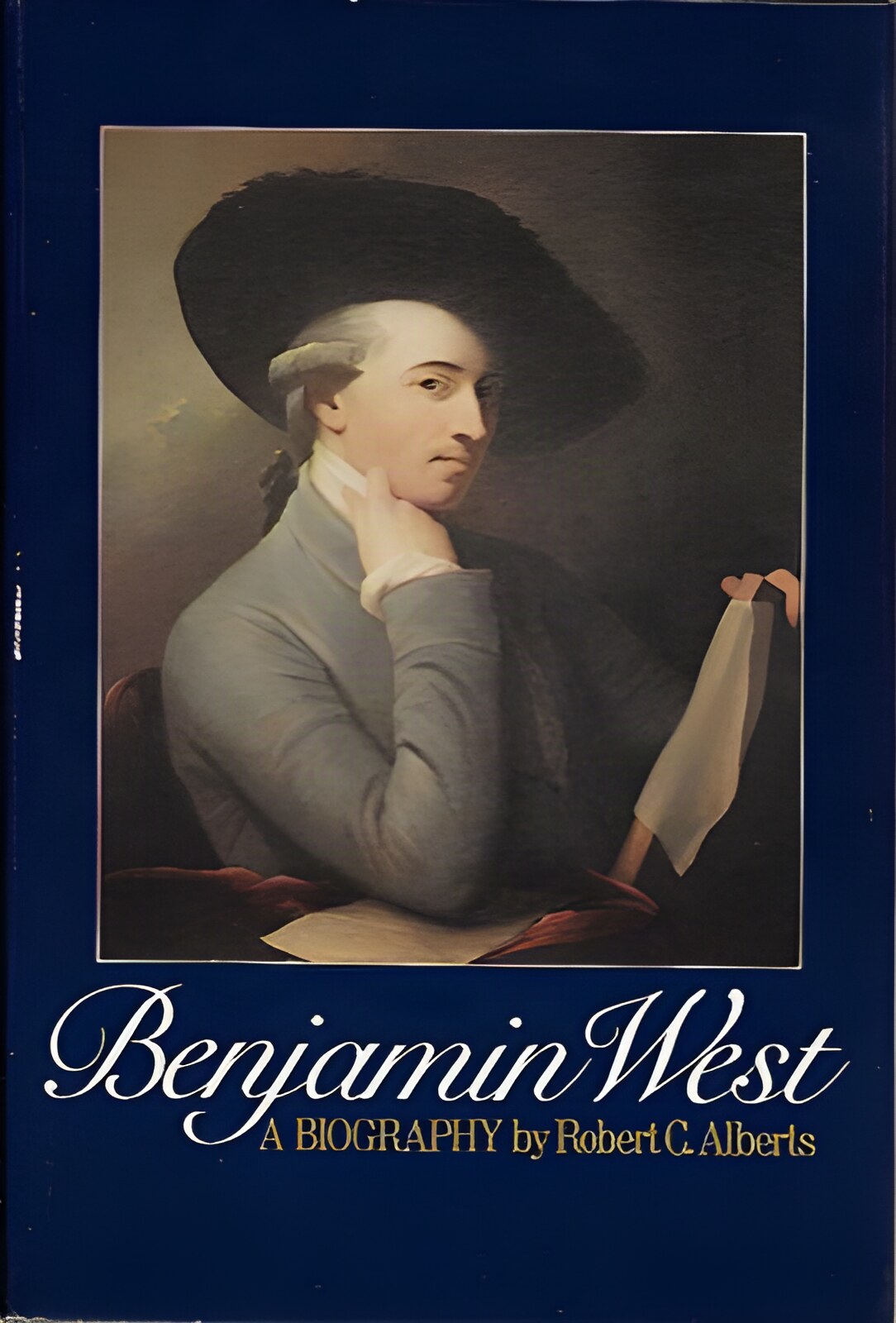
Hardcover. Boston, MA, Houghton Mifflin Company, 1st, 1978, Book: Very Good, Dust Jacket: Very Good, Hardcover, 525 pages, b&w illustrations. The first full-length biography of one of the fathers of American art. Light green cloth, gilt titles to spine and front cover. Blue pictorial dust jacket with minor wear to spine and edges. Overall a very nice, clean copy.
Hardcover. Boston, MA, Houghton Mifflin Company, 1st, 1978, Book: Very Good, Dust Jacket: Very Good, Hardcover, 525 pages, b&w illustrations. The first full-length biography of one of the fathers of American art. Light green cloth, gilt titles to spine and front cover. Blue pictorial dust jacket with minor wear to spine and edges. Overall a very nice, clean copy.
Hardcover. New York, Norton, 1st, 2018, Book: Very Good, Dust Jacket: Very Good, Hardcover, 634 pages, b&w illustrations. In a bright, unclipped dj. In Berenice Abbott: A Life in Photography, author, archivist, and curator Julia Van Haaften brings this iconic public figure to life alongside outlandish, familiar characters from artist Man Ray to cybernetics founder Norbert Wiener. A teenage rebel from Ohio, Abbott escaped first to Greenwich Village and then to Paris-photographing, in Sylvia Beach's words, "everyone who was anyone." As the Roaring Twenties ended, Abbott returned to New York, where she soon fell in love with art critic Elizabeth McCausland, with whom she would spend thirty years. In the 1930s, Abbott began her best-known work, Changing New York, in which she fearlessly documented the city's metamorphosis. When warned by an older male supervisor that "nice girls" avoid the Bowery-then Manhattan's skid row-Abbott shot back, "I'm not a nice girl. I'm a photographer...I go anywhere." This bold, feminist attitude would characterize all Abbott's accomplishments, including imaging techniques she invented in her influential, space race-era science photography and her tenure as The New School's first photography teacher. With more than ninety stunning photos, this sweeping, cinematic biography secures Berenice Abbott's place in the histories of photography and modern art, while framing her incredible accomplishments as a female artist and entrepreneur.
Hardcover. NY, Hudson Hills Press, 1st, 1987, Book: Very Good, Dust Jacket: Very Good, Hardcover, 228 pages, 123 color plates. Morisot was a gutsy pioneer among the French impressionists. As a standard-bearer of the avant-garde, she created a scandal by helping to organize a public auction of their works, something very few artists had dared to do. Defying the advice of her parents and Manet, she remained in Paris when Prussian troops besieged the city. In her artistic technique she was no less daring. Around 1874, in pictures of tourists and yacht-filled rivers, she broke through to an abbreviated, shorthand style ahead of her contemporaries. Disregarding her own view that Monet had taken landscape painting to its farthest limits, her late oils of gardens are brilliant fireworks of color. This catalogue of a retrospective exhibition that is to tour the country stands on its own as a valuable study.
Hardcover. NY, Knopf, 1st, 1997, Book: Very Good, Dust Jacket: Very Good, Hardcover, Illustrated with color, black & white plates. Clean, unmarked copy with only minor wear to dust jacket.
Hardcover. NY, Viking Adult, 1st, 1996, Book: Good, Dust Jacket: Good, Hardcover, 282 pages, with photographs of the artist and her work. Slight foxing on top edge and small stain on fore edge, otherwise, very clean and tight copy. Twenty years after the publication of her autobiography, Through the Flower, the renowned artist and feminist continues the story of her life and takes a provocative look at late twentieth-century American culture and the allocation of our resources.
Hardcover. Stanford CA, Stanford University Press, 1st, 2004, Book: Very Good, Dust Jacket: Good, Hardcover, 335 pages. Oversized. Black cloth cover, minor wear to edges. Dust jacket has some wear to corners and edges, small faint smudge. Inside is bright and clean. Many b&w photographs throughout. A nice, tight copy.
Softcover. NY, Norton, reprint, 2009, Book: Very Good, Dust Jacket: None, Softcover, 384 pages. A self-described "desert rat" who rocketed to fame at the age of twenty-two, Bill Mauldin used flashing black brush lines and sardonic captions to capture the world of the American combat soldier in World War II. His cartoon dogfaces, Willie and Joe, appeared in Stars and Stripes and hundreds of newspapers back home, bearing grim witness to life in the foxhole. We've never viewed war in the same way since. This lushly illustrated biography draws on private papers, correspondence, and thousands of original drawings to render a full portrait of a complex and quintessentially American genius.92 illustrations
Hardcover. NY, Norton, 1st, 2008, Book: Very Good, Dust Jacket: Very Good, Hardcover, 384 pages. The definitive biography of the greatest cartoonist of the Greatest Generation. "The real war," said Walt Whitman, "will never get in the books." During World War II, the truest glimpse most Americans got of the "real war" came through the flashing black lines of twenty-two-year-old infantry sergeant Bill Mauldin. Week after week, Mauldin defied army censors, German artillery, and Patton's pledge to "throw his ass in jail" to deliver his wildly popular cartoon, "Up Front," to the pages of Stars and Stripes. "Up Front" featured the wise-cracking Willie and Joe, whose stooped shoulders, mud-soaked uniforms, and pidgin of army slang and slum dialect bore eloquent witness to the world of combat and the men who lived-and died-in it. This taut, lushly illustrated biography-the first of two-time Pulitzer Prize winner Bill Mauldin-is illustrated with more than ninety classic Mauldin cartoons and rare photographs. It traces the improbable career and tumultuous private life of a charismatic genius who rose to fame on his motto: "If it's big, hit it."
Hardcover. Boston, Houghton Mifflin, 1st, March 27, 1989, Book: Very Good, Dust Jacket: Very Good, 190 pages, b&w illustrations throughout. Light edge wear to dust jacket; small tear on rear cover. Light foxing on top edge. Else a clean, tight copy.
Hardcover. Five Continents, 1st, 2018, Book: Very Good, Dust Jacket: None, Hardcover in pictorial boards. Born into slavery around 1853-4 on a cotton plantation in Benton, Alabama, Traylor has become one of the most important self-taught artists of the twentieth century, and certainly one of the most celebrated African-American artists, along with Thorton Dial and William Edmondson. The story of Bill Traylor's life and work is a remarkable one. It is a story that deserves attention both nationally and internationally. This publication, generously illustrated with full-page high-quality reproductions, provides a close examination of Traylor's recurrent themes, composition schemes, favored iconography, and contextual information related to the artist's biography, creative process and tools, visual environment, and artistic mindset. Each artwork is considered in a context beyond that of an isolated image and in response to one another, forming a series of intricate and consistent narratives, intriguingly cinematic in its development. The elements of Traylor's biography are the anchors of an individual mythology. Instead of merely being a basic depiction, the subject becomes a visual statement structuring Traylor's mind, bringing together hidden symbols from Kongo Vodou, Hoodoo, Southern Baptist, Freemasonry, and Blues sources, as well as layers of references: slavery, uncensored violence in the Jim Crow era, and turbulence within the black enclave known as 'Dark Town' in Montgomery, Alabama. Bilingual edition in French and English. Still in publisher's shrinkwrap.
Hardcover. NY, Abrams Comicarts, 1st, 2023, Book: Very Good, Dust Jacket: Very Good, Hardcover in a bright dust jacket, 168 pages. B&w art by Wagner Willan. Author Julian Voloj and award-winning illustrator Wagner Willian's Black & White is the first graphic novel biography following the life of Bobby Fischer, from chess wunderkind and national hero to his eventual spiral into madness and infamy. It begins in Brooklyn, where Fischer was born and raised by a single mother. By the time he was a teen, he had established himself as a loner and dropped out of school. But none of that mattered; he had found his true calling--chess. In 1972, Fischer played what many consider "the game of the century" against the Soviet Union's chess champion Boris Spassky at the height of the Cold War. Later, Fischer became the youngest-ever US Chess Champion and the game's youngest grandmaster. Never before had chess received such international attention. Fischer, whose sole focus in life up until then was chess, reached the Olympus of chess at 29, and then . . . he disappeared. Suffering from mental illness, the chess genius became increasingly paranoid, lost in anti-Semitic conspiracy theories--despite the fact that he himself was Jewish--and died as a fugitive in Iceland. Clean copy.
Hardcover. New York, Viking Studio Books, 2nd pr., 1994, Book: Very Good, Dust Jacket: None, Unpaginated. Hardcover with no dust jacket in a slipcase. Clean, tight copy with only light fading to slipcase. Paper on top of slip case is starting to become unglued. Bright colorful pictures throughout.
Hardcover. Chicago, University of Chicago Press, 1st, 1946, Book: Very Good, Dust Jacket: Fair, Hardcover, 131 pages of text followed by 126 plates, several in color. Foxing to endpapers. Dust jacket age darkened with chipping and small tears along edges. Clean, tight copy.
Hardcover. Chicago, University of Chicago Press, 1st, 1946, Book: Very Good, Dust Jacket: Fair, Hardcover, 131 pages of text followed by 126 plates, several in color. Foxing to endpapers. Dust jacket age darkened with chipping and small tears along edges. Clean, tight copy.
Hardcover. Chicago, University of Chicago Press , 1st, 1946, Book: Very Good, Dust Jacket: Very Good, Hardcover, 132 pages of text, plus 125 numbered plates in b&w and color. Price-clipped dust jacket with minor wear.
Hardcover. Brooklyn, NY, PowerHouse Books, 1st, 2013, Book: Very Good, Dust Jacket: Very Good, 200 pages. Hardcover with dust jacket. Remainder mark on bottom edge, otherwise, clean, unmarked copy with only minor wear to dust jacket. Color and Black and white pictures throughout. Explores the genre of self-portraits through nineteenth, twentieth, and twenty-first-century photographic techniques, including also block prints, watercolor drawings, and accompanying essays.
Hardcover. US, Last Gasp, 1st, 2019, Book: Very Good, Dust Jacket: None, Hardcover with no dust jacket. Like new in publisher's shrink wrap. Clean, tight copy. The Book of Weirdo is the definitive - and hugely entertaining- examination of Weirdo magazine, renowned underground comix cartoonist Robert Crumb's legendary humor comics anthology, which was originally published throughout the 1980s. A "low-brow" counterpoint to Art Spiegelman and Francoise Mouley's rather high-faluttin' RAW comix publication, Weirdo influenced an entire generation of alternative and neo-underground artists, as well as creative refuge for the underground comix veterans, and this book features the complete story of the well-recalled comics magazine, along with testimonials from over 130 of the publication's contributors, including interviews with Weirdo's three editors - R. "Keep on Truckin'" Crumb, Peter "Hate" Bagge, and Aline "The Bunch" Kominsky-Crumb - and publisher "Baba Ron" Turner. 288 pages.
Hardcover. New York, Little, Brown and Company, 2nd pr., 2018, Book: Very Good, Dust Jacket: Very Good, 503 pages. Hardcover with dust jacket. Clean, tight copy. From The Gashlycrumb Tinies to The Doubtful Guest, Edward Gorey's wickedly funny and deliciously sinister little books have influenced our culture in innumerable ways, from the works of Tim Burton and Neil Gaiman to Lemony Snicket. Some even call him the Grandfather of Goth. But who was this man, who lived with over twenty thousand books and six cats, who roomed with Frank O'Hara at Harvard, and was known -- in the late 1940s, no less -- to traipse around in full-length fur coats, clanking bracelets, and an Edwardian beard? An eccentric, a gregarious recluse, an enigmatic auteur of whimsically morbid masterpieces, yes -- but who was the real Edward Gorey behind the Oscar Wildean pose? He published over a hundred books and illustrated works by Samuel Beckett, T.S. Eliot, Edward Lear, John Updike, Charles Dickens, Hilaire Belloc, Muriel Spark, Bram Stoker, Gilbert & Sullivan, and others. At the same time, he was a deeply complicated and conflicted individual, a man whose art reflected his obsessions with the disquieting and the darkly hilarious. Based on newly uncovered correspondence and interviews with personalities as diverse as John Ashbery, Donald Hall, Lemony Snicket, Neil Gaiman, and Anna Sui, Born to Be Posthumous draws back the curtain on the eccentric genius and mysterious life of Edward Gorey.







 "Between Worlds: The Autobiography of Leo Lionniby: Lionni, Leo")




 "Bill Peet: An Autobiographyby: Peet, Bill")






 "Boardman Robinsonby: Christ-Janer, Albert")