Hardcover. San Diego/NY, Harcourt Brace Jovanovich, 1st, 1988, Book: Very Good, Dust Jacket: Very Good, Hardcover in a bright, unclipped dust jacket, 274 pages, b&w photos. "A shy, bald, myopic, gay albino from an ethnic Pittsburgh suburb and a beautiful, convent-educated heiress from France: This is the story of Andry Warhol and 'the girl in Andy's soup,' Isabelle Collin Dufresne, also known as Ultra Violet. It is suggested that Dali, Dufresne's companion for five years, introduced her to Andy Warhol in 1963. 'Leave Dali', said Andy. 'He's too old'. Soon after, Isabelle metamorphosed into Ultra Violet becoming an intimate of Warhol's underground scene, here recollected. Clean copy.
Hardcover. NY, Dutton, 1st, 1991, Book: Very Good, Dust Jacket: Very Good, Hardcover in a bright, unclipped dust jacket. 516 pages. SIGNED BY AUTHOR on front fly leaf. The enduring appeal of the music of George and Ira Gershwin has spawned several biographies of the talented brothers who created more than 700 popular songs before George's untimely death at age 39 in 1937--Ira died in 1983 at age 87. But never before has the collaboration itself been the subject of such intelligent and fruitful scrutiny as in this intriguing study. Rosenberg, chair of the musical theater program of the Tisch School of the Arts at New York University, has a gift for making scholarly points in accessible, albeit mundane language. Readers require no particular musical background in order to enjoy and respond to her original theories about the connections between George's music and Ira's lyrics. Points of comparison are frequently illustrated with side-by-side measures of music, and the striking thematic relationships between such songs as Embraceable You and The Man I Love are also compared dramatically to George's orchestral composition, including the well-known Rhapsody in Blue. This is a rich feast for music historians, musicians and connoisseurs of musical theater as well as inveterate hummers who like a Gershwin tune. Clean copy.
Hardcover. NY, Penguin Press, 1st, 2018, Book: Very Good, Dust Jacket: Very Good, Hardcover in a bright, unclipped dust jacket. 256 pages, b&w photos. For Bill Cunningham, New York City was the land of freedom, glamour, and, above all, style. Growing up in a lace-curtain Irish suburb of Boston, secretly trying on his sister's dresses and spending his evenings after school in the city's chicest boutiques, Bill dreamed of a life dedicated to fashion. But his desires were a source of shame for his family, and after dropping out of Harvard, he had to fight them tooth-and-nail to pursue his love. When he arrived in New York, he reveled in people-watching. He spent his nights at opera openings and gate-crashing extravagant balls, where he would take note of the styles, new and old, watching how the gowns moved, how the jewels hung, how the hair laid on each head. This was his education, and the birth of the democratic and exuberant taste that he came to be famous for as a photographer for The New York Times. After two style mavens took Bill under their wing, his creativity thrived and he made a name for himself as a designer. Taking on the alias William J.--because designing under his family's name would have been a disgrace to his parents--Bill became one of the era's most outlandish and celebrated hat designers, catering to movie stars, heiresses, and artists alike. Bill's mission was to bring happiness to the world by making women an inspiration to themselves and everyone who saw them. These were halcyon days when fashion was all he ate and drank. When he was broke and hungry he'd stroll past the store windows on Fifth Avenue and feed himself on beautiful things. Fashion Climbing is the story of a young man striving to be the person he was born to be: a true original. But although he was one of the city's most recognized and treasured figures, Bill was also one of its most guarded. Written with his infectious joy and one-of-a-kind voice, this memoir was polished, neatly typewritten, and safely stored away in his lifetime. He held off on sharing it--and himself--until his passing. Between these covers, is an education in style, an effervescent tale of a bohemian world as it once was, and a final gift to the readers of one of New York's great characters.
Softcover. Provincetown MA, Provincetown Art Association, 1st, 1985, Book: Very Good, Dust Jacket: None, Softcover, stapled, 12 pages, color and b&w illustrations. Biography by Kathryn Lee Smith, the artist's granddaughter. Clean, bright copy.
Hardcover. New York, Macmillan Company , 1st, 1959, Book: Very Good, Dust Jacket: Good, 122 pages. Hardcover with dust jacket. Illustrations by Ed Fisher. Blacka nd white. Dust jacket has light fraying and rubbing. Cover boards have edge wear. clean copy.
Hardcover. New York, Pegasus Books, 1st, 2017, Book: Very Good, Dust Jacket: None, 184 pages. Hardcover with no dust jacket. Laminated covers. Illustrated in color. Clean, tight copy.
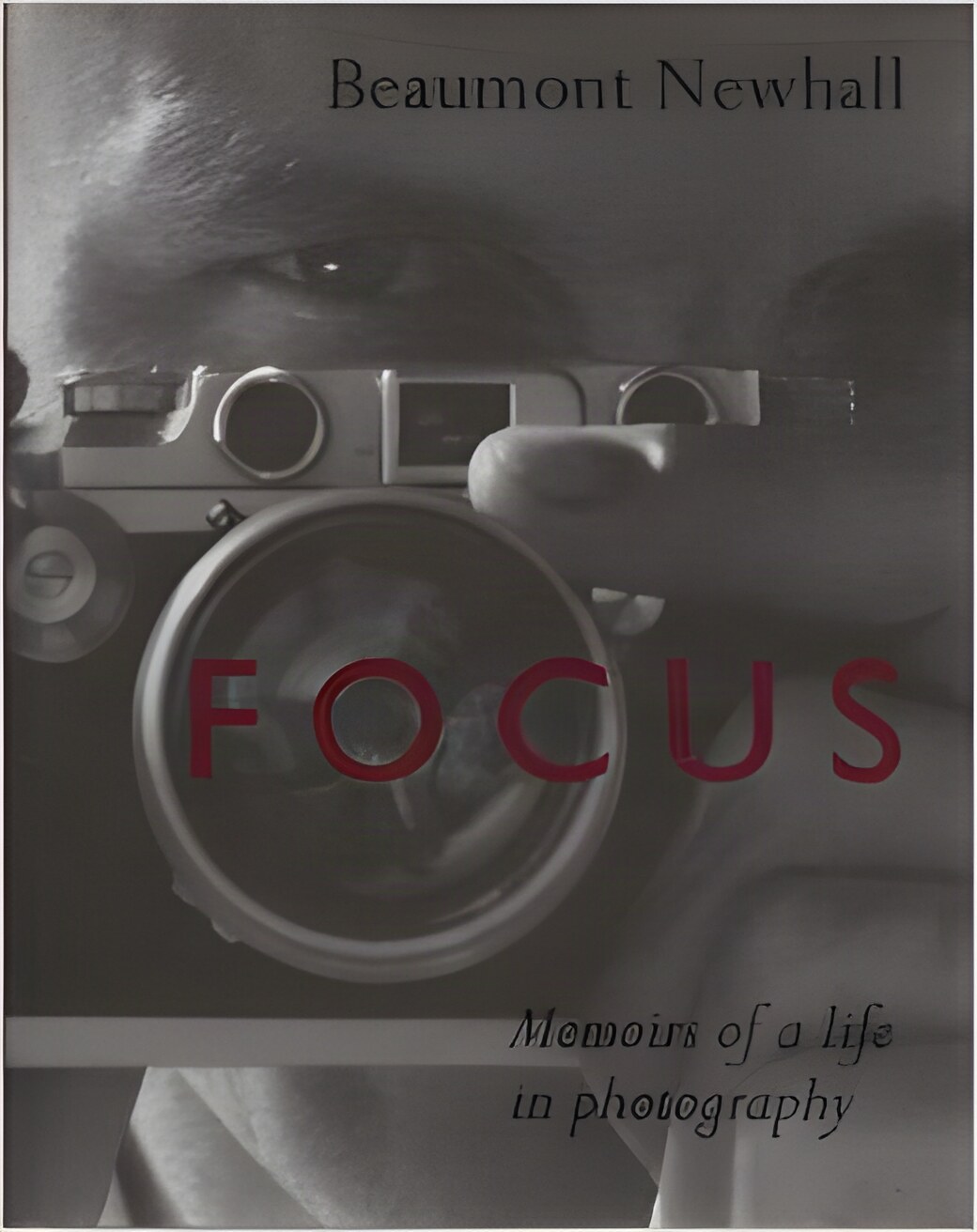
Hardcover. US, Bulfinch , 1st, 1993, Book: Very Good, Dust Jacket: Very Good, Hardcover, 264 pages includes index. Clean, unmarked copy with only minor wear to dust jacket. A graceful, lively memoir by photography's first historian, with accounts of his friendships with many of the century's great photographers, from Alfred Stieglitz to Ansel Adams, Edward Weston, and Henri Cartier-Bresson. Newhall (1908-93) wrote the now-standard History of Photography (1937) and founded the photo collection at the Museum of Modern Art; as much as anyone, he helped photography gain acceptance as art. This memoir, finished shortly before his death, includes an account of his boyhood in Lynn, Massachusetts; of his training in art history at Harvard; the important early exhibits he organized at the MOMA; and the contributions of his wife, Nancy, to both the field and his own accomplishments. A long section describing his work as a photoreconnaisance expert in Egypt and Italy during WW II, though not closely related to his career, is also highly interesting. In addition, Newhall offers detailed accounts of various important photographers' working methods, as well as of discussions carried on among them about their work.
Hardcover. New York, Atria Books, 1st Hardcover, 2016, Book: Very Good, Dust Jacket: Very Good, 416 pages. Hardcover with dust jacket. Remainder mark to bottom edge of textblock. Otherwise a very clean, unmarked copy with only minor edgewear to dust jacket. Black and white photographs. Tracing the highs and lows of fashion photography from the late 1940s to today, Gross vividly chronicles the fierce rivalries between photographers, fashion editors, and publishers like Conde Nast and Hearst, weaving together candid interviews, never-before-told insider anecdotes and insights born of his three decades of front-row and backstage reporting on modern fashion. An unprecedented look at an eccentric and seductive profession and the men and women who practice it on the treacherous shifting sands of pop and fashion culture, Focus depicts--perhaps most importantly--the rewards and cost, both terribly high, of translating an artist's vision of beauty for an often cold and cruel commercial reality.
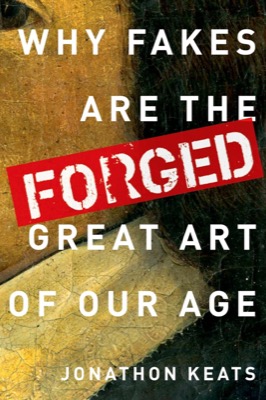
Hardcover. NY, Oxford University Press, 2nd pr., 2013, Book: Very Good, Dust Jacket: Very Good, Hardcover in a bright dust jacket, 197 pages. Forged explores art forgery from ancient times to the present. In chapters combining lively biography with insightful art criticism, Jonathon Keats profiles individual art forgers and connects their stories to broader themes about the role of forgeries in society. From the Renaissance master Andrea del Sarto who faked a Raphael masterpiece at the request of his Medici patrons, to the Vermeer counterfeiter Han van Meegeren who duped the avaricious Hermann G?ring, to the frustrated British artist Eric Hebborn, who began forging to expose the ignorance of experts, art forgers have challenged "legitimate" art in their own time, breaching accepted practices and upsetting the status quo. They have also provocatively confronted many of the present-day cultural anxieties that are major themes in the arts. Keats uncovers what forgeries --and our reactions to them-- reveal about changing conceptions of creativity, identity, authorship, integrity, authenticity, success, and how we assign value to works of art. The book concludes by looking at how artists today have appropriated many aspects of forgery through such practices as street-art stenciling and share-and-share-alike licensing, and how these open-source "copyleft" strategies have the potential to make legitimate art meaningful again. Clean copy.
Hardcover. NY, Knopf, 1st, 2019, Book: Very Good, Dust Jacket: Good, Hardcover, A captivating, spirited account of the intense relationship among four artists whose strong personalities, passionate feelings, and aesthetic ideals drew them together, pulled them apart, and profoundly influenced the very shape of twentieth-century art. Rear of dj has a crimp at top and a short trar at spine edge.
Hardcover. Bethlehem, Lehigh Univ. Press, 1st , 1992, Book: Very Good, Dust Jacket: Very Good, Hardcover in a very good dust jacket. Black & white illustrations, 298 pages. This work presents Di Giorgio's codex of machine and fort drawings for the Duke of Urbino, his sketchbook of machines, and archeological sketches in the Uffizi.
Hardcover. Washington DC, Decatur House Press, 1st, 1983, Book: Very Good, Dust Jacket: None, Hardcover, blue-gray cloth with gilt lettering, 100 pages of text, plus 48 pages with 107 b&w illustrations. Includes the essay: The Problem of Francesco Traini; and two particular studies: A Madonna, and An Illuminated Inferno and Trecento painting in Pisa. Edited and with Introduction by Hayden B. J. Maginnis. Mild musty odor, otherwise a clean, bright copy.
Hardcover. New York , Crown, 1st US, 1993, Book: Very Good, Dust Jacket: Very Good, Hardcover, 354 pages, color & black and white plates. In a bright, unclipped dust jacket. Traces the development of the painter's art and the course of his life, discussing his earliest memories, Sinn Fein uprisings in Ireland, World War I, Paris of the surrealists, and England during World War II.
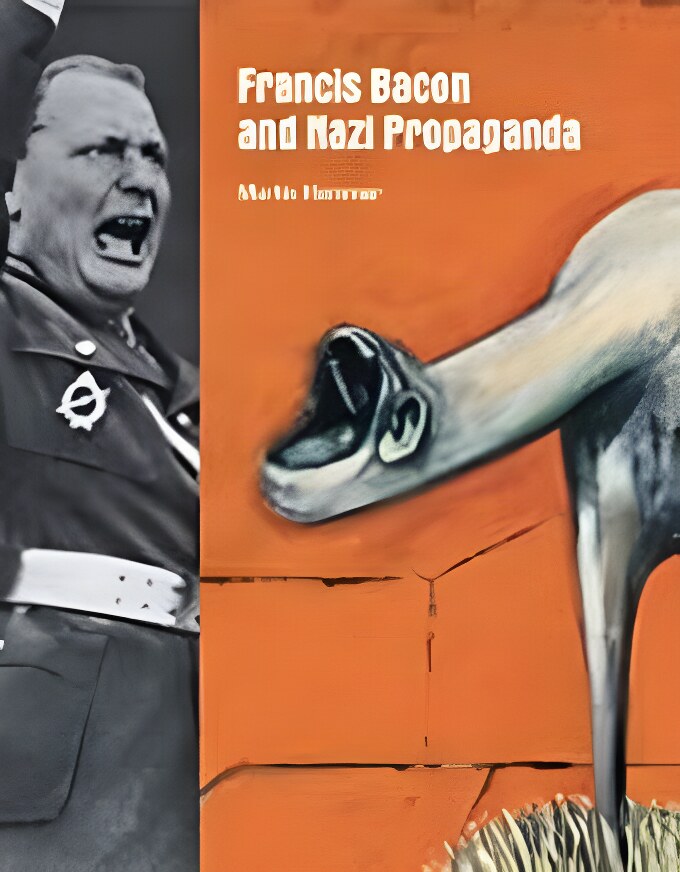
Hardcover. London, Tate, 1st, 2013, Book: Very Good, Dust Jacket: Very Good, Hardcover, 224 pages. British artist Francis Bacon (1909-1992) was one of the most important artists of the 20th century. Here, Martin Hammer presents him as a "painter of modern life," whose concern was to distill the feelings associated with living through the rise of Fascism in the 1930s, World War II, the revelations of the Holocaust, and then the early Cold War period. Against a backdrop of changing attitudes toward wartime memories and a gradual resurgence of interest in the war, Hammer offers extensive evidence of Bacon's use of prewar Nazi propaganda photography as a springboard for painting. By exploring some of Bacon's best-known and most compelling works, Hammer illuminates the artist's aim to transmute challenging photographic sources into a reflection on the contemporary world.
Softcover. Prestel, 1st, 2009, Book: Very Good, Dust Jacket: None, Softcover, 128 pages. Color illustrations, fine paperback with French flaps This book focuses on Bacon's life, circle and achievements. Clean copy.
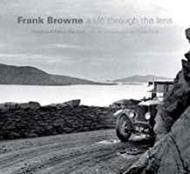
Hardcover. New Haven, CT, Yale University Press, 1st, 2015, Book: Very Good, Dust Jacket: Very Good, 224 pages. Hardcover with dust jacket. Very clean, like new copy still in publishers shrink wrap. Over 200 duotone images throughout. Tight copy. Born in Cork, Ireland, Frank Browne (1880-1960) was both a distinguished Jesuit and an accomplished photographer. At age 17, before commencing his studies for the priesthood, he embarked on a tour of Europe armed with a camera. Browne quickly discovered a strong affinity for photography, and continued to take photographs throughout his life. It was not until 1985, however-when Father Edward O'Donnell SJ discovered a large trunk in the Irish Jesuit Provincial's House and found it packed with negatives and photographs-that Browne was catapulted to international fame. Father Browne's remarkable life is recorded in the superb selection of images presented in this book. With wit and a sharp eye, he observed 20th-century Ireland; life as a Jesuit priest; his experience as a passenger on the first leg of the voyage of the Titanic in 1912; and his later travels throughout Europe, Egypt, Yemen, Ceylon, and Australia. This handsome, copiously illustrated volume offers a complete survey of the photographic work of an exceptional man.
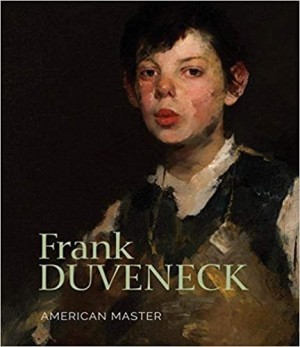
Hardcover. D Giles Ltd, 1st, 2020, Book: Very Good, Dust Jacket: Very Good, Hardcover in a bright dust jacket, still in publisher's shrinkwrap. This is the first major publication in more than 30 years devoted to Duveneck, one of the most influential and widely respected late-nineteenth century American artists.Beloved to his students, Duveneck was lauded by many Gilded Age luminaries such as James Abbott McNeill Whistler and Henry James. Yet a century after his death, he is largely known only for asingle, brilliant painting, The Whistling Boy. By contextualizing his work in the artistic, cultural and social milieus of the time, this publication offers diverse perspectives on Duveneck's life, work, subjects and reputation. The essays span his beginnings as a painter of dark realism to his later impressionistic work and examine his significance as a printmaker and draftsman. The lavishly illustrated volume includes a chronology and selected bibliography. irst half of the book consists of essays which detail the artists uneven life. Numerous photos, drawings and a few great close ups. The second half of the book consists of the catalog. 128 catalog images, mostly paintings with some drawings and pastels. All in color.
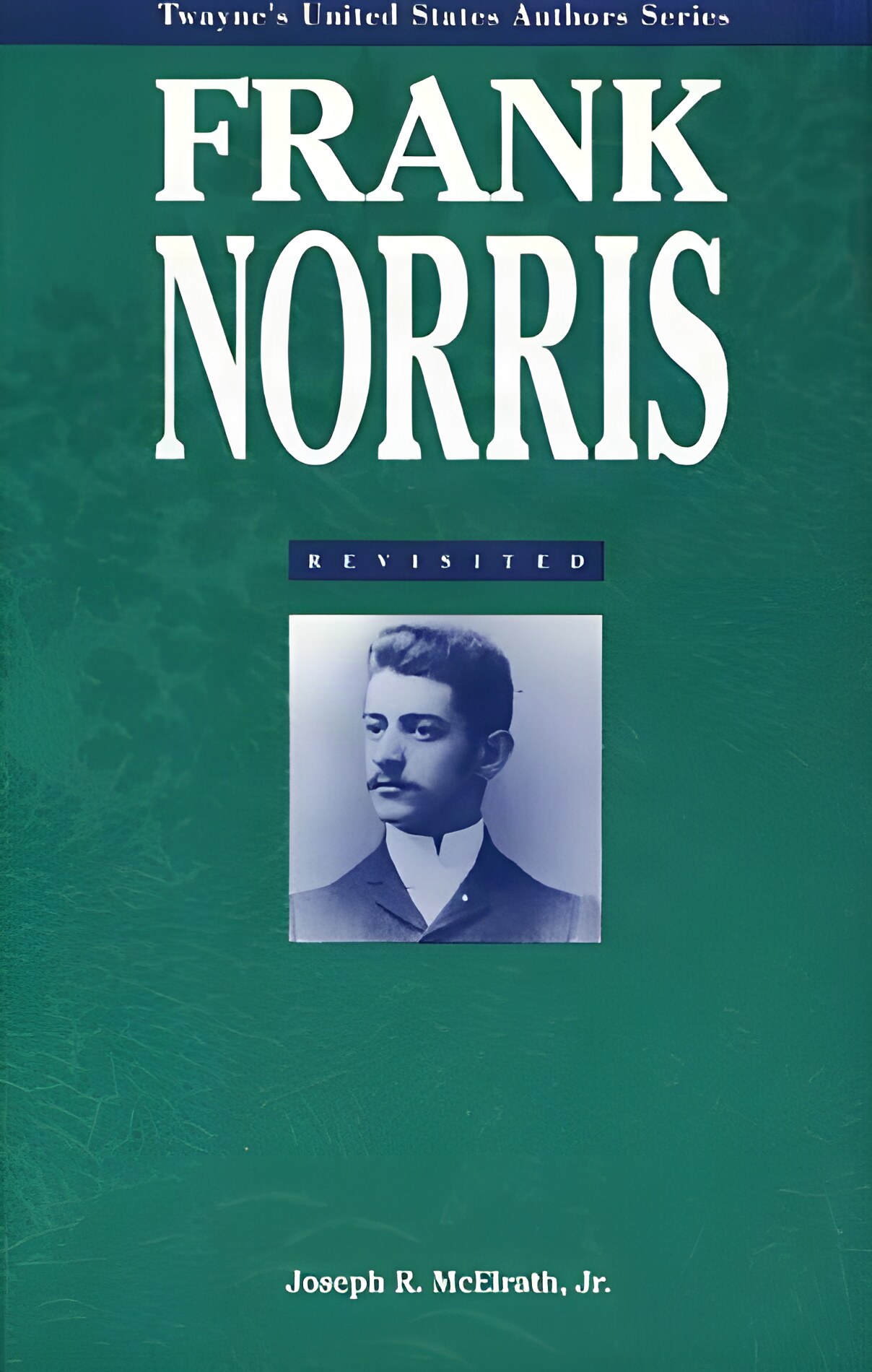
Hardcover. NY, Twayne Publishers, 1st, 1992, Book: Very Good, Dust Jacket: Very Good, Hardcover in a bright dust jacket, 145 pages. INSCRIBED BY AUTHOR on the front fly leaf. The renown Frank Norris attained in his brief lifetime sprang from his compelling--and to many Americans startling--novels about people whose lives have escaped their control and have become grotesquely warped by the confluent forces of hereditary and environment.In "revisiting" Frank Norris, Joseph R. McElrath, Jr. takes as a starting point Warren French's 1962 volume in this series and provides a complementary portrait of the artist. McElrath assesses the spate of relatively recent "historical reconstructions" of Norris's canon and finds a writer who, though at times transcendent in the Naturalistic vein, was pragmatic in his choice of subject matter and "not always grandly serious." It is in part the delight Norris took in parody, McElrath argues, that makes him still so readable. Clean copy.
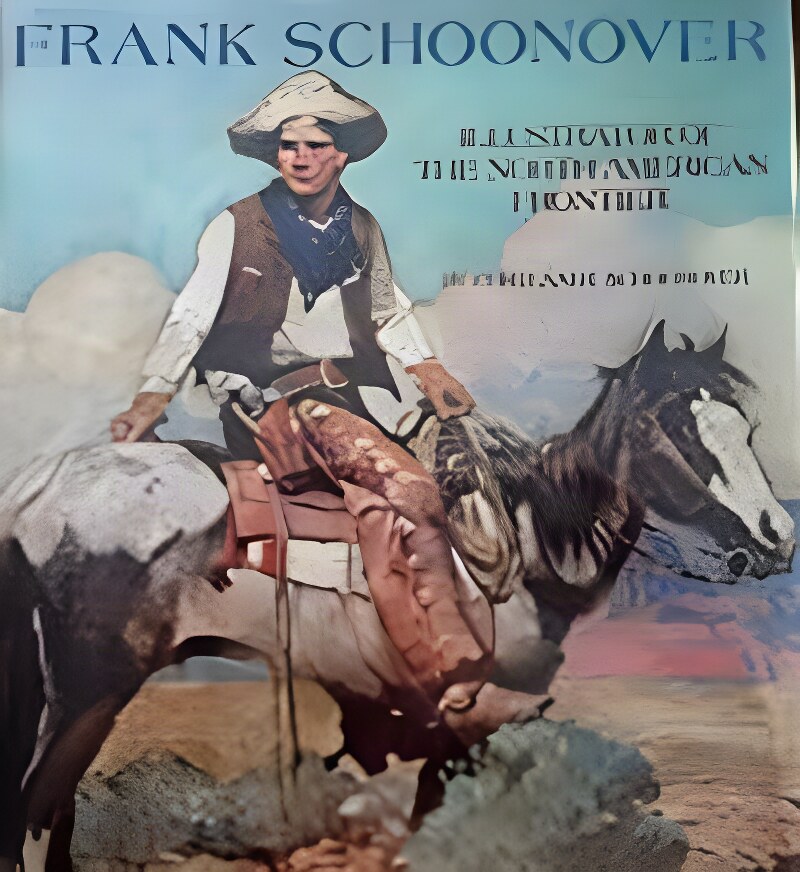
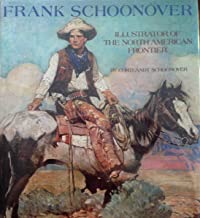
Hardcover. NY, Watson-Guptill, 1st, 1976, Book: Very Good, Dust Jacket: Very Good, Hardcover. Frank Schoonover, one of the giants of the Golden Age of American Illustration, was renowned for his scenes of life on the western frontier of America and Canada. Schoonover captured the flavor of the west and northwest in his dramatic outdoor compositions which depicted cowboys, Indians, trappers, Eskimos - the people and way of life that he knew, loved, and painted first hand. His keen sense of observations, coupled with his vivid documentary style, made his illustrations powerful paintings in themselves. They are now exhibited and collected for their own sake, independent of the books they illustrated, as unforgettable documents of a legendary way of life. Like the other great painter/illustrators of the Brandywine School -he was a student of Howard Pyle and a contemporary of such notables as N. C. Wyeth and Harvey Dunn - Schoonover was passionate about the portrayal of the American past. Although he lived most of his life in the Brandywine River area of Pennsylvania and Delaware, his commitment to the frontier dominated his work. A natural love for adventure and a yearning to find his own style sent him initially to the Canadian northwest, where he took naturally to the challenge of frontier life. Living among the Indians, canoeing, traveling by dogsled, and fending for himself brought authentic flavor to his paintings which illustrated many popular books and stories of adventure - most of which are now forgotten, although the paintings endure. This handsome collection is the first full-scale illustrated study of Schoonover's work, not only rediscovering the paintings of a major artist, but providing an important visual document of frontier life. 208 pages. 10 1/2 X 11 1/4. 48 color plates. 150 black-and-white illustrations. Chronology. Index.
Hardcover. NY, Watson-Guptill, 1st, 1976, Book: Very Good, Dust Jacket: Very Good, Hardcover. Frank Schoonover, one of the giants of the Golden Age of American Illustration, was renowned for his scenes of life on the western frontier of America and Canada. Schoonover captured the flavor of the west and northwest in his dramatic outdoor compositions which depicted cowboys, Indians, trappers, Eskimos - the people and way of life that he knew, loved, and painted first hand. His keen sense of observations, coupled with his vivid documentary style, made his illustrations powerful paintings in themselves. They are now exhibited and collected for their own sake, independent of the books they illustrated, as unforgettable documents of a legendary way of life. Like the other great painter/illustrators of the Brandywine School -he was a student of Howard Pyle and a contemporary of such notables as N. C. Wyeth and Harvey Dunn - Schoonover was passionate about the portrayal of the American past. Although he lived most of his life in the Brandywine River area of Pennsylvania and Delaware, his commitment to the frontier dominated his work. A natural love for adventure and a yearning to find his own style sent him initially to the Canadian northwest, where he took naturally to the challenge of frontier life. Living among the Indians, canoeing, traveling by dogsled, and fending for himself brought authentic flavor to his paintings which illustrated many popular books and stories of adventure - most of which are now forgotten, although the paintings endure. This handsome collection is the first full-scale illustrated study of Schoonover's work, not only rediscovering the paintings of a major artist, but providing an important visual document of frontier life. 208 pages. 10 1/2 X 11 1/4. 48 color plates. 150 black-and-white illustrations. Chronology. Index. Due to size and weight, DOMESTIC SHIPPING ONLY.
Hardcover. Garden City, NY, Doubleday & Company, Inc., 1st, 1974, Book: Very Good, Dust Jacket: Very Good, Hardcover, 207 pages with full colored plate illustrations, as well as black and white illustrations and photos. Remainder spray on bottom edge. Bound in blue cloth. Tightly bound, clean copy. Dust jacket shows a little bit of wear on corners, protected by a mylar cover.The first complete biography of a major American artist who devoted both his life & his immense talents to the realistic portrayal of the frontier West." Frank Tenney Johnson (1874 - 1939) was a painter of the Old American West, and he popularized a style of painting cowboys which became known as "The Johnson Moonlight Technique".
Hardcover. New York, Harry N. Abrams, Inc. , 1st Edition, 1989, Book: Very Good, Dust Jacket: Very Good, 160 pages. Hardcover. Color and b/w illustrations throughout. Dust jacket unclipped, excellent. Cover boards bound in red cloth, gilt title on spine, all excellent. Binding tight. Spine straight. Pages and edges clean and unmarked. In beautiful condition. More than one hundred reproductions--58 in full-color--bring to life this quintessentially American artist and the dramatic and colorful imagery that has become part of America's epic story.
Hardcover. Garden City, Duobleday & Company Inc., First Edition, 1982, Book: Very Good, Dust Jacket: Very Good, 537 pages. Hardcover. Black cloth covered boards with white titles to spine. Black & white illustrations. Dust jacket with light, marginal wear, now protected with a plastic cover. Tight binding, clean & unmarked pages throughout.
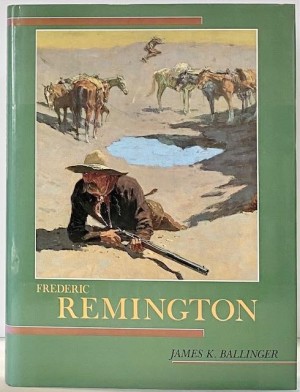
Hardcover. NY, Abbeville Press, 1st thus, 1988, Book: Very Good, Dust Jacket: Very Good, Hardcover in a bright dust jacket. Illustrated with drawings. Index. Bibliography. 487 pages. Remington, a prolific letter writer, was also an inveterate doodler. Many of these previously unpublished drawings are a part of this collection. Correspondence includes notes to his family and correspondence with President Theodore Roosevelt, Owen Wister, Poultney Bigelow, Francis Parkman, Elizabeth Custer and others. Clean copy.








 "Foursome: Alfred Stieglitz, Georgia O'Keeffe, Paul Strand, Rebecca Salsburyby: Burke, Carolyn")
 "Francesco di Giorgio: Checklist and History of Manuscripts and Drawings in Autographs and Copies from ca.1470-1687 and Renewed Copies, (1764-1839by: Scaglia, Gustina")





 "Frank Tenney Johnson Book, The: A Master Painter of the Old Westby: McCracken, Harold")