Hardcover. Princeton NJ, Princeton University Press, 1st, 2005, Book: Very Good, Hardcover, 208 pages. Like new in publisher's shrink-wrap. This lavishly illustrated book establishes the towering influence of the scientist Victor Regnault (1810-1878) in the earliest decades of photography, a period of experimentation ripe with artistic, commercial, and scientific possibility. Regnault has a double significance to the early history of photography, as the first leader of the Societe Francaise de Photographie (S.F.P.) and as the maker of more than two hundred calotype (paper negative) portraits and landscapes. His photographic and scientific careers intersected a third field with his appointment in 1852 as director of the Sevres porcelain works. Readers are treated to Regnault's own beguiling pastoral, garden, and forest scenes; striking portraits of the scientists and artists in his circle of friends; quirky images of acoustic experiments; and an insider's view of the Sevres porcelain works. Regnault's richly varied photographs also encompass perhaps the most extensive group of family portraits in early photography, and his romanticized landscapes reflect a moment when the rural outskirts of Paris were being aggressively suburbanized and industrialized.
Hardcover. Columbia OH, Ohio State University Press, 1st, 2008, Book: Very Good, Dust Jacket: None, 368 pages. Hardcover with no dust jacket. Clean, unmarked copy with only minor wear to corners. While "freaks" have captivated our imagination since well before the nineteenth century, the Victorians flocked to shows featuring dancing dwarves, bearded ladies, "missing links," and six-legged sheep. Indeed, this period has been described by Rosemarie Garland-Thomson as the epoch of "consolidation" for freakery: an era of social change, enormously popular freak shows, and taxonomic frenzy. Victorian Freaks: The Social Context of Freakery in Britain, edited by Marlene Tromp, turns to that rich nexus, examining the struggle over definitions of "freakery" and the unstable and sometimes conflicting ways in which freakery was understood and deployed. As the first study centralizing British culture, this collection discusses figures as varied as Joseph Merrick, "The Elephant Man"; Daniel Lambert, "King of the Fat Men"; Julia Pastrana, "The Bear Woman"; and Laloo "The Marvellous Indian Boy" and his embedded, parasitic twin. The Victorian Freaks contributors examine Victorian culture through the lens of freakery, reading the production of the freak against the landscape of capitalist consumption, the medical community, and the politics of empire, sexuality, and art. Collectively, these essays ask how freakery engaged with notions of normalcy and with its Victorian cultural context.
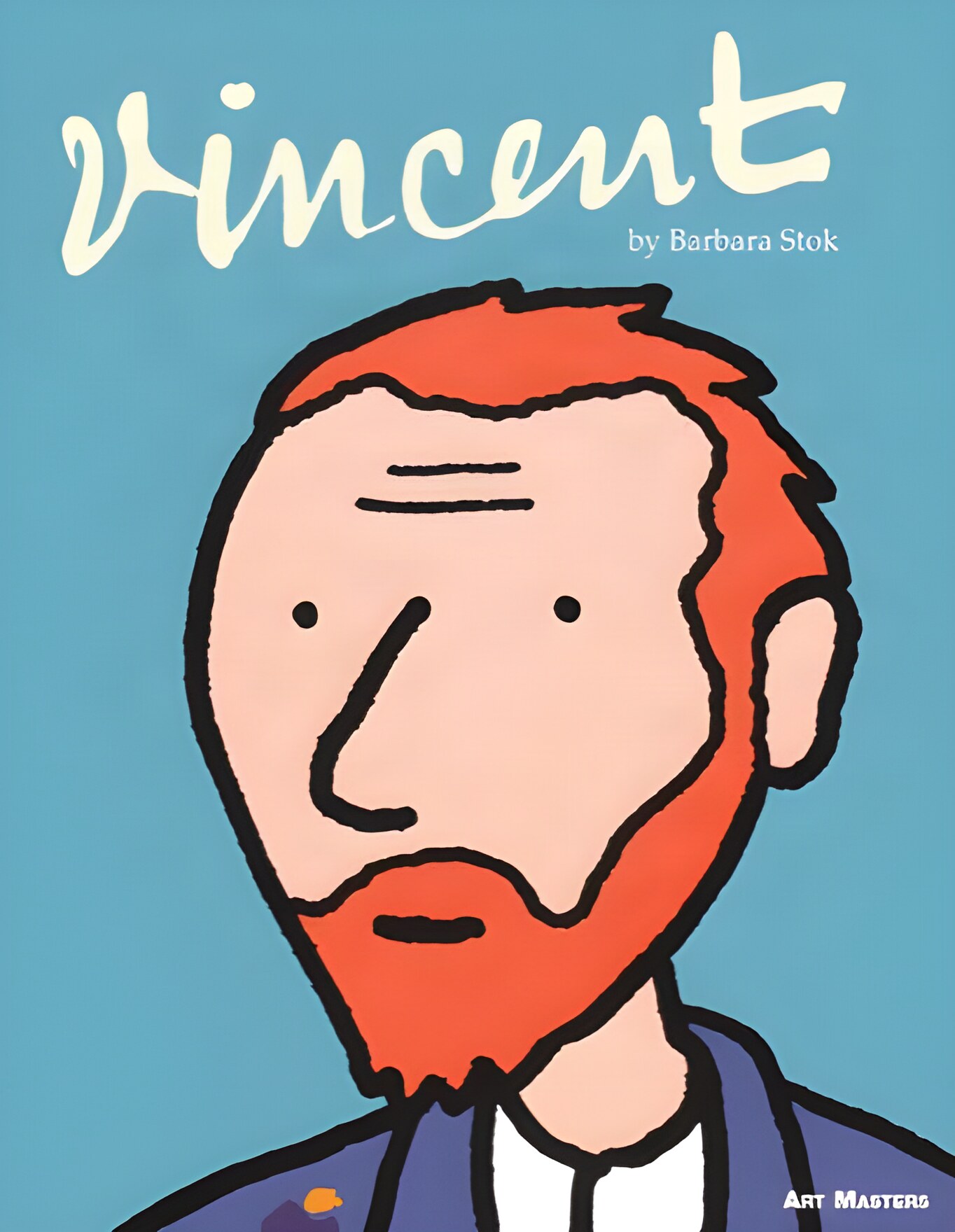
Softcover. SelfMadeHero, 1st US, 2015, Softcover, 142 pages illustrated in color by Stok. Translated from the Dutch by Laura Watkinson. This graphic biography documents the brief and intense period of creativity Vincent van Gogh (1853-1890) spent in Arles, Provence, in southern France. Here van Gogh dreams of setting up an artists' studio--a haven where he and his friends can paint together. But attacks of mental illness leave the painter confused and disoriented. When his friend and fellow artist Paul Gauguin refuses to reside permanently at the Yellow House, a distraught van Gogh cuts off part of his own ear. Throughout this period of intense emotion and hardship, Vincent's brother, Theo, stands by him, offering constant and unconditional support. Writer and illustrator Barbara Stok breathes riveting new life into a fascinating episode of art history, creating a vivid portrait of one of the world's most beloved and legendary artists. Clean copy.
Hardcover. New York, Rizzoli, 1st, 1990, Book: Very Good, Dust Jacket: Very Good, Two volume set. Hardcovers with dust jackets. Both in beautifully illustrated slipcase. Minor fraying to slipcase edges. Hardcovers both clean and unmarked. Color illustrations throughout.
Hardcover. Boston, Houghton Mifflin Books for Children, 1st, 2002, Book: Very Good, Dust Jacket: Very Good, Hardcover, 136 pages, color and b&w illustrations. Elleman examines the artist's early work and investigates the genesis of each of her seven picture books, from Choo Choo (1937) to the epic, carefully researched Life Story (1962, both Houghton) . Very good in a bright dust jacket.
Hardcover. New York, Thames & Hudson, 1st, 2006, Book: Very Good, Dust Jacket: Very Good, Hardcover, 408 pages. Like new in publisher's shrink-wrap. Containing uncensored and on-the-spot observations of Picasso at home and in company, Visiting Picasso is a wonderfully vivid, spontaneous and lively record of Roland Penroses many encounters with the artist and his family, friends and associates, from their first meeting in 1936 to the artists death in 1973. Over 70 photographs, many by Penroses wife Lee Miller, illustrate the colorful cast of characters.
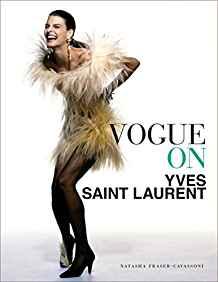
Hardcover. New York, Harry N. Abrams, 1st, 2015, Book: Very Good, Dust Jacket: None, 160 pages. Hardcover with no dust jacket. Clean, unmarked copy with only minor wear to boards. Color and black and white pictures throughout. Originally born in Algeria, Yves Saint Laurent moved to Paris when he was 18, and only three years later he was handpicked by Christian Dior to take the reins as designer of his fashion house. Over time, Saint Laurent resurrected haute couture from the casual mores that predominated in the 1960s, but also offered chic cachet to ready-to-wear clothing. He was among the earliest of designers to incorporate non- European references into his work, and in 1983 he became the first living designer to be feted with a solo exhibition at The Metropolitan Museum of Art in New York. Vogue on Yves Saint Laurent is a stellar volume in the series from the editors of British Vogue, featuring 20,000 words of original biography and history and studded with more than 80 images from their unique archive of images taken by leading photographers.
Hardcover. NY, Grove Press, 1st US, 2005, Book: Very Good, Dust Jacket: Very Good, Hardcover in a bright, unclipped dust jacket. In 1753, Voltaire -- playwright, poet, philosopher, and one of the most feted figures in Europe -- was forced by Louis XV into exile, where he remained for the last twenty-five years of his life. These years heralded a startling new beginning for this remarkable man. Voltaire carved out a new and vibrant world in his isolation, becoming a successful entrepreneur and writing his masterpiece Candide. In Voltaire in Exile, Ian Davidson re-creates this period in the life of one of the giants of the Enlightenment. By painstakingly translating the rich correspondence between Voltaire and his family, members of the Court at Versailles, and the French intellectual elite, Davidson allows us to discover Voltaire the artist, the campaigner, the aesthete, the lover, the humorist. The result is a wonderfully vivid portrait of this extraordinarily funny, iconoclastic, complex, and, above all, ferociously intelligent individual. Clean copy.
Hardcover. MI, Clarke Historical Library, 1st, 1976, Book: Very Good, Dust Jacket: None, 225 pages. Hardcover with orange fabric covers. Clean, tight copy with minor rubbign to edges. Black and white pictures throughout.
Hardcover. New York, Norton, 1st, 2015, Book: Very Good, Dust Jacket: Very Good, Hardcover, 458 pages, b&w illustrations. Sam Wagstaff, the legendary curator, collector, and patron of the arts, emerges as a cultural visionary in this groundbreaking biography. Even today remembered primarily as the mentor and lover of Robert Mapplethorpe, the once infamous photographer, Wagstaff, in fact, had an incalculable-and largely overlooked-influence on the world of contemporary art and photography, and on the evolution of gay identity in the latter part of the twentieth century. Born in New York City in 1921 into a notable family, Wagstaff followed an arc that was typical of a young man of his class. He attended both Hotchkiss and Yale, served in the navy, and would follow in step with his Ivy League classmates to the "gentleman's profession," as an ad executive on Madison Avenue. With his unmistakably good looks, he projected an aura of glamour and was cited by newspapers as one of the most eligible bachelors of the late 1940s. Such accounts proved deceiving, for Wagstaff was forced to live in the closet, his homosexuality only revealed to a small circle of friends. Increasingly uncomfortable with his career and this double life, he abandoned advertising, turned to the formal study of art history, and embarked on a radical personal transformation that was in perfect harmony with the tumultuous social, cultural, and sexual upheavals of the 1960s.
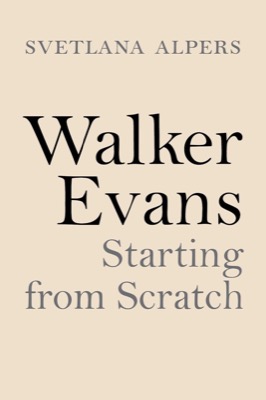
Hardcover. Princeton NJ, Princeton University Press, 1st, 2020, Book: Very Good, Dust Jacket: Very Good, Hardcocer in a bright dust jacket, 257 pages plus 143 b&w pages of photographs in the front of the book. Walker Evans (1903-75) was a great American artist photographing people and places in the United States in unforgettable ways. He is known for his work for the Farm Security Administration, addressing the Great Depression, but what he actually saw was the diversity of people and the damage of the long Civil War. In Walker Evans, renowned art historian Svetlana Alpers explores how Evans made his distinctive photographs. Delving into a lavish selection of Evans's work, Alpers uncovers rich parallels between his creative approach and those of numerous literary and cultural figures, locating Evans within the wide context of a truly international circle. Alpers demonstrates that Evans's practice relied on his camera choices and willingness to edit multiple versions of a shot, as well as his keen eye and his distant straight-on view of visual objects. Illustrating the vital role of Evans's dual love of text and images, Alpers places his writings in conversation with his photographs. She brings his techniques into dialogue with the work of a global cast of important artists--from Flaubert and Baudelaire to Elizabeth Bishop and William Faulkner--underscoring how Evans's travels abroad in such places as France and Cuba, along with his expansive literary and artistic tastes, informed his quintessentially American photographic style.
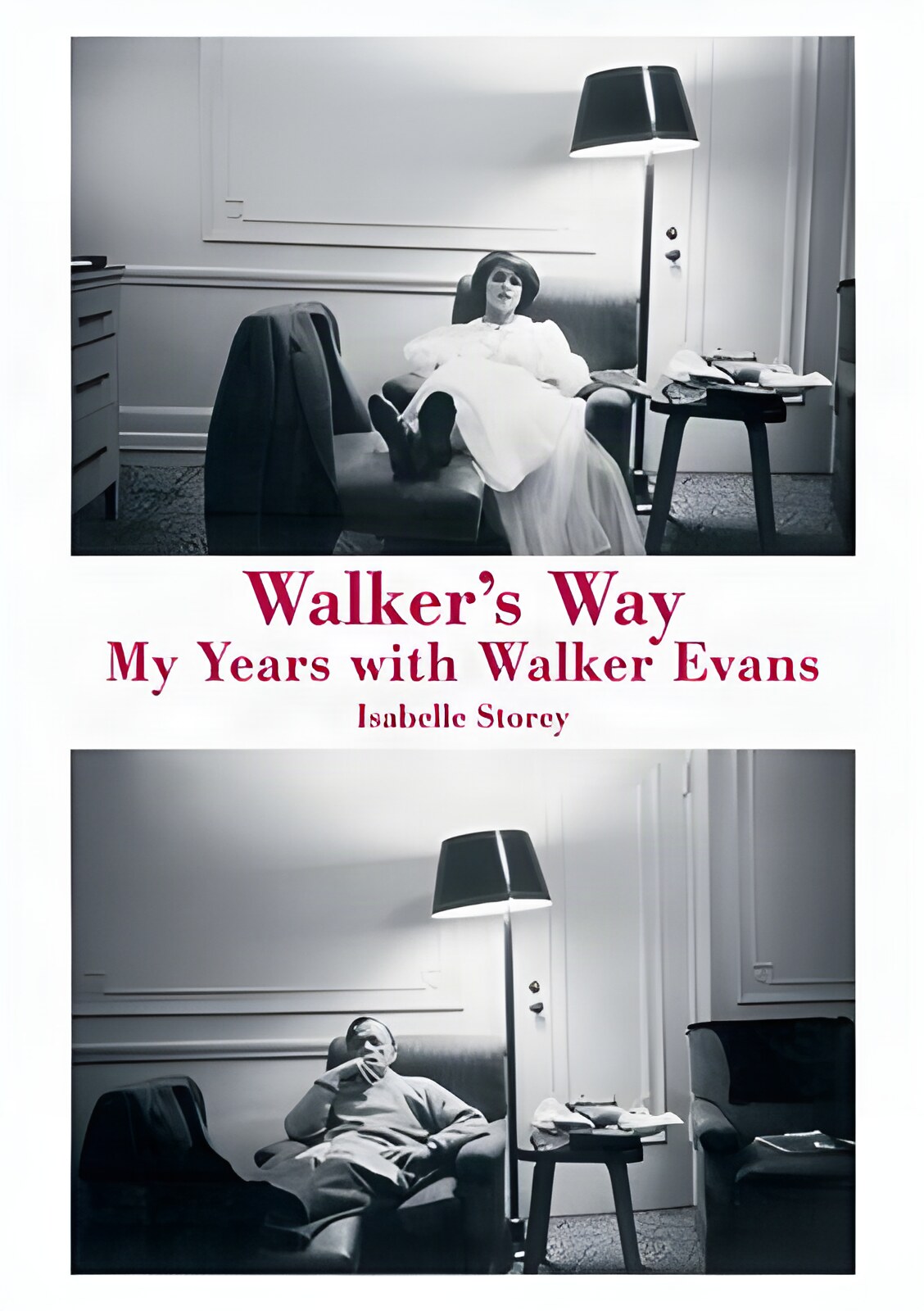
Hardcover. NY, PowerHouse Books, 1st, 2007, Book: Very Good, Dust Jacket: Very Good, Hardcover in a bright dust jacket, 263 pages. Personal history and intimate memoir by the wife of the great American artist. 50 duotone photographs and over a dozen by Walker Evans. Storey's memoir of her ten-year marriage to Walker Evans, is the story of an elegant young woman's infatuation with a great American artist--with the man himself, with what he stood for aesthetically, and with his artistic and social circle--and how her initial passion gradually cooled into disenchantment. Isabelle and Walker were married in 1960. Evans, already a prominent figure in the world of photography, introduced Isabelle to Robert Frank, Lee Friedlander, Helen Levitt, Robert Penn Warren, Alfred Kazin, William H. Whyte, and a host of other luminaries. Clean copy.
Hardcover. Tucson AZ, HP Books, 1st, 1985, Book: Very Good, Dust Jacket: Very Good, Hardcover, 96 pages. A pictorial biography of one of Disney's most popular creations. Color and b&w illustrations, filmography and bibliography. Clean in a bright dust jacket.
Hardcover. London/NY, Thames & Hudson, 1st, 2019, Book: Very Good, Dust Jacket: None, Hardcover, pictorial cloth, 112 pages illustrated in color, b&w. Jenny Uglow narrates the story of Walter Crane, an intriguing and most prolific figure not only in illustration, but in political culture more broadly. Uglow expertly weaves a fascinating study of how Crane's art and politics developed from his childhood love of Pre-Raphaelite painting to the influences of Morris and William Blake on the journals, books, banners, pamphlets and postcards he went on to create as he forged a new style for the international socialist movement. Comprising a staggering range of visual material, Crane's images became a symbolic code that leapt over linguistic boundaries. This book is a brilliant record of an artist who blended styles and influences like no one before him. An exploration of the life and work of Walter Crane, the pioneering British socialist artist who transformed the illustration of children's books. Clean copy.
Hardcover. New York, Prestel Publishing, 1st, 2011, Book: Very Good, Dust Jacket: Very Good, Hardcover, 214 pages, color plates. Like new in publisher's shrink-wrap. Catalog of an exhibition held at the National Gallery of Art, Washington, D.C., and three other institutions between Sept. 25, 2011 and Jan. 6, 2013.
Hardcover. Chicago, University of Chicago Press, 1st, 1948 , Book: Very Good, Dust Jacket: Very Good, 234 pages. Green cover with small gilt head silhouette to cover and lettering to spine, acetate-protected dust jacket, "Sally and Rockwell Kent" bookplate - formerly owned by the famous illustrator Rockwell Kent. Color frontispiece, 59 b&w plates of Allston's paintings. Light wear and chipping evident to dust jacket under acetate cover; overall, a clean, tight copy.
Hardcover. NY, Skira Rizzoli, 1st, 2010, Book: Very Good, Dust Jacket: Very Good, Hardcover, 224 pages. Illustrated in color and b&w. The most comprehensive book on the artist to date, offering an insightful look into the legendary musician and his enormous impact on the development of jazz. Miles Davis explores the life and art of one of the greatest visionaries in jazz history--through photographs, handwritten musical scores, album covers, posters, and more--cementing his reputation as the embodiment of cool, both on- and offstage. To examine his extraordinary career is also to examine the history of jazz from the mid-1940s through the early 1990s, as Davis was crucial in almost every important innovation and stylistic development during that time. His genius paved the way for these changes, both with his own performances and recordings, and by choosing collaborators with whom he forged new directions. Miles Davis--trumpeter, bandleader, and composer--was one of the most important figures in jazz history. He was born in a well-to-do family in St. Louis in 1926 and died in a Los Angeles hospital in 1991. He was at the forefront of several major developments in jazz music, including cool jazz, hard bop, free jazz, and fusion. Davis worked with many of the greatest jazz musicians of all time, including Ron Carter, John Coltrane, Chick Corea, Herbie Hancock, Quincy Jones, Charlie Parker, and Max Roach, among numerous others.
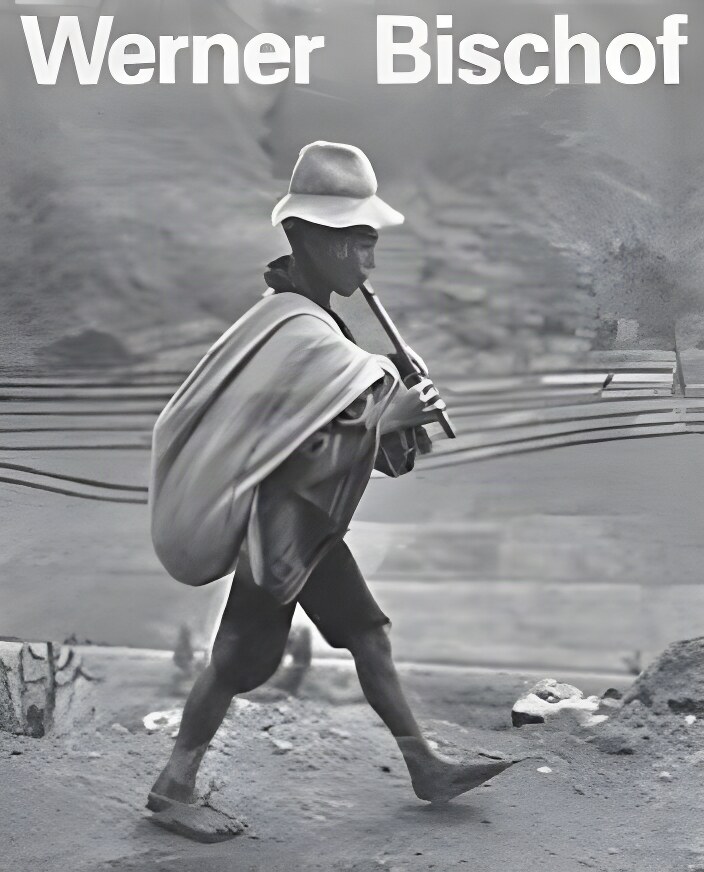
Hardcover. New York , Thames & Hudson, 1st, 1990, Book: Very Good, Dust Jacket: Very Good, 255 pages, clean hardcover in a bright, unclipped dust jacket. B&w photographs throughout by Bischof. His images were influenced by the major photo-movements of his time: the formal concepts of Das Neues Sehen (New Vision), the surrealism of Man Ray, and the documentary tradition of photojournalism. From the 1940s through the early 1950s, he covered World War II, the bombing of Hiroshima, and the Korean War for Life , Paris-Match , and other publications; his most famous series, "Famine in India," appeared in Life in 1951. This first major compilation of Bischof's work is nicely complemented by the text, a joint effort by son Marco and Swiss art historian Magnaguagno that vividly integrates biography and history. Dust jacket with minor edgewear, short closed tear to rear panel.
Hardcover. New York , Thames & Hudson, 1st, 1990, Book: Very Good, Dust Jacket: Very Good, 255 pages, clean hardcover in a bright, unclipped dust jacket. B&w photographs throughout by Bischof. His images were influenced by the major photo-movements of his time: the formal concepts of Das Neues Sehen (New Vision), the surrealism of Man Ray, and the documentary tradition of photojournalism. From the 1940s through the early 1950s, he covered World War II, the bombing of Hiroshima, and the Korean War for Life , Paris-Match , and other publications; his most famous series, "Famine in India," appeared in Life in 1951. This first major compilation of Bischof's work is nicely complemented by the text, a joint effort by son Marco and Swiss art historian Magnaguagno that vividly integrates biography and history.
Hardcover. NY, Harper, 1st, 2020, Book: Very Good, Dust Jacket: Very Good, Hardcover in a bright dust jacket, 672 pages. 16 pages of photos. What Becomes a Legend Most is the first definitive biography of this luminary--an intensely driven man who endured personal and professional prejudice, struggled with deep insecurities, and mounted an existential lifelong battle to be recognized as an artist. Philip Gefter builds on archival research and exclusive interviews with those closest to Avedon to chronicle his story, beginning with Avedon's coming-of-age in New York between the world wars, when cultural prejudices forced him to make decisions that shaped the course of his life. Compounding his private battles, Avedon fought to be taken seriously in a medium that itself struggled to be respected within the art world. Gefter reveals how the 1950s and 1960s informed Avedon's life and work as much as he informed the period. He counted as close friends a profoundly influential group of artists--Leonard Bernstein, Truman Capote, James Baldwin, Harold Brodkey, Renata Adler, Sidney Lumet, and Mike Nichols--who shaped the cultural life of the American twentieth century. It wasn't until Avedon's fashion work was exhibited at the Metropolitan Museum of Art in the late 1970s that he became a household name. Balancing glamour with the gravitas of an artist's genuine reach for worldy achievement--and not a little gossip--plus sixteen pages of photographs, What Becomes a Legend Most is an intimate window into Avedon's fascinating world. Dramatic, visionary, and remarkable, it pays tribute to Avedon's role in the history of photography and fashion--and his legacy as one of the most consequential artists of his time.
Hardcover. NY, Harper, 1st, 2020, Book: Very Good, Dust Jacket: Very Good, Hardcover in a bright dust jacket, 672 pages. 16 pages of photos. What Becomes a Legend Most is the first definitive biography of this luminary--an intensely driven man who endured personal and professional prejudice, struggled with deep insecurities, and mounted an existential lifelong battle to be recognized as an artist. Philip Gefter builds on archival research and exclusive interviews with those closest to Avedon to chronicle his story, beginning with Avedon's coming-of-age in New York between the world wars, when cultural prejudices forced him to make decisions that shaped the course of his life. Compounding his private battles, Avedon fought to be taken seriously in a medium that itself struggled to be respected within the art world. Gefter reveals how the 1950s and 1960s informed Avedon's life and work as much as he informed the period. He counted as close friends a profoundly influential group of artists--Leonard Bernstein, Truman Capote, James Baldwin, Harold Brodkey, Renata Adler, Sidney Lumet, and Mike Nichols--who shaped the cultural life of the American twentieth century. It wasn't until Avedon's fashion work was exhibited at the Metropolitan Museum of Art in the late 1970s that he became a household name. Balancing glamour with the gravitas of an artist's genuine reach for worldy achievement--and not a little gossip--plus sixteen pages of photographs, What Becomes a Legend Most is an intimate window into Avedon's fascinating world. Dramatic, visionary, and remarkable, it pays tribute to Avedon's role in the history of photography and fashion--and his legacy as one of the most consequential artists of his time.
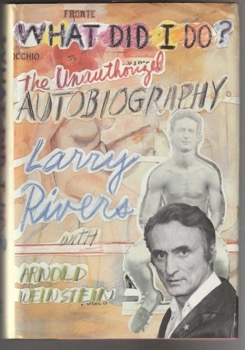
Hardcover. NY, HarperCollins, 1st, 1992, Book: Very Good, Dust Jacket: Very Good, Hardcover in a bright, unclipped dust jacket, 498 pages. The renowned artist offers a humorous take on his own life, discussing among other topics his Bronx childhood, his jazz career, his legendary excesses, and his brief stint in the military. There is the Larry Rivers whose work hangs in the Metropolitan Museum of Art and the National Gallery, and there is the Larry Rivers who himself has hung out in a variety of other, less respectable milieus. Now the artist, musician, friend, lover, and entertaining writer--with help from his old friend playwright Arnold Weinstein--pens perhaps the most outspoken and candid autobiography ever. B&w, some color illustrations. Clean copy.
Art Intitute of Chicago/Yale University Press, 1st, 2021, Book: Very Good, Dust Jacket: None, Hardcover, pictorial cloth, 251 pages illustrated in color. The extraordinary life of a captivating American artist, beautifully illustrated with his dreamlike drawings Much of Joseph Elmer Yoakum's story comes from the artist himself--and is almost too fantastic to believe. At a young age, Yoakum (1891-1972) traveled the globe with numerous circuses; he later served in a segregated noncombat regiment during World War I before settling in Chicago. There, inspired by a dream, he began his artistic career at age seventy-one, producing some two thousand drawings over a decade. How did Yoakum gain representation in major museum collections in Chicago and New York? What fueled his process, which he described as a "spiritual unfoldment"? This volume delves into the friendships Yoakum forged with the Chicago Imagists that secured his place in art history, explores the religious outlook that may have helped him cope with a racially fractured city, and examines his complicated relationship to African American and Native American identities. With hundreds of beautiful color reproductions of his dreamlike drawings, it offers the most comprehensive study of the artist's work, illuminating his vivid and imaginative creativity and giving definition and dimension to his remarkable biography. Clean copy. NOTE: DUE TO WEIGHT, DOMESTIC SHIPPING ONLY.
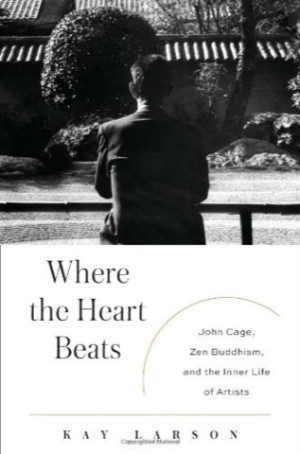
Hardcover. NY, Penguin Press, 1st, 2012, Book: Very Good, Dust Jacket: Very Good, Hardcover in a bright dust jacket. 474 pages, b&w illustrations. "A "heroic" and "fascinating" biography of John Cage showing how his work, and that of countless American artists, was transformed by Zen Buddhism". (The New York Times). Where the Heart Beats is the story of the tremendous changes sweeping through American culture following the Second World War, a time when the arts in America broke away from centuries of tradition and reinvented themselves. Painters converted their canvases into arenas for action and gesture, dancers embraced pure movement over narrative, performance artists staged "happenings" in which anything could happen, poets wrote words determined by chance.

 "Victor Regnault and the Advance of Photography: The Art of Avoiding Errorsby: Dahlberg, Laurie")

 "Vincent Van Gogh (Volume 1: Drawings/ Volume 2: Paintings)by: Gogh, Vincent van")
 "Virginia Lee Burton: A Life in Artby: Elleman, Barbara")
 "Visiting Picasso: The Notebooks and Letters of Roland Penroseby: Cowling, Elizabeth")






 "Walter Crane: The Illustrators by: Jenny Uglow")
 "Warhol: Headlinesby: Donovan, Molly")
 "Washington Allston: The Biography of a Pioneer of American Art and a Study of Romantic Art in Americaby: Richardson, Edgar P.")