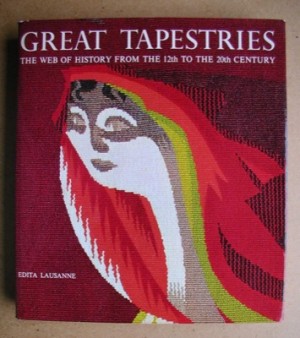
Hardcover. Switzerland, Edita S. A. Lausanne, 1st, 1965, Book: Very Good, Dust Jacket: Very Good, Hardcover, large folio in a bright dust jacket. 278 pages, color and b&w illustrations, many tipped-in color plates. Essay on Gothic tapestry by Pierre Verlet; essay on classical tapestry by Michel Florisoone; contemporary tapestry by Adolf Hoffmeister. An essay titled "The Weaver's Art" is by Francois Tabard. Lacks slipcase. DUE TO SIZE & WEIGHT, DOMESTIC SHIPPING ONLY.
Softcover. Lark Books, 1st, 2008, Book: Very Good, Dust Jacket: None, Softcover, 416 pages, illustrated in color. Feast your eyes on more than 300 of today's most creative, imaginative, and gorgeous hand-made guitars--all illustrated in full color and featuring information about the innovative artisans who created them. Meet guitar-making legends, such as C.F. Martin, Les Paul, and Leo Fender, who revolutionized the instrument's design. Discover why the past 25 years have seen an explosion of craftspeople who build guitars by hand, employing an attention to detail factories can't afford and using higher quality materials and more technical skill than in any previous era. Explore the various guitar styles used in a range of musical traditions, from blues to classical. Detailed information about each guitar's specifications, plus personal statements and anecdotes from the artisans about their work and techniques complete each entry.
Softcover. Athens, Blurb Inc., Reprint, 2010, Book: Very Good, Dust Jacket: None, 384 pages. Softcover printed to accompany the exhibition by the same title, appearing in multiple venues, including, Ruby Green Gallery, Nashville TN May - June 2003 and Athens Institute for Contemporary Art, Athens GA, August - September 2010. Bright, full page, full color photographs throughout. Clean, unmarked copy.
Hardcover. New York, Monacelli Press , 1st, 2012, Book: Very Good, Dust Jacket: None, 320 pages. Hardcover without dust jacket. Extensive b&w and color photography throughout. Illustrated end papers and fly leafs. Includes extensive bibliography and chronology. Clean, tight copy. In early October 1959, thirty-two-year-old Allan Kaprow presented a performance piece entitled "18 Happenings in 6 Parts." This unique conjunction of visual, aural, and physical events, performed for an intimate art world audience by his friends and colleagues, would change the course of art history. The genre of artwork that evolved from this debut would become known as Happenings. This new volume provides a comprehensive look at this revolutionary art form. Prepared in conjunction with an exhibition at the Pace Gallery in New York, it focuses on the years that saw the movement's birth in New York and Provincetown, Mass., and the artists who made the genre a legend: Red Grooms, Allan Kaprow, Robert Whitman, Jim Dine, Claes Oldenburg, Simone Forti, Carolee Schneemann. Together, they created a new and outrageous art form with an "anything goes" attitude, one whose influence is still felt within the contemporary art world.
Hardcover. NY, Monacelli, 1st, 2006, Book: Very Good, Dust Jacket: Very Good, Hardcover, 160 pages. Driving the glossy shelter magazines -- Architectural Digest, House and Garden, and many more -- is an enduring fascination with other people's lives and houses. But the pristine photographs in these publications do not represent reality. In his "Households" series, artist and architect Mark Robbins has invented the "flip side" of interior design magazines: a compelling series of photographs of actual people in actual homes. A young family at a writers retreat, a gay couple in a Long Island beach house, a husband and wife in a family compound, a single parent in a city apartment: Robbins has photographed residents and environments that comment on contemporary life and relationships. Robbins's design and photography work, which bridges the fields of art and architecture, has long focused on the complex social and political forces that contribute to the built environment. The thoughtfully arranged compositions reinforce, undermine, and even confuse stereotypes; the collection as a whole comments on present-day customs and ways of life in all their complexity.
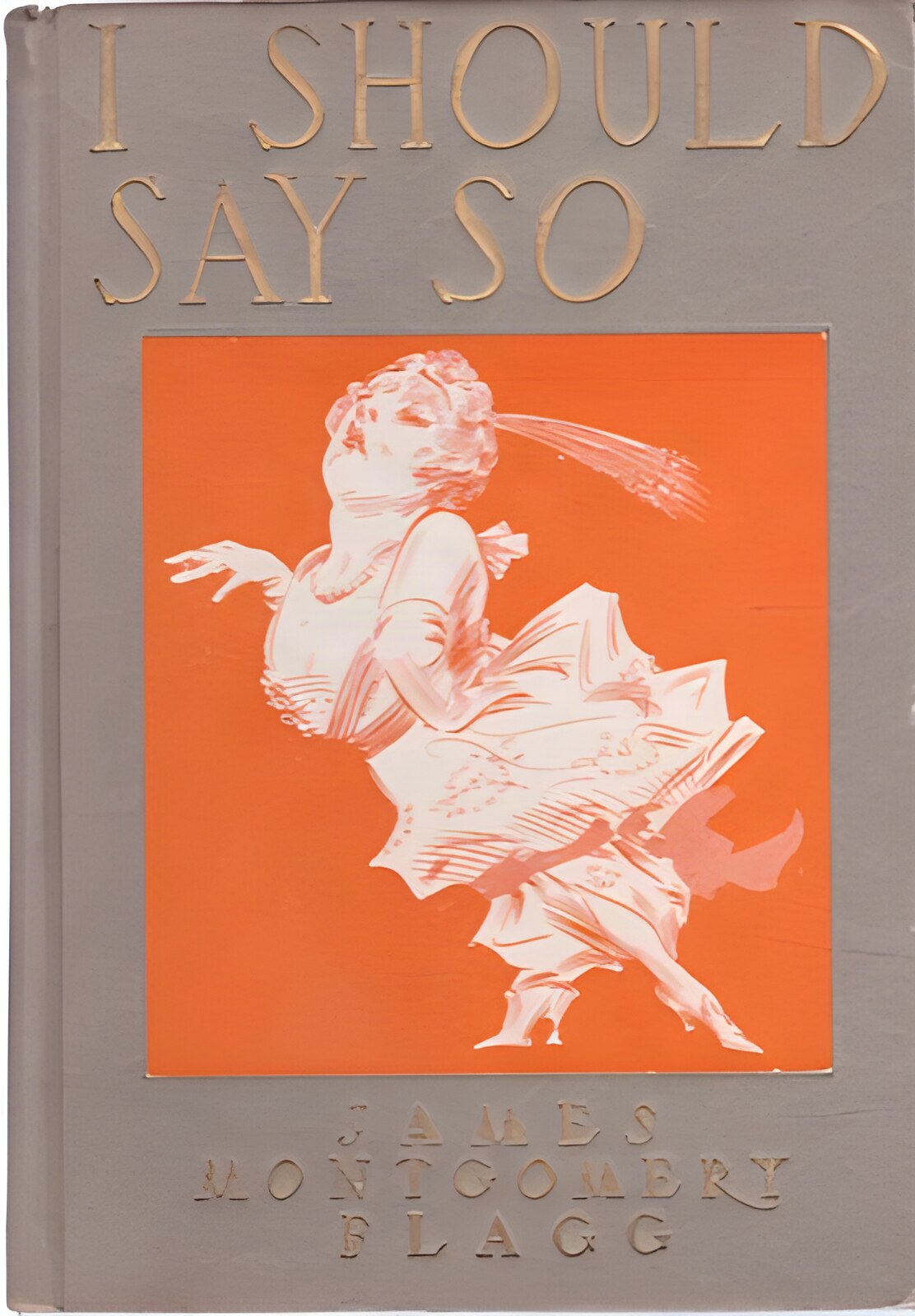
Hardcover. New York, George H. Doran, 1st, 1914, Book: Very Good, Dust Jacket: None, Hardcover, gray paper-covered boards with titles stamped in gilt. Orange and white pictorial paste-on cover. Orange and white pictorial endpapers. 36 illustrations by James Montgomery Flagg. Includes a section of Flagg illustrations spoofing other contemporary colleagues in their styling, including Howard Chandler Christy, Harrison Fisher, Charles Dana Gibson, among others. Clean, tight copy.
Hardcover. New Haven, CT, Yale University Press, 1st, 2006, Book: Very Good, Dust Jacket: Very Good, 320 pages. Hardcover with dust jacket. Very clean, unmarked copy with only minor edgewear. Illustrated with full-color reproductions of the artists' works, including some that have been published and others not originally intended for publication, such as sketchbooks and personal projects. Additional illustrations show behind-the-scenes working processes of the cartoonists and particular works by others that have influenced or inspired them. Through the eyes of these artists, we see with a new clarity the achievement of contemporary cartoonists and the extraordinary possibilities of comic art.
Hardcover. New Haven, CT, Yale University Press, 1st, 2006, Book: Very Good, Dust Jacket: Very Good, 320 pages. Hardcover with dust jacket. Very clean, unmarked copy with only minor edgewear. Illustrated with full-color reproductions of the artists' works, including some that have been published and others not originally intended for publication, such as sketchbooks and personal projects. Additional illustrations show behind-the-scenes working processes of the cartoonists and particular works by others that have influenced or inspired them. Through the eyes of these artists, we see with a new clarity the achievement of contemporary cartoonists and the extraordinary possibilities of comic art.
Softcover. NY, BisPublishers, 1st, 2004, Book: Very Good, Dust Jacket: None, Softcover, pictorial wraps with flaps. 393 pages. Infiltrate is a comprehensive collection of contemporary, cutting-edge New York design. It features established and emerging studios together with some extraordinary, little known companies and individuals. Each of the 30 ground-braking designers is interviewed and all artwork is captioned. Infiltrate is full of creative energy, experiments, challenging ideas and unexpected solutions. Clean copy.
Hardcover. US, Hatje Cantz, 1st, 2009, Book: Very Good, Dust Jacket: Very Good, Hardcover. Like new in publisher's shrink-wrap. Photographs of glaciers and Arctic regions have existed almost as long as photography itself, as a function of documentary and mapmaking endeavors. As early as the 1860s, the medium was used to assess topology, capturing Arctic landscape at a distance and at close quarters, or producing stereoscopic images or panoramas. Glaciologists needed photographs to be taken year after year in order to assess the growth or contraction of the ice, and today repeat photography has become a valuable tool for documenting and demonstrating the real effects of global warming. In Infinite Ice, historical images are reproduced alongside the responses of contemporary artists who have addressed photography and landscape--for example, long, nighttime exposures by Darren Almond, aerial photographs by Olafur Eliasson or panoramic views by Walter Niedermayr. Featuring approximately 100 images, this volume presents a broad variety of glacial photography from 1860 to the present.
Hardcover. Germany, Hatje Cantz, reprint, 2009, Book: Very Good, Dust Jacket: Very Good, 480 pages. Hardcover with dust jacket with slip case. Clean, unmarked copy with only minor wear to dust jacket. Color/ Black and white pictures throughout. Coinciding with renewed interest in James Ensor, this catalogue raisonne comes as an essential and definitive volume for Ensor buffs and all serious libraries of modern art. A legend in his own lifetime, Ensor (1860-1949) was--alongside Vincent van Gogh and Edvard Munch--a fearless independent whose work led directly to the development of German Expressionism and French Surrealism. Ensor achieved fame as the "painter of masks," and for his bizarre still lifes and grotesque carnival scenes, in harsh, contrasting, brilliant colors, evolving out of the traditional Flemish dance of death. Now, the reader can explore the Belgian painter's oeuvre thoroughly, in this opulently illustrated, full-color, slipcased catalogue raisonne. A comprehensive illustrated chronology offers additional details about the artist's life and work, and forms an integral part of this splendid, highly valuable contribution to art historical research, ensuring the legacy of a great artist who continues to inspire contemporary art.
Hardcover. Birmingham, Eng, Royal College of Surgeons, 1st, 1895, Book: Good, Dust Jacket: None, Bradshaw Lecture for 1894: A Study of His [Syme's] Influence and Authority on the Science and Art of Surgery During that Period. Syme was a leading surgeon of his day in Edinburgh's golden age of surgery. He was a master of surgical technique, a rival of Liston, a contemporary of Simpson and father-in-law and mentor of Joseph Lister. Hardcover, 27 pages. Red covers with gold lettering and decoration. Previous owner's signature on half-title page. Light foxing to first and last pages. Light rubbing to corners and edges. Light soiling to rear cover, upper corner.
Hardcover. New York, New Press, 1st, 2008, Book: Very Good, Dust Jacket: Very Good, Hardcover, 198 pages, b&w illustrations. Readers have long cherished the work of comic masters such as Will Eisner, Jules Feiffer, and Art Spiegelman, all of whom happen to be Jewish. Few, however, are probably aware that the Jewish role in creating the American comic art form is no less significant than the Jewish influence on Hollywood filmmaking. Filled with the most stunning examples of this vital artistic tradition, Jews and American Comics tells us how the "people of the book" became the people of the comic book. With three brief essays by Paul Buhle, the well-known historian of American Jewish life, Jews and American Comics offers readers a pictorial backstory tracing Jewish involvement in comic art from several little-known strips in Yiddish newspapers of the early twentieth century through the mid-century origins of the modern comic book and finally to contemporary comic art, which has at last found its place in museums, in private collections, and on the bookshelves of both critics and millions of avid readers.
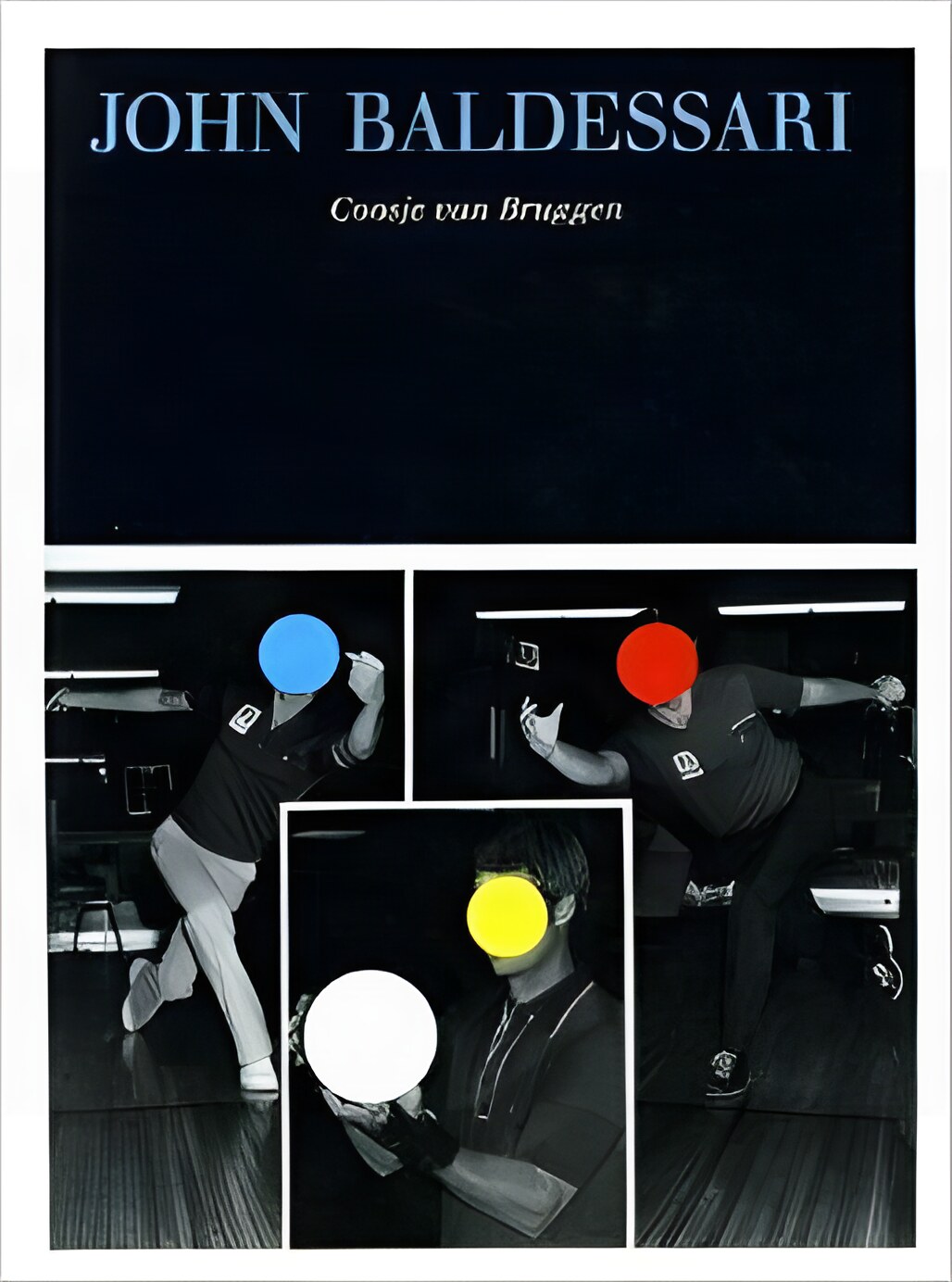
Softcover. NY, Rizzoli International Publications, 1st, 1990, Book: Very Good, Dust Jacket: None, Clean, unmarked copy with only minor wear to wrappers. 256 pages, profusely illustrated in bw and color. Published in conjunction with a traveling retrospective exhibition organized by the Museum of Contemporary Art, Los Angeles; Extensive text, as well as biographical and exhibition information.
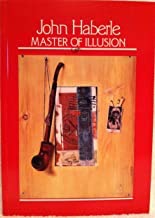
Softcover. Springfield, Mass., Museum of Fine Arts, 1st, 1985, Book: Good, Dust Jacket: None, Softcover, 72 pages, b&w illustrations, 8 color plates. Edge wear, small tears to wrappers and spine. Else a clean, tight copy. Of the three great nineteenth-century American trompe l'oeil artists--William Michael Harnett (1848-1892), John Frederick Peto (1854-1907), and John Haberle (1856-1933)--the least well known is Haberle. Haberle approached painting with an informed and sophisticated connoisseurship. A highly original artist, he often alluded to complicated, ingenious, and entertaining aspects of contemporary society. The rarity of his work only adds to its allure.
Hardcover. Ostfildern GR, Hatje Cantz, 1st, 2008, Book: Very Good, Dust Jacket: Very Good, Hardcover, 288 pages 231 illustrations 60 in color with 274 plans and drawings. Biography. Like new in publisher's shrink-wrap. Josef Paul Kleihues (1933-2004) was one of the most prolific architects of postwar Germany, famous both as the Director of the International Building Exhibition Berlin in 1987 and for his design for the Museum of Contemporary Art in Chicago. He was also known for his sensitive interventions into older buildings, an instance of which is the former Hamburger Bahnhof--now the Museum fur Gegenwart--in Berlin, where Kleihues intermixed glass walls and light installations by the American Minimalist Dan Flavin with the building's original nineteenth-century Neoclassical design. (His reconstruction was widely deemed to rival or even surpass Gae Aulenti's overhaul of the interior of the Musee d'Orsay in Paris.) This first volume of a three-part monograph presents projects up to 1980, including the highly acclaimed Berlin Sanitation Department and the Neukolln Hospital. Even in these early works, Kleihues' practical, problem-solving approach is already evident, indicating his readiness to reflect on the traditional approaches of Modern architecture and his capacity to expand them in interesting ways. This very generously illustrated volume was designed by Kleihues himself, just before his death in 2004.
Hardcover. Hatje Cantz, 1st, 2008, Book: Very Good, Dust Jacket: None, Hardcover, 160 pages. Known for his cool, clean, comics-inspired pictorial language, Julian Opie has been one of the leading figures in contemporary British art since the early 1980s. Equally at home in museum settings--like Tate Modern, the ICA Boston and MCA Chicago, where he has mounted recent one-person exhibitions and projects--and in collaboration with mainstream rock bands like Blur and U2, his work crosses media and genres with quiet, computer-assisted abandon. In the early days, Opie transgressed the boundaries between painting and sculpture by applying paint to the everyday articles he used in his steel objects. More recently he has experimented with digital technologies in the applied arts. Now, he is probably best-known for his hypnotically low-tech moving images generated by LCD and LED technologies. This volume assembles a representative collection of portraits, half-length figures and new works that draw from the motifs of baroque portraiture.
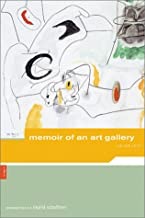
Softcover. NY, MFA Publications, reprint, 2003, Book: Very Good, Dust Jacket: None, Softcover, 368 pages. Julien Levy opened his New York gallery in 1931, and the following year assembled the first Surrealist show ever held in that city. Over the next two decades he exhibited works by Dali, Ernst, Joseph Cornell, Calder, Eugene Berman, Tchelitchew, Giacometti, Arshile Gorky and many other luminaries of twentieth-century art, giving a number of them their first shows. But Levy was more than a gifted dealer: he also had a gift for friendship, and in this charming, anecdotal memoir he recounts his intimate dealings with some of the most innovative figures of his generation. He crossed the Atlantic with Duchamp and introduced Tanguy to New York. He conceived the idea for Dali's Birth of Venus pavilion at the World's Fair, shared a summer house with Ernst and fished with Andre Breton (yielding a memorable description of the Surrealist leader's run-in with a blowfish). And he was with Gorky in the final, tragic days before the painter's suicide. Memoir of an Art Gallery is the story of prescient vision and lifelong devotion. By turns humorous and moving, and back in print after many years, it is also one of the most enjoyable works ever written about the pivotal time when Manhattan became the art capital of the world. This edition features a new introduction by Ingrid Schaffner, senior curator at the Institute of Contemporary Art in Philadelphia.
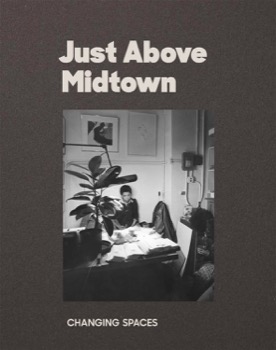
Softcover. NY, Museum of Modern Art, 1st, 2022, Book: Very Good, Dust Jacket: None, Softcover, 184 pages, illustrated in color and b&w. Just Above Midtown, or JAM, was an art gallery and self-described laboratory for experimentation led by Linda Goode Bryant that foregrounded African American artists and artists of color. Open from 1974 to 1986, it was a place where an expansive idea of contemporary art flourished and debate was cultivated. The gallery offered early opportunities for artists recognized as pivotal figures in late-20th-century art-including David Hammons, Butch Morris, Senga Nengudi, Lorraine O'Grady and Howardena Pindell-as well as a nonhierarchical approach to art that welcomed artists without stylistic proscription. Published in conjunction with the first museum exhibition to focus on this visionary gallery and its ongoing impact, Just Above Midtown: Changing Spaces showcases rarely seen material from JAM's history-artworks, ephemera and photographs-that collectively document the gallery's communal and programmatic activities. This richly illustrated, jacketed paperback catalog includes essays that contextualize JAM and consider its legacy, a conversation between Goode Bryant and Thelma Golden, Director and Chief Curator of the Studio Museum in Harlem, a complete exhibition chronology written by MoMA and Studio Museum staff with nearly 50 annotated entries, and excerpts from oral histories with JAM staff and artists conducted especially for this project. Clean copy.
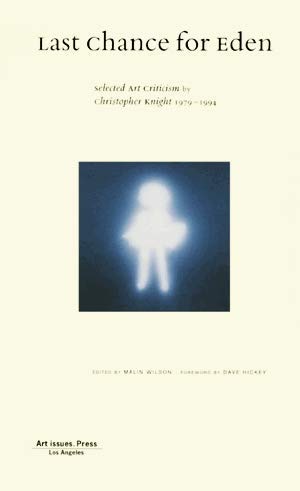
Hardcover. Los Angeles, Art Issues Press, 1st, 1995, Book: Very Good, Dust Jacket: Very Good, Hardcover in a bright dust jacket, 420 pages with index. Christopher Knight is the unprecedented five-time winner of the Chemical Bank Award for Distinguished Newspaper Art Criticism, and was a finalist for the 1990 Pulitzer Prize in criticism. Writing first for the Los Angeles Herald Examiner and now for the Los Angeles Times, Knight has developed a new journalistic approach to American art and culture, in which a radical defense of images stands alongside an incisive critique of cultural institutions. Among the 129 essays and reviews collected here are individual writings on internationally important historical figures, such as Rembrandt van Rijn, Tung Ch'i Ch'ang, and douard Manet; contemporary American masters like Edward Ruscha and Mike Kelley; and significant artists virtually forgotten today, such as California's Henrietta Shore and Mexico's Hermenegildo Bustos. Clean copy.
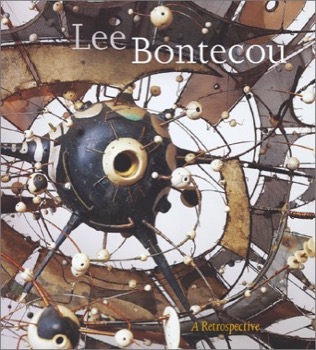
Hardcover. Chicago, Museum of Contemporary Art, 1st, 2003, Book: Very Good, Dust Jacket: Very Good, Hardcover in a bright dust jacket, 240 pages. Artist Lee Bontecou (b. 1931) became widely known in the 1960s and 1970s for her welded steel sculptures and plastic and epoxy molded assemblages, powerful constructions that evoked natural phenomena and organic biological life as well as machines and instruments of war. This critically acclaimed book re-evaluates the career of this highly influential artist and focuses not only upon the impact of her early work but also on the import she has exerted on a generation of younger artists. Featuring some 50 sculptures and more than 100 drawings from the late 1950s to 2003, the book presents four essays that reposition Bontecou's work within the history of recent art, examine its shifting critical reception, discuss the artistic context in which her work was made, and analyze how science underpinned some of her earliest explorations. Related ephemera laid in. Clean copy. This is a heavy and oversized book and will require extra shipping. International customers please ask for a shipping quote before purchasing.
Hardcover. Chicago, University Of Chicago Press, 1st US, 2001, Book: Very Good, Dust Jacket: Very Good, 440 pages. Hardcover with dust jacket and slipcase. Full color and black & white illustrations. Beautiful copy with light sunning to dust jacket spine, Clean, tight copy. The technical problems with the Last Supper began as soon as Leonardo started to paint it. He jettisoned the traditional fresco technique of applying paint to wet plaster, a method unsuited to Leonardo's slow and thorough execution, and created the work instead with an experimental technique that involved painting directly on the dry plaster. With this renegade method, Leonardo rendered one of the most enduring painting techniques volatile and unstable. Added to this initial complication have been centuries of pollution, tourists, candle smoke, and the ravages of age, not to mention food fights in the refectory staged by Napoleonic soldiers and Allied bombs in 1943. By the middle of the twentieth century, the Last Supper was in desperate need of a complete restoration. Pinin Brambilla Barcilon was chosen to head this twenty-year project, and Leonardo, The Last Supper is the official record of her remarkable effort. It first documents the cleaning and removal of the overpainting performed in the other attempts at restoration and then turns to Barcilon's meticulous additions in watercolor, which were based on Leonardo's preparatory drawings, early copies of the painting, and contemporary textual descriptions. This book presents full-scale reproductions of details from the fresco that clearly display and distinguish Leonardo's hand from that of the restorer. With nearly 400 sumptuous color reproductions, the most comprehensive technical documentation of the project by Barcilon, and an introductory essay by art historian and project codirector Pietro C. Marani that focuses on the history of the fresco,
Hardcover. NY, Watson-Guptill, 1st, 2011, Book: Very Good, Dust Jacket: None, Hardcover in pictorial boards with a gray cloth spine. The practice of drawing distilled to its essential elements. The companion DVD enclosed inside, beautifully filmed in Florence, Italy, provides real-time drawing lessons so that any gaps in the learning process are filled in with live instruction. In this elegant and inspiring primer, master contemporary artist and author Juliette Aristides breaks down the drawing process into small, manageable lessons; introduces time-tested principles and techniques that are easily accessible; and shares the language and context necessary to understand the artistic process and create superior, well-crafted drawings. Clean copy.
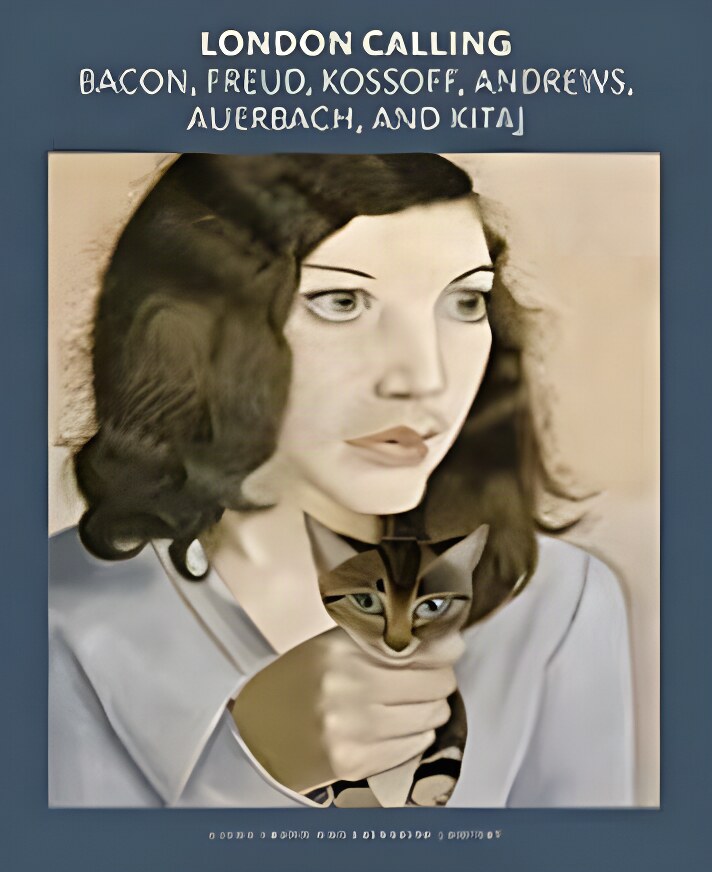
Hardcover. Loa Angeles, J. Paul Getty Museum, 1st, 2016, Book: Very Good, Dust Jacket: None, Hardcover, 136 pages. Offering a fresh account of developments that have since characterized postwar British painting, this catalogue focuses on Michael Andrews, Frank Auerbach, Francis Bacon, Lucian Freud, R. B. Kitaj, and Leon Kossoff-- artists who worked in close proximity as they were developing new forms of realism. If for many years their efforts seemed to clash with dominant tendencies, reassessment in recent decades has afforded their work a central position in a richer and more complex understanding of postwar British art and culture. Rigorous and gorgeously illustrated, the essays reflect on the parallel yet diverse trajectories of these artists, their friendships and mutual admiration, and the divergence of their practice from the discourse of high modernism. The authors seek to dispel the notion of their work as a uniquely British endeavor by highlighting the artists' international outlook and ongoing dialogue with contemporary European and American painters as well as masters from previous generations.



 "Hand Made, Hand Played: The Art & Craft of Contemporary Guitars by: Shaw, Robert")
 "Hand to Hand - 195 Artists Witness the Iraq War - 2003 - 2010by: Kane, Cecelia")


 "Happenings: New York 1958-1963by: Glimcher, Mildred L.")
 "Householdsby: Robbins, Mark")
 "In the Studio: Visits with Contemporary Cartoonistsby: Hignite, Todd")
 "In the Studio: Visits with Contemporary Cartoonistsby: Hignite, Todd")


 "Infinite Ice: The Arctic and the Alps from 1860 to the Presentby: Schroder, Klaus Albrecht")


 "James Ensor: The Complete Paintingsby: Tricot, Xavier")
 "James Syme, Regius Professor of Surgery in the University of Edinburgh, 1833-1869by: Pemberton, Oliver")
 "Jews and American Comics: An Illustrated History of an American Art Formby: Buhle, Paul")
 "Josef Paul Kleihuesby: Kleihues, Josef Paul, Andrea Mesecke and Thorsten Scheer")
 "Julian Opie: Recent Worksby: Timothy Clark (Author), Sandy Nairne (Author), Peter Noever (Editor)")


 "Leonardo: The Last Supperby: Barcilon, Pinin Brambilla/Pietro C. Marani")