Softcover. London, Black Dog Publishing, 1st, 2008, Book: Very Good, Dust Jacket: None, Softcover, 185 pages, color illustrations. Contemporary designers, artists and scientists explore the evolution of this ubiquitous and endlessly malleable material, through its trademarked names - Spandex, Teflon, Nylon, Rayon, Formica, Tupperware - through to looking at how its function and reputation have changed over its lifetime. It is an essential book for designers, academics and everyone interested in our consumer culture.
Hardcover. NY, Harcourt, reprint, 2000, Book: Very Good, Dust Jacket: Very Good, Hardcover in a bright dust jacket. SIGNED BY KURTZ on the title page with the admonishment to "Tell your stories!" Gorgeous color illustrations by E.B. Lewis. As her father prepares for a trip back to his childhood home in Ethiopia, Desta begins to worry. Where does her father truly belong-in the village of his youth or here in America with her? What was growing up in Ethiopia like? And will her father's love for his family be enough to bridge these two worlds and bring him back to her? A powerful portrait of a contemporary American immigrant family from a Coretta Scott King Honor-winning artist portrays a heartwarming father-daughter relationship. Clean copy.
Hardcover. NY, Assouline, 1st, 2006, Book: Very Good, Dust Jacket: Very Good, Hardcover, 288 pages. From contemporary food design to the spectacle of eighteenth-century aristocratic feasts, this book examines the history of cutlery and dining ritual. A broad offering of great, beautiful pictures and collection of texts that explore the social meanings and fascinating forms of table settings. A truly fascinating book.
Hardcover. NY, Land's End Press, 1st, 1968, Book: Very Good, Dust Jacket: Fair, Hardcover, 1968 stated on both the cover and copyright pages. 13 x 9.5 inches, black cloth with gilt design and lettering to the cover and spine. 288 pages. Wrapped in a worn and chipped dust-jacket with a nude illustration in black and white covering the lower 2/5 of the cover. This book provides a selection of Rops' graphics with notes on his life by Lee Revens. Felicien Rops (1833 1898) was a prominent figure in 19th-century Belgium. His art is characterized by satirical, demonic, and erotic themes, often challenging societal norms and hypocrisy. Rops works hold a mirror to contemporary society, exposing its repressive standards and moral contradictions. His art oscillates between sensuality, death, and satanism, making him a key figure in the late 19th-century decadent movement. No markings.
Hardcover. Princeton NJ, Princeton Architectural Press, 1st, 2001, Book: Very Good, Dust Jacket: Very Good, 326 pages, illustrated with b&w photographs, several color plates and architectural drawings by Vitale. Foreword by Horace Havemeyer III. Ferruccio Vitale is America's forgotten landscape architect. Though his works like Skylands and Longwood Gardens are well known, his name has been eclipsed by his contemporary, Frederick Law Olmsted, Jr. Yet Vitale's influence on the modern direction of landscape design and his promotion of it as a profession is arguably more significant than Olmsted's. His unique designs and philosophy, which challenged the then-dominant pictorial mode of landscape architecture, influenced generations of followers, and is still felt today. Vitale (1875-1933) developed his rationale designs, based on the principles of composition from the fine arts and architecture, in both civic commissions and, most notably, at the country estates of captains of industry and finance. He introduced an idealized and abstracted type of formal design that created beautiful spaces, structured large sites, and reflected informal and relaxed plant compositions. Ferruccio Vitale tours over 40 of his masterworks, photographed by some of the best landscape photographers of the time, including Samuel Gottscho. It recounts the compelling story of a life in the early twentieth century, influenced by immigrant dreams, social clubs, and professional connections, and its culmination in some of the greatest landscapes of the 20th century.
Hardcover. Princeton NJ, Princeton Architectural Press, 1st, 2001, Book: Very Good, Dust Jacket: Very Good, 326 pages, illustrated with b&w photographs, several color plates and architectural drawings by Vitale. Foreword by Horace Havemeyer III. Ferruccio Vitale is America's forgotten landscape architect. Though his works like Skylands and Longwood Gardens are well known, his name has been eclipsed by his contemporary, Frederick Law Olmsted, Jr. Yet Vitale's influence on the modern direction of landscape design and his promotion of it as a profession is arguably more significant than Olmsted's. His unique designs and philosophy, which challenged the then-dominant pictorial mode of landscape architecture, influenced generations of followers, and is still felt today. Vitale (1875-1933) developed his rationale designs, based on the principles of composition from the fine arts and architecture, in both civic commissions and, most notably, at the country estates of captains of industry and finance. He introduced an idealized and abstracted type of formal design that created beautiful spaces, structured large sites, and reflected informal and relaxed plant compositions. Ferruccio Vitale tours over 40 of his masterworks, photographed by some of the best landscape photographers of the time, including Samuel Gottscho. It recounts the compelling story of a life in the early twentieth century, influenced by immigrant dreams, social clubs, and professional connections, and its culmination in some of the greatest landscapes of the 20th century.
Hardcover. London, Conrad/Octopus, reprint, 2011, Book: Very Good, Dust Jacket: Very Good, Hardcover in a bright dust jacket, 112 pages. Join the Design Museum, the world's leading museum in contemporary design, on a guided tour of the 50 most important dresses in social history and design. Filled with pages of beautiful clothes, and the famous faces (and bodies) that put them on the world stage -including Wallis Simpson, Jackie Kennedy, Twiggy and Cher and, of course, Princess Di-this fun volume shares fascinating appraisals of what gave the 50 most important garments their iconic status.
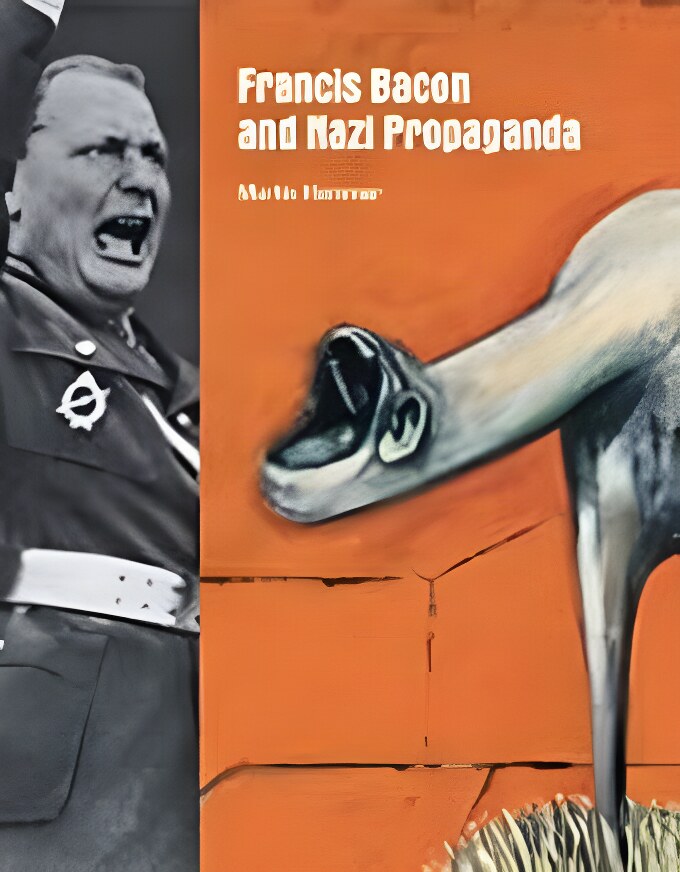
Hardcover. London, Tate, 1st, 2013, Book: Very Good, Dust Jacket: Very Good, Hardcover, 224 pages. British artist Francis Bacon (1909-1992) was one of the most important artists of the 20th century. Here, Martin Hammer presents him as a "painter of modern life," whose concern was to distill the feelings associated with living through the rise of Fascism in the 1930s, World War II, the revelations of the Holocaust, and then the early Cold War period. Against a backdrop of changing attitudes toward wartime memories and a gradual resurgence of interest in the war, Hammer offers extensive evidence of Bacon's use of prewar Nazi propaganda photography as a springboard for painting. By exploring some of Bacon's best-known and most compelling works, Hammer illuminates the artist's aim to transmute challenging photographic sources into a reflection on the contemporary world.
Hardcover. San Diego, Museum of Contemporary Art San Diego, 1st, 2001, Book: Very Good, Dust Jacket: Very Good, 79 pages, 56 illustrations 50 in color. Published on the occasion of the exhibition from January 17-March 28, 1999. A previously unpublished interview with Francis Bacon by the author from August 13, 1973. Includes acknowledgments, checklist, and chronology.
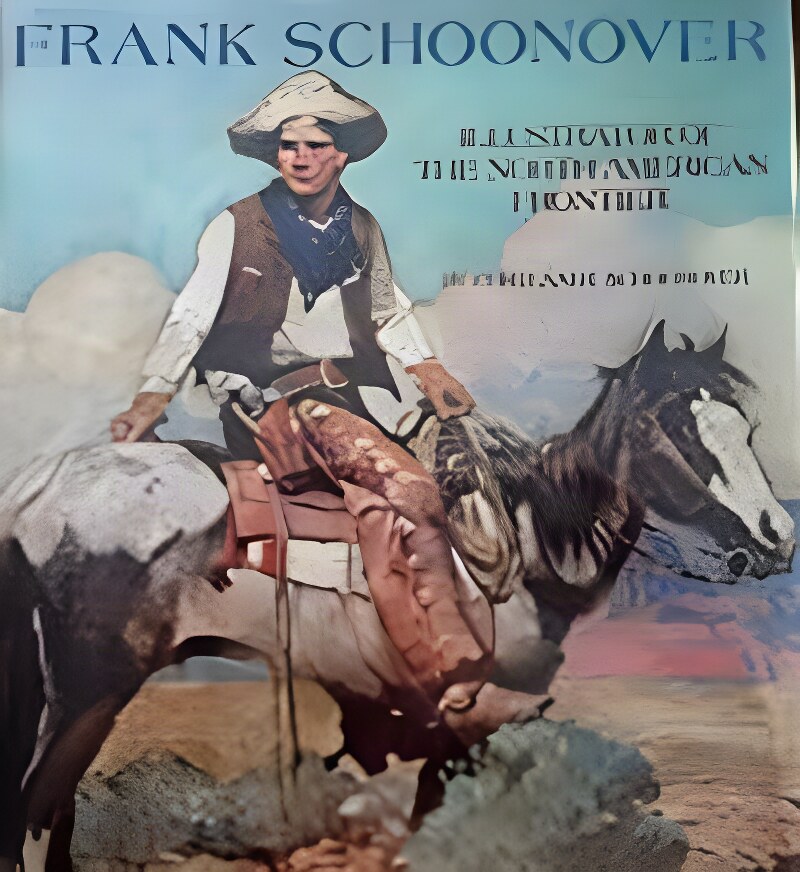
Hardcover. NY, Watson-Guptill, 1st, 1976, Book: Very Good, Dust Jacket: Very Good, Hardcover. Frank Schoonover, one of the giants of the Golden Age of American Illustration, was renowned for his scenes of life on the western frontier of America and Canada. Schoonover captured the flavor of the west and northwest in his dramatic outdoor compositions which depicted cowboys, Indians, trappers, Eskimos - the people and way of life that he knew, loved, and painted first hand. His keen sense of observations, coupled with his vivid documentary style, made his illustrations powerful paintings in themselves. They are now exhibited and collected for their own sake, independent of the books they illustrated, as unforgettable documents of a legendary way of life. Like the other great painter/illustrators of the Brandywine School -he was a student of Howard Pyle and a contemporary of such notables as N. C. Wyeth and Harvey Dunn - Schoonover was passionate about the portrayal of the American past. Although he lived most of his life in the Brandywine River area of Pennsylvania and Delaware, his commitment to the frontier dominated his work. A natural love for adventure and a yearning to find his own style sent him initially to the Canadian northwest, where he took naturally to the challenge of frontier life. Living among the Indians, canoeing, traveling by dogsled, and fending for himself brought authentic flavor to his paintings which illustrated many popular books and stories of adventure - most of which are now forgotten, although the paintings endure. This handsome collection is the first full-scale illustrated study of Schoonover's work, not only rediscovering the paintings of a major artist, but providing an important visual document of frontier life. 208 pages. 10 1/2 X 11 1/4. 48 color plates. 150 black-and-white illustrations. Chronology. Index.
Hardcover. NY, Watson-Guptill, 1st, 1976, Book: Very Good, Dust Jacket: Very Good, Hardcover. Frank Schoonover, one of the giants of the Golden Age of American Illustration, was renowned for his scenes of life on the western frontier of America and Canada. Schoonover captured the flavor of the west and northwest in his dramatic outdoor compositions which depicted cowboys, Indians, trappers, Eskimos - the people and way of life that he knew, loved, and painted first hand. His keen sense of observations, coupled with his vivid documentary style, made his illustrations powerful paintings in themselves. They are now exhibited and collected for their own sake, independent of the books they illustrated, as unforgettable documents of a legendary way of life. Like the other great painter/illustrators of the Brandywine School -he was a student of Howard Pyle and a contemporary of such notables as N. C. Wyeth and Harvey Dunn - Schoonover was passionate about the portrayal of the American past. Although he lived most of his life in the Brandywine River area of Pennsylvania and Delaware, his commitment to the frontier dominated his work. A natural love for adventure and a yearning to find his own style sent him initially to the Canadian northwest, where he took naturally to the challenge of frontier life. Living among the Indians, canoeing, traveling by dogsled, and fending for himself brought authentic flavor to his paintings which illustrated many popular books and stories of adventure - most of which are now forgotten, although the paintings endure. This handsome collection is the first full-scale illustrated study of Schoonover's work, not only rediscovering the paintings of a major artist, but providing an important visual document of frontier life. 208 pages. 10 1/2 X 11 1/4. 48 color plates. 150 black-and-white illustrations. Chronology. Index. Due to size and weight, DOMESTIC SHIPPING ONLY.
Hardcover. NY, Abrams, 1st, 2006, Book: Very Good, Dust Jacket: Very Good, Hardcover in a bright dust jacket. The photographs produced by the United States Farm Security Administration (FSA) during the Great Depression constitute one of America's greatest artistic legacies. A team of young photographers, including Dorothea Lange, Walter Evans, and Gordon Parks, not only created an extraordinary and powerful portrait of American life between the wars but in doing so also set a new standard for contemporary photography. 357 pages. Over 470 photographs, many of which have never been published before.
Hardcover. New Haven CT, Yale University Press, 1st, 2015, Book: Very Good, Dust Jacket: Very Good, Hardcover in a bright dust jacket. 282 pages, illustrated in b&w and color. Although Surrealism is usually associated with the 1920s and 1930s, it remained a vital force in Paris throughout the postwar period. This important book offers the first detailed account in English of the trajectory of the French Surrealists in the 1950s and 1960s, giving particular emphasis to the significance of myth for the group in its reception of science fiction and its engagement with fantastic art. Offering new readings of the art and writings of the later generation of Surrealists, Gavin Parkinson demonstrates how they were connected to the larger cultural and political debates of the time. Whereas earlier Surrealist art and writing drew on psychoanalytic practices, younger Surrealists engaged with contemporary issues, ideas, and themes of the period of the Cold War and Algerian War such as parapsychology, space travel, fantastic art, increasing consumerism in Europe, emerging avant-gardes such as Nouveau Realisme, and the rise of the whole genre of conspiracy theory, from Nazi occultism to flying saucers. Futures of Surrealism offers a unique perspective on this brave new world. Clean copy.
Softcover. Bloomington IN, Indiana University Press, 1st, 2003, Book: Very Good, Dust Jacket: None, Softcover, 209 pages. This groundbreaking study explores the Harlem Renaissance as a literary phenomenon fundamentally shaped by same-sex-interested men. Christa Schwarz focuses on Countee Cullen, Langston Hughes, Claude McKay, and Richard Bruce Nugent and explores these writers' sexually dissident or gay literary voices. The portrayals of men-loving men in these writers' works vary significantly. Schwarz locates in the poetry of Cullen, Hughes, and McKay the employment of contemporary gay code words, deriving from the Greek discourse of homosexuality and from Walt Whitman. By contrast, Nugent-the only "out" gay Harlem Renaissance artist-portrayed men-loving men without reference to racial concepts or Whitmanesque codes. Schwarz argues for contemporary readings attuned to the complex relation between race, gender, and sexual orientation in Harlem Renaissance writing. Clean copy.
Hardcover. NY, Pantheon, 1st, 2005, Book: Very Good, Dust Jacket: Very Good, Hardcover, 112 pages. This clever, satirical graphic novel reimagines the Flaubert classic Madame Bovary through contemporary mores and attitudes. Simmonds's unique approach includes the usual panels and balloons, but also voluminous amounts of text on each page. The result is a graphic novel that reads like an actual novel. Simmonds tells the story through the eyes of Raymond Joubert, a baker in Normandy. Gemma herself is a complex character--an unsatisfied young woman who marries Charlie Bovery, a lumpish carpenter, out of apparent boredom, and then persuades him to move from London to a farmhouse in Normandy, to escape his clinging ex-wife and two children. Here, the rather unlikable Gemma begins to come into focus, her loneliness and isolation leading to her affair. Joubert, who mixes genuine concern with denial about his voyeurism, is convinced Gemma's headed down the same tragic path as Flaubert's original. Since we learn in the first paragraph that Gemma is dead, the question is who will be responsible for her demise. Simmonds's art recalls the elegance of New Yorker cartoonists mingled with the goth charm of Edward Gorey (Gemma herself is all restlessly darting pinpoint pupils).
Softcover. Berlin GR, Walther Konig/Contemporary Fine Arts, Berlin, 1st, 2007, Book: Very Good, Dust Jacket: None, Softcover, 56 pages, color and b&w illustrations. Collection of new works on paper by the German neo-Expressionist Georg Baselitz is beautifully printed on deluxe paper and includes a tipped in centerfold on glossy paper. Here Baselitz revisits and remixes early works in fresh new ways. Bright, clean copy. English and German text.
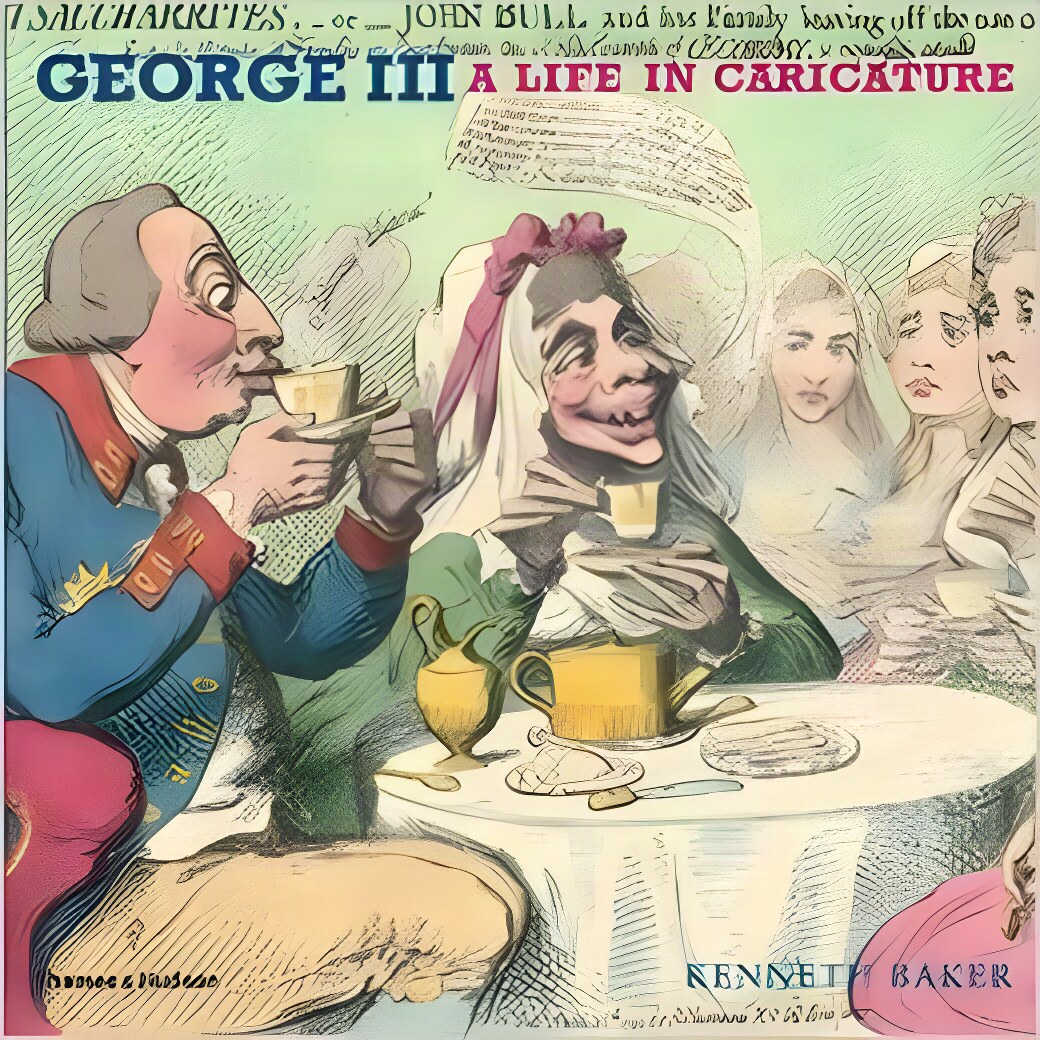
Hardcover. New York , Thames & Hudson, 1st, 2007, Book: Very Good, Dust Jacket: Very Good, Hardcover, 192 pages. Like new in publisher's shrink-wrap. George III enjoyed one of the longest reigns in English history (1760-1820) at a time when both England and the world were undergoing drastic changes. Yet he remains a dim figure, remembered mainly for his failures (losing America) and his "madness" (which turns out to have been not mental but physical). He was highly unpopular for much of his reign, and this judgment is spectacularly endorsed by hundreds of contemporary caricatures, many reproduced here for the first time. Among George's enemies were some of the wittiest artists of any age, and few took the trouble to be fair. This was the way the English nation saw its king, adding a new dimension to what is ultimately a tragic story. 200 color illustrations.
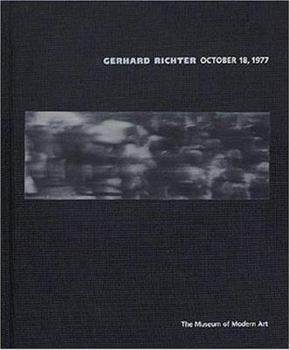
Hardcover. NY, Museum of Modern Art/Abrams, 1st, 2000, Book: Very Good, Dust Jacket: None, Hardcover, black cloth with cover paste-down plate, white lettering. Gerhard Richter (b. 1932) is one of the most highly regarded of contemporary artists, and his series of 15 paintings known as October 18, 1977, is one of the 20th century's most famous works on a political theme. It commemorates the day on which three young German radicals, members of the militant Baader-Meinhof group, were found dead in a Stuttgart prison; they were pronounced suicides, but many people suspected that they had been murdered. Richter's paintings, created 11 years after this traumatic event, are among the most challenging works of the artist's career. These hauntingly powerful images, derived from newspaper and police photography, are now in the collection of the Museum of Modern Art, New York. Clean copy.
Hardcover. Other Distribution, 1st, 2010, Book: Very Good, Dust Jacket: Very Good, Hardcover in publisher's shrink-wrap. 378 pages. Gloria F. Ross (1923-1998) described her work as the translation of paint into wool. She was deeply committed to reinventing the centuries-old art of tapestry, particularly championing the handmade in contemporary art. This remarkable book, written by textile scholar Ann Lane Hedlund, draws from rare unpublished archives to unravel the evolution of Ross's modern tapestries and to illuminate the significance of her creative partnerships. Gloria F. Ross and Modern Tapestry features the collaborative work of 28 acclaimed modernist painters and sculptors, including Helen Frankenthaler (Ross's sister), Kenneth Noland, and Louise Nevelson, with several dozen traditional-yet-innovative weavers in France, Scotland, and the Southwestern United States. Brief biographies of the artists, letters, notes, sketches, and photographs illustrate the practical and aesthetic challenges that occupied Gloria Ross for over three decades
Hardcover. US, Other Distribution, 1st, 2010, Book: Very Good, Dust Jacket: Very Good, Like new in publishers shrink-wrap. Hardcover with dust jacket, 378 pages. Gloria F. Ross (1923-1998) described her work as the translation of paint into wool. She was deeply committed to reinventing the centuries-old art of tapestry, particularly championing the handmade in contemporary art. This remarkable book, written by textile scholar Ann Lane Hedlund, draws from rare unpublished archives to unravel the evolution of Ross's modern tapestries and to illuminate the significance of her creative partnerships. Gloria F. Ross and Modern Tapestry features the collaborative work of 28 acclaimed modernist painters and sculptors, including Helen Frankenthaler (Ross's sister), Kenneth Noland, and Louise Nevelson, with several dozen traditional-yet-innovative weavers in France, Scotland, and the Southwestern United States. Brief biographies of the artists, letters, notes, sketches, and photographs illustrate the practical and aesthetic challenges that occupied Gloria Ross for over three decades.
Hardcover. NY, Abrams, 1st, 2011, Hardcover, 744 pages. Graffiti 365 delivers the first real insider's view into the contemporary graffiti and street-art scenes, as well as their antecedents. A fun, wide-ranging survey of the international graffiti movement, this book uses more than 600 rare, previously unpublished, or legendary images to introduce and describe important artists--from Blade to Banksy--and styles--from bubble to wild. Along the way, Graffiti 365 covers different eras, cities, legendary walls and crews, police and public responses to graffiti, and more. The author of Graffiti 365, J.SON, has been an artist and historian of the graffiti movement for decades--he started writing graffiti in 1973 and retired in 1984. Unparalleled in its breadth and depth of coverage, Graffiti 365 is a wide-angle snapshot of an entire movement.
Hardcover. Graphis Press, 1st, 2002, Book: Very Good, Dust Jacket: Very Good, 256 pages, 250 color plates featuring the best poster art of the year from all over the world. Like new in publisher's shrinkwrap. Outstanding creative works by world-renowned designers, selected from thousands of entries and reproduced in full-color, large format reproductions. As a contemporary reference and source of inspiration for successful promotional graphic design, Poster Annual 2002 is conveniently organized into a range of client categories ? from sports, film, architecture, and fashion, to festivals, museums, retail, public service, competitions, and corporate communications. This edition features extensive captions, detailed indexes, and informative credits, making it a valuable resource for designers, art directors, and clients.
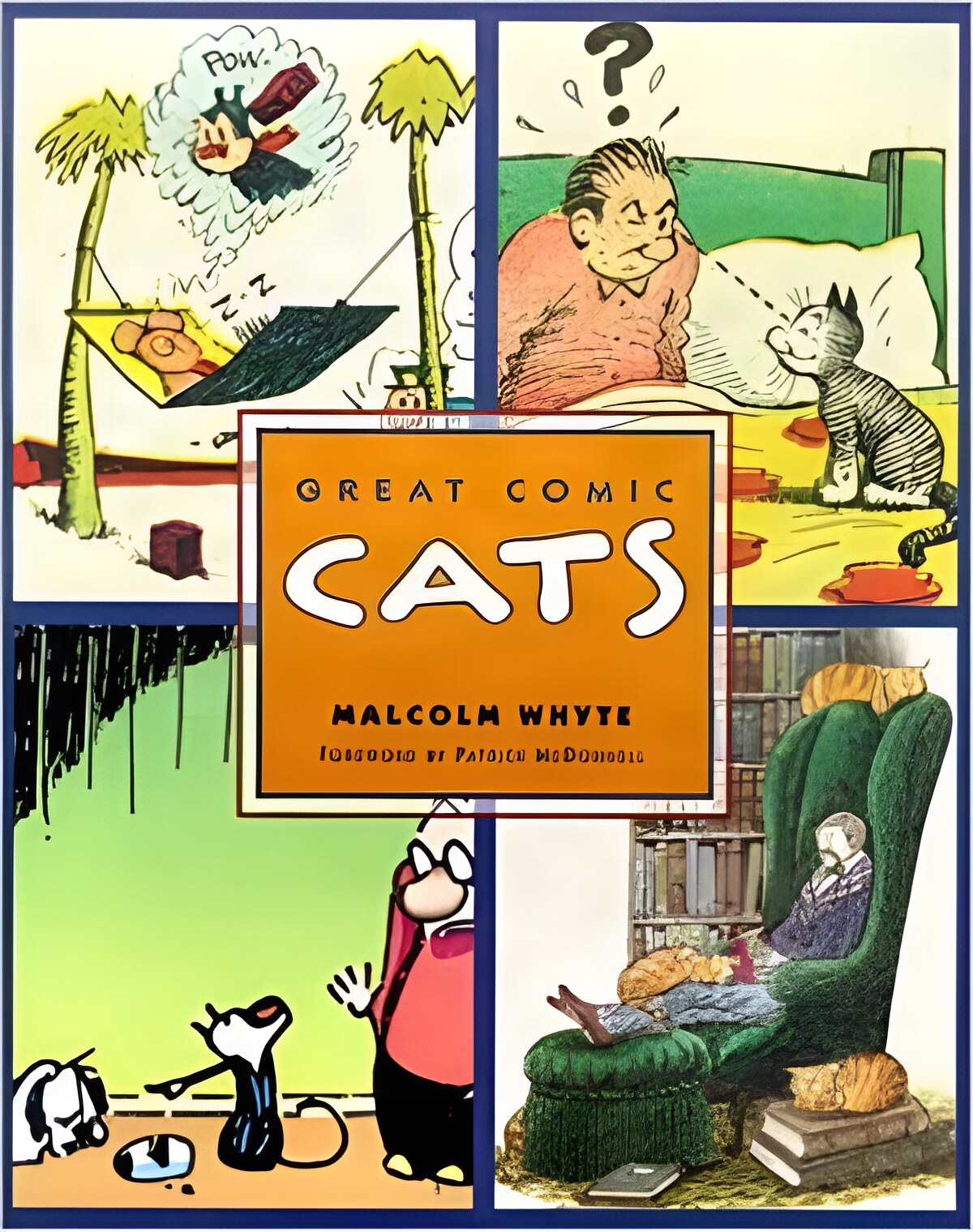
Softcover. San Francisco, Pomegranate, Revised Ed., 2001, Book: Very Good, Dust Jacket: None, Softcover, 168 pages. Many cans of tuna have been opened and emptied since the collection's first mostly black-and-white edition, in 1981; the revised edition adds more color art as well as coverage of classics including The Cat in the Hat, Bill the Cat, and pets penned by B. Kliban and Edward Gorey. The volume covers cartoon depictions of the cat dating back to 1100 B.C., though the bulk of the images date to the 20th century. Brief essays about printing, literature, contemporary society, and other historical facts are interspersed with the goods selections from the comics themselves. Editor Whyte is a publisher who founded the Cartoon Art Museum in San Francisco.
Softcover. San Francisco, Pomegranate, Revised Ed., 2001, Book: Very Good, Dust Jacket: None, Softcover, 168 pages. Many cans of tuna have been opened and emptied since the collection's first mostly black-and-white edition, in 1981; the revised edition adds more color art as well as coverage of classics including The Cat in the Hat, Bill the Cat, and pets penned by B. Kliban and Edward Gorey. The volume covers cartoon depictions of the cat dating back to 1100 B.C., though the bulk of the images date to the 20th century. Brief essays about printing, literature, contemporary society, and other historical facts are interspersed with the goods selections from the comics themselves. Editor Whyte is a publisher who founded the Cartoon Art Museum in San Francisco.



 "Feeding Desire: Design and the Tools of the Table, 1500-2005by: Sarah D. Coffin, Ellen Lupton, et al.")
 "Felicien Rops, Graphics, Irreverent and Erotic by: Felicien Rops, Lee Revens, J. K. Huysmans")
 "Ferruccio Vitale: Landscape Architect of the Country Place Eraby: Schnadelbach, R. Terry")
 "Ferruccio Vitale: Landscape Architect of the Country Place Eraby: Schnadelbach, R. Terry")
 "Fifty Dresses That Changed the World by: Design Museum")


 "Francis Bacon: The Papal Portraits of 1953by: Davies, Hugh")
 "FSA: The American Visionby: Brannan, Beverly and Gilles Mora")
 "Futures of Surrealism Myth, Science Fiction and Fantastic Art in France 1936-1969 by: Parkinson, Gavin")
 "Gay Voices of the Harlem Renaissance by: Schwarz, A.B. Christa")
 "Gemma Boveryby: Simmonds, Posy")
 "Georg Baselitz: The Bridge Ghost's Supperby: Baselitz, Georg")
 "Gloria F. Ross and Modern Tapestryby: Hedlund, Ann Lane/Grace Glueck (Foreword)")
 "Gloria F. Ross and Modern Tapestryby: Hedlund, Ann Lane")
 "Graffiti 365by: Jay Edlin and Andrew Witten")
 "Graphis Poster Annual 2002by: Porciello (Ed.), Michael")
 "Great Comic Catsby: Malcolm Whyte")