Hardcover. Cambridge MA, MIT Press, 2nd Pr., 1994, Book: Very Good, Dust Jacket: Very Good, Hardcover, 251 pages, with her photo-illustrated dust jacket. Who speaks? Who is silent? Who is seen? Who is absent? These questions focus on how cultures are constructed through pictures and words, how we are seduced into a world of appearances: into a pose of who we are and aren't. On both an emotional and an economic level, images and texts have the power to make us rich or poor. In these essays and reviews, written over the last decade, Barbara Kruger addresses that power with intelligence and wit, in the hope of engaging both our criticality and our dreams of affirmation. Barbara Kruger is an artist whose pictures and words engage issues of power, sex, money, difference, and death. Her work has appeared throughout America, Europe, and Japan in galleries, newspapers, magazines, and museums and on billboards, matchbooks, TV programs, t-shirts, postcards, and shopping bags. She has written about television, film, and cultures for Artforum, Esquire, the New York Times, and the Village Voice.
Hardcover. NY, Twayne Publishers, 1st, 1996, Book: Very Good, Dust Jacket: Very Good, Hardcover in a bright dust jacket, 162 pages. The first full-length critical treatment of this significant and neglected figure in American realism. Arguing that raw naturalism and subtle craftsmanship - seemingly incompatible qualities join to make Yates one of the most accomplished writers of the post - World War II period, the authors provide a comprehensive survey of his life and work. An introductory chapter outlines the historical, literary, and social contexts important to Yates's writings, comparing him, for example, with his contemporaries Philip Roth and Mary McCarthy and articulating strong lines of continuity between his themes and the ideas of the French historian Alexis de Tocqueville, the Marxist-oriented socialist C. Wright Mills, and the social theoretician Erving Goffman. Next a thorough biographical portrait illuminates Yates's obsession with the American middle class and its dislocated, disordered, and psychologically stifled populace, followed by sharp readings of the novels and story collections, including unfinished and minor works. Clean copy.
Hardcover. New York, Thames and Hudson, 3rd Revised, 1988, Book: Very Good, Dust Jacket: Very Good, 285 pages. Hardcover with dust jacket. Minor yellowing to dust jacket edges and spine. Previous owners inscription in pen to top edge of front flyleaf. An otherwise very clean, unmarked copy with only minor edgewear. 206 photographs, 16 in color. Follows the developments in the art and science of photography from the invention of the wet-collodion process through the evolution of dry plates.
Hardcover. Germany, Steidl, 1st, 2010, Book: Very Good, Dust Jacket: None, 160 pages. Hardcover with no dust jacket. Very clean, unmarked copy still in publishers shrink-wrap. Over 100 black and white photographs. Tight copy.
Hardcover. Germany, Steidl, 1st, 2010, Book: Very Good, Dust Jacket: None, 160 pages. Hardcover with no dust jacket. Very clean, unmarked copy still in publishers shrink-wrap. Over 100 black and white photographs. Tight copy.
Hardcover. New Haven, Yale University Press, 1st, May 11, 2000, Book: Very Good, Dust Jacket: Very Good, Hardcover, 303 pages, illustrated throughout. Very clean and tight copy. Although lumped together with Pop artists such as Roy Liechtenstein and Andy Warhol, and often the movement's spokesperson, Indiana and his paintings actually have an uneasy fit in Pop company, mostly because his work isn't grounded in the commodity-oriented (Campbell Soup) realism of most Pop Art. Instead, his work engages with literature and poetry and with the popular rhetoric of the American dream-all permeated by the particularities of his upbringing and life. Ryan's dual accomplishments are in articulating the dynamics of Indiana's art-especially the connections between the artworks and the sources of imagery and themes in his own biography-and in rendering a sophisticated and judicious roundup of the Pop Art movement.
Hardcover. Cambridge MA, MIT Press, 1st, 2002, Book: Very Good, Dust Jacket: Very Good, Hardcover, 364 pages, 9 color plates plus 80 b&w illustrations. Small remainder stamp to top edge otherwise very good.
Softcover. Ithaca NY, Cornell University Press, reprint, 1990, Book: Very Good, Dust Jacket: None, Softcover, 309 pages. A major contribution to the cultural and literary history of the Victorian age, Rule of Darkness maps the complex relationship between Victorian literary forms, genres, and theories and imperialist, racist ideology. Critics and cultural historians have usually regarded the Empire as being of marginal importance to early and mid-Victorian writers. Patrick Brantlinger asserts that the Empire was central to British culture as a source of ideological and artistic energy, both supported by and lending support to widespread belief in racial superiority, the need to transform "savagery" into "civilization," and the urgency of promoting emigration. Rule of Darkness brings together material from public records, memoirs, popular culture, and canonical literature. Brantlinger explores the influence of the novels of Captain Frederick Marryat, pioneer of British adolescent adventure fiction, and shows the importance of William Makepeace Thackeray's experience of India to his novels. He treats a number of Victorian best sellers previously ignored by literary historians, including the Anglo-Indian writer Philip Meadows Taylor's Confessions of a Thug and Seeta. Brantlinger situates explorers' narratives and travelogues by such famous author-adventurers as David Livingstone and Sir Richard Burton in relation to other forms of Victorian and Edwardian prose. Through readings of works by Arthur Conan Doyle, Joseph Conrad, H. Rider Haggard, Rudyard Kipling, John Hobson, and many others, he considers representations of Africa, India, and other non-British parts of the world in both fiction and nonfiction. Clean, bright copy.
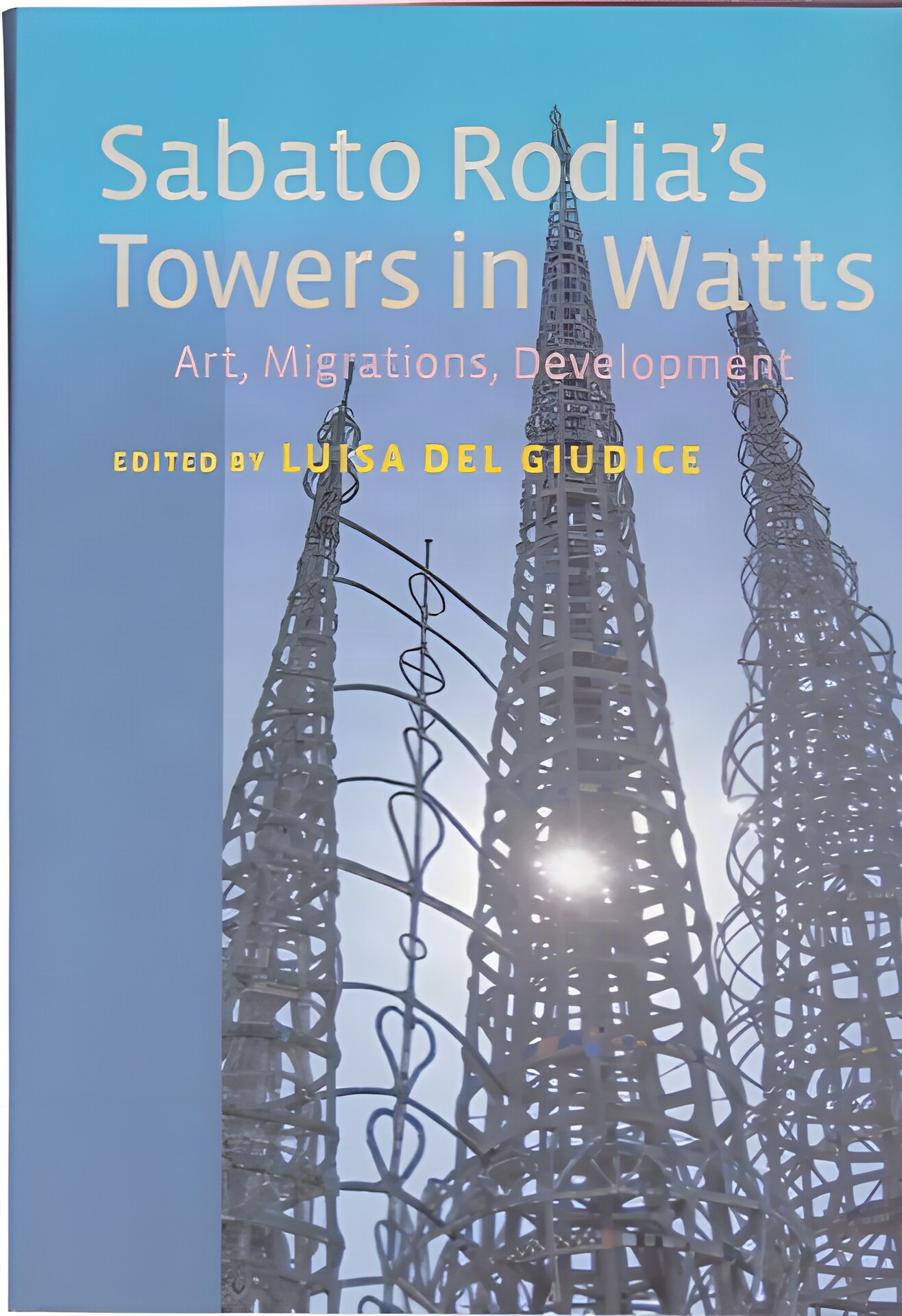
Softcover. NY, Fordham University Press, 1st, 2014, Book: Very Good, Dust Jacket: None, Softcover, 476 pages, b&w illustrations. INSCRIBED BY AUTHOR on the front fly leaf. This volume gathers groundbreaking critical essays on Sabato (Simon) Rodia's renowned Watts Towers (Los Angeles, California) from diverse disciplinary perspectives, extensively highlighting his migration context as never before, as well as the Towers in the context of human and community development within the 'Watts Towers Common Ground Initiative. Clean copy.
Hardcover. London, Ashgate, reprint, 2010, Book: Very Good, Dust Jacket: Very Good, 248 pages. Hardcover with dust jacket. Clean, unmarked copy with only minor wear to dust jacket. Silver gilt on spine. 'Like "the ring" itself, this book is viral: it gathers into itself literature and film, disease and survival, cultural studies and aesthetics, Japan and America, technology and the family. We won't read Suzuki's novels or watch the films in the same way again. A thoroughly readable and teachable text!' Steven Bruhm, Robert and Ruth Lumsden Professor of English, The University of Western Ontario, and author of Reflecting Narcissus: A Queer Aesthetic 'Taking as its point of departure the phenomenon of The Ring in all its manifestations"the Japanese novel, the Japanese film, the American film, and the various sequels"The Scary Screen offers an in-depth and sustained speculation about the anxiety created by the development of communication technologies. The collection introduces startling insights into the relationship between changes in media forms and widespread fears of contagion, while also identifying a new universal form of horror that has emerged in recent decades as the status of reproduction"both technological and biological"has undergone a profound transformation. The essays included here represent a powerful theoretical response to this transformation.' Todd McGowan, University of Vermont, and author of The Impossible David Lynch and The Real Gaze '... The Scary Screen is a useful contribution to studies of The Ring, horror film, and cultural anxieties evoked by technology.' Journal of the Fantastic in the Arts.
Softcover. Cambridge MA, MIT Press, 4th pr., 1977, Book: Very Good, Dust Jacket: None, Softcover, 82 pages, b&w illustrations. The collected writings of the "dean of the New York School of Abstract-Expressionist Painting." "The creative process lies not in imitating, but in paralleling nature; translating the impulse received from nature into the medium of expression, thus vitalizing this medium. The picture should be alive, the statue should be alive and every work of art should be alive." Thus Hans Hofmann wrote nearly half a century ago. He left the Old World, Germany, for the New, at the age of 50. In 1948, when the retrospective exhibition was held at the Addison Gallery of American Art, Hofmann was 68; he had been in the United States for 18 years, a citizen for seven years. Yet he was scarcely recognized in Europe or America as an artist of significance and had never had a full-scale retrospective exhibition of his work. Beginning with a group exhibition in Germany in 1909, he had been given 12 one-man shows and had been included in four group exhibitions before the exhibit at Andover. Subsequently, he was to have 33 one-man shows and to be in over 60 group exhibitions, including the 1960 Venice Biennale, in which he was one of the four artists chosen to represent America. Clean copy.
Hardcover. New Haven CT, Yale University Press, 1st, 1968, Book: Very Good, Dust Jacket: Fair, Hardcover in a chipped, tape repaired dust jacket. Maroon cloth with gilt lettering on spine. 266 pages. INSCRIBED BY SIPE on the front fly leaf to fellow professor Roger Mitchell. English majors are used to being told that Shakespeare frequently broke the rules of iambic pentameter, and that as he matured artistically, his usage became bolder and freer. Well, it isn't true. Shakespeare's iambics turn out to be extremely orthodox (which just makes all the more impressive the variations he was able to create within the rules). In 1968 Dorothy Sipe went to the remarkable labor of demonstrating this objectively through a painstaking analysis of over 13,000 lines of verse. She also supplied information I've never found anywhere else on the prosodic rules taught by poets to poets in Shakespeare's day. All this said, including a five star rating for the perfect achievement of its goal, the book is definitely not for everyone interested in Shakespeare's verse and methods. It is devoted to proving a highly specific case by means of many, many examples that non-specialists are likely to find tedious. But if you are deeply interested in some subjects -- Shakespeare's iambics, his coinages, and the history of English iambic technique -- it is well worth your time. Dust jacket tanned, otherwise a clean, tight copy.
Softcover. Durham NC, Duke University Press, 1st, 2007, Book: Very Good, Dust Jacket: None, Softcover, 340 pages, b&w illustrations. Various critics continue the film lovers' ongoing conversation about the low, the bad, and the sleazy face of cinema, this book examines the ineffable quality of "sleaze" in relation to a range of issues, including the production realities of low-budget exploitation pictures and the ever-shifting terrain of reception and taste.
Hardcover. London, William Pickering, 1st, 1835, Book: Good, Dust Jacket: None, Hardcover, 298 pages. Black leather covers with gilt rules, faded gilt title on ribbed spine. All edges gilt. Covers with edgewear and the top 6th of the spine leather is gone. Marbled endpapers with bookplate inside front cover. Rear flyleaf with a chunk cut out. Interior is very good. Medieval and Renaissance French poetry, translated into English by an acclaimed poet, travel writer, historian, and painter. Louisa Costello (1799-1870), was an accomplished Anglo-Irish artist and prolific poet and author. She was also a fine miniature painter, and her illustrations show her exquisite sensibility. 4 beautifully hand-colored lithograph plates by the author. Not all copies contain these plates.
Hardcover. New York, Random House , 1st, 2002, Book: Very Good, Dust Jacket: Very Good, 402 pages. Cloth boards in a bright dust jacket. Clean, tight copy. The subjects of Salman Rushdie's collection of non-fiction range from The Wizard of Oz, U2, India and Indian writing, the death of Princess Diana, and football, to twentieth-century writers including Angela Carter, Arthur Miller, Edward Said, J. M. Coetzee and Arundhati Roy. In a central section, 'Messages from the Plague Years', Rushdie focuses on the fight against the Iranian fatwa, presenting texts both personal and political, which show for the first time how it was to live through those days. Rushdie's columns for the New York Times confront current issues - Kashmir, Northern Ireland, Kosovo, Islam and the West - as well as lighter topics such as reality TV, sport and sleaze. The book ends with the lectures that give it its title - Rushdie's exploration of the theme of frontiers: crossing them, breaking taboos, and - in the light of September 11 - the world of permeable frontiers in which we all live.
Hardcover. NY, WW Norton, 1st, 2004, Book: Very Good, Dust Jacket: Very Good, Hardcover in a bright, unclipped dust jacket. A collection of articles, poems, essays, speeches, literary criticisms, and interviews about the 1960s musician and lyricist examines his legacy and role in the traditions of folk, rock, and blues, in a volume that includes contributions by such figures as Sam Shepard, Bruce Springsteen, and Johnny Cash.
Hardcover. New York, Thames & Hudson, 1st, 2005, Book: Very Good, Dust Jacket: Very Good, 240 pages. Hardcover with dust jacket. Very clean, unmarked copy still in publishers shrink-wrap. This intellectual tour de force draws on interviews with such key artists as Jean-Jacques Lebel, Mimi Parent, and Jean Benoit, and uses primary sources to advance our knowledge of the work of the better-known Surrealists, from Hans Bellmer to Meret Oppenheim. The Second World War, the Algerian War, and May 1968 are related in new ways to surrealism as a major countercultural force throughout this critical period in French history. By documenting the ways in which the Surrealists used sound, lighting, special effects, and performance art to create a living, theatrical environment, Dr. Mahon sheds new light on topics central to understanding art in our time.
Hardcover. London, NLB, 1st transl. thus, 1972, Book: Very Good, Dust Jacket: None, Hardcover, light blue cloth stamped in gilt, 257 pages. The articles and essays collected in this book were written during the decade of Lukacs's life when he was most active in politics. The first texts mark his transition from an anti-bourgeois aestheticism to Marxism and the newly founded Hungarian Communist Party. They are followed by material which displays the full range of his activity and thought during the subsequent ten years. Some of these essays were written when Lukacs was deputy commissar of education in the embattled, short-lived Hungarian Soviet Republic. Others include the famous article on parliamentarianism which earned its author the respectful yet severe criticism of Lenin.The volume includes short studies on German revisionism, Bukharin's Marxism, and Karl Wittfogel, and longer pieces on Lassalle and Moses Hess. The collection ends with the theses Luckas wrote, under his cover name "Blum", in opposition to the policies of the Third Period of the Comintern. Clean copy.
Hardcover. London, Frances Lincoln Children's Bks, 1st, 2015, Book: Very Good, Dust Jacket: None, 72 pages. Hardcover with no dust jacket. Clean, unmarked copy with only minor wear to boards. Color and Black and white pictures throughout by Blake.
Hardcover. Boston, New York Graphic Society, 1st, 1984, Book: Very Good, Dust Jacket: Very Good, Hardcover in a bright Surveys the work of 131 contemporary artists, lavishly illustrated. 100 color, and 297 black and white plates. Bibliography, index. Clean, bright copy.
Hardcover. Cambridge MA, Harvard University Press, 1st, 1940, Book: Very Good, Dust Jacket: Poor, Hardcover, red cloth in a worn and chipped dust jacket with closed tears, 191 pages with index. Dr. Worcester presents a theory of satire, surveying the whole field since Dryden's Discourse of the Origin of Satire and drawing illustrations not only from English but from classical, French, German, and American literature. At the same time he makes a penetrating study of irony and its uses. Name on inside front cover otherwise clean.
Hardcover. Cambridge MA, Harvard University Press , 1st, 1960, Book: Very Good, Dust Jacket: Very Good, Hardcover in a bright dust jacket, 313 pages. Reprint of the 1864 original. Edited by Benjamin Rowland, Jr. Blue cloth, gilt lettering to spine and front cover. A very crisp, clean and well preserved copy
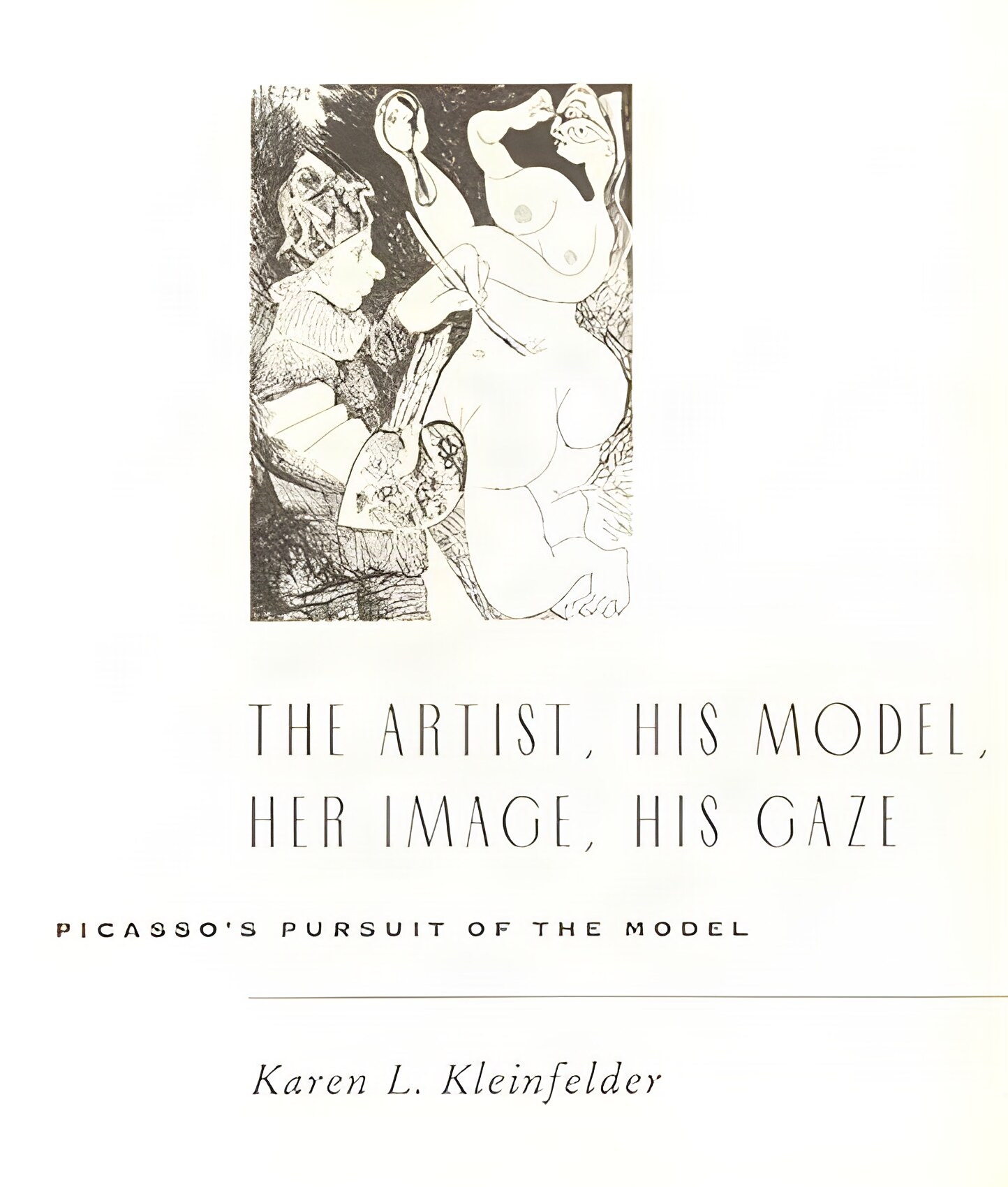
Hardcover. Chicago, University of Chicago Press, 1st, 1993, Book: Very Good, Dust Jacket: Very Good, Hardcover in a bright dust jacket, 256 pages, b&w illustrations. Although Pablo Picasso's name is virtually synonymous with modernity, his late graphics repeatedly turn back to the traditional theme of the artist and model. Had the aging artist turned reactionary, or is Picasso's treatment of the theme more subversive than anyone has suspected? In this innovative study, Karen L. Kleinfelder rejects the claim that Picasso's later work was a failure. The failing, she claims, lies more in the way we typically have read the images, treating them merely as reflections of an "old-age" style or of the artist's private life. Focusing on graphics dating from 1954 to 1970, Kleinfelder shows how Picasso plays with the artist-model theme to extend, subvert, and parody both the possibilities and limits of representation. For Kleinfelder, Picasso's graphic work both mystifies and demystifies the creative process, venerates and mocks the effects of aging and the artist's self-image as a living "old master," and acknowledges and denies his own fear of death. Clean copy.

 "Remote Control: Power Cultures and the World of Appearancesby: Kruger, Barbara")

 "Rise of Photography, The: 1850-1880 by: Gernsheim, Helmut")
 "Robert Doisneau: From Craft to Artby: ChEvrier, Jean-FranAois")
 "Robert Doisneau: From Craft to Artby: ChEvrier, Jean-FranAois")
 "Robert Indiana: Figures of Speechby: Ryan, Professor Susan Elizabeth")
 "Robert Smithson: Learning From New Jersey and Elsewhereby: Reynolds, Ann")
 "Scary Screen, The: Media Anxiety in The Ringby: Lacefield (Ed.), Kristin")
 "Search for the Real and Other Essays by: Hans Hofmann")
 "Shakespeare's Metrics (INSCRIBED COPY)by: Sipe, Dorothy L.")

 "Sparring with Gil Kane: Debating the History and Aesthetics of Comicsby: Groth (editor), Gary")



 "Step Across This Line - Collected Nonfiction 1992-2002by: Rushdie, Salman")
 "Studio A: The Bob Dylan Readerby: Benjamin Hedin (Ed.)")
 "Surrealism and the Politics of Eros, 1938-1968by: Mahon, Alyce")
 "Tell Me a Pictureby: Blake, Quentin")