Hardcover. New Haven, CT, Yale University Press, 1st, 2015, Book: Very Good, Dust Jacket: None, 160 pages. Hardcover with no dust jacket. Very clean, like new in publishers shrink-wrap. This publication presents the first in-depth survey of the Conley Harris and Howard Truelove Collection of Indian Drawings, which was recently acquired by the Philadelphia Museum of Art. This exceptional collection, which has never previously been published, consists of 65 works on paper created between the 16th and 19th centuries.
Hardcover. New Haven, Yale University Press, 1st, March 1, 2002, Book: Very Good, Dust Jacket: Very Good, Hardcover, 245 pages, illustrated throughout. Clean, bright pages and tight binding. Pierre Puvis de Chavannes (1824-1898) was a towering figure in late nineteenth-century France. The country's greatest public painter, he created murals that decorated museums in Amiens, Rouen, and Lyons as well as major buildings in Paris-most notably the Pantheon, the Sorbonne, and the city hall. Critics from the political right, left, and center, the avant-garde, the Academy, and the state all agreed on the importance of Puvis's murals. Avant-garde artists greatly admired and drew from his work. There was much controversy, however, over the meaning of these murals. This handsomely illustrated book is the first full-length examination of Puvis's murals and their critical reception during the artist's lifetime. Jennifer L. Shaw explains that Puvis's paintings were imagined to embody a vision of France. Although his regional images, allegories of the French heritage, and evocations of the nation as an embracing motherland were all part of a grand tradition of public art, Puvis's painting style was more closely aligned with the avant-garde. Rather than providing a specific narrative or allegory of France, Puvis's murals provoked viewers to experience their own fantasies of Frenchness; rather than using the close brushwork favored by most of his contemporaries, Puvis used large flat areas of color to render his subjects. Shaw persuasively argues that Puvis was the only painter of the period to unite the traditions of public art and modernist form. Her original analysis of Puvis's art underlines his importance to the history of modernism; her examination of the public response to his art illuminates debates about art, subjectivity, and national identity in fin de siecle France.
Hardcover. New York, Da Capo Press, Reprint, 1971, Book: Very Good, Dust Jacket: None, Hardcover. (Library of American Art Series) 1971 reprint of the original 1926 edition. 110 pages. b&w illustrations. Brown cloth, gilt lettering to spine and front cover. Light wear and unfortunate paper-clip impressions to upper edge of some pages. Still a nice, tight copy.
Hardcover. New York, Praeger, 1st, 1967, Book: Very Good, Dust Jacket: Good, 117 pages of text followed by black & white plates. Minor age darkening along top edge. Dust jacket worn along edges - now protected with clear plastic cover. Clean, tight copy.
Hardcover. Berkeley, University of California Press, 1st, 1990, Book: Very Good, Dust Jacket: Very Good, Hardcover in a bright dust jacket, 480 pages. Although he is referred to as a "genius" more often than any other scholar of his period, Edward Sapir has received no full-scale biography since his death in 1939. At long last, Regna Darnell provides a comprehensive assessment of the life, ideas, and wide-ranging interests of this remarkable man. Sapir, the foremost linguist and anthropologist of his generation, contributed substantially to the professionalization of linguistics as an independent discipline. He was the first to apply comparative Indo-European methods to the study of American Indian languages, on which he conducted extensive fieldwork. His theoretical work on the relationship of the individual personality to culture remains fundamental to culture theory in anthropology, as does his insistence on the symbolic nature of culture and the importance of culture as understood by its members, in their own words.Sapir became the first professional anthropologist in Canada and teacher of a whole generation of linguists and anthropologists at Chicago and Yale. Holding to a humanistic view of anthropology (his own work included poetry and literary criticism), he was the most articulate spokesman for the interdisciplinary social science of the late 1920s and 1930s. In both linguistics and anthropology Sapir is a revered master whose ideas continue to inspire discussion and research. A sixteen-volume Collected Works is now in progress. Clean copy.
Softcover. Milwaukie OR, Dark Horse, 1st, 2005, Book: Very Good, Dust Jacket: None, 346 pages, trade paperback with french flaps. It would be hard to imagine any creators who have more greatly affected their chosen medium than Will Eisner and Frank Miller have influenced the world of comics and graphic novels. Often misunderstood, but enduringly enjoyed by people from all walks of life, the comic book has in recent years been recognized as a "legitimate" art form by cultural institutions ranging from Harvard University to the Smithsonian, from The New Yorker to the Art Institute of Chicago. Now, culture-curious readers and life-long fans of the comics medium are invited to read along as two of the medium's greatest contributors-legendary innovator and godfather of sequential art Will Eisner, and the modern master of cinematic comics storytelling, Frank Miller-discuss one on one in an intimate interview format, the ins-and-outs of this compelling and often controversial art form. Eisner/Miller is profusely illustrated and features rare, behind-the-scenes photos of Eisner, Miller, and other notable creators.
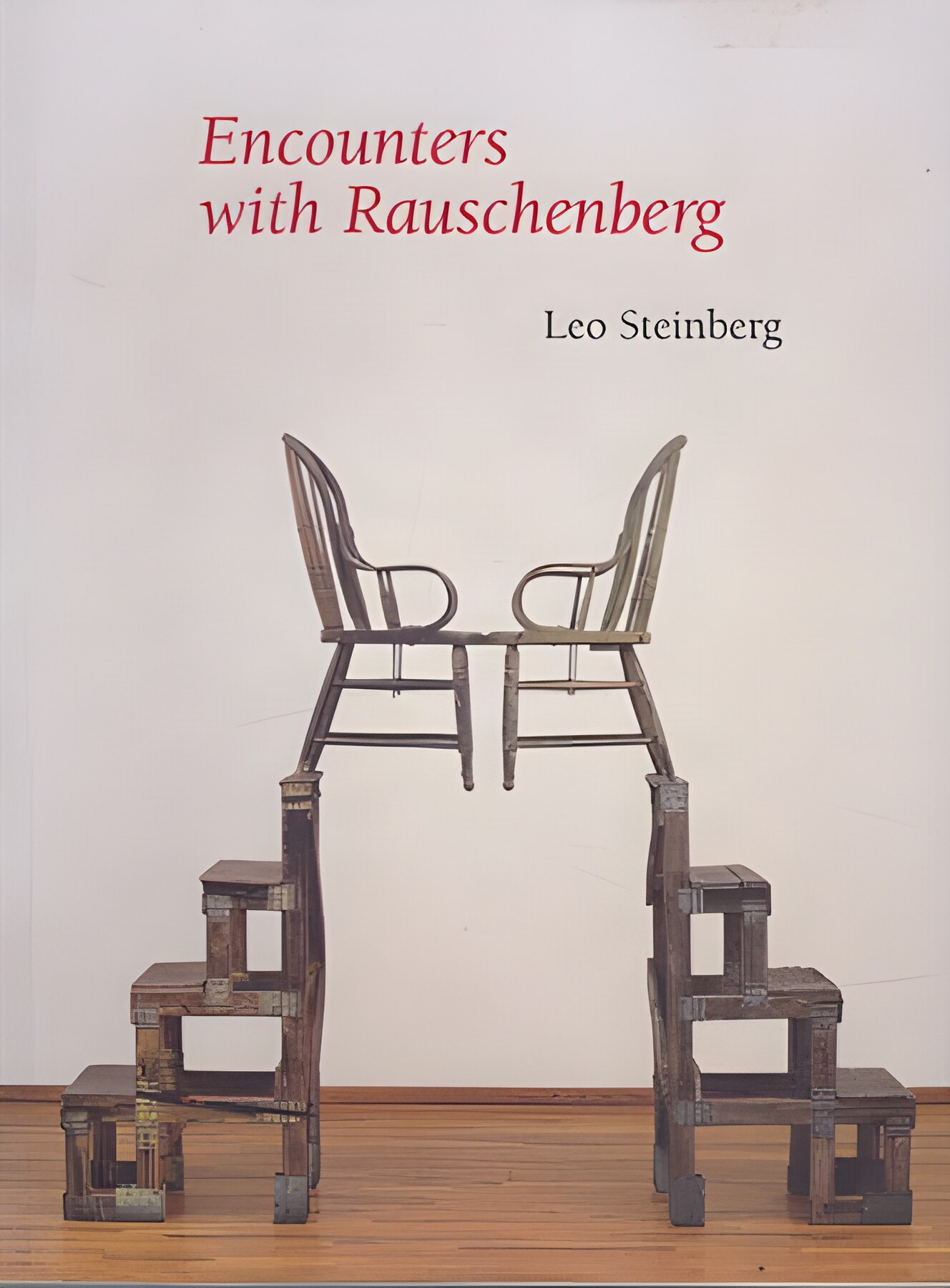
Softcover. Chicago, University of Chicago Press, 1st, 2000, Book: Very Good, Dust Jacket: None, Softcover, 75 pages illustrated in color. In his insightful and engrossing lecture, Leo Steinberg surveys and critiques the work of Robert Rauschenberg, one of the great American post-war artists. He also discusses his own experience as a critic in the exciting and turbulent art world of New York in the 1950s and 1960s. Clean copy.
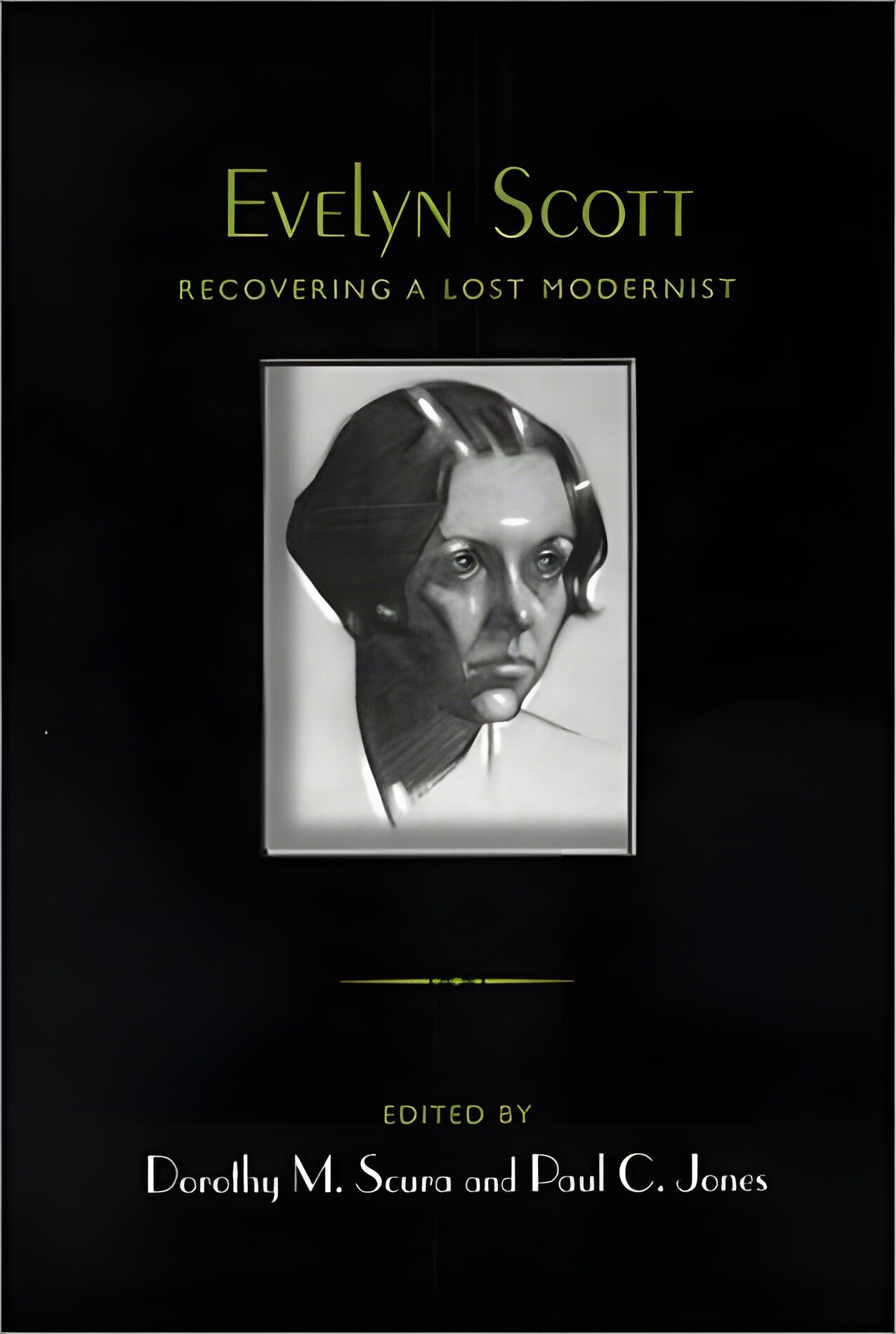
Hardcover. Knoxville TN, University of Tennessee Press, 1st, 2001, Book: Very Good, Dust Jacket: Very Good, Hardcover in a bright dust jacket, 235 pages. Evelyn Scott was a significant literary figure in American letters of the 1920s and 1930s, an important contributor in the experimental forms and techniques of the modernist movement. She wrote and published in many genres -- the novel, short fiction, poetry, memoir, criticism, and drama. Since that time, Scott's work has been forgotten by most readers and critics, and her reputation as an important writer of her day has been obscured. This collection, which features an introduction and thirteen critical essays, is the first volume to focus on Scott's work rather than her intriguing yet troubled life and initiates a long-needed examination of Scott's innovations in fiction, memoir, and other genres. The various essays take diverse critical approaches to Scott's canon, including her best-known works -- Escapade and The Wave -- and explore her views on topics such as women, politics, religion, art, and the South. Clean copy.
Hardcover. New York, PowerHouse Books, 1st, 2005, Book: Very Good, Dust Jacket: Very Good, 128 pages. Hardcover with dust jacket. Very clean, unmarked copy still in publishers shrink-wrap. With sumptuous black-and-white photographs that recall the religious fervor of El Greco and the anguish of Francis Bacon, The Face of Forgiveness: Salvation and Redemption takes us inside evangelical meetings across the world and bears witness to the driving emotional faith of Christian revival, where emotion and love pours from the eyes and mouths of the faithful, praying and thanking the Lord.
Hardcover. NY, Basic Books, 1st, 2006, Book: Very Good, Dust Jacket: Very Good, Hardcover, 337 pages, in a bright, unclipped dust jacket. Essays by the New York City cultural critic; examines the work of artists, filmmakers and writers ranging from Anton Chekov to J. K. Rowling, including Stanley Kubrick, The Sopranos, Sex in the City, John Updike, Norman Mailer, and Barbara Kingsolver. Clean copy.
Softcover. Ann Arbor, MI, Published for U. New Hampshire by University Microfilms International, 1980, Book: Very Good, Dust Jacket: None, Softcover, 255 pages. Biographical history of Paul Rosenfeld, his artistic, musical, and literary criticisms and his contemporaries. Slight bumping to corners, otherwise a tight and clean copy.
Hardcover. NY, Oxford University Press, 2nd pr., 2013, Book: Very Good, Dust Jacket: Very Good, Hardcover in a bright dust jacket, 197 pages. Forged explores art forgery from ancient times to the present. In chapters combining lively biography with insightful art criticism, Jonathon Keats profiles individual art forgers and connects their stories to broader themes about the role of forgeries in society. From the Renaissance master Andrea del Sarto who faked a Raphael masterpiece at the request of his Medici patrons, to the Vermeer counterfeiter Han van Meegeren who duped the avaricious Hermann G?ring, to the frustrated British artist Eric Hebborn, who began forging to expose the ignorance of experts, art forgers have challenged "legitimate" art in their own time, breaching accepted practices and upsetting the status quo. They have also provocatively confronted many of the present-day cultural anxieties that are major themes in the arts. Keats uncovers what forgeries --and our reactions to them-- reveal about changing conceptions of creativity, identity, authorship, integrity, authenticity, success, and how we assign value to works of art. The book concludes by looking at how artists today have appropriated many aspects of forgery through such practices as street-art stenciling and share-and-share-alike licensing, and how these open-source "copyleft" strategies have the potential to make legitimate art meaningful again. Clean copy.
Hardcover. NY, Twayne Publishers, 1st, 1992, Book: Very Good, Dust Jacket: Very Good, Hardcover in a bright dust jacket, 145 pages. INSCRIBED BY AUTHOR on the front fly leaf. The renown Frank Norris attained in his brief lifetime sprang from his compelling--and to many Americans startling--novels about people whose lives have escaped their control and have become grotesquely warped by the confluent forces of hereditary and environment.In "revisiting" Frank Norris, Joseph R. McElrath, Jr. takes as a starting point Warren French's 1962 volume in this series and provides a complementary portrait of the artist. McElrath assesses the spate of relatively recent "historical reconstructions" of Norris's canon and finds a writer who, though at times transcendent in the Naturalistic vein, was pragmatic in his choice of subject matter and "not always grandly serious." It is in part the delight Norris took in parody, McElrath argues, that makes him still so readable. Clean copy.
Hardcover. New York, Harry N. Abrams, Inc. , 1st Edition, 1989, Book: Very Good, Dust Jacket: Very Good, 160 pages. Hardcover. Color and b/w illustrations throughout. Dust jacket unclipped, excellent. Cover boards bound in red cloth, gilt title on spine, all excellent. Binding tight. Spine straight. Pages and edges clean and unmarked. In beautiful condition. More than one hundred reproductions--58 in full-color--bring to life this quintessentially American artist and the dramatic and colorful imagery that has become part of America's epic story.
Hardcover. Cambridge MA, Harvard University Press, 2nd pr., 1945, Book: Good, Dust Jacket: Fair, Hardcover in a worn and chipped dust jacket, 247 pages. SIGNED BY THE AUTHOR on the title page. Illustrated with 10 b&w plates.
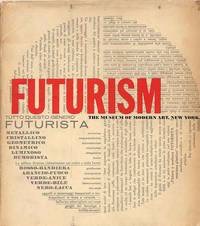
Hardcover. NY, The Museum of Modern Art, 1st, 1961, Book: Very Good, Dust Jacket: Very Good, 154 pages, hardcover with dust jacket. The works and writings of the Futurist artists in their most creative period, 1910-1916. 141 Illustrations (22 in color). Tanning to wraps, light edgewear. Mild foxing to top edge text block. Unmarked. A clean and tight copy.
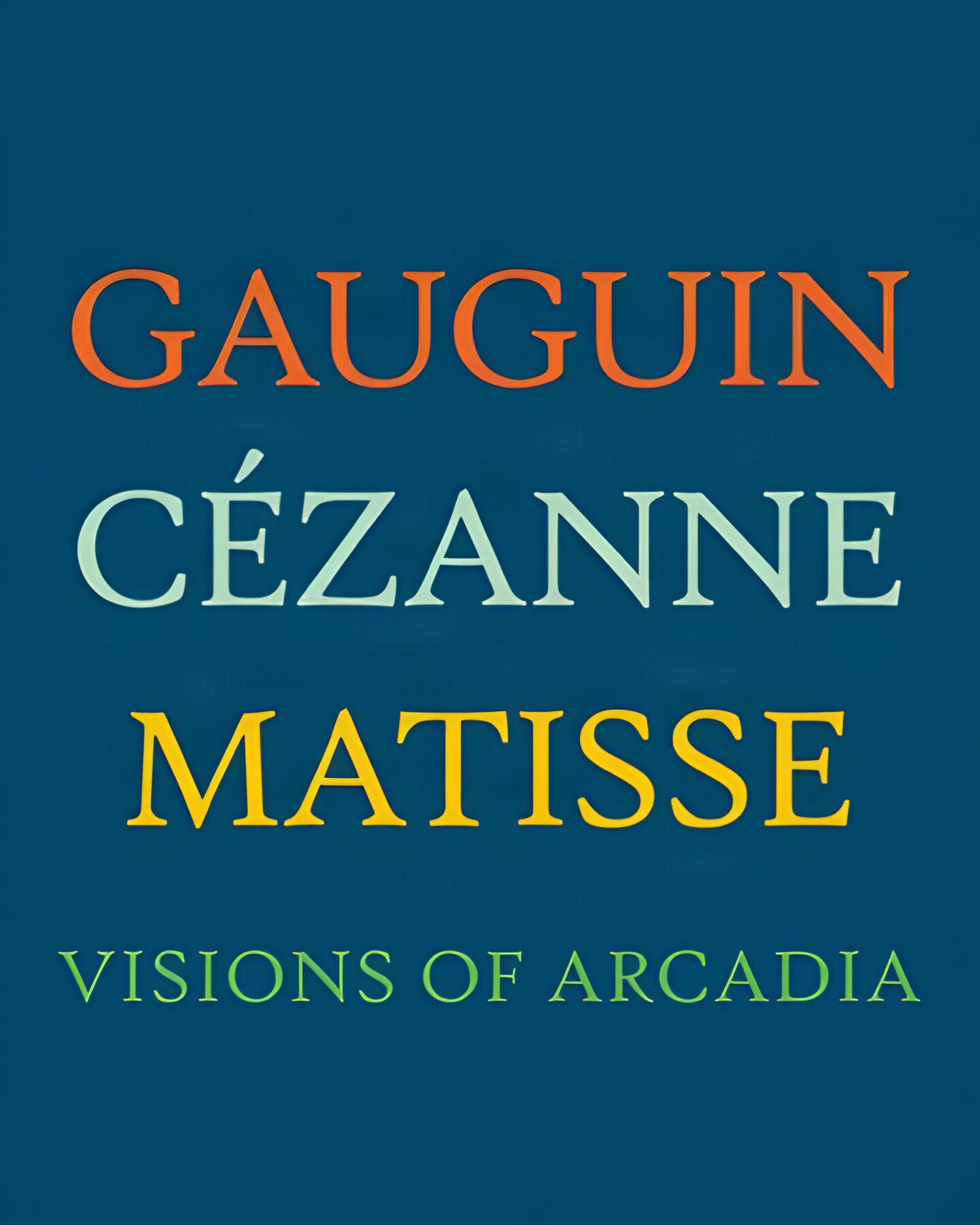
Hardcover. New Haven CT, Yale University Press, 1st, 2012, Book: Very Good, Dust Jacket: Very Good, Hardcover in a bright dust jacket. Published on the occasion of the exhibition held at the Philadelphia Museum of Art, 20 June-3 September 2012]/edited by Joseph J Rishel; with essays by Stephanie D'Allessandro.[et al.] A trio of masterpieces by Gauguin, Cezanne, and Matisse are joined by works by other major artists in this exploration of the enduring vitality of the theme of Arcadia. Paul Gauguin's Where Do We Come From? What Are We? Where Are We Going? (1897-98), Paul Cezanne's The Large Bathers (1906), and Henri Matisse's Bathers by a River (1909-10, 1913, and 1916-17). Other masterpieces by Jean-Baptiste-Camille Corot, Nicolas Poussin, and Pierre Puvis de Chavannes establish the high value given to Arcadia in the history of French painting. Still in publisher's shrinkwrap.
Hardcover. NY, Arcade Publishing, 1st us, 2005, Book: Very Good, Dust Jacket: Very Good, Hardcover in a bright dust jacket, 440 pages, color and b&w illustrations. This biography examines Braque's creativity, his personal and professional relationships (with Beckett, Cezanne, Giacometti, Matisse, Miro, Picasso etc) and enriches our understanding of France's early 20th century art culture.
Hardcover. Washington, D.C., Phillips Collection, 1st, 1999, Book: Very Good, Dust Jacket: Very Good, 158 pages. Hardcover with dust jacket. A very clean, unmarked copy with only minor wear to dust jacket edges. Color illustrations throughout. Explores O'Keeffe's unmatched accomplishments in still-life painting in two essays accompanied by reproductions of her work and photographs of her studios.
Hardcover. Columbia, University of Missouri Press, reprint, 1986, Book: Very Good, Dust Jacket: Very Good, Hardcover, 256 pages, illustrated in color and b&w. Like new in a bright, unclipped dust jacket. The definitive study of the painter.
Hardcover. Portland, OR, Nazraeli Press, 1st, 2010, Book: Very Good, Dust Jacket: None, 108 pages. This printing limited to 1000 copies. Hardcover with no dust jacket. Creasing to a few pages. An otherwise clean, unmarked copy with only minor edgewear. In the mid-1980s, Stu Levy began making 'grid-portraits' in order to overcome his his frustration with traditional portraiture's limited point of view. These constructs of photographs, consisting of twelve to twenty-five individual images, scan the architecture and flow of time in a subject's living or working environment. The resulting portraits, usually of artists, craftspeople and musicians, are made in the subjects' studios or living spaces and serve as a backstage tour of the artist s mind and creative process. Levy is fascinated by the artifacts that fill these spaces the possessions by which the subjects are themselves possessed. Rather than confining himself to a single 'decisive' moment, Levy explore its antithesis, a maze of scrambled time. These are made with a view camera using 4 x 5-inch negatives to allow for precision of detail. The sections are printed together to form the illusion of glancing through a window at a 'snapshot' of an event, which in reality might consist of fragmentary views made months apart and in totally separate rooms or environments. Among the subjects included in this important new monograph are Dr. Stanley Burns, Linda Connor, Barbara Crane, Jay Dusard, David Hockney, Graham Nash, and Jerry Uelsmann. Beautifully printed in duotone on matt art paper and bound in black Japanese cloth, this first printing of Grid-Portraits is limited to 1,000 copies.
Softcover. Belmont, CA, Wadsworth Thompson, 1st, 2003 , Book: Near Fine, Dust Jacket: None, 378 pages. Softcover. Color and b/w illustrations throughout. Wrapper excellent, like new. Pages clean and unmarked. Binding tight. Looks nearly new and barely used. designed for both beginning and advances drawing classes, this best seller explores all topics, media, and techniques that guide students in mastering basic skills and using those skills creatively and expressively.
Hardcover. NY, Columbia University Press, 1st, 2014, Book: Very Good, Dust Jacket: Very Good, Hardcover in a bright dust jacket, 328 pages. William Logan has been a thorn in the side of American poetry for more than three decades. Though he has been called the "most hated man in American poetry," his witty and articulate reviews have reminded us how muscular good reviewing can be. These new essays and reviews take poetry at its word, often finding in its hardest cases the greatest reasons for hope. Logan begins with a devastating polemic against the wish to have critics announce their aesthetics every time they begin a review. "The Unbearable Rightness of Criticism" is a plea to read those critics who got it wrong when they reviewed Lyrical Ballads or Leaves of Grass or The Waste Land. Sometimes, he argues, such critics saw exactly what these books were-they saw the poems plain yet often did not see that they were poems. In such wrongheaded criticism, readers can recover the ground broken by such groundbreaking books. Logan looks again at the poetry of Wallace Stevens, Frank O'Hara, and Philip Larkin; at the letters of T. S. Eliot, Elizabeth Bishop, and Robert Lowell; and at new books by Louise Gluck and Seamus Heaney. Always eager to overturn settled judgments, Logan argues that World War II poets were in the end better than the much-lauded poets of World War I. He revisits the secretly revised edition of Robert Frost's notebooks, showing that the terrible errors ruining the first edition still exist. The most remarkable essay is "Elizabeth Bishop at Summer Camp," which prints for the first time her early adolescent verse along with the intimate letters written to the first girl she loved. Clean, like new.
Hardcover. Geneva, Edito-Service, 1st English Ed., 1968, Book: Very Good, Dust Jacket: None, Hardcover, pebbled red cloth with gilt decoration and color label on front cover. Good general overview of painting in Western Europe during the later Medieval period. Illustrated in color and b&w. Clean copy.

 "Drawn From Courtly India: The Conley Harris and Howard Truelove Collectionby: Cameron, Ainsley")
 "Dream States: Puvis de Chavannes, Modernism, and the Fantasy of Franceby: Shaw, Professor Jennifer L.")
 "Early American Wall Paintings, 1710-1850by: Allen, Edward B.")

 "Edward Sapir. Linguist Anthropologist Humanistby: Darnell, Regna")
 "Eisner/Miller: A One on One Interview conducted by Charles Brownsteinby: Eisner, Will and Frank Miller")
 "Face of Forgiveness, The: Salvation and Redemptionby: Coleman, A.D. (Foreword)")
 "Falling Upwards: Essays in Defense of the Imaginationby: Siegel, Lee")

 "Frederic Remington (The Library of American Art)by: James K. Ballinger")


 "Georges Braque: A Lifeby: Danchev, Alex")
 "Georgia O'Keeffe: The Poetry of Thingsby: Turner, Elizabeth Hutton")
 "Grant Wood: A Study in American Art and Cultureby: Dennis, James")
 "Grid-Portraits (SIGNED)by: Levy, Stu")
 "Guide to Drawing, A: Sixth Editionby: Mendelowitz, Daniel M. , Duane A. Wakeham, David L. Faber")


