Hardcover. Chicago, Art Institute of Chicago, 1st, 2017, Book: Very Good, Hardcover,324 pages. Published on the centenary of the Russian Revolution, this landmark book gathers information from the forefront of current research in early Soviet art, providing a new understanding of where art was presented, who saw it, and how the images incorporated and conveyed Soviet values. More than 350 works are grouped into areas of critical importance for the production, reception, and circulation of early Soviet art: battlegrounds, schools, the press, theaters, homes and storefronts, factories, festivals, and exhibitions. Paintings by El Lissitzky and Liubov Popova are joined by sculptures, costumes and textiles, decorative arts, architectural models, books, magazines, films, and more. Also included are rare and important artifacts, among them a selection of illustrated children's notes by Joseph Stalin's daughter, Svetlana Allilueva, as well as reproductions of key exhibition spaces such as the legendary Obmokhu (Constructivist) exhibition in 1921; Aleksandr Rodchenko's 'Workers' Club in 1925; and a Radio-Orator kiosk for live, projected, and printed propaganda designed by Gustav Klutsis in 1922. Bountifully illustrated, this book offers an unprecedented, cross-disciplinary analysis of two momentous decades of Soviet visual culture.
Hardcover. Chicago, Art Institute of Chicago, 1st, 2017, Book: Very Good, Hardcover,324 pages. Published on the centenary of the Russian Revolution, this landmark book gathers information from the forefront of current research in early Soviet art, providing a new understanding of where art was presented, who saw it, and how the images incorporated and conveyed Soviet values. More than 350 works are grouped into areas of critical importance for the production, reception, and circulation of early Soviet art: battlegrounds, schools, the press, theaters, homes and storefronts, factories, festivals, and exhibitions. Paintings by El Lissitzky and Liubov Popova are joined by sculptures, costumes and textiles, decorative arts, architectural models, books, magazines, films, and more. Also included are rare and important artifacts, among them a selection of illustrated children's notes by Joseph Stalin's daughter, Svetlana Allilueva, as well as reproductions of key exhibition spaces such as the legendary Obmokhu (Constructivist) exhibition in 1921; Aleksandr Rodchenko's 'Workers' Club in 1925; and a Radio-Orator kiosk for live, projected, and printed propaganda designed by Gustav Klutsis in 1922. Bountifully illustrated, this book offers an unprecedented, cross-disciplinary analysis of two momentous decades of Soviet visual culture.
Hardcover. The Monacelli Press , 1st, 2018, Book: Very Good, Dust Jacket: Very Good, Hardcover in a bright dust jacket, 264 pages. Richard Filipowski (1923-2008) was among the most gifted polymaths in the annals of American modernism. Whether as a painter, sculptor, or designer of furniture and jewelry, Filipowski developed a lush, abstract, and amazingly consistent visual language that marks him among the finest figures of midcentury art and design. As a student at the Institute of Design (formerly the New Bauhaus) in Chicago, he quickly became a protege of founder Laszlo Moholy-Nagy, who featured several of Filipowski's works in his seminal text Vision in Motion (1947); Filipowski was the only student Moholy-Nagy called upon to join the faculty, where he taught alongside Walter Gropius and Marcel Breuer. Recruited by Gropius to develop a course in design fundamentals at Harvard, which remains a cornerstone of design pedagogy to this day, he would move to MIT where he taught for more than three decades, until his retirement in 1988. With a foreword by Laszlo Moholy-Nagy's daughter Hattula, Richard Filipowski: Art and Design Beyond the Bauhaus is the first monograph of this master, who over the course of his career created a unique body of work in diverse media that has largely, until recently, been held in private collections due to his relative lack of compulsion to seek media attention or worldly rewards. But now through the efforts of the Filipowski family and new attention by design scholars--several of whom contribute essays here on Filipowski's graphic and painted works, sculpture, furniture, and position in design history--the work is being revealed to a new generation of aficionados. Richard Filipowski is a rich document of a life and career that is poised to reenter the canon of modernism.
Hardcover. Newburyport Press, 1st, 2006, Book: Very Good, Dust Jacket: Very Good, Hardcover in a bright, unclipped jacket. Richard Henry Arbib was considered one of the leading industrial designers in the United States in the years following World War II. By the 1950s, he had established himself as one of the true visionaries in his field, producing groundbreaking design concepts not only for automobiles, but for a range of products that included wristwatches, pens, boats and even personal helicopters--designs so innovative than many of them would still be considered advanced today. This book is an attempt to rediscover both the man and his extraordinary work. Combining a biographical essay and commentary by historian and collector Frederic A. Sharf with 35 never-before-seen drawings by Arbib, this is a revelatory look at one of the great artists of America's industrial history, and the first biographic study of his work.
Hardcover. New York , Harry N. Abrams, 1st, 1969, Book: Very Good, Dust Jacket: Very Good, 229 pages, illustrated in b&w and color. Autobiography, bibliography. Book designed by Rauschenberg. Acetate dust jacket with chip to top of spine, small tear to rear panel at bottom. Otherwise crisp, clean copy.
Hardcover. New York, Rizzoli/Gagosian Gallery , 1st, 2008, Book: Very Good, Dust Jacket: Very Good, Hardcover. Like new in publisher's shrink-wrap. 156 pages, profusely illustrated in color and b&w. Designed by Dan Miller Design. With a biography and exhibition history. This is the elegantly produced, copiously illustrated hardbound catalogue published in conjunction with Los Angeles-based sculptor Robert Therrien's elaborate 2008 Gagosian Gallery New York installation.
Softcover. New Haven CT, Yale University Press, 1st, 2011, Book: Very Good, Dust Jacket: None, Softcover, 202 pages. color and b&w illustrations. Italian couturier Roberto Capucci (b. 1930) is revered by contemporary fashion designers for his innovative silhouettes and masterful use of color and materials. Capucci refers to his creations as "studies in form," and draws inspiration from a multitude of sources, including art, architecture, and nature. This beautifully illustrated book, the companion to the first exhibition of Capucci's work in the United States, examines his career from the 1950s to the present in the context of the rise of Italian fashion.
Hardcover. US, Taschen, 1st, 2014, Book: Very Good, Dust Jacket: Very Good, 560 pages. A compilation of more than 750 remarkable album covers, from legendary to rare record releases. Artists as varied as Elvis Presley, The Beatles, The Sex Pistols, Pink Floyd, The Cure, Iron Maiden, and Sonic Youth are gathered together in celebration of the cover art that defined their albums and their cult status. Each cover is accompanied by a fact sheet listing the art director, photographer or illustrator, year, label, and more, while nearly 250 records that marked particular turning points for a band, an artist, or the music genre, are highlighted with short descriptions. Large heavy volume. Like new in publisher's shrink-wrap.
Softcover. NY, Thames & Hudson;, 1st, 2018, Book: Very Good, Dust Jacket: None, Softcover, 256 pages. Fashion designer Peter Golding's comprehensive collection is a unique, insightful record of the 20th century's most exciting and productive periods of rock poster art and graphics. As part of the '60s and '70s fashion movement, Peter Golding's famous ACE boutique in London's Chelsea district brought him into regular contact with the biggest names in rock 'n' roll, and he went on to create one of the most comprehensive collections of rock 'n' roll graphics in existence. Showcasing the cream of this collection and more, Rock Graphic Originals is packed with vibrant poster art, logos, stage set designs, and promotional ephemera created for artists such as the Grateful Dead, Jimi Hendrix, Bob Dylan, Bruce Springsteen, Pink Floyd, The Doors, and many others. Barry Miles's concise introduction places the key protagonists and their work within their cultural and political context, while reflections from the artists themselves lend unique perspectives on their influences and methods. The book is punctuated throughout with special illustrated features on the social, political, and cultural phenomena that influenced the music scenes and design approaches of the period, including radical collective, The Diggers, US and UK underground comics, the psychedelic shops, and the legalize pot rallies. Rock Graphic Originals is a unique, insightful record of the 20th century's most exciting and productive periods of rock poster art and graphic design. 1,000 color illustrations . Remaider line on bottom edge.
Hardcover. Pantheon, 1st, 1979, Book: Very Good, Dust Jacket: Very Good, Hardcover, 136 pages. Numerous black & white and sepia illustrations, a few in color. Details Rodchenko's art, photography and domestic design work in the context of a transformative period in Russian society.
Hardcover. NY, Abrams, 1st, Book: Very Good, Dust Jacket: Very Good, Hardcover, 272 pages. Reproduces all 728 of the magazine's covers and includes behind-the-scenes stories and excerpts from articles and interviews with the idols of rock and rythym-and-blues.
Hardcover. NY, Doubleday/Dolphin, 1st, 1979, Book: Very Good, Dust Jacket: None, Softcover, 191 pages. Collects articles, interviews, photos on The- Not-Ready-For-Prime-Time-Players: Chevy Chase, Garrett Morris, Laraine Newman, Gilda Radner, John Belushi, Dan Aykroyd, Jane Curtin, Bill Murray and some of the guests: Candice Bergen, Steve Martin, Paul Simon, Lily Tomlin, more. Photos by Edie Baskin. Filled with bios and photos in color and b & w of the early days of Saturday Night Live. Clean copy.
Hardcover. New York, Henry Holt & Co, 1st, 1991, Book: Very Good, Dust Jacket: Good, Hardcover, 205 pages, illustrated throughout. Minor dust jacket edge wear, otherwise, very clean and tight copy. An examination of rooftop designs for living spaces, conservatories, studios, conference rooms, tea houses, and pool rooms includes floor plans and discusses building and zoning codes
Hardcover. New York, Rizzoli, 1st, 2006, Book: Very Good, Dust Jacket: Very Good, 262 pages. Hardcover with dust jacket. Sunfading to spine. Minor soiling to dust jacket. An otherwise very clean, unmarked copy with only minor edgewear. Rooms celebrates some of the most luxurious and bold interiors around the globe and the creative sensibilities of the people who inspired them. Beautifully presented through the sumptuous photography of Derry Moore, the 12th Earl of Drogheda, who has photographed some of the world's most spectacular houses as well as some of the most notable personalities in their homes, this lavish publication captures the dramatic spirit of such vivid figures as famed early twentieth-century interior designer Elsie de Wolfe, contemporary design legend Renzo Mongiardino, and the legendary decorator Nancy Lancaster. Moore revolutionized interior photography with his technical acuity, his keen aesthetic eye and his impeccably good taste. This vision culminated in an inspired collaboration with Joseph Holtzman, founding editor in chief and art director of the celebrated and controversial magazine Nest, and one of the great tastemakers of our age. This long-awaited book features a remarkable array of spectacular interiors, ranging from Charleston, the famed haunt of the Bloomsbury group, to India's Falaknuma Palace, Pauline de Rothschild's London residence, and Chatsworth Hall, Derbyshire, the grandest of English country houses.
Hardcover. Boston, L.C. Page & Co., 3rd pr., 1907, Book: Very Good, Dust Jacket: None, Hardcover, green cloth stamped in dark green, red and gilt, 147 pages. Five plates printed in 3-colors by Adelaide Eberhart. Cover design signed "E", probably the same artist. Clean, bright copy.
Hardcover. New York , Simon and Schuster, 1st, 2000, Book: Very Good, Dust Jacket: Very Good, 190 pages, b&w cartoon contraptions by the master. Bright, clean copy in unclipped dust jacket. A collection of Rube Goldberg's wackiest inventions features more than two thousand "schematics" from the immensely popular comic for everything from suicide machines to a pick-pocket device designed for politicians.
Hardcover. NY, Thames & Hudson, 1st, 2022, Book: Very Good, Dust Jacket: None, Hardcover, pictorial boards, oversize format. 408 pages with 534 color illustrations. Rudolph de Harak (1924-2002) is one of the most influential graphic designers of the mid-twentieth century. This beautifully produced, comprehensive monograph is devoted to this fascinating and significant figure and provides an in-depth account of de Harak's life and work. From his early years in Los Angeles to his success as a design consultant and educator in New York City, de Harak brought inventiveness to everything he designed, from record covers to book jackets, from furniture to exhibitions. De Harak's work was influenced by early modernist masters, such as Will Burtin, Gyorgy Kepes, Alvin Lustig, and Max Bill, as well as by the rigor, simplicity, and rationalism of the International Style, Abstract Expressionism, Op Art, and Pop Art. Organized chronologically into six chapters that cover de Harak's life and career, each supported by sidebars on the designers, architects, and art movements that have influenced his work, Rudolph de Harak Graphic Designer documents de Harak's pioneering and prolific fifty-year career in graphic, experiential, industrial, and furniture design for a wide range of clients, including the Metropolitan Museum of Art, Cummins engine company, McGraw Hill publishing, and many others. PLEASE NOTE: DUE TO WEIGHT, DOMESTIC SHIPPING ONLY.
Hardcover. NY, Abrams, 1st, 2001, Book: Very Good, Dust Jacket: Very Good, Hardcover, 176 pages. Before there was Martha Stewart, there was Russel Wright (1904-1976), the great mid-century modern American designer who pioneered the concept of "easier living" for the middle class, a uniquely American lifestyle that was gracious but contemporary and informal. Yet despite Wright's enormous influence, there has been no major survey of his work until now. This handsome volume-which accompanies an exhibition at Cooper-Hewitt, National Design Museum in New York City-showcases more than 125 of Wright's best designs for inexpensive, mass-produced dinnerware, textiles, and furniture. As the flurry of Wright auction activity on Ebay shows, there is a thriving collectors' market for his designs. 125 illustrations, 65 in full color, 176 pages, 71/2 x 10".
Hardcover. Moscow, Sovietsky Khudozhnik, 1st, 1990, Book: Very Good, Dust Jacket: Very Good, 359 pages. Hardcover with dust jacket. Russian text only. Profusely illustrated in full color and black & whiite. A survey of Russia's brief Art Nouveau movement in architecture. Bright, clean copy in a similar dust jacket. In a plain cardboard slipcase.
Hardcover. London, VIVAYS, 1st, 2012, Book: Very Good, Dust Jacket: Very Good, 200 pages. Hardcover with dust jacket. Like new in publisher's shrink-wrap. "This volume, based on rarely seen Russian archives, traces the history of the silent film poster in Russia, starting with a poster designed by Paul Assaturov ("Stenka Razin", 1908) in the style of ancient naive Russian imagery to the latest advertise- ment for a silent movie by Yuri Pimenov from 1934. Full-page reproductions of 161 Russian silent film posters are presented here in chronological order - from the very beginning of the 20th century until the 1930s.
Hardcover. Chicago, University of Chicago Press, 1st, 2005, Book: Very Good, Dust Jacket: Very Good, Hardcover, 284 pages. In Rustic Cubism, Bruce Adams tells the fascinating story of Moly-Sabata, an art colony founded in the Rhone Valley during the height of French modernism by Cubist pioneer Albert Gleizes. Following his social and spiritual agenda of earthly labor and a Celtic-medievalist view of Christianity, Gleizes' disciples worked to fuse Cubism with a revival of ancient agrarian, artisanal traditions. The most important and committed member of this experimental commune was ceramicist Anne Dangar (1885-1951). Generously illustrated with photographs of the art and social milieu of the period, this captivating and original narrative makes a considerable contribution to our understanding of French modernism and early twentieth-century cultural politics as well as of the life of a most talented and intriguing female artist.
Hardcover. Chatham UK, The Limited Editions Club, Ltd Ed, 1969, Book: Very Good, Dust Jacket: None, Hardcover, embossed gray cloth covers with gilt lettering on spine, slipcased. Illustrated with wood engravings by Reynolds Stone. No. 38 of 1500 copies, signed by the artist. Designed by Will Carter and printed by W & J Mackay & Company. Bright, clean copy with minor wear to slip case.
Hardcover. Milan/London, Skira/Thames & Hudson, 1st, 2008, Book: Very Good, Dust Jacket: Very Good, Hardcover, 192 pages. Like new in publisher's shrink-wrap. This book is the catalogue of an exhibition that took place at the Shanghai Museum of Contemporary Art (29 March-7 May 2008) to celebrate the eighty-year anniversary of the company. Photographs, sketches, and drawings explore design processes and showcase shoes, handbags, and accessories --a magnificent selection of fashion works embodying social and cultural changes over time. Illustrated with b&w and color photos. Includes bibliography and three essays.

 "Revoliutsiia! Demonstratsiia!: Soviet Art Put to the Testby: Matthew S. Witkovsky, Devin Fore, et al.")
 "Revoliutsiia! Demonstratsiia!: Soviet Art Put to the Testby: Matthew S. Witkovsky, Devin Fore, et al.")
 "Richard Filipowski: Art and Design Beyond the Bauhausby: Marisa Bartolucci (Editor), Hattula Moholy-Nagy (Foreword)")
 "Richard H. Arbib: 1917-1995 Visionary American Designerby: Arbib, Richard")
 "Robert Rauschenbergby: Forge, Andrew and Robert Rauschenberg")
 "Robert Therrien by: Therrien, Robert and Norman Bryson")
 "Roberto Capucci: Art into Fashionby: Dilys E. Blum")
 "Rock Coversby: Busch, Robbie")
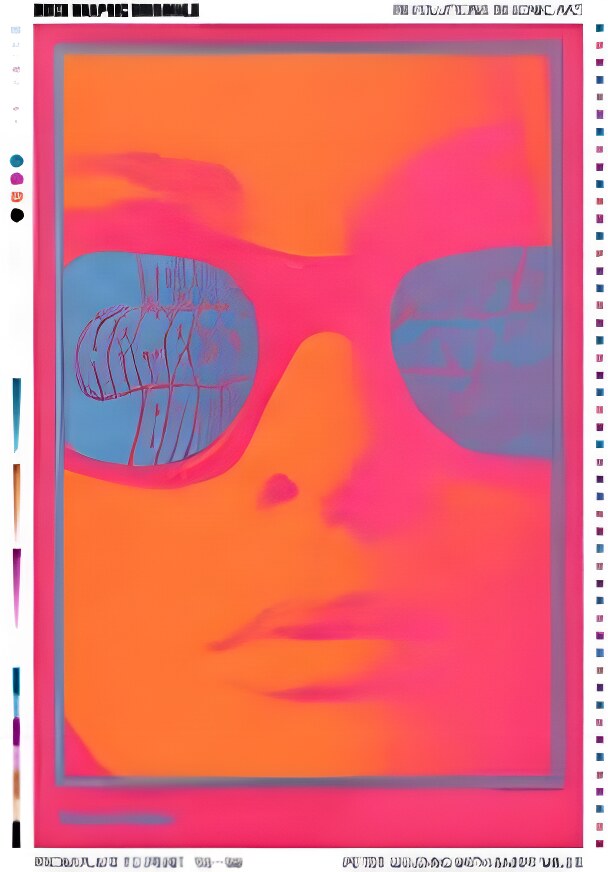


 "Rodchenko and the arts of revolutionary Russia by: Elliott, David")
 "Rolling Stone The Complete Covers 1967-1997by: Fred Woodward, Jann S. Wenner , et al.")
 "Rolling Stone Visits Saturday Night Live by: Partridge Marianne /Editor; Winter Vincent /Designer;")
 "Rooftop Architecture: The Art of Going Through the Roofby: Busch, Akiko")
 "Roomsby: Moore, Derry")
 "Roses of Saint Elizabeth, Theby: Woodruff, Jane Scott")
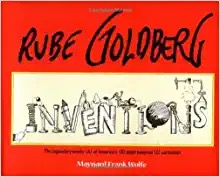


 "Rudolph de Harak Graphic Designer: Rational Simplicity by: Richard Poulin")
 "Russel Wright: Creating American Lifestyleby: Donald Albrecht , Robert Schonfeld, et al.")
 "Russia's Art Nouveauby: Borisova, Elena and Grigory Sternin")
 "Russian and Soviet Collages : 1920s - 1990sby: Vasily Elkin/ et al")
 "Russian Film Posters: 1900-1930by: Boerner, Maria-Christina")


 "Salvatore Ferragamo Evolving Legend 1928-2008by: Ferragamo, Salvatore")