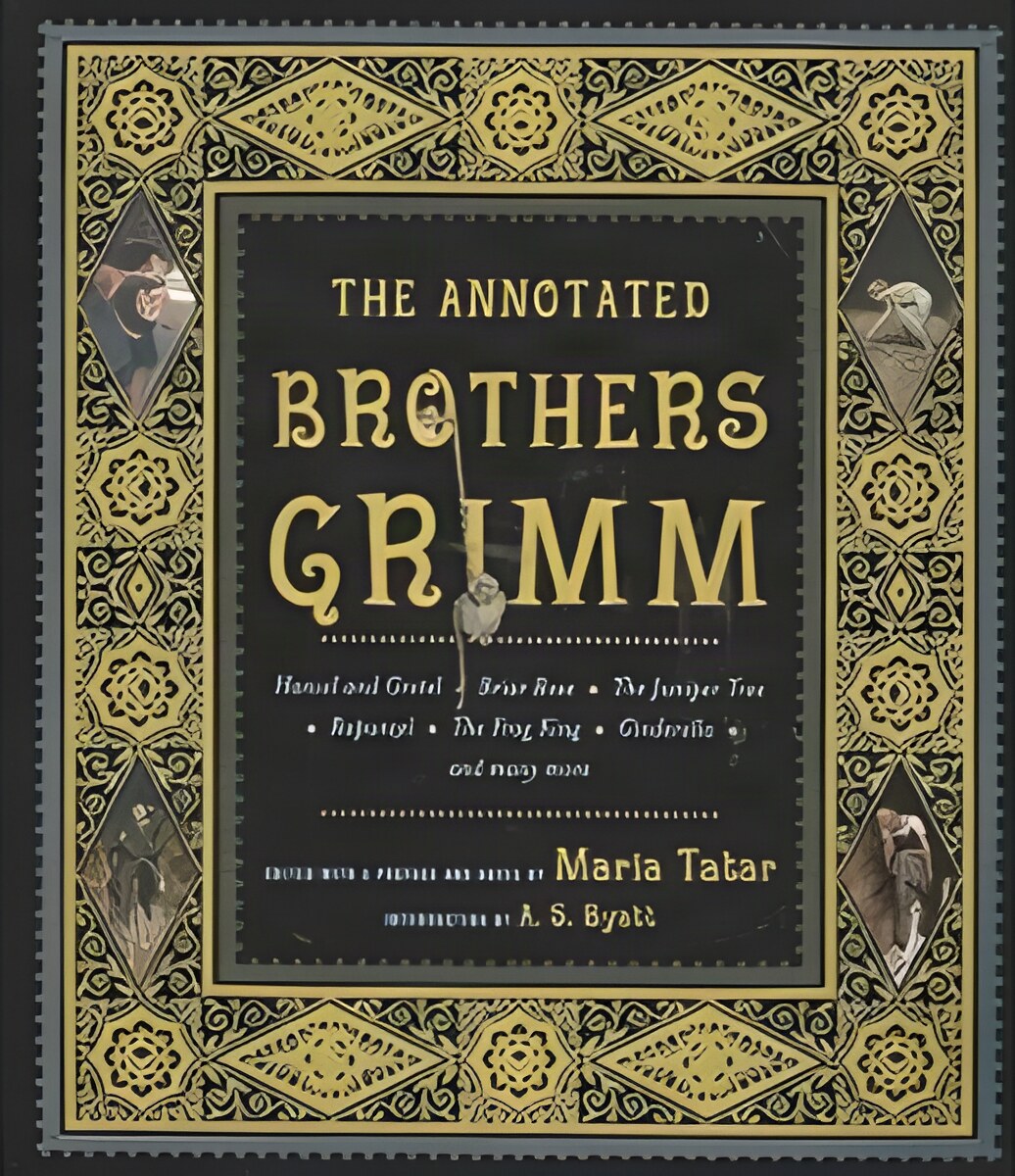
Hardcover. NY, W. W. Norton, 4th pr., 2004, Book: Very Good, Dust Jacket: Very Good, Hardcover in a bright, unclipped dust jacket, 462 pages. Maria Tatar's The Annotated Brothers Grimm celebrates the powerful cultural legacy of the stories collected by Jacob and Wilhelm Grimm --tales that have enchanted children and adults alike for generations. The volume includes over forty of the Grimms' most beloved stories, including: Rapunzel * Hansel and Gretel * The Brave Little Tailor * Cinderella * Little Red Riding Hood * The Robber Bridegroom * Briar Rose * Snow White * Rumplestilskin * The Golden Goose * The Singing, Soaring Lark * The Frog King * The Juniper Tree * and Mother Holle. With over 150 paintings and drawings from the most celebrated fairy tale illustrators, including George Cruikshank, Paul Hey, Walter Crane, Warwick Goble, Kay Nielsen, and Arthur Rackham. Clean copy.
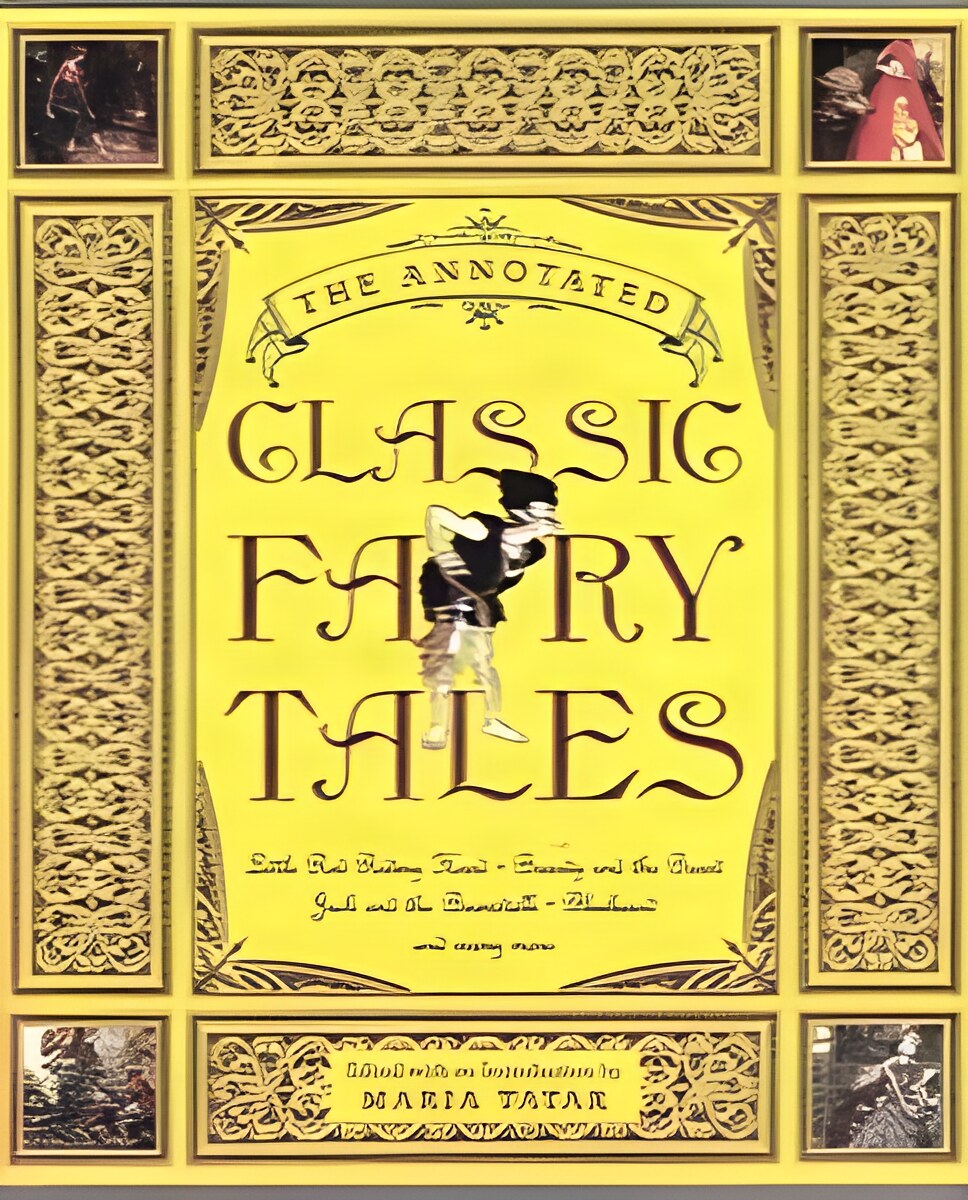
Hardcover. NY, W. W. Norton, 1st, 2002, Book: Very Good, Dust Jacket: Very Good, Hardcover in a bright, unclipped dust jacket, 445 pages. Through the woods with Hansel and Gretel, out to the ball with Cinderella and into the ocean with the Little Mermaid, this volume takes us down the familiar paths of our folklore heritage. Maria Tatar's Annotated Classic Fairy Tales celebrates the powerful cultural legacy of fairy tales and provides an invaluable storytelling archive for children and adults alike. The volume includes twenty-six stories, along with annotations and sumptuous images. Among them are: Cinderella, Hansel and Gretel, Snow White, Sleeping Beauty, Rapunzel, Rumpelstiltskin, The Story of the Three Little Pigs, Master Cat or Puss in Boots, The Story of the Three Bears, The Emperor's New Clothes, The Little Match Girl, The Princess and the Pea, The Ugly Duckling, The Little Mermaid. With over 300 paintings and drawings in full colour throughout by Ivan Bilibin, Edward Burne-Jones, Walter Crane, George Cruikshank, Gustave Dore, Edmund Dulac, Kay Nielsen, Maxfield Parrish and Arthur Rackham. Clean copy.
Hardcover. University Park PA, Penn State University Press, 1st, 2007, Book: Very Good, Dust Jacket: Very Good, Hardcover in a bright dust jacket, 264 pages. Numerous color illustrations. An exploration of Bartram's writings and artwork; all sixty-eight Bartram drawings owned by the Natural History Museum are brought together for the first time. Works by other eighteenth and nineteenth century natural history artists are included. His love of nature led him to explore the environs of the American Southeast between 1773 and 1777. Here he collected plants and seeds, kept a journal of his observations of nature, and made drawings of the plants and animals he encountered. The completed drawings were sent to his patron in London, and these make up the bulk of the collection held at London's Natural History Museum. Still in publisher's shrinkwrap.
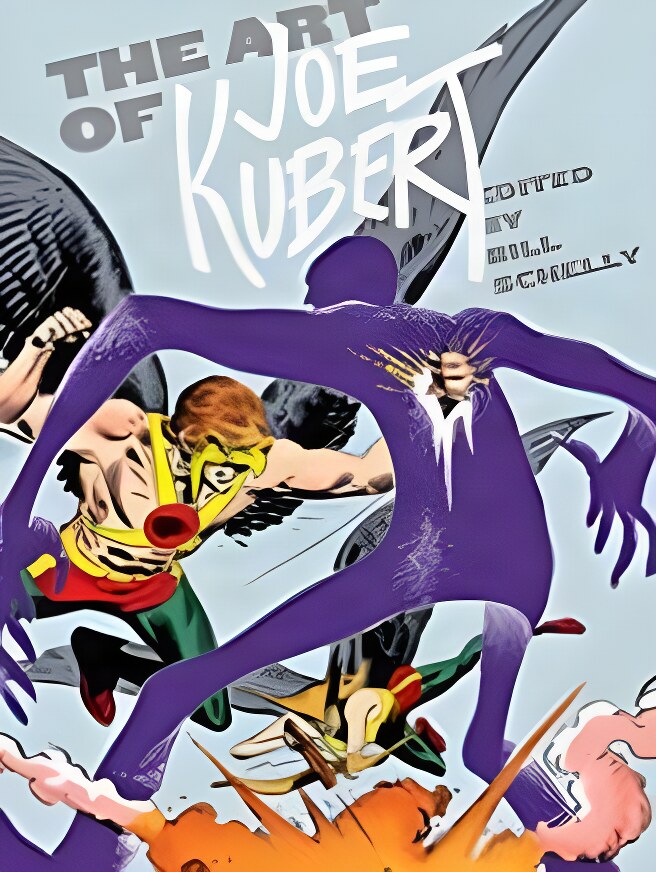
Hardcover. Seattle, Fantagraphics, 1st, 2011, Book: Very Good, Dust Jacket: Very Good, Hardcover, 224 pages. The Art of Joe Kubert is a deluxe, full-color coffee table book that honors this legendary creator with beautifully reproduced artwork from every phase of his career as well as critical commentary by the book's editor, comics historian and Kubert biographer Bill Schelly. Schelly's text parallels the visual evolution of the artist's work, tracing his life and career from his early days drawing Hawkman in the Golden Age, to his creation of Tor, his involvement in creating 3-D comics in the 1950s, his tour de force stints on DC's war comics - Sgt. Rock, The Unknown Soldier and the groundbreaking Enemy Ace - in the 1960s, to illustrating the adventures of Tarzan in the 1970s. And before finding a creative safe haven at DC Comics in the '50s, Kubert drew for many smaller and more obscure companies, including Holyoke, Quality, Fiction House, Harvey, St. John, and others - all of which are represented, including a 50-page section of comic-book stories in the horror, crime, and SF genres from the pre-Comics Code era, reprinted in full color for the first time.
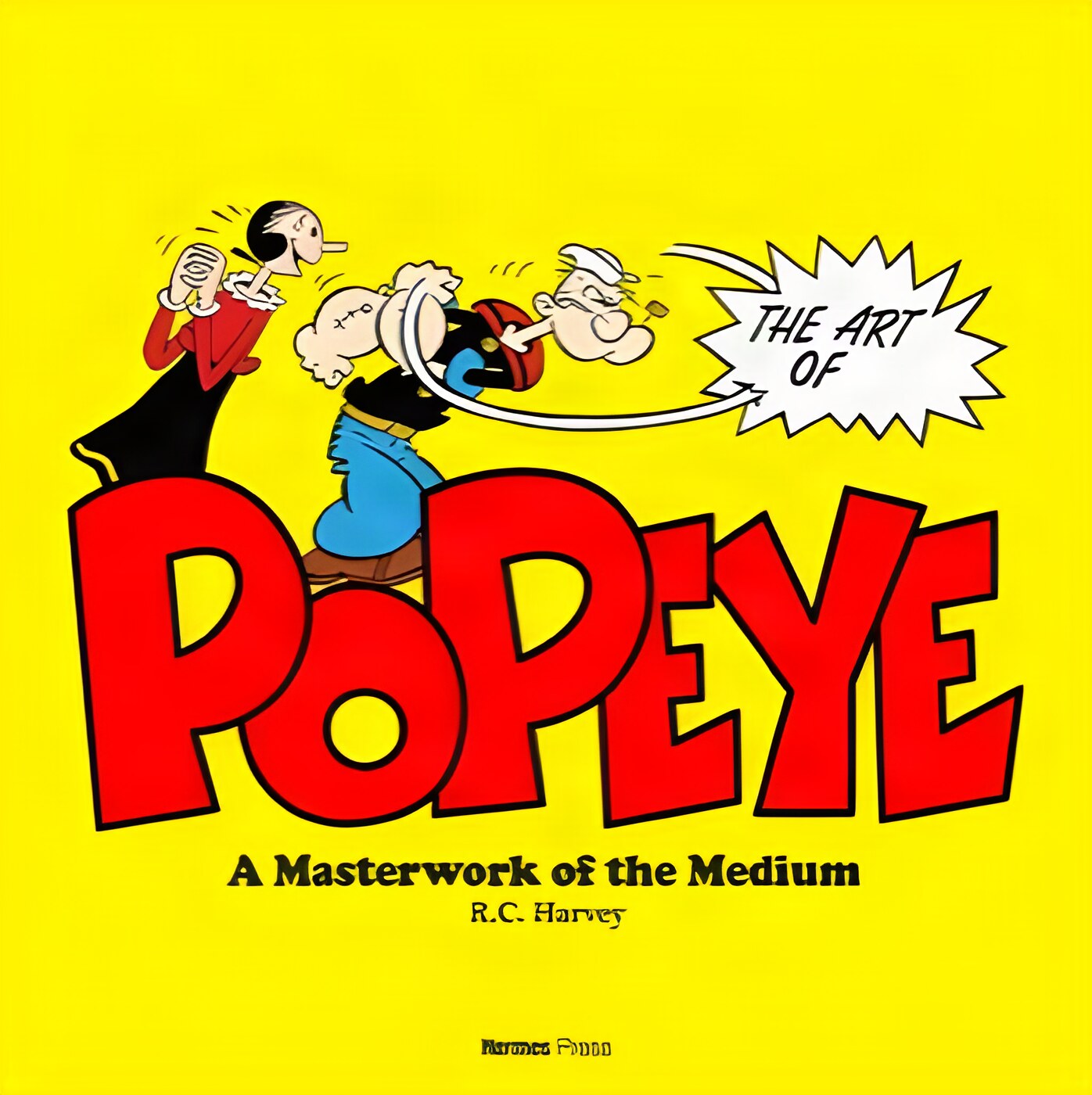
Hardcover. Hermes Press, 1st, 2024, Book: Very Good, Dust Jacket: None, Hardcover, pictorial boards, 190 pages. When cartoonist Elzie Segar created Popeye, as a minor character ten years into the run of the Thimble Theatre strip in 1929, little did he know that the world's most famous sailor would still be around over ninety years later and still being offered as a Sunday feature. To celebrate Popeye, the character, the comic strip and his universe, a feature cartoonist Charles M. Schulz described as "perfect... consistent in drawing and humor," Hermes Press is publishing the definitive art monograph on the subject. This book features a comprehensive essay written by pop culture historian R.C. Harvey accompanied by over 350 illustrations of original strip and comic book art, animation art, illustrations, advertising art, products, the Robert Altman film, and everything Popeye. Every aspect of Popeye is explored, from Olive Oyl and Eugene the Jeep to Wimpy and Bluto. Clean, bright copy.
Hardcover. NY, Harry N. Abrams, 1st, 1913, Book: Very Good, Dust Jacket: None, Hardcover. Pictorial boards with die-cut window and front mechanism very good. Still in publisher shrinkwrap. introduction by Adam Gopnik. Goldberg (1883 - 1970) was the most famous cartoonist of his time, best known for his comical inventions, which were syndicated in daily newspapers throughout the world. Author Jennifer George celebrates all aspects of her grandfather's career, from his very first published drawings in his high school newspaper and college yearbook to his iconic inventions, his comic strips and advertising work, and his later sculpture and Pulitzer Prize - winning political cartoons. Also included are essays by noted comics historians, rare photographs, letters, memorabilia, and patents, many reproduced here for the first time.
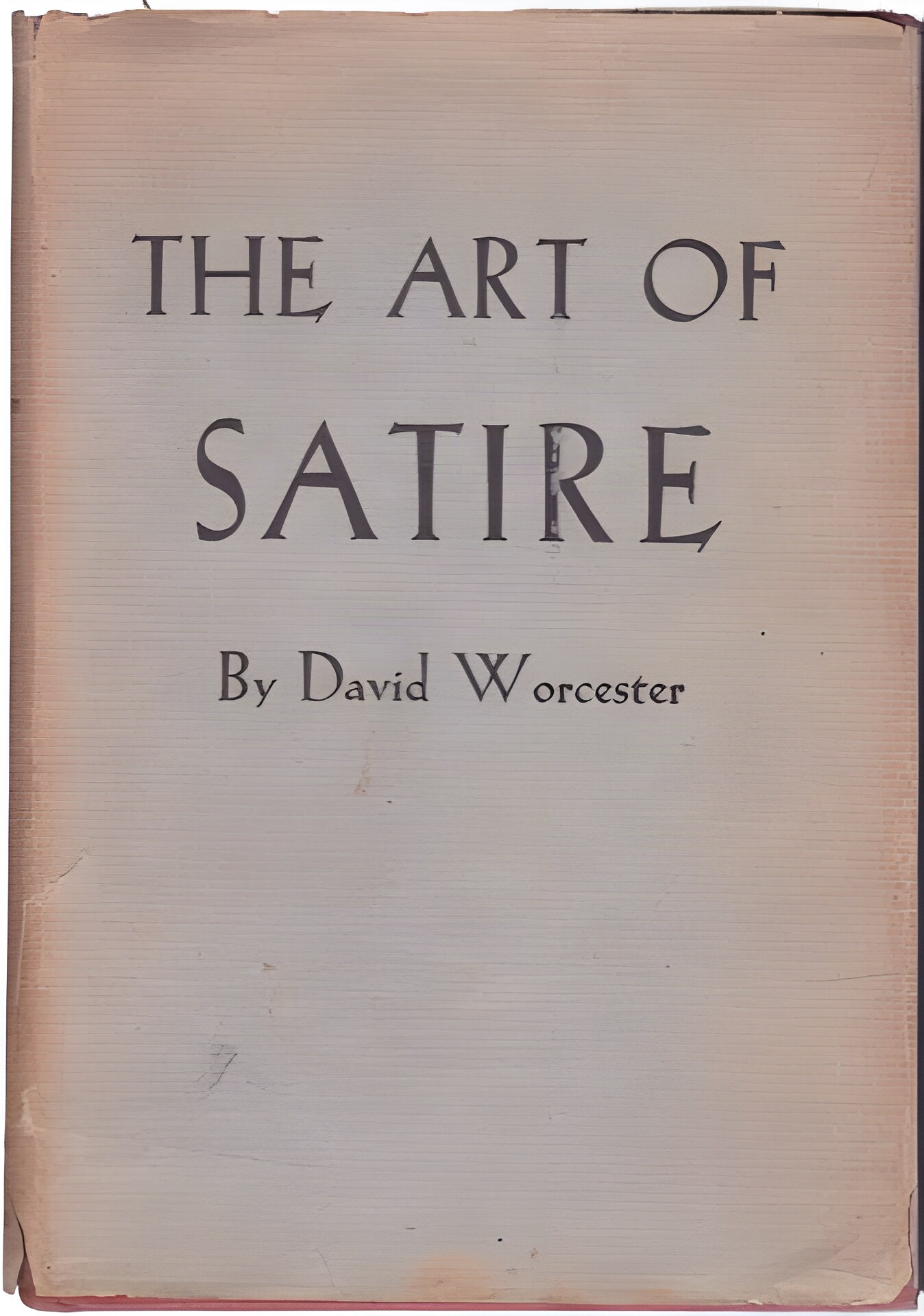
Hardcover. Cambridge MA, Harvard University Press, 1st, 1940, Book: Very Good, Dust Jacket: Poor, Hardcover, red cloth in a worn and chipped dust jacket with closed tears, 191 pages with index. Dr. Worcester presents a theory of satire, surveying the whole field since Dryden's Discourse of the Origin of Satire and drawing illustrations not only from English but from classical, French, German, and American literature. At the same time he makes a penetrating study of irony and its uses. Name on inside front cover otherwise clean.
Hardcover. NY, Lucas Books & Del Rey, 1st, 1999, Book: Very Good, Dust Jacket: None, Hardcover in gray boards with a black cloth spine. This lavish volume features more than six hundred examples of the art created for The Phantom Menace each a masterpiece in its own conceptual illustrations, sequential art, and brilliant, fully executed paintings. Digging deep into the exclusive Lucasfilm archives, The Art of Star The Phantom Menace details Episode 1's revolutionary use of traditional and high-tech media. Magnificent paintings that capture the exotic environments of Naboo, Tatooine, and Coruscant Key action sequences, including the Podraces on Tatooine and the riveting ground and space battles Fascinating insights and photos revealing the secrets of the artists at work The earliest conceptual drawings, following the evolution of Darth Maul, Qui-Gon Jinn, Queen Amidala, and Jar Jar Binks Exciting new poster art, created expressly for Episode 1. Clean copy, lacks dust jacket.
Hardcover. NY/London, Sotheby's Parke Bernet, Revised Ed., 1985, Book: Very Good, Dust Jacket: Very Good, Hardcover, 376 pages. 26 illustrations in color, and 420 in black and white. Originally published in 1979. John Harris was one of England's leading Architectural Historians at the time this book was written. He was curator of the Drawing Collection for RIBA. (Royal Institute of British Architects). Each section introduces a period such as: the Age of Estate Cartographers and the Garden Converstations, The Country House and Sporting Art: John Wootton, Peter Tillemans and Others, Caneletto and the Architectural Topographers, Gainsborough and the Picturesque, The Art of Turner and Constable. Harris comments on the artists , their style and pictures.
Hardcover. Dark Horse Books, 1st, 2007, Book: Very Good, Dust Jacket: Very Good, Hardcover, 216 pages. For 15 years Preston has been photographing cartoonists in their natural habitats, the studios in which they work. Revealing the faces behind the familiar drawings, Preston aims his lenses at artists engaged in virtually every realm of cartooning, including superhero comics (Alex Ross, Todd McFarlane); newspaper strips (Cathy Guisewite, Berke Breathed); alternative and underground comics (R. Crumb, the Hernandez brothers); and animation (Chuck Jones, Joseph Barbera). The best portraits capture the spirit of the subjects' work. Mad mainstay Sergio Aragones is surrounded by toy figurines. Loopy caricaturist Arnold Roth's mug sports a wacky grin. Art Spiegelman, known for his formal mastery of the comics medium, looks dead serious. The studio of gritty urban realist Frank Miller looks out on a brick wall. Most welcome are valedictory portraits of titans in the comics field who have passed on since Preston photographed them, including Will Eisner, Jack Kirby, and Carl Barks. Fans of cartooning and of photographic portraiture should enjoy Preston's evocative images of these often-reclusive figures in their working sanctums.
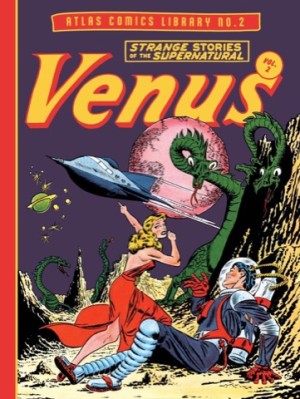
Hardcover. Seattle, Fantagraphics Books, 1st, 2024, Book: Very Good, Dust Jacket: None, Hardccover, pictorial boards, 290 pages in color. In the late 1940s, the first half of the Venus series from Marvel Comics predecessors Timely and Atlas Comics was published as a lighthearted romance comic about the goddess Venus taking a job on Earth at a beauty magazine. Never a company to miss a trend, Atlas began introducing more science fiction elements in the 1950s, and eventually turned Venus' dating adventures into a straight-out horror anthology. Collected here, 70 years later and for the first time ever, is that swift-changing second half of the 19-issue run. Future Marvel stars Bill Everett (seven issues) and Werner Roth (three issues) take Venus to heights of four-color weirdness and pre-Code horror ghastliness. Everett in particular is given free rein and seizes the opportunity: writing, drawing, and lettering twenty ghoulish and goofy masterpieces, including classics like "Hangman's House," "The Day Venus Vanished," "The House of Terror," "The Sealed Spectors," Tidal Wave of Terror," and the phantasmagorical "Cartoonist's Calamity!" These stories showcase the brilliant draftsmanship and storytelling of Everett, one of the giants of the 1940s and '50's comic book industry. His slick, fluid line rendered at Timely/Atlas, from his seminal god-child Prince Namor, the Sub-Mariner, to the atomic age Marvel Boy, is some of the finest pre-Code horror this side of E.C.'s Graham Ingels. Clean, bright copy.
Hardcover. NY, Lothrop, Lee and Shepard, 1st US, 1970, Book: Very Good, Dust Jacket: Very Good, Hardcover in a bright, unclipped dust jacket. 158 pages, b&w drawings by Douglas Phillips. An adventure story set in Thailand's teak forests, where the mighty elephant is bulldozer, tractor and sometimes killer. Clean copy.
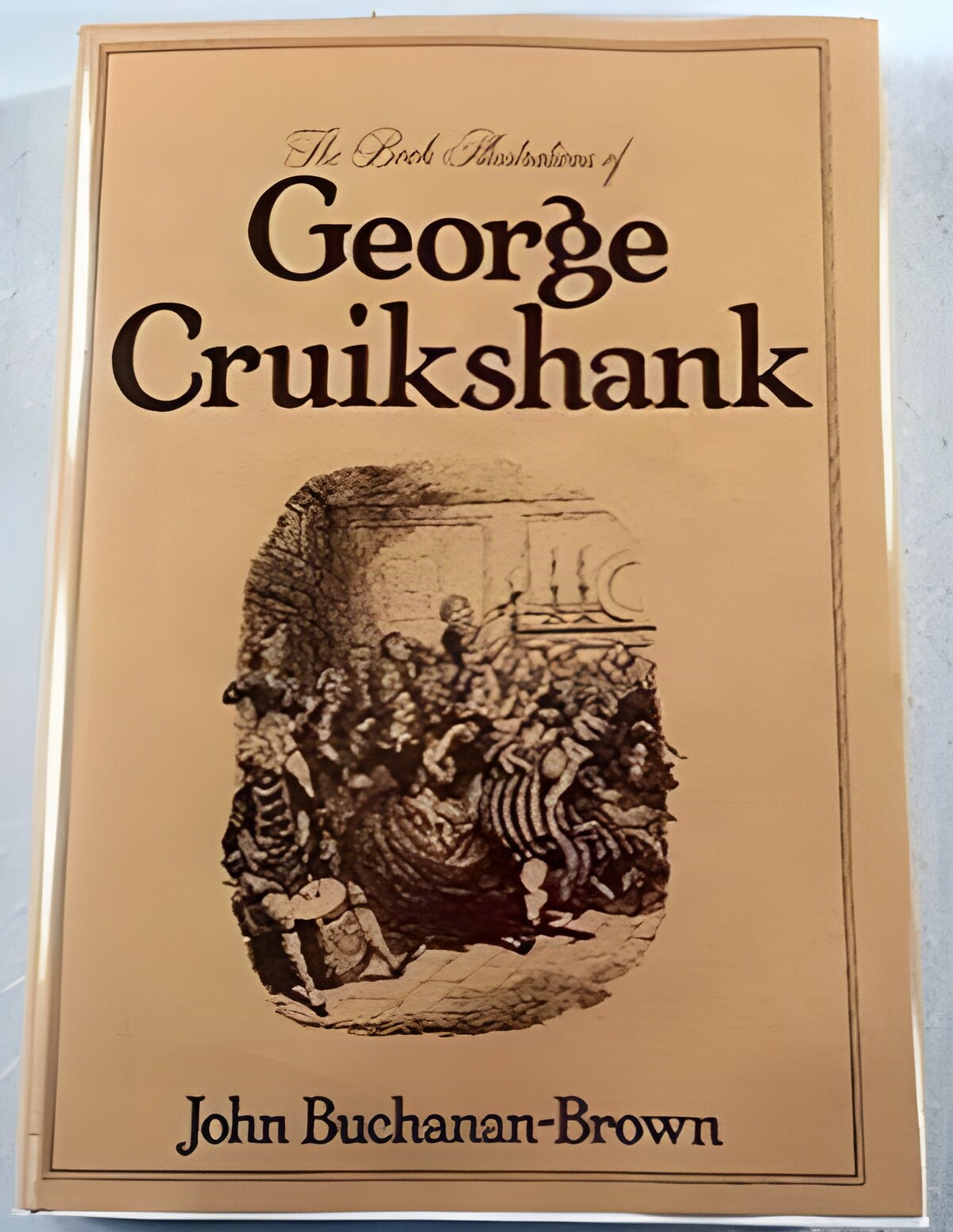
Hardcover. Rutland VT, Charles E. Tuttle, 1st US, 1980, Book: Very Good, Dust Jacket: Very Good, Hardcover, 256 pages. Illustrated with 190 pages of Cruikshank's drawings. Clean copy in a bright dust jacket. the author's third art monograph, reproducing Cruikshank's illustrations of Dickens, Ainsworth, Sterne, Smollett, and others, with extensive commentary and context. Clean copy.
Hardcover. NY, Frederick A. Stokes , 1st US, Book: Good, Dust Jacket: None, Hardcover, light green cloth decorated in dark green, black and gilt, 418 pages. From the sword in the stone and the founding of Camelot to the famed Round Table and the Lake of Enchantment, the legend of King Arthur will never lose its magic. Though simpler, this version includes all the wonderful stories-such as King Arthur's winning of Guenievere and Merlin's tragic downfall at the hands of the evil Vivien. B&w drawings throughout by A. G. Walker. Introduction by John W. Hales. Undated, circa 1900, front hinge partially cracked, title page tanned from frontis. tissue-guard. Small gouge to spine, otherwise clean.
Hardcover. Chicago, University of Chicago Press, 1st, 2015, Book: Very Good, Dust Jacket: None, Hardcover, 336 pages. In a world where nearly everyone has a cellphone camera capable of zapping countless instant photos, it can be a challenge to remember just how special and transformative Polaroid photography was in its day. And yet, theres still something magical for those of us who recall waiting for a Polaroid picture to develop. Writing in the context of two Polaroid Corporation bankruptcies, not to mention the obsolescence of its film, Peter Buse argues that Polaroid was, and is, distinguished by its processby the fact that, as the New York Times put it in 1947, the camera does the rest. Polaroid was often dismissed as a toy, but Buse takes it seriously, showing how it encouraged photographic play as well as new forms of artistic practice. Drawing on unprecedented access to the archives of the Polaroid Corporation, Buse reveals Polaroid as photography at its most intimate, where the photographer, photograph, and subject sit in close proximity in both time and spacemaking Polaroid not only the perfect party camera but also the tool for frankly salacious pictures taking. Along the way, Buse tells the story of the Polaroid Corporation and its ultimately doomed hard-copy wager against the rising tide of digital imaging technology. Still in publisher's shrinkwrap.
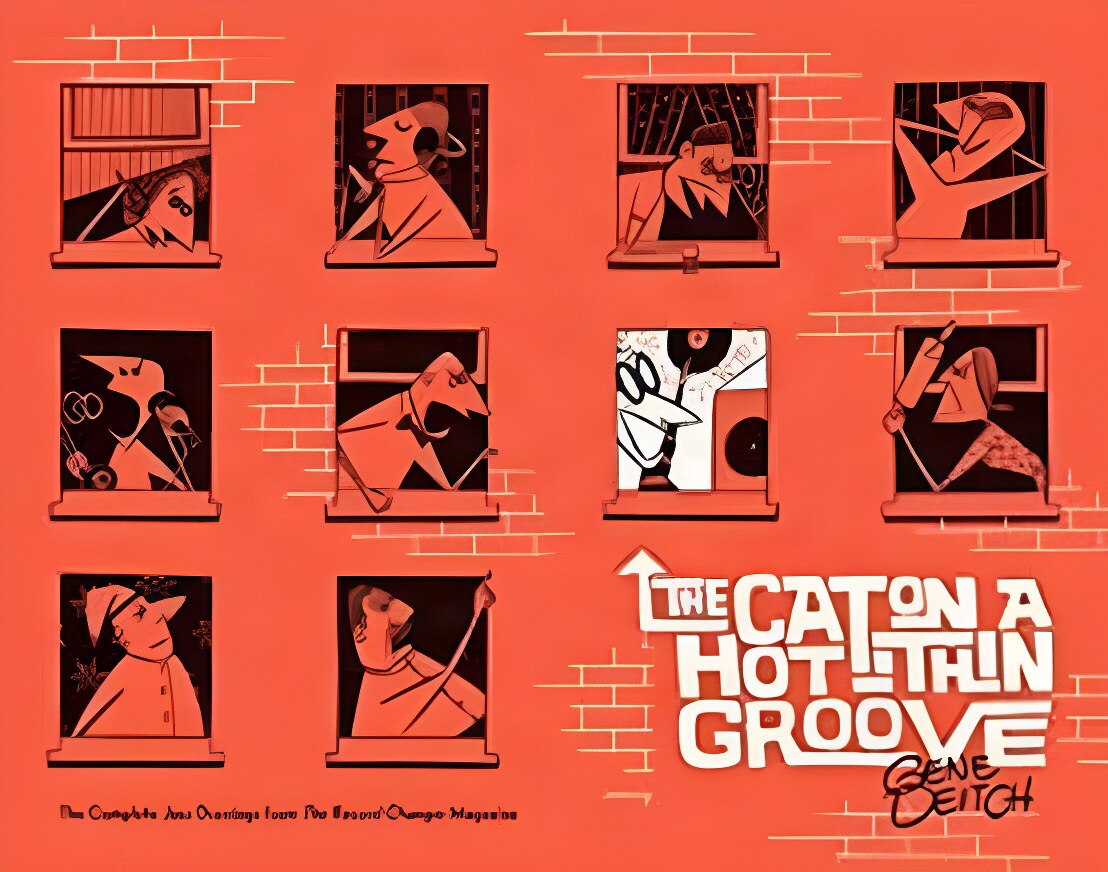
Softcover. Seattle, Fantagraphics, reprint, 2013, Book: Very Good, Dust Jacket: None, Softcover, 160 pages. At the age of 21, Gene Deitch discovered The Record Changer, a jazz fan magazine. Every jazz swinger in the '40s was called a "cat," so Gene Deitch created a cartoon feature titled "The Cat," which quickly became a fixture of the magazine. He also started drawing the covers, which graced almost every issue from 1945 to 1951. Deitch's stylistically virtuoso images exquisitely embodied the essence of the 1950s hipster, and was a visual paean to the joy of collecting records and appreciating jazz. The Cat on a Hot Thin Groove collects all of Deitch's Record Changer work in one gorgeous, coffee-table art book, with commentary and reminiscences by Deitch himself.
Softcover. Northhampton, MA, Kitchen Sink Press, 2nd printing, 1994, Book: Very Good, Dust Jacket: None, 56 pages. Softcover. Wrapper very good, glossy, vibrant. Wrapper has a touch of rubbing to the back. Color illustrations throughout. Pages clean and unmarked. Binding tight. In great condition. The first complete collection of the legendary work of one of comics' all-time greatest cartoonists.
Softcover. Seattle, Fantagraphics Books, 1st, 2001, Book: Very Good, Dust Jacket: None, Softcover, 144 pages, b&w drawings throughout. The Compleat Cannon reprints the entirety of cartoonist Wally Wood's classic sex and violence strip from the 1960s. Super-spy John Cannon is the American's answer to James Bond, fighting the Cold War with a license to kill. Wally Wood is of course the legendary cartoonist known for his contributions to the original Mad magazine. Always regarded as one of comics' great craftsmen, Cannon is simply one of the most beautiful strips ever produced. Featuring outrageous parodies of pop culture icons of the time, the Cold War, and the secret agent genre, Cannon is Wood at his most gregarious and incisive, working on one of the few projects in his career where he had no editorial constraints. Like Fantagraphics' The Compleat Sally Forth, also by Wood, this oversized collection includes a section of never-before-seen Cannon ephemera in the form of sketches, notes and annotated information about the strip.
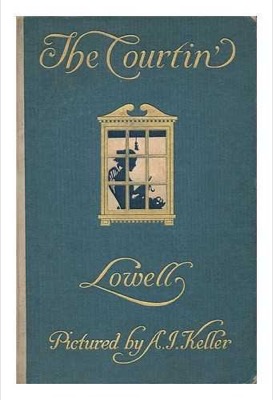
Hardcover. Boston, Houghton Mifflin, 1st thus, 1909, Book: Very Good, Dust Jacket: None, Hardcover, decorated pictorial stamped paper-covered boards. Book is in fine condition, crisp and clean, with tight binding and sharp corners. The poem is illustrated throughout in color with the watercolors and drawings of A. J. Keller. Includes facsimile of Lowell's handwritten manuscript.
Softcover. NY, Watson-Guptill, 1st, 2003, Book: Very Good, Dust Jacket: None, Softcover, 128 pages. For the aspiring artist who wants to become an expert comic book inker, The DC Comics Guide to Inking Comics is the definitive, one-stop resource!Americas leading comic book publisher brings its superstar creators and classic characters to the third in an authoritative series of books on how to create comics. Legendary comic book inker Klaus Janson uses DCs world-famous characters-including Batman, Superman, and Wonder Woman-to demonstrate an array of inking techniques, covering such topics as using textures, varying line weights, creating the illusion of three-dimensionality, and working with light and dark. Jansons lively, step-by-step instructions are informative, exciting-and clear enough for even beginners to follow. In addition, every technique shown in this guide conforms to actual industry standards.The perfect how-to on everything from basic inking materials to storytelling techniques, this one-stop sourcebook is packed with a wealth of tested techniques, practical advice, and professional secrets for the aspiring comic artist.
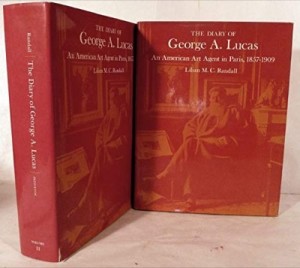
Hardcover. Princeton NJ, Princeton University Press, 1st, 1979, Book: Very Good, Dust Jacket: Very Good, Two volume set. Matching gold cloth boards with titles in gold on spine, in bright dust jackets. Transcribed and with Introduction by Lilian M.C. Randall. B&w illustrations of the sculptures, paintings, drawings and etchings that Lucas dealt with while in Europe. Double-column English text. Provides an extraordinary archive for historians and dealers. Provides a hugely empirical database for prices paid and commissions issued to artists, dealers, and craftsmen. George A. Lucas's acquaintances include Daumier, Cassatt, Whistler and Barye, among many, many others. Volume Two is given over wholly to Lucas's daily diary, which ran for an extraordinary length of time. Volume 1: xv [2], 3-148 pages.; Volume 2: iv [ii], 3-965 pages. DUE TO WEIGHT, DOMESTIC SHIPPING ONLY.
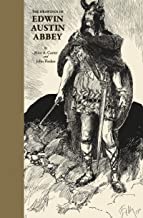
Softcover. Flesk, 1st, 2021, Book: Very Good, Dust Jacket: None, Softcover, 400 pages. Edwin Austin Abbey (1852-1911) was born just two years after the inaugural release of Harper's Monthly Magazine. Starting with his first published drawing in December 1870 at age 18, Abbey's life-long association with the publisher resulted in hundreds of drawings found within the pages of Harper's Monthly Magazine and Harper's Weekly as well as Harper & Brothers books. The resulting exposure throughout the U.S. and Europe secured an extensive level of recognition. Abbey had the rarefied appeal to everyone from the average reader to the most prestigious artists of the day. The inclusion of Abbey's illustrations in these periodicals helped to expand the reach of the poetry, stories and essays that they accompanied to a massive audience. This book focuses on Abbey's line art for the magazines and books published by Harper & Brothers, beginning with his earliest works as a new professional in the field. The collection contains over 350 drawings. These delineated the poetry of Robert Herrick and enhanced such books as The Deserted Village, Old Songs, She Stoops to Conquer and The Quiet Life. Drawings created for numerous short stories and poetry are displayed here as well. Also collected are Abbey's exquisite series of drawings done over the course of twenty years for The Comedies of William Shakespeare, followed by The Shakespeare Tragedies. His painstaking devotion to research while securing the appropriate costumes, props and models for his drawings was legendary. The results are some of the most revered illustrations ever created, which continue to astound aficionados and inspire artists generations after Abbey's last drawing was made. An extensive new essay by Alice A. Carter offers a fresh look at Edwin Austin Abbey, his life and career.
Hardcover. NY, Curt Valentin, 1st, 1947, Book: Very Good, Dust Jacket: None, Hardcover, textured beige boards with a green cloth spine. 94 pages of text and 58 black & white plates. Limited to 1,000 copies. Clean copy.


 "The Art of Rube Goldberg: (A) Inventive (B) Cartoon (C) Genius by: Jennifer George")


 "The Art of Star Wars: Episode 1: The Phantom Menace by: Jonathan Bresman")
 "The Artist & the Country House: A History of Country House & Garden View Painting 1540-1870by: John Harris")
 "The Artist Withinby: Preston, Greg")
 "The Big Tuskerby: Catherall, Arthur")

 "The Camera Does the Rest: How Polaroid Changed Photographyby: Peter Buse")
 "The Comic Strip Art of Lyonel Feininger: The Kinder-Kids: Wee Willie Winkie's Worldby: Lyonel Feininger, Bill Blackbeard (Editor/Introduction)")


 "The Compleat Cannonby: Wallace Wood")



 "The Drawings of Georges Seuratby: Germain Seligman")