Hardcover. NP, Somogy Art Publishers, 1st, 2006, Book: Very Good, Dust Jacket: Very Good, Hardcover, 96 pages. This fascinating collection of photographs documents a relatively unknown episode of Jewish history in Eastern Europe. Illustrating how the 1920s and 1930s saw the creation and development of "Jewish agricultural colonies" in the Soviet Union, Lithuania, Latvia, Poland, and Romania, this history shows that the aim was to "normalize" Jews by teaching them "productive" professional skills. These recently discovered photographs offer a unique and moving insight into the Jewish experience in central and Eastern Europe before World War II. This edition includes English, French, and Yiddish.
Hardcover. NY, Wiley, 2nd pr., 2001, Book: Very Good, Dust Jacket: Very Good, Hardcover in a bright, unclipped dust jacket. The long-awaited, untold, inside story of the rise of the legendary actor, singer, scholar, and activist. The first volume of this major biography breaks new ground. The greatest scholar-athlete-performing artist in U.S. history, Paul Robeson was one of the most compelling figures of the twentieth century. Now his son, Paul Robeson Jr., traces the dramatic arc of his rise to fame, painting a definitive picture of Paul Robeson's formative years. His father was an escaped slave; his mother, a descendent of freedmen; and his wife, the brilliant and ambitious Eslanda Cardozo Goode. With a law degree from Columbia University; a professional football career; title roles in Eugene O'Neill's plays and in Shakespeare's Othello; and a concert career in America and Europe, Robeson dominated his era. 383 pages, b&w illustrations. Clean copy.
Hardcover. NY, Houghton Mifflin Harcourt, 1st, 2021, Book: Very Good, Dust Jacket: Very Good, Hardcover in a bright, unclipped dust jacket. From a New York Times best-selling historian and Pulitzer Prize finalist, a sweeping epic of how the Vikings and their descendants have shaped history and America. Scandinavia has always been a world apart. For millennia Norwegians, Danes, Finns, and Swedes lived a remote and rugged existence among the fjords and peaks of the land of the midnight sun. But when they finally left their homeland in search of opportunity, these wanderers--including the most famous, the Vikings--would reshape Europe and beyond. Their ingenuity, daring, resiliency, and loyalty to family and community would propel them to the gates of Rome, the steppes of Russia, the courts of Constantinople, and the castles of England and Ireland. But nowhere would they leave a deeper mark than across the Atlantic, where the Vikings' legacy would become the American Dream. Clean copy.
Softcover. Atlanta, High Museum of Art, 1st, 1992, Book: Very Good, Dust Jacket: None, Softcover. Like new in publisher's shrink-wrap. The catalogue of a traveling exhibition organized by the High Museum of Art, Atlanta, examining the significant interrelationships between sports, photography, and culture in the US, Europe, and Russia since the late 19th century. The 141 works featured (32 color, 109 duotone) by 120 photographers (including such masters as Stieglitz, Adams, Cartier-Bresson, and Arbus) are drawn from American and European public and private collections and the archives of Life and Sports Illustrated . Includes essays by Harvey Green, John M. Hoberman, and Peter Schjeldahl.
Softcover. Atlanta, High Museum of Art, 1st, 1992, Book: Very Good, Dust Jacket: None, Softcover. Like new in publisher's shrink-wrap. The catalogue of a traveling exhibition organized by the High Museum of Art, Atlanta, examining the significant interrelationships between sports, photography, and culture in the US, Europe, and Russia since the late 19th century. The 141 works featured (32 color, 109 duotone) by 120 photographers (including such masters as Stieglitz, Adams, Cartier-Bresson, and Arbus) are drawn from American and European public and private collections and the archives of Life and Sports Illustrated . Includes essays by Harvey Green, John M. Hoberman, and Peter Schjeldahl.
Hardcover. Washington, D.C., Smithsonian Institution Press, rep, 1993, Book: Very Good, Dust Jacket: Very Good, Catalogue of the works of Thomas Eakins. Includes 49 large color plates with accompanying black/white and color illustrations and notes for each. Also contains reproductions of Eakins's lesser-known black/white photographs and biographical text about the artist. Very good condition; cloth bound book has virtually no flaws, dust jacket has few small tears near the edges.
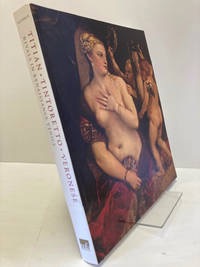
Softcover. Boston, Museum of Fine Arts, 1st, 2009, Book: Very Good, Dust Jacket: None, Softcover, 315 pages. Color illustrations. For nearly four decades in the sixteenth century, the careers of Venice's three greatest painters-, Titan, Tintoretto and Veronese, overlapped, producing mutual influences and bitter rivalries that changed art history. Venice was then among Europe's richest cities, and its plentiful commissions fostered an exceptionally fertile and innovative climate. In it, the three artists, brilliant, ambitious and fiercely competitive, vied with one another for primacy, employing such new media as oil on canvas, with its unique expressive possibilities, and such new approaches as a personal and identifiable signature style. They also pioneered the use of easel painting, a newly portable format that led to unprecedented fame in their lifetimes. With more than 150 stunning examples by the three masters and their contemporaries, this volume elucidates the technical and aesthetic innovations that helped define the uniquely rich "Venetian style," as well as the social, political and economic context in which it flourished. Essays range from examinations of seminal new techniques to such crucial institutions as state commissions and the patronage system. Most of all, by concentrating on the lives and careers of Venice's three greatest painters, Titian, Tintoretto, Veronese paints a vibrant human portrait--one brimming with savage rivalry, one-upmanship, humor and passion. Clean copy. DOMESTIC SHIPPING ONLY.
Softcover. Berkeley CA, University of California Press, 1st pbk., 1990, Book: Very Good, Dust Jacket: None, Softcover, 273 pages, b&w illustrations. The first in-depth analysis of the rich spiritual and artistic traditions of the Carib-speaking Yekuana Indians of Venezuela, who live in the dense rain forest of the upper Orinoco. Within their homeland of Ihuruna, the Yekuana have succeeded in maintaining the integrity and unity of their culture, resisting the devastating effects of acculturation that have befallen so many neighboring groups. Yet their success must be attributed to more than natural barriers of rapids and waterfalls, to more than lack of "contact" with our "modern" world. The ethnographic history recounted here includes not only the Spanish discovery of the Yekuana but detailed indigenous accounts of the entire history of Yekuana contact with Western culture, revealing an adaptive technique of mythopoesis by which the symbols of a new and hostile European ideology have been consistently defused through their incorporation into traditional indigenous structures. Clean copy.
Softcover. Boston, Museum of Fine Arts, 1st, 1992, Book: Very Good, Dust Jacket: None, Softcover, 271 pages illustrated in color and b&w. Textiles were the Incas' most prized possessions. Their first gifts to European strangers were made not of gold and silver, but of camelid fibre and cotton. They believed that the highest form of weaving was created expressly for the sun, which they considered the greatest of the celestial powers. This book uses this image to symbolize Andean tradition as a whole and documents the collection of ancient and Colonial Andean textiles in the Museum of Fine Arts, Boston, which is among the most comprehensive of its kind in the world. Described and illustrated here, in many cases for the first time are the finest examples from the collection: weavings of astonishing virtuosity with striking geometric designs, elaborate carpets and covers, mantles, tunics, featherwork, woven shoes with metal decoration and intriguing figural sculptures with tapestry faces - representing the major cultures of the pre-Columbian period as well as the achievements of Spanish Colonial times. Mild wear to outer wraps, otherwise a clean, bright copy.
Hardcover. Hartford, Canfield and Robins, 1st, 1836, Book: Fair, Dust Jacket: None, 610 pages. Hardcover with brown leather covers. Heavy soil and wear to the leather. Moderate foxing throughout. Black and white illustrations/engraved plates. Iceland to New Zealand, including the Americas, Europe, Asia, and Africa. Water stain to first 40 pages, about one sixth of page. Previous owner's signature on front fly leaf. Sound binding.
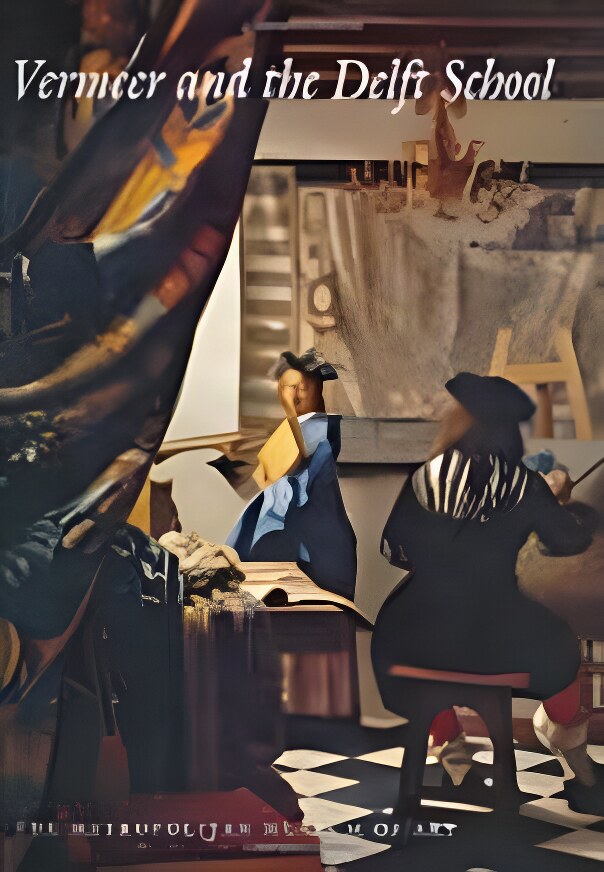
Hardcover. NY, Metropolitan Museum of Art, 1st, 2001, Book: Very Good, Dust Jacket: Very Good, Hardcover in a bright dust jacket, still sealed in publisher's shrinkwrap. 550 pages. Seventeenth-century Delft has traditionally been viewed as a quaint town whose artists painted scenes of domestic life. This important book revises that image, showing that the small but vibrant Dutch city produced fine examples of all the major arts--including luxury goods and sophisticated paintings for the court at The Hague and for patrician collectors in Delft itself. The book traces the history and culture of Delft from the 1200s through the lifetime of the city's most renowned painter, Johannes Vermeer. The authors discuss at length some ninety major paintings (seventeen by Vermeer), forty drawings, and a choice selection of decorative arts, all of which are reproduced in full color. Among the paintings are state portraits, history pictures, still lifes, views of palaces and church interiors, illusionistic murals, and refined genre pictures by Vermeer and Pieter de Hooch. The rich works on paper encompass exquisite drawings by Delft artists and sketches of the town by visiting artists. Included in the decorative arts are tapestries, bronze statuary, silver, Delftware, and glass. The volume concludes with an essay that takes the reader on a walk through seventeenth-century Delft. It is accompanied by maps of the city's neighborhoods that indicate major monuments and the homes of patrons, art dealers, and painters.
Softcover. New York, Guggenheim Museum, 1st, 1997, Book: Very Good, Dust Jacket: None, 147 pages. Softcover. Full color illustrations. Light bump to top right corner. Clean, unmarked copy.
Hardcover. New York, Harry N. Abrams, 1st, 2015, Book: Very Good, Dust Jacket: None, 160 pages. Hardcover with no dust jacket. Clean, unmarked copy with only minor wear to boards. Color and black and white pictures throughout. Originally born in Algeria, Yves Saint Laurent moved to Paris when he was 18, and only three years later he was handpicked by Christian Dior to take the reins as designer of his fashion house. Over time, Saint Laurent resurrected haute couture from the casual mores that predominated in the 1960s, but also offered chic cachet to ready-to-wear clothing. He was among the earliest of designers to incorporate non- European references into his work, and in 1983 he became the first living designer to be feted with a solo exhibition at The Metropolitan Museum of Art in New York. Vogue on Yves Saint Laurent is a stellar volume in the series from the editors of British Vogue, featuring 20,000 words of original biography and history and studded with more than 80 images from their unique archive of images taken by leading photographers.
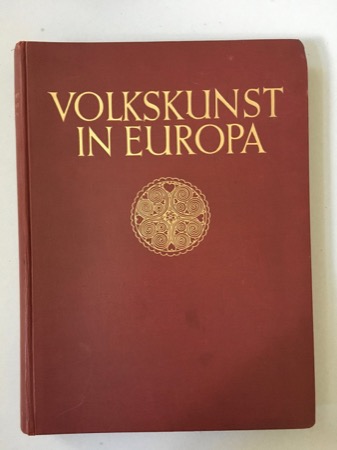
Hardcover. NY, E. Weyhe, 1st US, Book: Very Good, Dust Jacket: None, Hardcover, large folio, ( over 12" - 15" tall ), red cloth stamped in gilt. 56 pages of German text, comprising introduction and detailed catalogue of plates, the origins of objects (textiles, ceramics and wood) which demonstrate the origins and continued use of traditional design in the folk arts of Europe. Followed by 132 color plates of the objects mostly from Eastern Europe, most pasted in. First published in Germany in 1926, this appears to be the first US edition produced the same year. Architect Albert Kahn's copy with his ownership signature in pencil and date of 1926 on the front fly leaf. DOMESTIC SHIPPING ONLY.
Hardcover. NY, Grove Press, 1st US, 2005, Book: Very Good, Dust Jacket: Very Good, Hardcover in a bright, unclipped dust jacket. In 1753, Voltaire -- playwright, poet, philosopher, and one of the most feted figures in Europe -- was forced by Louis XV into exile, where he remained for the last twenty-five years of his life. These years heralded a startling new beginning for this remarkable man. Voltaire carved out a new and vibrant world in his isolation, becoming a successful entrepreneur and writing his masterpiece Candide. In Voltaire in Exile, Ian Davidson re-creates this period in the life of one of the giants of the Enlightenment. By painstakingly translating the rich correspondence between Voltaire and his family, members of the Court at Versailles, and the French intellectual elite, Davidson allows us to discover Voltaire the artist, the campaigner, the aesthete, the lover, the humorist. The result is a wonderfully vivid portrait of this extraordinarily funny, iconoclastic, complex, and, above all, ferociously intelligent individual. Clean copy.
Hardcover. Smithsonian Institution / Victoria and Albert Museum, 1st, 1995, Book: Very Good, Dust Jacket: Very Good, Hardcover in a bright dust jacket. Eighty-two watercolors and drawings selected from the extensive Searight Collection in London present a variety of 19th-century artists' encounters with the diverse cultures and dramatic lands of the fabled Ottoman Empire. Complementing the artworks are essays by experts in Middle Eastern studies elucidating the exchange of ideas and influences between East and West. Artists include Edward Lear, Luigi Meyer, David Roberts etc. 128 pages. Clean copy.
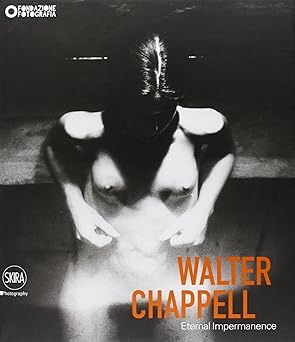
Hardcover. NY, Skira, 1st, 2013, Book: Very Good, Dust Jacket: Very Good, Hardcover in a bright dust jacket, 224 pages. A splendid monograph on an unconventional photographer who developed a unique and deeply personal vision of the world surrounding him. Walter Chappell (1925-2000) is considered one of the foremost figures in twentieth-century American photography. His thinking and vision of the world were closely connected with the intimistic, spiritual explorations undertaken between the 1950s and the 1970s by artists like Minor White and Paul Caponigro. While Chappell photographed various subjects, his inner eye was stimulated in particular by the form of the human body and landscapes as well as the combination of both, through which he endeavored to perceive the creative flow, the energy that runs through and connects all things. Produced to accompany the first major European retrospective of Walter Chappell's work, this catalog presents over 130 photographs, all originals, as well as the unfinished and previously unpublished album World of Flesh, which the photographer intended as the primary publication on his work. Clean copy.
Hardcover. NY, Thames and Huson, 1st, 2007, Book: Very Good, Dust Jacket: Very Good, Hardcover, 256 pages. Published to accompany an exhibition at London's Imperial War Museum, this book features more than 250 superb full-color illustrations of hard-hitting propaganda and groundbreaking graphic art. It encompasses iconic images such as Alfred Leete's "Your Country Needs You" as well as additional material drawn from the world of advertising and documentary photographs of posters in situ. Through posters, the author examines the social, political, ethnic, and cultural aspirations of America, Britain, Ireland, Germany, France, the Netherlands, Belgium, Russia, Austria, Hungary, and the Czech Republic. Covering topics as diverse as advertising in World War I, the Bolshevik Revolution, the Spanish Civil War, Germany and Occupied Europe in World War II, anti-nuclear campaigns, and Vietnam, the book is comprehensive and highly analytical, yet accessible. 300 illustrations, 250 in color.
Hardcover. Chicago, University Of Chicago Press, 1st, 2006, Book: Very Good, Dust Jacket: Very Good, Hardcover, pages. In When Buildings Speak,Anthony Alofsin explores the rich yet often overlooked architecture of the late Austro-Hungarian Empire and its successor states. He shows that several different styles emerged in this milieu during the late nineteenth and early twentieth centuries. Moreover, he contends that each of these styles communicates to us in a manner resembling language and its particular means of expression. Covering a wide range of buildings--from national theaters to crematoria, apartment buildings to warehouses, and sanatoria to postal savings banks--Alofsin proposes a new way of interpreting this language. He calls on viewers to read buildings in two ways: through their formal elements and through their political, social, and cultural contexts. By looking through Alofsin's eyes, readers can see how myriad nations sought to express their autonomy by tapping into the limitless possibilities of art and architectural styles. And such architecture can still speak very powerfully to us today about the contradictory issues affecting parts of the former Habsburg Empire.
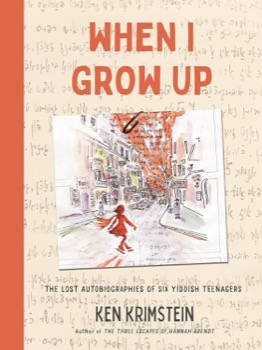
Hardcover. NY, Bloomsbury Publishing, 2nd pr., 2021, Book: Very Good, Dust Jacket: None, Hardcover, pictorial boards with orange cloth spine. 232 pages. From the prize-winning author of The Three Escapes of Hannah Arendt, a stunning graphic narrative of newly discovered stories from Jewish teens on the cusp of WWII.When I Grow Up is New Yorker cartoonist Ken Krimstein's new graphic nonfiction book, based on six of hundreds of newly discovered, never-before-published autobiographies of Eastern European Jewish teens on the brink of WWII-found in 2017 hidden in a Lithuanian church cellar. These autobiographies, long thought destroyed by the Nazis, were written as entries for three competitions held in Eastern Europe in the 1930s, just before the horror of the Holocaust forever altered the lives of the young people who wrote them.
Hardcover. NY, Thames & Hudson, 1st, 2015, Book: Very Good, Dust Jacket: None, Hardcover, 208 pages, 174 color plates. Window-Shopping through the Iron Curtain presents a selection of more than 100 images of shop windows shot by David Hlynsky during four trips taken between 1986 and 1990 to Poland, Czechoslovakia, Hungary, Yugoslavia, Bulgaria, East Germany, and Moscow. Using a Hasselblad camera, Hlynsky captured the slow, routine moments of daily life on the streets and in the shop windows of crumbling Communist countries. The resulting images could be still-lifes representing the intersection of a Communist ideology and a consumerist, Capitalist tool-the shop window-with the consumer stuck in the middle. Devoid of overt branding or calculated seduction, the shop windows were typically adorned with traditional yet incongruous symbols of cheer: homey lace curtains, paper flowers, painted butterflies, and pictures of happy children. Some windows were humble in their simple offerings of loaves and tinned fishes; others were zanily artistic, as in the modular display of military shirts in a Moscow storefront; and some illustrated intense professional pride, such as a sign in a Prague beauty salon depicting a pedicurist smiling fiendishly over an imperfect sole. The photographs are accompanied by essays by art historian Martha Langford and cultural studies specialist Jody Berland, as well as Hlynsky's own account of his time as a flaneur in the shopping plazas of the collapsing Soviet empire-"a vast ad-hoc museum of a failing utopia" that in 1989 began to close forever. No dj issued.
Hardcover. NY, Thames & Hudson, 1st, 2015, Book: Very Good, Dust Jacket: None, Hardcover, 208 pages, 174 color plates. Window-Shopping through the Iron Curtain presents a selection of more than 100 images of shop windows shot by David Hlynsky during four trips taken between 1986 and 1990 to Poland, Czechoslovakia, Hungary, Yugoslavia, Bulgaria, East Germany, and Moscow. Using a Hasselblad camera, Hlynsky captured the slow, routine moments of daily life on the streets and in the shop windows of crumbling Communist countries. The resulting images could be still-lifes representing the intersection of a Communist ideology and a consumerist, Capitalist tool-the shop window-with the consumer stuck in the middle. Devoid of overt branding or calculated seduction, the shop windows were typically adorned with traditional yet incongruous symbols of cheer: homey lace curtains, paper flowers, painted butterflies, and pictures of happy children. Some windows were humble in their simple offerings of loaves and tinned fishes; others were zanily artistic, as in the modular display of military shirts in a Moscow storefront; and some illustrated intense professional pride, such as a sign in a Prague beauty salon depicting a pedicurist smiling fiendishly over an imperfect sole. The photographs are accompanied by essays by art historian Martha Langford and cultural studies specialist Jody Berland, as well as Hlynsky's own account of his time as a flaneur in the shopping plazas of the collapsing Soviet empire-"a vast ad-hoc museum of a failing utopia" that in 1989 began to close forever. No dj issued.
Softcover. Bloomington, IN, Indiana University Press, 1st, 2015, Book: Very Good, Dust Jacket: None, 232 pages. Softcover. A very clean, unmarked copy with only minor edgewear. Black and white photographs throughout. The center of the art world before the war, Paris fired the Nazis' greed. The discovery of more than 1,500 prized paintings and drawings in a private Munich residence, as well as a recent movie about Allied attempts to recover European works of art, have brought Nazi plundering back into the headlines, but the thievery was far from being limited to works of art. From 1942 onwards, ordinary Parisian Jews-mostly poor families and recent immigrants from Eastern Europe-were robbed, not of sculptures or paintings, but of toys, saucepans, furniture, and sheets. Witnessing the Robbing of the Jews tells how this vast enterprise of plunder was implemented in the streets of Paris by analyzing images from an album of photographs found in the Federal Archives of Koblenz. Brought from Paris in 1945, the photographs were cataloged by the staff of the Munich Central Collecting Point. Beyond bearing witness to the petty acts of larceny, these images provide crucial information on how the Germans saw their work. They enable us to grasp the "Nazi gaze" and to confront the issue of the relation between greed and mass destruction.
Hardcover. London, Sampson Low, Son, and Marston, reprint, undated/c1880, Book: Good, Dust Jacket: None, Hardcover. History of the art of engraving within a European context. Undated, published c1880. Illustrated with 34 black/white reproductions of engravings. Good condition; pages have gilt edges, cloth bound book has some wear to the edges and introductory pages lightly spotted from age.

 "The Tradesmen and the Farmers of Yiddishland: 1921-1938by: Pollack, Emmanuelle (Editor)")
 "The Undiscovered Paul Robeson , An Artist's Journey, 1898-1939by: Paul Robeson Jr.")
 "The Viking Heart: How Scandinavians Conquered the Worldby: Arthur Herman")
 "This Sporting Life, 1878-1991by: Dugan, Ellen")
 "This Sporting Life, 1878-1991by: Dugan, Ellen")
 "Thomas Eakinsby: Wilmerding, Ed., John")


 "Universal Traveller: Designed to introduce Readers at home to an Acquaintance with the Arts, Customs and Manners of the Principal Modern Nations on the Globe...by: Go")


 "Vogue on Yves Saint Laurentby: Fraser-Cavassoni, Natasha")


 "Voltaire In Exile: The Last Years, 1753-78 by: Ian Davidson")

 "War Posters: Weapons of Mass Communicationby: James Aulich")
 "When Buildings Speak: Architecture as Language in the Habsburg Empire and Its Aftermath, 1867-1933by: Alofsin, Anthony")






 "Witnessing the Robbing of the Jews: A Photographic Album, Paris, 1940-1944by: Gensburger, Sarah")
 "Wonders of Engraving, Theby: Duplessis, Georges")