Hardcover. NY, Acanthus Press , 1st, 2008, Book: Very Good, Dust Jacket: Very Good, Hardcover, 320 pages, color plates. Volume I, Inventors of Tradition, highlights the careers and showcases the work of the designers who translated and then transformed European period styles into a new vocabulary for America. In addition to the work of celebrated taste-makers Billy Baldwin, Mario Buatta, and Albert Hadley Gura uncovers the interiors of once-influential, now-obscure designers whose work played an important role in the development of the New York look. Among these practitioners are William Pahlmann, the pioneer of contemporary eclecticism; the glamorous Melanie Kahane, with a fondness for shocking pink and tasteful pizzaz; and the epitome of the southern civility, Joseph Braswell, who believed that a beautiful environment could make its occupants into better people.
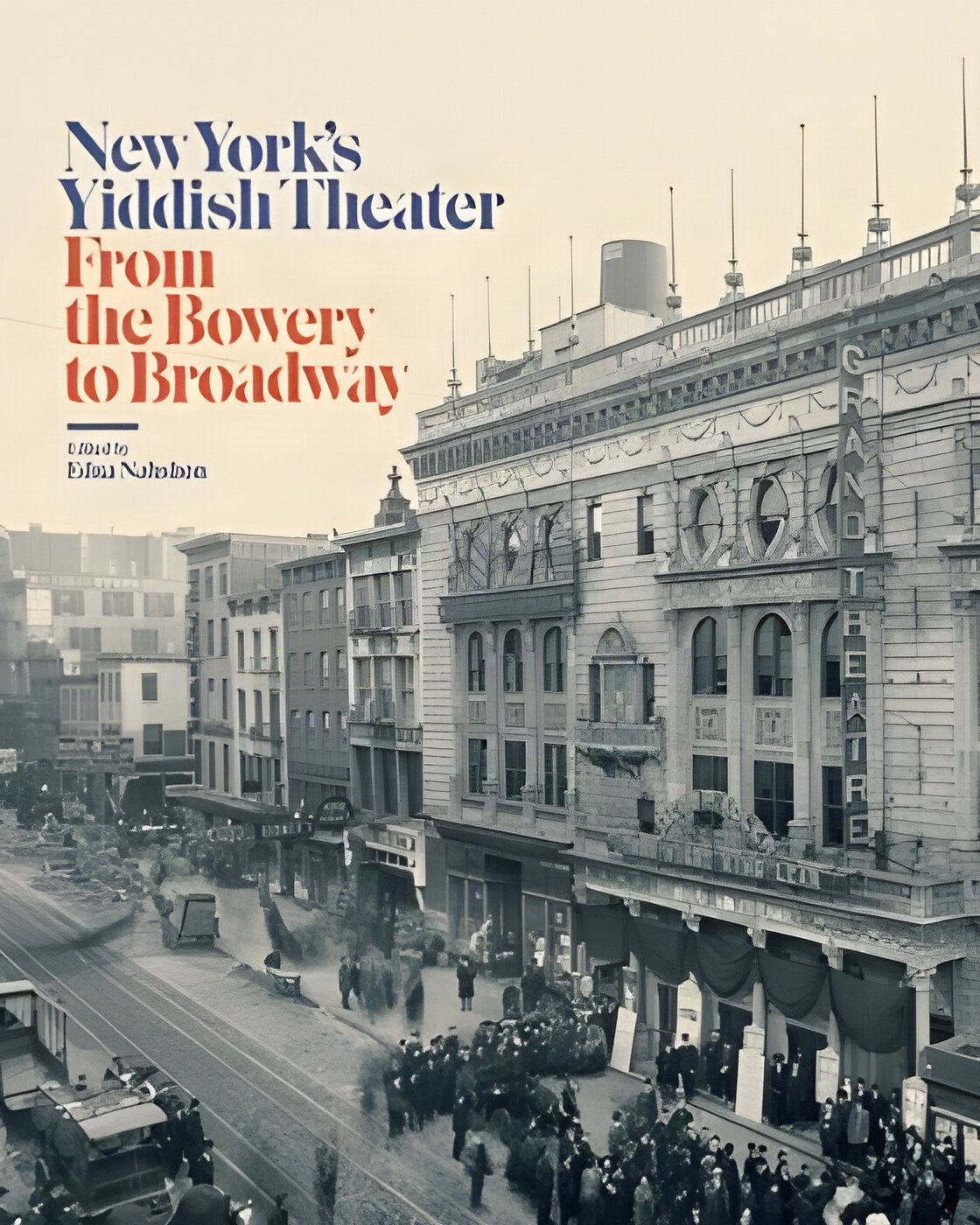
Hardcover. NY, Museum of the City of New York, 1st, 2016, Book: Very Good, Dust Jacket: None, Hardcover, pictorial boards, 327 pages, illustrated in color and b&w. In the early decades of the twentieth century, a vibrant theatrical culture took shape on New York City's Lower East Side. Original dramas, comedies, musicals, and vaudeville, along with sophisticated productions of Shakespeare, Ibsen, and Chekhov, were innovatively staged for crowds that rivaled the audiences on Broadway. Though these productions were in Yiddish and catered to Eastern European, Jewish audiences (the largest immigrant group in the city at the time), their artistic innovations, energetic style, and engagement with politics and the world around them came to influence all facets of the American stage. Vividly illustrated and with essays from leading historians and critics, this book recounts the heyday of "Yiddish Broadway" and its vital contribution to American Jewish life and crossover to the broader American culture. Clean copy.
Softcover. Middletown, CT, Wesleyan University, 1st, 1981, Book: Very Good, Dust Jacket: None, Softcover, 116 pages. Exhibition catalog. Letter from editor laid in. Black-and-white illustrations throughout. Light sun-fade to covers. Previous owner's signature on front flyleaf. A little mark from paper clip on title page. Clean, tight copy.
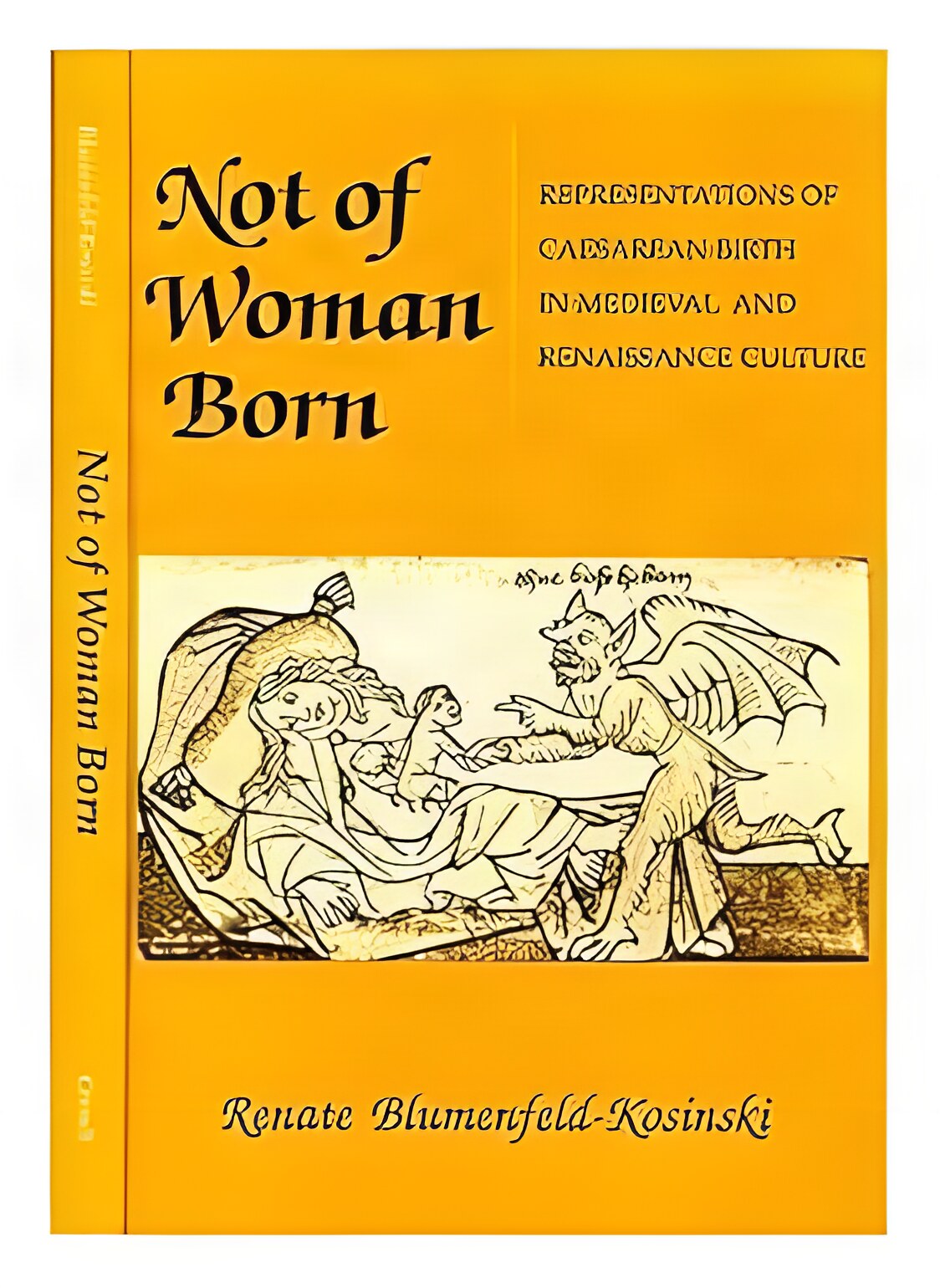
Softcover. Ithaca NY, Cornell University Press, reprint, 1991, Book: Very Good, Dust Jacket: None, Softcover, 204 pages. "Not of woman born," "the Fortunate," "the Unborn" - the terms designating those born by Caesarean section in medieval and Renaissance Europe were mysterious and ambiguous. In antiquity, children fortunate enough to have survived a Caesarean birth were believed to be marked for a special destiny. Vividly tracing the evolution of Caesarean birth from the early 1300s (when the operation was performed almost exclusively by midwives) through the Renaissance period (when midwives were considered witches and male surgeons took control), Blumenfeld-Kosinski . . . does more than provide [an] engrossingly accessible, historical account of the now-commonplace procedure--she unveils the roots of a medical misogyny that still prevails today. A richly cross-disciplined study utilizing depictions of Caesarean delivery in art, literature, and medical texts and illuminations (illustrations), [this book] is a captivating and revealing work that will be relished by readers of medical and cultural history, as well as by those who are interested in the subject of male dominance over women. Clean copy.
Hardcover. London, Scriptum, 1st, 2002, Book: Very Good, Dust Jacket: Very Good, Hardcover in a bright, unclipped dust jacket, 335 pages illustrated in color. The story of this flower, from the hunt for new varieties in the wild in the 1800s to the development of the more than 100,000 hybrids that exist today, is related in fascinating detail in "Orchids". This beautiful book features text by one of the world's foremost orchid authorities alongside spectacular watercolor portraits of prize-winning orchids from the Royal Horticultural Society in London, which spearheaded orchid cultivation in Western Europe beginning in the 19th century. This exquisite collection of paintings commissioned by the RHS every year since 1897 represents the ultimate orchid pictorial history. "Orchids" is an indispensable sourcebook for those captivated by the beauty and infinite variety of this glamorous flower.
1917, Book: Very Good, WW1 European soldier giving embarassed American soldier a hug. Two-color art by J. C. Leyendecker. 10 X 13", small label. PLEASE NOTE: The image shown is a scan of the actual product you are purchasing. What you see is what you get. The sheet may have some imperfections beyond the cropped area shown. You are buying THIS PAGE ONLY- not the entire magazine. Your order will be placed carefully between stiff paper and an acetate overlay, then packed in a rigid cardboard sleeve to prevent bending.
Hardcover. NY, Metropolitan Museum of Art , 1st, 2004, Book: Very Good, Dust Jacket: Very Good, Hardcover, 272 pages. Painters of Reality, titled after an exhibition held in Milan more than fifty years ago, is the first study in English of this major aspect of Italian art. It builds on the work of the art historian Roberto Longhi. Reexamining the subject in light of copious subsequent scholarship, the authors of this volume contribute major essays that define and discuss naturalism as it appeared in both Lombard paintings and drawings. There is also a fresh consideration of the North Italian predecessors whose influence is apparent either directly or indirectly, in the paintings of Caravaggio. More detailed discussions of the subject center on the precise elements that constituted Leonardo's "hypernaturalism": the important schools of paintings that arose in Brescia, Bergamo, Cremona, and Milan; and Caravaggio's most notable successors in northern Italy, who kept Lombard realism alive into the eighteenth century. Among the 136 paintings and drawings, many never before seen outside of Italy, are influential drawings by Leonardo and major paintings by Caravaggio. Other acknowledged masters in the history of European art are represented, including Lorenzo Lotto, Giovanni Girolamo Savoldo, Giovanni Battista Moroni, and Giacomo Ceruti. Works also appear from significant but less widely known artists such as Sofonisba, Anguissola, Vincenzo Campi, Moretto da Brescia, and Fra' Galgario.
Hardcover. New Haven, CT, Yale University Press, 1st, 2015, Book: Very Good, Dust Jacket: None, 480 pages. Hardcover with no dust jacket. Very clean, unmarked copy still in shrink wrap. 378 color and 10 black & white illustrations. Tight copy. While European art forms were widely disseminated, copied, and adapted throughout Latin America, colonial painting is not a derivative extension of Europe. The ongoing debate over what to call it-mestizo, hybrid, creole, indo-hispanic, tequitqui-testifies to a fundamental yet unresolved question of identity. Comparing and contrasting the Viceroyalties of New Spain, with its center in modern-day Mexico, and Peru, the authors explore the very different ways the two regions responded to the influence of the Europeans and their art. A wide range of art and artists are considered, some for the first time.
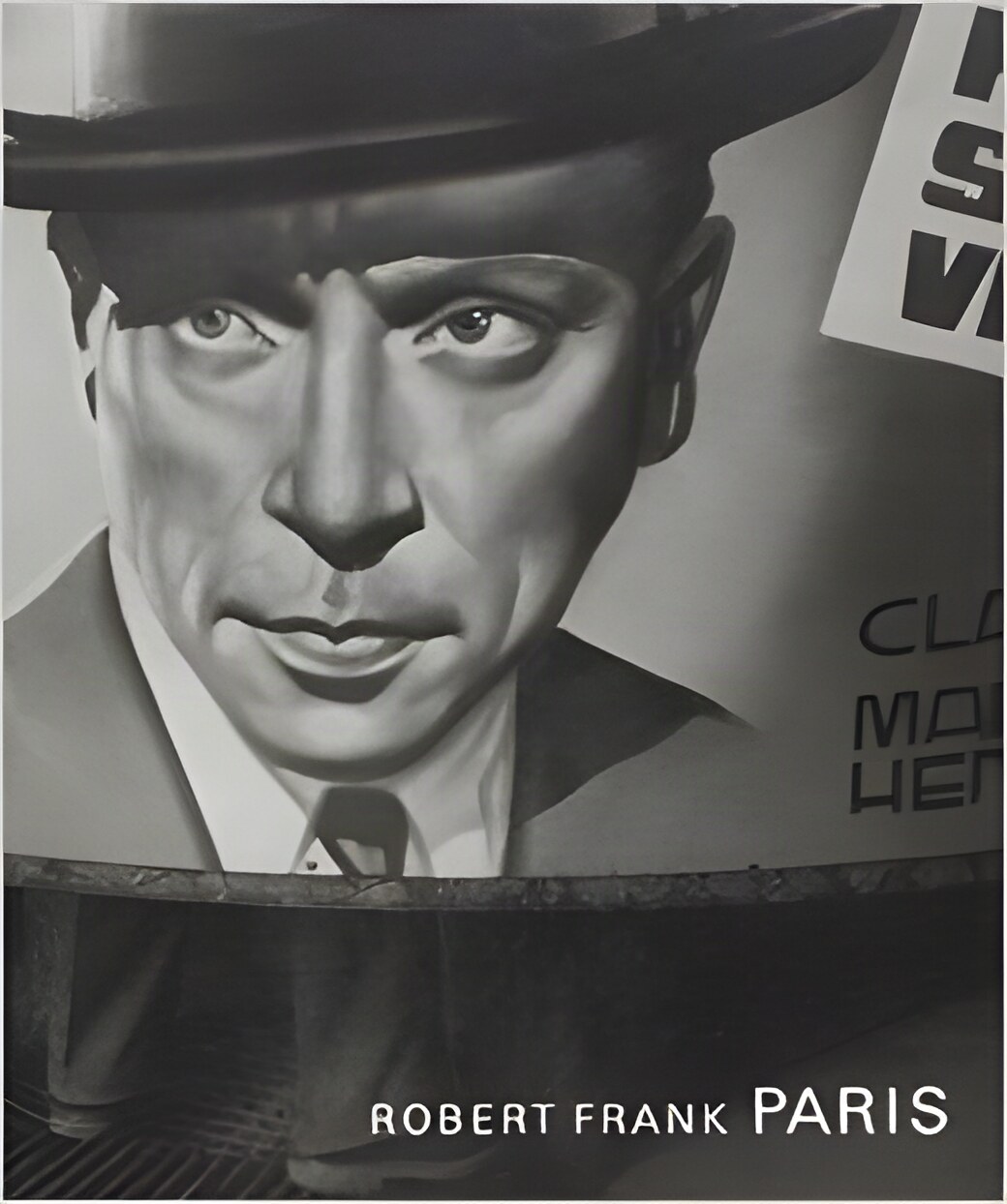
Softcover. Steidl, 2008, 2008, Book: Very Good, Dust Jacket: Very Good, Softcover. Like new in publisher's shrink-wrap. The publication of Paris marks the first time that the significant body of photographs which Robert Frank made in Paris in the early 1950s have been brought together in a single book. Having left Switzerland in 1924, this 1951 trip to France was only Frank's second return to Europe after he had settled in New York City in 1947, and some of the images he made during that visit have become iconic in the history of the medium. The 80 photographs reproduced here, which were selected by Frank and editor Ute Eskildsen, suggest that Frank's experience of the "new world" had sharpened his eye for European urbanism. He saw the city's streets as a stage for human activity and focused particularly on the flower sellers. His work clearly references Atget and invokes the tradition of the flaneur.
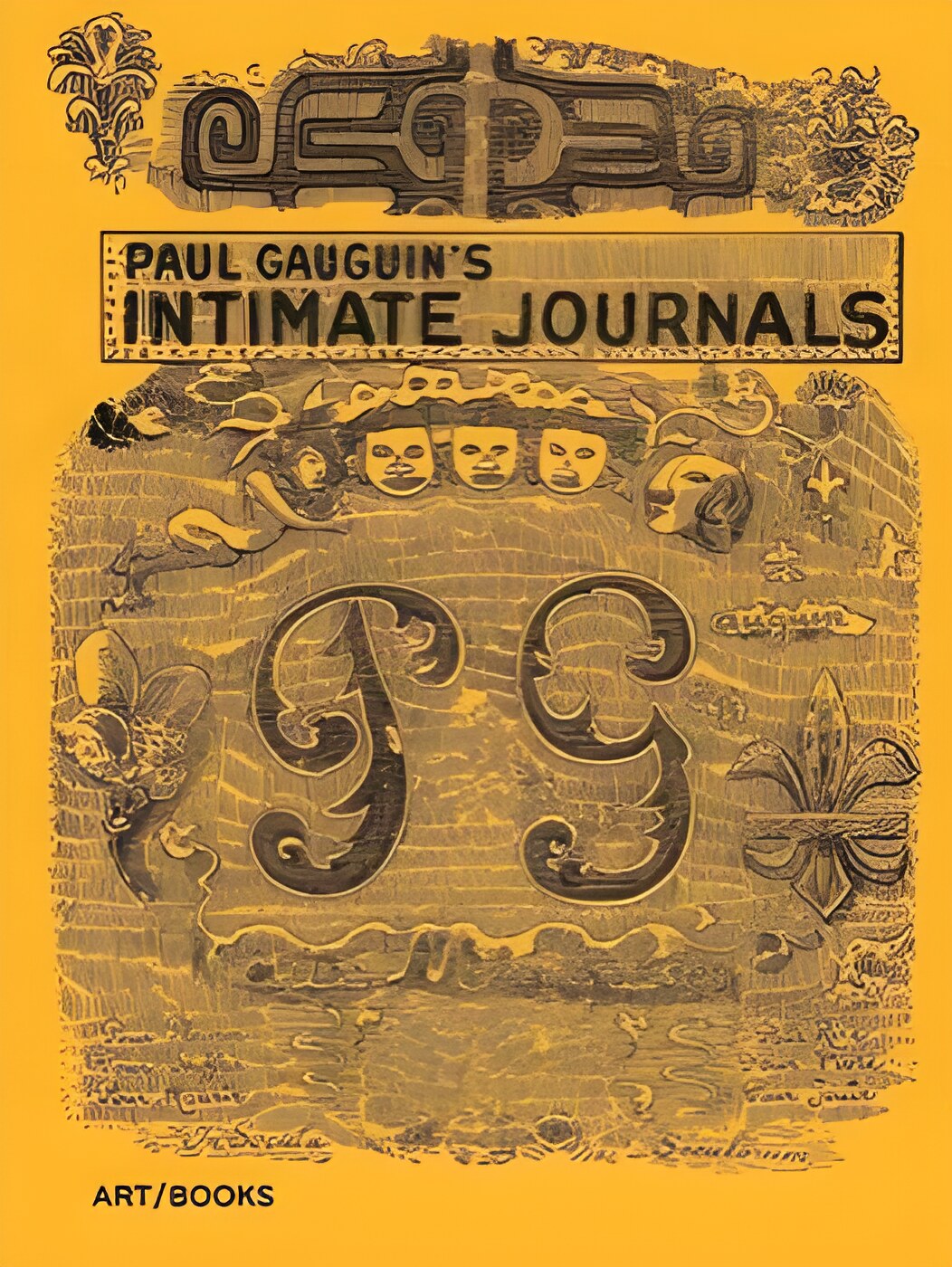
Hardcover. London, Art/Books, reprint, 2019, Book: Very Good, Dust Jacket: None, Hardcover, yellow cloth with black decoration, 186 pages. A beautiful facsimile of the earliest English translation of Gauguin's frank and entertaining memoir, written just before he died, in which he reveals his most inner thoughts on art, life and love Unappreciated in his own lifetime, Paul Gauguin is now recognized as one of the giants of French post-Impressionism and a pioneer of early modernism. A rebel in both art and life, he rejected his bourgeois upbringing and comfortable stockbroker's job to devote his life to painting. Eventually, dismayed by the 'hypocrisy of civilization' and in search of a primitive idyll, he left his wife and children behind in Paris and took up residence in the South Seas, first in Tahiti and, later, in the Marquesas Islands. He would never return to Europe. In the final months of his life, he wrote this witty and revealing autobiographical memoir with the request that it be published upon his death. It first appeared in the original French in 1918, and was translated into English three years later. As his son Emile wrote in the preface, 'These journals are an illuminating self-portrait of a unique personality. They bring sharply into focus for me his goodness, his humor, his insurgent spirit, his clarity of vision, his inordinate hatred of hypocrisy and sham.' Wide-ranging and elliptical, these candid reflections reveal Gauguin's inner thoughts about many subjects, including frank views on his fellow artists back in Paris, his turbulent relationship with Van Gogh, and the charms of Polynesian women, while providing glimpses into his often far-from-idyllic life in the islands. This beautiful facsimile reproduces the first American translation of the journals, a rare limited edition privately published in New York in 1921 for a select group of subscribers. With full-page sketches by the artist, these entertaining and enlightening musings give us a unique insight into Gauguin the man and the artist. Clean copy.
Softcover. London, Phaidon, 1st, 1996, Book: Very Good, Dust Jacket: None, Softcover, 160 pages. Paul Graham's intense color photographs map a social and cultural landscape. This work brings together portraits, landscapes and interiors from his British, European and Japanese series. Graham has exhibited worldwide, including the Museum of Modern Art, New York and the Tate Gallery, London.
Softcover. London, Phaidon Press, reprint, 2000, Book: Very Good, Dust Jacket: Very Good, Softcover, 255 pages, b&w and color photographs throughout. Light fading to dust jacket spine. Else a very clean, tight copy. "Paul Rand (1914-96) was a pioneering figure in American graphic design. Adopting what he called a 'problem solving' approach to design, he drew on the ideas of European avant-garde art movements, such as Cubism, Constructivism and De Stijl, and synthesized them to produce his own distinctive graphic language."
Hardcover. NY, Rizzoli, 1st, 2006, Book: Very Good, Dust Jacket: Very Good, Hardcover, 384 pages, profusely illustrated in color and b&w. This thought-provoking volume transports readers to France of the eighteenth, nineteenth, and twentieth centuries, beginning with Napoleon's love of perfume and the erotic importance he attached to it, through the lore and symbolism fragrance enjoyed in eighteenth and nineteenth-century Europe. By the early twentieth century, perfume's place as one of France's most important luxury industries was recognized and celebrated, and timeless fragrances--such as Chanel No. 5, Shalimar, Arpeges, and Joy--were launched. The distinctive bottles for these new essences and the art movements that inspired their design are detailed throughout the book, as are paintings, poetry, and literature that reveal the power of perfume and its ability to recall the past and evoke sensuality. According to nineteenth-century perfumer Eugene Rimmel, "the history of perfume is, in some manner, the history of civilization." Through fascinating text accompanied by gorgeous imagery, including packaging, labels, and advertisements, Perfume: Joy, Scandal, Sin explores perfume's impact on history, culture, society, art, and attitudes.
Hardcover. London, B. T. Batsford Ltd., 1st, 1949, Book: Very Good, Dust Jacket: Good, 169 pages. Hardcover. Red cloth edition. Top edge stained red. Illustrated with 126 black & white photographs and a few in color. Previous owners name embossed at top of rear interior dust jacket flap. Dust jacket with darkening to spine, minor smudges at upper left corner - jacket now protected with clear plastic cover. Clean, tight copy.
Hardcover. Seattle, Fantagraphics, 1st, Book: Very Good, Dust Jacket: None, Hardcover in pictorial boards, 298 pages. Published for the first time in English -- and the first time in color -- the classic Petra Chérie by Italian master Attilio Micheluzzi follows the dramatic adventures of a mysterious heroine during the end of World War I. Originally published in serial format from 1977-1982, Petra Chérie follows the adventures of Petra De Karlowitz, 'Chérie' to creator Micheluzzi, who addresses her throughout the book. Born to a Polish businessman and the most beautiful woman in Paris, raised in Canton, China, and now based in neutral Holland, she is a spy who answers only to herself. Evoking but cleverly eschewing stereotypes of the femme fatale, Petra is equally at home in the cockpit of an airplane and behind the wheel of a motorcar. More than that, she is an endlessly fascinating enigma and one of the most iconic characters in Italian comics. In short, thrilling tales across sky, sea, and land, zipping from Northern Europe to Mitteleuropa, from the Balkans to the Bosphorus to the nascent Soviet Union, Micheluzzi grapples with an era when Europe's borders were in flux and battle lines were often blurred. Clean copy.
Hardcover. New York, Flammarion, 1st English, 1997, Book: Very Good, Dust Jacket: Very Good, 263 pages, hardcover with dust jacket. Catalog of a traveling exhibition first held at the Museum of Fine Arts, Houston, Texas, subsequently held at various European museums. Translated from the French by Deke Dusinberre. Minor rubbing and fading to dust jacket, mostly to top edge. Slight bumping to corners. Unmarked. A clean and tight copy.
Hardcover. New York, Pace Wildenstein, 1st, 2007, Book: Very Good, Dust Jacket: Very Good, Hardcover, 188 pages. Illustrated in full color and black & white. Clean, bright copy.
Hardcover. Berkeley CA, University of California Press, 1st, 2006, Book: Very Good, Dust Jacket: Very Good, Hardcover in a bright dust jacket, 287 pages. Pieter Bruegel (ca. 1525-1569), generally considered the greatest Flemish painter of the sixteenth century, was described in 1604 by his earliest biographer as a supremely comic artist, few of whose works failed to elicit laughter. Today, however, we approach Bruegel's art as anything but a laughing matter. His paintings and drawings are thought to conceal profound allegories best illuminated with scholarly erudition. In this delightfully engaging book, Walter S. Gibson takes a new look at Bruegel, arguing that the artist was no erudite philosopher, but a man very much in the world, and that a significant part of his art is best appreciated in the context of humor. In his illuminating examination of the witty and amusing elements in Bruegel's paintings, prints, and drawings in relation to the sixteenth century European culture of laughter, Gibson reminds us exactly why Bruegel was one of the most original artists of his time. Clean copy.
Softcover. London ; New York, Phaidon Press, reprint, 2001, Book: Very Good, Dust Jacket: None, Softcover, 160 pages, illustrated throughout in color and b&w. Clean, unmarked copy with only minor wear to wrappers. Pipilotti Elisabeth Rist is a Swiss visual artist best known for creating experimental video art and installation art. Her work is often described as surreal, intimate, abstract art, having a preoccupation with the female body. Her artwork is often categorized as feminist art. Wikipedia
Hardcover. Lexington KY, University Press of Kentucky, 1st, 2014, Book: Very Good, Dust Jacket: Very Good, Hardcover, 320 pages, in a bright unclipped dust jacket, b&w illustrations. Pola Negri (1897-1987) rose from an impoverished childhood in Warsaw, Poland, to become one of early Hollywood's greatest stars. After tuberculosis ended her career as a ballerina in 1912, she turned to acting and worked under legendary directors Max Reinhardt and Ernst Lubitsch in Germany. Negri preceded Lubitsch to Hollywood, where she quickly became a fan favorite thanks to her beauty, talent, and diva personality. Known for her alluring sexuality and biting artistic edge, she starred in more than sixty films and defined the image of the cinematic femme fatale. Author Mariusz Kotowski brings the screen siren's story to English-speaking audiences for the first time in this fascinating biography. At the height of her fame, Negri often portrayed exotic and mysterious temptresses, headlining in such successes as The Spanish Dancer (1923) and Forbidden Paradise (1924), before returning to Europe in the 1930s. The devastating effects of World War II soon drove her back to the United States, where she starred in Hi Diddle Diddle (1943) and pursued her vaudeville career before retiring from the entertainment industry. Kotowski also illuminates Negri's dramatic personal life, detailing her numerous love affairs-including her engagement to Charlie Chaplin and her romance with Rudolph Valentino-as well as her multiple marriages. This long-overdue biography not only paints a detailed portrait of one classic Hollywood's most intriguing stars and the film industry's original Jezebel, but also explores the link between Hollywood and European cinema during the interwar years.
Softcover. Jerusalem/NY, Shalem Press, 1st, 2008, Book: Very Good, Dust Jacket: None, Softcover, 287 pages. Between the 16th and 18th centuries, European political philosophy felt intimately at home with the Hebrew Bible, enjoyed some familiarity with later Jewish texts and exegeses, and accommodated a small number of Jews within its political discourse. The period was characterized by a search for Hebraica Veritas, a view of De Republica Hebraeorum as the idealized polity, and biblical and Jewish ideas permeating the political imagination through art, literature, and legal codes. This volume is comprised of papers from the first ever international conference on political Hebraism held in Jerusalem in August 2004 under the auspices of the Shalem Center. The topic of political Hebraism is broached here from a number of approaches, including historical, literary, philosophical, theological, critical, and sociopolitical.
Softcover. NY, Museum of Modern Art, 1st, 1999, Book: Very Good, Dust Jacket: None, Softcover, 136 pages. From the early 1960s through the early 70s, Pop Art swept the industrialized world. Iconoclastic, rebellious, and immediately popular, the new movement found its roots in an unprecedentedly prosperous consumer society. Encouraged by galleries and publishers who catered to a new collectors' market, many Pop artists were drawn to the creation of editions on paper and in multiples. 60 vibrant examples by such American icons as Andy Warhol and Roy Lichtenstein, and by such European artists as Richard Hamilton, Niki de Saint Phalle, Gerhard Richter, Eduardo Paolozzi, and Sigmar Polke, are organized according to the themes of mass media consumer culture, politics, erotica and more. All of the works included herein are from The Prints and Illustrated Books Collection at The Museum of Modern Art, New York, an exceptionally rich repository of such work.
Softcover. New York, Rizzoli, 1st US, 1983, Book: Very Good, Dust Jacket: Very Good, Hardcover, 302 pages. Blue cloth cover with gilt lettering to spine, color illustrated dust jacket, 405 b&w and 80 color illustrations, stapled cardboard slipcase. Bottom right corner of cover slightly bumped. Very light wear to dust jacket edges; a very clean, tight copy. This book is the first to survey the whole i development of porcelain n Europe between the Napoleonic era and the First World War. The nineteenth century was a period of technological change and of artistic innovation: both these strands came together in the development of porcelain, which industrialization brought within the reach of the burgeoning middle classes of industrial Europe. While early in the century Neoclassicism had brought about a new purity of line and decoration, in Germany and in England taste demanded more elaborate styles and resulted in the emergence of the 'new Rococo' and later in the development of revived styles of decoration such as Minton's 'Majolica' and the work of studio potters. This book covers not only the great factories, Sevres, Limoges, Copenhagen, Meissen, but also the smaller producers in Holland, Italy and Spain and extends to the birth of Art Nouveau.


 "No Title: The Collection of Sol Lewittby: Paoletti (edited and introduced by), John T.")
 "Orchids. From the Archives of the Royal Horticultural Societyby: Mark Griffiths")

 "Painters of Reality: The Legacy of Leonardo and Caravaggio in Lombardy (Metropolitan Museum of Art Series)by: Andrea Bayer and Mina Gregori")
 "Painting in Latin America, 1550-1820: From Conquest to Independenceby: Alcala, Luisa Elena")
 "Paul Graham (Phaidon Contemporary Artist Series)by: Andrew Wilson")
 "Paul Randby: Heller, Steven")
 "Perfume: Joy, Scandal, Sin - A Cultural History of Fragrance from 1750 to the Presentby: Stamelman, Richard")
 "Peter Carl Faberge - Goldsmith and Jeweller to the Russian Imperial Court and the Principal Crowned Heads of Europe - An Illustrated Record and Review of his Life and Work, A.D. 1846-1920by:")
 "Petra Chérie by: Atillio Micheluzzi")
 "Picasso and Photography: The Dark Mirrorby: Baldassari, Anne")
 "Picasso, Braque and Early Film in Cubism - April 20-June 23, 2007by: Rose, Bernice B./Arne Glimcher/Tom Gunning/Jennifer Wild")
 "Picturesque Europe: a Delineation By Pen and Pencil of the Natural Features and the Picturesque and Historcal Places of Great Britain and the Continent (3 Volume Set) by:")
 "Pieter Bruegel and the Art of Laughterby: Walter S. Gibson")
 "Pipilotti Ristby: Bronfen, Elisabeth")
 "Pola Negri: Hollywood's First Femme Fataleby: Kotowski, Mariusz")

 "Pop Impressions Europe/USA: Prints and Multiples from the Museum of Modern Artby: Wendy Weitman")
 "Porcelain of the Nineteenth Centuryby: Fay-Halle, Antoinette and Barbara Mundt")