NY, The Press of the American Institute of Architects., 1st, 1925, Book: Good, Dust Jacket: None, Hardcover. Complete with 24 watercolor prints and 44 plates. Loosely bound in case with cloth ties which has cracking along spine. Interior very good. Number 677 of 1000. Elephant folio 23" tall. "A Series of Historical Examples from Roman Times to the End of the XVIIIth Century." An appreciation of historic French infrastructure that survived WWI. Beautiful large color reproductions of original watercolors of bridges by Pierre Vignal; 35 black and white drawings by Louis C. Rosenberg & Samuel Chamberlain; 44 measured drawings, photographs, diagrams, and maps. DUE TO SIZE & WEIGHT, DOMESTIC SHIPPING ONLY.
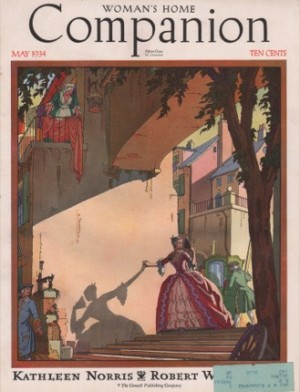
1934, Book: Very Good, Color art of French couple meeting in olden times. Watercolor art by T. M. Cleland. 10 X 13", small label. PLEASE NOTE: The image shown is a scan of the actual product you are purchasing. What you see is what you get. The sheet may have some imperfections beyond the cropped area shown. You are buying THIS PAGE ONLY- not the entire magazine. Your order will be placed carefully between stiff paper and an acetate overlay, then packed in a rigid cardboard sleeve to prevent bending.
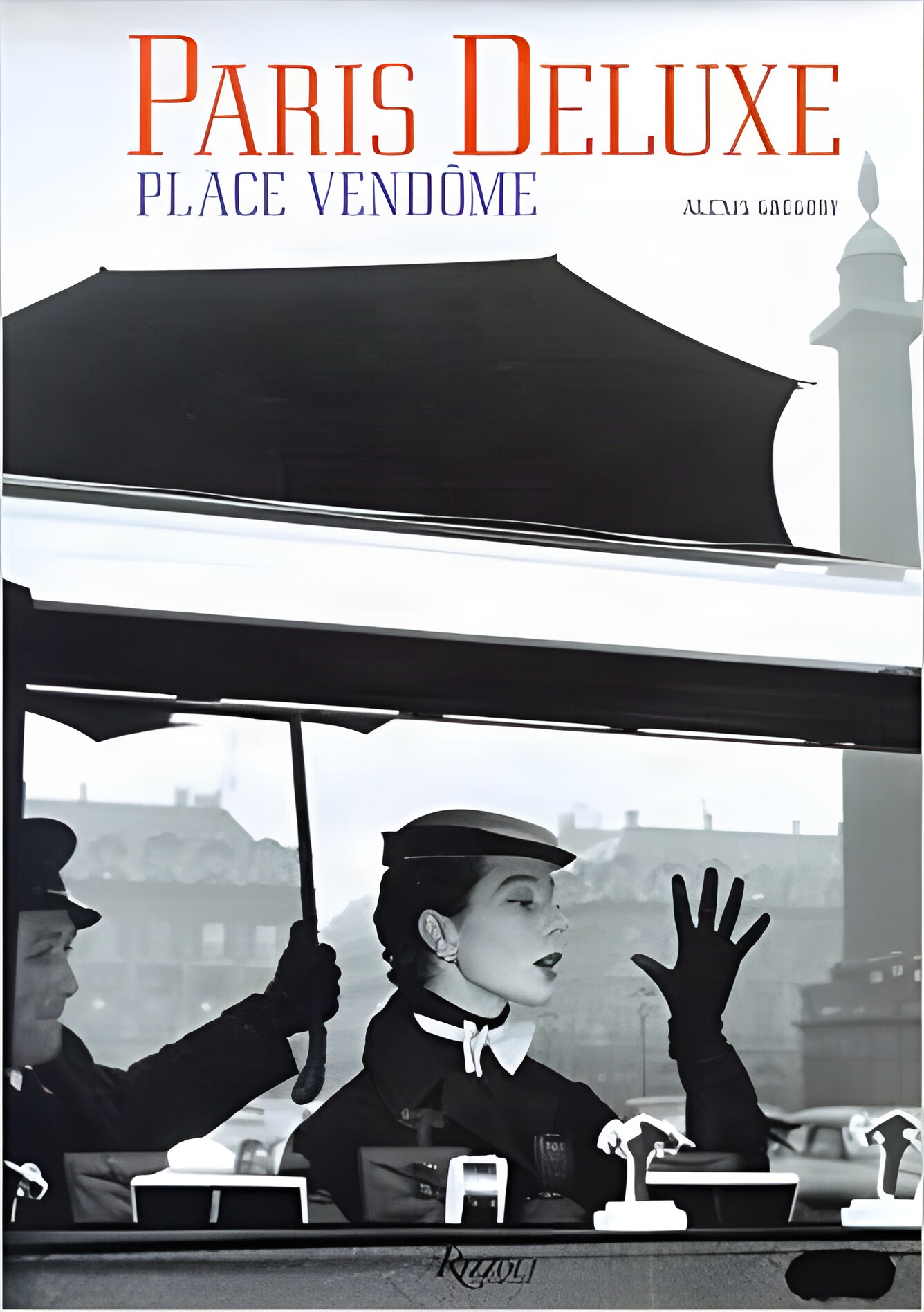
Hardcover. NY, Rizzoli, 1st, 1997, Book: Very Good, Dust Jacket: Very Good, Hardcover, 240 pages. In text and photographs, Paris Deluxe traces the history of the Place Vendome, from the square's beginnings as a high-risk property speculation, to its life in the twentieth century as Paris's center of fashion, jewelry, high finance, and art, a playground for international society that converges at the Paris Ritz, undoubtedly still the most elegant, expensive, and comfortable hotel in the world. The cast of extraordinary personalities who have left their marks on the square covers the spectrum from fashion and jewelry-- names like Coco Chanel, Elsa Schiaparelli, Frederic Worth, Cartier, Boucheron-- to financiers J.P. Morgan and John Law, and every prominent name in art and high society-- Edward, Prince of Wales, the Vanderbilts, Baroness Guy de Rothschild, Lillie Langtry, Rene Lalique and the Crozats, whose art collection was bought by Diderot for Catherine the Great.
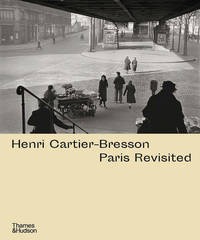
Hardcover. NY, Thames & Hudson, 1st, 2021, Book: Very Good, Dust Jacket: None, Hardcover, pictorial boards, 256 pages. Henri Cartier-Bresson was 'the eye of the 20th century' and one of the world's most acclaimed photographers. Paris was his home, on and off, for most of his life (1908-2004). The photographs he took of the city and its people manage to be both dreamlike and free of affectation. Here are around 160 photographs taken over a more than fifty-year career. Mostly in black and white, this selection reveals the strong influence on Cartier-Bresson of pioneering documentary photographer Eugene Atget (1857-1927), and the clear visual links with Surrealism that infused Cartier-Bresson's early pictures. After an apprenticeship with Cubist painter Andre Lhote, in 1932 Cartier-Bresson bought his first Leica, a small portable camera that allowed him to capture movement and the rhythms of daily life in Paris. Cartier-Bresson observed from close quarters the Liberation in August 1944 and the civil disturbances of May 1968. In between he also succeeded in capturing the faces of Parisians in their natural habitat, celebrated artists and writers and citizens alike. Remainder line to bottom edge, otherwise clean. DUE TO WEIGHT, DOMESTIC SHIPPING ONLY.
Hardcover. NY, Vendome Press, 1st, 1989, Book: Very Good, Dust Jacket: Very Good, Hardcover in a bright dust jacket, 208 pages. Best-selling French author Perrault provides moving personal reminiscences of his childhood in occupied Paris. The brief but eloquent narrative is accompanied by hundreds of previously unpublished photos from French and German archives, collected and cataloged by Parisian art historian Azema. Together, text and photos present a graphic portrait of everyday life, recording daily human struggles to find food and fuel, the psychological warfare waged by the occupiers, and the methods of German economic exploitation. As artists, the authors place special emphasis on the arts under the occupation and document the heroism of the writers' resistance. In sum, they show how Paris "kept alive a sense of the enemy."
Hardcover. New York , Mark Batty Publisher, 1st, 2005, Book: Very Good, Dust Jacket: Very Good, Hardcover in a bright dust jacket. 192 pages. Color photos of the Paris Metro features signs, graffitti, artworks, architecture. The text is in English.
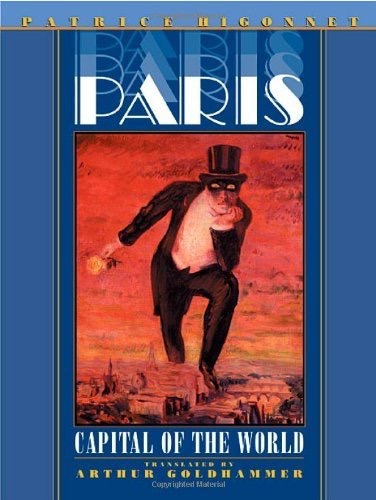
Hardcover. Cambridge MA, Harvard/Belknap Press, 1st, 2002, Book: Very Good, Dust Jacket: Very Good, Hardcover in a bright price-clipped dust jacket, 493 pages, illustrated in b&w and color. In an original and evocative journey through modern Paris from the mid-eighteenth century to World War II, Patrice Higonnet offers a delightful cultural portrait of a multifaceted, continually changing city. In examining the myths and counter-myths of Paris that have been created and re-created over time, Higonnet reveals a magical urban alchemy in which each era absorbs the myths and perceptions of Paris past, adapts them to the cultural imperatives of its own time, and feeds them back into the city, creating a new environment. Clean copy.
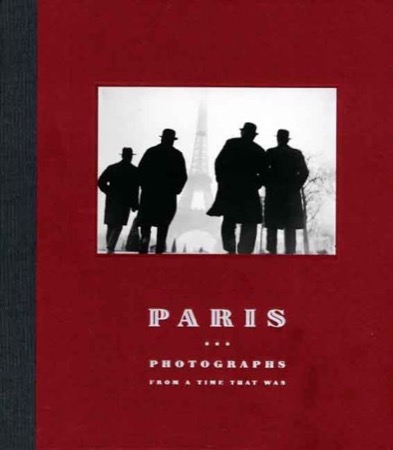
Hardcover. Chicago, Art Institute of Chicago, 1st, 2005, Book: Very Good, Dust Jacket: None, Hardcover, 100 pages. No dust jacket issued. Eugene Atget, Jacques Henri Lartigue, Andre Kertesz, Brassai, Henri Cartier- Bresson, Robert Doisneau? -some of the greatest photographers of Paris? were relatively unknown when they began their most innovative work. Not yet burdened with conventional career expectations, they found the city the perfect environment in which to invent and develop an entirely new approach to conceiving the photographic image. In the 1920s and 1930s, the generation of photographers after Atget responded not only to the physical city itself but also to a new sensibility of time as a spontaneous act. Masterworks by these now-famous visionaries of the medium are featured in this elegant book of photographs of Paris from the 1850s to the 1950s, drawn from the remarkable collection of the Art Institute of Chicago. Clean copy.
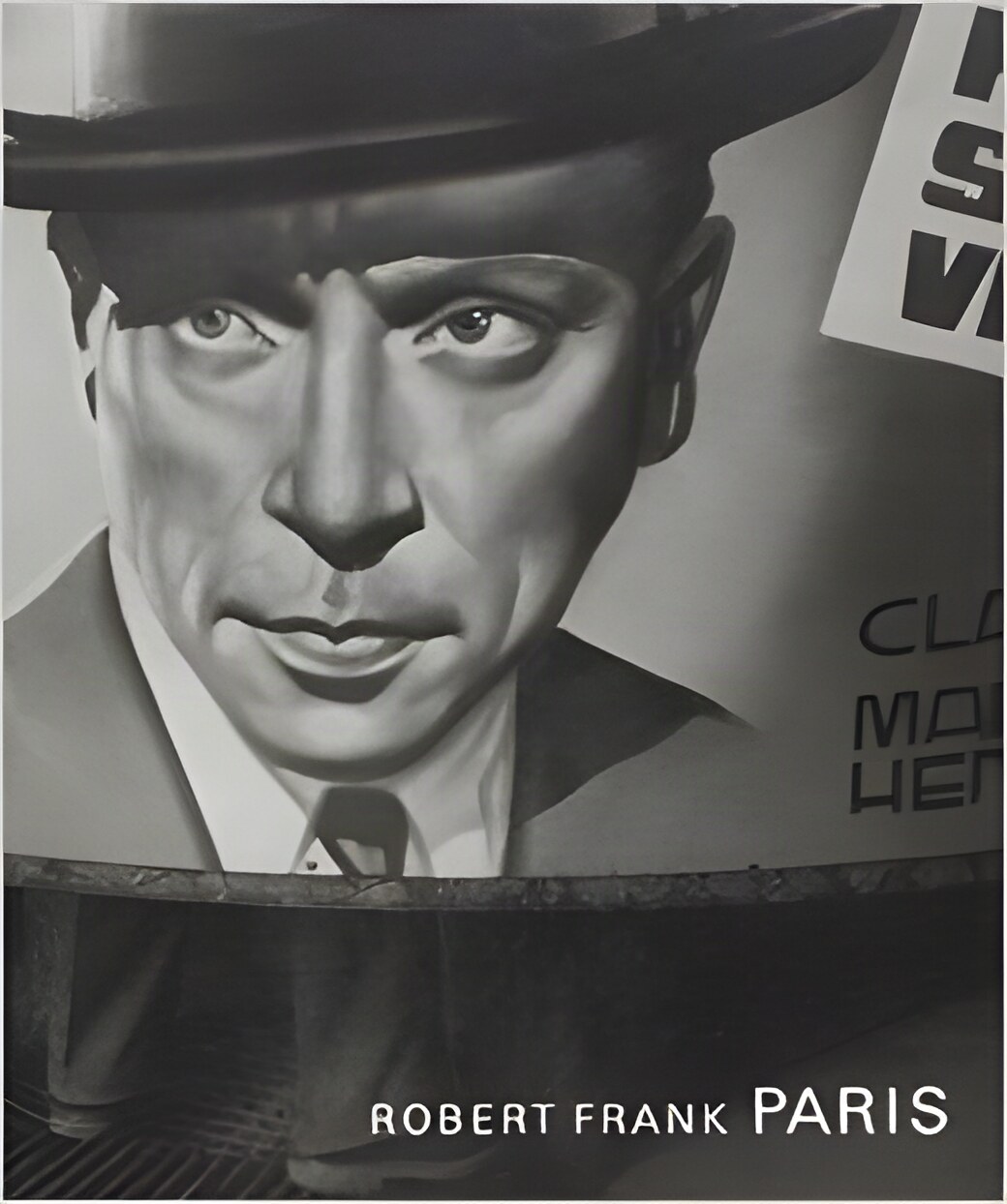
Softcover. Steidl, 2008, 2008, Book: Very Good, Dust Jacket: Very Good, Softcover. Like new in publisher's shrink-wrap. The publication of Paris marks the first time that the significant body of photographs which Robert Frank made in Paris in the early 1950s have been brought together in a single book. Having left Switzerland in 1924, this 1951 trip to France was only Frank's second return to Europe after he had settled in New York City in 1947, and some of the images he made during that visit have become iconic in the history of the medium. The 80 photographs reproduced here, which were selected by Frank and editor Ute Eskildsen, suggest that Frank's experience of the "new world" had sharpened his eye for European urbanism. He saw the city's streets as a stage for human activity and focused particularly on the flower sellers. His work clearly references Atget and invokes the tradition of the flaneur.
Softcover. Monte Carlo, Andre Sauret, 1st wraps, 1954, Book: Very Good, Dust Jacket: None, Softcover, illustrated card covers, French text, 13 color plates, b&w plates. Stamped #724 of 2,000 copies. Previous owner's stamp front end paper. Otherwise clean.
Hardcover. New York , Museum of Modern Art , 1st, 1988, Book: Very Good, Dust Jacket: Very Good, 151 pages, Hardcover with dust jacket. B&w illustrations. Unclipped dust jacket with minor edgewear.
Hardcover. NY, Rizzoli, 1st, 2006, Book: Very Good, Dust Jacket: Very Good, Hardcover, 384 pages, profusely illustrated in color and b&w. This thought-provoking volume transports readers to France of the eighteenth, nineteenth, and twentieth centuries, beginning with Napoleon's love of perfume and the erotic importance he attached to it, through the lore and symbolism fragrance enjoyed in eighteenth and nineteenth-century Europe. By the early twentieth century, perfume's place as one of France's most important luxury industries was recognized and celebrated, and timeless fragrances--such as Chanel No. 5, Shalimar, Arpeges, and Joy--were launched. The distinctive bottles for these new essences and the art movements that inspired their design are detailed throughout the book, as are paintings, poetry, and literature that reveal the power of perfume and its ability to recall the past and evoke sensuality. According to nineteenth-century perfumer Eugene Rimmel, "the history of perfume is, in some manner, the history of civilization." Through fascinating text accompanied by gorgeous imagery, including packaging, labels, and advertisements, Perfume: Joy, Scandal, Sin explores perfume's impact on history, culture, society, art, and attitudes.
Hardcover. Nieuwkoop , B. de Graaf, 1st, 1964, Book: Very Good, Dust Jacket: None, Hardcover, dark green cloth covers with gilt lettering, 159 pages with b&w diagrams and illustrations. Subjects include: The base of perspective illussions, third dimension, euclid, anamorphoses, the concave surface of the retina, Schickhardt's problem, eccentric positions of the observer's eye, rotations of the eyeball, visual size, pleudo-perspective, axial construction, rebirth of central perspective, Leon Battista Alberti, Paolo Uccello, the oblique position, Piero della Francesca etc.
Softcover. Paris, Musee de la Vie Romantique, 1st, 2001, Book: Very Good, Dust Jacket: None, 143 pages. Softcover. A very clean, unmarked copy with only minor edgewear. Black and white photographs throughout. French text.
Hardcover. NY, Farrar Straus & Giroux, 1st US, 2023, Book: Very Good, Dust Jacket: Very Good, Hardcover in a bright, unclipped dust jacket, 588 pages, several color plates. Before Picasso became Picasso-the iconic artist now celebrated as one of France's leading figures-he was constantly surveilled by the French police. Amid political tensions in the spring of 1901, he was flagged as an anarchist by the security services-the first of many entries in an extensive case file. Though he soon emerged as the leader of the cubist avant-garde, and became increasingly wealthy as his reputation grew worldwide, Picasso's art was largely excluded from public collections in France for the next four decades. The genius who conceived Guernica in 1937 as a visceral statement against fascism was even denied French citizenship three years later, on the eve of the Nazi occupation. In a country where the police and the conservative Academie des Beaux-Arts represented two major pillars of the establishment at the time, Picasso faced a triple stigma-as a foreigner, a political radical, and an avant-garde artist. Picasso the Foreigner approaches the artist's career and art from an entirely new angle, making extensive use of fascinating and long-overlooked archival sources. In this groundbreaking narrative, Picasso emerges as an artist ahead of his time not only aesthetically but politically, one who ignored national modes in favor of contemporary cosmopolitan forms. Remainder dot to top edge, otherwise a bright, clean copy.
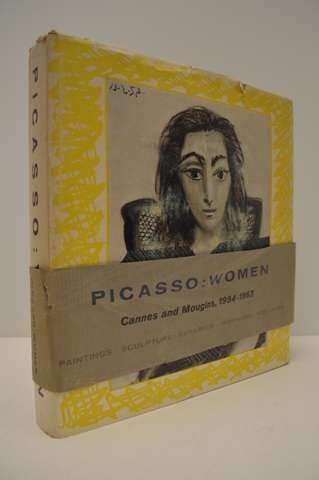
Hardcover. Paris, France / Amsterdam, Editions Cercle D'art / Abrams, 1st, 1967, Book: Very Good, Dust Jacket: Very Good, Hardcover in a bright dust jacket with the gray wrap-around band present. First English language edition, translated from the French by Humphrey Hare. Preface by Douglas Cooper. Thick folio. 11-1/4 in. x 12 in. 199 pages. Profusely illustrated with tipped-in color plate reproductions. (160 color mounted plates & 2 portraits in monochrome (including mounted frontis.). Sturdy and handsome joint publication with oatmeal cloth lettered with colorful letters by Picasso created specifically for the publication of this book. Clean copy. Due to size and weight, DOMESTIC SHIPPING ONLY.
Hardcover. Florence, Italy, Cantini, 1st, 1989, Book: Very Good, Dust Jacket: Very Good, 271 pages. Hardcover with dust jacket in SLIPCASE cover. ITALIAN TEXT. Color pictures. Previous owner's bookplate on end paper, otherwise clean, unmarked copy with only minor wear to dust jacket. Slipcase has some tape repair on bottom edge. Red cloth covers with gilt lettering on spine.
Hardcover. New Haven, Yale University Press, 1st US, 1992, Book: Very Good, Dust Jacket: Very Good, Hardcover, 240 pages, illustrated throughout in full color and b&w. Light edgewear to dust jacket, faint foxing to bottom edge. Clean, tight copy.
Hardcover. London, Rupert Hart-Davis, 1st, 1968, Book: Very Good, Dust Jacket: Very Good, Hardcover, 128 pages. Black and white cloth cover, slight wear to edges and corners. Dust jacket has minor edgewear. Previous owner's stamp on top edge. Illustrated by Jim Dine. Translated by Ron Padgett. Many b&w photographs and illustrations throughout. A bright, clean copy.
Hardcover. NY, InterVisual, 1st, 2007, Book: Very Good, Dust Jacket: None, Hardcover. Eight intricate and highly designed pop ups engineered by James Diaz. This book takes everyday paper and creates origami that pops! Imagine legal paper transformed into a paper bird orgiami and then it pops off the page.
Softcover. London, Imperial War Museums, 1st, 2014, Book: Very Good, Dust Jacket: None, 96 pages. Softcover. Very clean, unmarked copy with only minor edgewear. Posters of the First World War collects more than one hundred posters from America, Britain, France, Germany, and Italy that showcase renewed concern among the warring nations with national character and conduct.
Softcover. Paris, Les Editions De L'illustration, 1st, 1946, Book: Very Good, Dust Jacket: None, Softcover, oblong, 112 tipped-in color illustrations, tall 4to, printed tan boards. French art from the Middle Ages to the the 1940's. PLEASE NOTE: DUE TO WEIGHT, DOMESTIC SHIPPING ONLY.
Hardcover. New York, Guggenheim Museum, 1st, 1998, Book: Very Good, Dust Jacket: None, 544 pages, illustrated in color and b&w. Essays by various scholars on over 100 artists working in France, bibliography. Illustrated boards. In publisher's shrinkwrap.

 "Old Bridges of France by: Emerson William and Georges Gromort")
 "Paris Under the Occupationby: Gilles Perrault")
 "Paris Undergroundby: Archer, Caroline")


 "Pascinby: Warnod, Andre")
 "Paul Cezanne: The Basel Sketchbooksby: Gowing, Lawrence")
 "Perfume: Joy, Scandal, Sin - A Cultural History of Fragrance from 1750 to the Presentby: Stamelman, Richard")
 "Photographies Hongroises: Des Romantismes Aux Avant-Gardesby: Marchessau, Daniel")



 "Piero della Francesca (Italian Edition)by: Paolucci, Antonio")
 "Piero della Francescaby: Bertelli, Senior Carlo")
 "Poet Assassinated, The.by: Appollinaire, Jim Dine, Guillaume")
 "Popigami: When Everyday Paper Pops!by: Diaz, James and Francesca")
 "Posters of the First World Warby: Slocombe, Richard")
 "Pour une Renaissance de la Peinture Francaiseby: Baschet, Jacques")
 "Premises: Invested Spaces in Visual Arts, Architecture, & Design from France 1958-1998by: Buchloh, Benjamin H.D.")