Softcover. Germany, Gert and Mareidi , 1st, 1980, Book: Very Good, Dust Jacket: None, 300 pages, Softcover with paper wrappers. 170 b/w and 12 color photographs. Front wrapper APPEARS to be removed from spine, lacking publisher glue. Text block tight. Previous owner's signature on front wrapper.
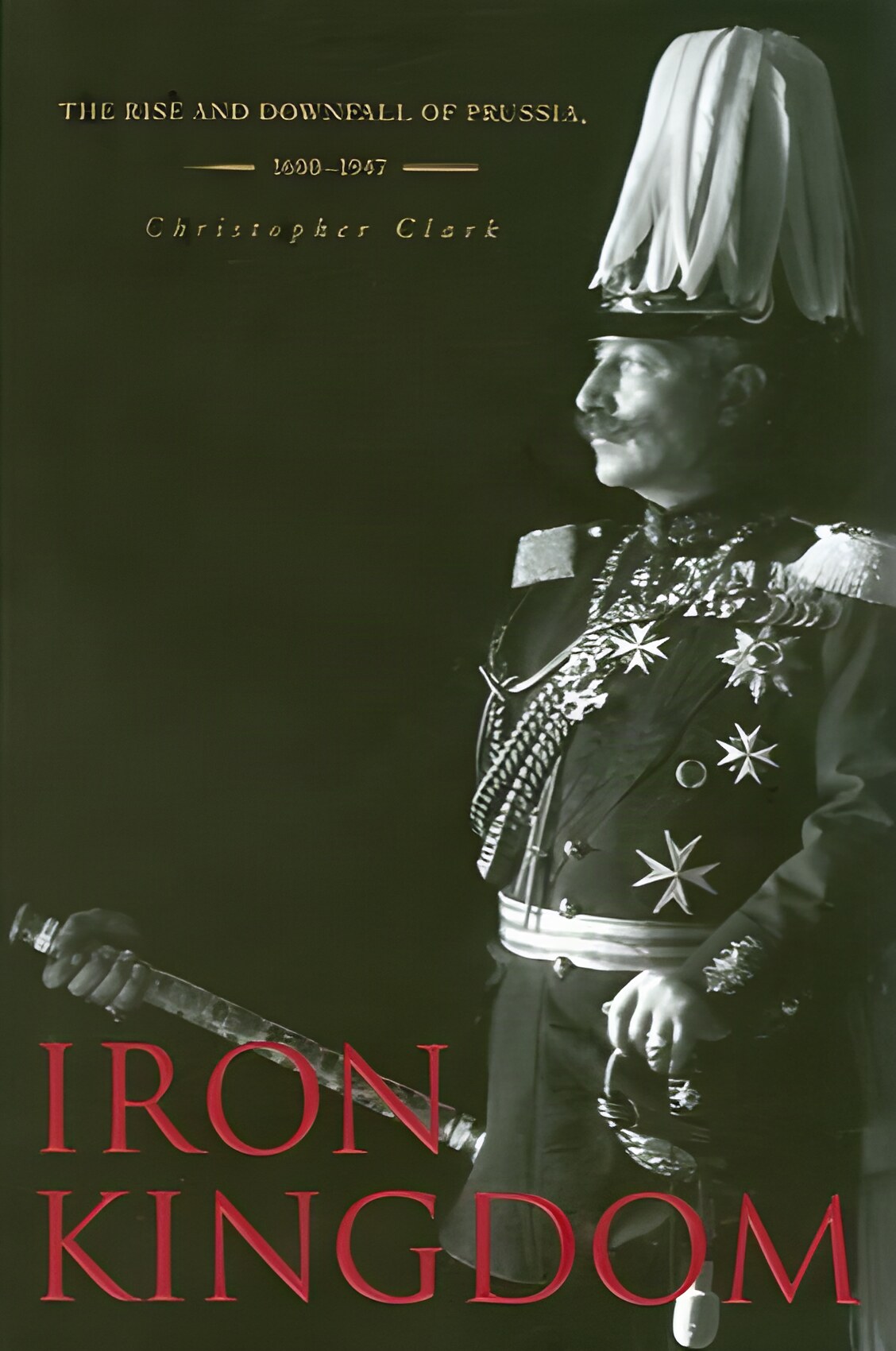
Softcover. Cambridge MA, Harvard University Press, reprint, 2008, Book: Very Good, Dust Jacket: None, Softcover, 776 pages. "Iron Kingdom, Christopher Clark's stately, authoritative history of Prussia from its humble beginnings to its ignominious end, presents a much more complicated and compelling picture of the German state, which is too often reduced to a caricature of spiked helmets and polished boots. Prussia and its army were inseparable, but Prussia was also renowned for its efficient, incorruptible civil service; its innovative system of social services; its religious tolerance; and its unrivaled education system, a model for the rest of Germany and the world. This too was Prussia-a tormented kingdom that, like a tragic hero, was brought down by the very qualities that raised it up. Mr. Clark, a senior lecturer in modern European history at Cambridge University, does an exemplary job. A lively writer, he organizes masses of material in orderly fashion, clearly establishing his main themes and pausing at crucial junctures to recapitulate and reconsider. Prussia, a self-invented artifact right down to its name, demands the kind of careful demythologizing that it receives from Mr. Clark, who gently but insistently exposes the flaws in most of the received wisdom about his subject. A result is an illuminating, profoundly satisfying work of history, brightened by vivid character sketches of the principals in his drama." Clean copy.
Hardcover. Germany, Hatje Cantz, 1st, 2006, Book: Very Good, Dust Jacket: None, Hardcover, 80 pages, photos in color. Minor shelf-wear to boards, else a clean, tight copy. This book documents the two most recent works by the critically acclaimed British artist and filmmaker, Isaac Julien, both of which continue his investigation of issues of race and global politics. True North, shot in the spectacular landscapes of Iceland and Northern Sweden, is conceived around the expedition writings of the African-American explorer Matthew Henson, one of the key members of Robert E. Peary's 1909 Arctic expedition, and arguably the first person to reach the North Pole. True North's diametric counterpart, Fantome Afrique, weaves cinematic and architectural references through the rich imagery of urban Ouagadougou, Africa's cinematic center, and the arid spaces of rural Burkina Faso. The film is punctuated by archival footage from early colonial expeditions and landmark moments in African history.
Hardcover. Germany, Hatje Cantz, 1st, 2006, Book: Very Good, Dust Jacket: None, Hardcover, 80 pages, photos in color. Minor shelf-wear to boards, else a clean, tight copy. This book documents the two most recent works by the critically acclaimed British artist and filmmaker, Isaac Julien, both of which continue his investigation of issues of race and global politics. True North, shot in the spectacular landscapes of Iceland and Northern Sweden, is conceived around the expedition writings of the African-American explorer Matthew Henson, one of the key members of Robert E. Peary's 1909 Arctic expedition, and arguably the first person to reach the North Pole. True North's diametric counterpart, Fantome Afrique, weaves cinematic and architectural references through the rich imagery of urban Ouagadougou, Africa's cinematic center, and the arid spaces of rural Burkina Faso. The film is punctuated by archival footage from early colonial expeditions and landmark moments in African history.
Softcover. San Francisco, Chronicle Books, 1st, 1993, Book: Very Good, Dust Jacket: None, Softcover, 133 pages illustrated in color. This lavishly illustrated volume offers a unique survey of Italian commercial graphic design during a period of both creative artistic vitality and extreme political turmoil. The first English-language book to showcase the bold typography and streamlined imagery of modern Italian design motifs on commercial products of the day, this fascinating and important resource for designers, history buffs, and collectors includes a discussion of the Futurist influence on the Italian Art Deco style and the success of such individualized expression despite a ruthless Fascist regime. Clean copy.
Hardcover. Germany, Hatje Cantz, reprint, 2009, Book: Very Good, Dust Jacket: Very Good, 480 pages. Hardcover with dust jacket with slip case. Clean, unmarked copy with only minor wear to dust jacket. Color/ Black and white pictures throughout. Coinciding with renewed interest in James Ensor, this catalogue raisonne comes as an essential and definitive volume for Ensor buffs and all serious libraries of modern art. A legend in his own lifetime, Ensor (1860-1949) was--alongside Vincent van Gogh and Edvard Munch--a fearless independent whose work led directly to the development of German Expressionism and French Surrealism. Ensor achieved fame as the "painter of masks," and for his bizarre still lifes and grotesque carnival scenes, in harsh, contrasting, brilliant colors, evolving out of the traditional Flemish dance of death. Now, the reader can explore the Belgian painter's oeuvre thoroughly, in this opulently illustrated, full-color, slipcased catalogue raisonne. A comprehensive illustrated chronology offers additional details about the artist's life and work, and forms an integral part of this splendid, highly valuable contribution to art historical research, ensuring the legacy of a great artist who continues to inspire contemporary art.
Hardcover. Germany, Prestel, 1st, 2015, Book: Very Good, Dust Jacket: None, 208 pages. Hardcover with no dust jacket. Very clean, unmarked copy with only minor edgewear. A thematic presentation of the groundbreaking and provocative art of Jean-Michel Basquiat, this volume offers a new appreciation of his tragic but highly influential career. From his early years spray painting the walls of lower Manhattan to his first solo show in 1982 and his untimely death at the age of 27 in 1988, Jean-Michel Basquiat has become a symbol of the 1980s New York art scene.
Hardcover. New Haven CT, Yale University Press;, 1st, 2009, Book: Very Good, Dust Jacket: Very Good, Hardcover, 180 pages. John Gutmann (1905-1998) was one of America's most distinctive photographers. Born in Germany where he trained as an artist and art teacher, he fled the Nazis in 1933 and settled in San Francisco, reinventing himself as a photo-reporter. Gutmann captured images of American culture, celebrating signs of a vibrant democracy, however imperfect. His own status as an outsider--a Jew in Germany, a naturalized citizen in the United States--informed his focus on individuals from the Asian-American, African-American, and gay communities, as well as his photography in India, Burma, and China during World War II. This handsome book acknowledges Gutmann's place in the history of photography. Drawing on his archive of photographs and papers at the Center for Creative Photography, it presents both unfamiliar works and little-known contexts for his imagery, linking his photography to his passionate interest in painting and filmmaking, his collections of non-Western art and artifacts, and his pedagogy. In addition to a major essay by Sally Stein, the volume includes an introduction by Douglas R. Nickel, and an overview of the Gutmann archive by Amy Rule.
Hardcover. New Haven CT, Yale University Press;, 1st, 2009, Book: Very Good, Dust Jacket: Very Good, Hardcover, 180 pages. John Gutmann (1905-1998) was one of America's most distinctive photographers. Born in Germany where he trained as an artist and art teacher, he fled the Nazis in 1933 and settled in San Francisco, reinventing himself as a photo-reporter. Gutmann captured images of American culture, celebrating signs of a vibrant democracy, however imperfect. His own status as an outsider--a Jew in Germany, a naturalized citizen in the United States--informed his focus on individuals from the Asian-American, African-American, and gay communities, as well as his photography in India, Burma, and China during World War II. This handsome book acknowledges Gutmann's place in the history of photography. Drawing on his archive of photographs and papers at the Center for Creative Photography, it presents both unfamiliar works and little-known contexts for his imagery, linking his photography to his passionate interest in painting and filmmaking, his collections of non-Western art and artifacts, and his pedagogy. In addition to a major essay by Sally Stein, the volume includes an introduction by Douglas R. Nickel, and an overview of the Gutmann archive by Amy Rule.
Hardcover. Ostfildern GR, Hatje Cantz, 1st, 2008, Book: Very Good, Dust Jacket: Very Good, Hardcover, 288 pages 231 illustrations 60 in color with 274 plans and drawings. Biography. Like new in publisher's shrink-wrap. Josef Paul Kleihues (1933-2004) was one of the most prolific architects of postwar Germany, famous both as the Director of the International Building Exhibition Berlin in 1987 and for his design for the Museum of Contemporary Art in Chicago. He was also known for his sensitive interventions into older buildings, an instance of which is the former Hamburger Bahnhof--now the Museum fur Gegenwart--in Berlin, where Kleihues intermixed glass walls and light installations by the American Minimalist Dan Flavin with the building's original nineteenth-century Neoclassical design. (His reconstruction was widely deemed to rival or even surpass Gae Aulenti's overhaul of the interior of the Musee d'Orsay in Paris.) This first volume of a three-part monograph presents projects up to 1980, including the highly acclaimed Berlin Sanitation Department and the Neukolln Hospital. Even in these early works, Kleihues' practical, problem-solving approach is already evident, indicating his readiness to reflect on the traditional approaches of Modern architecture and his capacity to expand them in interesting ways. This very generously illustrated volume was designed by Kleihues himself, just before his death in 2004.
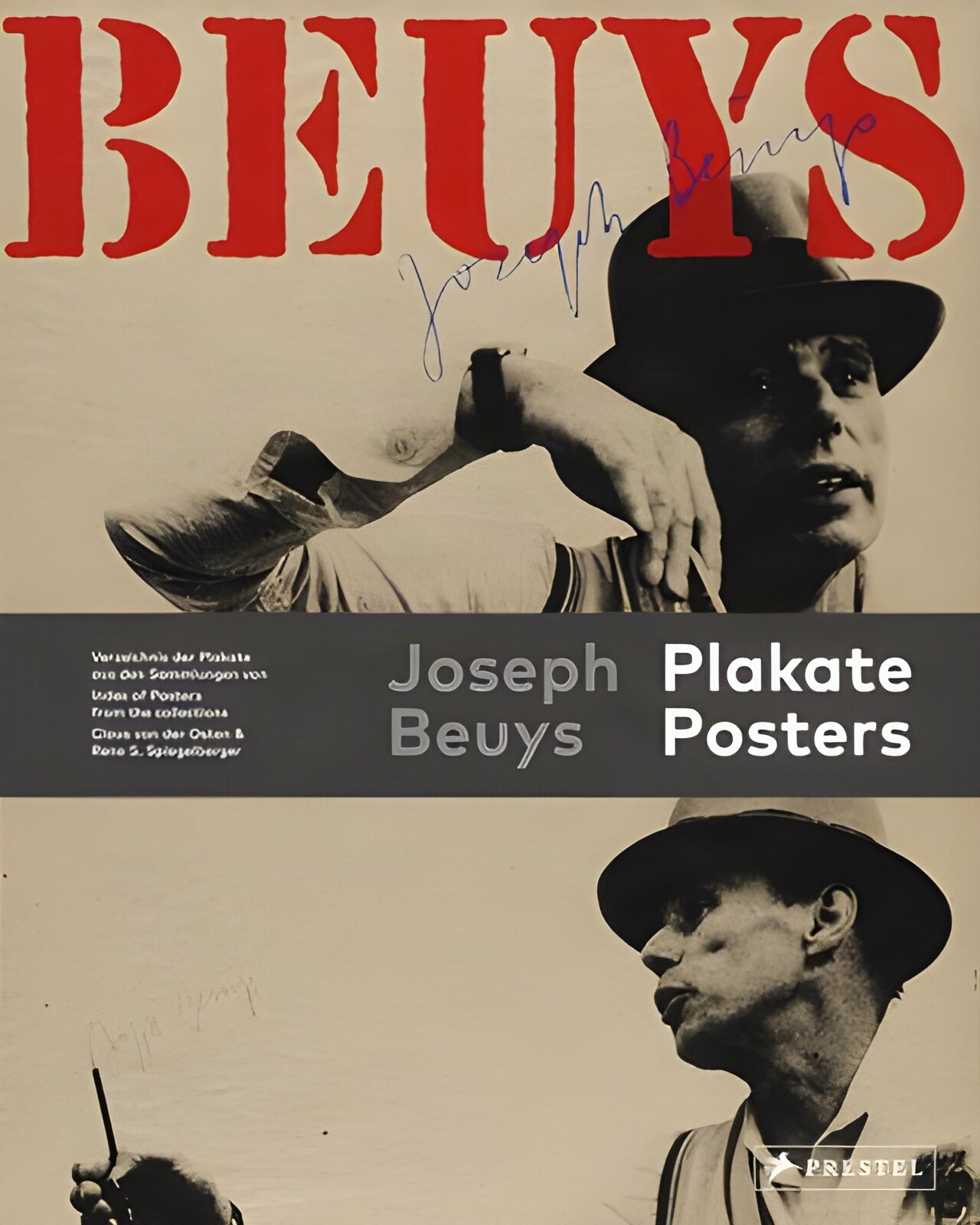
Hardcover. Munich/NJ, Prestel, 1st, 2021, Book: Very Good, Dust Jacket: Very Good, Hardcover in a bright dust jacket, 256 pages. One of the most important German postwar artists, Joseph Beuys is known for his drawings, performance art, activism, and teaching, influencing a generation of younger artists and expanding the concept of what art is. He had an ambitious goal for his art: to transform western culture into a more peaceful, democratic, and creative place. He also considered everyone to be an artist and that art and life should not be viewed separately. This book pulls together all of the avant-garde artist's posters from his entire oeuvre. His earliest posters often announced exhibitions of his own performance art, while later posters expressed his philosophical and political opinions, such as those for Germany's Green Party, which he was a founding member of. This book includes full page illustrations of Beuys' most important posters, essays about Beuys' influence, an extensive biography of the artist and a complete catalogue of all posters created under his guidance. Text in English and German. Still in publisher's shrinkwrap.
Hardcover. Leipzig, Germany, Kurt Wolff Verlag, 1st, 1915, Book: Very Good, Dust Jacket: None, Hardcover, 338 pages, plus postscript in rear, GERMAN TEXT. Purple cloth cover with Art Deco motif. Light edge wear, otherwise, very clean and tight copy.
Hardcover. Cambridge MA, The MIT Press, 1st, 2001, Book: Very Good, Dust Jacket: Very Good, 144 pages. Hardcover with dust jacket. Clean, tight copy in publisher's shrinkwrap. Karl Blossfeldt (1865-1932) achieved overnight fame in the late 1920s with the first publication of his photographs of plants. Those photographs, which revealed the inner structures of the organic forms, immediately made him a pioneer of New Objectivity-an innovative movement in art and photography of the 1920s and 1930s. Blossfeldt, however, was neither a trained photographer nor a botanist. He was a sculptor and art professor who did his photographic work to generate teaching material for his students.The publication of this book is the result of an extraordinary event-the 1997 discovery in Blossfeldt's estate of sixty-one previously unknown collages, in virtually mint condition, of photographic contact prints arranged on large cardboard sheets. Blossfeldt apparently used these to study the relation and similarity of the photographs and to compare them graphically and aesthetically. On some, Blossfeldt had made marks or handwritten notations. Others show lines for cropping. The collages, published here for the first time, unveil a hidden treasure of modern photography and cast fresh light on the systematic approach Blossfeldt used in his photographic studies. All collages are reproduced in four colors. Introducing the book is an essay by Swiss art historian Ulrike Meyer-Stump, a Lecturer at the Zurich University of the Arts. Not for sale in France, Germany, Switzerland, Belgium, and Austria
Softcover. Old Westbury NY, The Feminist Press, 1st, 1976, Book: Very Good, Dust Jacket: None, Softcover, 237 pages, b&w illustrations. A generation after her death, German artist Kathe Kollwitz won a reputation as one of the great graphic artists of the 20th Century. Concentrating on the more 'democratic' media--especially etchings, lithographs, posters, and woodcuts, as well as sculpture and bronze reliefs--Kollwitz always created for the people, rather than for the upper class collector. This original paperback is generously illustrated with many striking, seldom-seen reproductions from private collections, assembled in one volume for the first time. Name on front fly leaf, inscription on title page. Otherwise clean.
Hardcover. GR, Hatje Cantz, 1st, 2008, Book: Very Good, Dust Jacket: None, Hardcover, 128 pages. Red cloth-covered boards with mounted color plate on front panel.Kyungwoo Chun, born in Korea in 1969 and now based in Germany, is known for his poetically blurred long exposure photographic portraits. Chun's last name means "thousand," and derives from a Chinese general who emigrated to Korea 407 years ago. For this project, Chun photographed thousands of people in China with his last name.
Hardcover. Germany, Daab, 1st, 2012, Book: Very Good, Dust Jacket: None, 320 pages. Hardcover no dust jacket. Like new in publisher's shrink-wrap.. The Label Book of Clothing Culture presents over 40 TOP labels within the fashion business which are among the very best in the world. Great names such as Barbour and Brioni stand next to numerous 'Hidden Champions' of clothing culture. But this extraordinary coffee-table book is about much more than mere fashion, it also presents craftsmanship and history, style and quality; it highlights those companies that have committed themselves to this tradition with heart and soul. The editor and enthusiastic art collector, Dr. Dr. Thomas Rusche, knows what he is talking about, since it is he that coined the term 'clothing culture.' He shares his knowledge of the true champions of the business and provides interesting background information about the companies presented here.
Hardcover. Koln GR, Taschen, 1st, 2001, Book: Very Good, Dust Jacket: Very Good, Hardcover, 336 pages. One remarkable woman, five remarkable careers: Leni Riefenstahl is the exception to the rule. From dancer to actress to film-maker to photographer to diver, she has excelled in each field and is one of the most important and controversial artists of the 20th century. Her contributions to the art and technique of film-making were vast, most notably in her epochal film "Olympia" (1938). Critically acclaimed during the 1930's for her work under the Hitler administration and harshly criticized after the war, Riefenstahl surged on, completing the famous "Tiefland" in 1954. In the 1960s and 70s she traveled to Africa and extensively photographed East Africa and the Nuba tribes in Sudan, publishing three books. Ready for yet another change, she took up deep-sea diving at the age of 71, beginning a new chapter as an underwater photographer. Though she has attracted much attention throughout her life and has been the subject of many books, articles, and films, Leni Riefenstahl Five Lives is the first book to showcase her entire career in pictures. Produced in collaboration with Riefenstahl herself, the book includes her most famous images as well as many previously unpublished pictures from her private archives.
Hardcover. NY, Knopf, 1st, 2007, Book: Very Good, Dust Jacket: Very Good, Hardcover, 400 pages. The definitive biography of Leni Riefenstahl, the woman best known as "Hitler's filmmaker," one of the most fascinating and controversial personalities of the twentieth century. It is the story of huge talent and huger ambition, one that probes the sometimes blurred borders dividing art and beauty from truth and humanity. Relying on new sources--including interviews with her colleagues and intimate friends, as well as on previously unknown recordings of Riefenstahl herself--Bach gives us an exceptional work of historical investigation that untangles the past and is also an objective but unsparing appraisal of a woman of spectacular gifts corrupted by ruthless personal ambition.
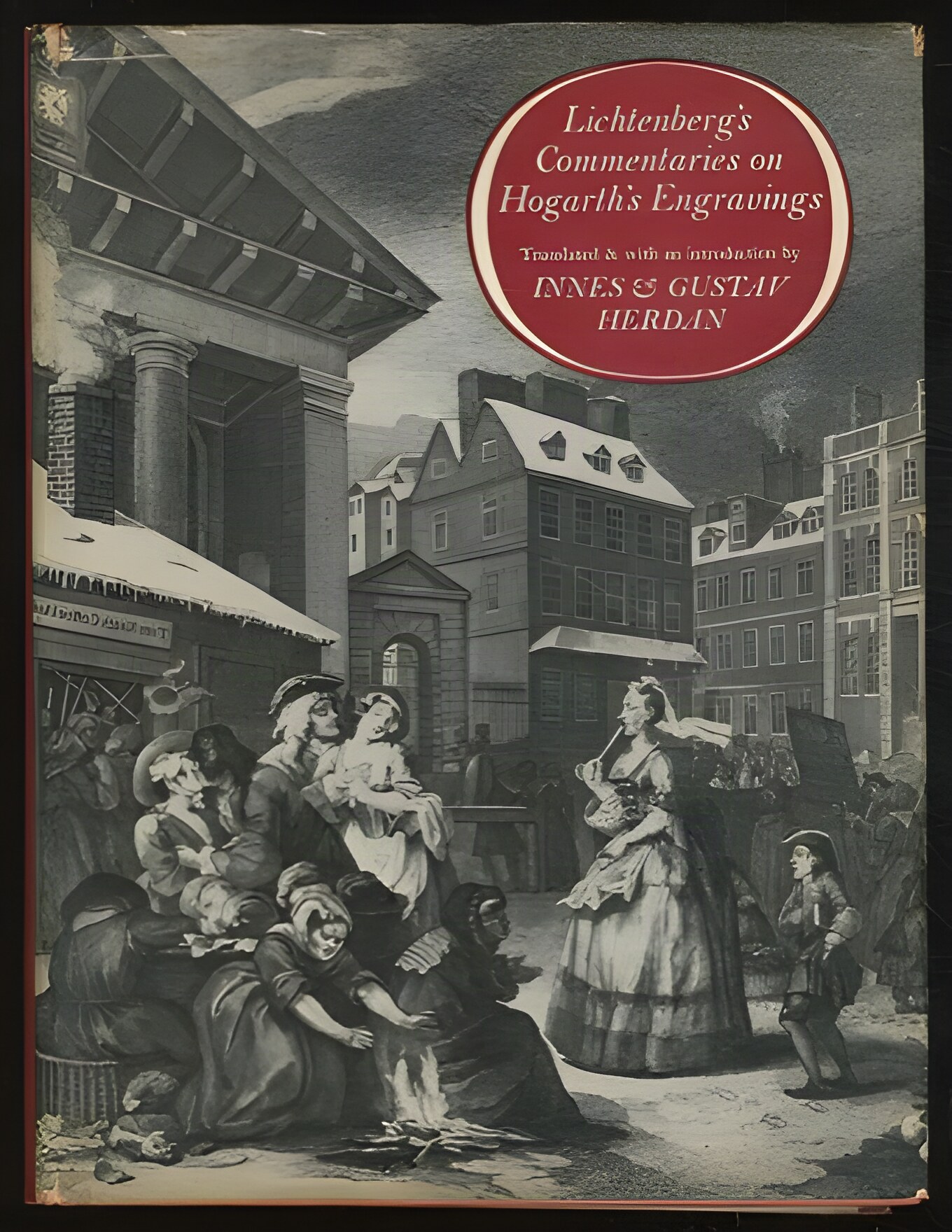
Hardcover. London, The Cresset Press, 1st, 1966, Book: Very Good, Dust Jacket: Very Good, Hardcover in a bright dust jacket with light edgewear. 297 pages + 26 b&w plates. English language edition. Translated from the German and with an introduction by Innes and and Gustav Herdan. Contains very clever and funny remarks on Hogarth's engravings by an 18th century German professor of physics. Small owner's stamp on front fly leaf, otherwise clean.
Hardcover. Boston, New Harvest, 1st, 2014, Book: Very Good, Dust Jacket: Very Good, 174 pages. Hardcover. Clean, unmarked copy with only minor wear to dust jacket. Hoban has written an insightful book into what may have made Lucian Freud the great painter he came to be. From his early days in Germany with his grandfather, Sigmund Freud, to his subsequent life in London, where his family moved before the war, we see Lucian Freud gradually developing from an intense adolescent who often resorted to physical violence in conflicts with others to the powerful figure who changed the face of Realism. His many liaisons with women are described in detail: Hoban offers us a candid sketch of who the most prominent women in his life were, his problems with commitment and other moral conundrums we are forced to consider in his character, such as his questionable demand on his lovers that they use no form of birth control, resulting in at least 14 children, most out of wedlock. Along with that, Freud's gambling addiction and his love of risk are explored by Hoban in a way that allows us a glimpse into Freud's psyche that is invaluable for anyone wanting to understand in a more in depth way the factors that might have contributed to his enormous talents and output.
Softcover. Germany, Schirmer/Mosel, 1st, 1996, Book: Very Good, Dust Jacket: None, Softcover. 128 pages, b&w photos. Portraits include Alfred Hitchcock, Grace Jones, Marilyn Manson, Radiohead, Tubac, Andy Warhol, Mike Tyson , Frank Stella, Louise Bourgeois, Jeff Koons, Cindy Sherman. Bright, clean copy.
Hardcover. New York, D.A.P.//La Fabrica , 1st, 2013, Book: Very Good, Dust Jacket: Very Good, Hardcover, 192 pages. Like new in publisher's shrink-wrap. America's first female war correspondent, Margaret Bourke-White was also something of a media star, with the portrait of her decked out in flying gear, camera in hand, about to set off on a bombing raid, being a favorite pin-up among U.S. forces. Focusing on the work Bourke-White made in the 1930s and 40s in Czechoslovakia, Germany, Italy, the Soviet Union and the U.K., Moments in History presents 150 classic photographs alongside revelatory extracts from letters and publications in periodicals. Bourke-White traveled to the USSR when the first Five-Year Plan was being implemented; she documented the German invasion of the Soviet Union in 1941, and the Allied bombing of Germany. In the summer of 1945 she was commissioned by Life to make a photographic record of the destroyed German cities. She was present at the liberation of the Buchenwald concentration camp and the Leipzig-Thekla forced labor camp. She recorded the partition of India and the Korean War, and one of her most famous pictures of this period is "Gandhi," which shows the subject at his spinning wheel. Also included in the catalogue are some of the word-picture sequences Bourke-White did for Fortune and Life, as well as extracts from her correspondence with personalities from the worlds of politics and culture, such as Winston Churchill and Georgia O'Keeffe. Bourke-White wanted to be the "eyes of the age," and her pictures testify to (as she put it) her "unquenchable desire to be present when history is being made."
Hardcover. NY, Aperture, 1st, 1997, Book: Very Good, Dust Jacket: Very Good, Hardcover in a bright dust jacket. In 1918, August Sander meticulously photographed the defeated citizenry of Germany who needed photo identification cards for the occupying forces. By 1929 he had photographed all classes and types of people. During this time, Sander came under the influence of modern art and its intellectual practitioners whom he befriended in Cologne. Through his discussions with them he came to understand the importance of his portrait work and was encouraged to continue. He produced the first volume of an extended series he hoped would provide an exhaustive catalogue, but in the 1930s his work fell into disfavor and was banned by the Nazis. The photography of August Sander comprises an extraordinary human document. This volume of the Masters of Photography series, which includes 43 portraits of a cross section of German society, from pastry chefs to industrialists, is a provocative glance at the Weimar Republic. Clean copy.

 "Ibejiby: Stoll, Mareidi und Gert")


 "Isaac Julien: True North Fantome Afriqueby: Anthony Appiah, Eveline Bernasconi, Lisa Bloom, Mark Nash, Cristina Albu, Isaac Julien, Veit Gorner (Foreword)")
![Isaac Julien: True North Fantome Afriqueby: Appiah, Anthony; Bernasconi, Eveline; Bloom, Lisa; Nash, Mark; Albu, Cristina; Julien, Isaac; Gorner, Veit [Foreword]](javascript:largeIMTop('https://www.browsingisarousing.com/shop/images/Isaac-Julien-True-North-Fantome-Afrique_by_Appiah-Anthony-Bernasconi-Eveline-Bloom-Lisa-Nash-Mark-Al350324-408463.jpg','https://www.browsingisarousing.com/shop/images/Isaac-Julien-True-North-Fantome-Afrique_by_Appiah-Anthony-Bernasconi-Eveline-Bloom-Lisa-Nash-Mark-Al350324-408463.jpg',0,'350324',0,'') "Isaac Julien: True North Fantome Afriqueby: Appiah, Anthony; Bernasconi, Eveline; Bloom, Lisa; Nash, Mark; Albu, Cristina; Julien, Isaac; Gorner, Veit [Foreword]")
 "Italian Art Deco: Graphic Design between the Warsby: Heller, Steven / Fili, Louise")
 "James Ensor: The Complete Paintingsby: Tricot, Xavier")
 "Jean-Michel Basquiat: Now's the Timeby: Buchhart, Dieter")
 "John Gutmann: The Photographer at Workby: Sally Stein , Douglas R. Nickel, et al.")
 "John Gutmann: The Photographer at Workby: Sally Stein , Douglas R. Nickel, et al.")
 "Josef Paul Kleihuesby: Kleihues, Josef Paul, Andrea Mesecke and Thorsten Scheer")
 "Joseph Beuys: Life and Worksby: Beuys, Joseph")


 "Judinnen (GERMAN ED.)by: Brod, Max")
 "Karl Blossfeldt: Working Collagesby: Wilde , Ann and Jurgen")

 "Kyungwoo Chun: Thousandsby: Kyungwoo Chun (Artist)")
 "Label Book of Clothing Culture, The: Tradition. Quality. Styleby: Rusche, Thomas")
 "Leni Riefenstahl-Five Lives: A Biography in Picturesby: Walk Ines; Leni Riefenstahl")
 "Leni: The Life and Work of Leni Riefenstahlby: Bach, Steven")
 "Lucian Freud: Eyes Wide Openby: Hoban, Phoebe")
 "Mad Dogby: Watson, Albert")
 "Margaret Bourke- White: moments in historyby: Quimby, Sean")
 "Masters of Photography: August Sanderby: August Sander and John von Hartz")