Hardcover. Minneapolis MN, Walker Art Center, 1st, 2007, Book: Very Good, Dust Jacket: None, Hardcover, publisher's light-brown cloth over boards, stamped lettering, and illustration to the spine, and boards. Richly illustrated in black-and-white and color throughout. "Deploying an acidic sense of humor, Walker examines the dialectics of pleasure and danger, guilt and fulfillment, desire and fear, race and class. This landmark publication, which is sure to win international design awards, accompanies Walker's first major American museum survey. It features critical essays by Philippe Vergne, Sander L. Gilman, Thomas McEvilley, Robert Storr and Kevin Young, as well as an illustrated lexicon of recurring themes and motifs in the artist's most influential installations by Yasmil Raymond, more than 200 full-color images, an extensive exhibition history and bibliography." Clean copy.
NY, Viking Press, 1st, 1976, Book: Very Good, Dust Jacket: Very Good, Hardcover with a bright, unclipped dust jacket. Color and black & white illustrations by Kate Greenaway. Clean copy. A new era in the history of children's books began in 1878 when Kate Greenaway's first book of pictures and verse, Under the Window, was published. This was followed by her Birthday Book, A Day in a Child's Life, Mother Goose, Little Ann, Language of Flowers, and Marigold Garden. These and the many other enchanting volumes she illustrated, gained her a devoted worldwide audience of all ages. Today's great revival of interest in Kate Greenaway's work is understandable; as an illustrator of childhood she had no equal in her day, nor has she had since. The Kate Greenaway Book contains a short biography and selections from her best-known as well as little-known works: a collection of texts and pictures, some never even published before, charmingly arranged for readers of all ages to enjoy.
Softcover. Art Gallery of Ontario, 1st, 2003, Book: Very Good, Dust Jacket: None, Softcover, 72 pages, exhibition catalog. Essay by Jay Clarke. Kathe Kollwitz (1867-1945) was a leading 20th century German artist. Kollwitz's art was rooted in socialism and naturalism, and focused on the lives of the common people, usually working class women. Through her involvement in the sufferings of the poor in the slums of Berlin, her exposure to the horrors of two world wars, and the experience of living through several personal tragedies, she came to see herself as the "voice of suffering" and "an advocate" for the people. Among her preferred themes were motherhood, sacrifice, separation, oppression and death. She also created many moving self-portraits. Includes 45 reproductions (15 colour, and 30 b&w). Contents of the catalogue include: a brief history of the Stuttgart Kollwitz collection by the former curator Dr. Gunther Thiem.
Softcover. NY, Guggenheim Museum, 1st, 2003, Book: Very Good, Dust Jacket: None, 267 pages, illustrated throughout in color and b&w. Clean, unmarked copy with only minor wear to wrappers. In 1915, Kazimir Malevich changed the future of modern art when his experiments in painting led the Russian avant-garde into pure abstraction. He called his innovation Suprematism--an art of pure geometric form meant to be universally comprehensible regardless of cultural or ethnic origin. His Suprematist masterpiece, White Square on White (1920-27), continues to inspire artists throughout the world. Focused exclusively on this defining moment in Malevich's career, Kazimir Malevich: Suprematism features nearly 120 paintings, drawings and objects, among them several recently discovered masterworks. In addition, the book includes previously unpublished letters, essays and diaries, along with essays by international scholars, who shed new light on this popular figure and his devotion to the spiritual in art.
Hardcover. Princeton NJ, Princeton University Press, 1st, 1992, Book: Very Good, Dust Jacket: Very Good, Hardcover in a bright dust jacket, 281 pages, b&w illustrations. "For, Lo! We live in an Iron Age--In the age of Steam and Fire!" wrote a poet mesmerized by the engines that were transforming American transportation, agriculture, and industry during his lifetime. Indeed, by the nineteenth century fire had become America's leitmotif--for good and for ill. "Keeping the flame" was deadly serious: even the slightest lapse of attention could convert a fire from friendly ally to ravaging destroyer. To examine the cultural context of fire in "combustible America," Margaret Hazen and Robert Hazen gather more than a hundred illustrations, most never before published, together with anecdotes and information from hundreds of original sources, including newspapers, diaries, company records, popular fiction, art, and music. What results is an immensely entertaining and encyclopedic history that ranges from stories of the tragic "great fires" of the century to fire imagery in folktales and popular literature. Dealing more with technology than with fire in nature, the book provides a vast amount of information on fire manipulation and prevention in urban life. Hazen and Hazen discuss the people who worked with fire--or against it. Founders, gaffers, blacksmiths, boilers at saltworks, and housewives knew how to "read" a fire and employ it for their purposes. A few dedicated investigators inquired about the scientific nature of heat and flame. And firefighters gradually progressed from "bucket brigades" to "using fire to fight fire" with the newly invented steam engine. The colorful stories of these Americans--the risks they took and the rewards they received--will fascinate not only social historians but also a broad audience of general readers. Clean copy.
Hardcover. NY, Rizzoli, 1st, 2008, Book: Very Good, Dust Jacket: None, Illustrated boards, 528 pages. Closely based on Haring's own concept for the monograph he wanted to publish before his untimely death, this volume represents more than a decade of research and contains a wealth of unpublished photographic and written material including drawings, studio photographs, and journal entries. From chalk drawings deep in the New York City subways to murals in Pisa and Berlin; collaborations with William Burroughs and the famous body painting of Grace Jones, this book follows the incredible trajectory of Keith Haring's artistic career: how a young man from a small town in rural Pennsylvania came to revolutionize the art world--and the course of art history--within little more than a decade. An incredibly prolific artist, Keith Haring created countless bold, provocative, endearing, and unforgettable images that continue to inspire artists--and delight children--worldwide. Tracing the arc from his early subway "tags" to his poignant work on social issues as diverse as AIDS, illiteracy and apartheid, this visually stunning book is the definitive work on Keith Haring.
Softcover. New York, Pantheon Books, 1st, 1982, Book: Very Good, Dust Jacket: None, 74 page catalog of 44 rich works of Kentucky quilting heritage. 63 color plates and 12 b&w photographs. A comprehensive collection of 19th century Kentucky quilting.
Hardcover. NY, Harry N Abrams, 1st, 1989, Book: Very Good, Dust Jacket: Very Good, 264 pages, illustrated throughout in b&w. Clean, unmarked copy with only minor wear to dust jacket. "A lavish, information-packed look at the people and places of an important, exciting era in art history. "?Publishers Weekly. From 1900 to 1930, Montparnasse was the center of artistic life for the whole world. A major contribution to the social and cultural history of the period? with its informative text and hundreds of photographs?. As The Washington Post said, Kiki's Paris "celebrates the people who made the modern movement in art, music and literature, most of whom were friends or lovers of Kiki, the woman Hemingway called 'The Queen of Montparnasse.'"
Softcover. New York, Harry N. Abrams , reprint, 2002, Book: Very Good, Dust Jacket: Very Good, 263 pages, softcover with French flaps. A major contribution to the social and art history of Paris in the early 20th century. Heavily illustrated with black-and-white photographs. Minor rubbing and edgewear to wraps. Unmarked. A clean and tight copy.
Hardcover. NY, W. W. Norton & Company, 1st, 1988, Book: Very Good, Dust Jacket: Very Good, Hardcover in a bright, unclipped dust jacket. Written by two members of archaeological expeditions which have excavated at Caesarea, the ancient city on the coast of Israel built by Herod the Great, this book tells the story of the great city, from its beginnings to its destruction in the 13th century. Readers discover this past through archaeologists' eyes, as the text considers not only artifacts and written sources but the processes by which archaeologists reconstruct the past. A companion volume to a traveling exhibition of Caesarean artifacts, this is very highly recommended for both its clarity and creativity. 244 pages illustrated in color plus index. Clean.
Softcover. San Diego, CA, IDW Publishing, Reprint, 2018, Book: Very Good, Dust Jacket: None, 308 pages. Softcover. A very clean, unmarked copy with only minor edgewear. This book is a centennial birthday bash hosted by Dean Mullaney, Bruce Canwell, and Brian Walker, with contributions by Brendan Burford, Lucy Shelton Caswell, Jared Gardner, Ron Goulart, Jeffrey Lindenblatt, Carl Linich, Paul Tumey, and Germund von Wowern. More than just comics, it's a celebration of the profound impact that King Features has had on popular culture!
Hardcover. New York , Abrams, 1st, 1999, Book: Very Good, Dust Jacket: Very Good, Hardcover, 254 pages, 173 illustrations, 131 in color. Although he is now seen as a progenitor of the "naive" style, during his lifetime Edward Hicks (1780-1849) was known only as a devout, impoverished Quaker minister who liked to paint. With a few exceptions, his extant body of work is made up of 62 "Peaceable Kingdom" pictures, based on Isaiah's biblical prophecy. Although these paintings, known for their charmingly wide-eyed and sensuous beasts, use potent color and effective design, they are technically unsophisticated and repetitive in the extreme. But they contain a powerfully serene devoutness, a mood probably expressed in compensation for Hicks's guilt about an avocation viewed as frivolous by other Quakers. As the popularity of folk art boomed in the early 20th century, Hicks's homely visions were popularized and became the focus of scholarly attention, and this work is probably the best to date. Weekley, the director of museums at Colonial Williamsburg, shrewdly considers Hicks's "secular" life and art through the filter of his intense piety and copiously illustrates her large-format book with brilliant color plates.
Softcover. NY, Delano Greenidge Editions, 1st paperback, 2002, Book: Very Good, Dust Jacket: None, Softcover, 229 pages. 207 color plates. Articles by A.D. Coleman and Henry Wilhelm. Large paperback format with glossy covers.
Hardcover. Seattle, Fantagraphics, 1st, 2012, Book: Very Good, Dust Jacket: None, Hardcover, 9" X 12", 600 pages. B&w, color reprints throughout. The first volume of the limited-edition deluxe Krazy Kat hardcover. It collects the first batch of five Krazy & Ignatz soft cover books that Fantagraphics published, comprehensively compiling the years 1916 through 1924 under a hard cover. It's not a slipcase; it's a single hardcover book. The covers to the original five soft cover books are NOT included, but literally everything else is. No dj issued
Hardcover. Seattle, Fantagraphics, 1st, 2008, Book: Very Good, Dust Jacket: None, Hardcover, 9" X 12", 600 pages. Color reprints throughout. The first edition deluxe Krazy Kat hardcover (it's Volume 3, but the second to be published) collects the second batch of five Krazy & Ignatz soft cover books Fantagraphics have published, comprehensively compiling the years 1935 through 1944 under hard covers. It's not a slipcase; it's a single hardcover book. The covers to the original five soft cover books are NOT included, but literally everything else is. No dj issued
Hardcover. Seattle, Fantagraphics, 1st, 2025, Book: Very Good, Dust Jacket: None, Hardcover, pictorial boards, 200 pages. Meticulously and lovingly restored, this Eisner Award-nominated series showcases one of the most renowned and celebrated comic strips in the art form's history. This exquisite, generously sized volume finishes up the 1920s collecting the acclaimed and groundbreaking Krazy Kat Sunday strips in an archival hardcover edition. Volume 5 in the series. Mostly b&w, some color. A bright, clean copy.
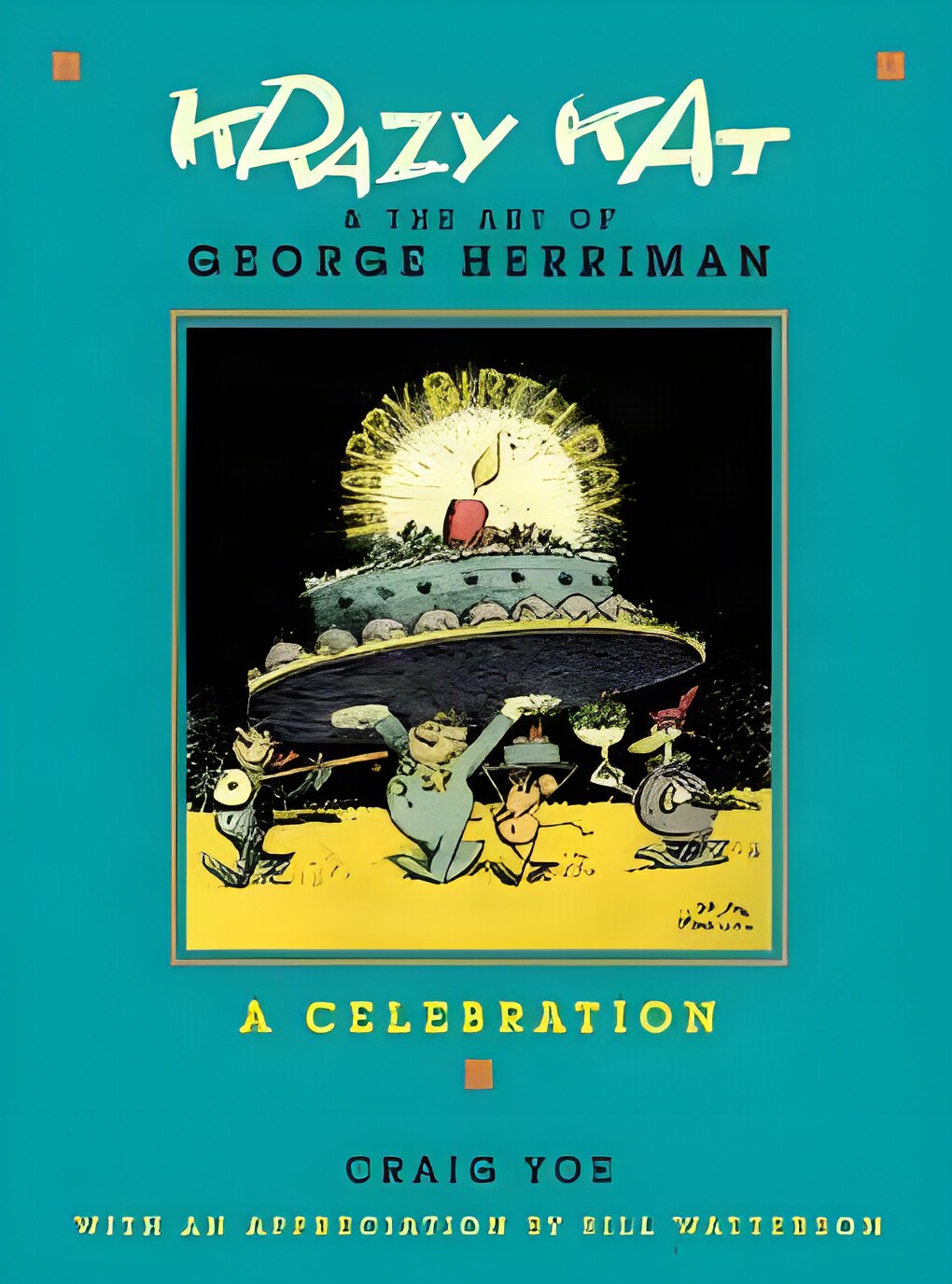
Hardcover. New York, Abrams ComicArts, 1st, 2011, Book: Very Good, Dust Jacket: None, 176 pages. Hardcover. Extensive color illustrations by George Herriman throughout. Illustrated end papers and paste downs. Clean, tight copy. Krazy Kat & the Art of George Herriman is a tribute to one of the most influential and innovative comic strips and creators of all time. This unique collection of rare art, essays, memorabilia, and biography highlights the career of the first genius of comics, George Herriman, and his iconic creations, Krazy Kat and Ignatz Mouse. During its 31-year run, Krazy Kat was enormously popular with the public, as well as influential writers, artists, and intellectuals of the time. This book includes original essays by Jay Cantor, Douglas Wolk, Harry Katz, Richard Thompson, Dee Cox (Herriman's granddaughter), Craig McCracken, Bill Watterson, and authorized reprints of two seminal essays on Herriman by Gilbert Seldes and E. E. Cummings, alongside newly discovered vintage essays by TAD, Summerfield Baldwin, and Toots Herriman. With Krazy Kat & the Art of George Herriman, Craig Yoe reveals this influential artist and writer for a whole
Hardcover. New York, Abrams ComicArts, reprint , 2011, Book: Very Good, Dust Jacket: None, 176 pages. Hardcover without dust jacket. Extensive color and b&w illustrations throughout. Illustrated end papers and fly leafs. Clean tight copy.
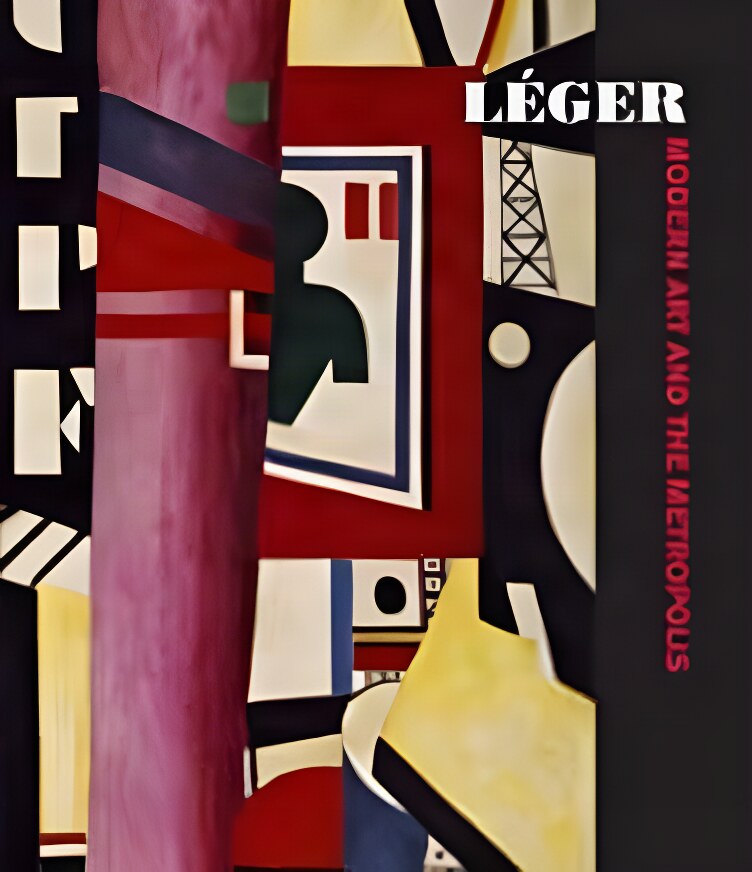
Hardcover. New Haven CT, Yale University Press, 1st, 2013, Book: Very Good, Dust Jacket: None, Hardcover, 292 pages. No dj issued. An insightful look at the dynamic relationship between modern art and modern urban life in 1920s Paris through the lens of Fernand Léger's masterpiece The City. With his landmark 1919 painting The City, Fernand Léger (1881-1955) inaugurated a vitally experimental decade during which he and others redefined the practice of painting in confrontation with the forms of cultural production that were central to urban life, ranging from graphic and advertising design to theater, dance, film, and architecture. This catalogue casts new light on the painting (reproducing all of its studies together for the first time), the avant-garde use of print media, and Léger's fascination with cinema and architecture, and contextualizes a network of international avant-gardes--including Blaise Cendrars, Le Corbusier, Jean Epstein, Piet Mondrian, Amédée Ozenfant, Francis Picabia, and Theo van Doesburg--in relation to Léger. Featuring nearly 250 images of paintings, architectural designs, models, posters, set designs, and film stills and an anthology of relevant historical texts not previously published in English, this handsome volume conveys the spirit of experimentation of the 1920s. Scholars in the fields of art, architecture, and film history offer a deeper understanding of the relationship between art and the modern urban experience that defined this significant chapter in the history of modern art.
Hardcover. US, Foggy Notion Books/Pasadena Museum of California Art, 1st, 2012, Book: Very Good, Dust Jacket: None, 208 pages. Hardcover with no dust jacket. Clean, unmarked copy with only minor wear to boards. Like new in publisher's shrink-wrap. Until recently, the figurative artists who dominated the Los Angeles art scene of the 1940s and 50s had largely been written out of art history. L.A. Raw is an attempt to right that wrong. Bringing together works by 41 artists in a variety of media, it traces a lineage that connects postwar figurative expressionism to the 1960s and 70s investigations of politics, gender and ethnicity in art. The featured artists include John Altoon, Wallace Berman, William Brice, Hans Burckhardt, Chris Burden, Cameron, Judy Chicago, Connor Everts, Llyn Foulkes, Charles Garabedian, David Hammonds, Robert Heinecken, John Paul Jones, Kim Jones, Ed and Nancy Kienholz, Rico Lebrun, Paul McCarthy, Arnold Mesches, Betye Saar, Ben Sakoguchi, Barbara Smith, James Strombotne, Jan Stussy, Edward Teske, Joyce Treiman, Howard Warshaw, June Wayne, Charles White and Jack Zajac.
Hardcover. 2012, Book: Very Good, Dust Jacket: None, Hardcover, 208 pages illustrated in color and b&w. Until recently, the figurative artists who dominated the Los Angeles art scene of the 1940s and 50s had largely been written out of art history. L.A. Raw is an attempt to right that wrong. Bringing together works by 41 artists in a variety of media, it traces a lineage that connects postwar figurative expressionism to the 1960s and 70s investigations of politics, gender and ethnicity in art. The featured artists include John Altoon, Wallace Berman, William Brice, Hans Burckhardt, Chris Burden, Cameron, Judy Chicago, Connor Everts, Llyn Foulkes, Charles Garabedian, David Hammonds, Robert Heinecken, John Paul Jones, Kim Jones, Ed and Nancy Kienholz, Rico Lebrun, Paul McCarthy, Arnold Mesches, Betye Saar, Ben Sakoguchi, Barbara Smith, James Strombotne, Jan Stussy, Edward Teske, Joyce Treiman, Howard Warshaw, June Wayne, Charles White and Jack Zajac. No dj issued, clean copy.
Softcover. Musee McCord d'histoire, 1st, d'histoire, Book: Very Good, Dust Jacket: None, Softcover, 143 pages, illustrated throughout in b&w. Text in French and English. Clean, unmarked copy with only minor wear to wrappers.


 "Kate Greenaway Book, The: A Collection of Illustration, Verse and Textby: Holme, Bryan")
 "Kathe Kollwitz: The Art of Compassionby: Kathe Kollwitz/Brenda D. Rix")
 "Kazimir Malevich: Suprematismby: Gurianova, Nina/ Jean-Claude Marcade , Tatyana Mikhienko")
 "Keepers of the Flame: The Role of Fire in American Culture, 1775-1925by: Margaret Hindle and Robert M Hazen")
 "Keith Haringby: Jeffrey Deitch, Julia Gruen, et al.")
 "Kentucky Quilts, 1800-1900: The Kentucky Quilt Projectby: Holstein, Jonathan, and John Finley.")
 "Ki Ki's Paris: Artists and Lovers 1900-1930by: Kluver, Billy/ Julie Martin")
 "Kiki's Paris: Artists and Lovers 1900-1930by: Kluver, Billy and Julie Martin")

 "King of the Comics: 100 Years of King Featuresby: Canwell, Bruce")
 "Kingdoms of Edward Hicks, Theby: Weekley, Carolyn J.")
 "Kodachrome - The American Invention of Our World 1939-1959by: Rijper (Ed.), Els")
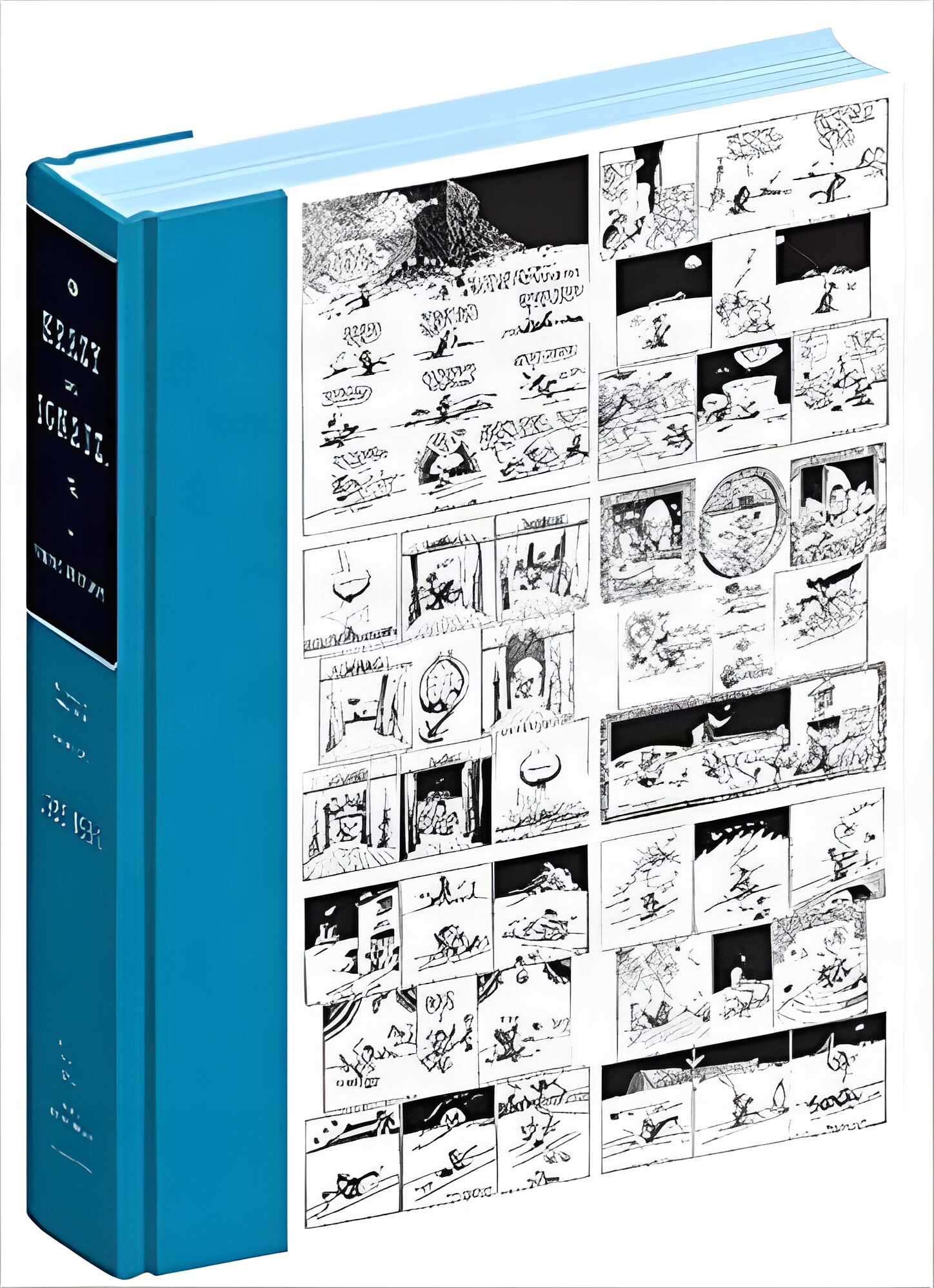
 "Krazy & Ignatz: The Complete Sunday Strips 1916-1924by: Herriman, George")


 "Krazy and Ignatz: The Complete Sunday Strips Volume Three 1935-1944by: Herriman, George")



 "Krazy Kat & the Art of George Herriman : A Celebrationby: Yoe, Craig/ George Merriman")
 "L.A. Raw: Abject Expressionism in Los Angeles, 1945-1980: From Rico Lebrun to Paul McCarthyby: Duncan, Michael")
 "L.A. Raw: Abject Expressionism in Los Angeles, 1945-1980: From Rico Lebrun to Paul McCarthyby: Michael Duncan , Peter Selz, et al.")
 "La Cambre Modes, 1986-2006by: Delcampe, Tony")
 "La Famille McCord : une vision passionn")