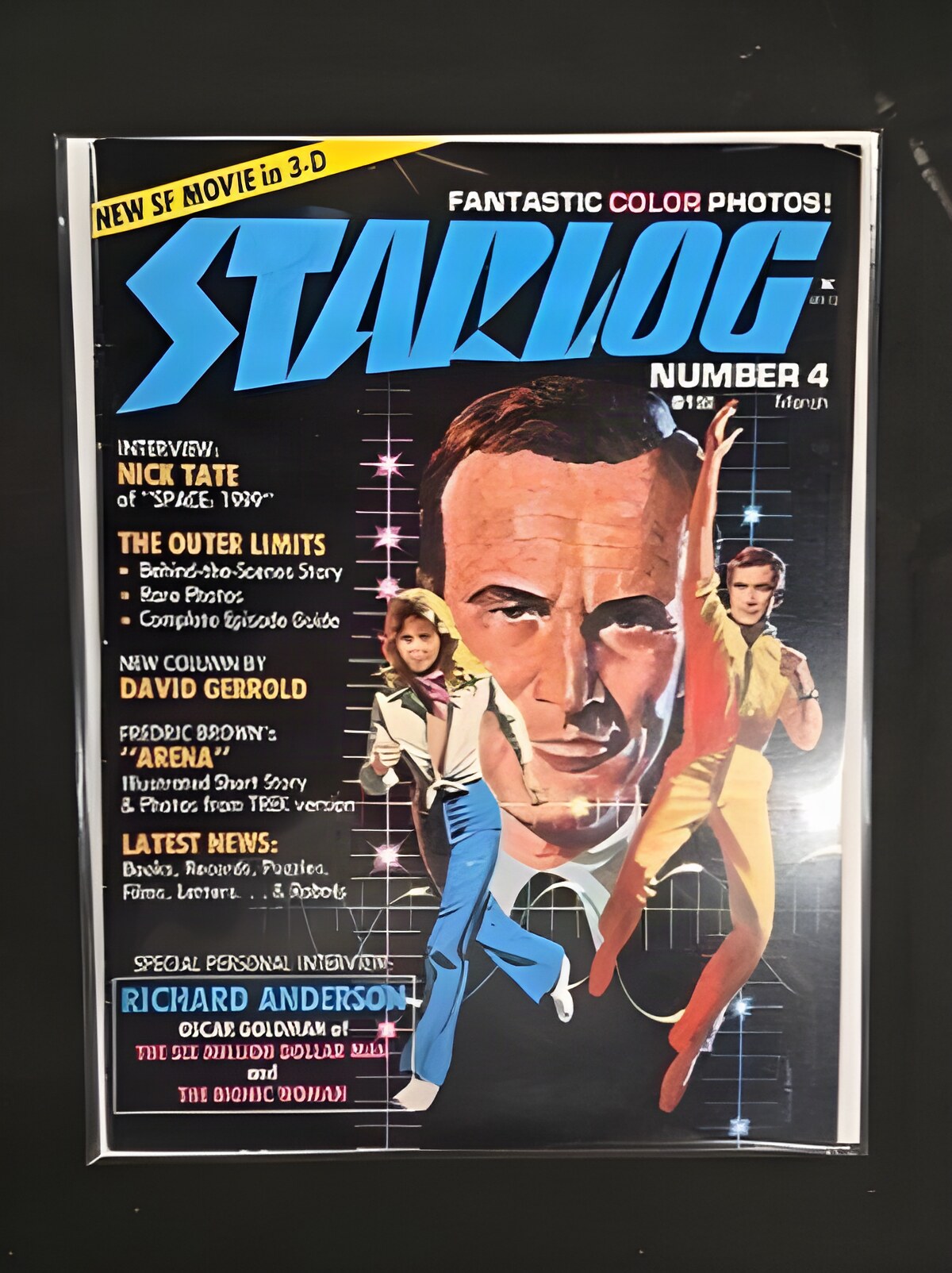
Softcover. NY, O'Quinn Studios, 1977, Book: Very Good, Dust Jacket: None, Softcover magazine, 78 pages illustrated in color and b&w. Articles include: The Outer Limits, Space 1999, Six Million Dollar Man, Frederic Brown's Arena. Clean copy.
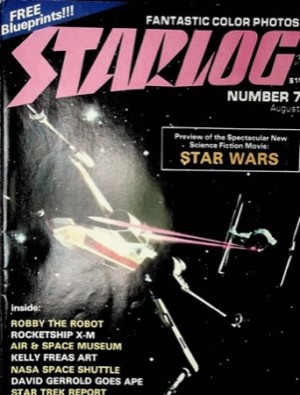
Softcover. NY, O'Quinn Studios, 1977, Book: Very Good, Dust Jacket: None, Softcover magazine, 78 pages illustrated in color and b&w. Articles include: Star Wars, Robby the Robot, Kelly Freas, Rocketship X-M, David Gerrold Goes Ape. Clean copy.
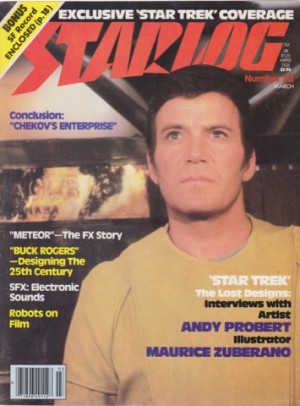
Softcover. NY, O'Quinn Studios, 1st, 1980, Book: Very Good, Dust Jacket: None, Softcover magazine, 66 pages illustrated in color and b&w. Articles include: Robots on Film. Meteor-The FX Story, Star Trek Lost Designs, Buck Rogers, Andy Probert Interview, others. Clean copy.
Hardcover. NY, Abrams, 1st, 2005, Book: Very Good, Dust Jacket: Very Good, Hardcover, 240 pages. Steinberg's high-concept graphic art--epitomized by his oft-imitated cartoon map in which a Manhattan distended with self-importance shoves the continents of North America and Asia to the margins--is enchantingly showcased in this lavishly illustrated retrospective of his work for the New Yorker. Smith, a curator at the Frances Lehman Loeb Art Center at Vassar and author of Edward Steichen: The Early Years, surveys six decades of Steinberg's pieces, including all 89 New Yorker covers (in full color), cartoons, wartime sketches from overseas, evocative (but never literal-minded) illustrations for articles, and unpublished items from the artist's portfolio. The material is arranged thematically, examining such recurring motifs as cats, pedestals and rubber-stamped figures and documenting the turn to visual metaphor in Steinberg's later work, where symbolic graphic representations of sound, abstract relationships and existential conundrums replace the usual scenario-with-verbal-punch line cartoon setup. Smith's pithy biographical essay situates Steinberg as a self-conscious modernist who helped develop a distinctive New Yorker visual style, one with "a wry, informal wit... attuned to the jittery optimism of the Atomic Age." Steinberg's cartoons usually made readers think before they laughed, and so will this splendid memorial to a 20th-century artistic landmark.
Hardcover. New York , Mark Batty Publisher, 1st, 2003, Book: Very Good, Dust Jacket: Very Good, 286 pages, a comprehensive and inspirational guide to editorial design packed with contemporary examples of sophisticated and effective solutions for virtually any design challenge. Moser's thorough understanding of the process, combined with intriguing juxtapositions of layouts, no-nonsense comments and original insight make for an entertaining and useful book. Chapters range from Grid Systems and Formats to Covers, Logos and Inside Pages, Types of Page and Themes, even a section on the design of magazine spines-illustrated with over 1500 examples from publications around the world, and drawn from the author's personal collection of over one million magazines! A great reference book for all graphic designers, art directors and editorial writers.
Softcover. Seattle, Fantagraphics Books, 1st, 2009, Book: Very Good, Dust Jacket: None, Softcover, 180 pages. The Sweetly Diabolic Art features paintings, drawings, and sketches from the 1940s through the 1990s, most never previously published or exhibited, as well as more artifacts from Flora's 1940s tenure in the Columbia Records art department and rare newspaper and magazine illustrations spanning several decades. Sweetly Diabolic is also the first printing of an abandoned children's book concept, The X-Ray Eyes of Wallingford Hume. Equally fascinating are original, never-before-published roughs and rejected images from Flora's 1950s and '60s children's books and a gallery of pen and pencil sketches from the 1940s. Sweetly Diabolic also collects, for the first time rarely seen cartoon-science illustrations: the images are augmented by personal vignettes, mementos from the family archives, and a 1984 interview with award-winning graphic designer Robert M. Jones, who offers priceless insights.
Hardcover. New Haven CT, Yale University Press, 1st, 2017, Book: Very Good, Dust Jacket: Very Good, Hardcover, 260 pages, in a bright, unclipped dust jacket. A riveting and superbly illustrated account of the enigmatic House Beautiful editor's profound influence on mid-century American taste From 1941 to 1964, House Beautiful magazine's crusading editor-in-chief Elizabeth Gordon introduced and promoted her vision of "good design" and "better living" to an extensive middle-class American readership. Her innovative magazine-sponsored initiatives, including House Beautiful's Pace Setter House Program and the Climate Control Project, popularized a "livable" and decidedly American version of postwar modern architecture. Gordon's devotion to what she called the American Style attracted the attention of Frank Lloyd Wright, who became her ally and collaborator. Gordon's editorial programs reshaped ideas about American living and, by extension, what consumers bought, what designers made, and what manufacturers brought to market. This incisive assessment of Gordon's influence as an editor, critic, and arbiter of domestic taste reflects more broadly on the cultures of consumption and identity in postwar America. Nearly 200 images are featured, including work by Ezra Stoller, Maynard Parker, and Julius Shulman. This important book champions an often-neglected source--the consumer magazine--as a key tool for deepening our understanding of mid-century architecture and design.
Paperback. Minneapolis, Art Instruction Inc., 1st wraps, Book: Very Good, Dust Jacket: None, Softcover, large format. Rubin was a journeyman illustrator of the 40's & 50's whose work appeared in many ads & magazine stories. Short biography. Color, black & whtie illust. 32 pages. Light water stain to top corner otherwise very good,
Hardcover. London, Art / Books Publishing, 1st, 2013, Book: Very Good, Dust Jacket: Very Good, 240 pages. Hardcover with dust jacket. Very clean, like new in publishers shrink-wrap. A tight copy. Terence Donovan was one of the foremost photographers of his generation--among the greatest Britain has ever produced. He came to prominence in London as part of a postwar renaissance in art, fashion, graphic design and photography, and--alongside David Bailey and Brian Duffy (photographers of a similar working-class background)--he captured and helped create the Swinging London of the 1960s. Donovan socialized with celebrities and royalty, and found himself elevated to stardom in his own right, and yet, despite his success and status, there has never been a serious evaluation of Donovan's fashion work: he allowed no monographs to be published during his lifetime. Terence Donovan Fashion is therefore the first publication of his fashion photographs. Arranged chronologically, and with an illuminating text by Robin Muir (ex-picture editor of Vogue), the book considers Donovan in the social and cultural context of his time, showing how his constant experimentation not only set him apart, but also influenced generations to come. Designed by former art director of Nova magazine and Pentagram partner David Hillman, and with images selected by Hillman, the artist's widow Diana Donovan and Grace Coddington, creative director of American Vogue, this volume is indisputably a landmark publication in the history of fashion photography.
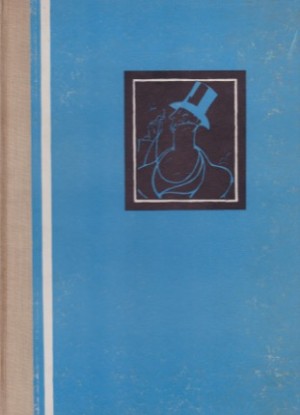
Hardcover. NY, Random House, 1st, 1939, Book: Very Good, Dust Jacket: None, Hardcover, hundreds of b&w cartoons from the magazine's golden age. Tan cloth spine with blue boards. No lettering on spine. Clean copy, no dust jacket.
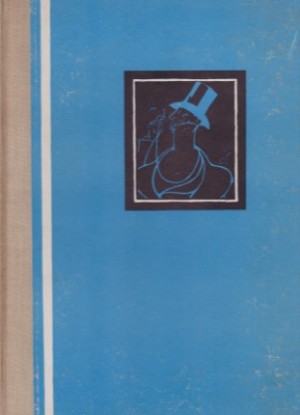
Hardcover. NY, Random House, 1st, 1939, Book: Very Good, Dust Jacket: None, Hardcover, hundreds of b&w cartoons from the magazine's golden age. Tan cloth spine with blue boards. No lettering on spine. Clean copy, no dust jacket.
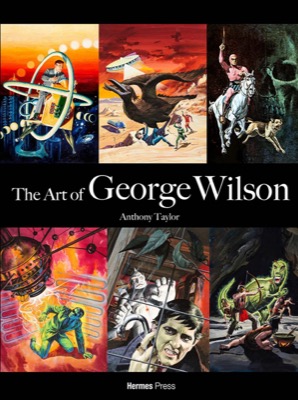
Hardcover. Neshannock PA, Hermes Press, 1st, 2025, Book: Very Good, Dust Jacket: None, Hardcover, pictorial boards, 203 pages. What made many of the great adventure comics of the 1960s so attractive were their fantastic painted covers by artist George Wilson. Wilson also turned in hundreds of painted covers for paperback books that range from The Phantom and Flash Gordon to romance, adventure and war titles, all illustrated in the extensive survey of his work. Unlike the majority of comic book covers of the era, Wilson's covers harkened back to the era of pulp magazines and were spectacularly eye-catching. He turned in efforts for literally hundreds of comics titles - this important monograph on the artist provides examples of every genre he worked in. Presented are cover paintings scanned from the original artwork from Classics Illustrated, The Twilight Zone, Ripley's Believe It or Not, Doctor Solar, Magnus Robot Fighter, Turok, Son of Stone, Star Trek, Korak, Son of Tarzan, Mighty Samson, Brothers of the Spear, Boris Karloff Tales of Mystery, Space Family Robinson, Dark Shadows, and The Occult Files of Doctor Spektor to name but a few. This new art book focuses on over 300 examples of his cover art accompanied by an introduction by famed artist Joe Jusko, an exhaustive essay by Anthony Taylor and the only interview Wilson ever gave. Clean copy.
Hardcover. Detroit MI, Stabur Press, 1st, 1987, Book: Very Good, Dust Jacket: None, Hardcover, 144 pages, illustrated in color and b&w. With the illustrated paper covered slipcase. The full-color jacket art by him was done expressly for this publication. Includes a checklist of his works: comic books, humor magazines, other magazines (Playboy, Esquire, etc), books, advertising, misc. prints, etc. All quotes in the book are from interviews conducted by the author.
Hardcover. Texas A&M University Press;, 1st, 2003, Book: Very Good, Dust Jacket: Very Good, Hardcover, 276 pages. Tom Lea was a realist who painted things as they are, but just happened to see more of what they are than most of us do. A muralist, painter, book illustrator, World War II artist-correspondent, historian, novelist, and humanist, Lea died in 2001 after creating in some sixty years a corpus of work that has captivated those who know it. This volume makes available the full range of his vigorous work. Old admirers of Lea's talents will delight in this presentation, and a whole new generation will be awed by the unique contribution he has made. A Southwesterner from multicultural El Paso, Lea gave new vision to the misunderstood lands often thought of as barren wastes. As Kathleen G. Hjerter says in her foreword, in his paintings "the desert's melded colors are vibrant under many subtle gradations of light; the mesas and mountains reach up to a sky enormous enough to hold everyone's soul." But it is not just the southwest. its life and lore that Lea knew. Any subject he portrayed in picture or words (he wrote several outstanding books, including The Wonderful Country) he first researched minutely. Thus, he brought marvelous detail to his portrayal of the Mexican bullfighter, the Australian ranches and Texas cattle of the King empire, and the Indians, pioneers, and ranch hands of his own corner of the world. In the Second World War, as an artist-correspondent for Life magazine, he captured both the weaponry and the emotions of war. On assignment in China he developed a love for that land that gave him not only many subjects for paintings but also his favorite and, in later years, most characteristic medium: Chinese ink applied with a fine brush. This is a heavy and oversized book and will require extra shipping. International customers please ask for a shipping quote before purchasing.
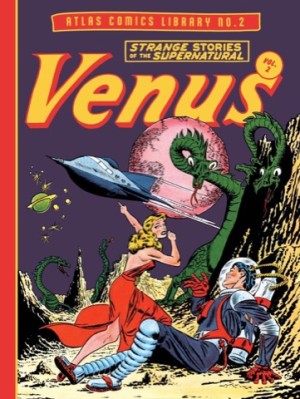
Hardcover. Seattle, Fantagraphics Books, 1st, 2024, Book: Very Good, Dust Jacket: None, Hardccover, pictorial boards, 290 pages in color. In the late 1940s, the first half of the Venus series from Marvel Comics predecessors Timely and Atlas Comics was published as a lighthearted romance comic about the goddess Venus taking a job on Earth at a beauty magazine. Never a company to miss a trend, Atlas began introducing more science fiction elements in the 1950s, and eventually turned Venus' dating adventures into a straight-out horror anthology. Collected here, 70 years later and for the first time ever, is that swift-changing second half of the 19-issue run. Future Marvel stars Bill Everett (seven issues) and Werner Roth (three issues) take Venus to heights of four-color weirdness and pre-Code horror ghastliness. Everett in particular is given free rein and seizes the opportunity: writing, drawing, and lettering twenty ghoulish and goofy masterpieces, including classics like "Hangman's House," "The Day Venus Vanished," "The House of Terror," "The Sealed Spectors," Tidal Wave of Terror," and the phantasmagorical "Cartoonist's Calamity!" These stories showcase the brilliant draftsmanship and storytelling of Everett, one of the giants of the 1940s and '50's comic book industry. His slick, fluid line rendered at Timely/Atlas, from his seminal god-child Prince Namor, the Sub-Mariner, to the atomic age Marvel Boy, is some of the finest pre-Code horror this side of E.C.'s Graham Ingels. Clean, bright copy.
Hardcover. Seattle, Fantagraphics, 1st, 2004, Book: Very Good, Dust Jacket: None, Hardcover, pictorial boards, 231 pages in color. Before focusing on tales of justice via superheroes under the Marvel banner, the publisher covered ground-level crime across a range of comics titles and true-crime magazines. Under the Timely imprint from 1947, and Atlas from 1951, up to eleven graphic series including Justice Comics, Official True Crime Cases, All-True Crime, Crime Cases, Crime Can't Win, Crime Must Lose, and Crime Exposed all muscled each other and competitors for space on the newsstands. For the first crime-themed volume in Fantagraphics' ongoing project to restore and resurrect pre-Marvel pulp classics, the Atlas Library has selected a book that debuted as the genre peaked, just before a Senate hearing and the institution of the Comics Code banned the use of the word "Crime" from even appearing in a comic's title. Escaping that fate, Police Action had a seven-issue run of violent and noir-ish morality plays, pitting the officers of the law against the forces of urban malevolence, and was produced by the cream of the Atlas freelance roster, including Joe Maneely, Robert Q. Sale, Gene Colan, Art Peddy, Mort Lawrence, Werner Roth and Bob Powell. Rounding the volume off, also presented is a post-Code one-shot, Police Badge #479, a snapshot of the industry's attempts to adapt to new strictures on the genre: here we view "our boys in blue" in the fight against rank corruption, highlighting the work of Don Heck and Joe Maneely. Clean, like new.
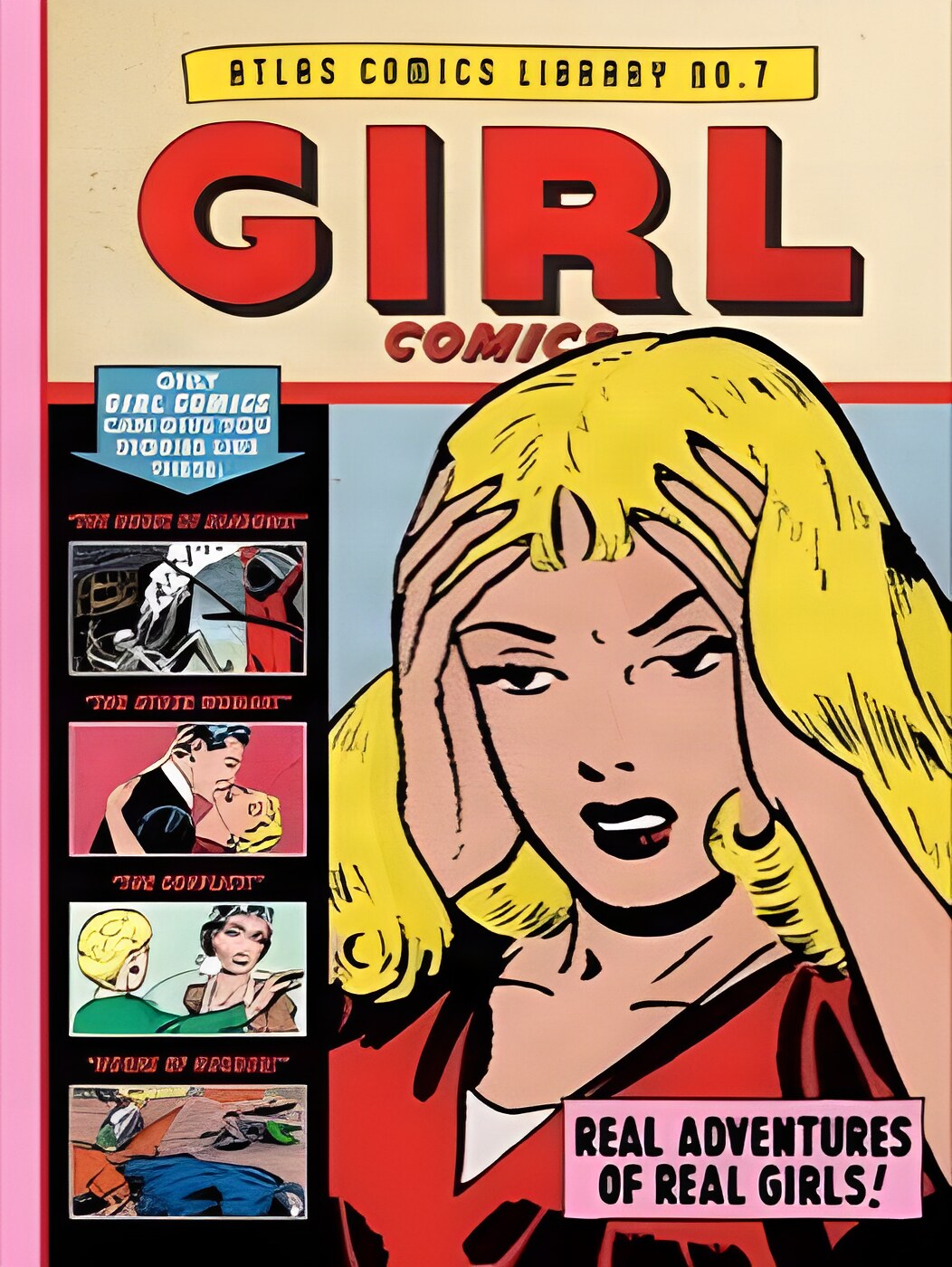
Hardcover. Seattle, Fantagraphics Books, 1st, 2025, Book: Very Good, Dust Jacket: None, Hardcover in pictorial boards, 397 pages illustrated in color. This new volume in Fantagraphics' and Marvel's collaborative Atlas Library presents Girl Comics #1-12, a long unseen subversion of romance comics beautifully designed for a new generation of readers!In 1950, Timely/Atlas/Marvel took a typical romance title called Girl Comics and turned it into a sister companion to its successful men's-adventure comics: an empowering girls'-adventure comic! Mystery, adventure and suspense was promised and delivered! At the hands of a stellar artistic line-up, including John Buscema, Mike Sekowsky, Bill Everett, Joe Maneely, Russ Heath, and Bernard Krigstein, Girl Comics evolved from heart-stricken love stories to hair-raising girl-power thrill rides like "The Death Plunge!," "The House of Shadows!," "I was a Murderer's Daughter!," "They Called me a Spy!," "The Dead Hands at the Controls," and "The Dark Hallway."This volume also features the story behind the stories, with editor Dr. Michael J. Vassallo's essays on Marvel publisher Martin Goodman's enthusiastic relationship with romance comics and magazines at a time when the art form was cementing itself into American youth culture! Clean copy. DOMESTIC SHIPPING ONLY.
Hardcover. NY, Houghton Mifflin Harcourt;, 1st, 2007, Book: Very Good, Dust Jacket: None, Hardcover, 341 pages. Celebrating the best in graphic storytelling and literary comics, a cutting-edge collection, guest edited by the award-winning author of Jimmy Corrigan, the Smartest Kid on Earth, features excerpts from graphic novels, pamphlet comics, newspapers, magazines, mini-comics, and the Web, from R. and Aline Crumb, Art Spiegelman, Seth, Lynda Barry, Kim Deitch, Gilbert Hernandez, and others.
Hardcover. Boston, Houghton Mifflin Harcourt, 1st, 2008, Book: Very Good, Dust Jacket: Very Good, Hardcover, 324 pages, illustrated throughout in color and b&w. Clean, unmarked copy with only minor wear to dust jacket. This newest edition to the Best American Series--"A genuine salute to comics" (Houston Chronicle)--returns with a set of both established and up-and-coming contributors. Editor Lynda Barry and and brand new series editors Jessica Abel and Matt Madden--acclaimed cartoonists in their own right-- have sought out the best stories culled from graphic novels, pamphlet comics, newspapers, magazines, mini-comics, and the Web to create this cutting-edge collection "perfect for newbies as well as fans"--The San Diego Union Tribune. This newest volume features luminaries like Chris Ware, Seth, and Alison Bechdel alongside Paul Pope's "Batman" and beloved daily cartoonists like Matt Groening.
Hardcover. Boston, Houghton Mifflin Harcourt, 1st, 2008, Book: Very Good, Dust Jacket: Very Good, Hardcover, 324 pages, illustrated throughout in color and b&w. Clean, unmarked copy with only minor wear to dust jacket. This newest edition to the Best American Series--"A genuine salute to comics" (Houston Chronicle)--returns with a set of both established and up-and-coming contributors. Editor Lynda Barry and and brand new series editors Jessica Abel and Matt Madden--acclaimed cartoonists in their own right-- have sought out the best stories culled from graphic novels, pamphlet comics, newspapers, magazines, mini-comics, and the Web to create this cutting-edge collection "perfect for newbies as well as fans"--The San Diego Union Tribune. This newest volume features luminaries like Chris Ware, Seth, and Alison Bechdel alongside Paul Pope's "Batman" and beloved daily cartoonists like Matt Groening.
Hardcover. NY, Houghton Mifflin Harcourt, 1st, 2013, Book: Very Good, Hardcover, 400 pages. The Best American Comics showcases the work of both established and up-and-coming contributors. Editor Jeff Smith--creator of the classic comic Bone, a comedy/adventure about three lost cousins from Boneville--has culled the best stories from graphic novels, pamphlet comics, newspapers, magazines, mini-comics, and web comics to create this cutting-edge collection.
Hardcover. Last Gasp, 1st, 2019, Book: Very Good, Dust Jacket: None, Hardcover, 288 pages. The Book of Weirdo is the definitive - and hugely entertaining- examination of Weirdo magazine, renowned underground comix cartoonist Robert Crumb's legendary humor comics anthology, which was originally published throughout the 1980s. A "low-brow" counterpoint to Art Spiegelman and Francoise Mouley's rather high-faluttin' RAW comix publication, Weirdo influenced an entire generation of alternative and neo-underground artists, as well as creative refuge for the underground comix veterans, and this book features the complete story of the well-recalled comics magazine, along with testimonials from over 130 of the publication's contributors, including interviews with Weirdo's three editors - R. "Keep on Truckin'" Crumb, Peter "Hate" Bagge, and Aline "The Bunch" Kominsky-Crumb - and publisher "Baba Ron" Turner. As much a history of the alternative comics scene of the 1980s - from New York City punk to Seattle grunge - this exhaustive retrospective includes rare and unseen artwork from that era, as well as new comics from modern-day artists celebrating their love for the great oddball magazine. In its time, the periodical featured the finest work of many artists, particularly the best material by Robert Crumb himself, Weirdo's founder and best known for ZAP Comix, Fritz the Cat, and Mr. Natural, and a man widely heralded as the greatest cartoonist of all time. We get photos of the various contributors, some samples of the work, more than a few brand-spanking-new artistic tributes to the magazine and the people who made it. And lots and lots of stories about what it was like to work for and with Robert Crumb.
Softcover. NY, Dover, reprint, 1969, Book: Very Good, Dust Jacket: None, Softcover, Bright purple cover. A collection of cartoon stories, reproduced unabridged from an original 1892 publication. Plus seven picture stories from issues of Life Magazine, 1921-22. Clean copy.

 "Steinberg at the New Yorkerby: Smith/Saul Steinberg, Joel")
 "Surprise Me: Editorial Designby: Moser, Horst")
 "Sweetly Diabolic Art of Jim Flora, Theby: Chusid, Irwin")
 "Technique of Hy Rubin, Theby: Rubin, Hy")
 "Terence Donovan Fashionby: Hillman, David (Editor)")

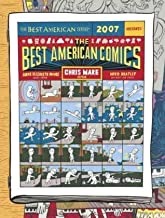
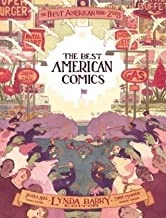
 "The Best American Comics 2008by: Abel, Jessica and Lynda Barry")
 "The Best American Comics 2013by: Smith; Jessica Abel;Matt Madden (Editors), Jeff")
 "The Book of Weirdo: A Retrospective of R. Crumb's Legendary Humor Comics Anthology by: Cooke, Jon B.")


 "The Bull Calf and Other Talesby: Frost, A. B.")