Hardcover. New York, Knopf, 1st, 2002, Book: Very Good, Dust Jacket: Very Good, Hardcover, 307 pages. Black & white photography. Minor wear to dust jacket, else a very nice, tight copy.
Hardcover. London, Thames and Hudson, 1st, 2016, Book: Very Good, Dust Jacket: None, Hardcover, 144 pages. With 73 illustrations. Foreword by Tim Walker. Red cloth with white titles to spine and turquoise papers with photographs and white titles to board. No dust jacket issued.
Hardcover. NY, Doubleday & Co., reprint, Book: Very Good, Dust Jacket: Very Good, Hardcover in a bright dust jacket. Imaginative, artistic photography and stunning b&w photographs of luminaries such as Greta Garbo, Gary Cooper, Therese Duncan, The Sandburgs, Katherine Cornell, Gallant Fox and countless more. Despite having a 1963 date on the title page this is a later reprint with an ISBN number and no color images (as were in the first printing). Also the initials A.L.I.P. where flap price should be. Still, in beautiful condition with a nice dust jacket.
Hardcover. Moyer Bell, 1st thus, 1997, Book: Very Good, Dust Jacket: Very Good, Hardcover in a bright dust jacket, 186 pages. BOOKPLATE SIGNED BY ELLIS on front fly leaf. For Alice Thomas Ellis, Wales was a magical place of unrestricted freedom and exploration. Through her recollections, the acclaimed novelist evokes the stark beauty of the Welsh landscape along with its history, legends, and people. Patrick Sutherland's 90 black-and-white images complement the text and make this shared journey even more compelling. Clean copy.
Hardcover. NY, Phaidon Press, 1st, 2003, Book: Very Good, Dust Jacket: Very Good, Hardcover in a bright, translucent dust jacket, 240 pages. In late 1964 Andy Warhol commissioned young fashion photographer David McCabe to document his daily activities for one year. During the course of this project, whenever the artist called McCabe would come to meet him at The Factory, an opening, a party, a coffeeshop or any place where Warhol would decide that he wanted to be accompanied by the photographer and his camera. In the end, these images were never published, perhaps because they revealed more than the increasingly-famous Warhol was willing to share with the public. Hidden away for almost 40 years, the significant majority of these 400 duotone photos are now presented together for the first time to fulfill their original intention in an astounding tour de force of dynamic and often poignant realism: A Year in the Life of Andy Warhol. These images not only represent unique documentation of one of the most significant artists of the twentieth century, but also provide a rare behind-the-scenes look at the New York art world at a time when Pop art was at its peak. McCabe's photographs are accompanied by the entertaining descriptions and reminiscences of Factory insider David Dalton, one of Warhol's first assistants.
Hardcover. New Haven, Yale University Press, 1st, 1985, Book: Very Good, Dust Jacket: None, Hardcover, blue cloth, 262 pages. Illustrated with black & white photographs. Clean, tight copy. This portrait of Disderi and the carte de visite he patented in Paris in 1854 is far more than a biography. The c-d-v, or photographic calling card, was a relatively inexpensive product that made the photographic portrait available to the middle class . McCauley's carefully documented work explores Disderi's career and oeuvre , the impact of mass-produced celebrity cartes on the social and cultural life of mid-19th-century France, and aesthetics in c-d-v portraiture. The final third of the book is an art historical evaluation of the importance of the c-d-v for portrait painting of the period . The fine bibliography, generous illustrative matter, and detailed notes add to the value of this work for the avid student of photohistory or 19th-century studies.
Hardcover. Cambridge MA, MIT Press, 1st, 1997, Book: Very Good, Dust Jacket: Very Good, Hardcover, 176 pages. Albert Renger-Patzsch, together with August Sander and Karl Blossfeldt, was one of the undisputed pioneers of twentieth-century German photography. Indeed, what Sander achieved in portrait photography and Blossfeldt in plant photography, Renger-Patzsch achieved in his renderings of objects and the material world. As a protagonist of the movement that came to be known as Neue Sachlichkeit (New Objectivity), he wanted to record, phenomenologically as it were, the exact appearance of objects -- their form, material, and surface. Thus he rejected any kind of artistic claim for himself. Believing that the photographer should strive to capture the "essence of the object," he called for documentation rather than art.
Hardcover. New Haven CT, Yale University Press, 1st, 2019, Book: Very Good, Dust Jacket: Very Good, Hardcover in a bright dust jacket, 259 pages, b&w, some color illustrations. Alfred Stieglitz (1864-1946) was an enormously influential artist and nurturer of artists even though his accomplishments are often overshadowed by his role as Georgia O'Keeffe's husband. This new book from celebrated biographer Phyllis Rose reconsiders Stieglitz as a revolutionary force in the history of American art. Born in New Jersey, Stieglitz at age eighteen went to study in Germany, where his father, a wool merchant and painter, insisted he would get a proper education. After returning to America, he became one of the first American photographers to achieve international fame. By the time he was sixty, he gave up photography and devoted himself to selling and promoting art. His first gallery, 291, was the first American gallery to show works by Picasso, Rodin, Matisse, and other great European modernists. His galleries were not dealerships so much as open universities, where he introduced European modern art to Americans and nurtured an appreciation of American art among American artists. Clean copy.
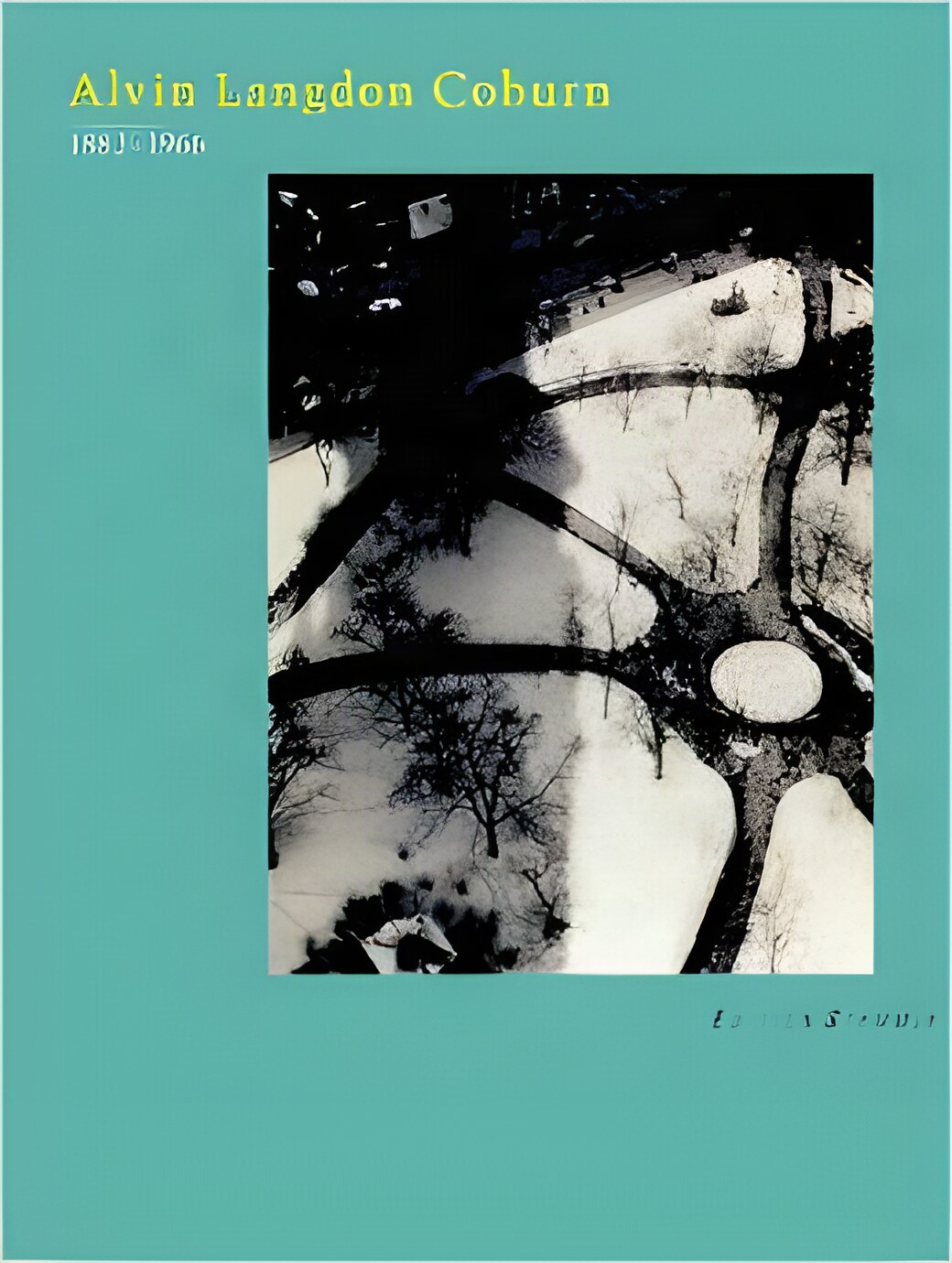
Hardcover. US, Edition Stemmle, 1st, 1998, Book: Very Good, Dust Jacket: Very Good, 208 pages, illustrated throughout in sepia. Light edgewear and tanning to dust jacket, else a clean, tight copy. Alvin Langdon Coburn (1882-1966) is remembered today as one of photography's early masters and great innovators. This monograph investigates the unconventional nature of his personal and artistic achievements. Coburn's landscapes, cityscapes, portraits, and Vortographs reflect his unprecedented steps towards the creation of a photography of symbol and abstraction.
Softcover. New York, Dover Publications Inc., 1st, 1982, Book: Very Good, Dust Jacket: None, 121 pages. Softcover. Light edgewear to wrappers. Black and white pictures throughout. Rothstein was a photojournalist for more than 45 years and the photographs in this volume are from his years as photographer for the Farm Security Administdration. His job was to photographs small towns, rural areas and general agricultural conditions throughout the country.
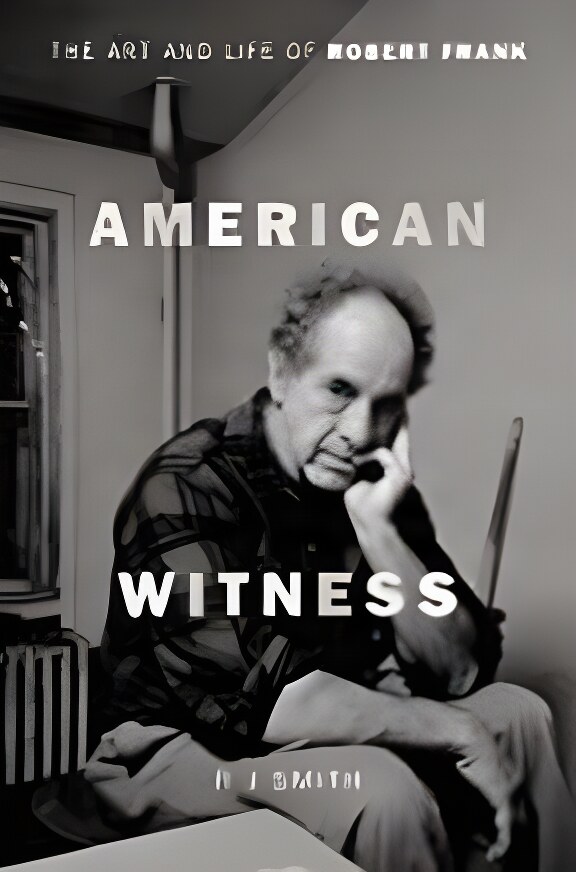
Hardcover. NY, Da Capo Press, 1st, 2017, Hardcover, 352 pages. As well-known as Robert Frank the photographer is, few can say they really know Robert Frank the man. Born and raised in wartime Switzerland, Frank discovered the power and allure of photography at an early age and quickly learned that the art meant significantly more to him than the money, success, or fame. The art was all, and he intended to spend a lifetime pursuing it. American Witness is the first comprehensive look at the life of a man who's as mysterious and evasive as he is prolific and gifted. Leaving his rigid Switzerland for the more fluid United States in 1947, Frank found himself at the red-hot social center of bohemian New York in the '50s and '60s, becoming friends with everyone from Jack Kerouac, Allen Ginsberg, and Peter Orlovsky to photographer Walker Evans, actor Zero Mostel, painter Willem de Kooning, filmmaker Jonas Mekas, Bob Dylan, writer Rudy Wirlitzer, jazz musicians Ornette Coleman and Charles Mingus, and more. Frank roamed the country with his young family, taking roughly 27,000 photographs and collecting 83 of them into what is still his most famous work: The Americans. His was an America nobody had seen before, and if it was harshly criticized upon publication for its portrait of a divided country, the collection gradually grew to be recognized as a transformative American vision.
Hardcover. NY, Da Capo Press, 1st, 2017, Book: Very Good, Dust Jacket: Very Good, Hardcover, 352 pages. As well-known as Robert Frank the photographer is, few can say they really know Robert Frank the man. Born and raised in wartime Switzerland, Frank discovered the power and allure of photography at an early age and quickly learned that the art meant significantly more to him than the money, success, or fame. The art was all, and he intended to spend a lifetime pursuing it. American Witness is the first comprehensive look at the life of a man who's as mysterious and evasive as he is prolific and gifted. Leaving his rigid Switzerland for the more fluid United States in 1947, Frank found himself at the red-hot social center of bohemian New York in the '50s and '60s, becoming friends with everyone from Jack Kerouac, Allen Ginsberg, and Peter Orlovsky to photographer Walker Evans, actor Zero Mostel, painter Willem de Kooning, filmmaker Jonas Mekas, Bob Dylan, writer Rudy Wirlitzer, jazz musicians Ornette Coleman and Charles Mingus, and more. Frank roamed the country with his young family, taking roughly 27,000 photographs and collecting 83 of them into what is still his most famous work: The Americans. His was an America nobody had seen before, and if it was harshly criticized upon publication for its portrait of a divided country, the collection gradually grew to be recognized as a transformative American vision.
Softcover. London, Illustrated London News , 1954, Original printed red card wrappers. Light rubbing of the covers, some thumbing of the leading edge; top spine worn, overall, this book is in good to very good condition. 68 pages. Gilt decorated red cover, color frontispiece portrait, gravure and color plates, photographs, illustrations, genealogical table. Contributors include Cyril Falls (Sir Winston Churchill in War), E.D. O'Brien (Sir Winston Churchill- the Man), Charles Petrie (Sir Winston Churchill's Place in History), Edward Winterton (Sir Winston Churchill in Parliament). Frontispiece by Yousuf Karsh.
Softcover. London, Illustrated London News , 1954, Original printed red card wrappers. Light rubbing of the covers, some thumbing of the leading edge; overall, this book is in good to very good condition. 68 pages. Gilt decorated red cover, color frontispiece portrait, gravure and color plates, photographs, illustrations, genealogical table. Contributors include Cyril Falls (Sir Winston Churchill in War), E.D. O'Brien (Sir Winston Churchill- the Man), Charles Petrie (Sir Winston Churchill's Place in History), Edward Winterton (Sir Winston Churchill in Parliament). Frontispiece by Yousuf Karsh.
Hardcover. London, Phaidon Press, 1st, 2006, Book: Very Good, Dust Jacket: None, 624 pages. Hardcover. 2000 illustrations, 1400 in color. Sixteen pound monster elephant folio, a huge volume. Laminated covers, clean, very good. Andy Warhol "Giant" Size is the definitive document of this remarkable creative force, and a telling look at late twentieth-century pop culture. A must-have for Warhol fans and pop culture enthusiasts, this in-depth and comprehensive overview of Warhol's extraordinary career is packed with more than 2,000 illustrations culled from rarely seen archival material, documentary photography, and artwork. Dave Hickey's compelling essay on Warhol's geek-to-guru evolution combines with chapter openers by Warhol friends and insiders to give special insight into the way the enigmatic artist led his life and made his art. It also provides a rare, behind-the-scenes look at the New York art world of the 1950s to the 1980s. DOMESTIC SHIPPING ONLY.
Hardcover. New York, Random House, 1st, 2008, Book: Near Fine, Dust Jacket: Near Fine, 240 pages, illustrated in color and b&w. Wraparound present. In publisher's shrinkwrap. Annie Leibovitz describes how her pictures were made, starting with Richard Nixon's resignation, a story she covered with Hunter S. Thompson, and ending with Barack Obama's campaign. In between are a Rolling Stones Tour, John Lennon and Yoko Ono, Demi Moore, Whoopi Goldberg, The Blues Brothers, Arnold Schwarzenegger, Keith Haring, Mikhail Baryshnikov, Patti Smith, George W. Bush, William S. Burroughs, Kate Moss and Queen Elizabeth. The most celebrated photographer of our time discusses portraiture, reportage, fashion photography, lighting, and digital cameras.
Hardcover. New York, Random House, 1st, 2008, Book: Very Good, Dust Jacket: Very Good, 240 pages, illustrated in color and b&w. Beige cloth covers, no paper wraparound band. Annie Leibovitz describes how her pictures were made, starting with Richard Nixon's resignation, a story she covered with Hunter S. Thompson, and ending with Barack Obama's campaign. In between are a Rolling Stones Tour, John Lennon and Yoko Ono, Demi Moore, Whoopi Goldberg, The Blues Brothers, Arnold Schwarzenegger, Keith Haring, Mikhail Baryshnikov, Patti Smith, George W. Bush, William S. Burroughs, Kate Moss and Queen Elizabeth. The most celebrated photographer of our time discusses portraiture, reportage, fashion photography, lighting, and digital cameras.
Boston, N.Y. Graphic Society, BC Ed., 1988, Book: Very Good, Dust Jacket: Very Good, Hardcover. Black & white photos. 400 pages. Flap has price, (C) page with First Edition statement but actually Book Club edition. Edited by Mary Street Alinder & Andrea Gray Stillman. In his early years in Yosemite, Adams formed the habit of writing letters at every opportunity. His correspondence, therefore, virtually provides the full record of his life. Through the years, wherever he went, from the Southwest to Maine to Alaska, he wrote literally thousands of letters and postcards. Among the family, friends, fellow photographers, environmentalists, and politicians with whom he corresponded rank such eminent names as Alfred Stieglitz, Dorothea Lange, Paul Strand, jimmy Carter, Beaumont and Nancy Newhall, Garry Trudeau, and Edward Weston. Including both sides of continuing dialogues with these people and others, this book revels the growth of the artist and the whole man, as well as the development of the art of photography through the voices of the masters. A companion volume to his best-selling autobiography, ANSEL ADAMS: LETTERS AND IMAGES is illustrated with over 100 of his photographs from monumental landscapes to family snapshots. This combination of images with the highlights of a lifetime of letter writing creates a compelling portrait of one of the 20th century's greatest artists and conservationists and one of the most personable and memorable of men.
Softcover. Boston/NY, Little, Brown, reprint, 2001, Book: Very Good, Dust Jacket: None, Softcover, 418 pages, b&w illustrations. Ansel Adams wrote literally thousands of letters to fellow photographers, environmentalists, politicians, family, and friends during his long life - letters that reveal the growth of the artist and the man, while contributing a unique overview of twentieth-century photography and the environmental movement. Among those with who he corresponded are such eminent names as Alfred Stieglitz, Edward Weston, Nancy and Beaumont Newhall, and Jimmy Carter. Wallace Stegner notes in his foreword that the letters 'show him as his family and friends knew him, in the intimate interchange of daily life and at the highest reaches of his thinking and feeling. Remainder line on bottom edge, otherwise clean.
Hardcover. Penland, NC, Jargon Society, 1st, 1971, Book: Very Good, Dust Jacket: Very Good, 63 pages. Hardcover with dust jacket. Clean, tight copy with only minor wear to edges. Related news clipping laid in.
Hardcover. GR, Steidl, 1st, 2007, Book: Very Good, Dust Jacket: Very Good, Hardcover, 232 pages. When celebrated photographer Arnold Newman began his career in 1938 in chain portrait studios in Philadelphia, Baltimore and West Palm Beach, he also immediately began to make abstract and documentary photography on his own, studying people and places impoverished by the Depression. In June of 1941, Beaumont Newhall of The Museum of Modern Art, New York, and Alfred Stieglitz "discovered" him, and he was given an exhibit with Ben Rose at the A.D. Gallery that September. There Newman began to combine his independent work with the portraiture that had been his bread-and-butter, developing the approach for which he is best known, which came to be called "environmental portraiture," and which is so widely influential today that it might be the new standard practice. This style made Newman a distinctive contributor to publications like Life, Vanity Fair, and the New York Times Magazine, brought him into the collections of museums around the world, including The Museum of Modern Art, The Metropolitan Museum of Art, and the International Center of Photography in New York, and led to his recognition in photography histories and with awards including France's Commander of the Order of Arts and Letters. The photographs collected here were made before Newman achieved recognition as a pioneering portraitist, during the formative years from 1938 to 1942. They highlight the early stirrings of a great photographic master.
Hardcover. East Sussex, Ammonite Press, 1sr, 2012, Book: Very Good, Dust Jacket: None, 286 pages, color photographs throughout. No dust jacket as issued. Large, heavy folio. Black cloth with cover label photo. "Arrested" is the biography of idiosyncratic London-based photographer and film director Jim Lee. Lee established a portfolio photographing bands such as the Kinks and the Who and later became in demand as a fashion photographer, notably working with "Vogue" editor-in-chief Anna Wintour. Lee's earlier photographic work is included in a permanent collection at the Victoria & Albert Museum. Born in 1945 to parents who were both MI5 operatives, Lee's life has followed anything but a conventional route. Dyslexia and an independent spirit saw Lee at the age of just seventeen emigrate to Australia where his passion for photography was kindled. Rescued from fighting in the Vietnam war by his parents' intervention, Lee returned to the UK and began to establish a portfolio photographing bands. As his reputation grew, Lee became in demand as a fashion photographer for magazines during the late sixties and seventies. He collaborated with some of the most influential fashion designers, including Yves St Laurent and Gianni Versace, and his work appeared in "Elle", "The Sunday Times Magazine", "Harpers & Queen" and "The New York Times".
Hardcover. East Sussex, Ammonite Press, 1sr, 2012, Book: Very Good, Dust Jacket: None, 286 pages, color photographs throughout. No dust jacket as issued. Large, heavy folio. Black cloth with cover label photo. "Arrested" is the biography of idiosyncratic London-based photographer and film director Jim Lee. Lee established a portfolio photographing bands such as the Kinks and the Who and later became in demand as a fashion photographer, notably working with "Vogue" editor-in-chief Anna Wintour. Lee's earlier photographic work is included in a permanent collection at the Victoria & Albert Museum. Born in 1945 to parents who were both MI5 operatives, Lee's life has followed anything but a conventional route. Dyslexia and an independent spirit saw Lee at the age of just seventeen emigrate to Australia where his passion for photography was kindled. Rescued from fighting in the Vietnam war by his parents' intervention, Lee returned to the UK and began to establish a portfolio photographing bands. As his reputation grew, Lee became in demand as a fashion photographer for magazines during the late sixties and seventies. He collaborated with some of the most influential fashion designers, including Yves St Laurent and Gianni Versace, and his work appeared in "Elle", "The Sunday Times Magazine", "Harpers & Queen" and "The New York Times".
Hardcover. New York, Crown Publishers, inc, 1st, 1966, Book: Very Good, Dust Jacket: Good, Hardcover, 220 pages. B&w photography throughout. Foreword by Karl Katz, critical evaluation by Dr. Alfred Werner. Dust jacket somewhat edgeworn but protected by mylar covering. Nice clean copy in good shape.

 "A Big Life (in Advertising)by: Wells Lawrence, Mary")
 "A Life in Fashion: The Wardrobe of Cecil Beaton by: Wild/Tim Walker, Benjamin")


 "A Year in the Life of Andy Warhol by: Dalton, David. (Text) McCabe, David. (Photographs)")
 "A.A.E. Disderi and the Carte de Visite Portrait Photographby: McCauley, Elizabeth Anne")


 "American West in the Thirties: 122 Photographsby: Rothstein, Arthur")
 "American Witness: The Art and Life of Robert Frankby: Smith, R. J.")

 "An Eightieth Year Tribute to Winston Churchill Statesman Historian Sportsman Soldier and Orator by: Ingram Bruce / editor")
 "Andy Warhol: \"Giant Size\"by: Hickey (Ed.), David and Steven Bluttal")
 "Annie Leibovitz At Workby: Leibovitz, Annie")
 "Annie Leibovitz At Workby: Leibovitz, Annie")
 "Ansel Adams - Letters and Images 1916-1984by: Adams, Ansel")
 "Ansel Adams: Letters and Images 1916-1984by: Adams, Ansel")
 "Arnold Newman: The Early Workby: Philip Brookman , Arnold Newman")
 "Arrestedby: Lee, Jim and Peter York")
 "Arrestedby: Lee, Jim and Peter York")
 "Artist at Work: Jacques Lipchitz, Theby: Van Bork, Bert")