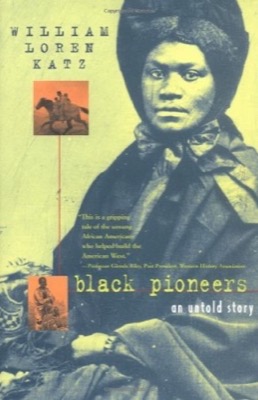
Hardcover. NY, Atheneum, 3rd pr., 1999, Book: Very Good, Dust Jacket: Very Good, Hardcover in a bright, unclipped dust jacket. In a clear, straightforward style, Katz describes the settlement of the Ohio and Mississippi Valleys (covering Ohio, Indiana, Illinois, Michigan, Wisconsin, Minnesota, Iowa, Kansas, and Missouri) by African Americans seeking freedom, including biographical sketches of men and women who formed churches, started schools, or were politically active in their region. Some of these settlers were fugitive slaves; several set up stations on the Underground Railroad with the aid of the Quakers; others were farmers, poets, and soldiers. In several states, they helped form black regiments in the Civil War. Chronologically arranged, the book introduces many lesser-known personages not found in most collective biographies and places them in a broader context of U.S. history as a whole.
Hardcover. NY, Atheneum, 3rd pr., 1999, Book: Very Good, Dust Jacket: Very Good, Hardcover in a bright, unclipped dust jacket. In a clear, straightforward style, Katz describes the settlement of the Ohio and Mississippi Valleys (covering Ohio, Indiana, Illinois, Michigan, Wisconsin, Minnesota, Iowa, Kansas, and Missouri) by African Americans seeking freedom, including biographical sketches of men and women who formed churches, started schools, or were politically active in their region. Some of these settlers were fugitive slaves; several set up stations on the Underground Railroad with the aid of the Quakers; others were farmers, poets, and soldiers. In several states, they helped form black regiments in the Civil War. Chronologically arranged, the book introduces many lesser-known personages not found in most collective biographies and places them in a broader context of U.S. history as a whole.
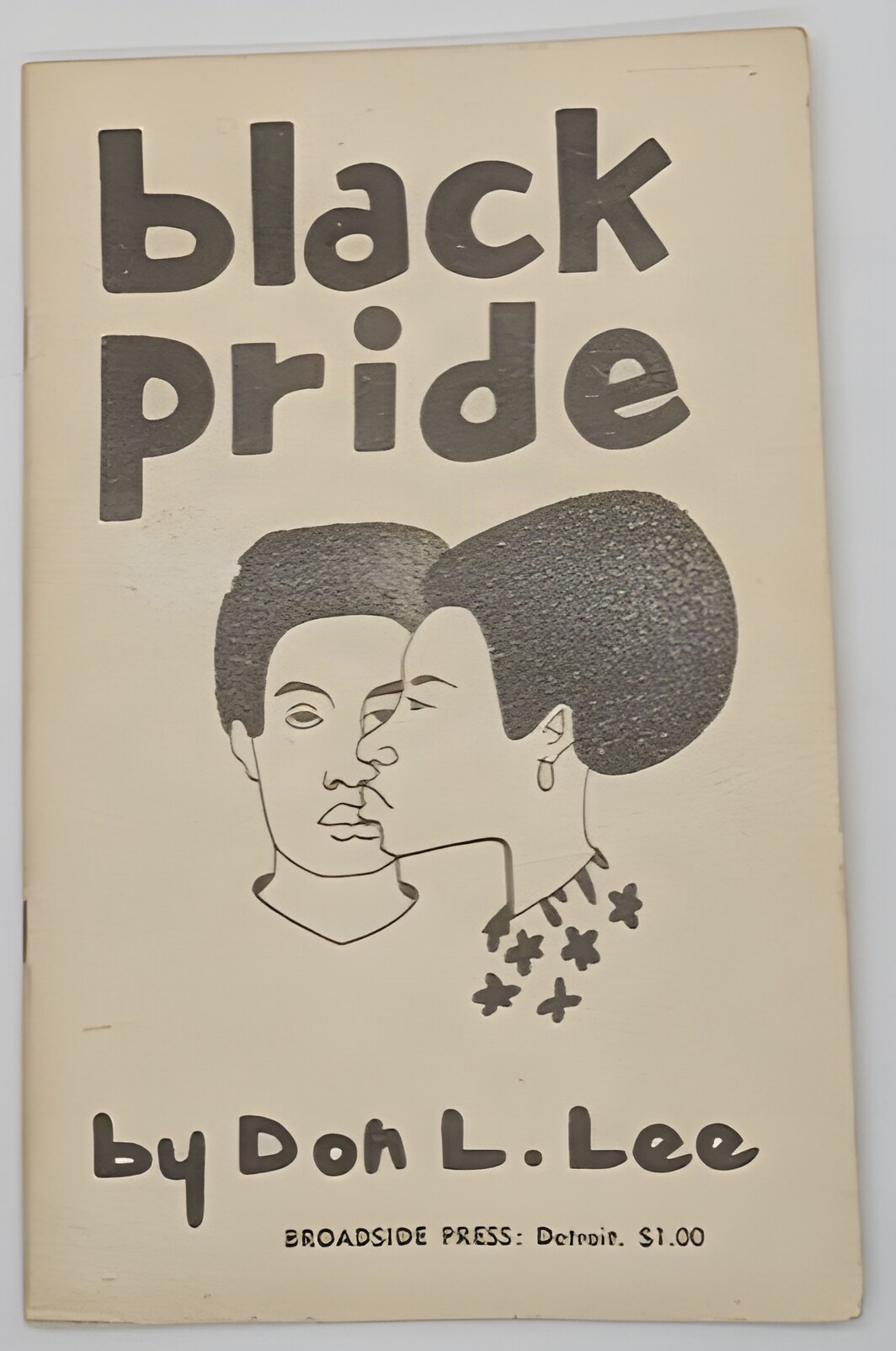
Softcover. Detroit MI, Broadside Press, 2nd pr., 1968, Book: Very Good, Dust Jacket: None, Softcover, stapled wrappers, 34 pages. Introduction by Dudley Randall. A seminal pamphlet from the Black Arts Movement, the work lays out Lee's early reflections on Black identity, self-respect, and cultural affirmation. Haki Madhubuti (He changed his name in 1973) published his first collection of poems, Think Black, in 1967 followed by Black Pride (1968), Don't Cry, Scream (1969), We Walk the Way of the New World (1970) and Book of Life (1973). His works deal with issues of racism, violence, stigmatization, and oppression of black people in America as well as the use of Christianity to persuade them to accept their condition. Previous owner's signature on front fly leaf, otherwise clean.
Softcover. Kensington, MD, Published privately, 1st, 1997, Book: Very Good, Dust Jacket: None, 36 pages. Softcover with light wear to edges. Black and white pictures throughout. Clean, tight copy.
Softcover. Hanover NH, Hood Museum of Art, Dartmouth College , 1st, 2008, Book: Very Good, Dust Jacket: None, Softcover, 374 pages illustrated in b&w and color. Issued in connection with an exhibition held March 8 to September 7, 2008, Hood Museum of Art, Dartmouth College. Black Womanhood examines an especially charged icon - the black female body - and contemporary artists' interventions upon historical images of black women as exotic Others, erotic fantasies, and supermaternal Mammies. This book presents icons of the black female body as seen from three separate but intersecting perspectives: the traditional African, the colonial, and the contemporary global. The display and contemplation of such iconic images addresses complex and often competing forces of self-presentation and the representation of others. Clean, like new. DOMESTIC SHIPPING ONLY.
Hardcover. Brooklyn, NY, PowerHouse Books, 1st, 2013, Book: Very Good, Dust Jacket: Very Good, 200 pages. Hardcover with dust jacket. Remainder mark on bottom edge, otherwise, clean, unmarked copy with only minor wear to dust jacket. Color and Black and white pictures throughout. Explores the genre of self-portraits through nineteenth, twentieth, and twenty-first-century photographic techniques, including also block prints, watercolor drawings, and accompanying essays.
Hardcover. NY, Amistad/HarperCollins, 3rd pr., 2005, Book: Very Good, Dust Jacket: Very Good, Hardcover in a bright, unclipped dust jacket. 540 pages, b&w illustrations, index. An important book of epic scope on America's first racially integrated, religiously-inspired political movement for change-The Underground Railroad, a movement peopled by daring heroes and heroines, and everyday folk For most, the mention of the Underground Railroad evokes images of hidden tunnels, midnight rides, and hairsbreadth escapes. Yet the Underground Railroad's epic story is much more morally complex and politically divisive than even the myths suggest. Against a backdrop of the country's westward expansion,which brought together Easterners who had engaged in slavery primarily in the abstract alongside slaveholding Southerners and their slaves, arose a clash of values that evolved into a fierce fight for nothing less than the country's soul. Beginning six decades before the Civil War, freedom-seeking blacks and pious whites worked together to save tens of thousands of lives, often at the risk of great physical danger to themselves. Not since the American Revolution had the country engaged in an act of such vast and profound civil disobedience that not only subverted federal law but also went against prevailing mores.
Hardcover. Atlas, 1st, 2008, Book: Very Good, Dust Jacket: Very Good, Hardcover, 224 pages. In the spring and summer of 1961, several hundred Americans--blacks and whites, men and women--converged on Jackson, Mississippi, to challenge state segregation laws. The Freedom Riders, as they came to be known, were determined to open up the South to civil rights: it was illegal for bus and train stations to discriminate, but most did and were not interested in change. Over 300 people were arrested and convicted of the charge "breach of the peace." Collected here in a richly illustrated, large-format book featuring over seventy contemporary photographs, alongside the original mug shots, and exclusive interviews with former Freedom Riders, is that testament: a moving archive of a chapter in U.S. history that hasn't yet closed.
Hardcover. US, Atlas & Co, 6th, 2008, 240 pages. Hardcover with dust jacket. Clean, unmarked copy with only minor wear to dust jacket. Black and white pictures throughout.
Softcover. Oxford UK, Clarendon Press, reprint, 1991, Book: Very Good, Dust Jacket: None, Softcover, green paper wraps, 449 pages. A study of the West Indies in the mid-nineteenth century, this book draws together the experiences of more than a dozen different sugar colonies and forms them into a coherent historical account. The first part of the book examines the West Indies on the eve of emancipation in 1830-1865, a key passage in West Indian history. Green presents a clear general picture of the sugar colonies, and places British governmental policy toward the region in the context of Victorian attitudes toward colonial questions.
Softcover. Charlottesville, University of Virginia Press, 1st pbk, 2007, Book: Very Good, Dust Jacket: None, Softcover. Illustrated with black and white photos.; A history of of the racially-charged integration of black players into baseball's southern minor leagues.
Softcover. Syracuse, NY, Willis N Bugbee Co, 1st, 1932, Book: Very Good, Dust Jacket: None, 16 pages. Softcover booklet. Green paper wrappers with softened edges. Light soil to paper wrappers. tight copy. Lightly faded on rear.
Hardcover. Scotland, Kiscadale Pub, 1st, 1995, Book: Very Good, Dust Jacket: Very Good, 104 pages. Hardcover with dust jacket. Clean, unmarked copy with only minor wear to dust jacket. Color and black and white pictures throughout. A well illustrated account of the author's collection of early photographs and post cards depicting Burma.
New York, John S. Taylor, 1st, 1836, Book: Good, Hardcover, 296 pages plus 8 pages of publisher's ads in rear. Original black boards with embossed design, gilt lettering and design with number ! on spine. Folding chart/map tipped in at page 196 with short tears. Illustrated title page. The first of three anti-slavery books published by John Taylor, a staunch abolitionist. A few brief notations on prlim pages, otherwise clean.
Hardcover. John Wiley and Sons, 1st, 2022, Book: Very Good, Dust Jacket: None, Hardcover, black cloth covers with white lettering, 261 pages. INSCRIBED BY ORGANSCHI on the half-title page. A comprehensive approach to design that integrates sustainable principles and design strategies for decarbonized construction. Offers professionals in the field an approach to sustainable design that embraces building science principles, life-cycle analysis, and design strategies in carbon neutral construction. The book also contains background information on carbon in construction materials and in the building design process. This book is filled with illustrative diagrams and drawings that help evaluate the potential impact of design decisions for creating carbon emissions. Written by and for designers and builders, the book includes a compelling pair of case studies that explore carbon-reducing strategies, suggests steps for assessing a building's carbon footprint, and reviews carbon storages and circulation of materials. Clean copy, like new.
Softcover. Ithaca NY, Cornell University Press, 2nd pr., 1993, Book: Very Good, Dust Jacket: None, Softcover, 280 pages. Since 1965, West Indians have been emigrating to the United States in record numbers, and to New York City in particular. Caribbean New York shows how the new immigration is reshaping American race relations and sheds much-needed light on factors that underlie some of the city's explosive racial confrontations. Philip Kasinitz examines how two forces-racial solidarity and ethnic distinctiveness-have helped to shape the identity of New York's West Indian community. He compares "new" (post-1965) immigrants with West Indians who arrived earlier in the century, and looks in detail at the economic, political, and cultural rules that Afro-Caribbean immigrants have played in the city during each period.
softcover. New York, Theatre Communications Group, reprint, 2004, Book: Very Good, Dust Jacket: None, 127 pages. Softcover. Clean, unmarked copy with only minor wear to wrappers.
Hardcover. New York, Century House, 1st, 1942, Book: Good, Dust Jacket: None, 399 pages. Hardcover with no dust jacket. Spine darkened and discolored. Black and white illustrations throughout. Clean, tight copy.
Hardcover. NY, Charles Scribner's Sons, 2nd pr., 1985, Book: Very Good, Dust Jacket: Very Good, Hardcover in a bright, unclipped dust jacket. Blending biography and social history, this portrait of one of the first Black Americans to win fame and respect in the twentieth century draws on new interview material and translations from German press coverage. 330 pages, b&w illustrations.
Philadelphia , John Winston, reprint, Book: Very Good, Dust Jacket: Very Good, Hardcover. B&W illustrations by Cyrus Leroy Baldridge. Clean copy in a nice dust jacket, pages tanning. Caleb Willows, a 16-year-old slave, makes a break for freedom and later is a student at Fisk University in Tennessee. He becomes one of the Jubilee Singers, eleven young African Americans who tour the United States and England singing spirituals in order to raise money for the school.
Softcover. San Francisco, Backbeat Books, 1st, 1998, Book: Very Good, Dust Jacket: None, Softcover, 271 pages, b&w illustrations. Chasin' That Devil Music has the feel of a documentary about the making of a thrilling motion picture. The main focus is on the Delta blues singers of the early 20th century--artists such as Charley Patton, Tommy Johnson, Son House, and Blind Lemon Jefferson who've achieved near-mythic status in blues circles. In addition, many of the articles gathered in this splendidly illustrated volume capture the process and people involved in tracking long-lost recordings nearly as elusive as the performers who made them. Here, for example, is the story of author/blues scholar Gayle Dean Wardlow's three-year hunt for the death certificate of Robert Johnson, the celebrated Mississippi bluesman and a figure whose legend has grown greater with each year since his much-debated death in 1938. The text here is nearly as raw in spots as the music that sparked it, but, as with those sounds (which can be heard on a terrific CD sampler included with the book), enthusiasts will find Chasin' That Devil Music riveting. Clean, bright copy.
Hardcover. Berkeley, University Of California Press, 1st, 2000, Book: Very Good, Dust Jacket: Very Good, Hardcover, black cloth stamped with silver lettering in a bright dust jacket, 112 pages. An immensely important record of black life in Chicago at the near end of the 1940's. Apart from a few photos of entertainers the rest capture, in fascinating detail, life in Chicago's south side. The workplace and workers, interiors of homes and bars, parades, funerals, sport and street scenes with plenty of activity. The detail in all these pictures is impressive and typical of Miller's eye to capture a scene that reveals so much. Foreword by Orville Schell. commentaries by Gordon Parks and Robert Stepto. Small color sticker on front fly leaf, otherwise clean.
Hardcover. New York, Schiffer, 1st, 2015, Book: Very Good, Dust Jacket: Very Good, 160 pages. Hardcover with dust jacket. Color photographs throughout. Clean, tight copy.
Hardcover. New York, McGraw Hill, 1st, 1977, Book: Very Good, Dust Jacket: Very Good, Hardcover, 171 pages, in a bright, unclipped dust jacket with art by Charles Lilly.

 "Black Pioneers: An Untold Storyby: William Loren Katz")


 "Bound for Canaan: The Underground Railroad and the War for the Soul of America by: Bordewich, Fergus")

 "Breach of Peace: Portraits of the 1961 Mississippi Freedom Ridersby: Etheridge, Eric")
 "British Slave Emancipation: the Sugar Colonies and the Great Experiment, 1830-1865 by: Green, William A.")
 "Brushing Back Jim Crow: The Integration of Minor-League Baseball in the American Southby: Adelson, Bruce")
 "Bugbee's Minstrel Plays: The Honey Boy Minstrelsby: Giles, Billy")
 "Burmah: A Photographic Journey, 1855-1925by: Singer, Noel F.")
 "Cabinet of Freedom, The: Volume 1by: Jay, William and others")




 "Caroline, or Change: A Musicalby: Tesori, Jeanine")
 "Cavalcade of Toysby: Freeman, Ruth and Larry")
 "Champion. Joe Louis: Black Hero in White Americaby: Mead, Chris")
 "Chariot in the Sky - A Story of the Jubilee Singersby: Bontemps, Arna")
 "Chasin' That Devil's Music,: Searching for the Blues (with CD)by: Gayle Dean Wardlow")

 "Chocolate Cheesecake: Celebrating the Modern Black Pin-Upby: Cox PHD, Earnest L.")
 "City Rose, Theby: Miller, Ruth White")