Softcover. Oxford, UK, Clarendon Press, Reprint, 1978, Book: Very Good, Dust Jacket: None, 306 pages. Softcover with light wear to wraps. Sunfade to spine. Spine faded. Small black mark on rear wrap, some lines highlighted on four pages. Light toning throughout, illustrated by tables & figures in bw.
Softcover. Berkeley CA, University of California Press, 1st pbk, 1997, Book: Very Good, Dust Jacket: None, Softcover, 472 pages. The prose writings of Charles Olson (1910-1970) have had a far-reaching and continuing impact on post-World War II American poetics. Olson's theories, which made explicit the principles of his own poetics and those of the Black Mountain poets, were instrumental in defining the sense of the postmodern in poetry and form the basis of most postwar free verse. The Collected Prose brings together in one volume the works published for the most part between 1946 and 1969, many of which are now out of print. A valuable companion to editions of Olson's poetry, the book backgrounds the poetics, preoccupations, and fascinations that underpin his great poems. Included are Call Me Ishmael, a classic of American literary criticism; the influential essays "Projective Verse" and "Human Universe"; and essays, book reviews, and Olson's notes on his studies. In these pieces one can trace the development of his new science of man, called "muthologos," a radical mix of myth and phenomenology that Olson offered in opposition to the mechanistic discourse and rationalizing policy he associated with America's recent wars in Europe and Asia. Clean copy.
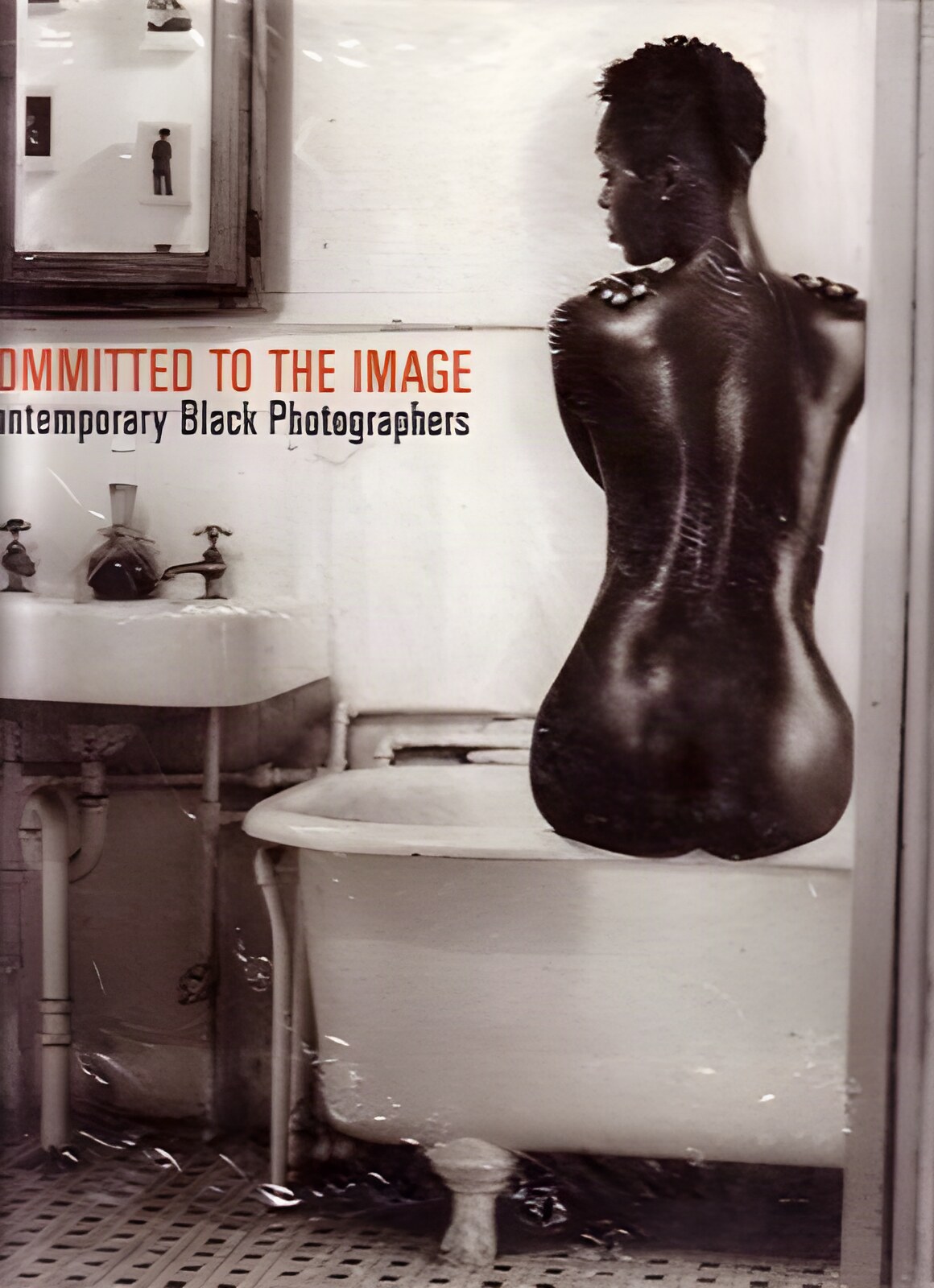
Softcover. London, Merrell Publishers, 1st pbk, 2001, Book: Very Good, Dust Jacket: None, Softcover, 240 pages, mostly b&w photos, some color. Catalogue of an exhibition held at the Brooklyn Museum of Art, New York, Feb. 16 - Apr. 29, 2001. The 94 African American photographers whose works appear in this volume, have used their equipment as tools of social commentary and personal and artistic exploration, bearing witness to the changes in American society over the past 50 years. Clean copy.
Softcover. NY, Oxford University Press, 2nd pr., 1995, Book: Very Good, Dust Jacket: Very Good, Hardcover in a bright, unclipped dust jacket. George Schuyler, a renowned and controversial black journalist of the Harlem Renaissance, and Josephine Cogdell, a blond, blue-eyed Texas heiress and granddaughter of slave owners, believed that intermarriage would "invigorate" the races, thereby producing extraordinary offspring. Their daughter, Philippa Duke Schuyler, became the embodiment of this theory, and they hoped she would prove that interracial children represented the final solution to America's race problems. Able to read and write at the age of two and a half, a pianist at four, and a composer by five, Philippa was often compared to Mozart. During the 1930s and 40s she graced the pages of Time and Look magazines, the New York Herald Tribune, and The New Yorker. Philippa grew up under the adoring and inquisitive eyes of an entire nation and soon became the role model and inspiration for a generation of African-American children. But as an adult she mysteriously dropped out of sight, leaving America to wonder what had happened to the "little Harlem genius." Suffering the double sting of racism and gender bias, Philippa had been rejected by the elite classical music milieu in the United States and forced to find an audience abroad, where she flourished as a world-class performer and composer. She traveled throughout South America, Europe, Africa, and Asia performing for kings, queens, and presidents. By then Philippa had added a second career as an author and foreign correspondent reporting on events around the globe--from Albert Schweitzer's leper colony in Lamberene to the turbulent Asian theater of the 1960s. She would give a command performance for Queen Elisabeth of Belgium one day, and hide from the Viet Cong among the ancient graves of the Annam kings another.
Hardcover. Seattle, University of Washington Press, 1st, 1966, Book: Very Good, Dust Jacket: Good, Hardcover, black cloth stamped in gilt, 204 pages. Dust jacket with partial fading, edgewear. Clean copy. The author's last work, a study of the Dahomean Kingdom, it's history and the part gold, colonialism and the slave trade played in it's fortunes. Scarce title.
Softcover. Urbana IL, University of Illinois Press, 1st, 2015, Book: Very Good, Dust Jacket: None, Softcover, 295 pages, b&w illustrations. INSCRIBED BY BECK on the title page. A daughter of freed African American slaves, Daisy Turner became a living repository of history. The family narrative entrusted to her--"a well-polished artifact, an heirloom that had been carefully preserved"--began among the Yoruba in West Africa and continued with her own century and more of life. In 1983, folklorist Jane Beck began a series of interviews with Turner, then one hundred years old and still relating four generations of oral history. Beck uses Turner's storytelling to build the Turner family saga, using at its foundation the oft-repeated touchstone stories at the heart of their experiences: the abduction into slavery of Turner's African ancestors; Daisy's father Alec Turner learning to read; his return as a soldier to his former plantation to kill his former overseer; and Daisy's childhood stand against racism. Other stories re-create enslavement and her father's life in Vermont--in short, the range of life events large and small, transmitted by means so alive as to include voice inflections. Beck, at the same time, weaves in historical research and offers a folklorist's perspective on oral history and the hazards--and uses--of memory. Clean copy.
Softcover. NY, Praeger, reprint, 1998, Book: Very Good, Dust Jacket: None, Softcover, 189 pages, b&w illustrations. This ground-breaking work brings dance into current discussions of the African presence in American culture. Dixon Gottschild argues that the Africanist aesthetic has been invisibilized by the pervasive force of racism. This book provides evidence to correct and balance the record, investigating the Africanist presence as a conditioning factor in shaping American performance, onstage and in everyday life. She examines the Africanist presence in American dance forms particularly in George Balanchine's Americanized style of ballet, (post)modern dance, and blackface minstrelsy. Hip hop culture and rap are related to contemporary performance, showing how a disenfranchised culture affects the culture in power. Clean copy.
Hardcover. New York, Hyperion Books for Children, 1st, 1993, Book: Very Good, Dust Jacket: Very Good, Unpaginated. Hardcover with matching dust jacket. SIGNED AND INSCRIBED BY AUTHOR ON FRONT FLY LEAF. Clean, tight copy.
Hardcover. St. Paul MN, Minnesota Historical Society, 1st, 2018, Book: Very Good, Dust Jacket: None, Hardcover, pictorial boards. 143 pages, b&w photos throughout. After serving in World War II, John Glanton returned home to Minnesota and began taking his camera around the streets, parks, clubs, restaurants, and private homes of Minneapolis, capturing the sights and scenes of everyday life for African Americans in the city. The images--from intimate portraits to public gatherings--reveal a dynamic and diverse community at a time when the nation was entering the postwar boom but before the civil rights movement had taken root. Glanton's photos offer a rare look into the lives and lifestyles of families and individuals often left out of histories of Minnesota's past, showing people at work and play, young and old, happy and sad. The images highlight black-owned businesses of the day, the music and club scene, and weddings and other family occasions to depict the experiences of African American people as presented through the lens of an African American photographer. Long forgotten in the garage of a family member, the photo negatives were recently rediscovered and digitized. A selection of 200 of the more than 800 images are featured here, along with commentary that further illuminates the lives and experiences of African Americans in postwar Minnesota.
Hardcover. Jefferson NC, McFarland, 1st, 1999, Book: Very Good, Dust Jacket: None, Hardcover, 223 pages, b&w photos. Eugene Jackson became a child star in 1924 playing "Pineapple" in the original "Our Gang" comedy shorts. Join him as he shares his life story -- a story that preserves the history of vaudeville and early Hollywood as well as chronicles the African American experience in the entertainment business.
Hardcover. Reno, Center for Basque Studies, 1st, 2012, Book: Very Good, Dust Jacket: None, 333 pages, b&w photos. Black illustrated boards, no dust jacket. Light bumping to corners, else a clean, tight copy. his story--that of the government-in-exile of Lehendakari Jose Antonio Agirre and the multitudes of other Basques who were forced by war and oppression to flee their homeland--has not been written in English before and is rather unknown to the Basque, Spanish, and French historiography. Drawing on primary sources; archival documentation; and interviews with many Basque political exiles, resistance members, and former prisoners of labor camps Professor Xabier Irujo tells a gripping story of the Basque autonomous government, conceived during the beginnings of a bloody civil war, forced to organize a mass exile and then overtaken by necessity to feed and clothe its exiled population. Following this initial period, the exiled Basques were then confronted by World War and forced again into flight, this time mainly to the Americas. Never giving up their opposition to the dictatorship of Francisco Franco, the government continued its struggle during forty long years of existence, through wars hot and cold as well as countless political developments. While tracing the history of Lehendakari Agirre, this book is more the story of all of the Basques who were forced into exile, and it serves as a testimony to their unwavering determination to return to their homeland. In addition, the book contains an extensive biographical index of many of the heretofore unknown exile activists: writers, politicians, soldiers, intellectuals, but even more so, Basque patriots.
Softcover. London, Methuen & Co, Ltd, 1st, 1973, Book: Very Good, Dust Jacket: None, Softcover, 405 pages. Black stiff wrappers. Light wear to edges and slight bump to upper edge of spine. Small crease to lower front corner. Clean, tight copy.
Hardcover. New York, Bloomsbury , 1st, 2002, Book: Very Good, Dust Jacket: Very Good, 255 pages. Hardcover with dust jacket. Clean, unmarked copy with only minor wear to dust jacket. Black and white pictures throughout. Throughout her career, Eve Arnold alternated between serious documentary photography and working behind the scenes on numerous films. At a time when Hollywood studios controlled every aspect of their actors' image, Arnold's candid photographs showed them at their most intimate and their most compelling: Marilyn Monroe sharing a private moment with Arthur Miller, Marlene Dietrich, uncharacteristically girlish in the recording studio, Michael Caine and Candice Bergen doing an impromptu tango number and an exhausted Richard Attenborough stealing a nap in between shooting. Eve Arnold: Film Journal is a collection of these famous film stills along with the notes and impressions made by Arnold during the shoot. As her camera revealed the unseen sides of Hollywood legends, Arnold also became privy to their private lives. In her Film Journal, she writes memorably about the tensions and dramas on the film sets, of Marilyn Monroe combing her pubic hair during an interview, Simone Signoret discussing her husband Yves Montand's infidelities, Joan Crawford sneaking in vodka in a Pepsi cooler, and Marlene Dietrich recounting her night with John F. Kennedy. With 80 previously unpublished photographs, including many old favorites, Eve Arnold: Film Journal is a classic from one of the great photographers of our time.
Hardcover. Johannesburg SA, Penguin Books, 1st, 1987, Book: Very Good, Dust Jacket: None, 130 pages. Hardcover with no dust jacket. Clean, unmarked copy with only minor wear to boards. Some fading to spine. and laminate is bubbled in some spots. A fascinating book of photographs of mainly Black life during the 1950s in South Africa.
Hardcover. NY, Knopf, 1st , 1978, Book: Very Good, 149 pages. Hardcover with laminated boards. Black & white photos. Clean board covers. No dust-jacket issued.
Softcover. Charleston, SC, Arcadia Publishing, 1st, 2004, Book: Very Good, Dust Jacket: None, Softcover, 128 pages, b&w photos throughout. At the foot of the Huachuca Mountains, the U.S. Army founded one of the most crucial military posts for American expansion into the southwest frontier. Soldiers had been stationed in the region for decades, but in 1877 Fort Huachuca became the symbolic cornerstone of America's western domain. The Native American word huachuca, meaning "place of thunder," described the sporadic but marvelous electrical storms in the area, but the skies would not be the only thing booming. During the tumultuous campaigns to resolve American and Indian disputes, the U.S. infantry and famed Buffalo Soldiers faced off with Geronimo and his Apache nation in both tense negotiations and bitter combat. As time marched on, the fort developed into a permanent installation with barracks, modern training grounds, and other facilities to accommodate troop rotations and eventually became the innovative Center for Military Intelligence. Clean copy.
Softcover. NY, Oxford University Press, reprint, 2010, Book: Very Good, Dust Jacket: None, Softcover, 402 pages, b&w illustrations. An insightful examination of the impact of the Civil Rights Movement and African Independence on jazz in the 1950s and 60s, Freedom Sounds traces the complex relationships among music, politics, aesthetics, and activism through the lens of the hot button racial and economic issues of the time. Ingrid Monson illustrates how the contentious and soul-searching debates in the Civil Rights, African Independence, and Black Power movements shaped aesthetic debates and exerted a moral pressure on musicians to take action. Throughout, her arguments show how jazz musicians' quest for self-determination as artists and human beings also led to fascinating and far reaching musical explorations and a lasting ethos of social critique and transcendence. Clean copy.
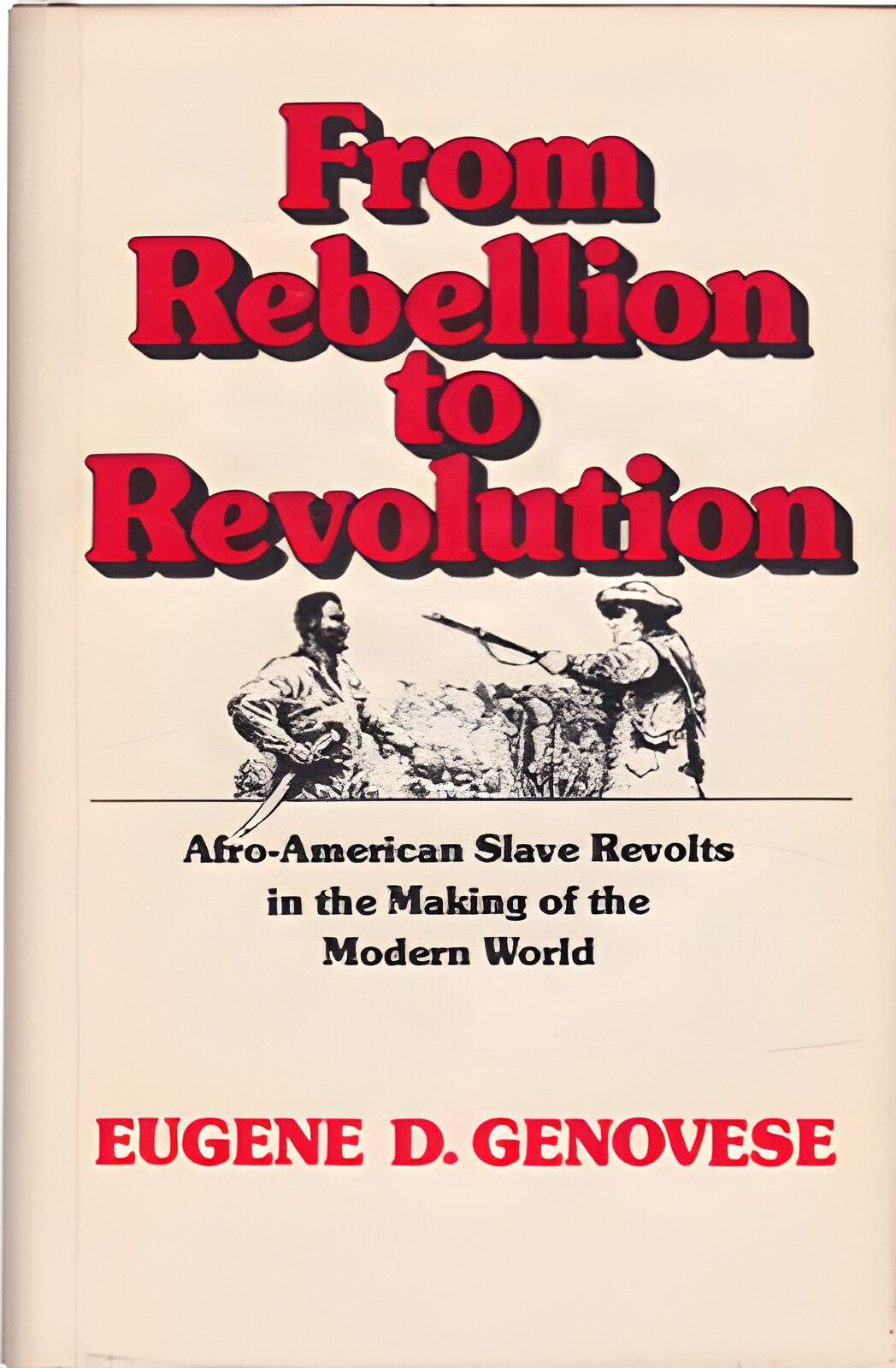
Hardcover. Baton Rouge, Louisiana State University , 1st, 1979, Book: Very Good, Dust Jacket: Very Good, Hardcover in a bright dust jacket, 173 pages. This work is a brief look at worldwide slave revolts in the 17th through 19th centuries, emphasizing their interrelations with European power struggles, which gave rebels hope of finding weak spots in the defenses of the slave powers. The French Revolution also had an influence on slave revolts, but the canny European powers used indigenous peoples to suppress slave revolts (e.g., native Americans) and took advantage of African ethnic divisions as well. American slaves stood little chance of revolt and were under constant surveillance from Southerners, who coward in fear after the successful rebellions in the Caribbean, particularly in Hispaniola, and after Nat Turner and John Brown's efforts. Genovese also brings up religion's double-edged sword: one side used to pacify slaves and the other side to inspire them to break their chains. In short, this scholarly treatise is thought-provoking as well as informative and ends with an inspirational quote from one of Frederick Douglass's lectures. Name on front fly leaf, otherwise a clean copy.
Hardcover. Boston, American Unitarian Association, 1st, 1905, Book: Very Good, Dust Jacket: None, Hardcover, black cloth with white lettering, 232 pages. Collection of six essays, including "Atlanta University" by Professor W. E. Burghardt Du Bois in which the author discusses the significance of Atlanta University. Other institutions and authors include: Howard University by Prof. Kelly Miller; Berea College, by President William G. Frost; Tuskegee Institute by Prof. Roscoe Conkling Bruce; Hampton Institute by Principal H. B. Frissell; and Fisk University by President James G. Merrill. From a church library with label on spine, bookplate and stamp on front endpapers. Otherwise a sharp copy with no other markings or residue. Scarce in original edition.
Softcover. Bloomington IN, Indiana University Press, 1st, 2003, Book: Very Good, Dust Jacket: None, Softcover, 209 pages. This groundbreaking study explores the Harlem Renaissance as a literary phenomenon fundamentally shaped by same-sex-interested men. Christa Schwarz focuses on Countee Cullen, Langston Hughes, Claude McKay, and Richard Bruce Nugent and explores these writers' sexually dissident or gay literary voices. The portrayals of men-loving men in these writers' works vary significantly. Schwarz locates in the poetry of Cullen, Hughes, and McKay the employment of contemporary gay code words, deriving from the Greek discourse of homosexuality and from Walt Whitman. By contrast, Nugent-the only "out" gay Harlem Renaissance artist-portrayed men-loving men without reference to racial concepts or Whitmanesque codes. Schwarz argues for contemporary readings attuned to the complex relation between race, gender, and sexual orientation in Harlem Renaissance writing. Clean copy.
Hardcover. NY, Abrams, 1st, 2024, Book: Very Good, Dust Jacket: None, Hardcover, pictorial boards, 330 pages. A visually captivating history of the evolution of Glamour magazine and the brands legendary decades at the forefront of female empowerment in an incredible photographic volume For more than 80 years, Glamour has been the preeminent women's empowerment brand in America. But until now, no one has told the extraordinary story of its origins, the famous names who helped shape the magazine into the global powerhouse it is today, and Glamour's many historic firsts. Glamour was the first American fashion magazine to feature a Black cover star, the first to present Gloria Steinem's writing, and the first to feature groundbreaking reporting on reproductive rights. In a gripping journey, follow the group of women editors and journalists who spearheaded the magazine as World War II transformed the female landscape with over 7.5 million working women suddenly in the US workforce in 1940 and repositioned the title from charting Hollywood glamour to the magazine for the girl with a job.
Hardcover. NY, G.P. Putnam's Sons, 1st, 1874, Book: Very Good, Dust Jacket: None, Hardcover, 256 pages. Fold-out frontis, b&w Illustrations, very nice, clean copy. Written by "two of its teachers." Includes "Fifty Cabin and Plantation Songs" arranged by Thomas P. Fenner. Illustrated with a four-fold engraved frontispiece, depicting several of the school's buildings as seen from the water, and many other engravings. An interesting account of the school, including a brief history of Virginia and of slavery and its aftermath in that state, and one of the earliest publications of slave music.

 "Classical Economists, Theby: O'Brien, D. P.")

 "Composition in Black and White: The Life of Philippa Schuyler by: Talalay, Kathryn")
 "Dahomey and the Slave Trade: An Analysis of an Archaic Economyby: Karl Polanyi")
 "Daisy Turner's Kin: An African American Family Saga (INSCRIBED COPY)by: Beck, Jane C.")
 "Digging the Africanist Presence in American Performance: Dance and Other Contextsby: Brenda D. Gottschild")


 "Double Exposure: Images of Black Minnesota in the 1940sby: John Glanton")
 "Eugene \"Pineapple\" Jackson - His Own Storyby: Jackson II, Eugene W. with Gwendolyn Sides St. Julian")
 "Expelled from the Motherland The Government of President Jose Antonio Agirre in Exile, 1937-1960by: Irujo, Xabier")


 "Experimental Study of Freudian Theories, Theby: Eysenck, Hans J. & Glenn D. Wilson")
 "Film Journalby: Arnold, Eve")
 "Finest Photos From the Old Drum, Theby: Jurgen (compiler and editor) Schadeberg")
 "Flashback! - The 50'sby: Arnold, Eve")
 "Fort Huachuca by: Price, Ethel Jackson")
 "Frederic Edwin Church: The Icebergsby: Carr, Gerald R.")

 "From Servitude to Service, Being the Old South Lectures on the History and Work of Southern Institutions for the Education of the Negroby: Du Bois, W.E.B. and others")
 "Gay Voices of the Harlem Renaissance by: Schwarz, A.B. Christa")
 "Glamour: An Extraordinary History: 85 Years of Women Breaking Boundariesby: Pearlman, Natasha; Wolle, Ruhama; Moeslein, Anna")


 "Hampton and Its Students by Two of Its Teachers with 50 Cabin and Plantation Songsby: Armstrong, Mrs. M.I. and Helen W. Ludlow")