Hardcover. Cambridge MA, MIT Press , 1st, 2022, Book: Very Good, Dust Jacket: Very Good, Hardcover in a bright dust jacket, 311 pages, b&w illustrations. In the 1930s and 1940s, English fashion houses, spurred by economic and wartime crises, put London on the map as a major fashion city. In this book, Michelle Jones examines the creation of a London-based couture industry during these years, exploring how designer collaboration and the construction of specific networks and narratives supported and shaped the English fashion economy. Haute couture-the practice of creative made-to-measure womenswear-was widely regarded as inherently French. Jones shows how an English version emerged during a period of economic turbulence, when a group of designers banded together in a collective effort to shift power within the international fashion system. Clean, bright copy.
Hardcover. New York, George H. Doran, 2nd pr., 1925, Book: Very Good, Dust Jacket: None, Early reprint. No Doran colophon, 1925 on (C) page but publisher's decorative device on title page. Green cloth, gilt lettering on spine faded otherwise clean, tight.
Hardcover. Homewood, Illinois, Richard D. Irwin, Inc., 1st, 1961, Book: Very Good, Dust Jacket: Good, 545 pages. Reprints of 18 articles approaching marketing issues from a mathematical viewpoint. Dark blue cloth covers, light blue spine, black & gilt titles, illustrated dust jacket with mylar protective covering, numerous b&w diagrams, charts and graphs. Dust jacket discolored at edges and spine, chipping to edges, small half-inch chunk from bottom front right corner, though dust jacket still very neat with mylar covering, clean boards, pages crisp and unmarked; a very neat, tight copy.
Hardcover. New York, Simon & Schuster, First Edition, 2014, Book: Very Good, Dust Jacket: Very Good, 370 pages. Hardcover. Red & black cloth boards with gilt titles to spine. Dust jacket with light marginal wear to edges. Clean & unmarked copy.
Hardcover. New York , Business Plus, 1st, 2010, Book: Very Good, Dust Jacket: Very Good, 244 pages. INSCRIBED BY AUTHOR on half-title page. Clean, unmarked copy with only minor wear to dust jacket.
Hardcover. Chicago, University Of Chicago Press , 1st, 2017, Book: Very Good, Dust Jacket: Very Good, Hardcover in a bright dust jacket, 330 pages with index. At the close of the nineteenth century, new printing and paper technologies fueled an expansion of the newspaper business and publishers were soon reeling off as many copies as Americans could be convinced to buy. Newspapers quickly saturated the United States, especially its cities, which were often home to more than a dozen daily papers apiece. Using New York, Philadelphia, Milwaukee, and Chicago as case studies, Julia Guarneri shows how city dailies became active agents in creating metropolitan spaces and distinctive urban cultures. Newsprint Metropolis offers a vivid tour of these papers, from the front to the back pages. Paying attention to much-loved features, including comic strips, sports pages, advice columns, and Sunday magazines, she tells the linked histories of newspapers and the cities they served. Themed sections for women, businessmen, sports fans, and suburbanites illustrated entire ways of life built around consumer products. Guarneri also argues that while papers provided a guide to individual upward mobility, they also fostered a climate of civic concern and responsibility. Charity campaigns and metropolitan sections painted portraits of distinctive, cohesive urban communities. Real estate sections and classified ads boosted the profile of the suburbs, expanding metropolitan areas while maintaining cities' roles as economic and information hubs. Clean, like new.
Hardcover. Seattle, University of Washington Press, 1st, 1991, Book: Very Good, Dust Jacket: Very Good, 388 pages, hardcover. B&w plates. INSCRIBED BY ECKERT. Light foxing to edge and light wear to bottom edges of cover. According to conventional interpretations, the Japanese annexation of Korea in 1910 destroyed a budding native capitalist economy on the peninsula and blocked the development of a Korean capitalist class until 1945. In this expansive and provocative study, now available in paperback, Carter J. Eckert challenges the standard view and argues that Japanese imperialism, while politically oppressive, was also the catalyst and cradle of modern Korean industrial development. Ancient ties to China were replaced by new ones to Japan - ties that have continued to shape the South Korean political economy down to the present day. Eckert explores a wide range of themes, including the roots of capitalist development in Korea, the origins of the modern business elite, the nature of Japanese colonial policy and the Japanese colonial state, the relationship between the colonial government and the Korean economic elite, and the nature of Korean collaboration. He conveys a clear sense of the human complexity, archival richness, and intellectual challenge of the historical period. His documentation is thorough; his arguments are compelling and often strikingly innovative.
Hardcover. Cheltenham UK, Edward Elgar Publishing, 1st, 2008, Book: Very Good, Dust Jacket: None, Hardcover in glossy pictorial boards, 264 pages. Here the example of the Russian oil industry in the context of transition from a planned to a market economy is used to develop a three-stage framework for organisational transformation. Four longitudinal case studies of Russian oil companies are drawn upon to explain the process of organisational transformation. The book highlights how and why this process differs between companies within the same industry, explores the complexity of the change process and discusses the importance of the top management team. Clean copy.
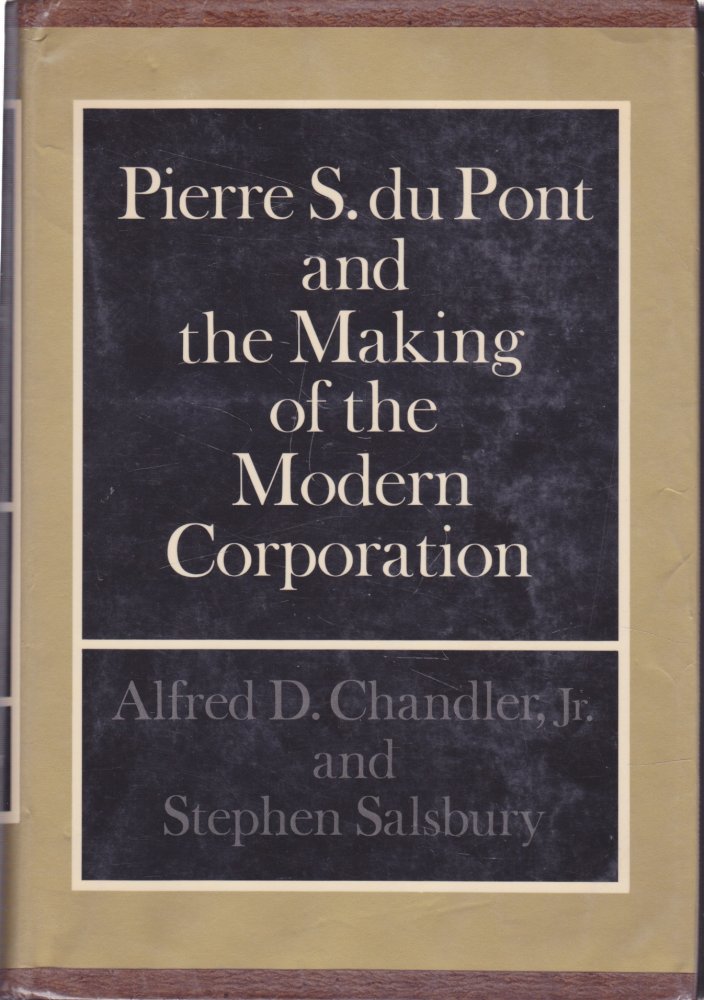
Hardcover. NY, Harper & Row, 1st, 1971, Book: Good, Dust Jacket: Good, Hardcover in a bright dust jacket. 722 pages, b&w illustrations. Ex-lib with residue and stamping to front endpapers, otherwise a clean, bright copy. One of the finest business histories ever written by an author who won both the Pulitzer and Bancroft Prizes for History. A detailed account of how Pierre S. du Pont transformed a family gunpowder factory into the Du Pont Company and revitalized General Motors into a highly prosperous corporation.
Hardcover. Cambridge MA, MIT Press], 2nd pr., 2010, Book: Very Good, Dust Jacket: Very Good, Hardcover in a bright dust jacket, 261 pages. The story of how diesel engines and gas turbines, used to power cargo ships and jet airplanes, made today's globally integrated economy possible. Clean copy.
Hardcover. Chapel Hill NC, University of North Carolina, 1st, 1991, Book: Very Good, Dust Jacket: Very Good, Hardcover in a bright dust jacket, 363 pages. In examining the founding of New England towns during the seventeenth century, John Frederick Martin investigates an old subject with fresh insight. Whereas most historians emphasize communalism and absence of commerce in the seventeenth century, Martin demonstrates that colonists sought profits in town-founding, that town founders used business corporations to organize themselves into landholding bodies, and that multiple and absentee landholding was common. In reviewing some sixty towns and the activities of one hundred town founders, Martin finds that many town residents were excluded from owning common lands and from voting. It was not until the end of the seventeenth century, when proprietors separated from towns, that town institutions emerged as fully public entities for the first time. Name on front endpaper, otherwise clean.
Softcover. Cambridge MA, Belknap Press / Harvard, reprint, 1996, Book: Very Good, Dust Jacket: None, Softcover, 760 pages. Representing ten years of research into the history of the managerial business system, this book concentrates on patterns of growth and competitiveness in the United States, Germany, and Great Britain, tracing the evolution of large firms into multinational giants and orienting the late twentieth century's most important developments. Clean,bright copy.
Hardcover. Chicago, University of Chicago Press, 2nd pr., 2015, Book: Very Good, Dust Jacket: Very Good, Hardcover in a bright dust jacket, 233 pages, b&w illustrations. From the minute it opened--on Christmas Day in 1865--it was Chicago's must-see tourist attraction, drawing more than half a million visitors each year. Families, visiting dignitaries, even school groups all made trips to the South Side to tour the Union Stock Yard. There they got a firsthand look at the city's industrial prowess as they witnessed cattle, hogs, and sheep disassembled with breathtaking efficiency. At their height, the kill floors employed 50,000 workers and processed six hundred animals an hour, an astonishing spectacle of industrialized death. Slaughterhouse tells the story of the Union Stock Yard, chronicling the rise and fall of an industrial district that, for better or worse, served as the public face of Chicago for decades. Dominic A. Pacyga is a guide like no other--he grew up in the shadow of the stockyards, spent summers in their hog house and cattle yards, and maintains a long-standing connection with the working-class neighborhoods around them. Pacyga takes readers through the packinghouses as only an insider can, covering the rough and toxic life inside the plants and their lasting effects on the world outside. He shows how the yards shaped the surrounding neighborhoods and controlled the livelihoods of thousands of families. He looks at the Union Stock Yard's political and economic power and its sometimes volatile role in the city's race and labor relations. And he traces its decades of mechanized innovations, which introduced millions of consumers across the country to an industrialized food system. Clean copy.
Hardcover. NY, Hill & Wang , 1st, 1996, Book: Very Good, Dust Jacket: Very Good, Hardcover in a bright dust jacket, 251 pages. Completed in 1825 and enlarged between 1836 and 1862 at the initial cost of $7 million, the Erie Canal not only created an economic revolution in the region but fostered new and unique communities made up of entrepreneurs, canal workers, and farmers. Utilizing a variety of primary resources, but especially the Canal Board Papers, Sheriff (history relates the social history of those who lived, worked, and traveled the Erie Canal before the Civil War. This previously untold story is laced with accounts by businessmen who saw the canal as opportunity, immigrant laborers looking for steady work, and farmers who transported their produce by canal boat. Although all of these groups relayed their complaints, claims, and concerns to the Canal Board, we do not know the responses they received. Still, the issues raised tell a great deal about the local impact of the Erie Canal, and herein lies the strength of the book. Clean copy.
Hardcover. Seattle, Fantagraphics Books, 1st, 2025, Book: Very Good, Dust Jacket: None, Hardcover, pictorial boards. 424 pages, color throughout. After becoming a professional comics artist in 1948 at the age of 17, by 21 Al Williamson was well-regarded enough as a Western and science-fiction illustrator to be recruited for the EC Comics staff roster - the absolute peak of the field in the 1950s, and a team rarely challenged since. After the Comics Code forced EC to reduce their business, Williamson found himself at the door of Atlas Comics, the largest employer of freelancers in the field. From 1955-60, Williamson would draw 99 stories for Atlas (both solo and with help by "Fleagle Gang" studio cohorts Angelo Torres and Roy Krenkel, plus Gray Morrow and Ralph Mayo) in mostly western and fantasy genres, with a smattering of war, romance and "jungle girl adventure". He flourished on Westerns, freely and loosely rendered four-page morality plays, many scripted economically by Stan Lee. With his extensive oeuvre subsequently based mostly in newspaper strips (including Flash Gordon, Secret Agent Corrigan, and the syndicated Star Wars, at George Lucas' own request), or working largely as an inker, his Atlas stories collectively are the largest single body of work Williamson would ever do as a primary creator for one company. Fantagraphics is proud to present this Al Williamson Artist Edition to finally showcase this distinct period of his remarkable career. Clean, bright copy. DOMESTIC SHIPPING ONLY.
Hardcover. Chicago, University of Chicago Press, 1st, 1989, Book: Very Good, Dust Jacket: Very Good, Hardcover in a bright dust jacket. "...identifies the many economic pressures exerted on the game today and measures their effects both on the field and in the ticket office. He presents a detailed and original analysis of traditional baseball performance statistics from slugging to fielding and draws on a wealth of previously unpublished data divulged in recent collusion suits. At the heart of the controversy are the disparate claims of owners, who say they are loosing money and stay on only out of love for the game, and players, who insist they are being exploited by owner reaping huge profits."
Hardcover. Walburg Pers, 1st, 2003, Book: Very Good, Dust Jacket: Very Good, Hardcover in a bright dust jacket, 192 pages illustrated in color and b&w. A study about the development of a company founded in Amsterdam in the Dutch Golden Age. The VOC, as it was called, was a joint venture company of the Dutch in controlling trade in the world. This scientific paper is one of the main references in terms of research on VOC History. Clean copy.
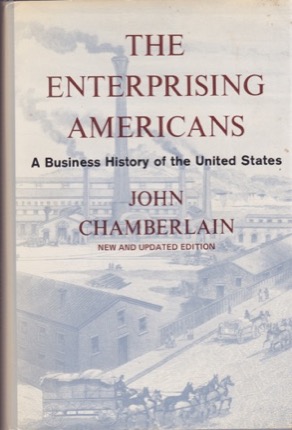
Hardcover. NY, Harper & Row, Revised Ed., 1974, Book: Very Good, Dust Jacket: Very Good, Hardcover in a bright dust jacket, 282 pages. INSCRIBED BY CHAMBERLAIN on the front fly leaf. The Updated Edition of a title first published in the 1960s. Clean copy.
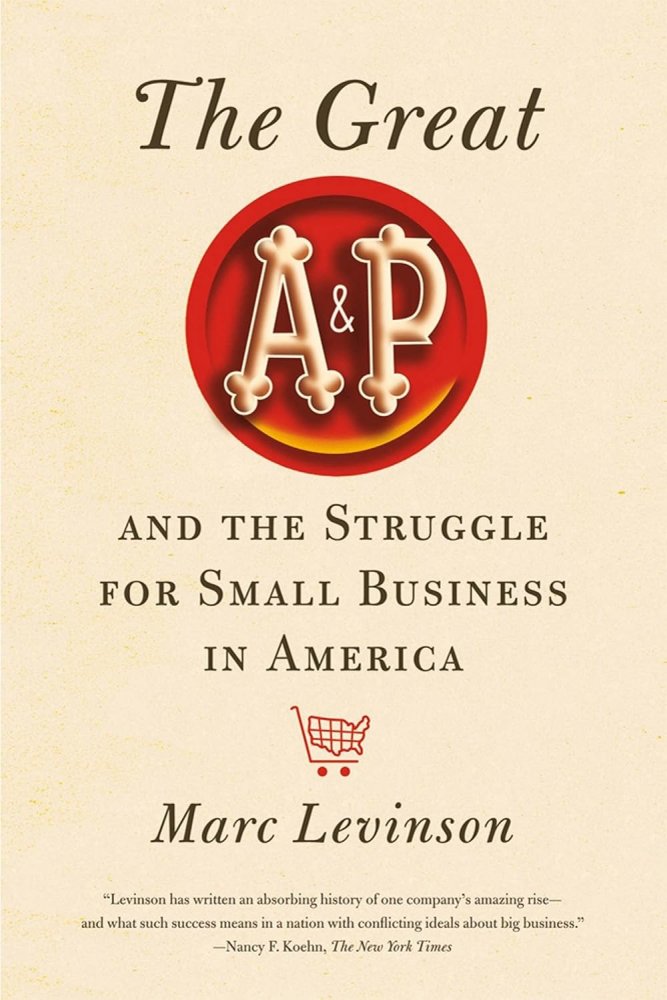
Hardcover. NY, Hill & Wang, 3rd pr., 2011, Book: Very Good, Dust Jacket: Very Good, Hardcover in a bright dust jacket, 358 pages, b&w illustrations. From modest beginnings as a tea shop, the Great Atlantic & Pacific Tea Company became the largest retailer in the world. It was a juggernaut, with nearly sixteen thousand stores. But its explosive growth made it a mortal threat to mom-and-pop grocery stores across the nation. Main Street fought back tooth and nail, leading the Hoover, Roosevelt, and Truman administrations to investigate the Great A&P. In a remarkable court case, the government pressed criminal charges against the company for selling food too cheaply-and won. The acclaimed historian Marc Levinson tells the story of a struggle between small business and big business that tore America apart. George and John Hartford took over their father's business and reshaped it again and again, turning it into a vertically integrated behemoth that paved the way for every big-box retailer to come. George demanded a rock-solid balance sheet; John was the marketer-entrepreneur who led A&P through seven decades of rapid changes. Together, they set the stage for the modern consumer economy by turning an archaic retail industry into a highly efficient system for distributing food at low cost. Clean copy.
Softcover. NY, Harper Torchbooks, reprint, 1966, Book: Very Good, Dust Jacket: None, Softcover, 302 pages. This book presents the historical setting of the industrial revolution in a form suitable for the general reader. It seeks to explain why 18th-century England was the theatre of the great series of mechanical inventions that caused the revolution, and what were the great social changes that preceded, accompanied and followed it. Clean copy.
Hardcover. Indianapolis, Liberty Press, 1st, 1976, Book: Very Good, Dust Jacket: Good, Hardcover in a worn, chipped dust jacket. 293 pages. SIGNED BY CHAMBERLAIN on title page, also INSCRIBED by him on the front fly leaf. Capitalism is a system that can stand on its own attainments, says John Chamberlain, and he offers here a fast-paced, provocative look at the intellectual forces and practical accomplishments that have created American capitalism. In clear, unequivocal language he discusses the ideas responsible for our economic institutions, the originators of these ideas, and the times in which they first became important. The political theories of the men who hammered out the Magna Carta and the Declaration of Independence; the thinking of John Locke, James Madison, and Adam Smith; the deeds and discoveries of the James Watts, Eli Whitneys, and Henry Fords-all these diverse elements are shown to be part of the tradition of a free society in which American capitalism has grown and flourished. A unique blend of political and economic theory and the practical accomplishments of businessmen and innovators, The Roots of Capitalism provides valuable insights into the ideas underlying the free economy. Clean copy.


 "Making of a Stockbroker, Theby: Lefevre, Edwin")
 "Mathematical Models and Methods in Marketingby: Bass et al. (eds.)")
 "Meat Racket, The - The Secret Takeover of America's Food Businessby: Leonard, Christopher")
 "Mirror Test, The: Is Your Business Really Breathingby: Hayzlett, Jeffrey W. & Jim Eber")
 "Newsprint Metropolis City Papers and the Making of Modern Americans by: Guarneri, Julia")
 "Offspring of Empire: The Koch'ang Kims and the Colonial Origins of Korean Capitalism 1876-1945 (SIGNED COPY)by: Eckert, Carter J.")

 "Organizing Asian American Labor: The Pacific Coast Canned Salmon Industry, 1870-1942by: Friday, Chris")
 "Other People's Money - A Swiss Banker Sums Upby: de Candolle, Roger")


 "Scale and Scope: The Dynamics of Industrial Capitalismby: Alfred DuPont Chandler Jr.")
 "Slaughterhouse: Chicago's Union Stock Yard and the World It Made by: Pacyga, Dominic A.")


 "The Business of Major League Baseballby: Gerald W. Scully")




 "The Rise of Modern Industry by: Hammond, J. L. and Barbara")