Hardcover. NY, E.P. Dutton, 1st, 1953, Book: Very Good, Dust Jacket: Very Good, Hardcover, 94 pages of b&w cartoons. In a very good, unclipped dust jacket that has fading to spine. Cartoons by George Wolfe, John Gallagher, Dick Cavalli, Mort Walker, others.
Hardcover. Utica NY, North Country Books, 1st, 1991, Book: Very Good, Dust Jacket: Very Good, Hardcover in a bright dust jacket, 332 pages, b&w illustrations. The story of how Adirondack forests lured investments from financial centers; how roads pushed deep into the wilderness; how tanneries were built in remote places and how towns sprang up around them; how hides were shipped to canal ports in Warrensburg or along the Erie Canal and how teamsters drove great distances to reach the tanneries. A largely forgotten history is brought to life in this well-researched book of an industry that disappeared in the 1890s.
Softcover. Electric Radio Press, reprint, 1998, Book: Very Good, Dust Jacket: None, Softcover. Hiram Percy Maxim (September 2, 1869 - February 17, 1936) was an American radio pioneer and inventor, and co-founder (with Clarence D. Tuska) of the American Radio Relay League (ARRL). Hiram Percy Maxim is credited with inventing and selling the first commercially successful firearm silencer, and also with developing mufflers for internal combustion engines. This is the only biography of this very remarkable man. He was a great inventor, writer, movie maker and is recognized as the father of Amateur Radio. Clean, bright copy.
Hardcover. New York, E. P. Dutton, 1st, 1979, Book: Very Good, Dust Jacket: Very Good, Hardcover, 206 pages, b&w illustrations. White cloth spine, red boards. Pictorial dust jacket. For-edge rough cut. Light wear to edges and covers, slight bump to lower edge of spine, else a very nice, tight, clean copy.
Hardcover. New York, E. P. Dutton, 1st, 1979, Book: Very Good, Dust Jacket: Very Good, Hardcover, 206 pages, b&w illustrations. White cloth spine, red boards. Pictorial dust jacket. For-edge rough cut. Light wear to edges and covers, slight bump to lower edge of spine, else a very nice, tight, clean copy.
Hardcover. New York, William Morrow, 1st, 2006, Book: Very Good, Dust Jacket: Very Good, Hardcover in a bright dust jacket, 295 pages, SIGNED BY AUTHOR on title page. Spotless and tight copy. John Keller is everyone's favorite hit man: a new kind of hero for a new, uncertain age. He's cool. Reliable. A real pro: the hit man's hit man. The inconvenient wife, the aging sports star, the business partner, the retiree with a substantial legacy. He's taken care of them all, quietly and efficiently. Keller's got a code of honor, though he'd never call it that. And he keeps the job strictly business. "What happens is you wind up thinking of each subject not as a person to be killed but as a problem to be solved. Now there are guys doing this who cope with it by making it personal. They find a reason to hate the guy they have to kill. I don't know what's a sin and what isn't, or if one person deserves to go on living and another deserves to have his life ended. Sometimes I think about stuff like that, but as far as working it all out in my mind, well, I never seem to get anywhere." But while Keller might be a pragmatic and crack assassin, he's also prone to doubts and loneliness just like everybody else. There was a psychotherapist once. A dog. Even a woman. And though he's got Dot, his wisecracking contact and sometimes confidante, and his precious stamp collection, these days, it doesn't seem to be enough.
Hardcover. NY, Knopf, 1st, 1982, Book: Very Good, Dust Jacket: Very Good, Hardcover, 332 pages, b&w photos. How the formation of the Screen Writers Guild and the political passions it aroused among Hollywood's writers, actors, directors, and producers in the 1930s and 40s shattered the closely knit community and led to the blacklist years. Clean in a bright dust jacket with light edgewear.
Softcover. St. Louis MO, Wrought Iron Range Co., reprint, Book: Good, Dust Jacket: None, Softcover, 212 pages, stiff black card covers. Reprint edition of this combined cookbook and trade catalogue, which changed slightly with each change in stove models. The Model "AB" is the most recent stove depicted on page 12 (circa 1924). Includes recipes for breakfast, beverages, bread, dinner, salads, puddings, and household hints. Prior to and following the recipes is a variety of promotional information about the Wrought Iron Range Company. Illustrated product lists for stoves and accessories, company history, features about prizes and awards, an illustration of their exhibit at the 1893 World's Columbian Exposition, as well as references for businesses currently using their products. Previous owner's name on last blank page. Otherwise clean. Binding a little shakey but holding.
Hardcover. Baltimore, Johns Hopkins University, 1st, 2011, Book: Very Good, Dust Jacket: Very Good, Hardcover in a bright dust jacket, 318 pages. From the time they emerged in American cities in the 1820s, commercial luxury hotels were far more than places where a traveler could eat and sleep-they were icons of style, opulence, and technological sophistication. Molly W. Berger offers a compelling history of the American hotel and how it captured the public's imagination as it came to represent the complex-and often contentious-relationship among luxury, economic development, and the ideals of a democratic society. From New York to San Francisco and points in between, Berger profiles the country's most prestigious hotels, including Boston's 1829 Tremont, which served as a model for luxury hotel design; San Francisco's world famous Palace, completed in 1875; and Chicago's enormous Stevens, built two years before the great crash of 1929. The fascinating stories behind their design, construction, and marketing reveal in rich detail how these buildings became cultural symbols that shaped the urban landscape. Clean copy.
Hardcover. New Haven CT, Yale University Press, 1st, 2008, Hardcover, 384 pages. When George Washington embarked on his presidential tours of 1789-91, the rudimentary inns and taverns of the day suddenly seemed dismally inadequate. But within a decade, Americans had built the first hotels--large and elegant structures that boasted private bedchambers and grand public ballrooms. This book recounts the enthralling history of the hotel in America--a saga in which politicians and prostitutes, tourists and tramps, conventioneers and confidence men, celebrities and salesmen all rub elbows. Hotel explores why the hotel was invented, how its architecture developed, and the many ways it influenced the course of United States history. The volume also presents a beautiful collection of more than 120 illustrations, many in full color, of hotel life in every era.
New Haven CT, Yale University Press, 1st, 2008, Book: Very Good, Dust Jacket: Very Good, Hardcover in a bright dust jacket. 375 pages including index, color and b&w illustrations. When George Washington embarked on his presidential tours of 1789?-91, the rudimentary inns and taverns of the day suddenly seemed dismally inadequate. But within a decade, Americans had built the first hotels?, large and elegant structures that boasted private bedchambers and grand public ballrooms. This book recounts the enthralling history of the hotel in America?a saga in which politicians and prostitutes, tourists and tramps, conventioneers and confidence men, celebrities and salesmen all rub elbows. Hotel explores why the hotel was invented, how its architecture developed, and the many ways it influenced the course of United States history. The volume also presents a beautiful collection of more than 120 illustrations, many in full color, of hotel life in every era. Clean, bright copy.
Hardcover. NY, Robert M. McBride, 1st, 1935, Book: Good, Dust Jacket: None, 314 pages, hardcover, b&w photographs. Fascinating account of the Strikebreaker King who was hired by manufacturers in the 1930s to cripple (sometimes literally) the efforts of striking workers. Frontispiece loose, ex-library copy, light soil to covers, overall good.
Hardcover. NY, E.P. Dutton, 1st, 1947, Book: Very Good, Dust Jacket: Poor, Hardcover in a very worn dust jacket with tape repairs. Black cloth with gilt lettering to spine. Vidal's second novel, a work with some gay aspects but one in which the author felt he played things a bit too safely. "Robert Holton has just returned from the torment and strife of war in Europe and settled in a solitary existence working for a New York stockbroking business The haunting memories of nights of love spent in Florence are suppressed as he struggles to succeed in an arid city." Book is tight and clean.
Hardcover. NY, E.P. Dutton, 1st, 1947, Book: Very Good, Dust Jacket: Good, Hardcover in a lightly worn dust jacket with tape repairs. Black cloth with gilt lettering to spine. Vidal's second novel, a work with some gay aspects but one in which the author felt he played things a bit too safely. "Robert Holton has just returned from the torment and strife of war in Europe and settled in a solitary existence working for a New York stockbroking business The haunting memories of nights of love spent in Florence are suppressed as he struggles to succeed in an arid city." Book is tight and clean. There is some light soil, foxing to the dust jacket.
Hardcover. NY, Houghton Mifflin Harcourt, 1st, 2012, Book: Very Good, Dust Jacket: Good, Hardcover in a bright, lightly used dust jacket. In the summer of 1946, New York City pulses with energy. Harry Copeland, a World War II veteran, has returned home to run the family business. Yet his life is upended by a single encounter with the young singer and heiress Catherine Thomas Hale, as each falls for the other in an instant. They pursue one another in a romance played out in Broadway theaters, Long Island mansions, the offices of financiers, and the haunts of gangsters. Catherine's choice of Harry over her longtime fiance endangers Harry's livelihood and threatens his life. Clean copy.
Hardcover. US, Minnesota Historical Society Press, 1st, 2011, Book: Very Good, Dust Jacket: Very Good, Hardcover, 116 pages, illustrated throughout in b&w. Clean, unmarked copy with only minor wear to dust jacket.
Hardcover. Cambridge MA, MIT Press, 1st, 2003, Book: Very Good, Dust Jacket: Very Good, Hardcover, 219 pages. This book documents the work of designer Brooks Stevens. It includes 250 illustrations of designs by Stevens and his firm, many in color, detailed studies of individual designs, interpretative essays, and several key writings by Stevens himself. Believing that an industrial designer "should be a businessman, an engineer, and a stylist, in that order," Stevens created thousands of ingenious and beautiful designs for industrial and household products-including a clothes dryer with a window in the front, a wide-mouthed peanut butter jar, and the Oscar Mayer Wienermobile.
Softcover. The MIT Press , reprint, 2005, Book: Very Good, Dust Jacket: None, Softcover, The first publication documenting the work of Brooks Stevens, one of America's most influential twentieth-century designers. A long overdue introduction to the work of visionary industrial designer Brooks Stevens (1911-1995). Believing that an industrial designer "should be a businessman, an engineer, and a stylist, in that order," Stevens created thousands of ingenious and beautiful designs for industrial and household products--including a clothes dryer with a window in the front, a wide-mouthed peanut butter jar, and the Oscar Mayer Wienermobile. ("There's nothing more aerodynamic than a wiener," he explained.) He invented a precursor to the SUV by turning a Jeep into a station wagon after World War II, and streamlined steam irons so that they resembled aircraft. It was Brooks Stevens who, in 1954, coined the phrase "planned obsolescence," defining it as "instilling in the buyer the desire to own something a little newer, a little better, a little sooner than is necessary." This concept has since been blamed for everything from toasters that stop working to today's throwaway culture, but Stevens was simply recognizing the intentionally ephemeral nature of a designer's work. Asked once to name his favorite design, he replied, "none, because every one would have to be restudied for the tastes of tomorrow." Clean copy still in publisher's shrinkwrap.
Hardcover. NY, Viking Kestrel, 1st, 1989, Book: Very Good, Dust Jacket: Very Good, Hardcover in a bright, unclipped dust jacket. Color illustrations by Letizia Galli. The animals on the Ark become restless and forgetful until the wise goats remind them of their roles before the flood. Clean copy.
Hardcover. Bloomsbury Sigma, 1st, 2023, Book: Very Good, Dust Jacket: None, Hardcover, pictorial cloth, 320 pages. The story of recorded sound - the technological developments, the people that made them happen and the impact they had on society - from the earliest inventions via the phonograph to LPs, EPs and the recent resurgence of vinyl.While Thomas Edison's phonograph, the first device that could both record and reproduce sound, represented an important turning point in the story of recorded sound, it was really only the tip of the iceberg, and came after decades of invention, tinkering and experiment.Into the Groove tells the story of the birth of recorded sound, from the earliest serious attempts in the 1850s all the way up to the vinyl resurgence we're currently enjoying. This book celebrates the ingenuity, rivalries and science of the modulated groove.
Hardcover. NY, Thomas Dunne Books/St. Martin's, 1st, 2010, Book: Very Good, Dust Jacket: Very Good, Hardcover in a bright, unclipped dust jacket. In this investigation into the criminal underworld of the cities and villages of the Italian South, David Lane provides an unrivaled expose of the operations of the Mafia today From Naples, home of Mafia-controlled mozzarella and toxic waste, through the no less rotten Calabria, to Sicily, cradle of Cosa Nostra, the hold of the Mafia on Southern Italy is as strong as ever. Following a multi-decade career as a journalist in Italy, David Lane uses his extensive contacts into the world of organized crime to demonstrate how globalization has transformed the Mafia into more than simply a global phenomenon. In painful detail, Into the Heart of the Mafia describes the unceasing mafia pressure endured by priests and politicians, businessmen, trade unionists, and ordinary citizens, and the risks undertaken by the policemen, judges, and politicians who fight to weaken the Mafia's influence. A travelogue with the most deadly of implications, Into the Heart of the Mafia stands as a guide like no other into the darkest side of Italy.
Hardcover. London, Quin Press Ltd., 2nd Ed., 1957, Book: Very Good, Dust Jacket: None, Hardcover, bright blue cloth with gilt lettering on cover and spine, 800 pages. A cornucopia of information about steel and iron production in the mid-1950s. A comprehensive global review of plants worldwide. Include producers of pig-iron, raw steel, rolled products, tinplate, etc. Ads from various companies throughout the listings. Valuable historic information on tonnage produced in the period. Excellent condition, clean. Due to size and weight, DOMESTIC SHIPPING ONLY.
Hardcover. New York, Harry N. Abrams, 1st, 2005, Book: Very Good, Dust Jacket: Very Good, Hardcover, 240 pages, illustrated throughout in color and b&w. Light edgewear to dust jacket, else a clean, tight copy.

 "Hey, Can't You Forget Business? - Wall Street Journal Cartoonsby: Preston (Ed.), Charles")

 "Hiram Percy Maximby: Schumacher, Alice Clink")
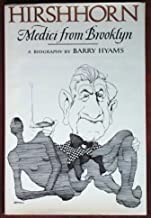
 "Hirshhorn, Medici from Brooklyn: A Biographyby: Hyams, Barry")
 "Hit Parade (SIGNED COPY)by: Block, Lawrence")
 "Hollywood Writers' Wars, Theby: Schwartz, Nancy Lynn")
 "Home Comfort Cook Book: Containing a General Course of Instruction in the Art of Home Cooking and Canning Including 1000 Modern Recipes and Valuable Formulae:Also Many Pages of Interesting and Valuable Information of Special Characte")
 "Hotel Dreams: Luxury, Technology, and Urban Ambition in America, 1829-1929 by: Berger, Molly W.")
 "Hotel: An American Historyby: Andrew K. Sandoval-Strausz")

 "How The Farm Pays The Experiences of Forty Years of Successful Farming & Gardening by: Crozier, William & Peter Henderson")
 "I Break Strikes! - The Technique of Pearl L. Bergoffby: Levinson, Edward")



 "In the Mood for Munsingwear: Minnesota's Claim to Underwear Fameby: Marks, Susan")
 "Industrial Strength Design: How Brook Stevens Shaped Your World by: Glenn Adamson")
 "Industrial Strength Design: How Brooks Stevens Shaped Your World by: Glenn Adamson / David Gordon (Preface)")
 "Inside Noah's Ark by: Fischetto, Laura / Letizia Galli")
 "Into the Groove: The Story of Sound From Tin Foil to Vinylby: Jonathan Scott")
 "Into the Heart of the Mafia: A Journey Through the Italian Southby: David Lane")
 "Iron and Steel Works of the World 1956-1957by: H. G. Cordero")
 "Irving Berlin's Show Business: Broadway - Hollywood - Americaby: Leopold, David")