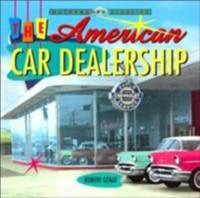
Softcover. Motorbooks , 1st, Book: Very Good, Dust Jacket: None, Softcover, 156 pages illustrated in color and b&w. Ever since the automobile was made accessible to the masses, car dealerships have been special places where desires, sweaty palms, and that new-car smell are distilled into an intoxicating elixir of freedom and ownership. From Art Deco showrooms of the '30s to modern glass-walled superstores, this nostalgic road trip revisits the architecture, marketing, and business practices that have become inextricably associated with auto retailers. A fascinating text accompanies an equally compelling collection of archival photography recalling past and present car dealer phenomena like new model previews and grand openings (i.e., soaped showroom windows, veiled cars, search lights), promotions and giveaways (banners, literature, buttons, pens, pedal cars, ashtrays, and anything else dealers could use to help make a sale), business practices from early-century animal trade-ins to today's refreshing Saturn-style service, customer relations and service centers, and nontraditional automotive outlets like Sears-Roebuck and hardware stores. Sidebars highlight innovative dealerships and those that have been in business for decades. Bumpto bottom corner otherwise clean, very good.
Hardcover. Pittsburgh PA, GoodKnight Books, 1st, 2017, Book: Very Good, Dust Jacket: Very Good, Hardcover in a bright, unclipped dust jacket. The Art of Selling Movies presents the first-ever look at 60 years of newspaper advertising for motion pictures great and small. These ads created by Hollywood and adapted by local and regional exhibitors motivated patrons to leave their homes, part with precious income, and spend time in the dark. Because of the high stakes involved, theater operators used wildly creative means to make that happen. They made movie advertising equal parts art and psychology, appealing to every human instinct (especially sex) in an effort to push product and keep their theatres in business. From the pen-and-ink masterpieces of the 1920s and 30s to location-specific folk art to ad space jam-packed with enticements for every member of the family, The Art of Selling Movies dissects the psyche of the American movie-going public ... and the advertisers seeking to push just the right buttons.
Hardcover. Pittsburgh PA, GoodKnight Books, 1st, 2017, Book: Very Good, Dust Jacket: Very Good, Hardcover in a bright, unclipped dust jacket. The Art of Selling Movies presents the first-ever look at 60 years of newspaper advertising for motion pictures great and small. These ads created by Hollywood and adapted by local and regional exhibitors motivated patrons to leave their homes, part with precious income, and spend time in the dark. Because of the high stakes involved, theater operators used wildly creative means to make that happen. They made movie advertising equal parts art and psychology, appealing to every human instinct (especially sex) in an effort to push product and keep their theatres in business. From the pen-and-ink masterpieces of the 1920s and 30s to location-specific folk art to ad space jam-packed with enticements for every member of the family, The Art of Selling Movies dissects the psyche of the American movie-going public ... and the advertisers seeking to push just the right buttons.
Hardcover. NY, Hill & Wang , 1st, 1996, Book: Very Good, Dust Jacket: Very Good, Hardcover in a bright dust jacket, 251 pages. Completed in 1825 and enlarged between 1836 and 1862 at the initial cost of $7 million, the Erie Canal not only created an economic revolution in the region but fostered new and unique communities made up of entrepreneurs, canal workers, and farmers. Utilizing a variety of primary resources, but especially the Canal Board Papers, Sheriff (history relates the social history of those who lived, worked, and traveled the Erie Canal before the Civil War. This previously untold story is laced with accounts by businessmen who saw the canal as opportunity, immigrant laborers looking for steady work, and farmers who transported their produce by canal boat. Although all of these groups relayed their complaints, claims, and concerns to the Canal Board, we do not know the responses they received. Still, the issues raised tell a great deal about the local impact of the Erie Canal, and herein lies the strength of the book. Clean copy.
Hardcover. Seattle, Fantagraphics Books, 1st, 2025, Book: Very Good, Dust Jacket: None, Hardcover, pictorial boards. 424 pages, color throughout. After becoming a professional comics artist in 1948 at the age of 17, by 21 Al Williamson was well-regarded enough as a Western and science-fiction illustrator to be recruited for the EC Comics staff roster - the absolute peak of the field in the 1950s, and a team rarely challenged since. After the Comics Code forced EC to reduce their business, Williamson found himself at the door of Atlas Comics, the largest employer of freelancers in the field. From 1955-60, Williamson would draw 99 stories for Atlas (both solo and with help by "Fleagle Gang" studio cohorts Angelo Torres and Roy Krenkel, plus Gray Morrow and Ralph Mayo) in mostly western and fantasy genres, with a smattering of war, romance and "jungle girl adventure". He flourished on Westerns, freely and loosely rendered four-page morality plays, many scripted economically by Stan Lee. With his extensive oeuvre subsequently based mostly in newspaper strips (including Flash Gordon, Secret Agent Corrigan, and the syndicated Star Wars, at George Lucas' own request), or working largely as an inker, his Atlas stories collectively are the largest single body of work Williamson would ever do as a primary creator for one company. Fantagraphics is proud to present this Al Williamson Artist Edition to finally showcase this distinct period of his remarkable career. Clean, bright copy. DOMESTIC SHIPPING ONLY.
Softcover. NY, American Telephone and Telegraph Company, 1938, Book: Very Good, Softcover, blue wraps, 6 3/4 x 10 inches, 22 pages of text + 24 pages of plates (photos). Account of the massive effort to restore telephone service after the devastating hurricane of September 21, 1938. Clean copy, mild musty odor.
Hardcover. NY, Lyle Stuart, 1st, 1970, Book: Very Good, Dust Jacket: Very Good, Hardcover in dust jacket with a faded spine, 320 pages. b&w illustrations. Biography of the famous white-collar criminal who became a multi-millionaire by manipulating financial markets. Clean copy.
NY, Henry Holt , 1st, 2014, Book: Very Good, Dust Jacket: Very Good, Hardcover in a bright, unclipped dust jacket. Raymond Chandler's incomparable private eye is back, pulled by a seductive young heiress into the most difficult and dangerous case of his career "It was one of those summer Tuesday afternoons when you begin to wonder if the earth has stopped revolving. The telephone on my desk had the look of something that knows it's being watched. Traffic trickled by in the street below, and there were a few pedestrians, too, men in hats going nowhere." So begins The Black-Eyed Blonde, a new novel featuring Philip Marlowe-yes, that Philip Marlowe. Channeling Raymond Chandler, Benjamin Black has brought Marlowe back to life for a new adventure on the mean streets of Bay City, California. It is the early 1950s, Marlowe is as restless and lonely as ever, and business is a little slow. Then a new client is shown in: young, beautiful, and expensively dressed, she wants Marlowe to find her former lover, a man named Nico Peterson. Marlowe sets off on his search, but almost immediately discovers that Peterson's disappearance is merely the first in a series of bewildering events. Soon he is tangling with one of Bay City's richest families and developing a singular appreciation for how far they will go to protect their fortune.
Hardcover. Boston, Houghton Mifflin, 1st, 1970, Book: Very Good, Dust Jacket: Very Good, Hardcover in a lightly worn dust jacket, 695 pages. A prolific and colorful period in American letters is reflected in this history of a great publishing firm. A cultural retrospective as well as a business history, b&w illustrations. Mild edge wear to the jacket, a clean copy.
Hardcover. Chicago, University of Chicago Press, 1st, 1989, Book: Very Good, Dust Jacket: Very Good, Hardcover in a bright dust jacket. "...identifies the many economic pressures exerted on the game today and measures their effects both on the field and in the ticket office. He presents a detailed and original analysis of traditional baseball performance statistics from slugging to fielding and draws on a wealth of previously unpublished data divulged in recent collusion suits. At the heart of the controversy are the disparate claims of owners, who say they are loosing money and stay on only out of love for the game, and players, who insist they are being exploited by owner reaping huge profits."
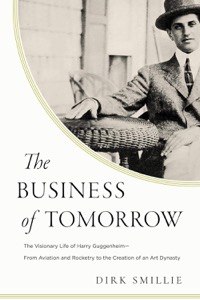
Hardcover. NY, Pegasus Books, 1st, 2021, Book: Very Good, Dust Jacket: Very Good, Hardcover in a bright dust jacket, 338 pages, b&w illustrations. At the turn of the last century, the Guggenheim family ran the most powerful mining conglomerate on earth. Decades later came the Guggenheim museum, which became the hub of the world's most powerful art brand. In between, the Guggenheim name was uttered in every field from aviation to politics, from journalism to rocketry. But who was behind this epic sphere of influence? It took three generations of Guggenheims to build the wealth in its first era. Yet it was the singular force of Harry Guggenheim who would guide the family's next generation of businesses into modernity. Part angel investor, part entrepreneur, part technologist, Harry launched businesses whose impact on 20th century America went far beyond the Guggenheims' mines or museum. His visionary investments continue to profoundly influence our world and hold valuable business lessons for billionaire dynasty builders like Jeff Bezos and Elon Musk. A flawed but brilliant man, Harry Guggenheim was the confidante to five American presidents and a key financial force behind commercial aviation and space exploration, two innovations that catapulted the nation into the future. Clean copy.
Hardcover. Chicago, University of Chicago Press, 1st, 2015, Book: Very Good, Dust Jacket: None, Hardcover, 336 pages. In a world where nearly everyone has a cellphone camera capable of zapping countless instant photos, it can be a challenge to remember just how special and transformative Polaroid photography was in its day. And yet, theres still something magical for those of us who recall waiting for a Polaroid picture to develop. Writing in the context of two Polaroid Corporation bankruptcies, not to mention the obsolescence of its film, Peter Buse argues that Polaroid was, and is, distinguished by its processby the fact that, as the New York Times put it in 1947, the camera does the rest. Polaroid was often dismissed as a toy, but Buse takes it seriously, showing how it encouraged photographic play as well as new forms of artistic practice. Drawing on unprecedented access to the archives of the Polaroid Corporation, Buse reveals Polaroid as photography at its most intimate, where the photographer, photograph, and subject sit in close proximity in both time and spacemaking Polaroid not only the perfect party camera but also the tool for frankly salacious pictures taking. Along the way, Buse tells the story of the Polaroid Corporation and its ultimately doomed hard-copy wager against the rising tide of digital imaging technology. Still in publisher's shrinkwrap.
Softcover. U. S. Department of the Interior, 1st, 2007, Book: Very Good, Dust Jacket: None, Softcover, horizontal format, 264 pages with b&w illustrations plus 14 pages of vintage packaging labels in rear. Chronicles the world's greatest concentration of salmon and canneries and their influence on Native and non-Native people in southwestern Alaska. This book documents long abandoned canneries, and those still in use, during the hey-day in the late nineteenth and early twentieth centuries with maps, historic photographs, and first hand accounts that give the reader an impression of the unique Bristol Bay way of life. Also offers a view of life upriver, during the winter, along the length and breadth of the three great salmon rivers in the Bay, The Nushagak, the Kvichak, and the Naknek. Historic photographs document a variety of cabins, houses, caches, and some of the people who built them and relied on them for shelter and storage. NOTE: front cover is missing so title page serves as cover, otherwise a clean, tight copy of this scarce regional history.
Hardcover. Cambridge MA, The MIT Press, 1st, 2012, Book: Very Good, Dust Jacket: Very Good, Hardcover in a bright dust jacket In this book, 380 pages, illustrated in color. The award-winning historian Regina Lee Blaszczyk traces the relationship of color and commerce, from haute couture to automobile showrooms to interior design, describing the often unrecognized role of the color profession in consumer culture. Blaszczyk examines the evolution of the color progression from 1850 to 1970, telling the stories of innovators who managed the color cornucopia that modern artificial dyes and pigments made possible. These color stylists, color forecasters, and color engineers helped corporations understand the art of illusion and the psychology of color. Clean copy.
Hardcover. NY, Harper Business , 1st, 2020, Book: Very Good, Dust Jacket: Very Good, Hardcover in a bright dust jacket, 432 pages. B&w and color illustrations. Small remainder line on bottom edge. In his much-anticipated memoir, The Company I Keep: My Life in Beauty, Chairman Emeritus and former CEO of The Estee Lauder Companies Leonard A. Lauder shares the business and life lessons he learned as well as the adventures he had while helping transform the mom-and-pop business his mother founded in 1946 in the family kitchen into the beloved brand and ultimately into the iconic global prestige beauty company it is today. In its infancy in the 1940s and 50s, the company comprised a handful of products, sold under a single brand in just a few prestigious department stores across the United States. Today, The Estee Lauder Companies constitutes one of the world's leading manufacturers and marketers of prestige skin care, makeup, fragrance and hair care products. It comprises more than 25 brands, whose products are sold in over 150 countries and territories. This growth and success was led by Leonard A. Lauder, Estee Lauder's oldest son, who envisioned and effected this expansion during a remarkable 60-year tenure, including leading the company as CEO and Chairman.
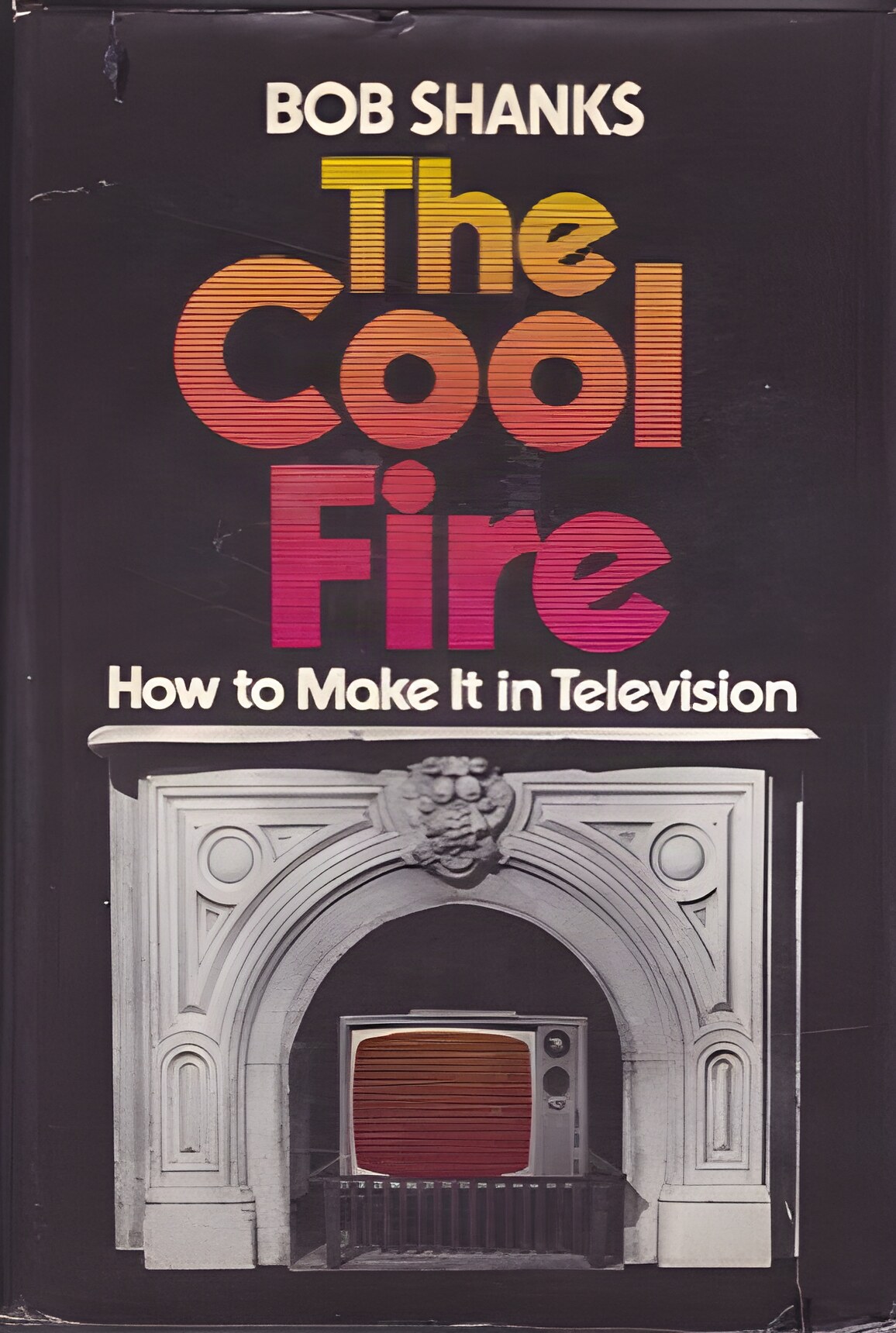
Hardcover. NY, W.W. Norton , 1976, Book: Very Good, Dust Jacket: Very Good, Hardcover in a bright, lightly worn dust jacket. 318 pages, A veteran producer provides an inside view of television, combining anecdotal discussions of agents, performers, and sponsors with detailed information on network organization and business activities. A good overview of the TV broadcasting business in the 1970s. No markings.
Hardcover. Princeton NJ, Princeton University Press, 1st, 1979, Book: Very Good, Dust Jacket: Very Good, Two volume set. Matching gold cloth boards with titles in gold on spine, in bright dust jackets. Transcribed and with Introduction by Lilian M.C. Randall. B&w illustrations of the sculptures, paintings, drawings and etchings that Lucas dealt with while in Europe. Double-column English text. Provides an extraordinary archive for historians and dealers. Provides a hugely empirical database for prices paid and commissions issued to artists, dealers, and craftsmen. George A. Lucas's acquaintances include Daumier, Cassatt, Whistler and Barye, among many, many others. Volume Two is given over wholly to Lucas's daily diary, which ran for an extraordinary length of time. Volume 1: xv [2], 3-148 pages.; Volume 2: iv [ii], 3-965 pages. DUE TO WEIGHT, DOMESTIC SHIPPING ONLY.
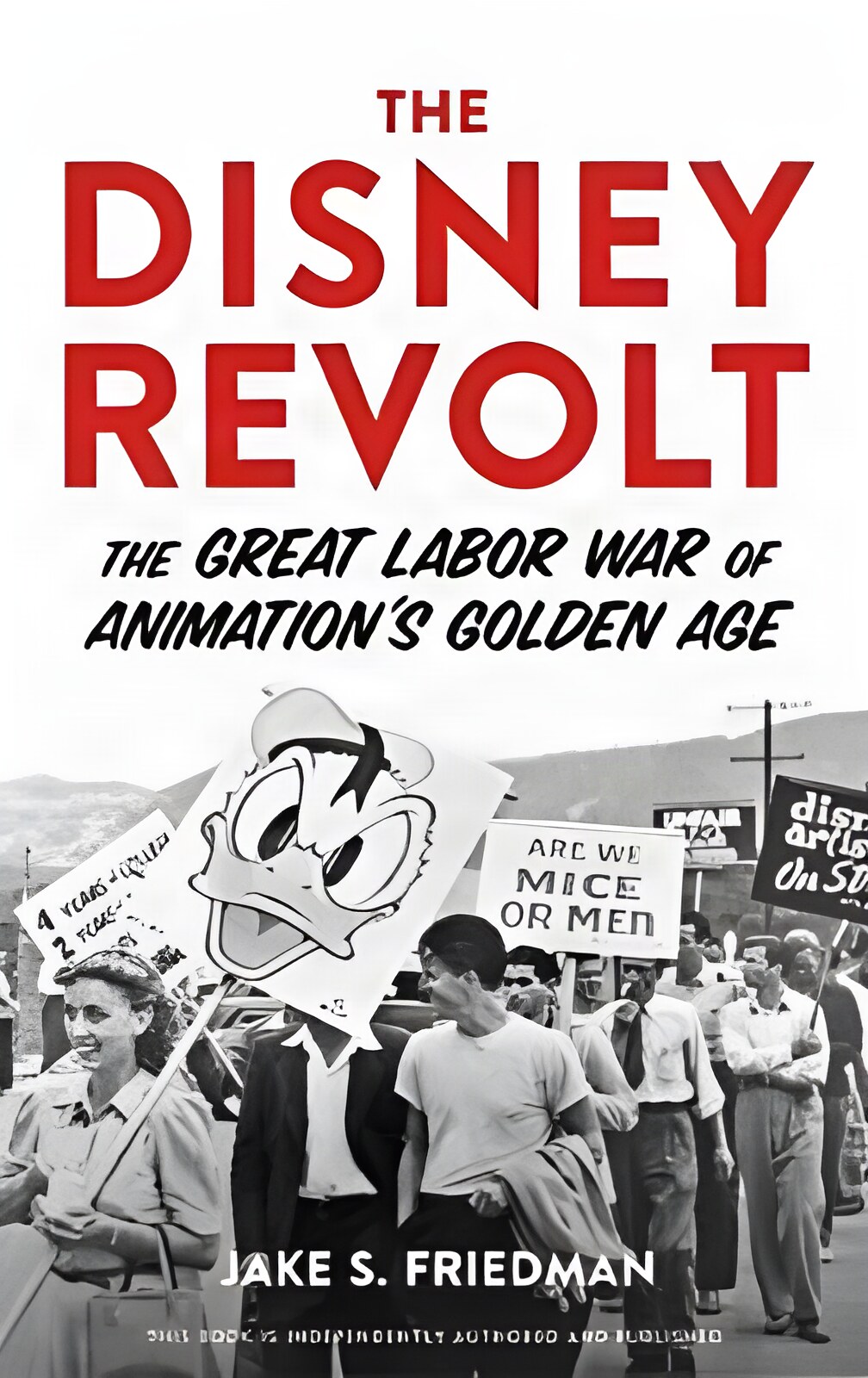
Hardcover. Chicago, Chicago Review Press, 1st, 2022, Book: Very Good, Dust Jacket: Very Good, Hardcover in a bright dust jacket, 322 pages, b&w photos. An essential piece of Disney history has been largely unreported for eighty years. Soon after the birth of Mickey Mouse, one animator raised the Disney Studio far beyond Walt's expectations. That animator also led a union war that almost destroyed it. Art Babbitt animated for the Disney studio throughout the 1930s and through 1941, years in which he and Walt were jointly driven to elevate animation as an art form, up through Snow White, Pinocchio, and Fantasia. But as America prepared for World War II, labor unions spread across Hollywood. Disney fought the unions while Babbitt embraced them. Soon, angry Disney cartoon characters graced picket signs as hundreds of animation artists went out on strike. Adding fuel to the fire was Willie Bioff, one of Al Capone's wiseguys who was seizing control of Hollywood workers and vied for the animators' union. Using never-before-seen research from previously lost records, including conversation transcriptions from within the studio walls, author and historian Jake S. Friedman reveals the details behind the labor dispute that changed animation and Hollywood forever. Clean copy.
Hardcover. Walburg Pers, 1st, 2003, Book: Very Good, Dust Jacket: Very Good, Hardcover in a bright dust jacket, 192 pages illustrated in color and b&w. A study about the development of a company founded in Amsterdam in the Dutch Golden Age. The VOC, as it was called, was a joint venture company of the Dutch in controlling trade in the world. This scientific paper is one of the main references in terms of research on VOC History. Clean copy.
Hardcover. NY, Harper & Row, Revised Ed., 1974, Book: Very Good, Dust Jacket: Very Good, Hardcover in a bright dust jacket, 282 pages. INSCRIBED BY CHAMBERLAIN on the front fly leaf. The Updated Edition of a title first published in the 1960s. Clean copy.
Softcover. Thousand Oaks CA, Sage Publications, 1st, 1998, Book: Very Good, Dust Jacket: None, Softcover, 182 pages, b&w illustrations. In 1960, Kevin Lynch wrote The Image of the City, which transformed the way design professionals and social scientists dealt with the urban form and design. The Evaluative Image of the City follows the work of Lynch and further explores the role of human evaluations of the cityscape. This book describes how to assess, plan, and design the appearance of cities to please inhabitants. It presents a series of studies on evaluative images, discusses methodologies, findings, and applications to design and planning at various stages. Urban designers and planners, architects, business people, and the general public will find this book a valuable guide for improving the image of their surroundings. Clean copy.
Hardcover. Cincinnati OH, self-published, 1st, 1908, Book: Very Good, Dust Jacket: None, Hardcover, gray cloth stamped in white. 96 pages with ads in rear for marble and granite. B&w frontis of author. Name on inside front cover otherwise clean.
Hardcover. NY, Farrar, Straus and Giroux, 1st, 2012, Book: Very Good, Dust Jacket: Very Good, Hardcover in a bright dust jacket, 270 pages. When Samuel Zemurray arrived in America in 1891, he was tall, gangly, and penniless. When he died in the grandest house in New Orleans sixty-nine years later, he was among the richest, most powerful men in the world. In between, he worked as a fruit peddler, a banana hauler, a dockside hustler, and a plantation owner. He battled and conquered the United Fruit Company, becoming a symbol of the best and worst of the United States: proof that America is the land of opportunity, but also a classic example of the corporate pirate who treats foreign nations as the backdrop for his adventures. Rich Cohen's brilliant historical profile unveils Zemurray as a hidden kingmaker and capitalist revolutionary, driven by an indomitable will to succeed. Clean copy.
Hardcover. NY, Harper & Row, 1st, 1984, Book: Very Good, Dust Jacket: Very Good, Hardcover, 230 pages. Translated from Spanish by Toby Talbot. Unclipped dust jacket with small crease on front flap, rubbing. Otherwise, clean and tight copy. A small gem of a novel, THE GODS, THE LITTLE GUYS AND THE POLICE won the Premio Casa de las Americas, the most prestigious literary prize offered for Latin American fiction, when it was originally published in Mexico. In this funny yet mordant satire of political terrorism in Argentina in the mid-1970s, a paramilitary death squad places the members of a poetry circle under surveillance. They include a bank clerk, a businessman and a pretty schoolteacher, as well as a cripple, a blind man and a former police informer, people as innocuous and apolitical as their verse. But having been denounced by a jealous wife of one of their members and betrayed by the informer, they have fallen prey to the violence and repression of Buenos Aires.

 "The Art of Selling Moviesby: John McElwee")
 "The Art of Selling Moviesby: John McElwee")





 "The Business of Major League Baseballby: Gerald W. Scully")
 "The Camera Does the Rest: How Polaroid Changed Photographyby: Peter Buse")
 "The Canneries, Cabins and Caches of Bristol Bay, Alaskaby: John B. Branson")

 "The Company I Keep: My Life in Beautyby: Leonard A. Lauder")