Hardcover. US, Soul Jazz Books, 1st, 2014, Book: Very Good, Dust Jacket: None, 200 pages. Hardcover with no dust jacket. Clean, unmarked copy with only minor wear to laminated cover boards. Color and black and white pictures throughout. The image of the Caribbean is as much a creation of the West as it is the result of its population's incredibly complex identity. A melting pot of races born of the 400-year slave trade--Africans, indigenous Americans and their French, Spanish, German, Dutch and English colonizers--the identity of the Caribbean stands at the intersection of tourism, colonialism and tropicality. This deluxe large-format volume features hundreds of fascinating and unique photographs that span 100 years of Caribbean history, culture, industry and more, as well as the subsequent diaspora of its people to America, England and elsewhere. The photographs show the many ways in which the region has been portrayed, from tropical backdrop of tourism and hedonism to colonial outpost and revolutionary threat in North America's own backyard.
Hardcover. Boston, Houghton Mifflin, 1st, 1922, Book: Very Good, Dust Jacket: None, Hardcover, 203 pages. Tan and black cover with illustration. Some fraying on edges and spine. Title on spine label slightly chipped away. Small stain on back cover. Pages untrimmed. Some foxing Inside, but otherwise crisp, clean and contains b&w illustrations throughout.
Hardcover. Boston, Houghton Mifflin, 1st, 1922, Book: Very Good, Dust Jacket: None, Hardcover, 203 pages. Tan and black cover with illustration. Some fraying on edges and spine. Faint smudges on spine. Pages untrimmed. Inside crisp, clean and contains b&w illustrations throughout.
Hardcover. New York, Dial Books for Young Readers, 2nd pr., 1981, Book: Very Good, Dust Jacket: Very Good, 30 pages. Hardcover with price-clipped dust jacket. Clean, unmarked copy with only minor wear to dust jacket. A Haitian story illustrated by Marc Tolon Brown.
Hardcover. Just Clicked Publications , 1st, 2004, Book: Very Good, Dust Jacket: None, Hardcover. Features the photographic work of Academy Award winning Cinematographer Karl Struss taken when he visited Bermuda in the late 1950s. Mr. Struss first visited Bermuda in 1912. Enchanted with the island, he returned in the fall of 1913 to take more photographs. This led to his appointment in 1914 by the Bermuda Trade Development Board to take photographs for the Island's 1915-16 official tourists' guide, Bermuda: Nature's Fairyland. Mr. Struss did not return to Bermuda for more than 40 years, until the late 1950s when he came with his wife Ethel. His photographs from that trip show Bermuda on the cusp of social and economic change. The original transparencies were taken with Ektachrome colour film on a stereo camera.
Softcover. Washington DC, Howard University Press, 1994, Book: Very Good, Dust Jacket: None, Softcover, 365 pages. Maps, illustrations, bibliography, index. A comparative social overview of slavery in Britain, America, and the Caribbean during the colonial period. Walvin carefully examines the external pressures exerted on coastal communities in Africa for slaves, the gradual development of a slave trading system within Africa, and the transport of over twelve million Africans across the seas. Clean copy. Several pages with dog-ear creases.
Hardcover. NY, The Literary Guild, 1928, Book: Very Good, Dust Jacket: None, Hardcover, Literary Guild edition, with the 1st Edition (stated) signatures from Harper. Bound in black cloth and pictorial boards. Illustrated in color and b&w by Mahlon Blaine.
Softcover. Oxford UK, Clarendon Press, reprint, 1991, Book: Very Good, Dust Jacket: None, Softcover, green paper wraps, 449 pages. A study of the West Indies in the mid-nineteenth century, this book draws together the experiences of more than a dozen different sugar colonies and forms them into a coherent historical account. The first part of the book examines the West Indies on the eve of emancipation in 1830-1865, a key passage in West Indian history. Green presents a clear general picture of the sugar colonies, and places British governmental policy toward the region in the context of Victorian attitudes toward colonial questions.
Hardcover. Chicago, University of Chicago Press, 1st, 2008, Book: Very Good, Dust Jacket: Very Good, 320 pages, b&w illustrations. Clean, unmarked copy with only minor wear to dust jacket. Building the Devil's Empire is the first comprehensive history of New Orleans's early years, tracing the town's development from its origins in 1718 to its revolt against Spanish rule in 1768. Shannon Lee Dawdy's picaresque account of New Orleans's wild youth features a cast of strong-willed captives, thin-skinned nobles, sharp-tongued women, and carousing travelers. But she also widens her lens to reveal the port city's global significance, examining its role in the French Empire and the Caribbean, and she concludes that by exemplifying a kind of rogue colonialism--where governments, outlaws, and capitalism become entwined--New Orleans should prompt us to reconsider our notions of how colonialism works.
Softcover. Ithaca NY, Cornell University Press, 2nd pr., 1993, Book: Very Good, Dust Jacket: None, Softcover, 280 pages. Since 1965, West Indians have been emigrating to the United States in record numbers, and to New York City in particular. Caribbean New York shows how the new immigration is reshaping American race relations and sheds much-needed light on factors that underlie some of the city's explosive racial confrontations. Philip Kasinitz examines how two forces-racial solidarity and ethnic distinctiveness-have helped to shape the identity of New York's West Indian community. He compares "new" (post-1965) immigrants with West Indians who arrived earlier in the century, and looks in detail at the economic, political, and cultural rules that Afro-Caribbean immigrants have played in the city during each period.
Hardcover. Cambridge MA, Harvard University Press , 1st, 2017, Book: Very Good, Dust Jacket: Very Good, Hardcover in a bright, unclipped dust jacket. 586 pages, b&w illustrations. Cuba's Revolutionary World examines in forensic detail how the turmoil that rocked a small Caribbean nation in the 1950s became one of the twentieth century's most transformative events. Initially, Castro's revolution augured well for democratic reform movements gaining traction in Latin America. But what had begun promisingly veered off course as Castro took a heavy hand in efforts to centralize Cuba's economy and stamp out private enterprise. Embracing the Soviet Union as an ally, Castro and his lieutenant Che Guevara sought to export the socialist revolution abroad through armed insurrection. Castro's provocations inspired intense opposition. Cuban anticommunists who had fled to Miami found a patron in the CIA, which actively supported their efforts to topple Castro's regime. The unrest fomented by Cuban-trained leftist guerrillas lent support to Latin America's military castes, who promised to restore stability. Brazil was the first to succumb to a coup in 1964; a decade later, military juntas governed most Latin American states. Thus did a revolution that had seemed to signal the death knell of dictatorship in Latin America bring about its tragic opposite. Clean copy.
Hardcover. NY, Street & Smith, 1st, 1898, Book: Good, Dust Jacket: None, Hardcover. Book is divided into 4 sections: Cuba, Porto Rico, The Philippines, & Hawaii. Each with a fold-out color map. 178, 171, 174, & 178 pages respectively. All maps present and in very good condition. Previous owner's inscription on front fly leaf. The pale green covers suffer from rubbing and abrasions causing discoloration, fading. Internally very good.
Softcover. Durham NC, Duke University Press, reprint, 1995, Book: Very Good, Dust Jacket: None, Softcover, 312 pages plus index. Though written over fifty years ago, Cuban Counterpoint is recognized as one of the most important books of Latin American and Caribbean intellectual history. Treating tobacco and sugar both as agricultural commodities and as social characters in a historical process, he examines changes in their roles as the result of transculturation. Clean copy. Spine faded.
Hardcover. New York, Philomel, 1st, 1998, Book: Very Good, Dust Jacket: Very Good, Hardcover in a bright dust jacket. Color illustrations by Ashley Wolff and SIGNED BY WOLFF WITH A SKETCH OF DR. BIRD on front fly leaf.
Hardcover. New York, Philomel, 1st, 1998, Book: Very Good, Dust Jacket: Very Good, Hardcover. Color illustrations by Ashley Wolff and SIGNED BY WOLFF WITH A SKETCH OF DR. BIRD on front fly leaf.
Softcover. London, Hard Case Crime, 1st thus, 2013, Book: Very Good, Dust Jacket: None, Softcover, colorful wraps with a retro-style illustration by Gregory Manchess. On a secret island in the Caribbean, bioengineers have devised a vacation resort like no other, promising the ultimate escape. But when Dr. Roger Clark investigates, he discovers the dark secret of Eden Island and of Advance Biosystems, the shadowy corporation underwriting it. Like new.
Hardcover. New York , Simon & Schuster Children's Publishing, 1st, 2002, Book: Very Good, Dust Jacket: Very Good, Hardcover in a bright dust jacket. SIGNED BY HILLARY KNIGHT. What's this--a new Eloise, never before seen or published? News doesn't get better than that. Kay Thompson first wrote Eloise Takes a Bawth in Italy in the 1960s with Hilary Knight and pal Mart Crowley; it has been marinating until now for a release with all-new drawings by Hilary Knight. Of course, this time Eloise is not in Moscow, not in Paris, she is simply in the bawth at home in the Plaza Hotel. With Eloise, though, nothing is simple. Perhaps especially the notion of taking a bath, where you have to "skibble into the bathroom and take off all your clothes," then strike a pose and look in the mirror, and splawsh, and sing, and bathe with turtle Skipperdee and dog Weenie. And pretend to be the "loosest cannonball in all the Caribbean" and "Little Miss Mermaid but let's keep that between us." But what's this? Could Eloise's bathtime shenanigans be causing a drip that "has begun to drop within the walls and hallowed halls of the stately old Plaza?" Drenching the elite at the Venetian Masked Ball in the Grawnd Ballroom, no less? Fabulously decadent scenes of Eloise enacting wild battles and undersea dives in the bathtub on the "tip top floor" of the Plaza contrast deliciously with the resulting swampy splendor of the ballroom. Extended fold-out cross-sections of the hotel's plumbing system and a spectacular, colorful, double gatefold illustrating the underwater ball ("the sensation of the social season" thanks to Eloise!) add drama and silliness as well.
Hardcover. London, Faber & Faber, 1st, 1990, Book: Good, Dust Jacket: Good, 161 pages, black cloth, book slightly cocked. Dust jacket edgeworn with light chipping. INSCRIBED BY HARRIS ( "Joyce and Irving, with love, Wilson & Margaret 1990") on the title page to Joyce and Irving Adler. The book is heavily annotated and underlined in both ink and light pencil by Joyce who was a literary scholar who wrote two books on Harris.
Hardcover. Baton Rouge, Louisiana State University , 1st, 1979, Book: Very Good, Dust Jacket: Very Good, Hardcover in a bright dust jacket, 173 pages. This work is a brief look at worldwide slave revolts in the 17th through 19th centuries, emphasizing their interrelations with European power struggles, which gave rebels hope of finding weak spots in the defenses of the slave powers. The French Revolution also had an influence on slave revolts, but the canny European powers used indigenous peoples to suppress slave revolts (e.g., native Americans) and took advantage of African ethnic divisions as well. American slaves stood little chance of revolt and were under constant surveillance from Southerners, who coward in fear after the successful rebellions in the Caribbean, particularly in Hispaniola, and after Nat Turner and John Brown's efforts. Genovese also brings up religion's double-edged sword: one side used to pacify slaves and the other side to inspire them to break their chains. In short, this scholarly treatise is thought-provoking as well as informative and ends with an inspirational quote from one of Frederick Douglass's lectures. Name on front fly leaf, otherwise a clean copy.
Hardcover. Baltimore, Genealogical Publishing Co., 1st, 1983, Book: Very Good, Dust Jacket: None, Hardcover, black cloth with gilt lettering, 733 pages. Many of the early settlers of Barbados eventually moved to the mainland of North America and settled in Virginia, Georgia, the Carolinas, and other colonies. Records of Barbados families exist in a variety of places and indeed a great many have been written up and published in the turn-of-the-century journal "Caribbeana" and "The Journal of the Barbados Museum and Historical Society". Unfortunately, back issues of these journals are no longer available, and copies can be found today in only a handful of libraries. With this present work, however, genealogists at last have access to both of these publications, for the book contains every article pertaining to family history ever published in these journals. The combined articles, reprinted here in facsimile, range from conventional genealogies and pedigrees to will abstracts and Bible records and refer to some 15,000 persons, all of whom are listed in the index. Besides the genealogies and family records, this compilation also contains a selection of notes on the connections between Barbados and New England families and four invaluable lists of Barbados Quakers.
Hardcover. New York , El Leon Literary Arts, 1st Bilingual, 2003, Book: Very Good, Dust Jacket: Very Good, Hardcover. Preface By Julia Alvarez. 95 pages, illustrated throughout in b&w. Beautiful, unmarked copy with only minor wear to dust jacket.
Softcover. NY, Brooklyn Museum : exclusively distributed by H. N. Abrams, 1st, 1978, Book: Good, Dust Jacket: None, 176 pages, illustrated throughout in color and b&w. Previous owner's blind stamp on front end paper. Light edgewear, rubbing and creasing to wrappers, else a clean, tight copy.
Hardcover. NY, Harper & Brothers, reprint, Book: Very Good, Dust Jacket: None, Hardcover, tan boards with a black cloth spine and a color illustration paste-down on front cover. K-E code on copyright page. 247 pages. Color and black and white illustrated plates throughout, all present as called for. A collection of tales, interweaving historical information, on various pirates and other notorious figures in the Spanish Main (Caribbean). Includes chapters on Henry Morgan, Blackbeard, Captain Kidd and others. Mild edgewear to covers, light water stain to rear board, gilt lettering on spine faded, otherwise clean.
Austin, Texas, Marion Kooagler McKay Art Institute, University of Texas Press, 1st, 1964, Book: Very Good, Dust Jacket: Very Good, Hardcover. 106 pages. Illustrated with color, black & white sketches. Introduction by John Palmer Leeper. Dust jacket with edgewear to bottom edges, closed tear.

 "90 Degrees of Shade: 100 Years of Photography in The Caribbeanby: Gilroy, Paul (Foreword)")
 "Admirals of the Caribbeanby: Hart, F.R.G.S., Francis Russell")
 "Admirals of the Caribbeanby: Hart, F.R.G.S., Francis Russell")

 "Bermudian Journey by: Struss, Karl")
 "Black Ivory; A History of British Slaveryby: Walvin, James")
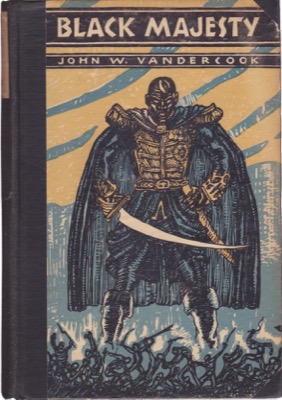


 "British Slave Emancipation: the Sugar Colonies and the Great Experiment, 1830-1865 by: Green, William A.")



 "Cuba and Our New Possessionsby: Hall, A. D.")
 "Cuban Counterpoint: Tobacco and Sugarby: Fernando Ortiz; Translator Harriet de Onis")
 "Doctor Bird - Three Lookin' Up Tales from Jamaica (SIGNED BY ILLUSTRATOR)by: Hausman, Gerald and Ashley Wolff")
 "Doctor Bird - Three Lookin' Up Tales from Jamaica (SIGNED BY ILLUSTRATOR)by: Hausman, Gerald and Ashley Wolff")


 "DRUG OF CHOICEby: Michael Crichton writing as John Lange")
 "Eloise Takes A Bawth (SIGNED COPY)by: Thompson, Kay")
 "Four Banks of the River of Space, The (SIGNED COPY)by: Harris, Wilson")
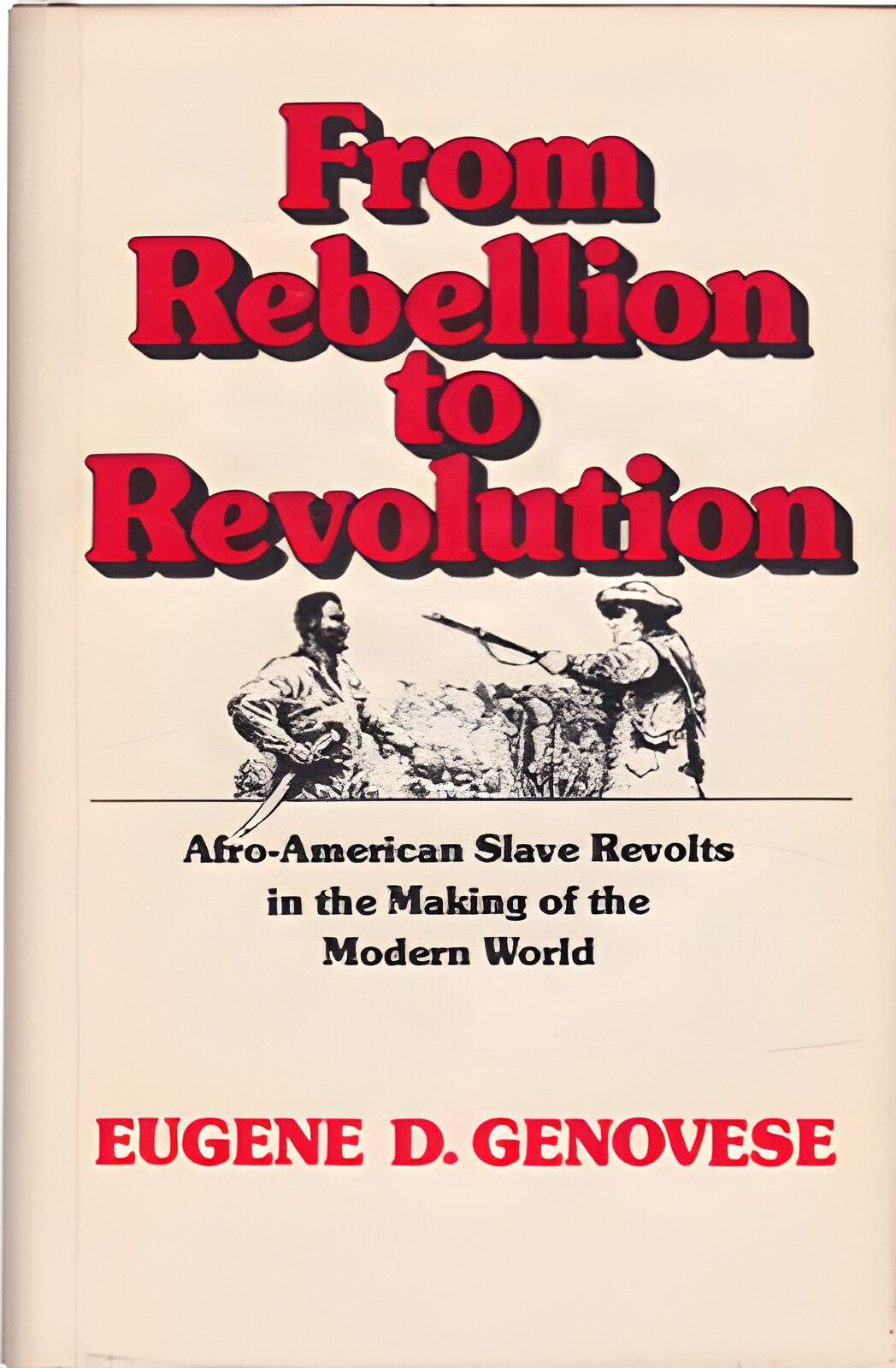
 "Genealogies of Barbados Families: From Caribbeana and the Journal of the Barbados Museum and Historical Societyby: James C. Branow")
 "Glimpses of La Yaguita: Street Scenes and Portraits from the Dominican Republicby: Orozco-Lang, Isaias")
 "Haitian Artby: Stebich, Ute")
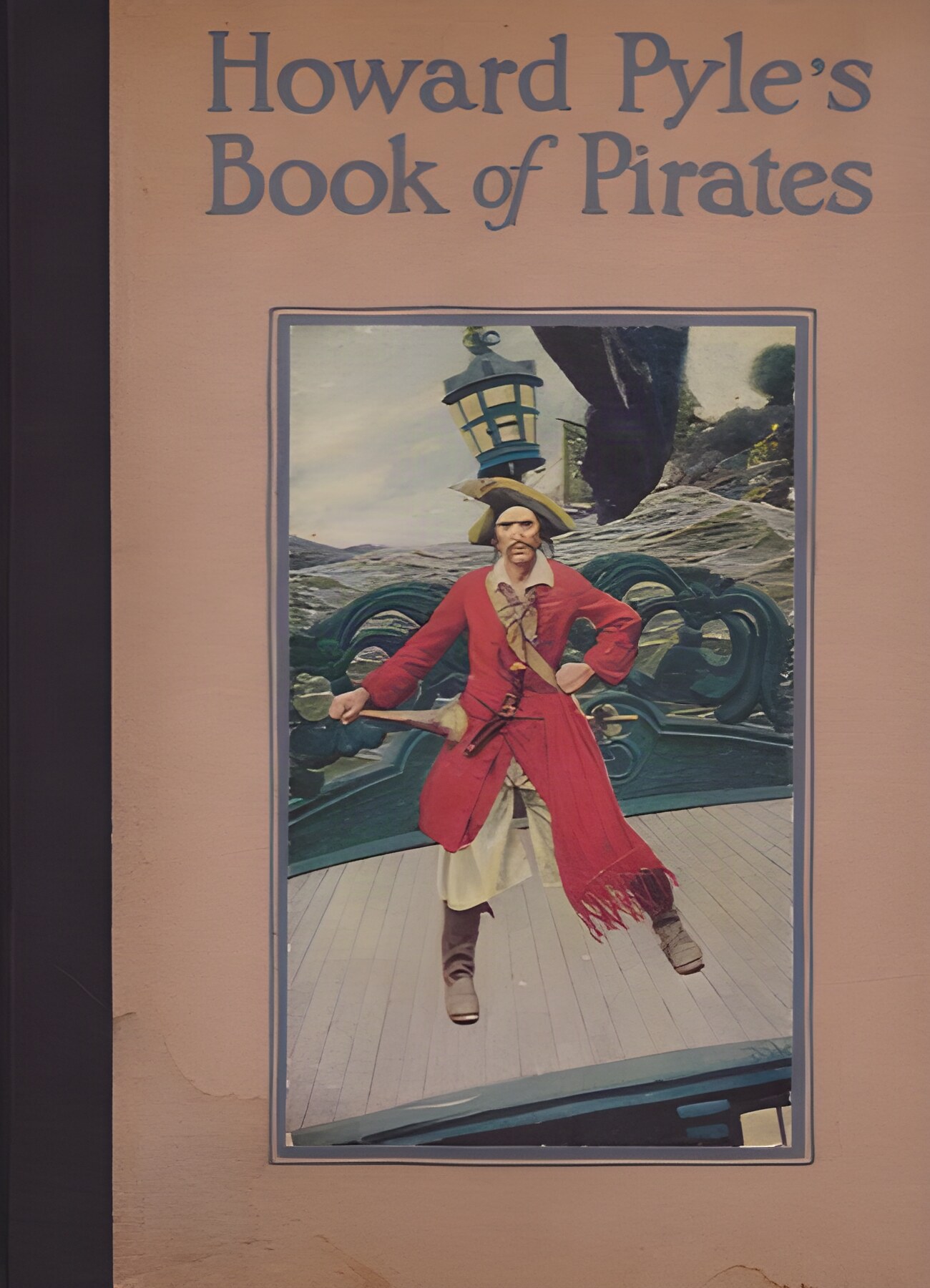
 "Jules Pascin's Caribbean Sketchbookby: Pascin, Jules")