Softcover. Lanham MD, Lexington Books, 1st, 2016, Book: Very Good, Dust Jacket: None, Softcover, 167 pages. Introduces basic information on Rwanda and how it has been viewed by the outside world. Chapter One describes early Rwanda's political and cultural development, traditional narratives, group migrations, the effects of German and later Belgian colonialism, and the introduction of Christianity. It concludes with a look at how this early history has been interpreted and reinterpreted. The second chapter discusses the end of Tutsi dominance and the 1959 Hutu Revolution. It details Hutu Power ideology, Belgian domestic politics, early acts of genocide, refugee movements, and economic and political stagnation. The text documents the development of the Rwandan Patriotic Front, its 1990 invasion, and the Arusha peace process. An account of the 1994 genocide follows. Drawing on numerous sources and fieldwork, it discusses this east central African nation's deeply seated cleavages, atrocious recent past, and the internal and external myths that have directed its history and national life. Clean copy.
Hardcover. Boston, Faber and Faber, 1st, 1994, Book: Very Good, Dust Jacket: Very Good, Hardcover in a bright, unclipped dust jacket, pages. "I write of peoples and of a struggle." So begins A New World, an ambitious and extraordinary book that challenges conventional historical narrative by presenting episodes in North America's history through the eyes and voices of the Europeans who established the first colonial outposts here. Beginning with the swaggering John Smith at Jamestown and ending with the beleaguered Montcalm at Quebec, Arthur Quinn allows towering historical figures to emerge from an often beautiful, sometimes forbidding early American landscape and speak. An elderly William Bradford looks back with growing despair at the early promise of the Pilgrim colony at Plymouth. Governor John Winthrop tries to administer a dose of practicality to the Puritans of Massachusetts. Jesuit missionaries bring Christianity and disaster to the Huron Confederacy. A blustering Peter Stuyvesant watches Manhattan slip from Dutch grasp. William Penn's Holy Experiment in Pennsylvania goes increasingly awry. And, finally, the British and the French fight history's first world war for supremacy in the New World. Telling each story using the literary conventions of the day, Quinn casts North America's colonial beginnings as a multicultural epic, gripping the reader throughout with his uncanny eye and storytelling skill. Clean copy.
Hardcover. NY, Clark Austin and Smith, 1st, 1854, Book: Good, Dust Jacket: None, Hardcover, embossed brown cloth, 283 pages. This is the original 1854 edition. Mild water stain to margins of first 30 pages, scattered foxing throughout. A comprehensive exploration of the origins, practices, and beliefs of various secret societies throughout history, with a particular focus on Freemasonry. The book delves into the philosophical and spiritual underpinnings of these societies, examining their rituals, symbols, and traditions. Arnold also explores the historical context in which these societies emerged, tracing their evolution from ancient mystery cults to modern-day fraternal organizations. The book provides a nuanced and objective analysis of these secretive groups, debunking myths and misconceptions while also acknowledging their enduring cultural significance. The secret societies of all ages considered in their relations with and influence on, the moral, social and intellectual progress of man. Through them came the new revelations of life, which contributed to the progress of Humanity. Contents: Importance of this History; Providential Character of these Institutions; Egyptian Mysteries; Secret Institution of Orpheus; Initiation at Eleusis; Secret Order of Pythagoras; Templars; Freemasonry; Second Period of Masonic History; Present Position of the Order; Christianity and Freemasonry; Thomas Paine's Essay on Freemasonry, with Comments. Gilt lettering on spine faded but readable. Bottom corner of front cover bumped. No markings.
Hardcover. Philadelphia, The American Philosophical Society, reprint, 1968, Book: Very Good, Dust Jacket: Good, Hardcover, 579 pages. B&w photographs. Previous owner's inscription on front flyleaf. Light foxing to top edge. Wear, chipping to dust jacket. A nice, clean copy.
Hardcover. London, Hodder and Stoughton, reprint, 1891, Book: Good, Dust Jacket: None, Hardcover, blue cloth with gilt flower design on front cover. 480 pages, with a frontispiece portrait + a folding color map in rear. Appears to be INSCRIBED BY AUTHOR on a bookplate inside front cover with a New Year's greeting and dated Dec 31 1891. Alexander Murdoch Mackay was a missionary, a teacher and an engineer who contributed tremendously to Christianity and education in Uganda. As a youth, he left Scotland and committed his life to preaching the word of God to the people of Uganda. He introduced vocational training, taught practical skills and laid the foundation of education in the Church of Uganda. He introduced a printing press which he used to print the Luganda version of the Holy Bible. Light shelf wear, fraying to top of spine.
Hardcover. Bristol UK, Thoemmes Press, reprint, 1997, Book: Very Good, Dust Jacket: None, Hardcover, blue cloth with gilt lettering on spine, 385 pages. A facsimile reprint of the 1655 Second Edition. One of 9 volumes in More's collected works. Light pencil marking to front fly leaf otherwise a clean, bright copy.
Hardcover. Bristol UK, Thoemmes Press, reprint, 1997, Book: Very Good, Dust Jacket: None, Hardcover, blue cloth with gilt lettering on spine, 570 pages. A facsimile reprint of the 1660 edition. One of 9 volumes in More's collected works. Pencil marking to 3 pages, otherwise a clean, bright copy.
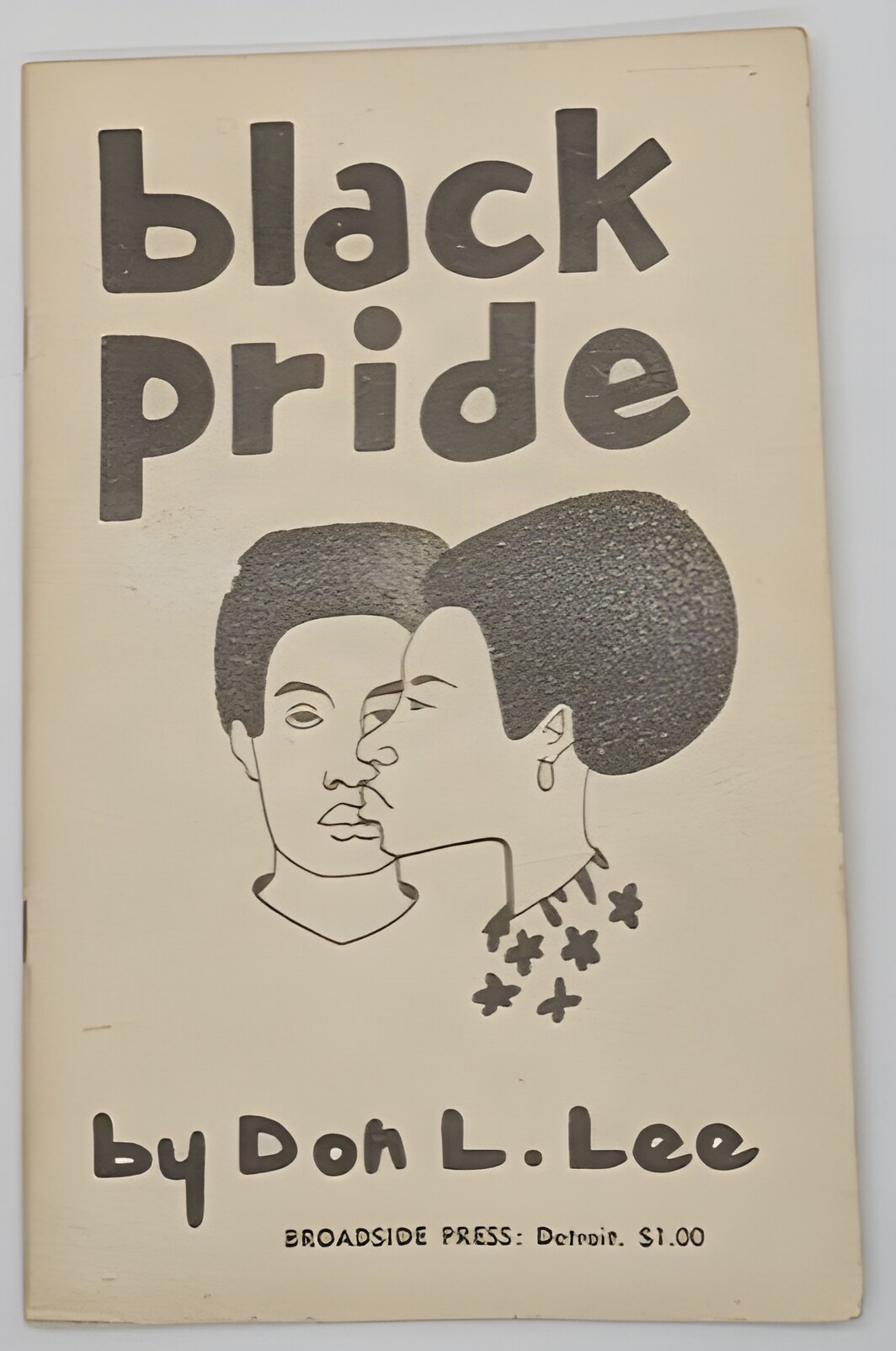
Softcover. Detroit MI, Broadside Press, 2nd pr., 1968, Book: Very Good, Dust Jacket: None, Softcover, stapled wrappers, 34 pages. Introduction by Dudley Randall. A seminal pamphlet from the Black Arts Movement, the work lays out Lee's early reflections on Black identity, self-respect, and cultural affirmation. Haki Madhubuti (He changed his name in 1973) published his first collection of poems, Think Black, in 1967 followed by Black Pride (1968), Don't Cry, Scream (1969), We Walk the Way of the New World (1970) and Book of Life (1973). His works deal with issues of racism, violence, stigmatization, and oppression of black people in America as well as the use of Christianity to persuade them to accept their condition. Previous owner's signature on front fly leaf, otherwise clean.
Hardcover. Cambridge, England, Cambridge University, 1st Edition, 1777, Book: Good, Dust Jacket: None, Nonpaginated. Hardcover. Cover boards bound in polished calf (agewear--see image), gilt bands on spine. Front cover boards and front flyleaf still attached but coming loose from binding,Binding tight otherwise. Spine straight. Previous owner's inscription on front flyleaf and dated signatures (178? and 1792) on title page (see image). Some light pencil on top of title page (see image). Tanning throughout from age. Beautiful old volume, a collector's dream.
Softcover. First Second, 1st, 2013, Book: Very Good, Dust Jacket: None, Two softcover volumes in a pictorial slipcase, pages. The Boxers & Saints Boxed Set from Gene Luen Yang, one of the greatest comics storytellers alive, brings all his formidable talents to bear in this astonishing work. In two volumes, Boxers & Saints tells two parallel stories. The first is of Little Bao, a Chinese peasant boy whose village is abused and plundered by Westerners claiming the role of missionaries. Little Bao, inspired by visions of the Chinese gods, joins a violent uprising against the Western interlopers. Against all odds, their grass-roots rebellion is successful. But in the second volume, Yang lays out the opposite side of the conflict. A girl whose village has no place for her is taken in by Christian missionaries and finds, for the first time, a home with them. As the Boxer Rebellion gains momentum, Vibiana must decide whether to abandon her Christian friends or to commit herself fully to Christianity.
Softcover. First Second, 1st, 2013, Book: Very Good, Dust Jacket: None, Two softcover volumes in a pictorial slipcase, pages. The Boxers & Saints Boxed Set from Gene Luen Yang, one of the greatest comics storytellers alive, brings all his formidable talents to bear in this astonishing work. In two volumes, Boxers & Saints tells two parallel stories. The first is of Little Bao, a Chinese peasant boy whose village is abused and plundered by Westerners claiming the role of missionaries. Little Bao, inspired by visions of the Chinese gods, joins a violent uprising against the Western interlopers. Against all odds, their grass-roots rebellion is successful. But in the second volume, Yang lays out the opposite side of the conflict. A girl whose village has no place for her is taken in by Christian missionaries and finds, for the first time, a home with them. As the Boxer Rebellion gains momentum, Vibiana must decide whether to abandon her Christian friends or to commit herself fully to Christianity.
Hardcover. Philadelphia, David McKay Company, 1st, 1929, Book: Good, Dust Jacket: None, 133 pages, illustrated throughout with tipped in b&w plates by M. Boutet De Monvel. Purple cloth with gilt titles. Sun-fade to covers, light tanning to pages opposite plates, else a clean, tight copy.
Softcover. Cambridge, UK, Cambridge University Press, 1st, 2006, Book: Very Good, Dust Jacket: None, Softcover, 331 pages including index. Who would the Saviour have to be, what would the Saviour have to do to rescue human beings from the meaning-destroying experiences of their lives? This book offers a systematic Christology that is at once biblical and philosophical. Starting with human radical vulnerability to horrors such as permanent pain, sadistic abuse or genocide, it develops what must be true about Christ if He is the horror-defeater who ultimately resolves all the problems affecting the human condition and Divine-human relations. Distinctive elements of Marilyn McCord Adams' study are her defence of the two-natures theory, of Christ as Inner Teacher and a functional partner in human flourishing, and her arguments in favour of literal bodily resurrection (Christ's and ours) and of a strong doctrine of corporeal Eucharistic presence. The book concludes that Christ is the One in Whom, not only Christian doctrine, but cosmos, church, and the human psyche hold together.
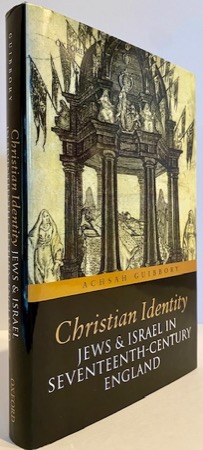
Hardcover. Oxford, England, Oxford University Press, 1st, 2010, Book: Very Good, Dust Jacket: Very Good, 328 pages. Hardcover. B/w illustrations throughout. Previous owner's name on front flyleaf. Black cover boards, gilt title on spine. Binding tight. Spine straight. Pages clean, unmarked, bright. Dust jacket unclipped, excellent, glossy. Assesses the comexity and fluidity of Christian identity from the reign of Elizabeth I and the early Stuart kings through the English Revolution, and into the Restoration, which the English Church and monarchy were restored.
Hardcover. London, Routledge/Thoemmes Press, 1st thus, 1995, Book: Very Good, Dust Jacket: None, Hardcover, maroon cloth with gilt lettering on spine. Facsimile reprints of the two works (1696 and 1697). Introduction by John Valdimir Price. Approx, 430 pages, light pencil markings to about 20 pages. Otherwise clean, tight copy.
Hardcover. NY, The Overlook Press, 1st, 2010, Book: Very Good, Dust Jacket: Very Good, Hardcover in a bright dust jacket. 358 pages, Illustrated with three sections of color plates. b&w maps, illustrations. Clean copy. A fascinating survey of the life and enduring legacy of perhaps the greatest and most unjustly ignored of the Roman emperors-written by a richly gifted historian. In 312 A.D., Constantine-one of four Roman emperors ruling a divided empire-marched on Rome to establish his control. On the eve of the battle, a cross appeared to him in the sky with an exhortation, "By this sign conquer." Inscribing the cross on the shields of his soldiers, Constantine drove his rivals into the Tiber and claimed the imperial capital for himself. Under Constantine, Christianity emerged from the shadows, its adherents no longer persecuted. Constantine united the western and eastern halves of the Roman Empire. He founded a new capital city, Constantinople. Thereafter the Christian Roman Empire endured in the East, while Rome itself fell to the barbarian hordes.
Hardcover. Cambridge MA, Harvard University Press, 1st, 1973, Book: Very Good, Dust Jacket: Good, Hardcover, 542 pages, tan cloth with gilt lettering on spine. Dust jacket has edgewear, chipping to corners. There is some light pencil marking to about 12 pages in the front of the book. Previous owner's signature on front fly leaf.
Hardcover. NY, Macmillan, reprint, 1929, Book: Very Good, Dust Jacket: None, Hardcover, blue cloth with gilt letterng on spine and front cover, 242 pages. Does Civilization Need Religion? sets out from the fact that religion's inability to make its ethical and social resources available for the solution of the moral problems of modern civilization is one, and the neglected one, of the two chief causes responsible for its debilitated condition. It is convinced that if Christian idealists are to make religion socially effective they will be forced to detach themselves from the dominant secular desires of the nations as well as from the greed of economic groups. It aims to show that though neither the orthodox nor the modern wing of the Christian Church seems capable of initiating a genuine revival which will evolve a morality capable of challenging and maintaining itself against the dominant desires of modern civilization's needs, there are resources in the Christian religion which make it the inevitable basis of any spiritual regeneration of Western civilization. Does Civilization Need Religion? maintains that the task of redeeming Western society rests in a peculiar sense upon Christianity, which has reduced the eternal conflict between self-assertion and self-denial to the paradox of self-assertion through self-denial and made the Cross the symbol of life's highest achievement. It is persuaded that the idea of a potent but yet suffering divine ideal which is defeated by the world but gains its victory in the defeat must continue to remain basic in any morally creative worldview. Names on front fly leaf otherwise a clean copy.
Hardcover. Stockholm, Journal, 1st, 2005, Book: Very Good, Dust Jacket: Very Good, 304 pages, 85 color, 210 b&w plates. Hardcover with dust jacket. Like new in publisher's shrink-wrap.
Hardcover. Cambridge, MA, Belknap Press of Harvard University Press, 1st Edition, 1961, Book: Very Good, Dust Jacket: None, 154 pages. Hardcover. Navy blue cloth cover boards, title on spine in white and small gilt design on front cover board. Previous owner's name on front flyleaf. Light pencil marks (erasable) throughout. Binding tight. Spine straight. This small book, the last work of a world-renowned scholar, has established itself as a classic. It provides a superb overview of the vast historical process by which Christianity was Hellenized and Hellenic civilization became Christianized.
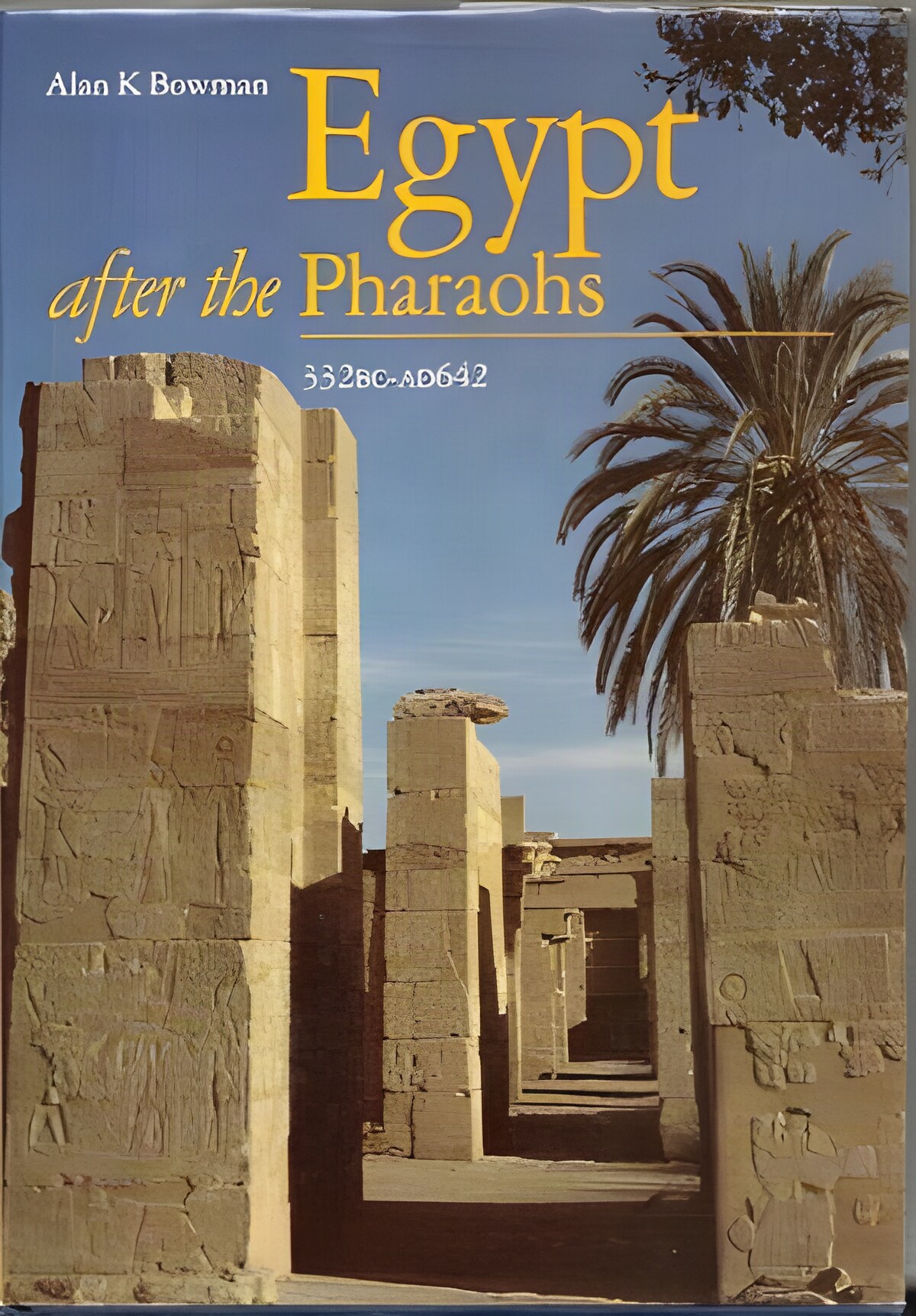
Hardcover. Berkeley CA, University of California Press, 1st, 1986, Book: Very Good, Dust Jacket: Very Good, Hardcover in a bright dust jacket, 264 pages, photographs throughout. Egypt After the Pharoahs treats the period which witnessed the arrival of the Greeks and Hellenistic culture in Egypt, the reign of the Ptolemies from Ptolemy I to Cleopatra, the conquest by Rome, the scientific and cultural achievements of Alexandria, and the rise of Christianity. The rich social, cultural, and intellectual ferment of this period comes alive in Alan Bowman's narrative. Clean copy.
Hardcover. Bristol UK, Thoemmes Press, reprint, 1997, Book: Very Good, Dust Jacket: None, Hardcover, blue cloth with gilt lettering on spine, 319 pages. A facsimile reprint of the 1656 edition. One of 9 volumes in More's collected works. Name, light pencil marking to front fly leaf otherwise a clean, bright copy.
Softcover. Princeton, NJ, Markus Weiner Publishers, 1st English Translation, 2001, Book: Very Good, Dust Jacket: None, 327 pages. Softcover. B/w illustrations throughout. Decorated wrapper, excellent. Pages clean and bright. Binding good. Like new copy. This fascinating study of eunuchs guides readers as they travel through various lands and periods, familiarizing themselves with the duties and responsibilities, the unspeakable torments, and the passions and joys of these individuals.
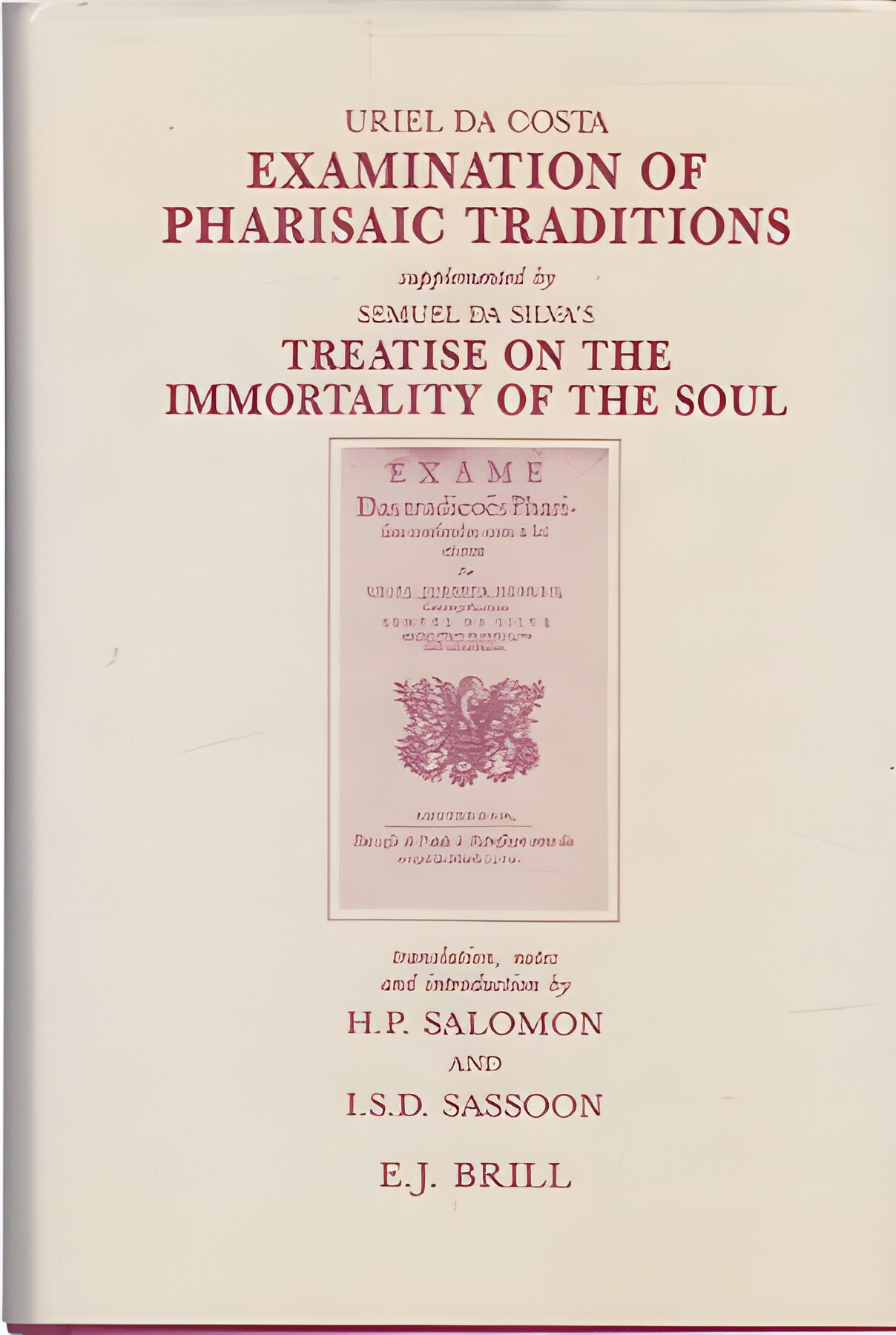
Hardcover. NY, E.J. Brill, 1st, 1993, Book: Very Good, Dust Jacket: Very Good, Hardcover in a bright dust jacket, 578 pages plus charts, b&w photos in rear. Translation and notes by H.P. Salomon and I.S.D. Sassoon. Da Costa's long-lost book rejects the divine origin of the rabbinic tradition. His insight was that what he calls Pharisaism is irreconcilable with the religion of the Pentateuch and therefore cannot derive from the same source. He claims, for example, that the Law of Moses does not allow for a belief in an afterlife for individual human beings. Concomitantly he denied the Mosaic origin of the notion of eternal punishment. The rabbinic reading of the Mosaic Law appeared to him almost as great a falsification as the Christian one. Yet there could be no reversion to Christianity and despite his deep rift with the synagogue he still believed in ultimate redemption for the Jewish people. As he so dramatically declares in his closing sonnet, Israel's rehabilitation depends on its shedding man-made doctrines, and holding fast to the Law in its purity.






 "Accounts Rendered by Papal Collectors in England 1317-1378by: Lunt, William E.")
![AM. Mackay Pioneer Missionary of the Church Missionary Society to Uganda. By His Sister A. M. by: Harrison, J.W [A.M.Mackay]](javascript:largeIMTop('https://www.browsingisarousing.com/shop/images/AM.-Mackay-Pioneer-Missionary-of-the-Church-Missionary-Society-to-Uganda.-By-His-Sister-A.-M._by_Har380841-422046.jpg','https://www.browsingisarousing.com/shop/images/AM.-Mackay-Pioneer-Missionary-of-the-Church-Missionary-Society-to-Uganda.-By-His-Sister-A.-M._by_Har380841-422046.jpg',0,'380841',0,'') "AM. Mackay Pioneer Missionary of the Church Missionary Society to Uganda. By His Sister A. M. by: Harrison, J.W [A.M.Mackay]")
 "An Antidote Against Atheism, or, An appeal to the naturall faculties of the minde of manby: Henry More/ G.A.J. Rogers (Intro.)")
 "An Explanation of the Grand Mystery of Godlinessby: Henry More")
 "Book of Common Prayer, The: and Administration of the Sacraments, and Other Rites and Ceremonies of the Church, According to the Use of the Church of England; Together with the Psalter or Psalms of David, Pointed as they are to be su")


 "Brother of the Birds: A Little History of Saint Francis of Assisiby: Green/ M. Boutet De Monvel, Louisa Meigs")
 "Christ and Horrors: The Coherence of Christology by: Adams, Marilyn McCord")




 "Deus Destroyed: The Image of Christianity in Early Modern Japanby: Elison, George")

 "Dream of Jerusalem, The: Lewis Larsson and the American Colony Photographersby: Grondahl, Mia")
 "Early Christianity and Greek Paideiaby: Jaeger, Werner")


 "Enthusiasmus Triumphatus: Or, A Discourse of the Nature, Causes, Kinds, and Cure, of Enthusiasmeby: Henry More/ G.A.J. Rogers (Intro.)")
 "Eunuchs and Castrati: A Cultural Historyby: Scholz, Piotr O.")