Softcover. Washington DC, Scalo/National Gallery of Art, 1st, 1994, Book: Very Good, Dust Jacket: None, Wraps are black, with white lettering on the spine. No date listed on title page. Copyright page dated 1994. Unpaginated; 34 b/w photographs reproduced. replica of a 1952 book which Frank produced in an edition of three unique examples.approximately 80 pages.
Softcover. Washington DC, Howard University Press, 1994, Book: Very Good, Dust Jacket: None, Softcover, 365 pages. Maps, illustrations, bibliography, index. A comparative social overview of slavery in Britain, America, and the Caribbean during the colonial period. Walvin carefully examines the external pressures exerted on coastal communities in Africa for slaves, the gradual development of a slave trading system within Africa, and the transport of over twelve million Africans across the seas. Clean copy. Several pages with dog-ear creases.
Hardcover. Washington, DC, Associated Publishers, Revised Ed., 1944, Book: Very Good, Dust Jacket: None, Hardcover, 381 pages. Dark green cover with slight wear and white spotting to back. Slight soiling to edges. Binding cracked at page 45. Overall, a clean, tight copy.
Hardcover. Washington DC, National Portrait Gallery/Princeton University Press, 1st, 2018, Book: Very Good, Dust Jacket: Very Good, Hardcover in a bright dust jacket, Accompanied exhibition at the National Portrait Gallery. Illustrated. First major publication to focus on the development of silhouettes, gathers leading experts to shed light on the surprisingly complex historical, political, and social underpinnings of this ostensibly simple art form. This richly illustrated volume explores likenesses of everyone from presidents and celebrities to everyday citizens and enslaved people. Ultimately, the book reveals how silhouettes registered the paradoxes of the unstable young nation, roiling with tensions over slavery and political independence. Primarily tracing the rise of the silhouette in the decades leading up to the Civil War, Black Out also considers the ubiquity of the genre today, particularly in contemporary art. Historical research and four contemporary artists: Kara Walker, Kristi Malakoff, Kumi Yamashita, and Camille Utterback. Still in publisher's shrinkwrap.
Hardcover. Seattle, University of Washington Press, 1st, 1989, Book: Very Good, Dust Jacket: Very Good, Hardcover in a bright, unclipped dust jacket, 343 pages. This is an anthropological study of boyhood in a group of related Igbo villages called Afikpo, in souteastern Nigeria. About half of the book is taken up with the description and analysis of adolescent initiation rites, providing a close and detailed view of rituals that for the most part have only been touched upon in literature. The work makes use of psychoanalytic theory, with a logic that is grounded in data, blended with traditional cultural anthropological analysis. Ottenberg's understanding of the dynamics of the symbols and their unstated meanings contributes to the study of ritual process in any society. The data on ritual initiation alo0ne make this a major contribution to African ethnography, and Ottenberg's descriptive material on male secrecy and related gender distinctions provides a background fora more general understanding of West African secret societies.
Hardcover. Oklahoma Heritage Assn., 2000, Book: Very Good, Dust Jacket: Very Good, Hardcover in a bright, unclipped dust jacket. 324 pages, b&w illustrations. SIGNED BY CO-AUTHOR THOMPSON on the title page.Bryce Harlow was one of the most extraordinary political figures in the United States in the second half of the 20th century. He served four presidents with great honor and distinction. His word was his bond. With his gentle manner and Oklahoma drawl, Harlow advised Presidents on more public issues than perhaps anyone in American history. Dr. Henry Kissinger says Harlow spent his entire adult life studying the ways of Washington, D.C., alternating between participant and observer. Harlow had a deep sense for the Presidency, its power, its majesty, and the awful responsibility it imposes. Clean, unread copy.
Hardcover. Lyons Press, 1st, 2016, Book: Very Good, Dust Jacket: Very Good, Hardcover in a bright dust jacket, 249 pages, b&w illustrations. William McGarvey "Bullet Bill" Dudley (December 24, 1921 - February 4, 2010) led a thrilling career as a professional American football player in the National Football League for the Pittsburgh Steelers, Detroit Lions, and Washington Redskins. With humble beginnings in Bluefield, Virginia he made the football team his junior year, and in 1938 he kicked a 35-yard field goal in the season's finale. Dudley was drafted in the 1942 NFL Draft with the first overall pick by the Pittsburgh Steelers. He was inducted into the Pro Football Hall of Fame in 1966 and the Virginia Sports Hall of Fame in 1972. During the 1942 season, he led the league in rushing with 696 yards on 162 carries and was then named to the All-Pro team. Steve Stinson revisits his father-in-law's journey from Bluefield, Virginia through his retirement from the NFL and shares everything he brought to communities in between each pivotal moment in Dudley's life. Clean copy.
Hardcover. NY, Time Life, reprint, 1981, Book: Very Good, Dust Jacket: None, 546 pages. Hardcover with no dust jacket. Dark blue leather bound with gilt titles to front cover and spine. Embossed decoration on front cover. Gilt text block edges, red ribbon marker. Clean, tight copy.In 1863 Horace Porter, then a captain, met Ulysses S. Grant as Grant commenced the campaign that would break the Confederate siege at Chattanooga. After a brief stint in Washington, Porter rejoined Grant, who was now in command of all Union forces, and served with him as a staff aide until the end of the war. Porter was at Appomattox as a brevet brigadier general, and this work, written from notes taken in the field, is his eyewitness account of the great struggle between Lee and Grant that led to the defeat of the Confederacy.
Hardcover. NY, Simon & Schuster, 1st, 2011, Book: Very Good, Dust Jacket: Very Good, Hardcover in a bright, unclipped dust jacket. 516 pages includes index, b&w photos. Neil Lanctot's biography of Hall of Fame catcher Roy Campanella--filled with surprises--is the first life of the Dodger great in decades and the most authoritative ever published. Born to a father of Italian descent and an African- American mother, Campanella wanted to be a ballplayer from childhood but was barred by color from the major leagues. He dropped out of school to play professional ball with the Negro Leagues' Washington (later Baltimore) Elite Giants, where he honed his skills under Hall of Fame catcher Biz Mackey. Campy played eight years in the Negro Leagues until the major leagues integrated. Ironically, he and not Jackie Robinson might have been the player to integrate baseball, as Lanctot reveals. An early recruit to Branch Rickey's "Great Experiment" with the Brooklyn Dodgers, Campy became the first African-American catcher in the twentieth century in the major leagues. As Lanctot discloses, Campanella and Robinson, pioneers of integration, had a contentious relationship, largely as a result of a dispute over postseason barnstorming. Clean copy.
Hardcover. Washington, DC, Princeton University Press, 1st, 1989, Book: Very Good, Dust Jacket: Very Good, 352 pages. Hardcover with dust jacket. Tight copy with minor wear to edges. Previous owner's notes in pencil near rear end paper.
Softcover. Washington, DC, Smithsonian Institution, 1st, 1978, Book: Very Good, Dust Jacket: None, Softcover, 96 pages, b&w and color illustrations. Very light edge wear; else a very clean, tight copy.
Softcover. Washington, DC, Smithsonian Institution, 1st, 1978, Book: Very Good, Dust Jacket: None, Softcover, 96 pages, b&w and color illustrations. Very light edge wear; else a very clean, tight copy.
Hardcover. Washington DC, Smithsonian Institution, 1st, 1968, Book: Very Good, Dust Jacket: Good, Hardcover in a lightly worn, unclipped dust jacket. 156 pages, b&w and color illustrations. Accompanied the exhibit of the same name shown at the Smithsonian, the Philadelphia Museum of Art and the Whitney in 1968 and 1969. Essays by Martin Friedman, Bartlett Hayes and Charles Millard. Whitney Museum of American Art. Bibliography: p. 106-107. Charles Sheeler (July 16, 1883 - May 7, 1965) was an American painter and commercial photographer. He is recognized as one of the founders of American modernism, developing a "quasi-photographic" style of painting known as Precisionism and becoming one of the master photographers of the 20th century. Mild shelf wear, clean copy.
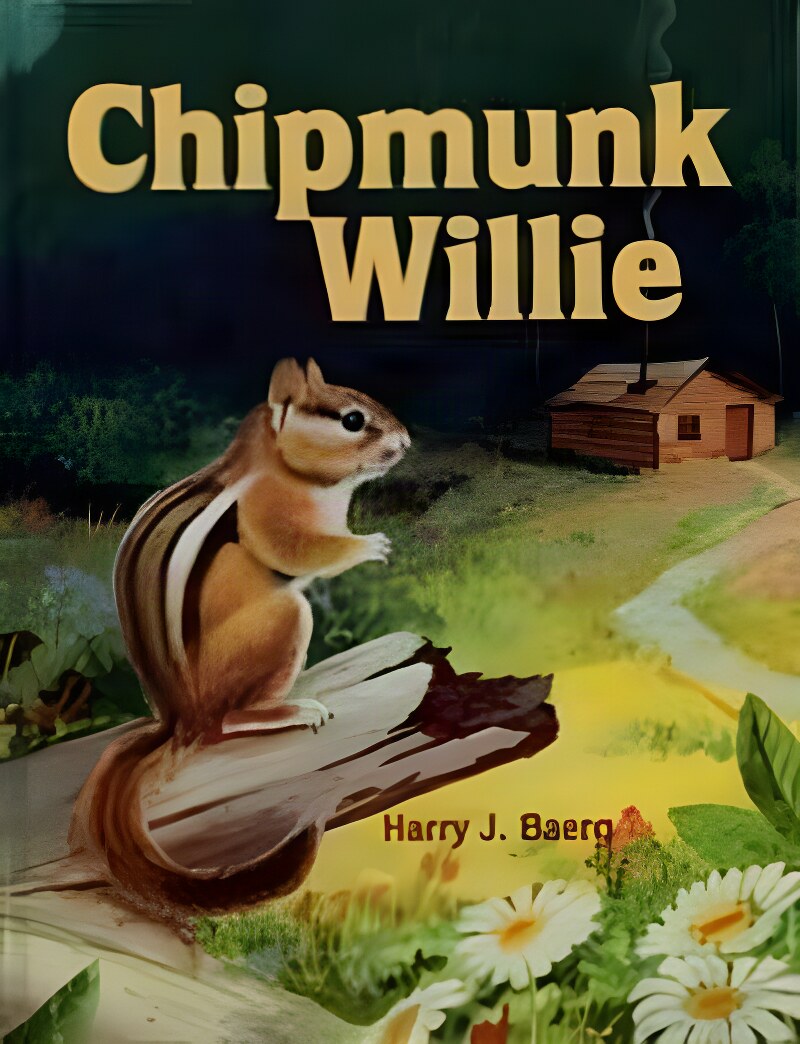
Hardcover. Washington DC, Review and Herald , 1st, 1958, Book: Good, Dust Jacket: None, Hardcover, pictorial boards, 56 pages illustrated in color by the author. Ex-library with light residue, small stickers. When Chipmunk Willie wakes up from a long winter nap, he is eager to explore the world around him. He finds plenty of excitement when he hunts for food and takes care of his family. There's a surprise around every corner as he runs into an old tomcat, a sharp-eyed hawk, a weasel, and a snake. Join Willie as he scurries from adventure to adventure!
Hardcover. Chicago, Rand McNally & Company, 1st, 1956, Book: Very Good, Dust Jacket: None, Hardcover, red cloth stamped in black. No dust jacket. Illustrated in b&w by Wesley Dennis. With "A" on the copyright page, first thus. 154 pages. Stamp with inscription on half-title page. Otherwise clean. George Washington meets his match in a wily fox in this legendary hunting tale from Newbery Award-winning author Marguerite Henry. Cinnabar is a fox. He lives in a den with his family, Vicky and four little cubs. He's a hardworking fox who does everything he can to ensure that his family has what they need. But during fox hunting season, he likes to have a little fun: Every hunt day, promptly at one o'clock, Cinnabar shows up and runs until nightfall. Can the huntsmen ever catch this clever fox? Based on an old legend about fox hunting in the area around Mount Vernon.
Hardcover. Chicago, Rand McNally & Company, 1st, 1956, Book: Very Good, Dust Jacket: None, Hardcover, red cloth stamped in black. Ii a worn, chipped dust jacket. Illustrated in b&w by Wesley Dennis. With "A" on the copyright page, first thus. 154 pages. light wear to cloth at bottom of spine. George Washington meets his match in a wily fox in this legendary hunting tale from Newbery Award-winning author Marguerite Henry. Cinnabar is a fox. He lives in a den with his family, Vicky and four little cubs. He's a hardworking fox who does everything he can to ensure that his family has what they need. But during fox hunting season, he likes to have a little fun: Every hunt day, promptly at one o'clock, Cinnabar shows up and runs until nightfall. Can the huntsmen ever catch this clever fox? Based on an old legend about fox hunting in the area around Mount Vernon.
Hardcover. Knoxville, University of Tennessee Press , 1st, 1980, Book: Very Good, Dust Jacket: Very Good, Hardcover in a bright dust jacket, 149 pages. The chief nurse of the Union Hospital in Washington, D.C., describes life and stress in the hospital and comments on notable persons of power. Her heretofore unpublished diary and letters comprise a fresh, highly significant document concerning the medical history of the Civil War and the contributions of women nurses in the Northern military hospitals. This book is edited, with Introduction and Commentary, by John R. Brumgardt.
Softcover. Washington DC, Smithsonian Institution Press, 1st, 1979, Book: Very Good, Dust Jacket: None, Softcover, 110 pages, illustrated throughout in color and b&w. Light wear to wrappers, mild damp stain to rear cover. Previous owner's writing, underlining to several pages.
Hardcover. University of Missouri, 1st, 2007, Book: Very Good, Dust Jacket: Very Good, Hardcover, 288 pages. A "shooter" for the Associated Press for thirty-three years, Burroughs was assigned to the Washington bureau, and his photos appeared frequently in newspapers around the world, as well as on the covers of Life and other magazines. Close-ups of History is both an eyewitness account of history and a stirring professional memoir--a book that brings special moments into the viewfinder as Burroughs turns his trained photographer's eye to reflect his highly cultivated sense of news. These dramatic photographs testify to an incredible career launched at the end of World War II, and Burroughs's work in postwar Germany is especially poignant. He documented the remains of Hitler's office, ruined cities and displaced persons, and the Nuremberg trials. He also captured the beginning of the Cold War as the Soviets tried to take over Berlin and the German people struggled to hold the city for the West.
Hardcover. New York, Colophon Press, 1st, 1930, Book: Good, Dust Jacket: None, Unpaginated. Hardcover with lightly tanned pages. Cover boards show light soil. Articles include: Colophons by Ruth S. Granniss; Firsts, Issues and Points by George H. Sargent; On Breaking Type by H.L. Mencken; Whitman and the War's Finale by Emory Holloway; Illustrating "Huckleberry Finn" by E.W. Kemble; Irving's Washington and an Episode in Courtesy by George S. Hellman; On Being Published by Sherwood Anderson; Chartreuse by A.R. Stavenitz; An Unrecorded "Pilgram's Progress" by Gilbert McCoy Troxell; The Bookplates of Bruce Rogers by William A. Kittredge; Getting Into Print by William McFee.
Hardcover. Washington, DC, Congressional Globe Office, 1st, 1860, Book: Good, Dust Jacket: None, 992 pages, hardcover. Half leather over marbled boards. A bound copy of 55 issues of The Congressional Globe from the weeks and months leading up to the Civil War. Extensively indexed. Edgewear to boards, mostly along top edge. Bumping to corners. Water staining to front and rear panels, lower fore edge. Staining to interior copy is minimal; damage ends at half title page. Previous owner's bookplate on front end paper. Unmarked. A tight copy.
Hardcover. NY, Scribner, 1st, 2024, Book: Very Good, Dust Jacket: Very Good, Hardcover in a bright, unclipped dust jacket. Creation Lake is a novel about a secret agent, a thirty-four-year-old American woman of ruthless tactics and clean beauty who is sent to do dirty work in France. "Sadie Smith" is how the narrator introduces herself to the rural commune of French subversives on whom she is keeping tabs, and to her lover, Lucien, a young and well-born Parisian she has met by "cold bump"--making him believe the encounter was accidental. Like everyone she targets, Lucien is useful to her and used by her. Sadie operates by strategy and dissimulation, based on what her "contacts"--shadowy figures in business and government--instruct. First, these contacts want her to incite provocation. Then they want more. *NAMED A BEST BOOK OF 2024 BY THE NEW YORK TIMES, THE ATLANTIC, VULTURE, VOGUE, THE WASHINGTON POST, KIRKUS REVIEWS, NPR, THE ECONOMIST, THE CHICAGO PUBLIC LIBRARY, VOX, and more*. Clean copy.
Hardcover. Washington, D. C., Smithsonian, 1st, 1998, Book: Very Good, Dust Jacket: Very Good, Hardcover, 58 pages. Illustrated with full color photographs. Clean, bright copy.

 "Black and White Thingsby: Frank, Robert")
 "Black Ivory; A History of British Slaveryby: Walvin, James")
 "Black Man in White America, Theby: Van Drusen, John O.")

 "Boyhood Rituals in an African Society: An Interpretationby: Simon Ottenberg")
 "Bryce Harlow: Mr. Integrity (SIGNED COPY)by: Ralph G. Thompson/ Bob Burke")

 "Campaigning with Grant (Collector's Library of the Civil War)by: Porte, Horace")
 "Campy: The Two Lives of Roy Campanellaby: Neil Lanctot")
 "Cecilia Beaux and the Art of Portraiture by: Tappert, Tara Leigh")
 "Cezanne and America: Dealers, Collectors, Artist and Critics 1891-1921by: Rewald, John")
 "Charles Burchfield: The Charles Rand Penney Collectionby: Penney, Charles Rand et. al.")
 "Charles Burchfield: The Charles Rand Penney Collectionby: Penney, Charles Rand et. al.")

 "Cinnabar: The One O'Clock Foxby: Marguerite Henry; illustrated by Wesley Dennis")
 "Cinnabar: The One O'Clock Foxby: Marguerite Henry; illustrated by Wesley Dennis")
 "Civil War Nurse: The Diary and Letters of Hannah Ropesby: Hannah Ropes /John R. Brumgardt (Editor)")
 "Close-Ups of History: Three Decades through the Lens of an AP Photographerby: Henry Burroughs and Margaret Wohlgemuth Burroughs")
 "Colophon: A Book Collectors' Quarterlyby: Adler (editor), Elmor; Et Al.")
 "Congressional Globe, The: 36th Congress 2nd Session, Dec. 3, to Feb. 18, 1860-1861by: Rives, John C.")

 "Cuba y Cubaby: Burri, Rene")