Softcover. Washington DC, National Gallery of Art, 1st, 2011, Book: Very Good, Dust Jacket: None, Softcover, 224 pages. Headline-making in every sense, the myriad works of art in which Andy Warhol used or referenced tabloids throughout his career are explored in this book as a coherent body for the first time. Obsessed with contemporary culture, Warhol celebrated the sensational as well as the mundane in every facet of society. His headline works, which were realized in a range of formats--from two-dimensional to time-based media such as film, video, and television--chart in real time the great shift in the technological means employed to deliver the news from the 1950s until the artist's death in 1987. This companion volume to a riveting exhibition brings together more than 80 works, from Warhol's earliest drawings and paintings of newspaper headlines, to his screen-printed canvases, photographs, and electronic media, and concluding with collaborative works he produced with Keith Haring and Jean-Michel Basquiat. Featuring illuminating essays and abundant reproductions of the headline works, as well as source materials and examples of Warhol's private scrapbooks of clippings, this unique and powerful volume demonstrates the rich intersection of mainstream media and fine art.
Hardcover. Chapel Hill & London, The University Of North Carolina Press,, 1st, 1991, Book: Very Good, Dust Jacket: Very Good, Hardcover, 297 pages. illustrated throughout in color and b&w. Oblong folio. Light gray cloth with gilt title to spine. Pictorial dust jacket. Minor wear to covers, else like new. The 15x11.5" format accommodates 160 color and 12 b&w illustrations, many of them decidedly horizontal, and accompanying text laid out in two wide (5.5") columns. Before photography, Washington, DC was the subject of numerous engravings, aquatints, and lithographs which were published separately as well as in newspapers and magazines, souvenir booklets, and guidebooks and brochures. A selection of these illustrations depicting buildings or districts, views from public structures, and bird's-eye views is presented along with descriptions of Washington from contemporary published works by journalists, architects, travelers, politicians, and others. Nine chapters review successive periods of growth and identify events that shaped the city's character.
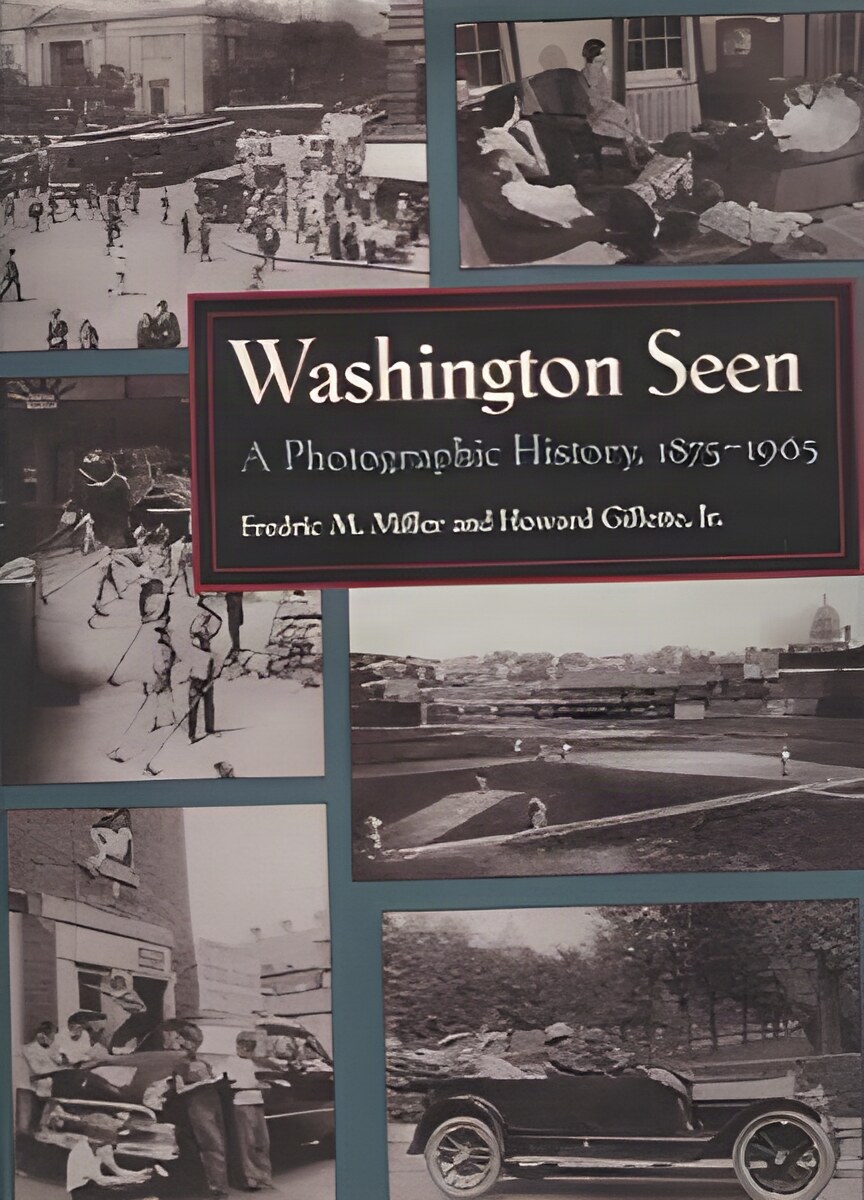
Hardcover. Baltimore, Johns Hopkins University Press, 1st, 1995, Book: Very Good, Dust Jacket: Very Good, Hardcover in a bright, unclipped dust jacket. In Washington Seen Fredric Miller and Howard Gillette bring together nearly four hundred unique photographs from the Gilded Age to the Great Society. Throughout, the focus is not on streets and monuments but on the complex relationships among the people of Washington-men and women, black and white-and the way they worked and lived. Here are Washingtonians at home and at work, at restaurant tables and lunch counters, in schools and churches, dancing the jitterbug and going to the movies, cheering the Redskins, the Senators, and the Homestead Greys. In the accompanying text, Miller and Gillette invite readers to enter into an intimate "conversation with the past," offering insightful commentary on the images of people whose faces cannot fail to captivate. Clean copy.
Hardcover. Washington DC, Smithsonian Institution Press, 1st, 1998, Book: Very Good, Dust Jacket: Very Good, Hardcover in a bright dust jacket, 292 pages, b&w illustrations. SIGNED BY BOTH AUTHORS on the title page. Additionally INSCRIBED BY COHN on the dedication page. Kevin J. Crisman and Arthur B. Cohn show how a confluence of geographic, technological, economic, and social conditions in the United States and Canada turned an ancient idea into a practical alternative to more expensive and dangerous steamboats. Reviewing evidence from travelers' memoirs, regional histories, pictorial records, and the only horseboat ever studied by archaeologists - a wreck on the floor of Lake Champlain's Burlington Bay, in Vermont - the authors trace the evolution of horseboats from early mechanisms that forced the animals to walk in tight circles to "endless floor" treadmills that resembled modern exercise machines. In a lively narrative interspersed with quotes from passenger accounts, the book charts the rise and demise of horseboat businesses on the Hudson River, as well as in New York City, St. Louis, and Halifax, Nova Scotia. The authors also describe and record the underwater excavation of the Lake Champlain wreck, revealing a wealth of detail about the construction and operation of a typical treadwheel horseboat of the 1830s and 1840s. Clean copy.
NY, Henry Holt, 1st, 1998, Book: Very Good, Dust Jacket: Very Good, Hardcover in a bright, unclipped dust jacket. When sixteen-year-old Brent Bishop inadvertently causes the death of a young woman, he is sent on an unusual journey of repentance, building wind toys across the land. In his most ambitious novel to date, Newbery winner Paul Fleischman traces Brent's healing pilgrimage from Washington State to California, Florida, and Maine, and describes the many lives set into new motion by the ingenious creations Brent leaves behind. Clean copy.
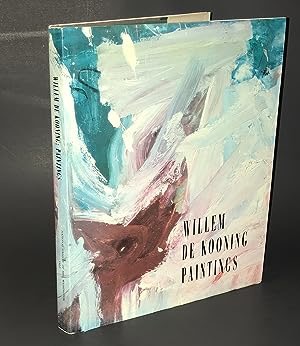
Hardcover. Washington DC, National Gallery /Yale University, 1st, 1994, Book: Very Good, Dust Jacket: Very Good, Hardcover in a bright dust jacket. 231 pages, numerous color and bw plates. Catalogue of a de Kooning exhibition, organized by the National Gallery in association with the Tate Gallery and the Metropolitan Museum of Art. This illustrated survey of de Kooning's paintings covers the period from 1938 through 1986. The catalogue, by curator Prather, is preceded by two critical essays: Sylvester's "Flesh Was the Reason" and Shiff's "Water and Lipstick: De Kooning in Transition." 12'' x 9.75''. Clean copy. DOMESTIC SHIPPING ONLY.
Hardcover. Washington DC, National Geographic Books, 1st, 2008, Book: Very Good, Dust Jacket: Very Good, Hardcover in a bright dust jacket, 207 pages. Recounted in gripping words and unforgettable images, Avakian's remarkable experiences will draw readers into the Muslim world to meet friends and terrorists, leaders and thieves and everyday people. She lived and worked for two years in the Gaza strip, often in Islamic dress, once beaten bloody by Hamas. For several terrifying days in Somalia she was pinned down by sniper fire on the way to her hotel. She careened across the snowy Tien-Shen Mountains with Islamic fundamentalists in an ancient Lada, only to be detained and tossed out by the Uzbek KGB. All the while, she captured some of the most important stories of our time-the famine in Sudan, the violence in Gaza and Somalia, the daily life of Hezbollah. She traveled extensively with Yasser Arafat as one of the only non-Arab photographers given such access. Small scar to front of dust jacket otherwise a clean copy.
Hardcover. Washington DC/New Haven CT, National Gallery of Art/Yale University Press, 1st, 1986, Book: Very Good, Dust Jacket: Very Good, 259 pages, hardcover with dust jacket. First major survey of Homer's watercolor career, part of a celebration of the 150th anniversary of Winslow Homer's birth. Mild rubbing to dust jacket. Color and black-and-white illustrations throughout. Unmarked. Bright and clean. A tight copy.
Softcover. Washington DC, Smithsonian Institution Press, 1st, 1972, Book: Very Good, Dust Jacket: None, Softcover, 128 pages, 106 bw repros. Essay by John Wilmerding. Catalog, prepared by Elaine Evans Dee, lists 106 works. Includes Drawings, Oils, Etching and Wood Engraving. The vast majority of these drawings were found in Homer's studio after his death and given to the Cooper-Hewitt.
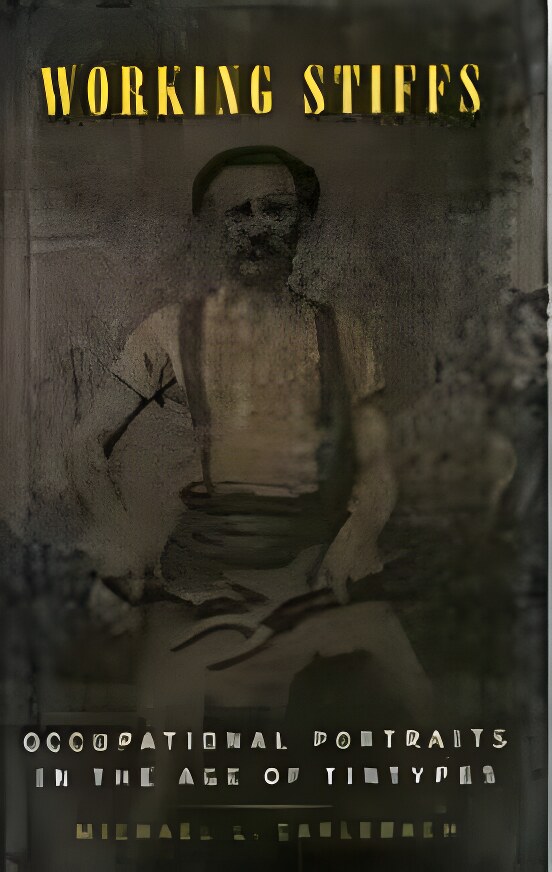
Hardcover. Washington DC, Smithsonian Institution Scholarly Press, 1st, 2002, Book: Very Good, Dust Jacket: Very Good, Hardcover, 144 pages. The tintype, patented in 1856, was a cheap, fast, easy-to-make, practically indestructible type of photograph that became enormously popular among the working class in the late nineteenth century. For common laborers and their families, the opportunity to join the ranks of those who owned pictures of family and friends--the upper classes--was momentous. This collection exhibits more than eighty examples of a specific kind of tintype: occupational portraits, photographs of working people with the tools of their trade. Michael L. Carlebach examines the historical significance of these tintypes and finds that they reveal a great deal about late nineteenth-century values. The subjects of these images are plumbers proudly holding their wrenches and pipe cutters, carpenters with their saws and lathing hatchets, textile workers with their spindles and yarn, icemen with their tongs. These people lived and worked at a time when a depersonalized factory system run by production and efficiency experts was beginning to dominate American industry and culture. Many of the men and women in these tintypes were part of a disappearing class of self-employed artisans and journeymen; their portraits proudly stress their individuality and the essential nobility of their work.
Hardcover. Seattle, University of Washington Press, 1st, 2012, Book: Very Good, Dust Jacket: Very Good, 196 pages. Hardcover with dust jacket. Color photographs. Clean, unmarked copy with only minor wear to dust jacket. In Yamuna Walk, photographer and multimedia artist Atul Bhalla documents a five-day trek along the sacred Yamuna River as it passes through his home city of New Delhi, India. Through his vivid and haunting photographs, Bhalla explores the myriad ways that modern life along the Yamuna is shaped by water, from the rural outskirts of the city to the polluted landscape of urban Delhi. Climbing over fences, crossing concrete overpasses, and navigating between blooming fields and piles of waste on his journeys, Bhalla also shows the diverse marks of human development that can be read in the image of the river.

 "Warhol: Headlinesby: Molly Donovan , John J. Curley , et al.")
 "Washington On View: The Nation's Capital Since 1790by: Reps, John William")


 "When Horses Walked on Water: Horse-Powered Ferries in Nineteenth-Century America (SIGNED COPY)by: Kevin J. Crisman, Arthur B. Cohn")
 "Whirligig by: Fleischman, Paul")



 "Winslow Homer Watercolorsby: Cooper , Helen A.")
 "Winslow Homer, 1836-1910;: A selection from the Cooper-Hewitt Collection, Smithsonian Institutionby: Wilmerding, John et al.")
 "Yamuna Walkby: Bhalla, Atul (Photographer)")