Hardcover. Munchen, Georg Muller , 1st, 1925, Book: Very Good, Dust Jacket: None, Hardcover, black cloth with gilt design on front cover, gilt lettering on spine. 124 pages of text in German, followed by 248 b&w plates of portraits and scenes in India. One of a series of books on indigenous cultures by this publisher. Clean copy.
Hardcover. US, Hatje Cantz, 1st, 2009, Book: Very Good, Dust Jacket: Very Good, Hardcover. Like new in publisher's shrink-wrap. Photographs of glaciers and Arctic regions have existed almost as long as photography itself, as a function of documentary and mapmaking endeavors. As early as the 1860s, the medium was used to assess topology, capturing Arctic landscape at a distance and at close quarters, or producing stereoscopic images or panoramas. Glaciologists needed photographs to be taken year after year in order to assess the growth or contraction of the ice, and today repeat photography has become a valuable tool for documenting and demonstrating the real effects of global warming. In Infinite Ice, historical images are reproduced alongside the responses of contemporary artists who have addressed photography and landscape--for example, long, nighttime exposures by Darren Almond, aerial photographs by Olafur Eliasson or panoramic views by Walter Niedermayr. Featuring approximately 100 images, this volume presents a broad variety of glacial photography from 1860 to the present.
Hardcover. NY, Aperture, 1st, 1998, Book: Very Good, Dust Jacket: Very Good, Hardcover, 160 pages. Michael von Graffenried, an award-winning Swiss photographer, covertly photographed civil strife in Algeria from the early 1990s through 1998. In a land where Islamic terrorists have executed over sixty journalists and photographers in the last seven years, Graffenried's very survival is remarkable. His extraordinary accomplishment, however, is these photographs, which form a composite of Algeria that is more whole than the nation itself, fractured by one segment of the population in favor of democracy and another in favor of an Islamic state. Graffenried makes his pictures secretly, using an antique Widelux panoramic camera with a hidden lens. He would risk his picture and his life were he to raise a camera to his eyes. Instead, he shoots from the hip, with his hands clasped over what looks like a pair of binoculars. In learning to frame his photographs without a viewfinder, he opens himself to a rich array of surprise and irony in his pictures, and reveals a society that has been concealed from the international community for nearly seven years.
Hardcover. New York, Glitterati, 1st, 2012, Book: Very Good, Dust Jacket: Very Good, Hardcover, 352 page. Like new in publisher's shrink-wrap. A unique linsight into life in Brazil's infamous favelas. A honest portrayal of the 'other side' of Brazil's society. Portrays a world that came to prominence with the hit film City of God. Combining thought-provoking text and hard-hitting, stunning photography, Inside the Favelas provides a compelling commentary on the life in Brazil's shanty towns Includes a foreword by The Honorable Sergio Cabral Filho, Govenor of the State of Rio de Janeiro, Brazil
Hardcover. Lausanne, Clairefontaine, 1st , 1956, Book: Very Good, Dust Jacket: Very Good, Hardcover, 128 pages. Black & white photos by Schuh printed in gravure. Documentary images of people in the Cartier-Bresson style. FRENCH TEXT by Fouchet. Nice condition. Schuh's early work as freelance photojournalist for several magazines, including "Paris Match" and "Life," led him throughout Europe and as far as Indonesia. In this work, Schuh presents the realities of daily life through a selection of his early photographs, including his two most famous: "Enfant javanais jouant" (a boy stretched out playing a game), and "Danseuses sacrees de Bali" (temple dancer), both taken in Indonesia in 1938-39.
Hardcover. New York , powerHouse Books, 1st, 2004, Book: Very Good, Dust Jacket: None, Like new in publishers shrink-wrap. 352 pages, a fascinating behind the scenes look at the New York fashion world; as seen through 100's of stunning, full-color photos. Foreword by Katie Couric. Introduction by Fern Mallis.
Hardcover. New York, Museum of Modern Art, 1st, 2011, Book: Very Good, Dust Jacket: Very Good, 168 pages. Hardcover still in publisher's shrinkwrap. Dust jacket unmarked. Binding is strong. Clean tight copy.
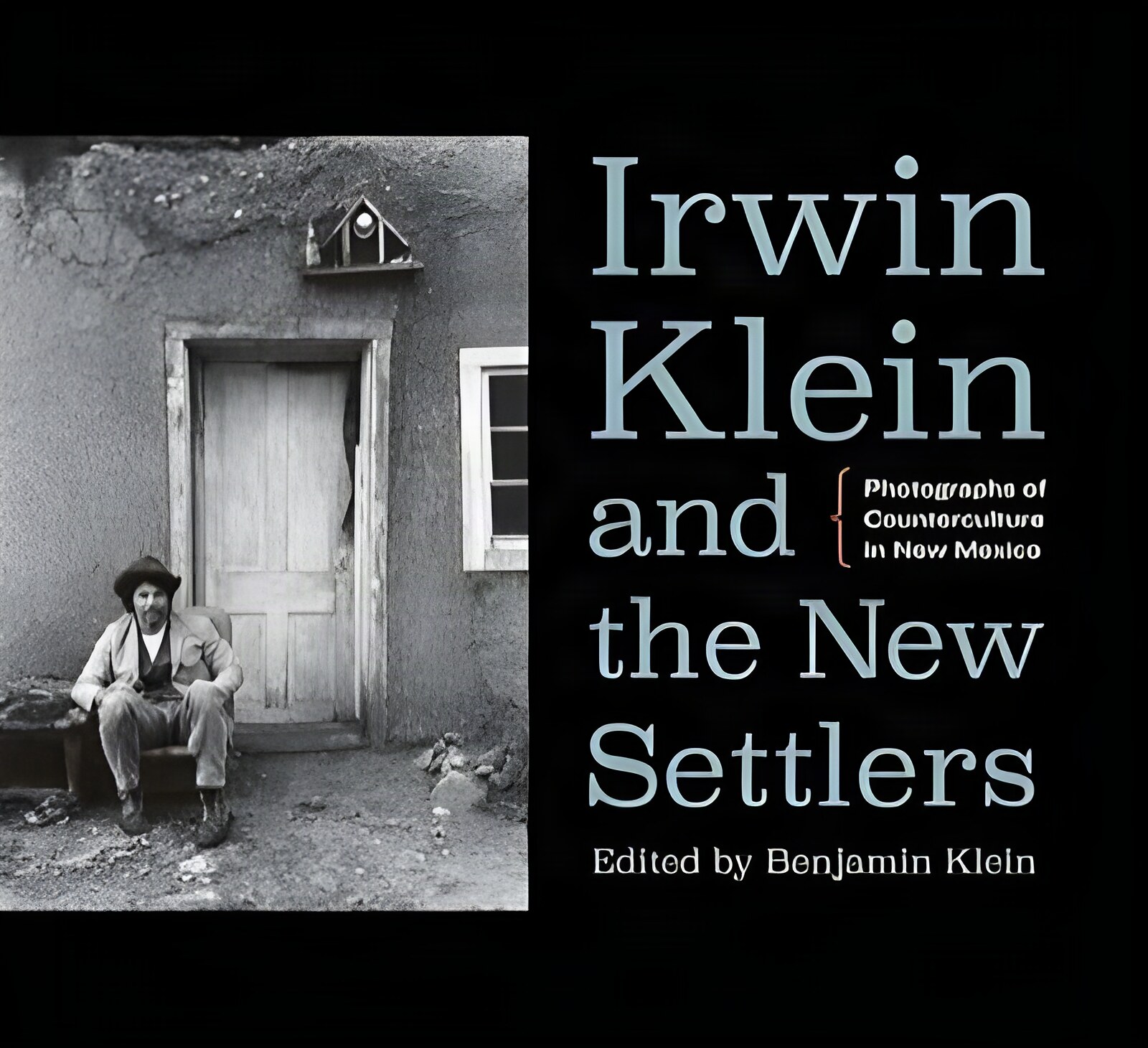
Hardcover. Lincoln NE, University of Nebraska Press, 1st, 2016, Book: Very Good, Dust Jacket: Very Good, Hardcover in a bright dust jacket, 167 pages. A previously unpublished photo series by Irwin Klein of northern New Mexican counterculture communes from 1967-1971 blended with modern essays on the topic. Dropouts, renegades, utopians. Children of the urban middle class and old beatniks living alone, as couples, in families, or as groups in the small Nuevomexicano towns. When photographer Irwin Klein began visiting northern New Mexico in the mid-1960s, he found these self-proclaimed New Settlers and many others in the back country between Santa Fe and Taos. His black-and-white photographs captured the life of the countercultures transition to a social movement. Clean copy.
Hardcover. Germany, Hatje Cantz, 1st, 2006, Book: Very Good, Dust Jacket: None, Hardcover, 80 pages, photos in color. Minor shelf-wear to boards, else a clean, tight copy. This book documents the two most recent works by the critically acclaimed British artist and filmmaker, Isaac Julien, both of which continue his investigation of issues of race and global politics. True North, shot in the spectacular landscapes of Iceland and Northern Sweden, is conceived around the expedition writings of the African-American explorer Matthew Henson, one of the key members of Robert E. Peary's 1909 Arctic expedition, and arguably the first person to reach the North Pole. True North's diametric counterpart, Fantome Afrique, weaves cinematic and architectural references through the rich imagery of urban Ouagadougou, Africa's cinematic center, and the arid spaces of rural Burkina Faso. The film is punctuated by archival footage from early colonial expeditions and landmark moments in African history.
Hardcover. Germany, Hatje Cantz, 1st, 2006, Book: Very Good, Dust Jacket: None, Hardcover, 80 pages, photos in color. Minor shelf-wear to boards, else a clean, tight copy. This book documents the two most recent works by the critically acclaimed British artist and filmmaker, Isaac Julien, both of which continue his investigation of issues of race and global politics. True North, shot in the spectacular landscapes of Iceland and Northern Sweden, is conceived around the expedition writings of the African-American explorer Matthew Henson, one of the key members of Robert E. Peary's 1909 Arctic expedition, and arguably the first person to reach the North Pole. True North's diametric counterpart, Fantome Afrique, weaves cinematic and architectural references through the rich imagery of urban Ouagadougou, Africa's cinematic center, and the arid spaces of rural Burkina Faso. The film is punctuated by archival footage from early colonial expeditions and landmark moments in African history.
Hardcover. Boston, Little Brown, 1st, 1985, Book: Very Good, Dust Jacket: None, Hardcover, 287 pages, 442 b&w illustrations. The famous photojournalist presents, among other events, the abdication of Edward VIII; the Anschluss; the Warsaw ghetto, before and after its destruction; Tito's guerrilla war against the Nazis; and Isr'l's battle for independence. He recorded the fall of Hungary to the Communists; he was with Churchill at Teheran; and with Khrushchev at Belgrade. There are also exotic parties given by Cecil Beaton and Lady Juliet Duff. Portraits of the last glories of the English aristocracy and the old French Bourgeoisie; the industrialists and artists who made Italy's miraculous postwar recovery possible. In 60,000 words of text he captures the extraordinary adventures and bizarre characters that together made up the author's life. The combination of words and pictures provides a rich, powerful portrait of a fascinating career. Missing dust jacket.
Hardcover. University of Nebraska Press, 1st, 1985, Book: Very Good, Dust Jacket: Very Good, Hardcover, 279 pages, 227 plates. Traces the life of the Wyoming photographer and shows his pictures of people, landscapes, stories, street scenes, churches, farms, homes and businesses of the West
Hardcover. New Haven, CT, Yale University Press, 1st, 2015, Book: Very Good, Dust Jacket: Very Good, 336 pages. Hardcover with dust jacket. Like new in publisher's shrink-wrap. The definitive study of the images made by a pioneer journalist and photographer who passionately advocated for America's urban poor. 336 pages, 25 color, 375 duotone + 210 b/w illustrations.
Hardcover. NY, Abrams, 1st, 2005, Book: Very Good, Dust Jacket: Very Good, Hardcover, 128 pages. Although Stock has been associated with Magnum Photos since 1951 and his work has been collected in numerous books (California Trip; Jazz Street), he remains best known for his unforgettable b&w photographs of Dean, which soared beyond routine celebrity shots. Stock's photo essay in Life, "Moody New Star," attracted attention the same week East of Eden opened in 1955, and in the years since, his photos of Dean have resurfaced in magazines, books and exhibitions. Published on the 50th anniversary of Dean's death, this collection of 80 duotones recaptures the few weeks in 1954 Stock spent with the actor in New York and his Fairmount, Ind., hometown before the two flew back to L.A. for the filming of Rebel Without a Cause. Hyams (James Dean: Little Boy Lost) calls the haunting shot of Dean alone in a rainy Times Square "one of the foremost iconic images of the 20th century." A surreal scene at the Fairmount farm shows Dean banging bongo drums for an audience of cows and pigs, and a peek inside an Actors Studio session is a rarity since Lee Strasberg "almost never let anyone photograph his classes." Stock's own brief memoir of his friendship with Dean is well written, evocative and insightful.
Hardcover. GR, Steidl , 1st, 2014, Book: Very Good, Dust Jacket: Very Good, Hardcover in a bright, unclipped dust jacket. "James Karales (1930-2002) was big-time in the best time but is not as well-known as he should be," argues photographic historian Vicki Goldberg. This book will change that. Early in his career, Karales began a photo-essay documenting Rendville, Ohio, an important stop on the Underground Railroad during the Civil War and one of the few racially integrated communities in America in the late 1950s. These pictures demonstrate his striking ability to capture the essential qualities of a community, are reminiscent of images made for the Farm Security Administration in the 1930s, and reflect Karales' state of mind as he grappled with the racial issues that were to preoccupy him and America for many years to come. Karales worked for Look from 1960 until it ceased publication in 1971. Among many important assignments for the magazine, Karales documented Martin Luther King and the fifty-mile, five-day Selma (Alabama) march in 1965. Fifteen minutes before the end of the march, the sky darkened and Karales' wide-angle shot of the protesters silhouetted against the horizon has since become an emblem of the march and has insured the photographer's place in this tumultuous period of American history. In this new publication we discover that Karales' stature as a photojournalist and social documentary photographer par excellence is based on much more than one iconic image.
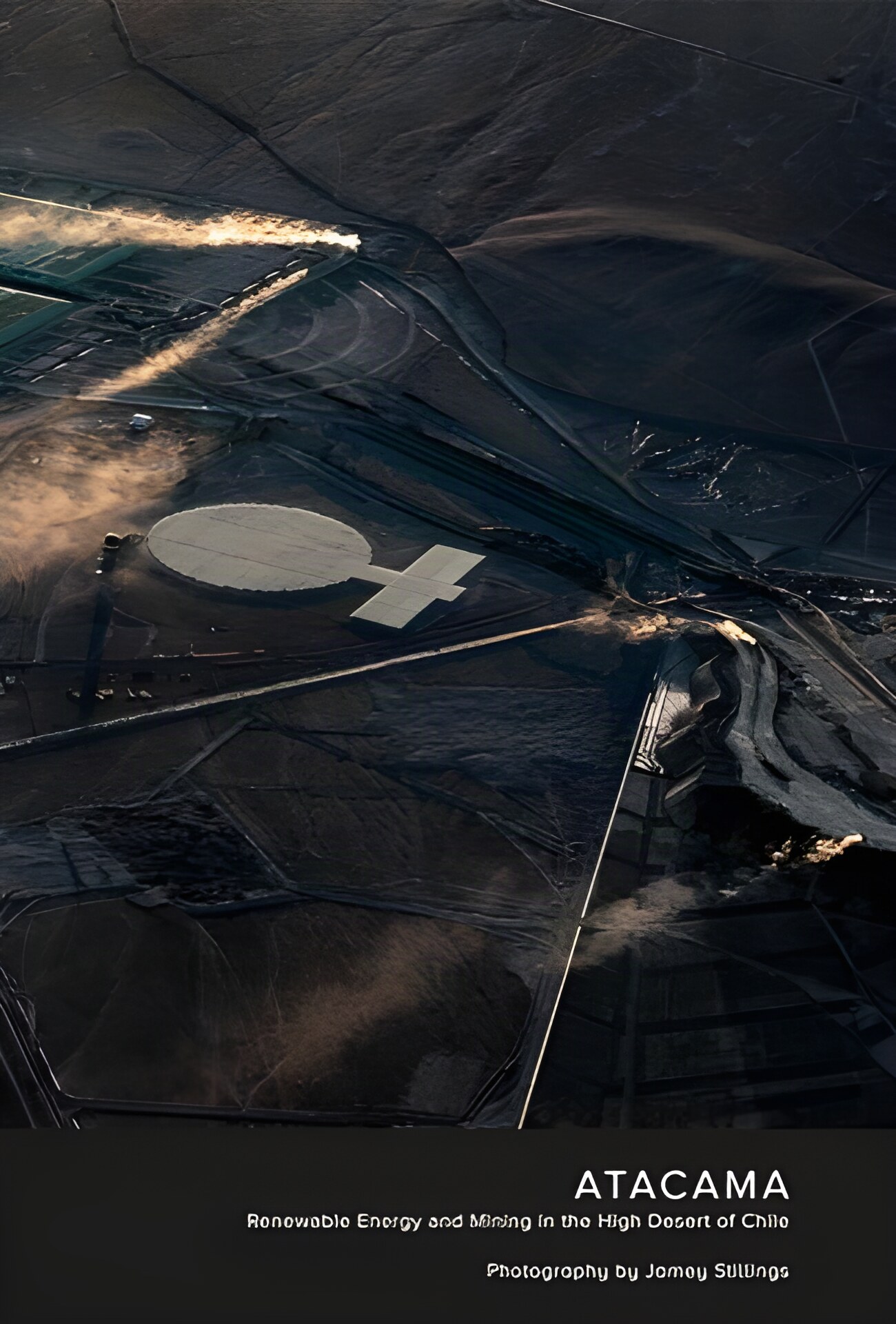
Hardcover. Gottingen, Steidl Verlag, 1st, 2023, Book: Very Good, Dust Jacket: None, Hardcover, pictorial boards, 160 pages. Full-page color plates. INSCRIBED BY STILLINGS on the half title page with the photographer's business card laid-in. With ATACAMA, Jamey Stillings shares his distinctive aerial perspective to examine dramatic large-scale renewable energy projects, the visual dynamic of enormous mining operations and the stark beauty of the Atacama Desert, so often scarred by human activity. Chile produces a third of the world's copper and has the largest known lithium reserves, and we utilize these resources daily in our cars, computers and smartphones. The country's mining industry has traditionally been dependent on imported coal, diesel and natural gas for its energy. Yet the Atacama Desert has excellent solar and wind potential: new renewable energy projects there now supply significant electricity to the northern grid, transmit power to population centers in the south, and are reducing mining's dependence on fossil fuel. Wrap-around band laid-in. Clean, bright copy.DOMESTIC SHIPPING ONLY.
Hardcover. Paris, Flammarion, 1st, 2004, Book: Very Good, Dust Jacket: Very Good, Hardcover, 216 pages. Like new in publisher's shrink-wrap. The 150 photographs in this collection represent a unique vision of a nation struggling to define itself. These images are accompanied by essays from renowned Japanese experts, who provide social and historical insight into this period and its photographic output. The first comprehensive review of this period in Japanese photography,.
Hardcover. Koln GR, Taschen, 1st, 2008, Book: Very Good, Dust Jacket: Very Good, Huge hardcover volume in a slipcase, 551 pages, In 1959 and 1960, photographer William Claxton and noted German musicologist Joachim Berendt traveled the United States hot on the trail of Jazz music. The result of their collaboration was an amazing collection of photographs and recordings of legendary artists as well as unknown street musicians. The book "Jazzlife", the original fruit of their labors, has become a collector's item that is highly treasured among Jazz and photography fans. They will be delighted to be able to take a Jazz-trip through time, both seeing and hearing the music as Claxton and Berendt originally experienced it.It features photographs of Charlie Parker, Count Basie, Duke Ellington, Muddy Waters, Gabor Szabo, Dave Brubeck, Stan Getz, Billie Holiday, Ella Fitzgerald, Miles Davis, Charlie Mingus, Thelonious Monk, John Coltrane, and many more. It also includes a bonus CD of digitally remastered period recordings. DOMESTIC SHIPPING ONLY.
Softcover. New York , Guggenheim Museum, 1st, 2008, Book: Very Good, Dust Jacket: None, First edition, first printing. Softcover. Photographically illustrated stiff wrappers; no dust jacket as issued. Photographs by Jeff Wall. Essays by Jennifer Blessing and Katrin Blum. Includes an exhibition checklist and list of illustrations. 60 pages with 18 four-color illustrations and 19 black-and-white illustrations. 12 x 10 inches. Published on the occasion of an exhibition at Deutsche Guggenheim, Berlin.
Hardcover. New Haven CT, Yale University Art Gallery, 1st, 2013, Book: Very Good, Dust Jacket: None, Like new in publisher's shrink-wrap. "Fifty years after Kennedy's death, this book observes the public's reaction to the president's election and assassination, featuring many photographs published here for the first time. In his travels throughout America during this period, Lee Friedlander (b. 1934) encountered these responses and photographed what he witnessed. From Washington, D.C., to Buffalo to Minneapolis to Los Angeles, Friedlander has captured a moment in American history that galvanized the nation and continues to resonate today." 48 b&w images by Friedlander.
Hardcover. New Haven CT, Yale University Art Gallery, 1st, 2013, Book: Very Good, Dust Jacket: None, Like new in publisher's shrink-wrap. "Fifty years after Kennedy's death, this book observes the public's reaction to the president's election and assassination, featuring many photographs published here for the first time. In his travels throughout America during this period, Lee Friedlander (b. 1934) encountered these responses and photographed what he witnessed. From Washington, D.C., to Buffalo to Minneapolis to Los Angeles, Friedlander has captured a moment in American history that galvanized the nation and continues to resonate today." 48 b&w images by Friedlander.
Hardcover. Bologna IT, Damiani, 1st, 2006, Book: Very Good, Dust Jacket: None, 240 pages, Foreward by Tilda Swinton. As a newly active photographer in the 1990s, Shand Kydd fell into the party and opening scene of the Young British Artists, or YBAs, and participated in that crowd's growth and success by documenting his friends, including Tracey Emin and Damien Hirst. About 200 exposures in strict black-and-white capture art-society luminaries like Gilbert and George, Sam Taylor-Wood, Nan Goldin, Richard Prince, Juergen Teller, Maurizio Cattelan and Tracey Emin. Fine copy in the original color-printed, stiff-card wrappers, no dust jacket issued.
Hardcover. Hatje Cantz, 1st, 2008-08-01, Book: Very Good, Dust Jacket: Very Good, Hardcover, pages. Like new in publisher's shrink-wrap. In the early 1950s, Berlin-born photographer Jurgen Schadeberg captured Nelson Mandela, (then a young attorney), singer Miriam Makeba and the nightlife in Sophiatown, a dynamic black neighborhood in Johannesburg. Revealing the poverty endemic to the majority of South Africa's black population became Schadeberg's chief focus. He arrived there in 1950, at the advent of apartheid, to work for Drum, the first magazine for black readers. In 1964, when Drum was banned, Schadeberg left South Africa for Europe and the United States, creating a body of portraits unique in their ability to cut across race, class and social standing. In 1994, Schadeberg created an iconic image of Nelson Mandela, by then the first black President of South Africa, standing at the window of his former prison cell on Robben Island, where he had been detained on charges of conspiracy from 1964-1982. Schadeberg, whose work has been highly influential to younger artists, now lives and works near Paris. This substantial volume collects 250 images from across his career.
Hardcover. NY, W. W. Norton & Company, 1st, 2008, Book: Very Good, Dust Jacket: Very Good, Hardcover, 320 pages. Extraordinary photographs, along with extensive captions, document the transition from a barely explored paradise to a modern nation. This stunning collection of 720 photographs, many of them drawn from family archives and scrapbooks and all carefully restored, is one of the most important visual records of Africa in the late nineteenth and early twentieth centuries ever to have been published. The early photographers captured the beauty and dangerous allure of life on this spectacular frontier: the ceremonies and traditional attire of the native people, the fantastic machinery used in construction of the Uganda Railway, the gradual development of trade on the coast and in the country's interior, the hardships of the East African Campaign during World War I, and the pioneering spirit of early European settlers and farmers. Many of the most famous names and places connected with Africa appear in these pages, including Karen Blixen's farm and Ernest Hemingway and Theodore Roosevelt on safari.




 "Infinite Ice: The Arctic and the Alps from 1860 to the Presentby: Schroder, Klaus Albrecht")


 "Inside Algeriaby: Michael von Graffenried , Mary-Jane Deeb, et al.")
 "Inside the Favelas: Rio de Janeiroby: Mayhew, Douglas")
 "Instants Voles Instants Donnesby: Schuh, Gotthard and Max-Pox Fouchet")
 "Intentsby: McMullan, Patrick")
 "Into the Sunset - Photography's Image of the American Westby: Respini, Eva")
 "Isaac Julien: True North Fantome Afriqueby: Anthony Appiah, Eveline Bernasconi, Lisa Bloom, Mark Nash, Cristina Albu, Isaac Julien, Veit Gorner (Foreword)")
![Isaac Julien: True North Fantome Afriqueby: Appiah, Anthony; Bernasconi, Eveline; Bloom, Lisa; Nash, Mark; Albu, Cristina; Julien, Isaac; Gorner, Veit [Foreword]](javascript:largeIMTop('https://www.browsingisarousing.com/shop/images/Isaac-Julien-True-North-Fantome-Afrique_by_Appiah-Anthony-Bernasconi-Eveline-Bloom-Lisa-Nash-Mark-Al350324-408463.jpg','https://www.browsingisarousing.com/shop/images/Isaac-Julien-True-North-Fantome-Afrique_by_Appiah-Anthony-Bernasconi-Eveline-Bloom-Lisa-Nash-Mark-Al350324-408463.jpg',0,'350324',0,'') "Isaac Julien: True North Fantome Afriqueby: Appiah, Anthony; Bernasconi, Eveline; Bloom, Lisa; Nash, Mark; Albu, Cristina; Julien, Isaac; Gorner, Veit [Foreword]")
 "It Happened In Our Lifetime: A Memoir In Words and Pictures by: Phillips, John")

 "Jacob A. Riis: Revealing New York's Other Half; A Complete Catalogue of his Photographsby: Yochelson, Bonnie")
 "James Dean: Fifty Years Agoby: Dennis Stock and Joe Hyams")
 "James Karalesby: James Karales")
 "Japan: A Self-Portrait: Photographs 1945 - 1964by: Hiraki, Osam")
 "Jazzlifeby: William Claxton Steve Crist Joachim E. Berendt")
 "Jeff Wall: Exposureby: Blessing, Jennifer and Jeff Wall")
 "JFK: A Photographic Memoirby: Friedlander, Lee")
 "JFK: A Photographic Memoirby: Friedlander, Lee")
 "Johnnie Shand Kydd: Crashby: Kydd, Johnnie (Photographer)")


 "Jurgen Schadebergby: Schadeberg, Jurgen")
 "Kenya: A Country in the Making, 1880-1940by: Pavitt, Nigel")