Hardcover. New York , Phaidon, 1st , 2004, Book: Very Good, Dust Jacket: Very Good, Hardcover. Like new in publisher's shrink-wrap. Unpaginated (432 pages ), with 278 black-and-white plates. 11-3/4 x 8-3/4 inches. An epic collection of poignant and often controversial stories photographed and written by acclaimed social documentary photographer Eugene Richards.
Hardcover. Chicago, University of Chicago Press , 1st, 2015, Book: Very Good, Dust Jacket: Very Good, Hardcover in a bright dust jacket. 280 pages. Preface by Geoff Dyer. Essay by David Van Reybrouck. Includes 20 color plates and 80 halftones. Still in publisher's shrinkwrap. The First World War presents a startlingly different perspective, one based on rare glass plate photographs, that reveals the war with previously unseen, even uncanny, clarity. Scanned from the original plates, with scratches and other flaws expertly removed, these oversized reproductions offer a wealth of unusual moments, including scenes of men in training, pictures of African colonial troops on the Western front, landscapes of astonishing destruction, and postmortem portraits of Belgian soldiers killed in action. Readers previously familiar with only black-and-white or sepia-toned prints of the hostilities will be riveted by the book's many authentic color photographs, products of the early autochrome method. From children playing war games to a wrenching deathbed visit, these images are extraordinary not only for their subject matter, but also for the wide range of emotions they evoke.
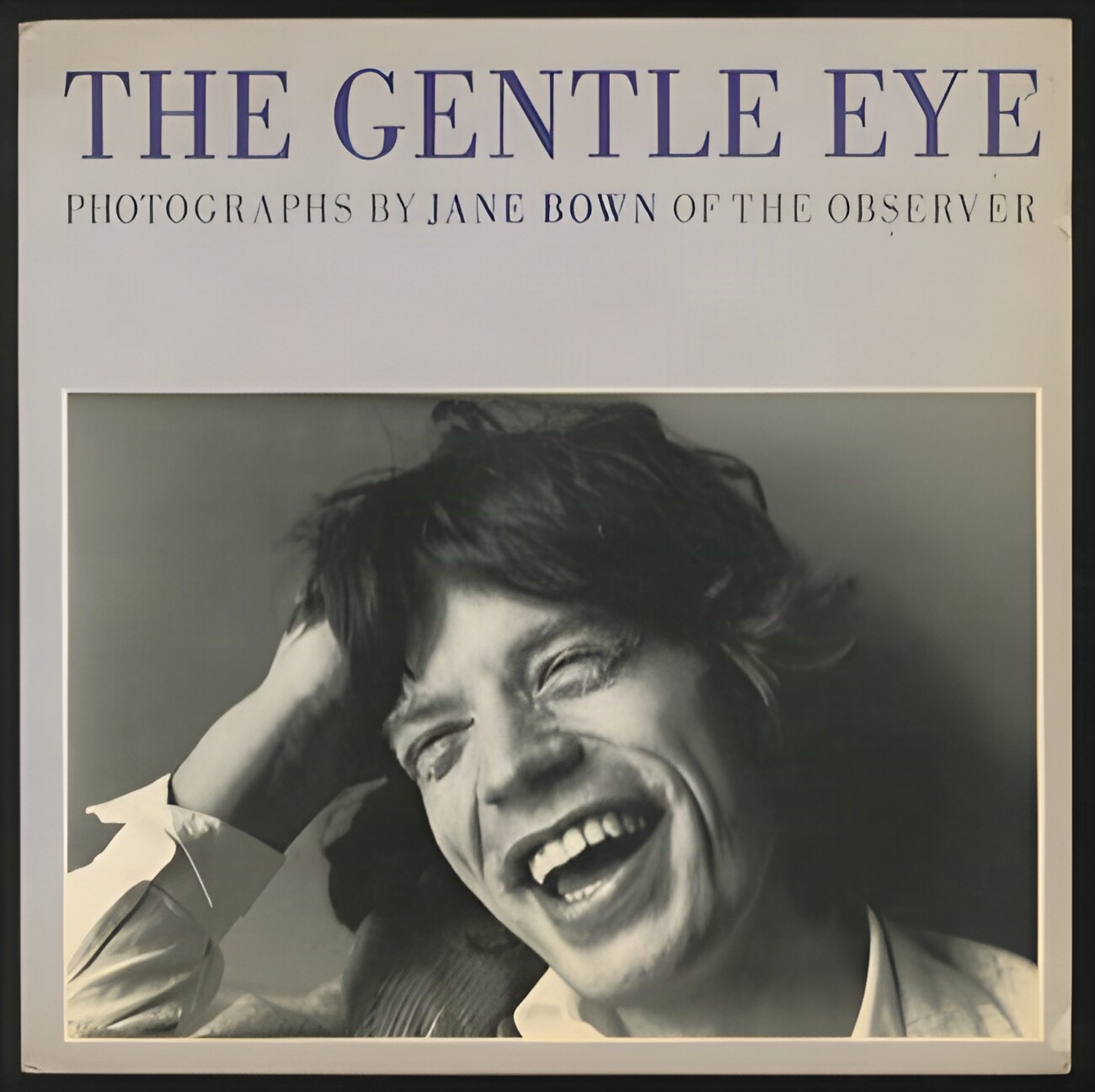
Softcover. London, The Observer/Thames & Hudson, 1st, 1980, Book: Very Good, Dust Jacket: None, Softcover, 120 full-page black-and white plates. Semi-stiff pictorial covers, titled in purple. Published to accompany an exhibition at the National Portrait Gallery. Introduction by Patrick O'Donovan. This collection showcases the distinctive photographic work of Jane Bown, a renowned British photographer known for her ability to capture candid and evocative portraits with a "gentle eye." Clean, bright copy.
Hardcover. Millbrae CA, Celestial Arts, 1st, 1981, Book: Very Good, Dust Jacket: Very Good, Hardcover, oblong format in a bright dust jacket. 168 pages, map frontis. Period photographs throughout primarily from the San Francisco Public Library collection, as well as the Bancroft Library and Presidio Army Museum collections among others. Clean copy.
Hardcover. Museums of San Francisco/ DelMonico Books, 1st, Book: Very Good, Dust Jacket: Very Good, Hardcover in a bright dust jacket. In 1974 the photojournalist and art photographer Steve Kahn began a series of provocative black-and-white Polaroids of porn-industry models posing in seedy Hollywood apartments. What began as an exploration of staged photography and portraiture evolved over the next three years into "The Hollywood Suites," a multi-faceted conceptual project in which Kahn turned his lens away from the models to deconstruct their seemingly mundane and monotonous surroundings. Endlessly fascinating, Kahn's series touches on myriad themes including bondage, containment, isolation, and the poetics of absence. This volume includes more than 100 works arranged in chronological groupings based on the original Polaroid film sessions and features essays that offer a scholarly assessment of a groundbreaking work. Published on the occasion of the exhibition "Steve Kahn: The Hollywood Suites" at the de Young museum, San Francisco, from September 9, 2018 to March 31, 2019.
Hardcover. Museums of San Francisco/ DelMonico Books, 1st, Book: Very Good, Dust Jacket: Very Good, Hardcover in a bright dust jacket. In 1974 the photojournalist and art photographer Steve Kahn began a series of provocative black-and-white Polaroids of porn-industry models posing in seedy Hollywood apartments. What began as an exploration of staged photography and portraiture evolved over the next three years into "The Hollywood Suites," a multi-faceted conceptual project in which Kahn turned his lens away from the models to deconstruct their seemingly mundane and monotonous surroundings. Endlessly fascinating, Kahn's series touches on myriad themes including bondage, containment, isolation, and the poetics of absence. This volume includes more than 100 works arranged in chronological groupings based on the original Polaroid film sessions and features essays that offer a scholarly assessment of a groundbreaking work. Published on the occasion of the exhibition "Steve Kahn: The Hollywood Suites" at the de Young museum, San Francisco, from September 9, 2018 to March 31, 2019.
Hardcover. NY, powerHouse, 1st, 2009, Book: Very Good, Dust Jacket: Very Good, Hardcover, 112 pages. Established in 1866, the Ku Klux Klan still remains one of America's most secretive organizations. New York photojournalist Anthony Karen first transcended that secrecy several years ago when he got the opportunity to photograph a KKK cross-lighting ceremony. Since then, Karen has been documenting Klan organizations throughout the country. In The Invisible Empire: Ku Klux Klan, those photographs are compiled to form an absorbing document of one of the most notorious groups in history. Taken with unrestricted access, Karen's images bring us deep inside America's most private white nationalist organizations. Beginning with a brief introduction into the history of the Klan, the book provides detailed visual accounts of modern-day Klan life, including candid shots of rallies, individual portraits of Klansmen and women, as well as a look at the naturalization process for new members. Presented in intimate profiles are: a functioning Klan ministry, a group that has merged National Socialism with Klan ideologies, and a 58-year-old seamstress who makes custom Klan robes, among others. Accompanied by quotations from the late Dale Fox, Imperial Wizard of The Brotherhood of the Klans, The Invisible Empire: Ku Klux Klan offers an unprecedented glimpse into the shadowy society and its mysterious inner workings.
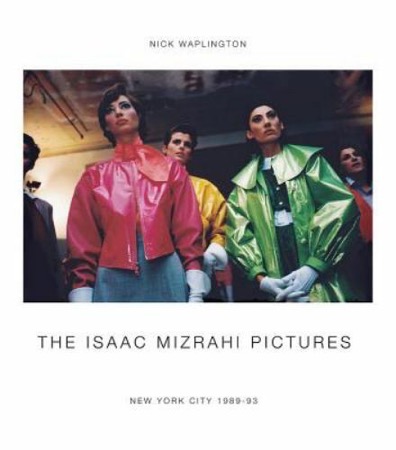
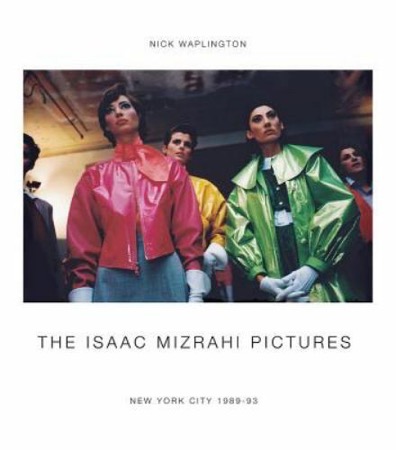
Hardcover. Damiani, 1st, 2016, Book: Very Good, Dust Jacket: None, Hardcover in pictorial boards. 168 pages, color photos. From 1989 to 1993, New York fashion designer Isaac Mizrahi granted the British photographer Nick Waplington rare backstage access to photograph every detail of the designer's fitting sessions in the weeks before his twice-yearly fashion shows. Combining Waplington's gritty verite style with Mizrahi's haute couture sensibilities, the resulting images offer a candid glimpse into the world of fashion when supermodels including Cindy Crawford, Christy Turlington and Naomi Campbell reigned supreme. At the same time, Waplington set out to document the wildly creative nightlife of the '90s "club kid" culture in New York, juxtaposing his images of uptown style with downtown looks and taking pictures at some of the city's most infamous clubs, such as the Pyramid Club and Save the Robots. Clean copy in publisher's shrinkwrap.
Hardcover. Damiani, 1st, 2016, Book: Very Good, Dust Jacket: None, Hardcover in pictorial boards. 168 pages, color photos. From 1989 to 1993, New York fashion designer Isaac Mizrahi granted the British photographer Nick Waplington rare backstage access to photograph every detail of the designer's fitting sessions in the weeks before his twice-yearly fashion shows. Combining Waplington's gritty verite style with Mizrahi's haute couture sensibilities, the resulting images offer a candid glimpse into the world of fashion when supermodels including Cindy Crawford, Christy Turlington and Naomi Campbell reigned supreme. At the same time, Waplington set out to document the wildly creative nightlife of the '90s "club kid" culture in New York, juxtaposing his images of uptown style with downtown looks and taking pictures at some of the city's most infamous clubs, such as the Pyramid Club and Save the Robots. Clean copy.
Hardcover. NY, Knopf, 1st, 2009, Book: Very Good, Dust Jacket: Very Good, Hardcover, 268 pages. After having a breakdown in the midst of working on a photo-essay on Pittsburgh in 1957, legendary photographer W. Eugene Smith holed up in a loft in New York's Chelsea, in the Tin Pan Alley area. There, over the next several years, he became deeply embroiled in the New York City jazz scene, opening his home as a practice and performance space for some of the great artists of mid-century jazz, including Thelonious Monk, Zoot Sims and many others. Of course, he took pictures--both of musicians and of a window-size view of mid-century New York--and also wired the place for recording, logging hours and hours of tape, capturing the music and the talk around it. These photos and tapes had been thought lost--the stuff of rumor, buried in Smith's archive--until Stephenson dug them out and culled the best, along with transcriptions of material from the tapes, for this landmark book. Smith's stunning use of contrast makes figures like Monk seem dramatic and completely ordinary at the same time. The photos of the city offer a rare glimpse into a neighborhood being itself when it thought no one was watching. This will be an essential book for jazz fans, photography lovers and those interested in the history of New York.
Hardcover. NY, Abrams, 1st, 2007, Book: Very Good, Dust Jacket: Very Good, Hardcover, 200 pages. The photography that Americans invented in the 1960s and ?70s was as fresh and vital as their music. Photographers of those years believed in their medium?s unlimited capacities of expression. Between the publication of Robert Frank?s The Americans (1958) and the coming of post-modernism, the photographers featured in this book embarked on their own personal quests. Whether they roamed the world, like Lee Friedlander and Garry Winogrand, or sought out its dark corners, like Larry Clark and Nan Goldin, they shared a fierce devotion to their medium and its unique qualities. The generation that created this work knew it was remarkable. Today, with Gilles Mora as a guide, we can look back on it with even greater appreciation, since we know that these were indeed the last photographic heroes. Also includes work by Joel Meyerowitz, William Eggleston, and many others.
Hardcover. NY, Abrams, 1st, 2007, Book: Very Good, Dust Jacket: Very Good, Hardcover, 200 pages. The photography that Americans invented in the 1960s and ?70s was as fresh and vital as their music. Photographers of those years believed in their medium?s unlimited capacities of expression. Between the publication of Robert Frank?s The Americans (1958) and the coming of post-modernism, the photographers featured in this book embarked on their own personal quests. Whether they roamed the world, like Lee Friedlander and Garry Winogrand, or sought out its dark corners, like Larry Clark and Nan Goldin, they shared a fierce devotion to their medium and its unique qualities. The generation that created this work knew it was remarkable. Today, with Gilles Mora as a guide, we can look back on it with even greater appreciation, since we know that these were indeed the last photographic heroes. Also includes work by Joel Meyerowitz, William Eggleston, and many others.
Hardcover. NY, Abradale Press, reprint, 1995, Book: Very Good, Dust Jacket: Very Good, Hardcover in a bright, price-clipped dust jacket. A collection of photograph reproductions and accompanying text of O. Watson Link's work on the Norfolk and Western Railway.
Hardcover. GR, Steidl, 1st, 2016, Book: Very Good, Dust Jacket: Very Good, Hardcover in a bright, unclipped dust jacket. Sid Grossman (1913-55) and his work were largely forgotten after his untimely death in 1955. Labeled as a communist by the FBI after the war, his hard-earned reputation as a free-thinking photographer quickly fell into oblivion for the rest of the century and beyond. Grossman was one of the founders of the famous New York Photo League and a notoriously demanding and capricious teacher who always challenged his students. This monograph, the first comprehensive survey of Grossman's life and work, contains more than 150 photographs that demonstrate Grossman's enduring talent. The images range from his early social documentary of the late 1930s to the more personal, dynamic street photography of the late 1940s, as well as later experiments with abstraction in both black and white and color. It features an essay by renowned historian Keith F. Davis, and concludes with excerpted transcripts from recordings of a course Grossman taught in 1950.
Hardcover. NY/London, Booth-Clibborn, 1st, 2011, Book: Very Good, Dust Jacket: Very Good, Hardcover, 300 pages. Basil Hyman, a keen amateur photographer, took hundreds of photographs of everyday life in Britain during the 1950s. The Lost Album is a nostalgic look back at this long-gone era, filled with photographs made during a time of enormous social change--just after World War II and before the "Swinging Sixties"--and a wealth of ephemera: theater tickets and playbills, newspaper advertisements, ration books, and much more. Special inserts include actual facsimiles of some of these now-obscure items--talismans from a slower time, when formality, pride, and courtesy prevailed. There are special sections on two major events: the Festival of Britain in 1951, and the Coronation of Queen Elizabeth II in 1953. With brief, lively introductions and captions, this is a captivating snapshot of how people lived and played in Britain in those years.
Softcover. GR, Steidl, 1st, 2010, Book: Very Good, Dust Jacket: None, Two softcover volumes in a card slipcase. 750 total pages. Lost since 1939, the Mexican suitcase contains nearly 4,500 negatives documenting the Spanish Civil War by Robert Capa, Chim (David Seymour), and Gerda Taro. These films had traveled from Paris via the south of France to Mexico City, where, almost seventy years later, they were rediscovered and now reside in the collection of the International Center of Photography.
Softcover. GR, Steidl, 1st, 2010, Book: Very Good, Dust Jacket: None, Two softcover volumes in a card slipcase. 750 total pages. Lost since 1939, the Mexican suitcase contains nearly 4,500 negatives documenting the Spanish Civil War by Robert Capa, Chim (David Seymour), and Gerda Taro. These films had traveled from Paris via the south of France to Mexico City, where, almost seventy years later, they were rediscovered and now reside in the collection of the International Center of Photography.
Hardcover. Phaidon, 1st, 2000, Book: Very Good, Dust Jacket: Very Good, Hardcover, 191 pages. The story of the making of the film, The Misfits, starring Marilyn Monroe, Clark Gable, Montgomery Clift. The Magnum Photographic Agency was given exclusive rights to photograph the making of the film, and sent nine of it's most famous photographers; Dennis Stock, Inge Morath, Ernst Erwitt, Bruce Davidson, Henri Cartier-Bresson, Cornell Capa, and Eve Arnold. With 200 of the photographs reproduced here, with an essay and interview with Arthur Miller. As new in original shrinkwrap.
Hardcover. Center for American Places, 1st, 2005, Book: Very Good, Dust Jacket: Very Good, Hardcover, 232 pages. The Mississippi River flows through American history and culture as a mythic waterway brimming with tragedy and hope, and awash in passionate ambitions and harsh realities. In 1953, a young Charles Dee Sharp traveled twice down the Mississippi (first by towboat and then by car along the renowned river road Highway 61) to make a documentary film of it, taking black-and-white photographs of the river, its communities, and its people. While Sharp's documentary never came to fruition, the striking images he captured survived as moving and evocative historical testaments to a lost era, now collected in his new book The Mississippi in 1953. These images create a vivid portrait of America's heartland a half century ago, and they are enriched with excerpts from Sharp's original trip journal, intriguing anecdotes from the people he encountered along his journey, and an engaging environmental history of the river by historian John O. Anfinson. The Mississippi in 1953 offers an original and poignant look at the living artery of the American landscape and how it molded the United States into the nation it is today.
Softcover. NY, Simon and Schuster, 1st, 1964, Softcover, 96 pages, illustrated wraps. A documentation and moving tribute to the Civil Rights activists of the 1960s, many b&w photographs by Danny Lyons. Stated First Printing. Wrappers have creases, rubbing. Previous owner's name on front fly leaf. Otherwise clean. Light tanning to pages.
Softcover. NY, Simon and Schuster, 1st, 1964, Book: Fair, Dust Jacket: None, Softcover, 96 pages, illustrated wraps. A documentation and moving tribute to the Civil Rights activists of the 1960s, many b&w photographs by Danny Lyons. Stated First Printing. Wrappers have chipping, rubbing. Lorraine Hansberry, best known for her award-winning play A Raisin in the Sun, contributed the text.
Hardcover. Daab Publishing, 1st, 2006, Book: Very Good, Dust Jacket: Very Good, Hardcover, 240 pages. David Bradford is a photographer and New York City taxi driver, who epitomizes the concept of carrying a camera during regular day-to-day activities. Bradford mainly shoots while he's working, capturing the essence of New York City in all its human, architectural and climatic diversity. In his second book, he presents a selection of his passengers, which sat down at his backseat. The result is a collection that captures the breadth of humanity - the whole world of people - that can pass through the back seat of a New York City taxi.
Softcover. New York, Holt, Rinehart & Winston, 1st pbk, 1981, Book: Very Good, Dust Jacket: None, Softcover, 154 pages. Michael Harrington was a political scientist and activist best known for The Other America, an examination of poverty in the midst of affluence in the U.S. Here, he reexamines the state of the U.S. twenty years after his landmark book. Bob Adelman is a respected photojournalist, b&w photos throughout; 11 x 8.5 inches. SIGNED BY ADELMAN. "Adelman has moved beyond the familiar cliches of most documentary photography into that rare sphere wherein technical ability and social vision combine to create a great work of art." Quote by Ralph Ellison.
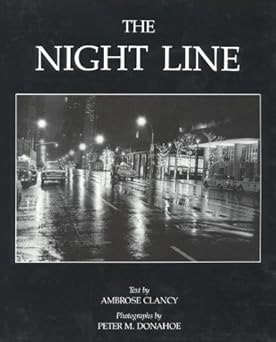
Hardcover. NY, New Amsterdam, 1st, 1990, Book: Very Good, Dust Jacket: Very Good, Hardcover in a bright dust jacket. 127 pages. Text and b&w photographs profile the working life of New York City cab drivers as it unfolds over the course of a single night. Clean copy.

 "The Fat Baby : Storiesby: Richards, Eugene")
 "The First World War: Unseen Glass Plate Photographs of the Western Front by Carl De Keyzerby: Carl De Keyzer/David Van Reybrouck")
 "The Great San Francisco Earthquake and Fire 1906by: Saul, Eric; Denevi, Don")
 "The Hollywood Suitesby: Steve Kahn")
 "The Hollywood Suitesby: Steve Kahn")
 "The Invisible Empire: Ku Klux Klanby: Anthony S. Karen")




 "The Jazz Loft Project: Photographs and Tapes of W. Eugene Smith from 821 Sixth Avenue, 1957-1965by: Sam Stephenson")
 "The Last Photographic Heroes: American Photographers of the Sixties and Seventiesby: Gilles Mora")
 "The Last Photographic Heroes: American Photographers of the Sixties and Seventiesby: Gilles Mora")

 "The Life and Work of Sid Grossmanby: Keith Davis / Sid Grossman")


 "The Lost Album: A Visual History of 1950s Britainby: Hyman, Basil")
 "The Mexican Suitcase: The Legendary Spanish Civil War Negatives of Robert Capa, Gerda Taro, and David Seymour by: Cynthia Young; David Balsells")
 "The Mexican Suitcase: The Legendary Spanish Civil War Negatives of Robert Capa, Gerda Taro, and David Seymour by: Cynthia Young; David Balsells")
 "The Misfits: Story of a Shootby: Arthur Miller, Serge Toubiana, et al.")
 "The Mississippi River in 1953: A Photographic Journey from the Headwaters to the Deltaby: Sharp, Charles Dee")
 "The Movement: Documentary of a Struggle for Equalityby: Hansberry, Lorraine")
 "The Movement: Documentary of a Struggle for Equalityby: Lorraine Hansberry/Dennis Stock")
 "The New York Taxi Back Seat Bookby: Bradford, David/Barry Wells")
 "The Next America; the decline and rise of the United States. Photographs by Bob Adelman (SIGNED BY ADELMAN)by: Harrington/Bob Adelman, Michael")