Hardcover. Boston, John P Jewett and Company, 1st, 1856, Book: Very Good, Hardcover, embossed brown cloth with gilt lettering on spine. Stated "Fourth Thousand" on title page, 418 pages. Early women's rights advocate Harriot K Hunt, considered the first female doctor in the United States. After two refusals to have her study at the Harvard Medical School, she received a private medical education and practiced with an emphasis on prevention of disease. She was a dedicated advocate for women as professionals and as an educated populace. A very early advocate for changes to voting rights and property rights for women. Each year when she paid her taxes, in fact, she issued a "taxation without representation" protest. An intriguing look at attitudes and treatment of early women's rights advocates from a well-educated and outspoken women. Light fraying to top and bottom of spine, name on inside front cover, ownership stamp to blank leaf preceding half-title page.
Hardcover. NY, G.P. Putnam's Sons, 1st, 1874, Book: Very Good, Dust Jacket: None, Hardcover, 256 pages. Fold-out frontis, b&w Illustrations, very nice, clean copy. Written by "two of its teachers." Includes "Fifty Cabin and Plantation Songs" arranged by Thomas P. Fenner. Illustrated with a four-fold engraved frontispiece, depicting several of the school's buildings as seen from the water, and many other engravings. An interesting account of the school, including a brief history of Virginia and of slavery and its aftermath in that state, and one of the earliest publications of slave music.
Softcover. New Haven CT, Yale University Press, reprint, 1996, Book: Very Good, Dust Jacket: None, Softcover, 248 pages. Copybooks and the Palmer method, handwriting analysis and autograph collecting - these words conjure up a lost world, in which people looked to handwriting as both a lesson in conformity and a talisman of individuality. In this engaging history, ranging from colonial times to the present, Tamara Plakins Thornton explores the shifting functions and meanings of handwriting in America.
Hardcover. Proctor VT, 1916, Book: Very Good, Dust Jacket: None, A unique personal diary filled with written entries, ephemera and photographs, all related to the Class of 1918 at Proctor High School in Vermont. Inscriptions and messages from teachers and classmates. Dozens of photographs, programs, clippings, tickets, etc. The owner, Nina Eckley (1900-1989) is listed in a couple school play programs. The "Commencement Memory Book" was published by Dodd Mead in 1916. This item captures the spirit of the times better than any scholarly work.
Hardcover. NY, Viking, 1st, 1999, Book: Very Good, Dust Jacket: Very Good, Hardcover in a bright, unclipped dust jacket, 430 pages. In this book, backed by a wealth of new research, the author tells for the first time the story of the career of Eugenio Pacelli, the man who as Pius XII was Pope during the Second World War and arguably the most powerful churchman in modern history. Adding to the continuing debate about collective guilt and the Holocaust this is an extraordinary and explosive history. In the first decade of the century, as a brilliant young lawyer, Pacelli helped shape an ideology of unprecedented papal power; during the 1920s he employed cunning and moral blackmail to impose that power in Germany. In 1933 Hitler became his perfect negotiating partner and a concordat was established that granted religious and educational advantages to the Catholic Church in exchange for Catholic withdrawal from social and political action. This 'voluntary' abdication of political Catholicism imposed from Rome facilitated the rise of Nazism. Clean copy.
Softcover. Boston, Brill Academic, 1st, 2003, Book: Very Good, Dust Jacket: None, Softcover, 562 pages. This monograph demonstrates why humanism began in Italy in the mid-thirteenth century. It considers Petrarch a third generation humanist, who christianized a secular movement. The analysis traces the beginning of humanism in poetry and its gradual penetration of other Latin literary genres, and, through stylistic analyses of texts, the extent to which imitation of the ancients produced changes in cognition and visual perception. The volume traces the link between vernacular translations and the emergence of Florence as the leader of Latin humanism by 1400 and why, limited to an elite in the fourteenth century, humanism became a major educational movement in the first decades of the fifteenth. It revises our conception of the relationship of Italian humanism to French twelfth-century humanism and of the character of early Italian humanism itself. Clean, bright copy.
Softcover. Cambridge MA, Harvard University Press, reprint, 2008, Book: Very Good, Dust Jacket: None, Softcover, 776 pages. "Iron Kingdom, Christopher Clark's stately, authoritative history of Prussia from its humble beginnings to its ignominious end, presents a much more complicated and compelling picture of the German state, which is too often reduced to a caricature of spiked helmets and polished boots. Prussia and its army were inseparable, but Prussia was also renowned for its efficient, incorruptible civil service; its innovative system of social services; its religious tolerance; and its unrivaled education system, a model for the rest of Germany and the world. This too was Prussia-a tormented kingdom that, like a tragic hero, was brought down by the very qualities that raised it up. Mr. Clark, a senior lecturer in modern European history at Cambridge University, does an exemplary job. A lively writer, he organizes masses of material in orderly fashion, clearly establishing his main themes and pausing at crucial junctures to recapitulate and reconsider. Prussia, a self-invented artifact right down to its name, demands the kind of careful demythologizing that it receives from Mr. Clark, who gently but insistently exposes the flaws in most of the received wisdom about his subject. A result is an illuminating, profoundly satisfying work of history, brightened by vivid character sketches of the principals in his drama." Clean copy.
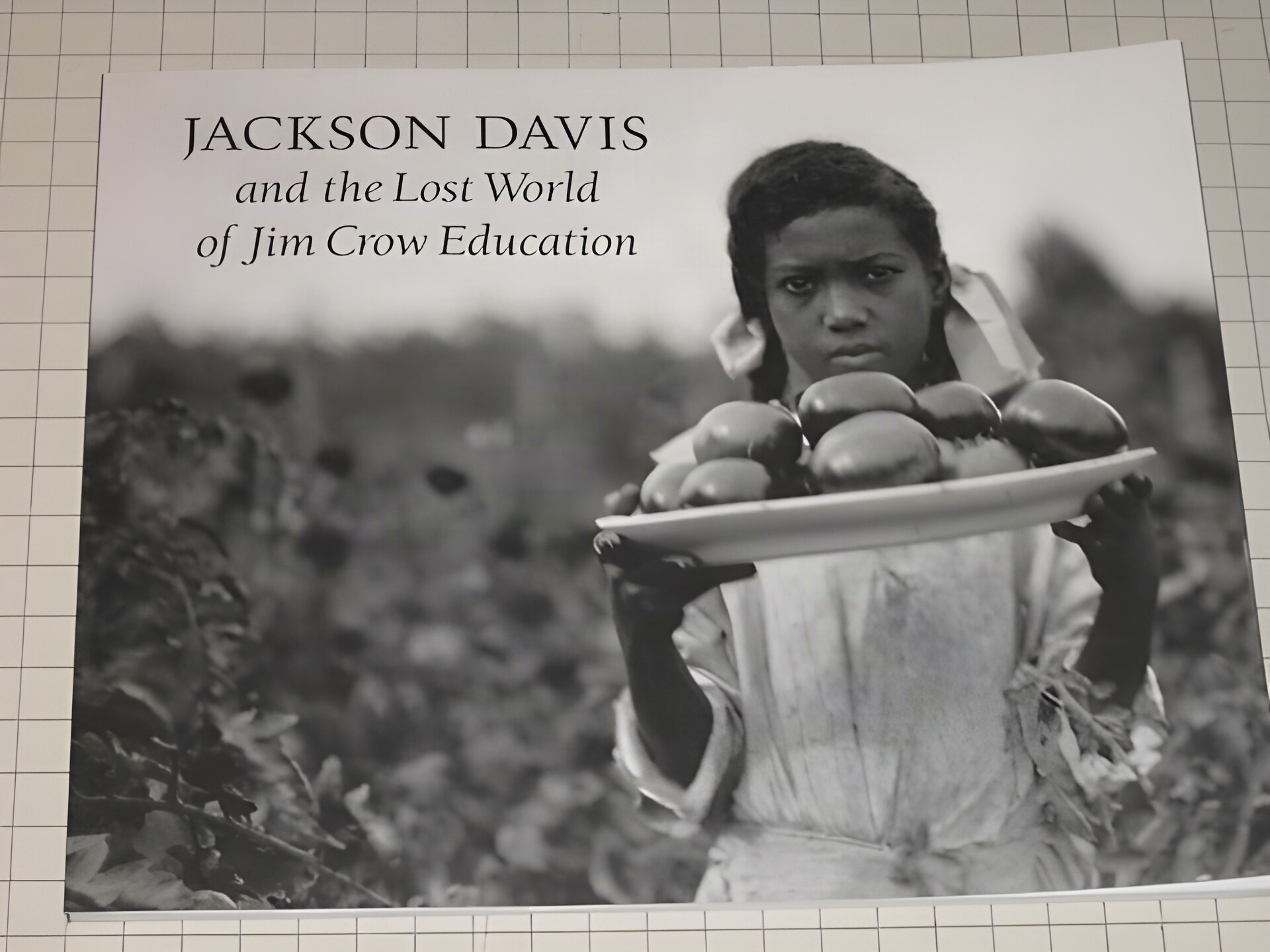
Softcover. Charlottesville VA, University of Virginia Library, 1st, 2000, Book: Very Good, Dust Jacket: None, Softcover, 64 pages, b&w photos throughout. This is a history of African-American public school education in Henrico County, Virginia. Introductory essay by William A. Link. Author documented his work (as a field agent for the General Education Board) being an amateur photographer. Davis' photographs are organized by subject (Events, People, Demonstration Farming, etc.). Limited to 3.000 copies. Clean.
Hardcover. New York, Council of Women for Home Missions and Missionary Education Movement of the United States ands Canada, 1st, 1924, Book: Very Good, Dust Jacket: None, 260 pages, hardcover. A study of the Appalachian Mountain dwellers. Gilt title on spine. Black-and white frontispiece photo intact. Mild soiling to boards, light bumping to corners as well. Mild age spotting to pages throughout. Unmarked. A bright and tight copy.
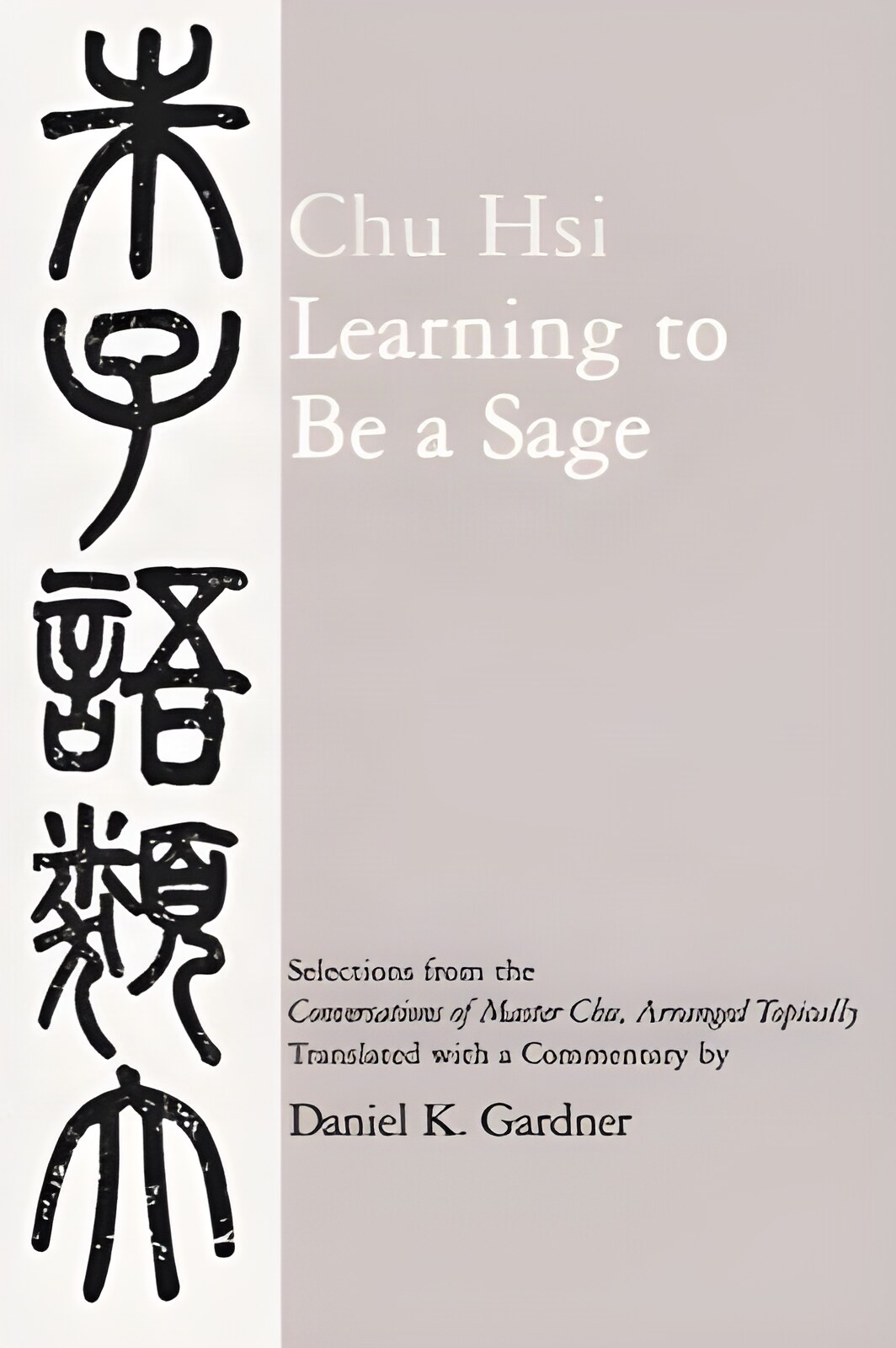
Softcover. Berkeley CA, University of California Press, reprint, 1990, Book: Very Good, Dust Jacket: None, Softcover, 218 pages. Students and teachers of Chinese history and philosophy will not want to miss Daniel Gardner's accessible translation of the teachings of Chu Hsi (1130-1200)-a luminary of the Confucian tradition who dominated Chinese intellectual life for centuries. Homing in on a primary concern of our own time, Gardner focuses on Chu Hsi's passionate interest in education and its importance to individual development. For hundreds of years, every literate person in China was familiar with Chu Hsi's teachings. They informed the curricula of private academies and public schools and became the basis of the state's prestigious civil service examinations. Nor was Chu's influence limited to China. In Korea and Japan as well, his teachings defined the terms of scholarly debate and served as the foundation for state ideology. Clean copy.
Princeton NJ, Princeton University Press, 1st, 2020, Book: Very Good, Dust Jacket: None, Hardcover, 264 pages, still in publisher's shrinkwrap. Lewis Carroll began photographing children in the mid-nineteenth century, at a time when the young medium of photography was opening up new possibilities for visual representation and the notion of childhood itself was in transition. In this lavishly illustrated book, Diane Waggoner offers the first comprehensive account of Carroll as a photographer of modern childhood, exploring how his photographs of children gave visual form to emerging conceptions of childhood in the Victorian age. Situating Carroll's photography within the broader context of Victorian visual and social culture, Waggoner shows how he drew on images of childhood in painting and other media, and engaged with the visual language of the Victorian theater, fancy dress, and Pre-Raphaelitism. She provides the first in-depth analysis of Carroll's photographing of boys, which she examines in the context of boys' education and reveals to be a significant part of his photographic career. Waggoner draws on a wealth of rare archival material, demonstrating how Carroll established new aesthetic norms for images of girls, engaged with evolving definitions of masculinity, and pushed the idea of childhood to the limit with his use of dress and nude images
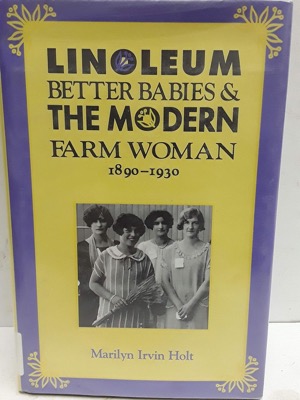
Hardcover. Albuquerque, University of New Mexico Press, 1st, 1995, Book: Very Good, Dust Jacket: Very Good, Hardcover in a bright dust jacket. 250 pages. b&w illustrations. The Progressive Era promoted a vision of America united by an emphasis on science and progressive reform. The zeal to modernize business, government and social relations extended to farm families and the ways women defined their roles. In this study of the expert advice offered by the domestic economy movement, Holt argues that women were not passive receptors of these views. Seeing their place in agriculture as multi-faceted and important, they eagerly accepted improved education and many modern appliances but often rejected suggestions conflicting with their own views of the rewards and values of farm life. Progressive reform inevitably left a mixed legacy; science and technology did not perfect rural society. But many programs such as 4-H and Master Homemaker still exist and are still shaped by women's desire to preserve and pass on the possibilities of rural life. Clean copy.
Hardcover. Oxford UK, The Voltaire Foundation, 1st, 1991, Book: Very Good, Dust Jacket: None, Hardcover in blue cloth, gilt lettering on spine, 251 pages. As France moved from the seventeenth to the eighteenth century, it found itself in the grip of anglomanie - a fascination with new English ideas in the domains of science and philosophy. Chief among the English thinkers it enthusiastically embraced was John Locke. On his visits to France and in his personal correspondence, Locke interacted with prominent French thinkers, scientists and savants of the day, such as Charles Barbeyrac and Pierre Magnol, and his works engaged in a critical dialogue with those of Descartes. However, Locke has been feted to such an extent that his position in the history of ideas in France is often overlooked. In Locke in France 1688-1734, Ross Hutchison re-examines and re-contextualises the precise nature and extent of Locke's influence in France by exploring how his ideas were incorporated into contemporary French debates and controversies in the transitional period from the seventeenth to the eighteenth century. Hutchison highlights the various channels of dissemination which brought Locke to the attention of the French, including translations of his major works and his personal friendships with French Protestant exiles. Hutchison also presents case studies of interactions in which Lockean ideas played a dominant role in the evolution of French thought, ranging from political theory to the nature of language, theories of education, and the relation between soul and matter. Clean copy, no dust jacket.
Softcover. Chapel Hill, University of North Carolina Press, 1st pbk, 2002, Book: Very Good, Dust Jacket: None, Softcover, 411 pages, b&w illustrations. Tracing the erosion of white elite paternalism in Jim Crow Virginia, Douglas Smith reveals a surprising fluidity in southern racial politics in the decades between World War I and the Supreme Court's 1954 Brown v. Board of Education decision. Smith draws on official records, private correspondence, and letters to newspapers from otherwise anonymous Virginians to capture a wide and varied range of black and white voices. African Americans emerge as central characters in the narrative, as Smith chronicles their efforts to obtain access to public schools and libraries, protection under the law, and the equitable distribution of municipal resources. This acceleration of black resistance to white supremacy in the years before World War II precipitated a crisis of confidence among white Virginians, who, despite their overwhelming electoral dominance, felt increasingly insecure about their ability to manage the color line on their own terms. Exploring the everyday power struggles that accompanied the erosion of white authority in the political, economic, and educational arenas, Smith uncovers the seeds of white Virginians' resistance to civil rights activism in the second half of the twentieth century. Light marking to 10 pages, otherwise clean, very good.
Hardcover. New Haven CT, Yale University Press, 1st, 2022, Book: Very Good, Hardcover, pictorial boards, Photographer Marcia Resnick (b. 1950) earned recognition as part of the legendary Downtown New York art scene of the 1970s and 1980s. Her portraits of the era's major cultural figures, such as Jean-Michel Basquiat, John Belushi, and Susan Sontag, have contributed to the scene's mythic status. Against this backdrop, Resnick also produced a significant body of work that engaged with the history of art, took a humorous approach to conceptual art and feminism, and proposed new ideas for what photography could be. Spanning the artist's career, this richly illustrated volume explores Resnick's early influences and education at Cooper Union and CalArts; discusses her series and photobooks such as See and Re-visions; and situates the artist's work within the history of contemporary art. An afterword by Laurie Anderson speaks to the very personal vision of Resnick's photography. Still in publisher's shrinkwrap.
Softcover. NY, Seven Stories Press, reprint, 2012, Book: Very Good, Dust Jacket: None, Softcover, 431 pages. A fascinating document of an extraordinary life, Memoirs of A Breton Peasant reads with the liveliness of a novel and bristles with the vigor of an opinionated autodidact from the very lowest level of peasant society. Brittany during the nineteenth century was a place seemingly frozen in the Middle Ages, backwards by most French standards; formal education among rural society was either unavailable or dismissed as unnecessary, while the church and local myth defined most people's reasoning and motivation. Jean-Marie Deguignet is unique not only as a literate Breton peasant, but in his skepticism for the church, his interest in science, astronomy and languages, and for his keen--often caustic--observations of the world and people around him. Born into rural poverty in 1834, Deguignet escapes Brittany by joining the French Army in 1854, and over the next fourteen years he fights in the Crimean war, attends Napoleon III's coronation ceremonies, supports Italy's liberation struggle, and defends the hapless French puppet emperor Maximilian in Mexico. He teaches himself Latin, French, Italian and Spanish and reads extensively on history, philosophy, politics, and literature. He returns home to live as a farmer and tobacco-seller, eventually falling back into dire poverty. Throughout the tale, Deguignet's freethinking, almost anarchic views put him ahead of his time and often (sadly, for him) out of step with his contemporaries. Deguignet's voluminous journals (nearly 4,000 pages in total) were discovered in a farmhouse in Brittany a century after they were written. This narrative was drawn from them and became a surprise bestseller when published in France in 1998. Clean copy.
Hardcover. Lawrence KS, University Press of Kansas, 1st, 1994, Book: Very Good, Dust Jacket: Very Good, Hardcover with a bright dust jacket. B&w vintage photos throughout. The Midwest's one-room schools were, Fuller observes, the most democratic in the nation. Located in small, independent school districts, these schools virtually wiped out illiteracy, promoted democratic values, and opened up new vistas beyond the borders of their students' lives. Entire communities, Fuller shows, revolved around these schools. At various times they were used as churches, polling places, sites of political caucuses, and meeting halls for local organizations. But as America urbanized and the movement to consolidate took hold in rural counties, these little centers of learning were left at the margins of the educational system. Some were torn down, some left to weather away, some sold at auction, and still others transformed into museums.
Hardcover. New Haven CT, Yale University Press, 1st, 2000, Book: Very Good, Dust Jacket: Very Good, Hardcover in a bright dust jacket, 234 pages, b&w illustrations. Nicolas-Claude Fabri de Peiresc (1580-1637) was, during his lifetime, one of Europe's most famous men. A friend of Pope Urban VIII and Galileo, of Peter-Paul Rubens and Hugo Grotius, of Tommaso Campanella and Marin Mersenne, Peiresc played an important role in the intellectual culture of his time. This book is the first study in English of this extraordinary man, as well as a vivid portrait of his whole circle. Looking through the lens of Peiresc's life, Peter N. Miller brings into focus the early-seventeenth-century world of learning-its people, places, and ideas. Drawing on the extensive Peiresc archive (more than 50,000 pieces of paper), Miller brilliantly evokes the lives of antiquaries, philosophers, theologians, and politicians of Peiresc's day, only some of whom remain known today. He explores the age in which Peiresc's toleration and sociability, his political action and cosmopolitanism, and his serious scholarship without dogmatism were identified as a set of virtues and practices by which to live. Peiresc's notion of scholarship as a moral exercise, the sweep of his interests, and the cross-Continental reach of his intellectual life show with new clarity what it meant to be a man of learning during the decades around 1600. Name on front fly leaf, otherwise clean copy.
Hardcover. Hillsdale NJ, Lawrence Erlbaum, 1st, 1982, Book: Very Good, Dust Jacket: None, Hardcover, green cloth covers with light blue stamping, 422 pages. This highly readable translation of the major works of the 18th- century philosopher Etienne Bonnot, Abbe de Condillac, a disciple of Locke and a contemporary of Rousseau, Voltaire, and Diderot, shows his influence on psychiatric diagnosis as well as on the education of the deaf, the retarded, and the preschool child. Published two hundred years after Condillac's death, this translation contains treatises which were, until now, virtually unavailable in English: A Treatise on Systems, A Treatise of the Sensations, Logic. Name on front fly leaf, light bumps to cover corners.
Hardcover. US, The MIT Press, 1st, 2000, Book: Very Good, Dust Jacket: Very Good, Like new in publisher's shrink-wrap. Remainder mark on top page block. Boston played a crucial role in the development of American photography, including criticism, collecting, and curating, in the second half of the twentieth century. This book accompanies a landmark exhibition at the DeCordova Museum that includes such important American artists as Berenice Abbott, Harry Callahan, Paul Caponigro, Marie Cosindas, Harold Edgerton, Nan Goldin, Jerome Liebling, Nicholas Nixon, Barbara Norfleet, Olivia Parker, Rosamond Purcell, Aaron Siskind, and Minor White.The period from 1955 to 1985 reflects photography's acceptance as an art form, the influence of modernism, and the coalescence of a unique constellation of educational institutions, museums, and technological development in the Boston area that directly influenced artistic options for photography. Minor White's arrival at the Massachusetts Institute of Technology in 1965 to run the Center for Creative Photography and the Polaroid Corporation's innovative support of photographic art suggest how developments built upon one another to create a regional critical mass in photography.The book contains twenty-five color plates, sixty duotones, and essays by A. D. Coleman, Rachel Rosenfield Lafo, Arno Rafael Minkkinen, and Kim Sichel.
Hardcover. US, The MIT Press, Book: Very Good, Dust Jacket: Very Good, Like new in publisher's shrink-wrap. Remainder mark on top page block. Boston played a crucial role in the development of American photography, including criticism, collecting, and curating, in the second half of the twentieth century. This book accompanies a landmark exhibition at the DeCordova Museum that includes such important American artists as Berenice Abbott, Harry Callahan, Paul Caponigro, Marie Cosindas, Harold Edgerton, Nan Goldin, Jerome Liebling, Nicholas Nixon, Barbara Norfleet, Olivia Parker, Rosamond Purcell, Aaron Siskind, and Minor White.The period from 1955 to 1985 reflects photography's acceptance as an art form, the influence of modernism, and the coalescence of a unique constellation of educational institutions, museums, and technological development in the Boston area that directly influenced artistic options for photography. Minor White's arrival at the Massachusetts Institute of Technology in 1965 to run the Center for Creative Photography and the Polaroid Corporation's innovative support of photographic art suggest how developments built upon one another to create a regional critical mass in photography.The book contains twenty-five color plates, sixty duotones, and essays by A. D. Coleman, Rachel Rosenfield Lafo, Arno Rafael Minkkinen, and Kim Sichel.
Hardcover. Oxford University Press, 1st, 1914, Book: Very Good, Dust Jacket: None, Hardcover, dark green cloth with gilt decoration and lettering to front cover and spine. Top edge gilt. Illustrated with 11 vintage photographic plates, 416 pages. Mild wear to cover edges. No markings.

 "Garland Series: On the Freedom of Printing and of Speech - Charles Blount - A Just Vindication of Learning - Daniel Defoe - An Essay on the Regulation of the Press - Jeremy Bentham - On the Liberty of the Press.")


 "Hampton and Its Students by Two of Its Teachers with 50 Cabin and Plantation Songsby: Armstrong, Mrs. M.I. and Helen W. Ludlow")



 "Lewis Carroll's Photography and Modern Childhoodby: Diane Waggoner")



 "Memoirs of a Breton Peasant, 1834-1905by: Jean-Marie D?©guignet")
 "Old Public Schools of England by: John Rodgers")
 "One-Room Schools of the Middle West: an Illustrated History by: Fuller, Wayne E.")

 "Philosophical Writings of Etienne Bonnot, Abbe De Condillac:by: Franklin Philip/ Harlan Lane")
 "Photography in Boston: 1955-1985by: Nagler, Gillian (Editor)/Rachel Rosenfield Lafo")
 "Photography in Boston: 1955-1985by: Nagler, Gillian (Editor)")
 "Princetonby: Varnum Lansing Collins")