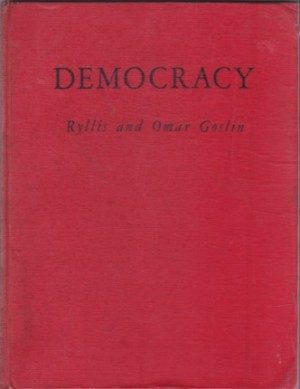
Hardcover. NY, Harcourt, Brace and Company, 1st, 1940, Book: Very Good, Dust Jacket: None, Hardcover, red cloth covers stamped with black lettering. Illustrated with b&w photographs and drawings. Fine text for children on the principles of democracy. First printing with "I" on copyright page. "Review Copy" stamped on front fly leaf, otherwise clean.
Hardcover. A. Rotterdam, 1st, 1764, Book: Very Good, Hardcover, gilt-ruled calf, ribbed spine with gilt lettering, designs, 204 pages. Marbled endpapers and edges. FRENCH TEXT. Apparently there are at least three editions published in the same year, no priority established. Observations concerning economics, finances, justice, the army, education and population (the Christian morals are favorable to population whereas luxury is not): deals furthermore with 'L'Argent', 'Du Luxe', 'Des Subsides', 'Des Obligations de la Patrie envers les Citoyens', 'De L'Administration des Finances', 'Des Impots', 'Des Rentes', 'Des Pensions', 'Des Charges', 'Des Ambassades', 'Des Guerres', 'De la Discipline Militaire', 'Des Réformes', 'Des Désertions', 'Des Grades Militaires', 'Des Fondations', 'De L'Usure', 'Des Loteries', 'Des Monnoyes', 'Des Marchandises', 'Des Voitures & des Postes'. Clean copy.
Hardcover. Cambridge, MA, Harvard University Press, 1st, 1977, Book: Very Good, Dust Jacket: None, Blue cloth covered boards with gold gilt lettering, slight stain on back cover, otherwise clean copy. Published by the Council on East Asian Studies at Harvard University. 335 pages. Appendixes include Table of the Published Chinese Sources of John Dewey's Lectures Delivered in China, 1919-1921, John Dewey's Major Lecture Series, Published Articles, and Professional Activities During His Visit to China, and Translations of Dewey's Works into Chinese.
Softcover. Los Angeles, CA, William Andrews Clark Memorial Library, Reprint, 1970, Book: Very Good, Dust Jacket: None, 77 pages. Softcover. Augustan Reprint Society. Pamphlet with staple binding. Light tanning to cover, cover is becoming detached from bound pages. No pages missing or ripped. Very good condition. Previous owner's name written on front cover. Some underlining and brief notes written inside (pencil)."The most satisfactory of Collins' many pamphlets and books..."
Hardcover. Boston, MA, Isaiah Thomas and Company, 1st Edition, 1789, Book: Good, Dust Jacket: None, 416 pages. Hardcover. Full-calf leather bound with gilt rule edging on the spine (faded--see image), red leather label ruled in gilt (gold), title on spine also in gilt. No pages missing. Previous owner's dated signature on front flyleaf, title page and facing page. Front and rear hinges tender. Signature (pp. 53-66) is coming away from spine at bottom, still attached. Hinge split at gutter after front fly leaf which is slightly detached, as well. Small wear hole on page before title page. Wear to cover boards about the edges and at spine. Small bit of leather missing at bottom of spine (see image). Front cover board has a slight warp (see image). Some foxing and tanning from age throughout including edges. This old volume is a treasure written by the Father of the English Dictionary, with a dedication to Benjamin Franklin, a contributor.
Hardcover. London UK, Chapman & Hall, 1st, 1995, Book: Very Good, Dust Jacket: None, 510 pages, illustrated throughout in b&w. Pictorial laminated boards, no dust jacket. Light wear to edges of spine. else a very neat, clean, unmarked copy.
Softcover. NY, Archipelago Books, 1st, 2005, Book: Very Good, Dust Jacket: None, Softcover in pictorial wrappers, 275 pages. Joao Cabral de Melo Neto is one of Brazil's most acclaimed poets. From his early days, Mr. Cabral has written poems that are marked by a captivating use of simple language. Avoiding ceremony and circumstance, they follow centuries-old paths rather than struggle to break new ground. Clean copy.
Softcover. New York, Dell, 1st, 1970, Book: Very Good, Dust Jacket: None, Mass market paperback, Dell #2254, 128 pages. B&w cartoon drawings throughout by the Berenstains. Clean.
Hardcover. New York, R. H. Russell, 1st, 1899, Book: Very Good, Dust Jacket: None, A collection of black & white cartoons by Gibson. Oblong cardboard covers with beveled edges, cloth spine. Clean, unmarked pages.
Hardcover. London, William Pickering, 1st, 1853, Book: Good, Dust Jacket: None, 309 pages. Hardcover. Brown cloth covers w/ faded gilt lettering on spine. Light soiling to covers, rubbing to corners. Water stains to end papers. Rear hinge starting to crack. Spine slightly cocked. Else pages clean and tight.
Hardcover. Saratoga Springs NY, Tang Teaching Museum & Art Gallery at Skidmore College,, 1st, 2015, Book: Very Good, Dust Jacket: None, Hardcover, pictorial boards, 208 pages. What, exactly, is a "teaching museum"? Everything is Connected answers that question by tracing the ideas and people behind the creation of the Frances Young Tang Teaching Museum and Art Gallery at Skidmore College. The book also explores the many ways the museum has realized its mission as an interdisciplinary space for the creation of new knowledge since opening in 2000. Through deep research and stunning photography, Everything is Connected shows the exhibitions and public programs that make the Tang a national leader among college and university museums. Clean copy in shrinkwrap.
Hardcover. Hampton NH, Peter E. Randall, reprint, 1972, Book: Very Good, Dust Jacket: None, Hardcover, turquoise cloth with gilt lettering, two reprinted publications in one volume. B&w illustrations. Perry's work originally published in 1913; and Bell's in 1876. Fold-out map of Exeter of the past with a facsimile of 1776 newspaper page on rear. Name on front fly leaf otherwise a clean, bright copy.
Hardcover. Boston, MA, Richardson & Lord, 1st edition, 1826, Book: Fair, Dust Jacket: None, 125 pages plus publisher ads. Hardcover. Small: 4.5" W x 5.5" L. Previous owners' names on front endpapers. Brown, marbled cover boards, brown quarter cloth, rubbing and chipping to cover boards (see image). Tanning and some foxing to pages from age (see image), doesn't affect text. Binding tight. Spine straight. Charming old, tiny textbook.
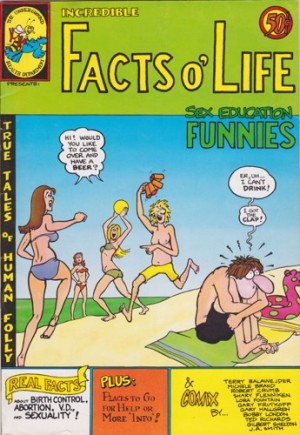
Softcover. San Francisco, Rip Off Press, 2nd pr., 1972, Book: Very Good, Dust Jacket: None, Softcover, 36 pages, including semi-glossy color covers, and b/w interior. 2nd printings have a glossy cover, with ORANGE beer cans on the cover. Stories and art by Gilbert Shelton, R. Crumb, Shary Flenniken, Lora Fountain, Gary Frutkoff, Bobby London, and J.A. Smith. Saddle-stapled wraps.
Hardcover. NY, NYU Press , 1st, 2014, Book: Very Good, Dust Jacket: None, Hardcover, illustrated boards, no dust jacket issued, 272 pages. Returning Vietnam veterans had every reason to expect that the government would take care of their readjustment needs in the same way it had done for veterans of both World War II and Korea. But the Vietnam generation soon discovered that their G.I. Bills fell well short of what many of them believed they had earned. Mark Boulton's groundbreaking study provides the first analysis of the legislative debates surrounding the education benefits offered under the Vietnam-era G.I. Bills. Specifically, the book explores why legislators from both ends of the political spectrum failed to provide Vietnam veterans the same generous compensation offered to veterans of previous wars. Clean copy.
Hardcover. NY, Penguin Press, 1st, 2018, Book: Very Good, Dust Jacket: Very Good, Hardcover in a bright, unclipped dust jacket. 256 pages, b&w photos. For Bill Cunningham, New York City was the land of freedom, glamour, and, above all, style. Growing up in a lace-curtain Irish suburb of Boston, secretly trying on his sister's dresses and spending his evenings after school in the city's chicest boutiques, Bill dreamed of a life dedicated to fashion. But his desires were a source of shame for his family, and after dropping out of Harvard, he had to fight them tooth-and-nail to pursue his love. When he arrived in New York, he reveled in people-watching. He spent his nights at opera openings and gate-crashing extravagant balls, where he would take note of the styles, new and old, watching how the gowns moved, how the jewels hung, how the hair laid on each head. This was his education, and the birth of the democratic and exuberant taste that he came to be famous for as a photographer for The New York Times. After two style mavens took Bill under their wing, his creativity thrived and he made a name for himself as a designer. Taking on the alias William J.--because designing under his family's name would have been a disgrace to his parents--Bill became one of the era's most outlandish and celebrated hat designers, catering to movie stars, heiresses, and artists alike. Bill's mission was to bring happiness to the world by making women an inspiration to themselves and everyone who saw them. These were halcyon days when fashion was all he ate and drank. When he was broke and hungry he'd stroll past the store windows on Fifth Avenue and feed himself on beautiful things. Fashion Climbing is the story of a young man striving to be the person he was born to be: a true original. But although he was one of the city's most recognized and treasured figures, Bill was also one of its most guarded. Written with his infectious joy and one-of-a-kind voice, this memoir was polished, neatly typewritten, and safely stored away in his lifetime. He held off on sharing it--and himself--until his passing. Between these covers, is an education in style, an effervescent tale of a bohemian world as it once was, and a final gift to the readers of one of New York's great characters.
Hardcover. Privately Printed, 1st, 1928, Book: Very Good, Dust Jacket: Good, Hardcover, blue paper-covered boards, black cloth spine with paper label, fore- and bottom edges untrimmed, frontis portrait and other black-and-white illustrations. Glassine wrapper present, chipped and worn. These letters document the nascent history of Smith College, Northampton, Mass. Pages unopened. Clean copy.
hardcover. NY, Knopf , 1st, 1999, Book: Very Good, Dust Jacket: Very Good, Hardcover, 448 pages. Black & white photos and illustrations. Like new. Purely out of artistic ambition, Armenian-American abstract painter Gorky (1895-1948; born in Turkey as Vostanig Adoian) fabricated a new identity, complete with an Ivy League education and personal histories with master artists, on arriving in the United States. Spender (Within Tuscany), who is married to Gorky's oldst daughter, unhesitatingly exposes the painter's many "tall tales." He also assesses Gorky's difficulty in arriving at his own aesthetic until late in life in terms of both the artist's ties to the artistic patriarchs of the previous generation, the Surrealists (including Breton, Duchamp and Brancusi) and his complex status as a forerunner who eventually became alienated from the New York Abstract Expressionists (particularly de Kooning and Rothko). Spender derives much information from anecdotal sources, including an interview with de Kooning, and assumes a chatty tone in dealing with other artists. But he becomes increasingly less sympathetic to Gorky, whose last years are presented from the perspectives of Spender's wife and her mother. Nonetheless, painting constantly despite failing health, family problems and critical indifference, Gorky's frustrations are heartbreaking. Equally compelling is the window opened on New York's art scene when it was still a small clique. Gorky was so in love with the "artist" archetype that he not only lied about himself but also plagiarized anecdotes, artistic statements, love letters and possibly even his own suicide note. Spender preserves the personal dimensions of his subject while demonstrating that the painter should have adopted a youthful declaration. "I shall be a great artist or if not a great crook"as his motto. 90 b&w illustrations.
Hardcover. Boston, American Unitarian Association, 1st, 1905, Book: Very Good, Dust Jacket: None, Hardcover, black cloth with white lettering, 232 pages. Collection of six essays, including "Atlanta University" by Professor W. E. Burghardt Du Bois in which the author discusses the significance of Atlanta University. Other institutions and authors include: Howard University by Prof. Kelly Miller; Berea College, by President William G. Frost; Tuskegee Institute by Prof. Roscoe Conkling Bruce; Hampton Institute by Principal H. B. Frissell; and Fisk University by President James G. Merrill. From a church library with label on spine, bookplate and stamp on front endpapers. Otherwise a sharp copy with no other markings or residue. Scarce in original edition.
Hardcover. Cambridge MA, Zoland Books, 1st, 1997, Book: Very Good, Dust Jacket: Very Good, Hardcover in a bright, unclipped dust jacket. INSCRIBED BY CORBETT on the dedication page. A memoir by poet William Corbett recounts the story of his relationship with his father whose sudden and peculiar abandonment of his family in 1965 left numerous unanswered questions. Clean copy.
Hardcover. Boston, John P Jewett and Company, 1st, 1856, Book: Very Good, Hardcover, embossed brown cloth with gilt lettering on spine. Stated "Fourth Thousand" on title page, 418 pages. Early women's rights advocate Harriot K Hunt, considered the first female doctor in the United States. After two refusals to have her study at the Harvard Medical School, she received a private medical education and practiced with an emphasis on prevention of disease. She was a dedicated advocate for women as professionals and as an educated populace. A very early advocate for changes to voting rights and property rights for women. Each year when she paid her taxes, in fact, she issued a "taxation without representation" protest. An intriguing look at attitudes and treatment of early women's rights advocates from a well-educated and outspoken women. Light fraying to top and bottom of spine, name on inside front cover, ownership stamp to blank leaf preceding half-title page.



 "Dewey Experiment in China: Educational Reform and Political Power in the Early Republicby: Keenan, Barry")


 "Dissertations on the English Language: with Notes, Historical and Critical, To Which is Added, by Way of Appendix, an Essay on a Reformed Mode of Spelling, with Dr. Franklin's Arguments on that Subject.")




 "Education Impossibleby: Berenstain, Stan and Jan")
 "Education of Mr. Pipp, Theby: Gibson, C.D.")
 "Education of Mr. Pipp, Theby: Gibson, Charles Dana")
 "Elements of Psychology, Part 1by: Morell, J. D.")





 "From A High Place - A Life Of Arshile Gorkyby: Spender, Matthew")
 "From Servitude to Service, Being the Old South Lectures on the History and Work of Southern Institutions for the Education of the Negroby: Du Bois, W.E.B. and others")
 "Furthering My Education: A Memoir (SIGNED COPY)by: Corbett, William")
 "Garland Series: On the Freedom of Printing and of Speech - Charles Blount - A Just Vindication of Learning - Daniel Defoe - An Essay on the Regulation of the Press - Jeremy Bentham - On the Liberty of the Press.")


