Hardcover. NY, Twayne Publishers, 1st, 1958, Book: Very Good, Dust Jacket: Very Good, Hardcover in a bright, unclipped dust jacket, 271 pages, b&w photographs. An account of the author's trip to French Equatorial Africa and Albert Schweitzer's jungle hospital (Lambarene), the author's stay there and conversations with Dr. Schweitzer. The author convinced Schweitzer to lend his name to an educational movement in the U.S. (the nominal reason for the trip), and states that he believes Schweitzer is a much needed Prophet of the divided Western world. Clean, bright copy.
Hardcover. NY, Harper & Brothers, 1st, 1898, Book: Very Good, Dust Jacket: None, Hardcover, gray cloth decorated in yellow and blue, with gilt lettering to spine. 226 pages, 10 b&w photo plates including frontis. with tissue guard. Inscription, ownership stamp on front endpapers, otherwise clean.
Hardcover. London, B.T. Batsford, 1st, 1957, Book: Very Good, Dust Jacket: None, 136 pages. Hardcover with no dust jacekt. illustrated with drawings by Edward Ardizzone. Blue cloth covers with light fading to spine
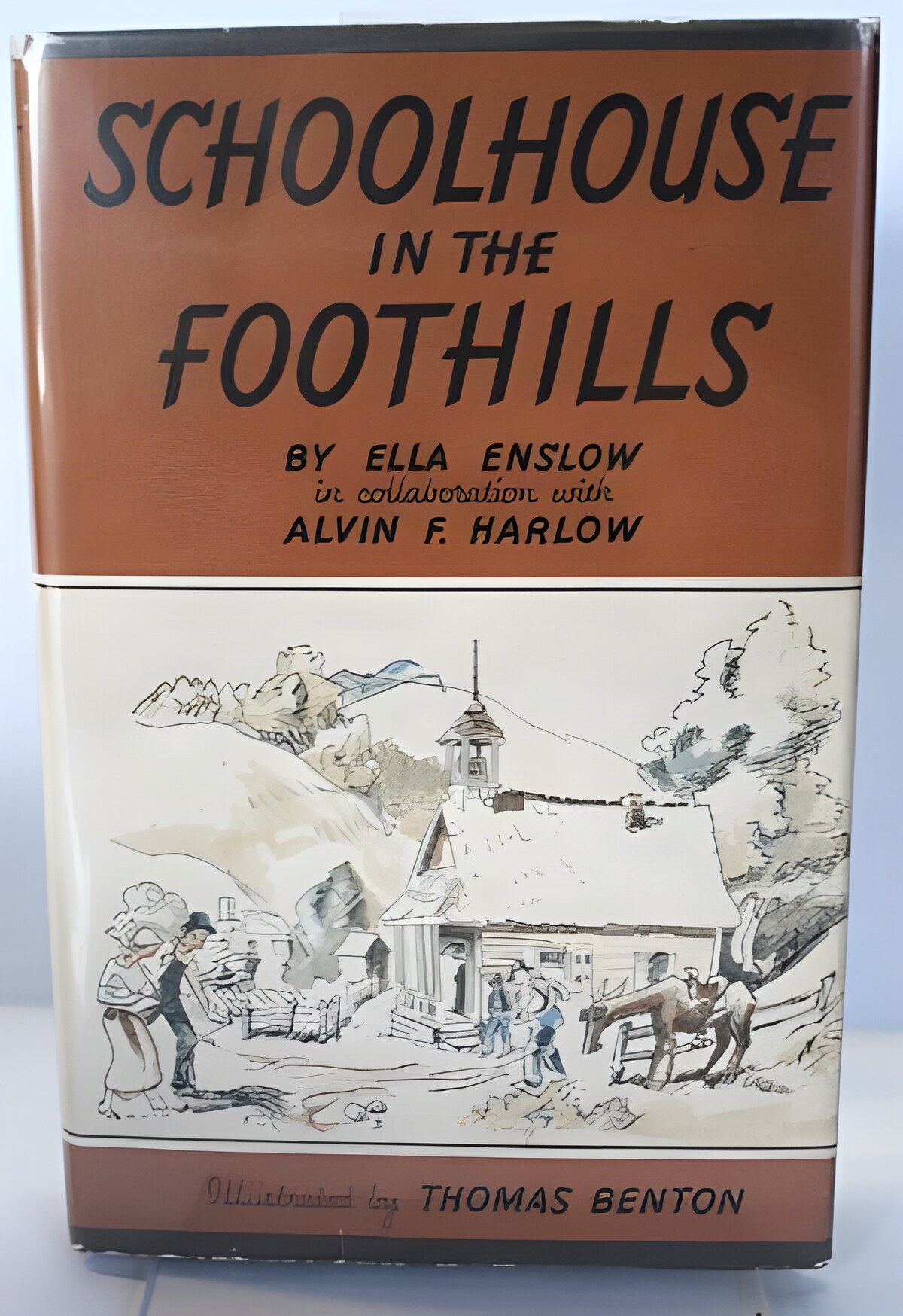
Hardcover. NY, Simon & Schuster , 1st, 1935, Book: Very Good, Dust Jacket: Very Good, 239 pages. Hardcover with dust jacket. Eight two-color illustrations plus dust jacket art in color by Thomas (Hart) Benton. True account of a young school teacher in the Tennessee mountains. With a bright, unclipped dust jacket with light edgewear. Scarce in this condition.
Paperback. Albany, NY, Education Department, Albany Institute of History and Art., revised, 1984, Book: Very Good, Dust Jacket: None, Softcover, 201 pages. Very little wear to cover. Inside is bright and clean with many b&w illustrations throughout.
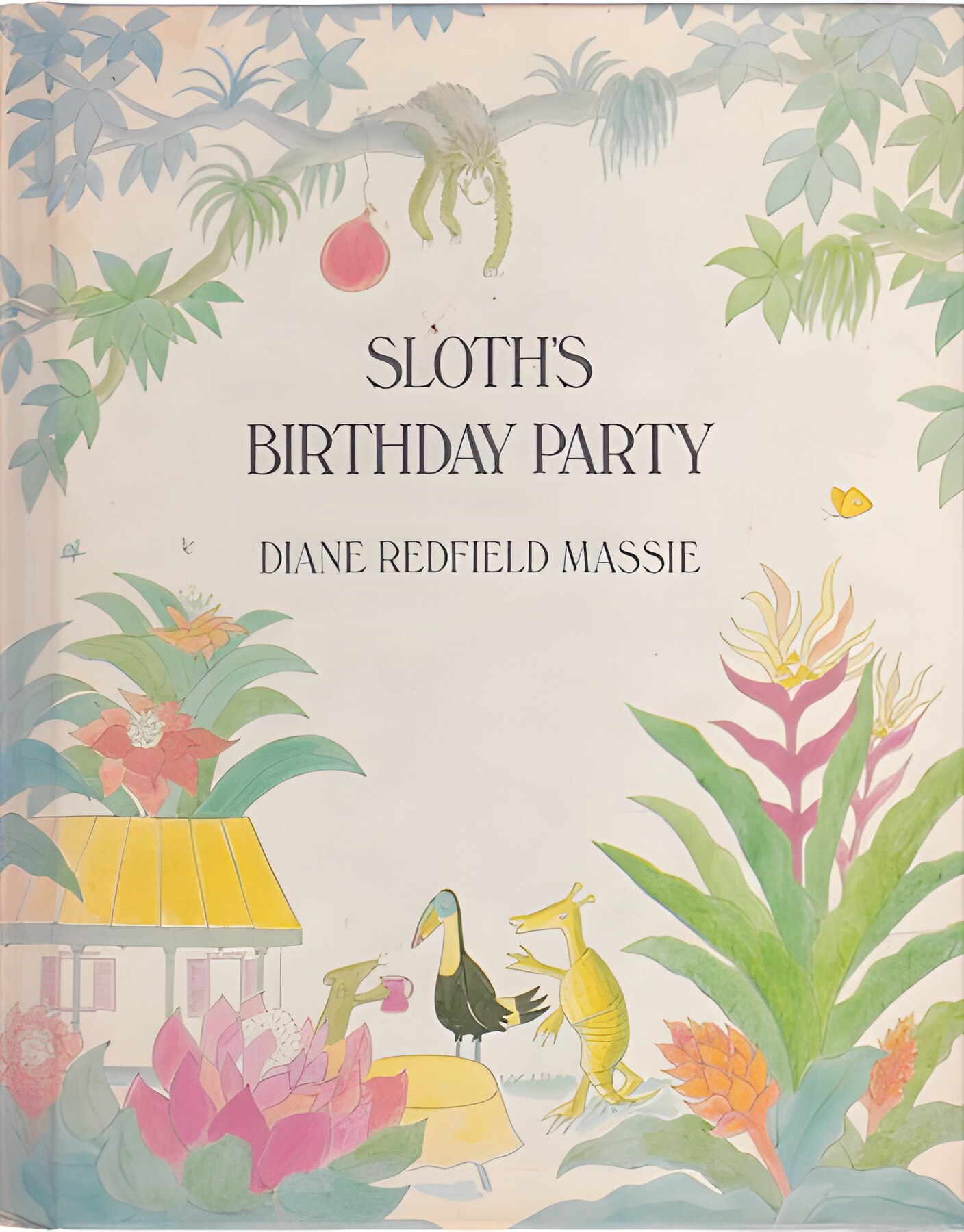
Hardcover. Middletown CT, Xerox Education Publications, BC Ed., 1976, Book: Very Good, Dust Jacket: None, Hardcover, pictorial cloth, color illustrations by the author. Sloth plans a birthday party but is afraid no one will come because they don't like his messy house. Clean copy. Weekly Reader Book Club Edition.
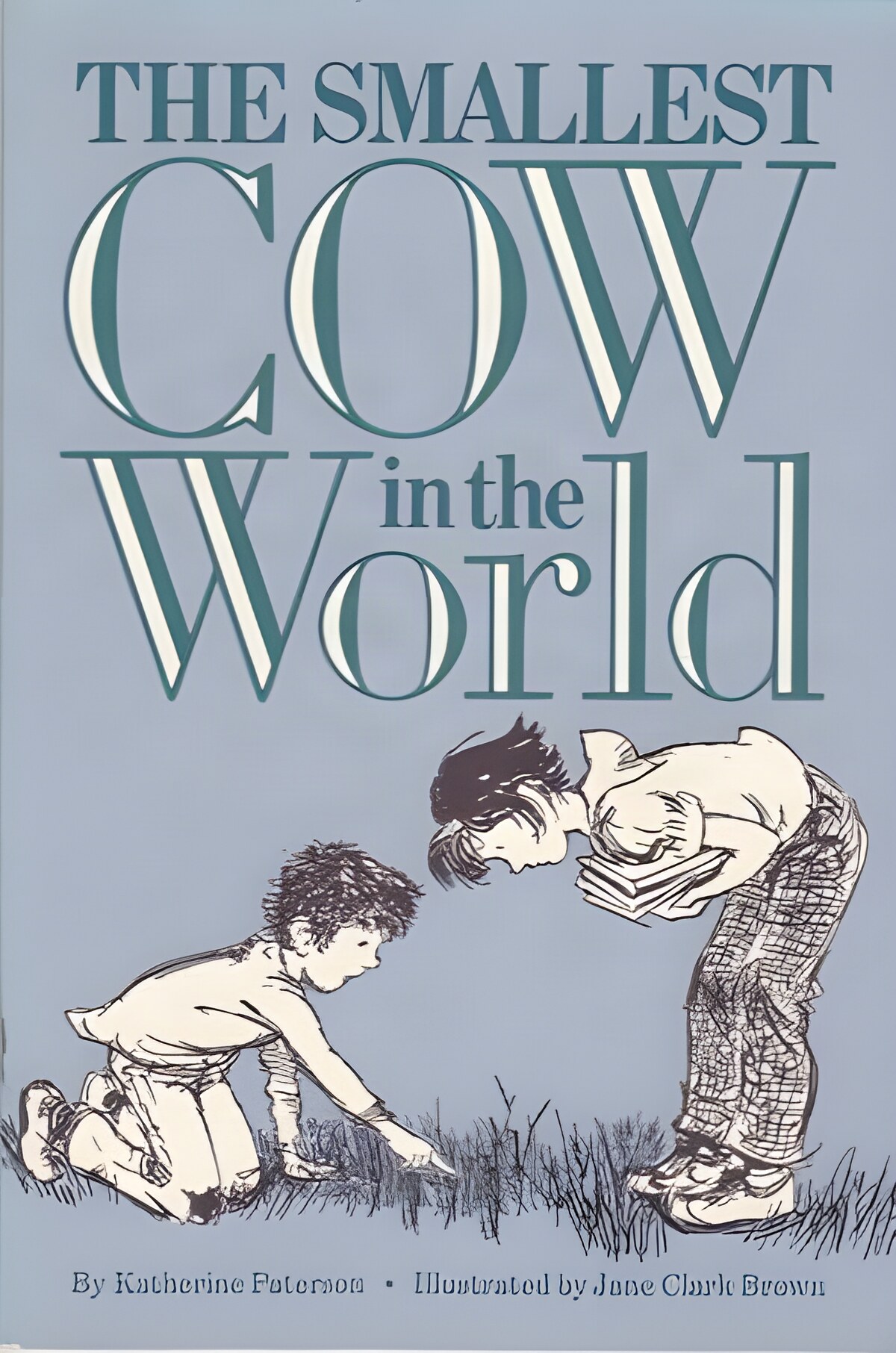
Softcover. Burlington VT, Vermont Migrant Education Program, 1st, 1988, Book: Very Good, Dust Jacket: None, The scarce 1st printing of this charming book for beginning readers. Paperback. B&W illustrations by Jane Clark Brown.
Hardcover. Mankato MN, Creative Education, 1st, 1984, Book: Very Good, Dust Jacket: None, Glazed boards illustrated in color, 32 pages, color art by Roland Topor.
Hardcover. NY, Macmillan, 1st, 1908, Book: Very Good, Dust Jacket: None, Hardcover, 362 pages. How to present an argument in a logical and convincing manner in written form. Compiled by two professors at Oberlin College.
Hardcover. John Babcock, 1st, 1801, Book: Fair, Dust Jacket: None, 288 pages. Hardcover. Full brown calf leather binding shows heavy wear to edges. Pages and endpapers heavily foxed and tanned. Moderate soil. Previous owner's name on front fly leaf. Two volumes in one.
Softcover. Montreal, Drawn and Quarterly, 2nd, 2014, Book: Very Good, Dust Jacket: None, 200 pages. Softcover. Light edgewear to wrappers, Color, Black and white pictures throughout.
Hardcover. London, NLB, 1st transl. thus, 1972, Book: Very Good, Dust Jacket: None, Hardcover, light blue cloth stamped in gilt, 257 pages. The articles and essays collected in this book were written during the decade of Lukacs's life when he was most active in politics. The first texts mark his transition from an anti-bourgeois aestheticism to Marxism and the newly founded Hungarian Communist Party. They are followed by material which displays the full range of his activity and thought during the subsequent ten years. Some of these essays were written when Lukacs was deputy commissar of education in the embattled, short-lived Hungarian Soviet Republic. Others include the famous article on parliamentarianism which earned its author the respectful yet severe criticism of Lenin.The volume includes short studies on German revisionism, Bukharin's Marxism, and Karl Wittfogel, and longer pieces on Lassalle and Moses Hess. The collection ends with the theses Luckas wrote, under his cover name "Blum", in opposition to the policies of the Third Period of the Comintern. Clean copy.
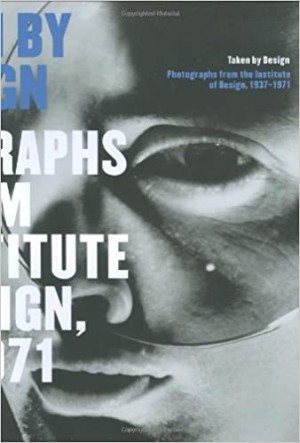
Hardcover. Chicago, University of Chicago Press;, 1st, 2002, Book: Very Good, Dust Jacket: None, Hardcover, 272 pages. One of Chicago's great cultural achievements, the Institute of Design was among the most important schools of photography in twentieth-century America. It began as an outpost of experimental Bauhaus education and was home to an astonishing group of influential teachers and students, including Lazlo Moholy-Nagy, Harry Callahan, and Aaron Siskind. To date, however, the ID's enormous contributions to the art and practice of photography have gone largely unexplored. Taken by Design is the first publication to examine thoroughly this remarkable institution and its lasting impact. With nearly 300 illustrations, including many never-before published photographs, Taken by Design examines the changing nature of photography over this critical period in America's midcentury. It starts by documenting the experimental nature of Moholy's Bauhaus approach and photography's new and enhanced role in training the "complete designer." Next it traces the formal and abstract camera experiments under Harry Callahan and Aaron Siskind, which aimed at achieving a new kind of photographic subjectivity. Finally, it highlights the ID's focus on conscious references to the processes of the photographic medium itself. In addition to photographs by Moholy, Callahan, and Siskind, the book showcases works by Barbara Crane, Yasuhiro Ishimoto, Joseph Jachna, Kenneth Josephson, Gyorgy Kepes, Nathan Lerner, Ray K. Metzker, Richard Nickel, Arthur Siegel, Art Sinsabaugh, and many others. Major essays from experts in the field, biographies, a chronology, and reprints of critical essays are also included, making Taken by Design an essential work for anyone interested in the history of American photography.
Hardcover. NY, Free Press, 1st, 1991, Book: Very Good, Dust Jacket: Very Good, Hardcover, 219 pages. B&W photos. The twentieth-century rise of the automobile collided head on with Victorian prescriptions for the proper role and place of women in society. Gender conventions cast women as too weak, dependent, and flighty to manage the fiery motored beast. Overcoming that stereotype was as difficult for women as gaining access to the vote, the professions, and education, yet their personal feats of driving in both war and peace demolished the gender barriers against their taking the road. After women proved once and for all that they could drive under the worst conditions in World War I, they adapted the automobile to their domestic roles in urban society during the 1920s. Written with flair and verve, this volume displays Scharff's erudition in social, cultural, gender, and technological history.
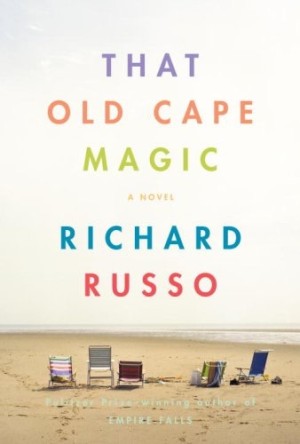
Hardcover. NY, Knopf, 1st, 2009, Book: Very Good, Dust Jacket: Very Good, Hardcover in a bright, unclipped dust jacket. "Family, family, family is the subject of That Old Cape Magic [with] a complicated skein of plotlines, deep connection to place, and affection for the large cast of characters who blunder and struggle through his pages." -Roxanna Robinson, The New York Times Book Review. Clean copy.
Softcover. Washington DC, National Gallery of Art, 1st, 2010, Book: Very Good, Dust Jacket: None, Softcover, pictorial wrappers, 430 pages. This volume of essays reexamines the establishment and early history of the Accademia di San Luca in Rome, one of the most important centers of governance, education, and theory in the arts for the early modern period and the model for all subsequent academies of art worldwide. It is the most comprehensive history of the Accademia to be published in more than forty years, and the first in nearly two hundred years to be based almost entirely on new primary and documentary material. In reconstructing the early history of the institution, the volume also provides a new basis for tracking the careers of painters, sculptors, and architects working in Rome in the early 16th century, and for understanding the artistic and professional issues that engaged them.
Hardcover. NY, Theo. Audel & Company, 1st, 1903, Book: Very Good, Dust Jacket: None, Hardcover, 334 pages plus publisher's ads in rear. Bright, clean copy with gilt title, design on spine. All edges gilt. Chapter headings include: Summary of Arithmetic; Useful Measurements; Parts of a Circle; Measuring Machines; Screw cutting in the Lathe; Boring Machines & operations; Milling Machines & Operations; Drilling Machines and Operations; Grinding Operations; Punching & Shearing Machines .Bolt Cutting.Auxiliary Machines; Utilities and Accessories; Shop Management; Useful Workshop Recipes; Aid to the Injuried in Accidents, etc.
Hardcover. Princeton NJ, Princeton University Press, 1st, 2011, Book: Very Good, Dust Jacket: Very Good, Hardcover in a bright, unclipped dust jacket, 543 pages. This is the history of how two countries on the northern edge of Europe built societies in the twentieth century that became objects of inspiration and envy around the world. Francis Sejersted, one of Scandinavia's leading historians, tells how Norway and Sweden achieved a rare feat by realizing grand visions of societies that combine stability, prosperity, and social welfare. It is a history that holds many valuable lessons today, at a time of renewed interest in the Scandinavian model. The book tells the story of social democracy from the separation of Norway and Sweden in 1905 through the end of the century, tracing its development from revolutionary beginnings through postwar triumph, as it became a hegemonic social order that left its stamp on every sector of society, the economy, welfare, culture, education, and family. The book also tells how in the 1980s, partly in reaction to the strong state, a freedom and rights revolution led to a partial erosion of social democracy. Yet despite the fracturing of consensus and the many economic and social challenges facing Norway and Sweden today, the achievement of their welfare states remains largely intact.
Hardcover. NY, VIking, 1st, 2010, Book: Very Good, Dust Jacket: Very Good, Hardcover in a bright, unclipped dust jacket, 261 pages, illustrations. Philip Mould takes a wonderfully interesting look at how art restoration works. But, in looking at restoration of existing paintings, he also delves into how he, as a gallery owner, along with his team, find work that has remained under-valued or unvalued for centuries. And then how that piece, now restored by Mould's experts, ventures back into the art world in renewed glory. Mould takes five or so examples of "found" paintings - one from his "Antique Roadshow" - and writes how instinct and education about a painter, his other work, the painting's subject's history, and other "intangables' go into Mould and his staff taking on an often dirty and undistinguished painting on the chance that the painting is "the real thing" - a real Rembrandt, a real Homer Winslow, etc. Probably the most interesting story was that of a Norman Rockwell painting on display at the Rockwell Museum in Massachusetts that...wasn't. Wasn't the "real" Rockwell painting, but rather one done by a disciple of Rockwell, who copied the original for reasons sort of murky, and donated to the museum. The "real" Rockwell was found by the copier's sons after his death and turned over to the museum. Clean copy.
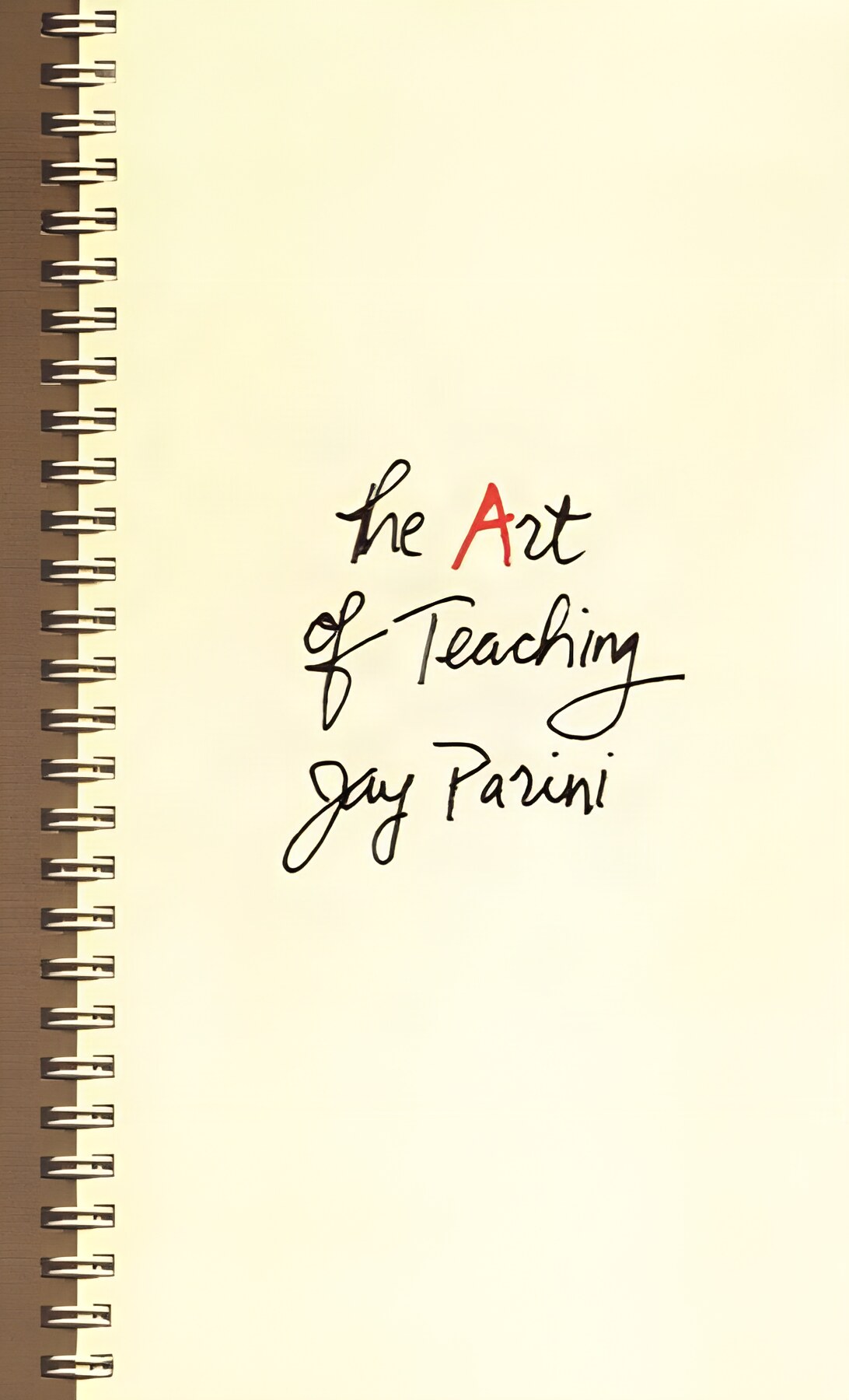
Hardcover. NY, Oxford University Press, 1st, 2005, Book: Very Good, Dust Jacket: None, Hardcover, glossy boards, 160 pages. SIGNED BY PARINI on the title page. A writer and critic looks back over his own decades of trials, errors, and triumphs, in an intimate memoir that brims with humor, encouragement, and hard-won wisdom about the teacher's craft. Clean copy.
Hardcover. NY, The Monacelli Press, 1st, 2005, Book: Very Good, Dust Jacket: Very Good, Hardcover, 640 pages, pofusely illustrated. In the late nineteenth century, Chicago -- the birthplace of modern architecture in the United States -- was a magnet for aspiring architects. The city was forced to rebuild after the destruction wrought by the Great Fire of 1871 and also to expand to accommodate a surge in the population. The seemingly endless demand for taller and more sophisticated buildings offered young draftsmen an unprecedented opportunity to influence the design of the American skyscraper. The Chicago Architecture Club: Prelude to the Modern documents the history of these draftsmen, the organization they founded, and its role in shaping architectural education and modern architectural practice.
Hardcover. NY, The Monacelli Press, 1st, 2005, Book: Very Good, Dust Jacket: Very Good, Hardcover, 640 pages, pofusely illustrated. In the late nineteenth century, Chicago -- the birthplace of modern architecture in the United States -- was a magnet for aspiring architects. The city was forced to rebuild after the destruction wrought by the Great Fire of 1871 and also to expand to accommodate a surge in the population. The seemingly endless demand for taller and more sophisticated buildings offered young draftsmen an unprecedented opportunity to influence the design of the American skyscraper. The Chicago Architecture Club: Prelude to the Modern documents the history of these draftsmen, the organization they founded, and its role in shaping architectural education and modern architectural practice.
Hardcover. Baton Rouge LA, Louisiana State University Press, 1st, 1988, Book: Very Good, Dust Jacket: Very Good, Hardcover in a bright dust jacket. 360 pages, b&w illustrations. Following the American Civil War, many former Confederates fled their southern homeland. Some left the United States, some moved to the western territories. Still others moved north to northeastern and midwestern towns and cities, believing that northern economic and educational opportunities offered the quickest means of rebuilding shattered fortunes and lives. Sutherland provides a detailed and illuminating account of the contributions these displaced southerners made to the financial, literary, artistic, and political life of the nation. Very nice copy.




 "Seventeenth Century Albany: A Dutch Profile.by: Wilcoxen, Charlotte")
 "Snow White and Rose Redby: Grimm/Roland Topor, Jakob and Wilhelm")
 "Specimens of Exposition and Argumentby: Percival, Milton and Jelliffe, R. A., (editors)")

 "Syllabus: Notes from an Accidental Professorby: Barry, Lynda")
 "Taking the Wheel - Women and the Coming of the Motor Ageby: Scharff, Virginia")

 "The Advanced Machinist: A Practical and Educational Treatise, With Illustrations by: Rogers, William")


 "The Art Detective: Fakes, Frauds, and Finds and the Search for Lost Treasuresby: Philip Mould")