Hardcover. London, The Cresset Press, 1st, 1960, Book: Very Good, Dust Jacket: Good, 256 pages. Blue cloth cover, gilt lettering, some minor wear to edges of spine. Dust jacket has some wear, and a small tear on bottom of spine. Library sticker on front endpaper. Eight page section of b&w photographs. Inside is bright and clean. A nice copy.
Hardcover. London, John Lane the Bodley Head, 1st, 1913, Book: Very Good, Dust Jacket: None, Hardcover, 291 pages. Photographs and illustrations throughout. Minor spine edge wear. Gilt title on front cover and spine. A clean and tight copy.
Hardcover. London, Sampson Low, Marston and Co., 5th Ed., 1897, Book: Very Good, Dust Jacket: None, Two volumes, illustrated with b&w photographs and maps (some fold-out). Navy blue cloth with gilt titles on spine, gilt battleship on front covers, top edge gilt. Vol. 1 with frontispiece and title page loose (easily repairable), rear hinges cracked, Vol. 2 opened roughly at page 80-81, otherwise a clean, sharp set.
Hardcover. London, Oxford University Press, reprint, 2011, Book: Very Good, Dust Jacket: None, Two volume set complete, glossy boards, 977 pages in total. Professor Toomer's two-volume set is not only an indispensable reference work but also provides the first thorough treatment of the scholarship of John Selden, acknowledged as the most learned man of 17th-century England. All of his numerous published works, especially in the fields of history, law, and Hebraica, are critically examined and described in detail. The narrative also relates his writings to contemporary events, in the Civil War and the parliaments (including the Long Parliament) in which he played a prominent part, and to the work of other scholars in Europe (notably Scaliger and Grotius) and in Britain (including Camden and Ussher). Selden's involvement with the Universities, the support of libraries, and the promotion of scholarship is discussed. The work will be an essential resource, not only for the life of a major figure of his time, but also for the intellectual history of 17th-century England in general. No djs as issued, like new.
Hardcover. Woodstock VT, Countryman Press, 4th pr., 1999, Book: Very Good, Dust Jacket: Very Good, Hardcover in a bright, price-clipped dust jacket, 416 pages, b&w illustrations. Now largely forgotten, the massacres of 1675 to 1676, known as King Philip's War, ended the harmonious relations that had existed between native Americans and the colonists since their arrival at Plymouth Rock in 1620. Tensions had been rising as the number of settlers grew, and the pillaging of an outlying farm by affronted young braves escalated into open hostilities. Pitched battles were fought from Rhode Island to Maine. Hundreds of English died as farmers fled and cowered behind stockades or in the few port towns. Thousands of natives were slaughtered and the rest dispersed or sold into slavery in the West Indies. The savagery resulted in the clearing of the native populations from southern New England and the unopposed expansion of the New England colonies. It also became the brutal model on which the United States came to deal with its native peoples. King Philip's War tells the story with such close attention to detail that each ambush, each burned-out farm, becomes a vivid image. The authors make abundant use of maps and photographs of old sites to enable the reader to follow the course of the war: the book forms an exhaustive guide for the armchair historian or anyone wishing to visit the monuments and battlefields today. Clean copy.
Hardcover. London, England, Oxford at the Clarendon Press, 2nd Edition, 1955, Book: Very Good, Dust Jacket: None, 479 pages plus maps and fold-out family tree/timeline. Hardcover. Paste down presentation label on front flyleaf. Previous owner's signature on front flyleaf. Blue cloth cover boards, gilt title on spine (slightly faded). A touch of tanning to pages. In very good condition.
Hardcover. UK, Lee Miller Archives Publishing, 1st, 2021, Book: Very Good, Dust Jacket: Very Good, Hardcover in a bright dust jacket, 185 pages. After fashion modeling in New York City in the 1920's, Miller went to Paris, becoming a fashion and fine-art photographer -- in addition to covering World War II. This is a beautifully produced book looking at Lee Miller's extraordinary contributions to the pages of Vogue before becoming a war correspondent. Many of the images have not been seen since they were taken in the 1940's. Clean copy.
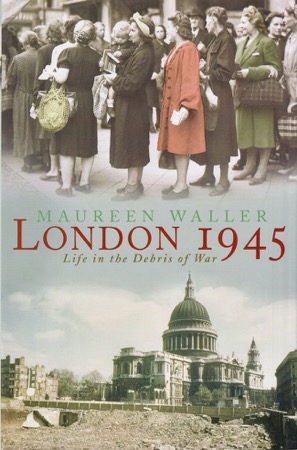
Hardcover. NY, St. Martin's Press, 1st, 2005, Book: Very Good, Dust Jacket: Very Good, Hardcover in a bright dust jacket, 511 pages, b&w illustrations. When Hitler unleashed a fierce barrage of weapons on the defiant capital of England, London's resilient citizens were undaunted. With colorful detail and rich insight, historian Maureen Waller takes readers through London in the last year of war. She reveals the magnificence of human spirit that carried a besieged people through agonizing travails and the long, giddy transformation the metropolis made as it passed through battle, to celebration, and back to life as usual. Clean copy.
Hardcover. Cambridge MA, MIT Press , 1st, 2022, Book: Very Good, Dust Jacket: Very Good, Hardcover in a bright dust jacket, 311 pages, b&w illustrations. In the 1930s and 1940s, English fashion houses, spurred by economic and wartime crises, put London on the map as a major fashion city. In this book, Michelle Jones examines the creation of a London-based couture industry during these years, exploring how designer collaboration and the construction of specific networks and narratives supported and shaped the English fashion economy. Haute couture-the practice of creative made-to-measure womenswear-was widely regarded as inherently French. Jones shows how an English version emerged during a period of economic turbulence, when a group of designers banded together in a collective effort to shift power within the international fashion system. Clean, bright copy.
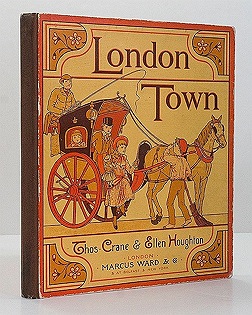
Hardcover. London, Marcus Ward and Co., 1st Edition, 1883, Book: Very Good, Dust Jacket: None, 56 pages; color llustrated boards with brown cloth spine with colored plates by the authors throughout. Verses by Felix Leigh. Cover exhibits edgewear, heaviest at the corners of the boards, which are bumped and have the underlying cardboard exposed. Back cover has a bump at the fore-edge and another at the bottom. Both covers slightly spotted. Interior: binding cracked at page 9; missing between front fly leaf and dedication page (evidence of something tipped in with glue and later removed along reverse of front fly leaf)-- however, the book is otherwise intact. All illustrations present in this edition: lovely plates depicting life in Victorian England, interior very clean.
Hardcover. NY, Farrar, Straus and Giroux, 1st, 1971, Hardcover in a bright dust jacket, 378 pages. From dust jacket notes: "For most Americans, the Second World War started on December 7, 1941, and much of the fighting took place in strange, faraway places. For the British, the war started on September 3, 1939, and much of the action took place in the skies over England. In the spring of 1940, after months of uneasy calm, Germany invaded the Lowlands and conquered France within a few days, leaving England without her only meaningful ally on the Continent. A year would pass before the Soviet Union was drawn into the war, and eighteen months before the Japanese attacked Pearl Harbor. The United Kingdom, with a land area about the size of Wyoming, was alone, all alone, with only the Straits of Dover separating the island from Hitler's war machine. For six years Mollie Panter-Downes covered the war for The New Yorker magazine from her native England. Even at the height of the air war over London, when 'all that is best in the good life of civilized effort appears to be slowly and painfully keeling over,' she continued to file her fortnightly reports in an understated but dramatic fashion that reflected the fortitude of her fellow countrymen: 'The announcements of the first air-raid deaths are beginning to appear in the obituary columns of the morning papers. No mention is made of the cause of death, but the conventional phrase "very suddenly" is always used.' William Shawn, editor of The New Yorker, has assembled Miss Panter-Downes' 'Letter from London' columns into a consecutive, on-the-spot chronicle of the war in England."
Hardcover. Netherlands, Dordrecht/Republic of Letters, 1st, 2010, Book: Very Good, Dust Jacket: None, Hardcover, illustrated glossy boards, 281 pages. For the first four decades of the twentieth century Philip Kerr, the Eleventh Marquess of Lothian, hovered on the fringes of power in Britain. As a commentator on public affairs, private secretary to Liberal prime minister David Lloyd George, secretary to the Rhodes Trust, Liberal peer, and ambassador to the United States at the beginning of World War II, Lothian's greatest interest was in preserving and strengthening the British Empire and building close bonds with the United States. This international collection of essays by seven scholars explores Lothian's impact on Anglo-American relations and his role, behind the scenes and as a government official, in forging what would eventually become known as the "special relationship." Clean copy.
Hardcover. Norman, OK, University of Oklahoma Press, 1st Edition, 1967, Book: Very Good, Dust Jacket: None, Two Volume set. DOMESTIC SHIPPING ONLY. Volume 1: 568 pages. Volume 2: 517 pages. Hardcovers. In slipcase, very good. B/w illustrations throughout. Decorated edges. Black cloth cover boards. Pages clean and bright. Spines straight. Bindings tight. North's reputation among historians has varied wildly, reaching its lowest point in the late 19th century, when he was depicted as a creature of the king and an incompetent who lost the American colonies.
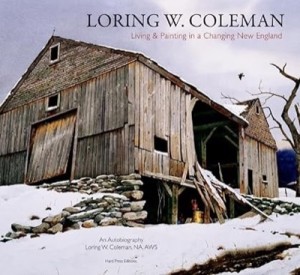
Hardcover. Hudson Hills, 1st, 2011, Book: Very Good, Dust Jacket: Very Good, Hardcover in a bright dust jacket, 240 pages, color illustrations. Loring Coleman's voice as a storyteller is full of his humor and sense of wonder as he tells us about his life and then gives us the tales behind the beauty and mystery of over 50 of his paintings, most of which are reflections of a disappearing life in New England. He begins by describing the moment when his eyesight failed, and he learned that after seven decades as an artist, he might never paint again. His creation of this book became his response. With spirited memories of the intriguing characters who affected his life, Loring describes his upbringing in the tough Chicago of the 1930s, his discovery of idyllic rivers in Concord, Massachusetts, and his adventures as a motorcyclist and young student of great art teachers. He tells of marrying his wife Katinka the day before Pearl Harbor, entering the military, and quickly finding himself commanding the U.S. Army's largest World War II art department. He then traces his energetic years as a teacher, traveling art historian, and lover of Bavaria and Austria. In the context of his rich personal life, Loring shows us his paintings, as he reveals the many amusing, exasperating, and provocative experiences surrounding the artistic choices he made as he became one of New England's most revered artists. Clean copy. DUE TO WEIGHT, DOMECTIC SHIPPING ONLY.
Softcover. Zenith Press, reprint, 2004, Book: Very Good, Dust Jacket: None, Softcover, 574 pages, b&w illustrations. Originally published in Germany in 1955, and in England and the United States in 1958, this classic memoir of WWII by a man who was an acknowledged military genius and probably Germany's top WWII general, is now made available again. Field Marshal Erich von Manstein described his book as a personal narrative of a soldier, discussing only those matters that had direct bearing on events in the military field. The essential thing, as he wrote, is to "know how the main personalities thought and reacted to events." This is what he tells us in this book. His account is detailed, yet dispassionate and objective. Clean copy.
Hardcover. Boston, New Harvest, 1st, 2014, Book: Very Good, Dust Jacket: Very Good, 174 pages. Hardcover. Clean, unmarked copy with only minor wear to dust jacket. Hoban has written an insightful book into what may have made Lucian Freud the great painter he came to be. From his early days in Germany with his grandfather, Sigmund Freud, to his subsequent life in London, where his family moved before the war, we see Lucian Freud gradually developing from an intense adolescent who often resorted to physical violence in conflicts with others to the powerful figure who changed the face of Realism. His many liaisons with women are described in detail: Hoban offers us a candid sketch of who the most prominent women in his life were, his problems with commitment and other moral conundrums we are forced to consider in his character, such as his questionable demand on his lovers that they use no form of birth control, resulting in at least 14 children, most out of wedlock. Along with that, Freud's gambling addiction and his love of risk are explored by Hoban in a way that allows us a glimpse into Freud's psyche that is invaluable for anyone wanting to understand in a more in depth way the factors that might have contributed to his enormous talents and output.
Hardcover. Ostfildern GR, Hatje Cantz, 1st, 2010, Book: Very Good, Dust Jacket: None, Like new in publishers shrink-wrap. Dutch documentary photographer Martin Roemers decided to track down the remains of deserted atom bomb shelters of the Cold War period. For over ten years he traveled through formerly hostile countries on both sides of the line: through eastern and western Germany, England, Belgium, the Netherlands, Poland, Ukraine, and other former East Bloc nations. Hardcover, 144 pages, 73 color plates, essays by Roemers, H.J.A. Hofland, and Nadine Barth.
Hardcover. Carlton Books, 1st, 2003, Book: Very Good, Dust Jacket: Very Good, Hardcover, 128 pages, illustrated throughout with numerous plates in color and b&w. Clean, unmarked copy with only minor wear to dust jacket.
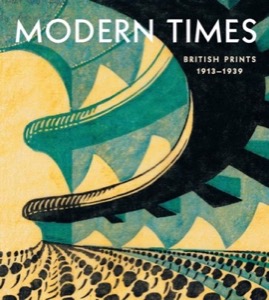
Hardcover. NY, Metropolitan Museum of Art, 1st, 2021, Book: Very Good, Dust Jacket: None, Hardcover, pictorial boards, 200 pages. A look at the artistic and technical innovation of British printmaking from World War I to the eve of World War II, as artists from the Grosvenor School and beyond harnessed an emerging modernist style. This richly illustrated volume reintroduces rare print works from the collection of Leslie and Johanna Garfield into the narrative of modernism, demonstrating their relationship to other movements such as Cubism, Futurism, and Constructivism. Essays explore how artists turned to printmaking to alleviate trauma, memorialize their wartime experiences, and capture the aspirations and fears of the twenties and thirties. Special attention is given to the linocut technique revolutionized by Claude Flight and his students at London's Grosvenor School of Modern Art. Highlighted as well are the pioneering works of artists such as C. R. W. Nevinson, Sybil Andrews, Cyril E. Power, Paul Nash, Edward Wadsworth, Edith Lawrence, Ursula Fookes, and Lill Tschudi. In their quest to promote a more democratic art, these artists created innovative graphics that portrayed in subject, form, material, and technique the dynamic era in which they lived. In publisher's shrinkwrap.
Hardcover. Surrey UK, Severn House Publishers, 1st, 2014, Book: Very Good, Dust Jacket: Very Good, Hardcover in a bright, unclipped dust jacket. Cannell offers an Agatha Christie-like whodunit with touches of Olde World England and a soupcon of romance. Young Florence Norris is thrilled to become a housemaid at Mullings, home of the respected Stodmarsh family. Although she leaves service to marry, her husband dies in the war, and she's drawn back to Mullings, where she becomes the trusted housekeeper and confidante of young master Ned Stodmarsh. The years pass happily enough until the terrible day when Lady Stodmarsh dies unexpectedly. Florence suspects Lady Stodmarsh was murdered, but without evidence, she can't take her case to the police. Shortly after his wife's tragic death, Lord Stodmarsh takes a holiday to assuage his grief--and shocks everyone by returning home with a new wife. While Lord Stodmarsh is alive, his new wife is all sweetness and light, but when he dies unexpectedly, she reveals her true, wicked nature. When more violent murders occur, Florence can no longer keep her suspicions to herself. With a multistranded plot, strong characters, and echoes of Rebecca, this mix of romance and crime will appeal to a wide range of readers. Clean copy.
Softcover. Brighton UK, Sussex Academic Press, 1st, 2010, Book: Very Good, Dust Jacket: None, Softcover, 283 pages. The first book to study the history of the Nazis in Britain. In September 1930, the Nazi Party newspaper, Volkischer Beobachter, sent its first representative to London. Soon afterwards, German residents in London established an Ortsgruppe, or local Nazi group, which provided Party members with a place to congregate and support the new movement. By 1933, more than 100 members belonged to the London group. The Nazis in pre-war London created a dilemma for the Foreign Office and the Home Office, who were divided as to how best to treat residents whose allegiance was to the German Reich. Some felt that all Nazi organizations should be banned, and Party Members should not be allowed to enter the UK. Others, including MI5, argued that it would be easier to keep track of Nazis if they were in-country. Previously unpublished German documents reveal the fates of German diplomats, journalists, and professionals, many of whom were interned in Britain or deported to Nazi Germany once war broke out on September 3, 1939. Clean copy.
Softcover. London, Profile Books, reprint, 2006, Book: Very Good, Dust Jacket: None, Softcover, 312, b&w illustrations. In September 1939, housewife and mother Nella Last began a diary whose entries, in their regularity, length and quality, have created a record of the Second World War which is powerful, fascinating and unique. When war broke out, Nella's younger son joined the army while the rest of the family tried to adapt to civilian life. Writing each day for the "Mass Observation" project, Nella, a middle-aged housewife from the bombed town of Barrow, shows what people really felt during this time. This was the period in which she turned 50, saw her children leave home, and reviewed her life and her marriage - which she eventually compares to slavery. Her growing confidence as a result of her war work makes this a moving (though often comic) testimony, which, covering sex, death and fear of invasion, provides a new, un-glamorised, female perspective on the war years. 'Next to being a mother, I'd have loved to write books.' Clean copy.
Softcover. East Greenwich RI, Society of Colonial Wars in the State of Rhode Island, reprint, 1986, Book: Very Good, Dust Jacket: None, Softcover, red card stock with black lettering on the front cover. Book is clean, tight and bright. With Introductory Notes and a Biographical Index By Bruce Campbell MacGunnigle, Editor and Historian of the Society. 70 pages with 36 pages reproduced in facsimile. Clean.
Hardcover. New York , Harmony Books, 1st US, 1989, Book: Very Good, Dust Jacket: Very Good, Hardcover, 70 pages, nicely reproduced b&w landscape photography by McCullin. Introduction by John Fowles. Very good in a similar unclipped dust jacket. Everyone in their 50's and over will remember Don McCullin's emotive, highly charged documentary photography of the Vietnam, Biafran, Middle-eastern wars of the '60's, 70's and 80's. Here is another side to this thoughtful, insightful, deep thinking man, a book of technically superb but rather melancholy works on his local Somerset area. Beautifully observed photographs, wonderfully printed.

 "In Peril on the Sea: War Exploits of Allied Seamen.by: Masters, David")
 "In the Wake of the Eighteen-Twelvers: Fights and Flights of Frigates and Fore-'n'-afters in the War of 1812-1815 on the Great Lakesby: Snider, C. H. J.")
 "Ironclads in Action: A Sketch of Naval Warfare from 1855 to 1895 with some Account of the Development of the Battleship in England (2 Vols.)by: Wilson, H.W.")


 "Lee Miller: Fashion in Wartime Britainby: Bouhassane, Ami; Muir, Robin; Butchart, Amber")

 "London War Notes 1939-1945by: Mollie Panter Downes")
 "Lord Lothian and Anglo-American Relations, 1900-1940 by: Priscilla Roberts (Ed.)")
 "Lord North (2 Volume Set)by: Valentine, Alan")


 "Lost Victories: War Memoirs of Hitlers Most Brilliant General by: Von Manstein, Field Marshal Erich")
 "Lucian Freud: Eyes Wide Openby: Hoban, Phoebe")
 "Martin Roemers: Relics of the Cold Warby: Hofland, H.J.A.")
 "Men O'War: The Illustrated Story of Life in Nelson's Armyby: Goodwin, Peter")
 "Murder at Mullingsby: Dorothy Cannell")
 "Nazis in Pre War London 1930 1939: The Fate and Role of German Party Members and British Sympathizers by: James J. Barnes; Patience P. Barnes")
 "Nella Last's War: The Second World War Diaries of Housewife, 49by: Nella Last /Richard Broad & Suzie Fleming(Editors)")
 "New England's Victory at Louisburg in 1745 by: Rev. Samuel Niles")
 "Open Skiesby: McCullin, Don")