Hardcover. Cambridge MA, Harvard University Press, 1st, 2018, Book: Very Good, Dust Jacket: Very Good, Hardcover in a bright dust jacket, 404 pages. The Napoleonic wars did not end with Waterloo. That famous battle was just the beginning of a long, complex transition to peace. After a massive invasion of France by more than a million soldiers from across Europe, the Allied powers insisted on a long-term occupation of the country to guarantee that the defeated nation rebuild itself and pay substantial reparations to its conquerors. Our Friends the Enemies provides the first comprehensive history of the post-Napoleonic occupation of France and its innovative approach to peacemaking. From 1815 to 1818, a multinational force of 150,000 men under the command of the Duke of Wellington occupied northeastern France. From military, political, and cultural perspectives, Christine Haynes reconstructs the experience of the occupiers and the occupied in Paris and across the French countryside. The occupation involved some violence, but it also promoted considerable exchange and reconciliation between the French and their former enemies. Clean copy.
Hardcover. Philadelphia, Lippincott, 1st, 1940, Book: Very Good, Dust Jacket: Good, Hardcover, 295 pages. Color frontis. and b&w drawings by Henry Pitz. An adventure story set in Pre-war England. A boy discovers an old classic car which enables him and his impoverished father to set out and enter the London-to-Brighton Run. Their car, named the "Wanderlust", soon attracts the attention of crooks. Previous owner's inscription on blank prelim page.
Hardcover. Oxford UK, Cambridge University Press, 1st, 1992, Book: Good, Dust Jacket: Very Good, Hardcover in a bright dust jacket, 287 pages. This collection of essays looks at the distinctively English intellectual, social and political phenomenon of Latitudinarianism, which emerged during the Civil War and Interregnum and came into its own after the Restoration, becoming a virtual orthodoxy after 1688. Dividing into two parts, it first examines the importance of the Cambridge Platonists, who sought to embrace the newest philosophical and scientific movements within Church of England orthodoxy, and then moves into the later seventeenth century, from the Restoration onwards, culminating in essays on the philosopher John Locke. These contributions establish a firmly interdisciplinary basis for the subject, while collectively gravitating towards the importance of discourse and language as the medium for cultural exchange. The variety of approaches serves to illuminate the cultural indeterminacy of the period, in which inherited models and vocabularies were forced to undergo revisions, coinciding with the formation of many cultural institutions still governing English society. Name on front fly, pencil marking to about 20 pages.
Hardcover. London, England, Oxford at the Clarendon Press, 1st Edition, 1967, Book: Very Good, Dust Jacket: Fair, 406 pages. Hardcover. Previous owner's name on front flyleaf. Dust jacket price clipped, has some damage to top right corner of front cover, as well as agewear. Navy blue cover boards, gilt title on spine. The years between the two wars saw a rich flowering of work in formal logic in Poland. Yet the writings of Polish logicians of that time have largely remained inaccessible to English-speaking readers.
Softcover. New York, Rizzoli, 1st US, 1983, Book: Very Good, Dust Jacket: Very Good, Hardcover, 302 pages. Blue cloth cover with gilt lettering to spine, color illustrated dust jacket, 405 b&w and 80 color illustrations, stapled cardboard slipcase. Bottom right corner of cover slightly bumped. Very light wear to dust jacket edges; a very clean, tight copy. This book is the first to survey the whole i development of porcelain n Europe between the Napoleonic era and the First World War. The nineteenth century was a period of technological change and of artistic innovation: both these strands came together in the development of porcelain, which industrialization brought within the reach of the burgeoning middle classes of industrial Europe. While early in the century Neoclassicism had brought about a new purity of line and decoration, in Germany and in England taste demanded more elaborate styles and resulted in the emergence of the 'new Rococo' and later in the development of revived styles of decoration such as Minton's 'Majolica' and the work of studio potters. This book covers not only the great factories, Sevres, Limoges, Copenhagen, Meissen, but also the smaller producers in Holland, Italy and Spain and extends to the birth of Art Nouveau.
Hardcover. NY, Longmans, Green & Co., 1st, 1933, Book: Good, Dust Jacket: None, Hardbound, 278 pages. Illustrated by John Gincano. Previous owner's signature front endpaper. Heavy soiling to spine and edges of covers. Fade marks. Book covers a bit warped. Corners a bit bumped. Small chunk missing from p. 117, and tears to surrounding pages, but no harm to text. The book tells of the author's family immigrating from England to New York and then to Iowa and their lives on the Iowa prairie.
Hardcover. NY, Dutton, 1st, 1941, Book: Very Good, Dust Jacket: Fair, Hardcover in a frayed and chipped dust jacket. Pictorial boards with a blue cloth spine. A photo essay on the young princesses during the war year of 1940. Book is clean, very good, dust jacket is fair only.
Hardcover. London, The Offices of Punch, 1916, Book: Very Good, Dust Jacket: None, Two matching hardcover volumes, pebbled green cloth over leather spine and corners. The set collects all of Punch Magazine for 1916. Hundreds of b&w cartoons lampooning British culture and politics leading up to World War II. Clean, bright set. Over 800 pages total.
Hardcover. London, Andersen Press, 1st, 1987, Book: Very Good, Dust Jacket: None, 30 pages, hardcover, pictorial glazed boards. Illustrated in color by the author. While living in the underground stations during the war, Sammy helps the Raries rescue one of their children from the Rat Patrol. Clean copy.
Hardcover. Boston, Museum of Fine Arts, 1st, 2008, Book: Very Good, Dust Jacket: Very Good, Hardcover in a bright dust jacket. It is little known that interbellum Britain hosted a generation of Modernist artists who absorbed the wealth of Continental avant-garde idioms and adapted them to their own unique ends. Some of this work was done under the rubric of Vorticism, the Neofuturist movement spearheaded by Wyndham Lewis, while other artists were closely associated with London's Grosvenor School of Art (and so came to be known collectively as the Grosvenor School), breaking new ground in the practice of linocut. Rhythms of Modern Life examines the impact of Cubism and Futurism on British printmaking in the years between the First and Second World Wars, focusing in particular on the dynamic imagery of 13 artists, including C.R.W. Nevinson, Paul Nash, Edward Wadsworth and David Bomberg, all early followers of Italian Futurism and British Vorticism, and on the works of Grosvenor School artists Claude Flight, Sybil Andrews, Cyril Power and Lill Tschudi. All of these artists coined styles that addressed the velocity of modern life, espousing industry, speed and an optimism for the century ahead. This book, the first survey of its kind, features more than 100 lithographs, etchings, woodcuts and linocuts, ranging from geometric abstractions to forceful impressions of the first fully mechanized war, Jazz Age images of sporting events, speed trials and other contemporary diversions. Clifford S. Ackley's introduction takes stock of the art historical moment and is followed by discussions of the prints, an overview of the history and technique of the modern linocut and short biographies of the artists.
Hardcover. NY, Simon & Schuster, 1st, Book: Very Good, Dust Jacket: Very Good, Hardcover in a bright dust jacket, A sociological look at the influence of Shakespeare's Shylock on world mythology describes the character's creation and his evolution on the stage, and presents writing about him by Proust, James, T. S. Eliot, and others. Amazingly, Shylock is in only five scenes in the Merchant of Venice. Yet, as pointed out by Gross, the theater critic for the London Sunday Telegraph , his impact and significance transcend his physical presence, so much so that his name and "pound of flesh" idea are almost universally known. In the first part of this character/cultural study, Gross examines the antecedents of Shylock and the play, and his development within the play. The second part considers "interpretations" both theatrical and literary in England and America until World War II; the third part considers Shylock more broadly as a touchstone (e.g., how his "type" is used by the Victorians--Trollope's Lopez, Dickens's Riah, Ruskin's use of him in Munera Pulveris ). Clean copy.
Softcover. NY, Schocken Books, reprint, 1967, Book: Very Good, Dust Jacket: None, Softcover, 520 pages. In order to understand the English Revolution and Civil War we need to understand Puritanism. Using his consummate skill as a historian, Professor Hill suggests that there might have been non-theological reasons for supporting the Puritans, or for being a Puritan. He shows Puritanism as a living faith, answering the hopes and fears of yeomen and gentlemen, merchants and artisans. He looks at oath-taking, the Sabbath, bawdy courts, and poor relief and assesses the significance of the household (rather than the Parish) and the dignity of labor. He shows Puritanism in daily life and discusses the emergence of the seemingly paradoxical Puritan revolutionaries. Light bump to top corner of about 50 pages, clean copy.
Hardcover. Harrisburg PA, National Historical Society, reprint, 1988, Book: Very Good, Dust Jacket: None, Hardcover, glossy green pictorial boards. No DJ as issued. Volume 16 of the Architectural Treasures of Early America. From material originally published as the Georgian Period edited by Professor William Rotch Ware. 224 page book with historic photographs and home plans. Clean copy.
Hardcover. London, England, Adam and Charls Black, 1st Edition, 1969, Book: Good, Dust Jacket: Very Good, 328 pages. Hardcover. Color and b/w illustrations by Victor Ambrus throughout. Decorated cover boards, cover boards slightly warped, but no moisture damage present. Back endpaper has an horizontal air-bubble. pages clean and unmarked with exception of half title page with has a small brown smudge. Dust jacket unclipped, slightly tanned from age. Light tanning to edges. Binding tight. Spine straight. Here is the story of the British people, written by an author renowned as 'the young reader's historian' and illustrated by an artist who is amongst the most talented book illustrators of our time.
Softcover. London, Tate Gallery, 1999, Book: Very Good, Dust Jacket: None, Softcover, 296 pages, illustrated in color and b&w. Wonderfully written and illustrated account of the work of the Bloomsbury artists, Vanessa Bell, Duncan Grant and Roger Fry. Contains detailed chronologies of their lives. Catalogue entries on two hundred works, all illustrated in color, bring out the chief characteristics of Bloomsbury painting--domestic, contemplative, sensuous, and essentially pacific. These are seen in landscapes, portraits, and still lifes set in London, Sussex, and the South of France, as well as in the abstract painting and applied art that placed these artists at the forefront of the avant-garde before the First World War. Portraits of family and friends--from Virginia Woolf and Maynard Keynes to Aldous Huxley and Edith Sitwell--highlight the cultural and social setting of the group. Essays by leading scholars provide further insights into the works and the changing critical reaction to them, exploring friendships and relationships both within and outside of Bloomsbury, as well as the movement's wider social, economic, and political. Clean, bright copy.
Softcover. Madison WI, University of Wisconsin, reprint., 2005, Book: Very Good, Dust Jacket: None, Softcover in pictorial wraps, 244 pages. The Blind African Slave recounts the life of Jeffrey Brace (ne Boyrereau Brinch), who was born in West Africa around 1742. Captured by slave traders at the age of sixteen, Brace was transported to Barbados, where he experienced the shock and trauma of slave-breaking and was sold to a New England ship captain. After fighting as an enslaved sailor for two years in the Seven Years War, Brace was taken to New Haven, Connecticut, and sold into slavery. After several years in New England, Brace enlisted in the Continental Army in hopes of winning his manumission. After five years of military service, he was honorably discharged and was freed from slavery. As a free man, he chose in 1784 to move to Vermont, the first state to make slavery illegal. There, he met and married an African woman, bought a farm, and raised a family. Although literate, he was blind when he decided to publish his life story, which he narrated to a white antislavery lawyer, Benjamin Prentiss, who published it in 1810. Upon his death in 1827, Brace was a well-respected abolitionist. In this first new edition since 1810, Kari J. Winter provides a historical introduction, annotations, and original documents that verify and supplement our knowledge of Brace's life and times. Clean copy.
Hardcover. London , Rupert Hart=Davis, 1st, 1968, Book: Very Good, Dust Jacket: Good, Hardcover in a dust jacket with light edgewear, 365 pages. An informal military history of the North American continent. The two major campaigns covered being the war with France for the possession of Canada & the American War of Independence. Service discipline in the British Army meant a bloody back, hence the nickname for the soldiers of the time. Name on front fly leaf, otherwise clean.
Hardcover. UK, Osprey Military Books, 1st, 1999, Book: Very Good, Dust Jacket: None, Hardcover, brown cloth with gilt lettering on spine, 160 pages. The Boer War devastated the South African economy and left a legacy of bitterness. It saw the invention of the concentration camp and a new style of guerilla warfare. This history of the campaign includes artwork of maps, weapons and uniforms, with contemporary photography from the period. Clean copy. No dust jacket.
Hardcover. NY, Farrar & Rinehart, 1st US, 1939, Book: Good, Hardcover, blue cloth with dark blue lettering, 251 pages. Endpapers tanned and soiled at edges. Name on front fly leaf, otherwise clean.
Softcover. London, Carlton Books, 1st, 2001, Book: Very Good, Dust Jacket: None, Softcover, 128 pages. "Captain Scarlet and the Mysterons" is one of the better "Supermarionation" series that came from the hands of Gerry and Sylvia Anderson, known by Americans as well as those in the UK for their many classic puppet series "Supercar", "Fireball XL5", "Stingray", and especially "Thunderbirds"- and their classic live action "UFO" and "Space Precinct".The Captain Scarlet series also was shown in the USA, but in a limited market originally and with wider exposure via compilation films on Showtime and HBO and later on SciFi Channel. Captain Scarlet marked one of the first Supermarionation series to have a truly dark and serious storyline, with an invisible alien race, the Mysterons, seeking revenge for an attack made in error on their cities on Mars. The Mysterons then declared war on Earth. Chris Bentley presents a complete production history and guide to all 32 episodes of the Captain Scarlet and the Mysterons series, plus information about voice artists, merchandising and spin-offs. PLEASE NOTE: the book is clean and tight, but was once owned by a smoker and has a smoke odor.
Hardcover. NY, Pantheon, 1st US, 1999, Book: Very Good, Dust Jacket: Very Good, Hardcover in a bright, unclipped dust jacket. A magisterial achievement: part biography, part history, part moral meditation on the resurrection of torture as an instrument of political power in the twentieth century, The Good Listener tells the story of Helen Bamber, a good but complex woman now in her seventies, who has spent her life battling to bring the dark side of history into the light. In almost every situation in our century where mankind has demonstrated its capacity to intensify evil--during the Nazi Holocaust, in Algeria, Chile, Africa, the USSR, and Israel, as well as in postwar Britain and Germany--Bamber has served as a witness, an expert, or a reproach, as well as a repository of our collective memory of debasement. Her father, a Polish Jew, had been so obsessed by the Fascist threat that he would read to Helen from Goebbels' speeches, teaching her how corrupting and manipulative language can be. She went to Bergen-Belsen after World War II had ended, and upon her return to London she dedicated herself to caring for the young survivors of the camp. So began Bamber's brave devotion to the grim and dangerous task of undoing the work of the torturer--culminating, after her participation as a central force in Amnesty International, in her establishment in England of the Foundation for the Care of Victims of Torture. Because Bamber's uncanny openness to others has been one of her great skills, Clean copy.
Hardcover. Oxford UK, Clarendon Press, reprint, 1992, Book: Very Good, Dust Jacket: None, Six hardcover volumes. Navy blue cloth with gilt lettering to spines. 1992 reissue of 1888 edition; the book was originally written by Edward, Earl of Clarendon, an advisor to both Charles I and Charles II. One of the most significant histories of the 1642-to-1646 English Civil War, it was the first detailed account from a key player in the events it covered. Written at first as a defense of Charles I, it was extensively revised after 1667 and became far more critical and frank, particularly in its assessments of his contemporaries. Vol. 1 with pencil notations on front fly leaf. Otherwise a clean, bright set. DUE TO WEIGHT, DOMESTIC SHIPPING ONLY.
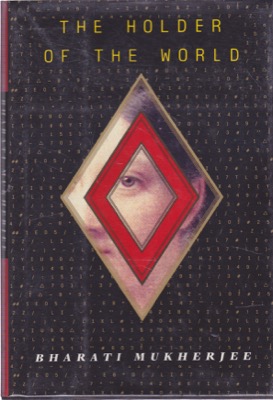
Hardcover. NY, Alfred A Knopf, 1st, 1995, Book: Very Good, Dust Jacket: Very Good, Hardcover in a bright, unclipped dust jacket. The tale of a 17th-Century American girl who ends up an emperor's mistress in India. Hannah Easton, born in 1670 in the forests of Massachusetts, at age 15 moves to Salem with adoptive parents after her father dies of a bee sting and her mother - during the French and Indian War-runs off with a lover from the Nipmuc tribe. Having witnessed scalpings and worse, and harboring the terrible secret of her mother's having gone over to the ``barbarians,'' Hannah is a deeper well than most young girls, suffering trance-like illnesses but also excelling at needlework - including the surgical variety, learned in the war. Her oddnesses, though, are no impediment to marriage with the dashing adventurer Gabriel Legge, who takes her first to England, then to India, where Gabriel joins the East India Company before going independent as a pirate - a calling that will bring him fame and wealth, but also, at last, death. Clean copy.
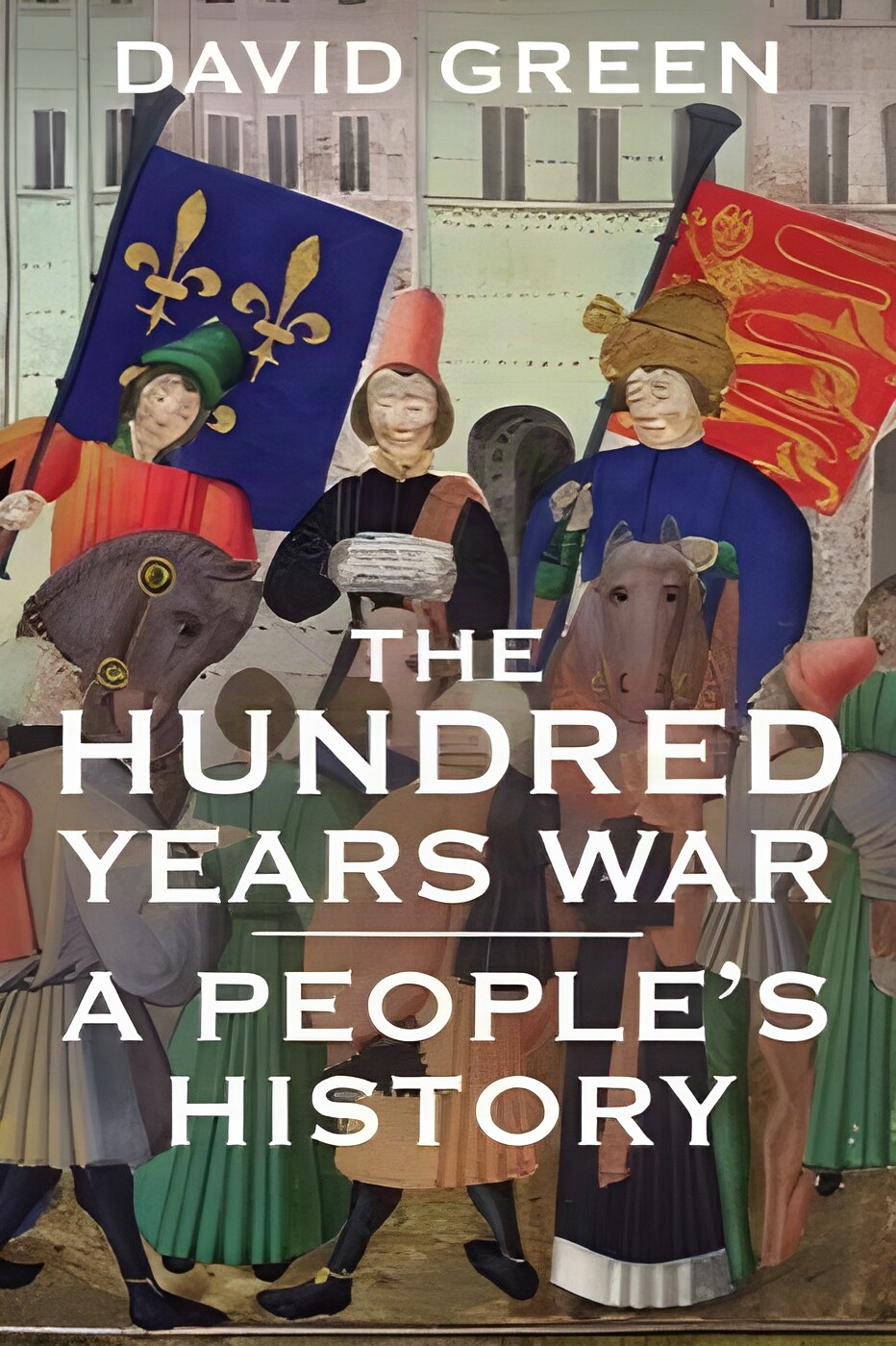
Softcover. New Haven CT, Yale University Press, 1st, 2014, Book: Very Good, Dust Jacket: Very Good, Softcover, 339 pages, b&w illustrations. The Hundred Years War (1337-1453) dominated life in England and France for well over a century. It became the defining feature of existence for generations. This sweeping book is the first to tell the human story of the longest military conflict in history. Historian David Green focuses on the ways the war affected different groups, among them knights, clerics, women, peasants, soldiers, peacemakers, and kings. He also explores how the long war altered governance in England and France and reshaped peoples' perceptions of themselves and of their national character. Clean copy.


 "Peter and the Wanderlustby: Ursula Moray Williams")

 "Polish Logic 1920-1939: Papers by Ajdukiewicz, Chwistek, Jaskowski, Jordan, Lesniewski, Lukasiewicz, Slupecki, Sobocinski, and Wajsbergby: McCall, Storrs (Editor), Ta")

 "Porcelain of the Nineteenth Centuryby: Fay-Halle, Antoinette and Barbara Mundt")
 "Prairie Anchorageby: Medary, Marjorie")
 "Princess Elizabeth And Princess Margaret Rose At Homeby: Sheridan, Lisa")


 "Punch, Or the London Charivari. Volumes 150 & 151 (2 Vols.)by: N/A")


 "Raries, Theby: Talbot, John")
 "Rhythms of Modern Life: British Prints, 1914-1939by: Clifford Ackley (Editor), Stephen Coppel/Thomas Rassieur / Samantha Rippner")


 "Spirit of New England (Architectural Treasures of Early America, Vol. 16) by: Mullins, Lisa C. (editor)")
 "Story of Britain, Theby: Unstead, R.J., Victor Ambrus (Illustrator)")


 "The Art of Bloomsburyby: Shone, Richard")
 "The Blind African Slave: Or Memoirs of Boyrereau Brinch, Nicknamed Jeffrey Brace by: Jeffrey Brace; Editor Kari J. Winter; Contributor Benjamin F. Prentiss")






![The History of the Rebellion and Civil Wars in England Begun in the Year 1641. In Six Volumes. by: Hyde, Edward [Earl of Clarendon]; Macray, W. Dunn [ed.]](https://www.browsingisarousing.com/shop/images/The-History-of-the-Rebellion-and-Civil-Wars-in-England-Begun-in-the-Year-1641.-In-Six-Volumes._by_Hy386321-438274.jpg "The History of the Rebellion and Civil Wars in England Begun in the Year 1641. In Six Volumes. by: Hyde, Edward [Earl of Clarendon]; Macray, W. Dunn [ed.]")