Hardcover. Princeton NJ, Princeton University Press, 1st, 1995, Book: Very Good, Dust Jacket: Very Good, Hardcover in a bright dust jacket, 173 pages. Blandine Kriegel, at one time a collaborator with Michel Foucault, is one of France's foremost political theorists. This translation of her celebrated work L'Etat et les esclaves makes available for English-speaking readers her impassioned defense of the state. Published in France in 1979 and republished in 1989, this work challenged not only the anti-statism of the 1960s but also generations of romanticism in politics that, in Kriegel's view, inadvertently threatened the cause of liberty by refusing to distinguish between the despotic and the lawful state. In a work that addresses the urgent concerns of Europe and the contemporary world as a whole, Kriegel examines the background of modern liberal democracy in the late seventeenth and eighteenth centuries and argues cogently for the future of constitutional social-democracy. Clean copy.
Hardcover. Vermont Heritage Press, Revised Ed., 1997, Book: Very Good, Dust Jacket: Good, Hardcover in a rubbed, edgeworn dust jacket. Pictorial end papers. B&w illustrations throughout. Intact foldout of "Shelburne Shipyard in Winter" in winter circa 1920. This new edition adds essays by Arthur B. Cohn, director of the Lake Champlain Maritime Museum, on Lake Champlain steamboats and ferries and recent developments in Champlain Valley Maritime archaeology. Clean copy.
Hardcover. NY, The Century Company, reprint, 1904, Book: Very Good, Dust Jacket: None, Hardcover, blue cloth with gilt lettering on leather spine label, 332 pages, b&w frontis portrait of Roosevelt. Bookplate on inside front cover, otherwise a clean, bright copy.
Hardcover. Albuquerque NM, University of New Mexico Press, 1st, 1989, Book: Very Good, Dust Jacket: Very Good, Hardcover in a bright dust jacket, 217 pages. Includes essays on William Everson, Robert Duncan, Gary Snyder, Kenneth Rexroth, Michael McClure, Nathaniel Tarn, Thom Gunn and more. Notes, bibliography. Clean copy.
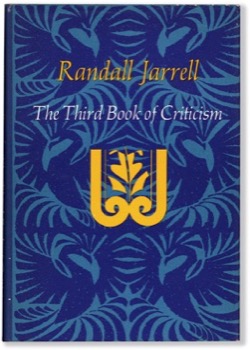
Hardcover. NY, Farrar, Straus, and Giroux, 1st, 1969, Book: Very Good, Dust Jacket: Very Good, Hardcover in a bright dust jacket with minor edgewear, unclipped, 334 pages. Poet/critic's posthumously published third volume of essays, here mostly writer's he loved, including: Stead, Frost, Stevens, Kipling, Auden, Graves and Chekov and other Russians. Name on blank prelim page, otherwise clean.
Hardcover. NY, Alfred A. Knopf, 1st, 1969, Book: Very Good, Dust Jacket: Very Good, Hardcover in a lightly worn dust jacket, unclipped. A collection of essays and articles relating to the "new theatre," the Third Theatre off-off Broadway, and the Living Theatre as it displayed itself on its recent American tour. Also includes non-theatre essays - on the Madison Avenue Villain; on horror movies; a memoir, and an assortment of literary reviews and speculations. 294 pages, clean copy.
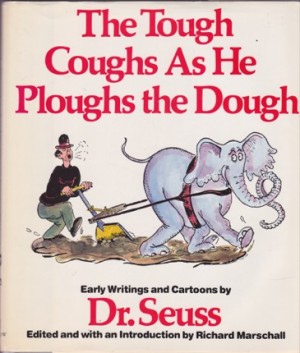
Hardcover. NY, William Morrow & Co, 1st, 1987, Book: Very Good, Dust Jacket: Very Good, Hardcover in a lightly worn, price clipped dust jacket with a short closed tear to rear panel. Writer and cartoonist Ted Geisel was a successful illustrator for humor magazines before he became children's book author Dr. Seuss. In 1925, he had graduated from Dartmouth College in New Hampshire, then developed comic masterpieces for a dozen years. The contents herein were drawn from those collections. Collected are essays of surrealism and literary nonsense including confessions on spying on General Grant during the Civil War; Cartoon essays supported by art creatures: Piscozooavistical Studies of Boids and Beasties; 17 full-page cartoon fantasies; Cartoon advertisements for Flit insecticide.
Hardcover. Edinburgh, William P. Nimmo & Co, reprint, 1881, Book: Very Good, Dust Jacket: None, Hardcover, original gilt-blocked half buckram over sandgrain cloth, 544 pages with index. Top edge gilt. Clean copy.
Softcover. Chicago, University Of Chicago Press, reprint, 1994, Book: Very Good, Dust Jacket: None, Softcover, 386 pages, b&w illustrations. The four essays in this volume constitute Derrida's most explicit and sustained reflection on the art work as pictorial artifact, a reflection partly by way of philosophical aesthetics (Kant, Heidegger), partly by way of a commentary on art works and art scholarship (Van Gogh, Adami, Titus-Carmel). The illustrations are excellent, and the translators, who clearly see their work as both a rendering and a transformation, add yet another dimension to this richly layered composition. Indispensable to collections emphasizing art criticism and aesthetics.
Hardcover. NY, Norton, 1st, 1982, Book: Very Good, Dust Jacket: Very Good, Hardcover in a bright, unclipped dust jacket, 192 pages. Through the distillation of a lifetime of experiences, John Hay describes in The Undiscovered Country his quiet, profound search for our place in the natural world. In considering snails, alewives, terns, woodland moths, and other forms of natural life, Hay shares with his readers a discovery that few have experienced and no one has written about so eloquently. Clean copy.
Hardcover. NY, William Morrow, 1st, 2016, Book: Very Good, Dust Jacket: Very Good, Hardcover in a bright, unclipped dustjacket. An enthralling collection of nonfiction essays on a myriad of topics--from art and artists to dreams, myths, and memories--observed in #1 New York Times bestselling author Neil Gaiman's probing, amusing, and distinctive style. An inquisitive observer, thoughtful commentator, and assiduous craftsman, Neil Gaiman has long been celebrated for the sharp intellect and startling imagination that informs his bestselling fiction. Now, The View from the Cheap Seats brings together for the first time ever more than sixty pieces of his outstanding nonfiction. Analytical yet playful, erudite yet accessible, this cornucopia explores a broad range of interests and topics, including (but not limited to): authors past and present; music; storytelling; comics; bookshops; travel; fairy tales; America; inspiration; libraries; ghosts; and the title piece, at turns touching and self-deprecating, which recounts the author's experiences at the 2010 Academy Awards in Hollywood.
Hardcover. London, Jonathan Cape, 1st, 1930, Book: Very Good, Dust Jacket: None, Hardcover. Limited to 504 signed copies, this being no 265. Bound in original publishers quarter vellum, with green cloth boards, vellum dusty, cloth faded. An anthology of the author's writings from 1921 to 1930. The work concerns the history of an unnamed fictional village, and is divided into alternating chapters with different headings. Vellum-backed cloth, lettered in gold at the spine and with Williamson's familiar owl logo gold-stamped to the upper board. With a portrait frontispiece and two brief sketches by the author. Top edge gilt, others untrimmed. Some uneven fading to the cloth and a little darkening to the vellum backstrip, as is common with this production.
Hardcover. NY, New Directions Books, 1st, 1941, Book: Good, Dust Jacket: None, Hardcover, red cloth with black title on spine. Collected stories and essays "not for readers who hate to think," Mild shelf wear, clean.
Hardcover. Washington DC, National Gallery of Art , 1st, 2020, Book: Very Good, Dust Jacket: None, Hardcover, pictorial boards with blue cloth spine. In 1860 James McNeill Whistler and Joanna Hiffernan met and began a significant professional and personal relationship. Hiffernan posed as a model for many of Whistlers works, including his controversial Symphony in White paintings, a trilogy that fascinated and challenged viewers with its complex associations with sex and morality, class and fashion, academic and realist art, Victorian popular fiction, aestheticism and spiritualism. This luxuriously illustrated volume provides the first comprehensive account of Hiffernan's partnership with Whistler throughout the 1860s and 1870s a period when Whistler was forging a reputation as one of the most innovative and influential artists of his generation. A series of essays discusses how Hiffernan and Whistler overturned artistic conventions and sheds light on their interactions with contemporaries, including Gustave Courbet, for whom she also modeled. Clean, bright copy.
NY, Nation Books, 1st US, 2011, Book: Very Good, Dust Jacket: Very Good, Hardcover in a bright, unclipped dust jacket. A collection of Hedges essays originally published by Truthdig, the Webby award-winning progressive news website. Hedges lyrically and fearlessly dissects the most controversial issues of the day: America's wars of self-destruction in Iraq and Afghanistan, the decay of American empire (at home and abroad), Israel's ghettoization of Palestinians in the West Bank and Gaza, and the failure of American liberalism. Clean copy.
Softcover. London, Tate Publishing, 1st UK, 2015, Book: Very Good, Dust Jacket: None, Softcover. VG+. Red and color pictorial wraps, French flaps, 272 pages., many color and BW illus. Issued in conjunction with a 2015-2016 exhibition of pop art from a variety of international artists and sources. With eight thematic and illustrated essays. The illustrated catalogue presents 162 specific pieces.
Softcover. London/NY, Routledge, reprint, 2001, Book: Very Good, Dust Jacket: None, Softcover, 328 pages. This unique collection of essays, published together for the first time, not only elucidates the complexity of ancient Greek thought, but also reveals Karl Popper's engagement with Presocratic philosophy and the enlightenment he experienced in his reading of Parmenides. As Karl Popper himself states himself in his introduction, he was inspired to write about Presocratic philosophy for two reasons - firstly to illustrate the thesis that all history is the history of problem situations and secondly, to show the greatness of the early Greek philosophers, who gave Europe its philosophy, its science and its humanism. Light pencil marking to 8 pages.
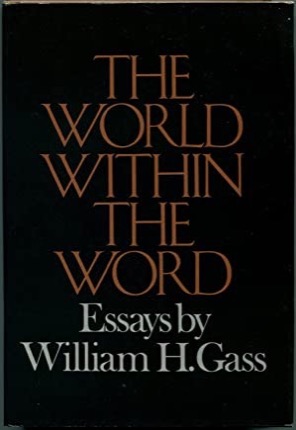
Hardcover. NY, Knopf, 1st, 1978, Book: Very Good, Dust Jacket: Very Good, Hardcover in a bright, unclipped dust jacket, 341 pages. This is the first collection of essays in seven years by the author of Omensetter's Luck, In the Heart of the Heart of the Country, and Fiction and the Figures of Life. In it, one of America's most brilliant and eclectic minds examines literature, culture, writers (their lives and works), and the nature and uses of language and the written word. Clean copy.
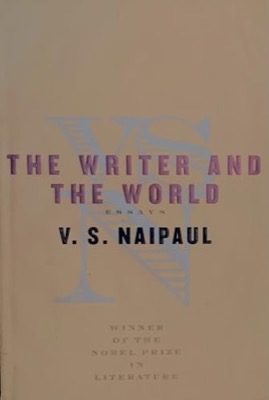
Hardcover. NY, Knopf , 1st, 2002, Book: Very Good, Dust Jacket: Very Good, Hardcover in a bright, unclipped dust jacket, 524 pages. The finest shorter pieces of reflection and reportage by V.S. Naipaul - nearly all of them heretofore out of print - are collected in one volume spanning some forty years of travel and sustained meditations on our world. Clean copy.
Hardcover. Hartford CT, Edwin Hunt, 1st, 1847, Book: Very Good, Dust Jacket: None, Hardcover, 213 pages. 7.75 x 4.75", blind & gold stamped brown cloth. A collection of sermons: Elements of Power: spirit of enterprise, enthusiasm, courage, readiness to receive & propagate new truths; Sources of Danger: trifling pursuits, unworthy associates, improper pleasures & amusements, ball-room, intemperance, theatre, improper reading; Pleasure & the Judgment; Demands of Age: reforms, slavery, war, temperance; spurious reforms, capital punishment. Some light foxing, minor wear to covers, clean.
Softcover. NY, Oxford University Press, 1st, 2015, Book: Very Good, Dust Jacket: None, Softcover, 360 pages. Ex nihilo nihil fit. Philosophy, especially great philosophy, does not appear out of the blue. In the current volume, a team of top scholars-both up-and-coming and established-attempts to trace the philosophical development of one of the greatest philosophers of all time. Featuring twenty new essays and an introduction, it is the first attempt of its kind in English and its appearance coincides with the recent surge of interest in Spinoza in Anglo-American philosophy. Spinoza's fame-or notoriety-is due primarily to his posthumously published magnum opus, the Ethics, and, to a lesser extent, to the 1670 Theological-Political Treatise. Few readers take the time to study his early works carefully. If they do, they are likely to encounter some surprising claims, which often diverge from, or even utterly contradict, the doctrines of the Ethics. Consider just a few of these assertions: that God acts from absolute freedom of will, that God is a whole, that there are no modes in God, that extension is divisible and hence cannot be an attribute of God, and that the intellectual and corporeal substances are modes in relation to God. Yet, though these claims reveal some tension between the early works and the Ethics, there is also a clear continuity between them. Name, date on front fly leaf, otherwise clean.
Softcover. Oxford UK, Blackwell, 1st, 1999, Book: Very Good, Dust Jacket: None, Softcover, 332 pages. The Zizek Reader - which includes a Foreword by Zizek and a new, previously unpublished essay on cyberspace - provides a comprehensive and accessible introduction to the flamboyant work of a figure who has been variously described as 'one of the most arresting, insightful and scandalous thinkers in recent memory' and 'the Giant of Ljubljana'. His work is an extraordinary mix of Hegel and Hitchcock, Schelling and science fiction, Kant and courtly love, Stalin and Stephen King, all of which is strongly seasoned with Lacanian psychoanalysis. Divided into three parts - Culture, Woman and Philosophy - the Reader not only provides careful explications of the individual extracts within each section but also connects these extracts in a general introduction, mapping the shiftings of Zizek's thought within the Lacanian framework. The essays on woman offer feminism ammunition from unexpected sources, within a reading of Lacan that goes counter to his ambiguous reception by feminists. In fact, at this collection dazzlingly demonstrates, Zizek provides us with one of the most limpid and persuasive readings so far produced of Lacan's difficult thought. Name on inside of front cover, otherwise clean.
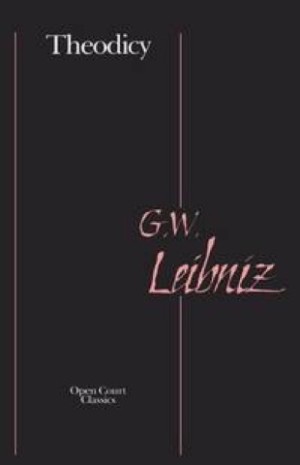
Softcover. La Salle IL, Open Court, reprint, 1990, Book: Very Good, Dust Jacket: None, Softcover, 448 pages. In this 1710 treatise, Gottfried Liebniz's only book-length work, he applies the idea of philosophical 'optimism'- that we live in the best of all possible worlds-to the 'problem of evil'- If a benevolent God exists, why do terrible things happen? He explores the possibility that humanity's happiness is not necessarily part of God's plan.Much of Leibniz's thinking in the realm of the sciences flowed from his philosophy-he believed the universe to operate under simple, intelligible, interconnected rules. Understanding how he approached the metaphysical world and humanity's place in it is vital to understanding his contributions to modern science. The impact of the work of this German mathematician (1646-1716) on modern science and technology is all but incalculable. His notation for infinitesimal calculus-which he developed independently of Newton-remains in use today, and his invention of binary counting is the basis for modern computing. He was a powerfully influential philosopher as well, and is still considered, alongside Descartes and Spinoza, one of the great 17th-century rationalists.






 "The Sun Is But a Morning Star: Studies in West Coast Poetry and Poeticsby: Lee Bartlett")

 "The Treasury of British Eloquence: Specimens of Brilliant Orations By the Most Eminent Statesmen, Divines, Etc., of Great Britain of the Last Four Centuriesby: Cochra")
 "The Truth in Painting by: Derrida, Jacques")
 "The Undiscovered Country by: Hay, John")
 "The View from the Cheap Seats: Selected Nonfiction by: Gaiman, Neil")



 "The Wisdom Of The Heart by: Henry Miller")

 "The World As It Is: Dispatches on the Myth of Human Progress by: Chris Hedges")
![The World Goes Pop: The Ey Exhibitionby: Morgan, Jessica [ed.] & Frigeri, Flavia [ed.]](javascript:largeIMTop('https://www.browsingisarousing.com/shop/images/The-World-Goes-Pop-The-Ey-Exhibition_by_Morgan-Jessica-ed.-Frigeri-Flavia-ed.353189-395177.jpg','https://www.browsingisarousing.com/shop/images/The-World-Goes-Pop-The-Ey-Exhibition_by_Morgan-Jessica-ed.-Frigeri-Flavia-ed.353189-395177.jpg',0,'353189',0,'') "The World Goes Pop: The Ey Exhibitionby: Morgan, Jessica [ed.] & Frigeri, Flavia [ed.]")

 "The YOUNG MAN: or Lectures for the Times, Delivered in the Fourth Congregational Church, Hartford, Ct.by: Patton, William W.")