Hardcover. Vilnius, Baltos Lankos, 1st, 1995, Book: Very Good, Dust Jacket: Very Good, 69 duotone plates, images taken by the Lithuanian photographer Jozef Chechowicz (1819-1888). Mostly landscapes of the city and it's buildings, some with people. Beautifully produced volume, limited to 2000 copies. Light edgewear to dust jacket.
Hardcover. Amsterdam, Schetern & Giltay, 1st, 1915, Book: Very Good, Dust Jacket: None, Hardcover, color illustrated boards, 190 pages. A collection of b&w (a few 2-color) political cartoons preceding WW I. Dutch text. Scarce.
Hardcover. Amsterdam, Uitgeverij Van Oorschot , 1st, 2017, Book: Very Good, Dust Jacket: Very Good, Hardcover, 1060 pages, DUTCH LANGUAGE. Bright copy in a similar dust jacket. Clean.
Hardcover. Leiden/NY, E.J. Brill, 1st, 1996, Book: Very Good, Dust Jacket: Very Good, Hardcover in a bright dust jacket, 376 pages. This volume consists of 21 papers delivered at an international Spinoza conference on Disguised and Overt Spinozism around 1700, held at the Erasmus University (Rotterdam) in October 1994. In these papers, scholars from Italy, France, Germany, Great Britain, the Netherlands and the United States examine the impact of Spinoza's philosophy on the European Republic of Letters, one generation after the death, in 1677, of the greatest philosopher in the history of the Netherlands. Clean copy.
Hardcover. Taschen, 1st, 2008, Book: Very Good, Dust Jacket: Very Good, Hardcover, 580 pages. 1940-1949: Destruction and Reconstruction. This volume covers the 1940s, when fascism came to a climax and World War II led to the extensive destruction of Europe. But the second half of this decade was also a time of reconstruction, democratization, and the related search for new social values. Unlike in Nazi Germany, in fascist Italy Modernism was able to advance in architecture and design - as proved impressively by the buildings and designs by Carlo Mollino, Gian Luigi Banfi, Franco Albini, and Giuseppe Terragni that are documented herein. After the war, Organic Design emerged alongside the International style. This edition reflects upon the economic, social, and cultural problems of the time, but also shows how the force of the avant-garde continued to thrive in Italy, Switzerland, Scandinavia and the USA. Reports and features on modern industrial design and furniture, as well as domestic and business interiors stand side by side with articles about novel prefabricated houses. In publisher's shrink wrap. Due to size and weight, DOMESTIC SHIPPING ONLY.
Hardcover. London, B. T. Batsford, 1st, 1984, Book: Very Good, Dust Jacket: Very Good, Hardcover in a bright, unclipped dust jacket. Many b&w plates, some color, 216 pages. In this beautiful book, Aileen Ribeiro surveys the clothing worn by the middle and upper classes throughout Europe in the eighteenth century and discusses what this meant in terms of social definition and identity. Ribeiro, one of the world's premier historians of dress, also looks at such subjects as developments in retailing and distribution, etiquette, the rise of the dress designer and couturier, the evolution of ready-made clothes, fancy dress and the masquerade. Clean copy.
Hardcover. Princeton NJ, Princeton University Press, 1st, 1994, Book: Very Good, Dust Jacket: Very Good, Hardcover in a bright dust jacket, 268 pages. The question of what it takes "to be a man" comes under scrutiny in this sharp, often playful, cultural critique of the German duel--the deadliest type of one-on-one combat in fin-de-siecle Europe. At a time when dueling was generally restricted to swords or had been abolished altogether in other nations, the custom of fighting to the death with pistols flourished among Germany's upper-class males, who took perverse comfort in defying their country's weakly enforced laws. From initial provocation to final death agony, Kevin McAleer describes with ironic humor the complex protocol of the German duel, inviting his reader into the disturbing mindset of its practitioners and the society that valued this socially important but ultimately absurd pastime. Clean copy.
Hardcover. New York, Praeger, 1st, 1967, Book: Very Good, Dust Jacket: Good, 117 pages of text followed by black & white plates. Minor age darkening along top edge. Dust jacket worn along edges - now protected with clear plastic cover. Clean, tight copy.
Hardcover. Tucson AZ, University of Arizona Press, 1st, 1987, Book: Very Good, Dust Jacket: Very Good, Hardcover in a bright dust jacket, 339 pages, b&w illustrations. A study of the people and customs of Tonga, based on the ethnographic observations of European visitors before the period of intensive Christian missionary activity. Clean copy.
Hardcover. New York, Alfred A. Knopf, 1st Edition, 2023, Book: Near Fine, Dust Jacket: Near Fine, 695 pages. Hardcover. Decorated endpapers. Color and b/w illustrations throughout, including maps. Pages clean and bright. Spine straight. Binding tight. Dust jacket unclipped, excellent condition. Yellow cover boards, green quarter cloth, gilt title on spine.
Hardcover. Florence, Flor & Findel, 3rd, 1907, Book: Good, Dust Jacket: None, 254 pages. Tipped in illustrations and photographs. Age discoloration to pages, beveled brown leather over covers with three bands on spine continued on front and back cover ending in flor de lis decoration. Rubbing all edges. front and rear hinge cracked.
Hardcover. New Haven CT, Yale University Press, 1st, 2019, Book: Very Good, Dust Jacket: None, Hardcover, pictorial boards, 232 pages. The question "What is American art?" might conjure the hyperrealism of Raphaelle Peale and William Harnett, the bold graphic style of Stuart Davis and Jacob Lawrence, or the Precisionist forms of Charles Sheeler. Little known, however, is that such notions of American art are significantly owed to a Russian Jewish immigrant named Edith Halpert. The founder of the Downtown Gallery in New York, Halpert shaped an identity for American art, declaring that its thrilling heterogeneity and democratic values were what most distinguished it from the European avant-garde. For forty-plus years, Halpert's gallery brought recognition and market success to now-legendary American artists--among them Arthur Dove, Marsden Hartley, and Georgia O'Keeffe, in addition to the artists mentioned above. She relentlessly championed nonwhite, female, and unknown artists and was a formative advisor in the shaping of many of the nation's most celebrated art museums and collections, from San Francisco to Boston. Not content with those achievements, she also pioneered the appreciation and collecting of American folk art. Richly illustrated with works that passed through her groundbreaking gallery, this book tells the extraordinary and largely overlooked story of her career and legacy. The artists Halpert launched into the American canon are household names--and this book compellingly argues that hers should be, as well. In publisher's shrinkwrap.
Softcover. UK, Cambridge University Press, 1st pbk., 1984, Book: Very Good, Dust Jacket: None, Softcover, 300 pages. This account of Egyptian society in the reign of Muhammad Ali traces the beginnings of the nation state in Egypt. It considers Muhammad Ali as part of a social group whose economic interests led them in the direction of trade with Europe as a means of raising money for further investments. They attempted to increase agricultural exports and to use the profits to create industry; then, following the logic of imperialists, their next step was to seek to conquer the surrounding areas to find markets for their industries and sources of raw materials. These policies brought them into conflict with their suzerain, the Ottoman sultan, and with England, since England needed markets in the Middle East. England sought to destroy the new regime in Egypt as a means of exerting influence on the region. In carrying out these economic changes, the country underwent a series of internal developments that were to revolutionize the structure and shape of Egyptian society. The rules of landownership were altered and large estates were formed, Egyptian fallahin were drafted into the army, and the administration was Egyptianized, establishing the groundwork for a nation state. Small embossed stamp on title page, otherwise clean.
Hardcover. University of Pittsburgh Press, 1st , 1984, Book: Very Good, Dust Jacket: None, Hardcover, yellow cloth with gilt stamping, 283 pages. Between 1805 and 1879, Egypt evolved into a modern state with a Western-style military force and a central bureaucracy headed by an elite corps of European-trained officials. Viceroy Muhammad Ali and his successors used this new state apparatus to augment their autocratic power and to profit as intermediaries between Egypt and the capitalist West. This study is invaluable for it's unique and exhaustive research into the structure and foundations of the ruling elite and the process by which modern bureaucracy was built up in Egypt. It also highlights the dangers of rapidly developing a country's material infrastructure using massive outside assistance without adjusting for the destabilizing social changes that are the inevitable result. Clean copy.
Hardcover. New Haven CT, Yale University Press, 1st, 2006, Book: Very Good, Dust Jacket: Very Good, Hardcover in a bright dust jacket, 546 pages. This epic history compares the empires built by Spain and Britain in the Americas, from Columbus's arrival in the New World to the end of Spanish colonial rule in the early nineteenth century. J. H. Elliott, one of the most distinguished and versatile historians working today, offers us history on a grand scale, contrasting the worlds built by Britain and by Spain on the ruins of the civilizations they encountered and destroyed in North and South America. Elliott identifies and explains both the similarities and differences in the two empires, processes of colonization, the character of their colonial societies, their distinctive styles of imperial government, and the independence movements mounted against them. Based on wide reading in the history of the two great Atlantic civilizations, the book sets the Spanish and British colonial empires in the context of their own times and offers us insights into aspects of this dual history that still influence the Americas. Color illustrations. Clean copy.
Hardcover. Seattle, WA, University of Washington Press, 1st, 2016, Book: Very Good, Dust Jacket: None, 224 pages. Hardcover with no dust jacket. A very clean, unmarked copy with only minor edgewear. A tight copy. Contemporary portraits of key personalities aboard the ship, scale models and plans of the ship itself, scientific instruments taken on the voyage, commemorative medals and sketches, the objects (over 140) featured in this book tell the story of the Endeavour voyage and its impact ahead of the 250th anniversary in 2018 of the launch of this seminal mission. Artwork made both during and after the voyage will be seen alongside actual specimens. By comparing the voyage originals with the often stylized engravings later produced in London for the official account, Endeavouring Banks investigates how knowledge gained on the mission was gathered, revised, and later received in Europe. Items that had been separated in some cases for more than two centuries are brought together to reveal their fascinating history not only during but since that mission. Original voyage specimens are featured together with illustrations and descriptions of them, showing a rich diversity of newly discovered species and how Banks organized this material, planning but ultimately failing to publish it. In fact, many of the objects in the book have never been published before.
Softcover. Princeton, NJ, Markus Weiner Publishers, 1st English Translation, 2001, Book: Very Good, Dust Jacket: None, 327 pages. Softcover. B/w illustrations throughout. Decorated wrapper, excellent. Pages clean and bright. Binding good. Like new copy. This fascinating study of eunuchs guides readers as they travel through various lands and periods, familiarizing themselves with the duties and responsibilities, the unspeakable torments, and the passions and joys of these individuals.
Softcover. Cambridge MA, Harvard University Press, reprint, 1985, Book: Very Good, Dust Jacket: None, Softcover, 291 pages with index. A social history of Europe in all its aspects: economic, political, diplomatic military, colonial-expansionist. Crisply and succinctly written, it describes Europe not through a history of individual countries, but in a common context during the three quarters of a century between the death of Louis XIV and the industrial revolution in England and the social and political revolution in France. It presents the development of government, institutions, cities, economies, wars, and the circulation of ideas in terms of social pressures and needs, and stresses growth, interrelationships, and conflict of social classes as agents of historical change, paying particular attention to the role of popular, as well as upper- and middle-class, protest as a factor in that change. Clean, bright copy.
Hardcover. Chicago, Quadrangle Books, 1st, 1972, Book: Very Good, Dust Jacket: Good, Hardcover in a rubbed, worn dust jacket, 277 pages. Name on front fly leaf, otherwise clean.
Hardcover. NY, Random House, 1st, 1969, Book: Very Good, Dust Jacket: Very Good, Hardcover in a lightly worn dust jacket, 387 pages. These essays originated in a series of lectures and seminars held by the Graduate School of Contemporary European Studies and the Centre for the Advanced Study of Italian Society of the University of Reading in 1966-1967. The countries covered include Italy, Germany, Austria, Hungary, Rumania, Poland, Finland, Norway, Great Britain, France, Spain, and Portugal. Name on front fly leaf otherwise clean.
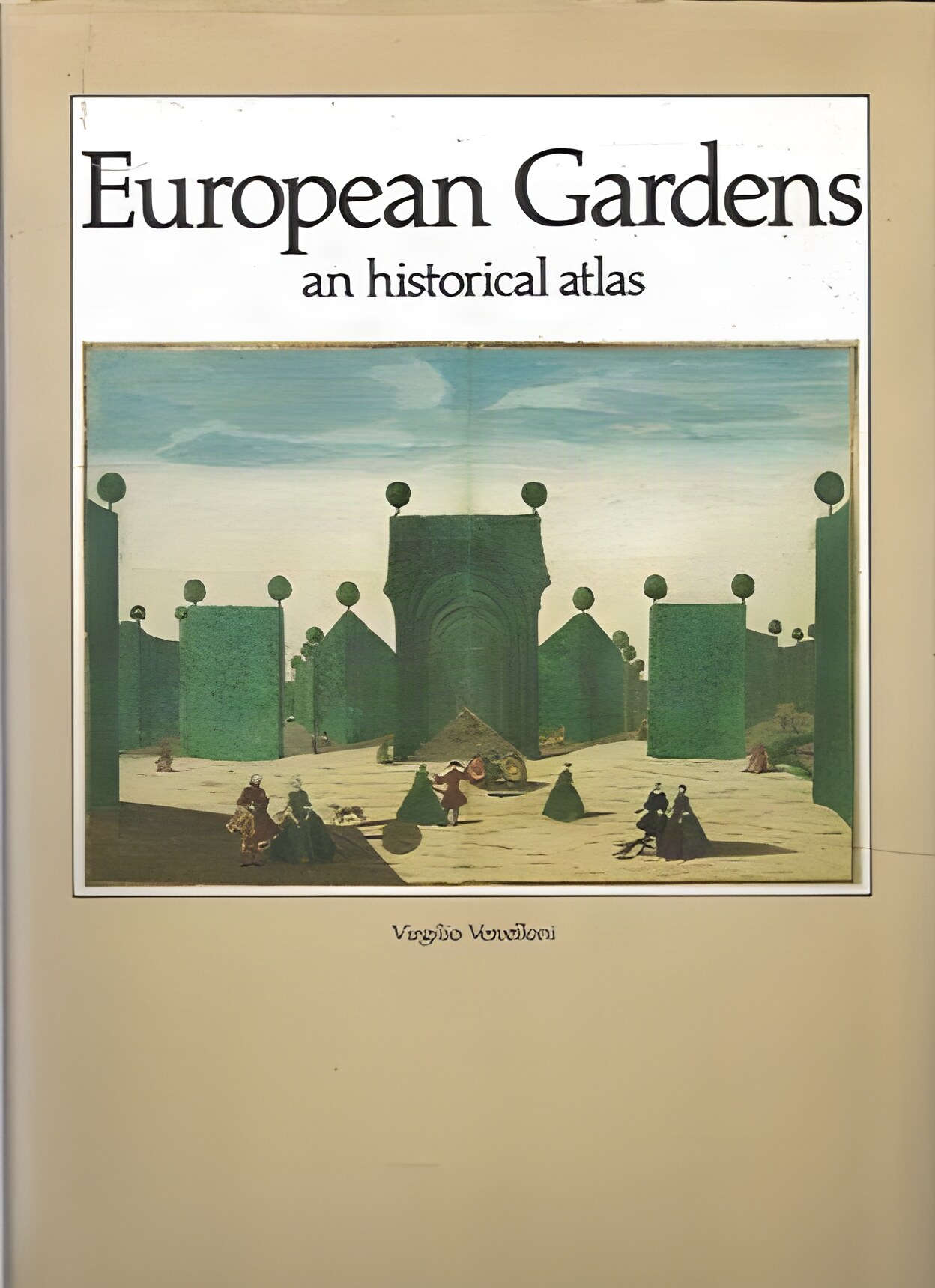
Hardcover. NY, Rizzoli, 1st US, 1990, Book: Very Good, Dust Jacket: Very Good, Hardcover in a bright dust jacket, 207 pages. Entertainingly idiosyncratic in its selection of material, this historical compendium of facts and fascinating lore takes off on a visual romp through the history of gardens. Rather than adhere to a conventional narrative format, Vercelloni--an Italian architect, city planner and landscape gardener--arranges his material as though it were a slide show, devoting each page to an image and accompanying text. Beginning with the "landscape" of the Ice Ages, forging ahead to the Renaissance and finally reaching contemporary times, the author presents a captivating grab-bag of information, covering such topics as the significance of flowers in Renaissance painting, the reasoning behind the 17th-century craze for tulips and the role of contemporary urban parks in society. With its strong visual orientation and pungent text, Vercelloni's "historical atlas" looks deftly and light-heartedly at humanity's ongoing love of gardens. Clean copy.
Hardcover. Boston, Charles C. Little and James Brown, 1st, 1849, Book: Very Good, Dust Jacket: None, Hardcover, embossed brown cloth covers with gilt lettering on spine. How respectable members of society communicated by letter with examples of mannered correspndence of the mid-19th century. Clean copy.
Softcover. London, V & A Publications, 1st pbk, 1996, Book: Very Good, Dust Jacket: None, Softcover, 191 pages. Containing over 100 masterpieces from a major collection, this volume traces the history of European sculpture, from the early-Christian period through to the beginning of the 20th century. Highlights include the medieval ivories, works by many of the Italian Renaissance masters, English 18th-century pieces, such as Roubillac's statue of Handel and sculptures by Rodin. Clean, bright copy.


 "De Oorlog In Prent / Karikaturen Uit De Versehillende Landenby: Feith, Jan")
 "De Wereld Waar ik Buiten Sta: Oorlogsdagboek 1940-1945 (Dutch Edition)by: Michaelis, Hanny")
 "Disguised and Overt Spinozism around 1700: Papers presented at the international colloquium held at Rotterdam 5-8 October 1994by: Bunge, Wiep van & Wim Klever (Ed.)")

 "Dress in Eighteenth Century Europe 1715-1789by: Ribeiro, Aileen")

 "Early Tonga As the Explorers Saw It, 1616-1810by: Ferdon, Edwin N.")


 "Echoes of Old Florence: Her Palaces and those who have lived in themby: Leader, Scott")
 "Edith Halpert: The Downtown Gallery and the Rose of American Artby: Shaykin, Rebecca")

 "Egypt Under the Khedives 1805-1879by: F. Robert Hunter")

 "Endeavouring Banks: Exploring Collections from the Endeavour Voyage 1768-1771by: Chambers, Neil")
 "Eunuchs and Castrati: A Cultural Historyby: Scholz, Piotr O.")


 "Europe in the Sixteenth Centuryby: Koenigsberger, H. G. and George L. Mosse")


 "European Life And Manners; In Familiar Letters To Friends Vol. 1 Only by: Colman, Henry")
 "European Sculpture at the Victoria and Albert Museumby: Williamson, Paul")