Hardcover. Rockport MA, Protean Pree, 1st, 2008, Book: Very Good, Dust Jacket: Very Good, Hardcover in a bright, unclipped dust jacket, b&w illustrations. In 1943, the author was on track to become a doctor like his parents when he flunked organic chemistry at Harvard and enlisted in the army, finding himself heading off to fight in Europe with the 45th Infantry Division (in which famed editorial cartoonist Bill Mauldin also served). Garland chronicles the division's journey from the landing at Sicily through the liberation of Dachau and then, some 60 years later, also seeks to come to terms with his experiences and those of his comrades. Part personal and collective memoir and part history, Garland's book is loaded with recollections compiled from interviews, diaries, drawings, and photographs that he neatly fits into the historical framework. His writing is highly engaging and shares the story of the 45th and its 511 days in combat and four amphibious landings, providing an excellent narrative history of the division during World War II, as well as a personal reckoning.
Softcover. Paris, ACAER/GPC, 1st, 1994, Book: Very Good, Dust Jacket: None, 68 pages. Softcover. Exhibition catalog. French and English text. Black & white photographs. From the introduction: "This catalogue has been re-edited by advanced reading copy wraps en reve architecture centre with the Georges Pompidou Centre, for the presentation in France of the exhibition "Warchitecture-Sarajevo, a wounded city". The exhibition and the catalogue were prepared by the architects of the Sarajevo association, members of the associations of Architects of Bosnia-Herzegovina DAS-SABIH". Light rubbing to cover edges, minor creases at corners. Clean, unmarked text.
Hardcover. London, Allen Lane, 1st, 2011, Book: Very Good, Dust Jacket: Very Good, Hardcover in a bright dust jacket, 830 pages. Europe's history is littered with kingdoms, duchies, empires and republics which have now disappeared but which were once fixtures on the map of their age - 'the Empire of Aragon' which once dominated the western Mediterranean; the Grand Duchy of Lithuania, for a time the largest country in Europe; the successive kingdoms (and one duchy) of Burgundy, much of whose history is now half-remembered - or half-forgotten - at best. This book shows the reader how to peer through the cracks of mainstream history writing and listen to the echoes of lost realms across the centuries. Illustrated in color and b&w. Clean copy.
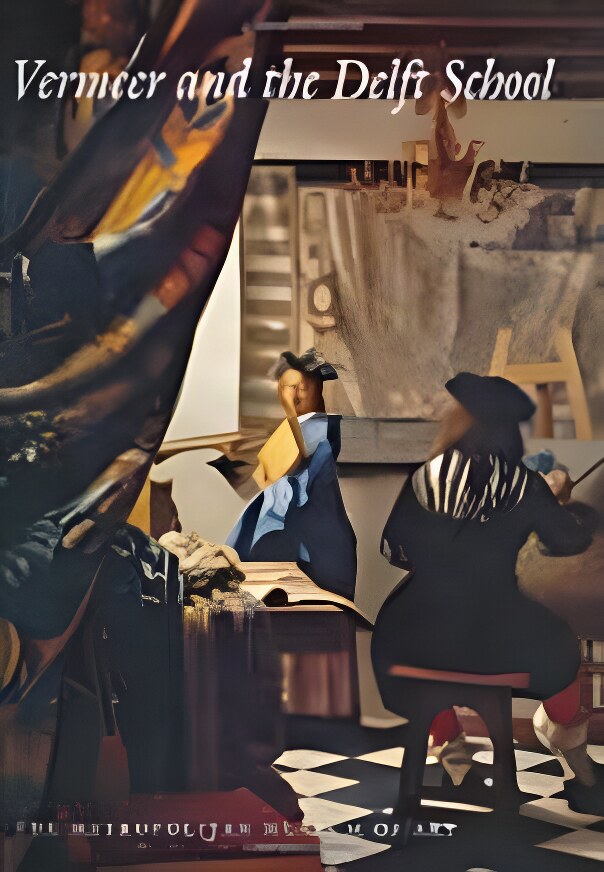
Hardcover. NY, Metropolitan Museum of Art, 1st, 2001, Book: Very Good, Dust Jacket: Very Good, Hardcover in a bright dust jacket, still sealed in publisher's shrinkwrap. 550 pages. Seventeenth-century Delft has traditionally been viewed as a quaint town whose artists painted scenes of domestic life. This important book revises that image, showing that the small but vibrant Dutch city produced fine examples of all the major arts--including luxury goods and sophisticated paintings for the court at The Hague and for patrician collectors in Delft itself. The book traces the history and culture of Delft from the 1200s through the lifetime of the city's most renowned painter, Johannes Vermeer. The authors discuss at length some ninety major paintings (seventeen by Vermeer), forty drawings, and a choice selection of decorative arts, all of which are reproduced in full color. Among the paintings are state portraits, history pictures, still lifes, views of palaces and church interiors, illusionistic murals, and refined genre pictures by Vermeer and Pieter de Hooch. The rich works on paper encompass exquisite drawings by Delft artists and sketches of the town by visiting artists. Included in the decorative arts are tapestries, bronze statuary, silver, Delftware, and glass. The volume concludes with an essay that takes the reader on a walk through seventeenth-century Delft. It is accompanied by maps of the city's neighborhoods that indicate major monuments and the homes of patrons, art dealers, and painters.
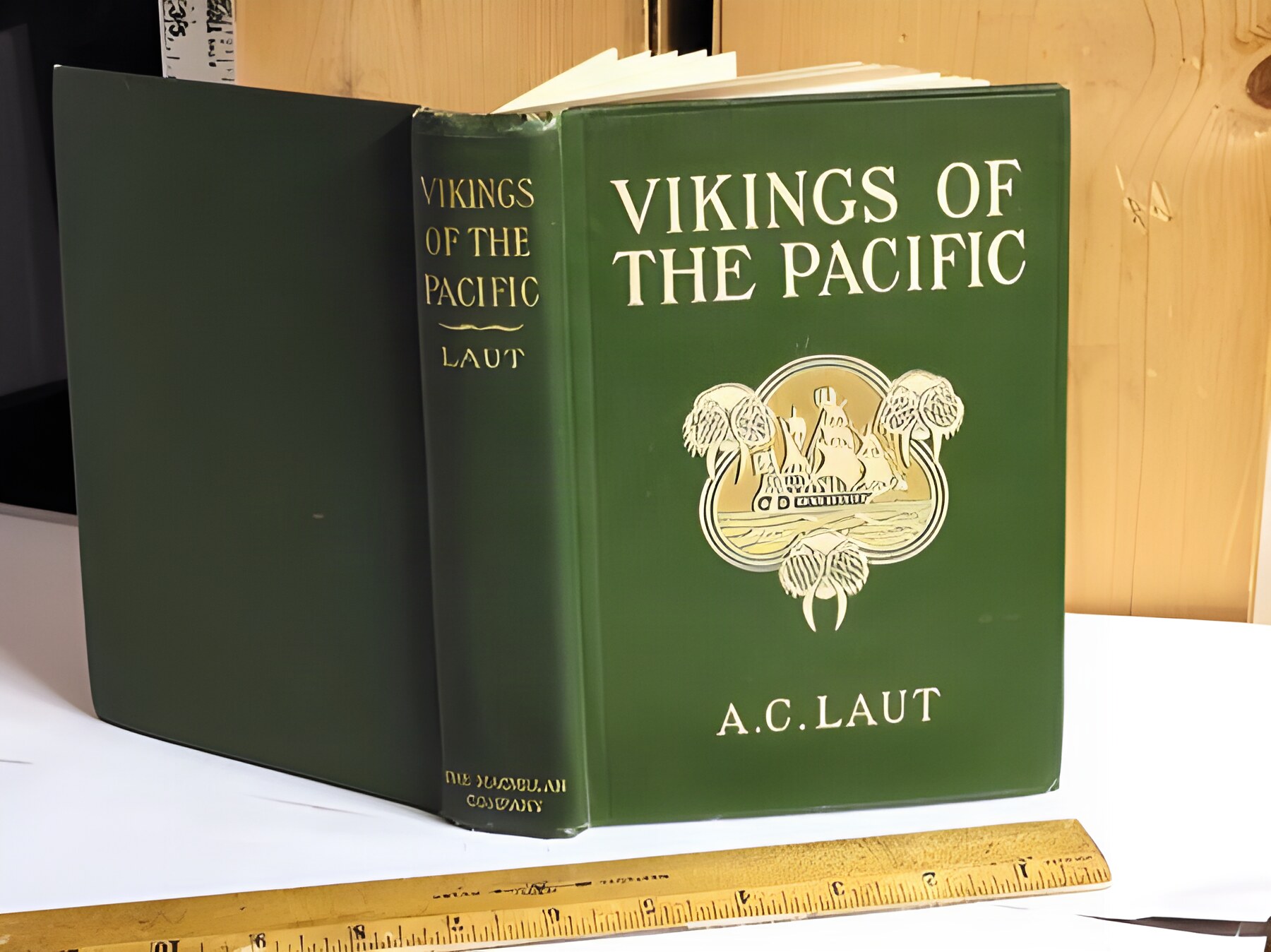
Hardcover. NY, Macmillan, 1st, 1905, Book: Very Good, Dust Jacket: None, Hardcover, green cloth stamped in white and gilt, 349 pages, b&w illustrations, top edge gilt. Chronicles the daring explorers who crossed oceans from the West to the far shores of the North Pacific. From the dawn of Russian and European ambitions to the first American and British voyages, the book weaves together the lives, motives, and trials of men who chased a sea of unknowns. It presents a vivid look at discovery, rivalry, and the costs of pushing beyond the maps. Drawing on primary sources, Laut illustrates the fierce competition for discovery and dominance in the fur trade among these intrepid adventurers. Previous owner's signature on front fly leaf, mild wear to top of spine, otherwise a clean, tight copy.
Hardcover. New York, Princeton Architectural Press, 1st, 2003, Book: Very Good, Dust Jacket: Very Good, 152 pages. Hardcover with dust jacket. Minor soiling to front cover of dust jacket. An otherwise clean, unmarked copy with only minor wear to dust jacket edges. Color illustrations throughout. A tight copy. "A collection of exquisite large-format pen-and-ink watercolor renderings of all of Palladio's villas."
Hardcover. New York, Harry N. Abrams, 1st, 2015, Book: Very Good, Dust Jacket: None, 160 pages. Hardcover with no dust jacket. Clean, unmarked copy with only minor wear to boards. Color and black and white pictures throughout. Originally born in Algeria, Yves Saint Laurent moved to Paris when he was 18, and only three years later he was handpicked by Christian Dior to take the reins as designer of his fashion house. Over time, Saint Laurent resurrected haute couture from the casual mores that predominated in the 1960s, but also offered chic cachet to ready-to-wear clothing. He was among the earliest of designers to incorporate non- European references into his work, and in 1983 he became the first living designer to be feted with a solo exhibition at The Metropolitan Museum of Art in New York. Vogue on Yves Saint Laurent is a stellar volume in the series from the editors of British Vogue, featuring 20,000 words of original biography and history and studded with more than 80 images from their unique archive of images taken by leading photographers.
Softcover. Cambridge MA, Harvard University Press, 1st pbk, 2014, Book: Very Good, Dust Jacket: None, Softcover, 755 pages. Walter Benjamin is one of the twentieth century's most important intellectuals, and also one of its most elusive. His writings-mosaics incorporating philosophy, literary criticism, Marxist analysis, and a syncretistic theology-defy simple categorization. And his mobile, often improvised existence has proven irresistible to mythologizers. His writing career moved from the brilliant esotericism of his early writings through his emergence as a central voice in Weimar culture and on to the exile years, with its pioneering studies of modern media and the rise of urban commodity capitalism in Paris. That career was played out amid some of the most catastrophic decades of modern European history: the horror of the First World War, the turbulence of the Weimar Republic, and the lengthening shadow of fascism. Now, a major new biography from two of the world's foremost Benjamin scholars reaches beyond the mosaic and the mythical to present this intriguing figure in full. Clean copy.
Softcover. NY, Palgrave Macmillan, reprint, 2002, Book: Very Good, Dust Jacket: None, Softcover, 270 pages, b&w illustrations. The career of Norton and Margot, a ballroom dance team whose work was thwarted by the racial tenets of the era, serves as the barometer of the times and acts as the tour guide on this excursion through the worlds of African American vaudeville, black and white America during the swing era, the European touring circuit, and pre-Civil Rights era racial etiquette. Clean copy.
Softcover. New Haven CT, Yale University Press, reprint, 1996, Book: Very Good, Dust Jacket: None, Softcover, 292 pages. This fascinating book examines Western perceptions of war in and beyond the nineteenth century, surveying the writings of novelists, anthropologists, psychiatrists, poets, natural scientists, and journalists to trace the origins of modern philosophies about the nature of war and conflict. Daniel Pick compares philosophical and historical models of conflict with fictions of invasion and biological speculation about the nature and value of conquest. He discusses the work of such familiar commentators on war as Clausewitz, Engels, and von Bernhardi, and examines little-known writings by Proudhon, De Quincey, Ruskin, Valery, and many others. He explores nineteenth-century English fears of French contamination through the Channel Tunnel and the widespread continuing dread of German domination. And he analyzes the history of the widely-shared European belief that war is beneficial or at least functionally necessary. Clean copy.
Hardcover. Chicago, University Of Chicago Press, 1st, 2006, Book: Very Good, Dust Jacket: Very Good, Hardcover, pages. In When Buildings Speak,Anthony Alofsin explores the rich yet often overlooked architecture of the late Austro-Hungarian Empire and its successor states. He shows that several different styles emerged in this milieu during the late nineteenth and early twentieth centuries. Moreover, he contends that each of these styles communicates to us in a manner resembling language and its particular means of expression. Covering a wide range of buildings--from national theaters to crematoria, apartment buildings to warehouses, and sanatoria to postal savings banks--Alofsin proposes a new way of interpreting this language. He calls on viewers to read buildings in two ways: through their formal elements and through their political, social, and cultural contexts. By looking through Alofsin's eyes, readers can see how myriad nations sought to express their autonomy by tapping into the limitless possibilities of art and architectural styles. And such architecture can still speak very powerfully to us today about the contradictory issues affecting parts of the former Habsburg Empire.
Hardcover. NY, Metro Books, 1st, 1998, Book: Very Good, Dust Jacket: Very Good, Hardcover in a bright dust jacket. The late nineteenth century brought a transportation explosion in North America and Europe, much of it produced by the steam engine, which by that time had become strong and versatile enough to power ocean-crossing vessels and large freight trains. Where Rails Meet the Sea tells the exciting story of how the transportation industry was revolutionized by steam power and how the industry in turn changed the face of the world. Written by an expert in the history of ships and trains and heavily illustrated throughout in color and b&w.
Hardcover. Boston, Little Brown, reprint, 1913, Book: Very Good, Dust Jacket: None, Hardcover, maroon cloth with gilt lettering on spine. 470 pages with index, b&w frontis of an English church. A detailed history of the Willard family first published 1n 1848. Clean copy.
Hardcover. NY, Dutton Caliber, 1st, 2022, Book: Very Good, Dust Jacket: Very Good, Hardcover in a bright dust jacket, 324 pages, b&w illustrations. When the P-51 Mustang began tearing across European skies in early 1944, the Allies had been losing the air war for years. Staggering numbers of bomber crews, both British and American, had been shot down and killed thanks to the Luftwaffe's superior fighter force. Not only did the air war appear grim, but any landing of troops in France was impossible while German fighters hunted overhead. But behind the scenes, a team of visionaries had begun to design a bold new type of airplane, one that could outrun and outmaneuver Germany's best. Wings of War is the incredible true story of the P-51 Mustang fighter and the unlikely crew of designers, engineers, test pilots, and army officers who brought it from the drafting table to the skies over World War II. This is hardly a straightforward tale of building an airplane--for years, the team was stymied by corruption within the defense industry and stonewalled by the Army Air Forces, who failed to understand the Mustang's potential. But when squadrons of Mustangs were finally unleashed over Hitler's empire, the Luftwaffe was decimated within months, clearing the skies for D-Day. Clean copy.
Softcover. Philadelphia, University of Pennsylvania Press, 1st US, 2002, Book: Very Good, Dust Jacket: None, Softcover, 193 pages. Most European prosecutions for the crime of witchcraft occurred between the fifteenth and seventeenth centuries, with the peak coming in the hundred years after 1560. This volume brings together the large amount of recent scholarship on witchcraft of this period and provides a novel analysis of the trials by considering the legal systems involved. Witch hunts, methods of torture, and the scientific interest in magic spells and demonology as an intellectual pursuit are also covered in detail. Clean copy.
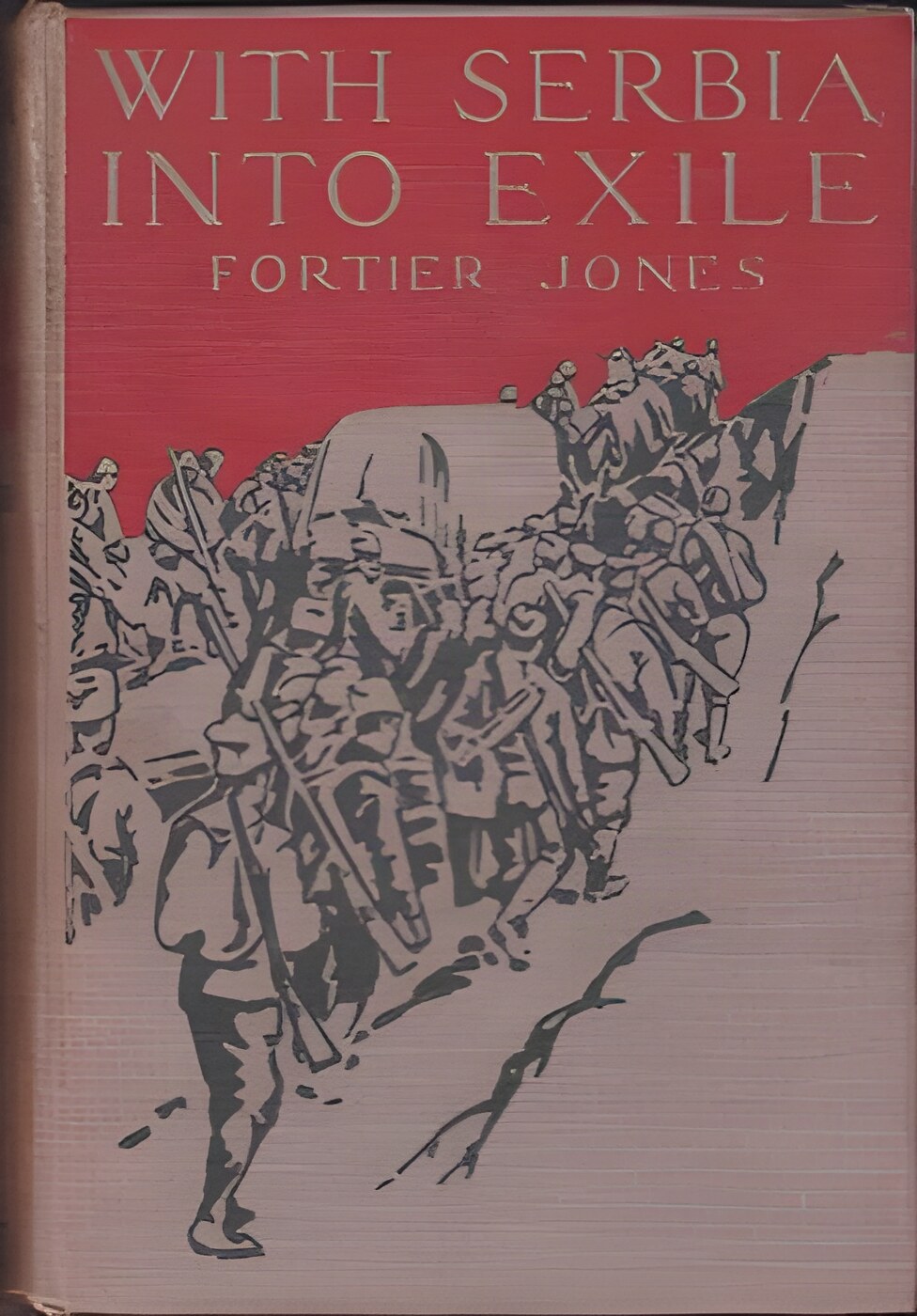
Hardcover. NY, Grosset & Dunlap, reprint, 1916, Book: Very Good, Dust Jacket: None, Hardcover, 385 pages, illustrated with b&w photos. Tan cloth stamped in red and dark green on front and spine. No D.J.
Softcover. Bloomington, IN, Indiana University Press, 1st, 2015, Book: Very Good, Dust Jacket: None, 232 pages. Softcover. A very clean, unmarked copy with only minor edgewear. Black and white photographs throughout. The center of the art world before the war, Paris fired the Nazis' greed. The discovery of more than 1,500 prized paintings and drawings in a private Munich residence, as well as a recent movie about Allied attempts to recover European works of art, have brought Nazi plundering back into the headlines, but the thievery was far from being limited to works of art. From 1942 onwards, ordinary Parisian Jews-mostly poor families and recent immigrants from Eastern Europe-were robbed, not of sculptures or paintings, but of toys, saucepans, furniture, and sheets. Witnessing the Robbing of the Jews tells how this vast enterprise of plunder was implemented in the streets of Paris by analyzing images from an album of photographs found in the Federal Archives of Koblenz. Brought from Paris in 1945, the photographs were cataloged by the staff of the Munich Central Collecting Point. Beyond bearing witness to the petty acts of larceny, these images provide crucial information on how the Germans saw their work. They enable us to grasp the "Nazi gaze" and to confront the issue of the relation between greed and mass destruction.
Hardcover. NY, Routledge, 1st US, 1992, Book: Very Good, Dust Jacket: Very Good, Hardcover in a bright dust jacket, 289 pages, b&w illustrations. In the nineteenth century, major developments in internal surgery were due to operations on ovaries. Women bore the brunt of surgical experimentation and also reaped its rewards. Their need was great, but so was their compliance. From the first operation in America in 1809, much suffering was relieved at the expense of prolonged surgery endured by both black slaves and prosperous whites. Later, in the Victorian era, many surgeons looked at certain types of behavior as reasons for mutilating operations. Such procedures as "spaying" and clitoridectomies were performed to "cure" hysteria and masturbation, as well as questionable interventionalist surgery in pregnancy and childbirth which still continue today. Women Under the Knife is an extraordinary history, giving a vivid picture--medical, literary, and sociological--of Victorian society in America and Europe. Clean copy.
Hardcover. London, Sampson Low, Son, and Marston, reprint, undated/c1880, Book: Good, Dust Jacket: None, Hardcover. History of the art of engraving within a European context. Undated, published c1880. Illustrated with 34 black/white reproductions of engravings. Good condition; pages have gilt edges, cloth bound book has some wear to the edges and introductory pages lightly spotted from age.
Hardcover. Philadelphia, PA, Philadelphia Museum of Art in association with Yale University Press, 1st, 2015, Book: Very Good, Dust Jacket: None, Hardcover with no dust jacket. Very clean, like new in publishers shrinkwrap. Peter Paul Rubens (1577-1640) proudly described his monumental painting Prometheus Bound as first among "the flower of my stock." This singular work demonstrates how Rubens engaged with and responded to his predecessors Michelangelo and Titian, with whom he shared an interest in depictions of physical torment. The Wrath of the Gods offers an in-depth case study of the Flemish artist's creative process and aesthetic, while also demonstrating why this particular painting has appealed to viewers over time. Many scholars have elaborated on Rubens's affinity for Titian, but his connection to Michelangelo has received far less attention. This study presents a new interpretation of Prometheus Bound, showing how Rubens created parallels between the pagan hero Prometheus and Michelangelo's Risen Christ from the Sistine Chapel's Last Judgment. Christopher D. M. Atkins expands our understanding of artistic transmission by elucidating how Rubens synthesized the works he saw in Italy, Spain, and his native Antwerp, and how Prometheus Bound in turn influenced Dutch, Flemish, and Italian artists. By emulating Rubens's composition, these artists circulated it throughout Europe, broadening its influence from his day to ours.
Hardcover. London, Cambridge University Press, 1st, 2010, Book: Very Good, Dust Jacket: Very Good, Hardcover in a bright, unclipped dust jacket. This revisionist study of Allied diplomacy from 1941 to 1946 challenges Americocentric views of the period and highlights Europe's neglected role. Fraser J. Harbutt, drawing on international sources, shows that in planning for the future Churchill, Roosevelt, Stalin, and others self-consciously operated into 1945, not on "East/West" lines but within a "Europe/America" political framework characterized by the plausible prospect of Anglo-Russian collaboration and persisting American detachment. Harbutt then explains the destabilizing transformation around the time of the pivotal Yalta conference of February 1945, when a sudden series of provocative initiatives, manipulations, and miscues interacted with events to produce the breakdown of European solidarity and the Anglo-Soviet nexus, an evolving Anglo-American alignment, and new tensions that led finally to the Cold War. This fresh perspective, stressing structural, geopolitical, and traditional impulses and constraints, raises important new questions about the enduringly controversial transition from World War II to a cold war that no statesman wanted. Clean copy.
Softcover. Cambridge University Press, 1st paperback, 1996, Book: Very Good, Dust Jacket: None, 421 pages. Softcover. Wrapper very good, no rips or tears. B/w illustrations. Pages and edges have a touch of tanning from age, otherwise clean and unmarked. Binding tight. In very good shape. The first book to examine the bloody demise of the former Yugoslavia in the full light of its history and that of its ethnic mosaic.
Hardcover. NY, Merrell Publishing, 1st, 2008, Book: Very Good, Dust Jacket: Very Good, Hardcover, 240 pages. In the early twentieth century Zaida Ben-Yusuf (1869?1933) was one of the busiest photographers in New York City, maintaining a fashionable studio on Fifth Avenue, exhibiting her distinctly modern portraits across America, Europe and Russia, and publishing work in many magazines. Her self-portraits also challenged traditional perceptions of female identity. This striking book celebrates Ben-Yusuf ?s achievement, showcasing a significant selection of her elegant and compelling portraits featuring prominent artistic and political figures of the day, including Lincoln Steffens, Edith Wharton, Elsie de Wolfe and Robert Henri.

 "Unknown Soldiers: Reliving World War II in Europeby: Joseph E. Garland")
 "Urbicide - Sarajevo - Sarajevo, Une Ville Blesseeby: Curic, Borislav/Nedzad Delija/Igor Grozdanic/Nazif Hasanbegovic/Boran Hrelja/Nedzad Hrelja/Aida Kalauzovic-Mandic")



 "Villas of Palladio, Theby: Giaconi, Giovanni")
 "Vogue on Yves Saint Laurentby: Fraser-Cavassoni, Natasha")
 "Walter Benjamin: A Critical Lifeby: Eiland, Howard; /Jennings, Michael W.")

 "When Buildings Speak: Architecture as Language in the Habsburg Empire and Its Aftermath, 1867-1933by: Alofsin, Anthony")
 "Where Rails Meet the Sea: America's Connections Between Ships & Trains by: Krieger, Michael")
 "Willard Memoir; or, Life and Times of Major Simon Willard: with Notices of Three Generations of His Descendants, and Two Collateral Branches in the United States; also, Some Account of the Name and Family in Europe, from an Early Day")


 "Witnessing the Robbing of the Jews: A Photographic Album, Paris, 1940-1944by: Gensburger, Sarah")

 "Wonders of Engraving, Theby: Duplessis, Georges")
 "Wrath of the Gods, The: Masterpieces by Rubens, Michelangelo, and Titianby: Atkins, Christopher D. M.")
 "Yalta 1945: Europe and America at the Crossroadsby: Fraser J. Harbutt")
 "Yugoslavia as History: Twice There was a Countryby: Lampe, John R.")


 "Zaida Ben-Yusuf: New York Portrait Photographer by: Goodyear, Frank H. (Author), Elizabeth O. Wiley (Contributor), Jobyl A. Boone (Contributor)")